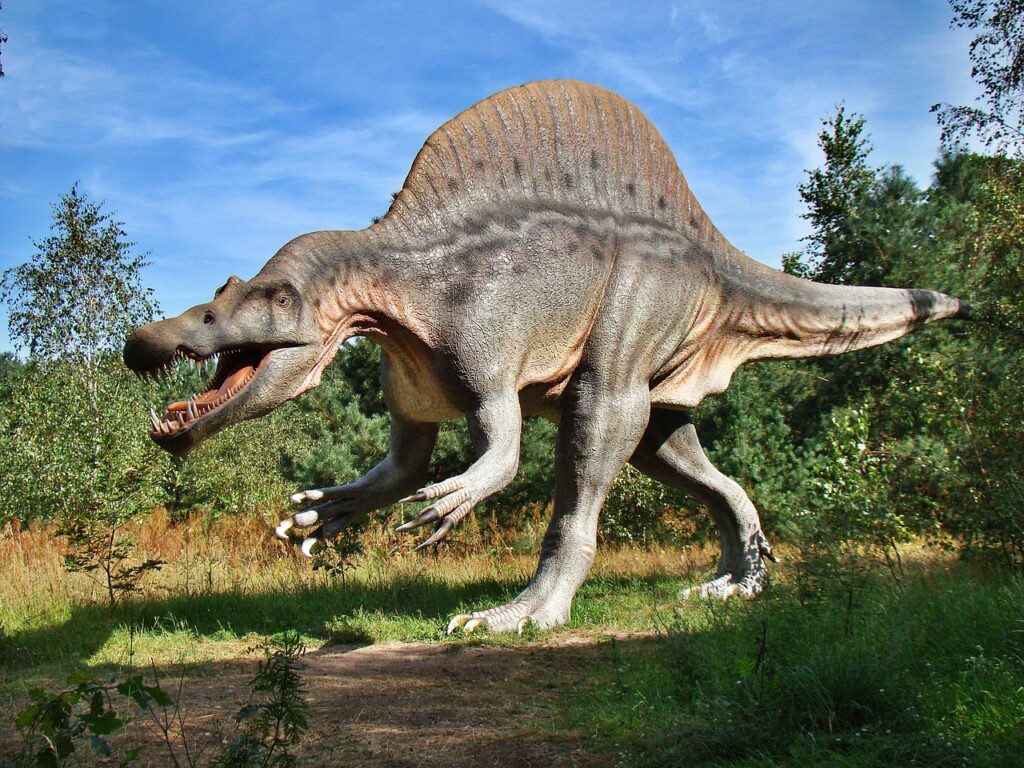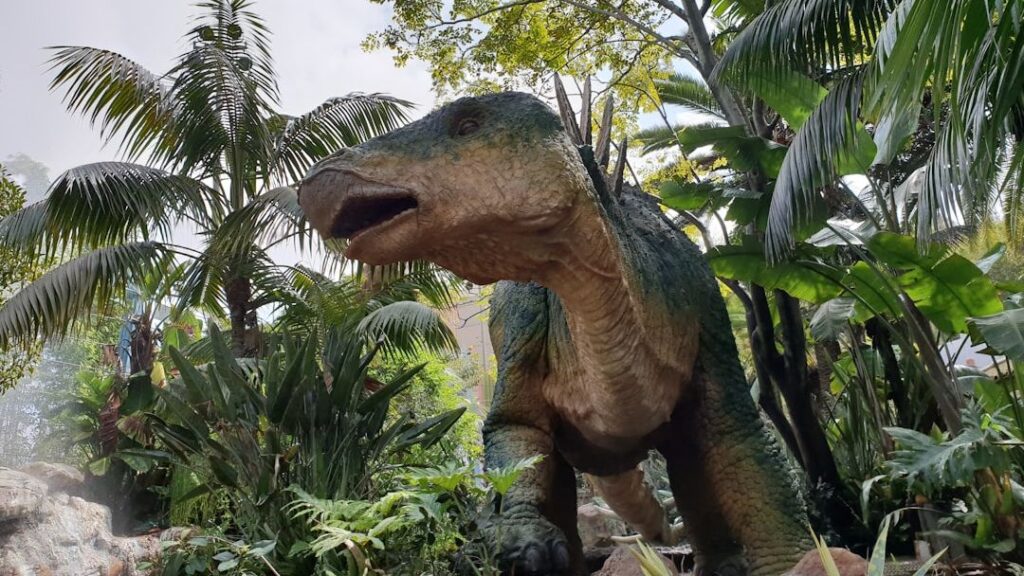
Scientists have long relied on the oldest dinosaur fossils to mark the start of these animals on Earth, yet a fresh examination of evolutionary patterns now places their appearance several million years earlier. The revised timeline places the first dinosaurs between 250 and 240 million years ago, well before the fossils that currently anchor the record. This adjustment also highlights short intervals of unusually fast physical change during the Middle to early Late Triassic, a period already known for dramatic shifts in life after the Permian extinction. Such findings invite researchers to reconsider how quickly new body plans can arise when ecosystems begin to recover.
Reconsidering the Gap Between Fossils and First Appearance
The earliest confirmed dinosaur fossils date to roughly 230 million years ago, leaving an unexplained stretch of time between the end of the Permian mass extinction and the first clear skeletal evidence. The new analysis treats this gap not as an absence of dinosaurs but as a period when the animals existed without leaving many preserved remains. By modeling evolutionary rates across related reptile groups, the work shows that dinosaurs could have split from their closest relatives much sooner than the fossil record alone indicates. This approach relies on statistical methods that account for incomplete preservation rather than waiting for new bones to surface.
Researchers note that the Triassic environment, with its shifting climates and recovering plant life, would have offered opportunities for small, agile reptiles to diversify quickly. The study therefore treats the missing fossils as a sampling issue rather than proof that dinosaurs had not yet evolved. Future fieldwork in under-explored Early Triassic deposits may eventually close the gap, but the current modeling already narrows the window of uncertainty.
Periods of Rapid Physical Transformation
Alongside the earlier origin date, the analysis identifies concentrated bursts of morphological evolution between the Middle and early Late Triassic. During these intervals, dinosaur ancestors appear to have developed new limb proportions, skull shapes, and body sizes at rates higher than those seen in surrounding reptile lineages. These spurts align with broader ecological changes, including the rise of new plant groups and the decline of certain competitors. The pattern suggests that once dinosaurs appeared, natural selection acted strongly on their physical traits for a relatively brief window.
Importantly, the bursts were not uniform across all traits or all lineages. Some features, such as tooth shape linked to diet, changed more steadily, while others tied to locomotion shifted in concentrated episodes. This uneven pace helps explain why early dinosaurs remained relatively small and rare for millions of years before larger forms emerged later in the Triassic. The findings underscore that evolutionary speed can vary sharply even within a single group of animals.
Comparing Old and New Estimates
| Aspect | Previous View | Updated Suggestion |
|---|---|---|
| Earliest dinosaur appearance | Around 230 million years ago, based on oldest fossils | 250–240 million years ago, inferred from evolutionary models |
| Rate of early change | Gradual diversification after first fossils | Short bursts of rapid morphological evolution in Middle to early Late Triassic |
| Remaining uncertainty | Fossil record considered largely complete for origins | Preservation gaps likely hide earlier forms; more data needed |
Limitations and Next Steps for Research
Like any modeling study, the conclusions rest on assumptions about evolutionary rates and the completeness of the fossil record. Small changes in those assumptions can shift the estimated origin date by several million years in either direction. The work also cannot identify specific locations or species that existed in the newly proposed earlier window. Direct fossil confirmation remains the gold standard, and the current results serve mainly as a guide for where to search next.
Teams are already planning targeted expeditions in Early Triassic rock layers across South America, Africa, and Europe. Improved dating techniques and three-dimensional imaging of existing specimens may further test the rapid-burst hypothesis. Until those data arrive, the revised timeline stands as a working framework rather than a settled fact.
What the Revised Timeline Means for Understanding Life’s Recovery
Placing dinosaurs earlier in the Triassic changes how scientists view the pace at which ecosystems rebuilt after the Permian extinction, the most severe mass die-off in Earth’s history. It suggests that the first dinosaurs shared the landscape with a wider array of other reptiles for longer than previously thought, potentially competing or coexisting in ways that shaped later dinosaur success. The rapid morphological bursts also imply that key adaptations for survival and expansion arose under intense selective pressure during a time of environmental flux.
These insights do not rewrite the broader story of dinosaur dominance in the Jurassic and Cretaceous, yet they refine the opening chapter. The animals that would later rule the continents appear to have taken their first steps in a world still healing from catastrophe, with bursts of innovation helping them carve out early niches. Further work will determine whether this pattern holds or whether additional surprises await in the rocks.