If you grew up scanning the bargain bin at a video store, you probably know this feeling: you spot a rubbery T. rex on a sun-faded cover, the tagline promises carnage and chaos, and you instantly know you’re about to watch something ridiculous. You rent it anyway. Dinosaur B-movies live in that strange sweet spot where bad taste, low budgets, and sincere enthusiasm collide into something oddly irresistible.
What makes some of these films so absurd that they loop all the way back around to entertaining? It is not just the wobbly puppets or the wildly inaccurate “science.” It is the sheer commitment to bonkers ideas: brains in robotic dinosaurs, wisecracking T. rexes, genetic experiments gone wrong, even prehistoric nuns. Let’s walk through ten of the most gloriously unhinged dinosaur B-movies ever made – and unpack why, in spite of everything, people kept pressing play.
Tammy and the T-Rex (1994)
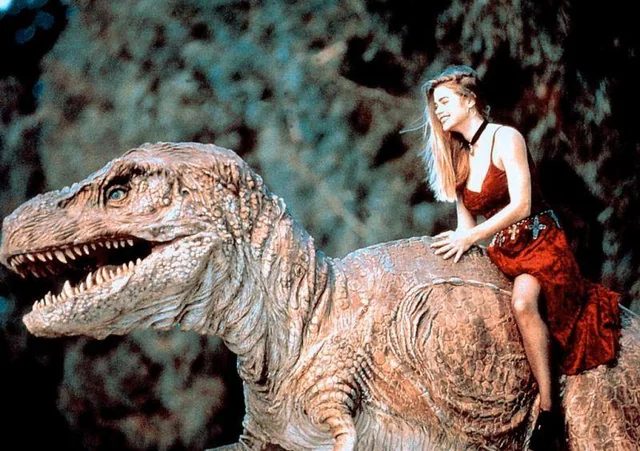
Imagine pitching this with a straight face: a teenage boy dies, a mad scientist steals his brain, and implants it into an animatronic Tyrannosaurus rex so he can reunite with his cheerleader girlfriend. That is the actual plot of Tammy and the T-Rex, a low-budget science fiction horror-comedy starring a very young Denise Richards and Paul Walker, long before their blockbuster careers. The movie was shot fast to take advantage of a mechanical dinosaur the producer briefly had access to, and the script was basically reverse engineered around the prop. ([en.wikipedia.org](https://en.wikipedia.org/wiki/Tammy_and_the_T-Rex?utm_source=openai))
On paper it sounds like pure junk, but that is exactly why people watch it. There is a reckless, party-movie energy to the whole thing: absurd brain surgery sequences, slapstick gore, and melodramatic teen-romance beats played completely straight. For a certain kind of viewer, especially horror and cult-film fans, the joy is in witnessing a ludicrous premise pushed as far as it can possibly go without anyone on screen admitting how silly it is. You watch Tammy and the T-Rex not to critique realism, but to bask in the chaos with friends, beers, and running commentary.
Carnosaur (1993)
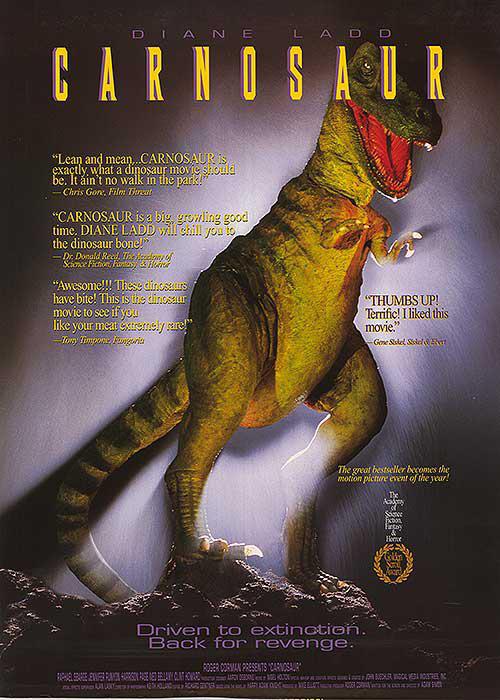
Released just weeks before Jurassic Park, Carnosaur is the grungy, feral street cousin to Spielberg’s sleek blockbuster. Produced by exploitation legend Roger Corman and loosely adapted from John Brosnan’s novel, it follows a mad scientist (played by Diane Ladd) who plans to wipe out humanity by engineering a virus that causes women to give birth to dinosaurs, then repopulate the world with her custom-built prehistoric predators. Made for a fraction of Jurassic Park’s budget, it leans on rubber suits, miniature sets, and copious slime instead of cutting-edge CGI. ([en.wikipedia.org](https://en.wikipedia.org/wiki/Carnosaur_%28film%29?utm_source=openai))
Why did people watch it? Partly curiosity: this was marketed as “the other dinosaur movie of 1993,” inviting direct comparison with a film it could never hope to match. But Carnosaur compensates with sheer audacity. The effects are rough, yet they have a tactile, DIY charm that appeals to horror buffs who prefer monster movies that feel like they were built in a garage. The outrageous pseudo-science and body horror go places a mainstream studio never would, and that transgressive streak has helped it earn a small but loyal cult following that loves it because it is nasty, earnest, and utterly unashamed of being trashy.
Theodore Rex (1995)
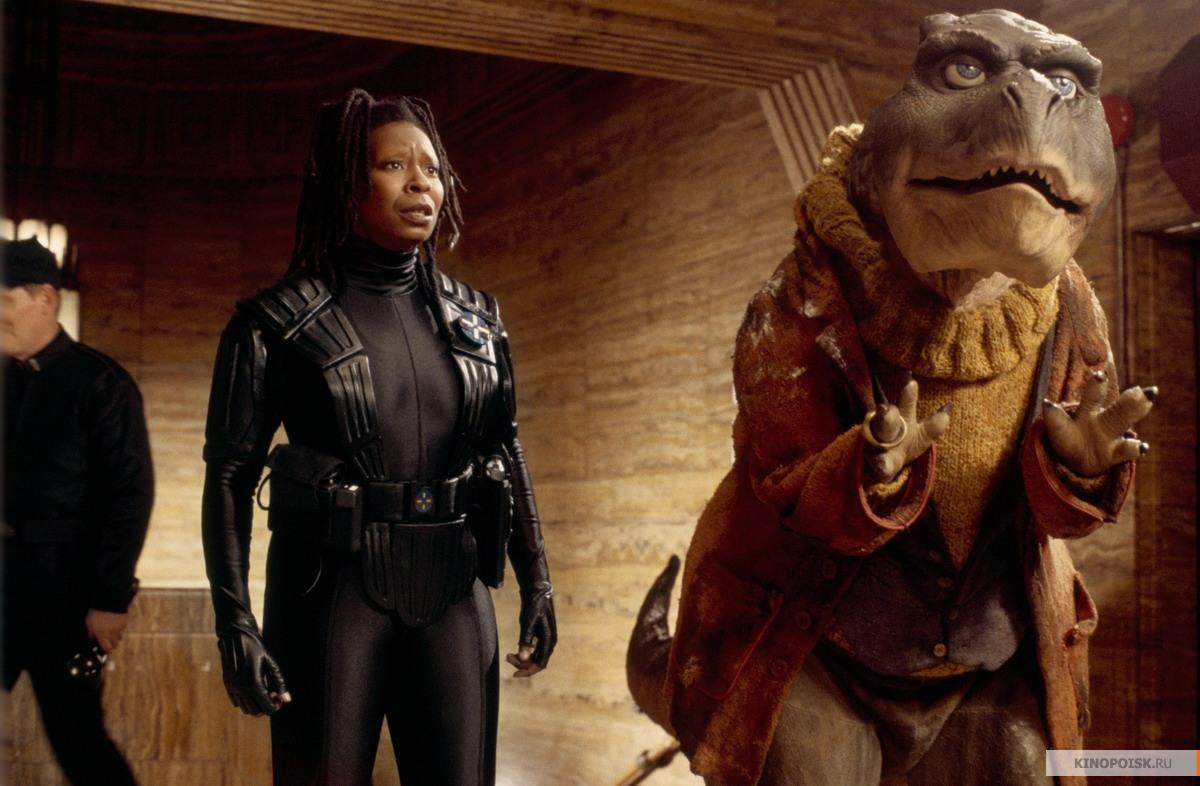
Theodore Rex might be the most infamous entry on this list, not because it is gory or shocking, but because it is such a head-scratching misfire. Set in a near-future where humans and anthropomorphic dinosaurs coexist, the film pairs Whoopi Goldberg as a tough cop with a cookie-loving, trench-coat-wearing T. rex detective named Theodore. Intended as a family-friendly buddy-cop adventure, it features elaborate suits and animatronics to bring the talking dinosaur to life, but the tone and execution baffled critics and audiences alike, leading to a direct-to-video release in North America instead of the planned theatrical debut. ([en.wikipedia.org](https://en.wikipedia.org/wiki/Theodore_Rex_%28film%29?utm_source=openai))
So why do people still seek it out? In the age of internet irony, Theodore Rex has become a sort of endurance test and curiosity object. The sight of a serious, Oscar-winning actor trading quips with an awkward rubber dinosaur head is so surreal that it feels like a fever dream you have to verify with your own eyes. Fans of bad cinema are drawn to it the way climbers are drawn to dangerous peaks: precisely because it is widely considered one of the strangest, most misjudged studio projects of the 1990s. Watching it becomes a joint activity, a shared “can you believe this exists?” experience that is more fun with friends than alone.
Planet of Dinosaurs (1977)
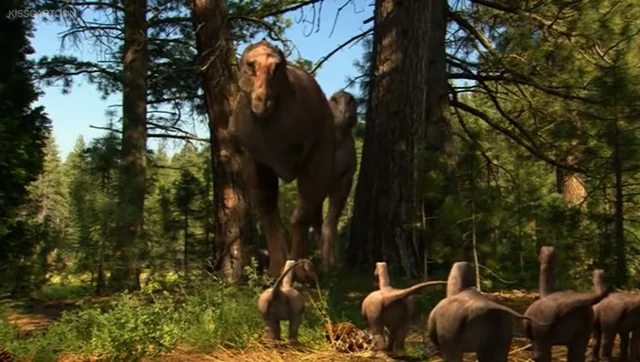
Planet of Dinosaurs is essentially a long showreel for stop-motion creatures, held together by the loosest of plots. A spaceship crash-lands on a remote planet, the generic crew wanders around in tight uniforms, and one by one they are stalked and eaten by impressively detailed, Ray Harryhausen–inspired dinosaurs. The acting is wooden and the dialogue feels like it was written during lunch breaks, but the filmmakers clearly poured most of their limited funds and energy into painstaking miniature work and model animation.
For monster-movie purists, that trade-off is part of the appeal. There is something hypnotic about watching handcrafted stop-motion dinos lumber, snap, and roar against painted backdrops, like toys come to life on a child’s bedroom floor. People who revisit Planet of Dinosaurs today are often not looking for story sophistication – they are chasing the tactile charm of practical effects in an era dominated by digital creatures. The rough edges, visible matte lines, and jerky motion give the film a nostalgic, almost museum-like quality that modern viewers increasingly find endearing rather than embarrassing.
Reptilicus (1961)
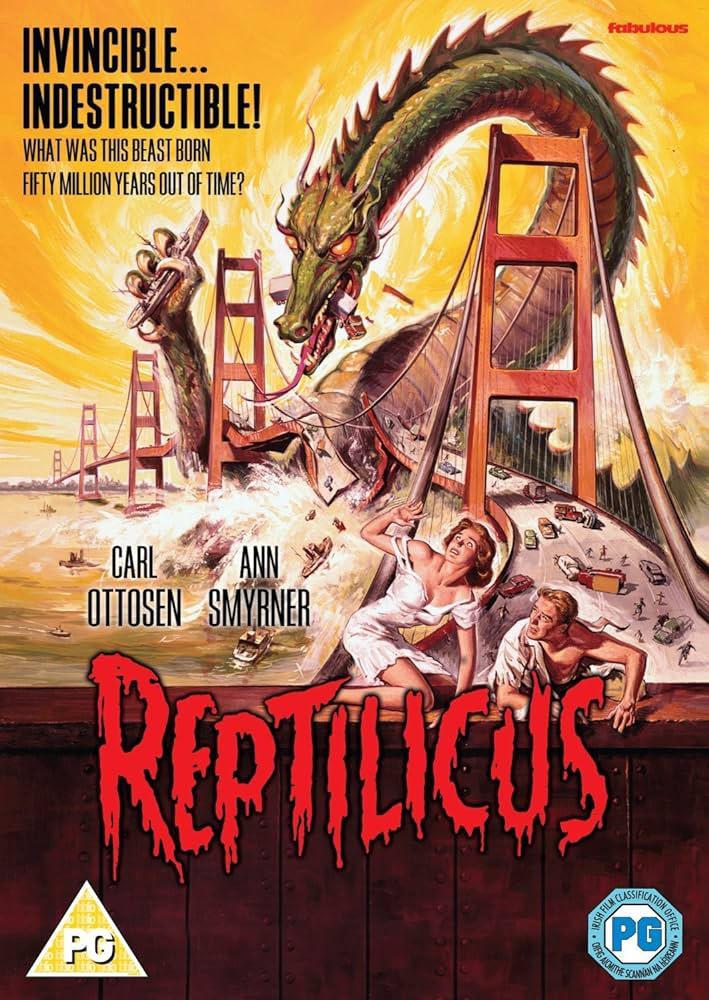
Strictly speaking, Reptilicus is a kaiju-style monster movie rather than a pure dinosaur flick, but its giant, regenerated reptile is close enough in spirit – and absurdity – that fans usually lump it in with the dino B-movie pantheon. A frozen tail segment of a prehistoric creature is discovered, thaws, regenerates into a full monster, and proceeds to rampage through Copenhagen with all the grace of a rubber puppet on stiff wires. Shots of the creature drooling green slime and flapping its jaw like a malfunctioning marionette have become legendary among bad-movie aficionados.
People watch Reptilicus for the same reason they watch a clumsy school play: to cheer on ambition drowning in limitations. There is a genuine charm in seeing Denmark try to mount its own Godzilla-style spectacle, complete with miniatures and earnest military briefings, even when the results are unintentionally hilarious. For many viewers, especially younger monster fans discovering older films, it also serves as a quirky gateway into the broader world of international B-cinema – proof that questionable creature features are a global tradition, not just a Hollywood oddity.
Reptilian (Yonggary: 2001)
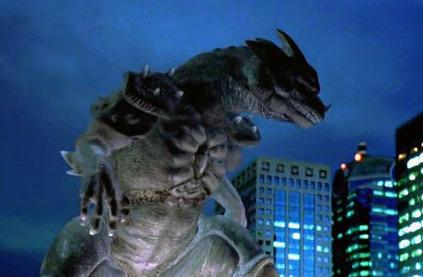
Reptilian, a reimagining of the 1960s South Korean monster Yongary, tries desperately to ride the wave of late-1990s creature features with flashy CGI and international casting. The story is the usual mix: an ancient underground dinosaur-like monster is awakened, stomps a city, and battles the military while bickering scientists and soldiers shout exposition. On release, the digital effects already looked dated, with rubbery textures and physics that feel more like a cutscene from an old video game than a big-screen spectacle.
Yet that very awkwardness has helped the film find a niche cult audience over time. Fans of schlocky sci-fi enjoy how earnestly it imitates Hollywood blockbusters without quite understanding what makes them work, leading to weird tonal swings and stilted English dialogue. The film has become a kind of cinematic time capsule, capturing the moment when lower-budget producers realized they could afford CGI dinosaurs – but not necessarily good CGI dinosaurs. People watch it now with a mix of nostalgia and fascination, marveling at how fast visual standards changed and how stubbornly charming bad effects can be when paired with total sincerity.
Prehysteria! (1993)
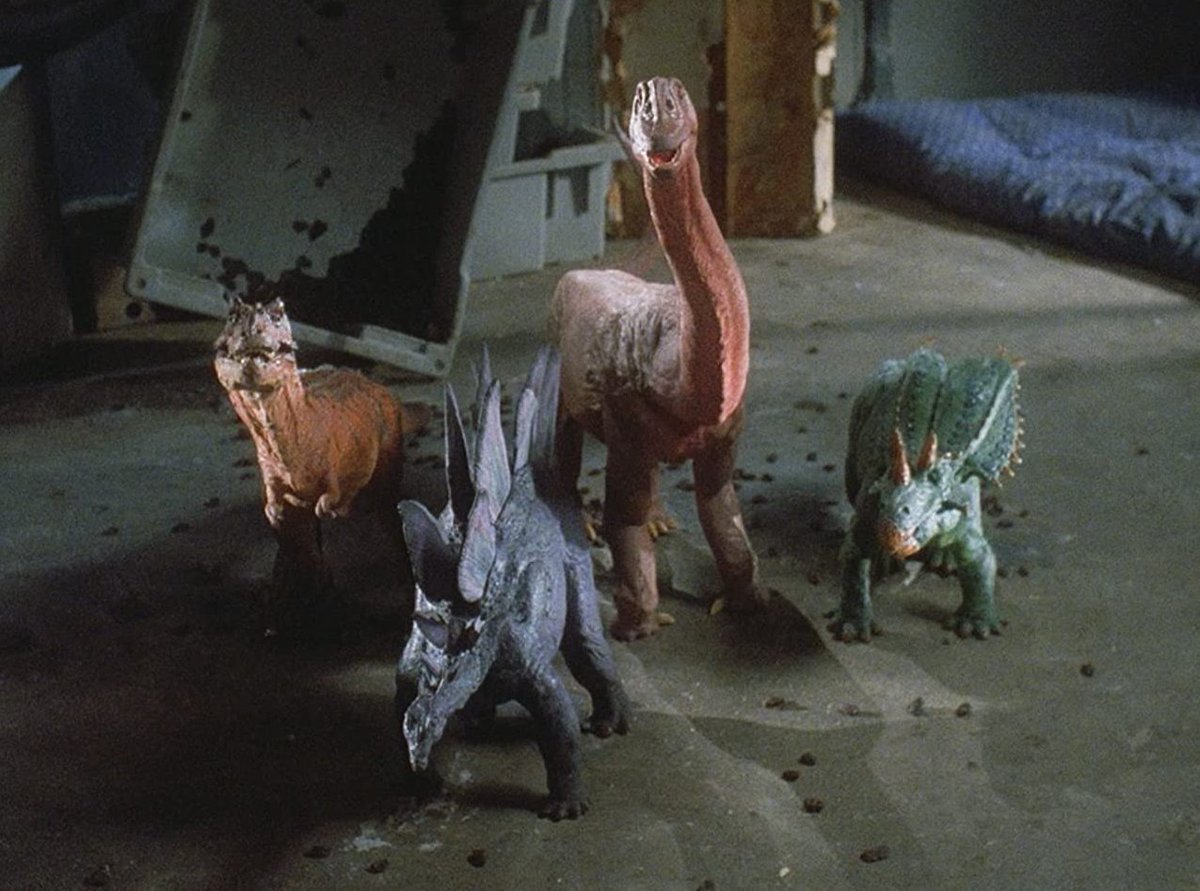
Prehysteria! takes the dinosaur craze in an entirely different direction: instead of giant city-smashers, it gives us tiny, cutesy, stop-motion baby dinos adopted by a family that runs a struggling farm. Produced under Charles Band’s Full Moon umbrella, it blends kid-friendly whimsy with B-movie thrift, using clever perspective tricks and puppetry to make the pint-sized creatures dance, skateboard, and wreak mild havoc in kitchens and living rooms. The story leans heavily on the sentimental bond between children and their prehistoric pets.
For millennials who saw it on VHS, Prehysteria! functions as comfort food. It is absurd in premise – a random crate of living dinosaur eggs ends up at a rural house – and the science is nonexistent, but the film taps into the universal fantasy of discovering a secret, magical pet that adults do not quite understand. Parents tolerated it because it was relatively gentle and upbeat, while kids latched onto the mix of dinosaurs and slapstick. In hindsight, its handmade effects and earnest tone feel almost rebellious compared to the slick, committee-designed family films that dominate streaming platforms today, which helps explain its lingering nostalgic pull.
Velocipastor (2018)
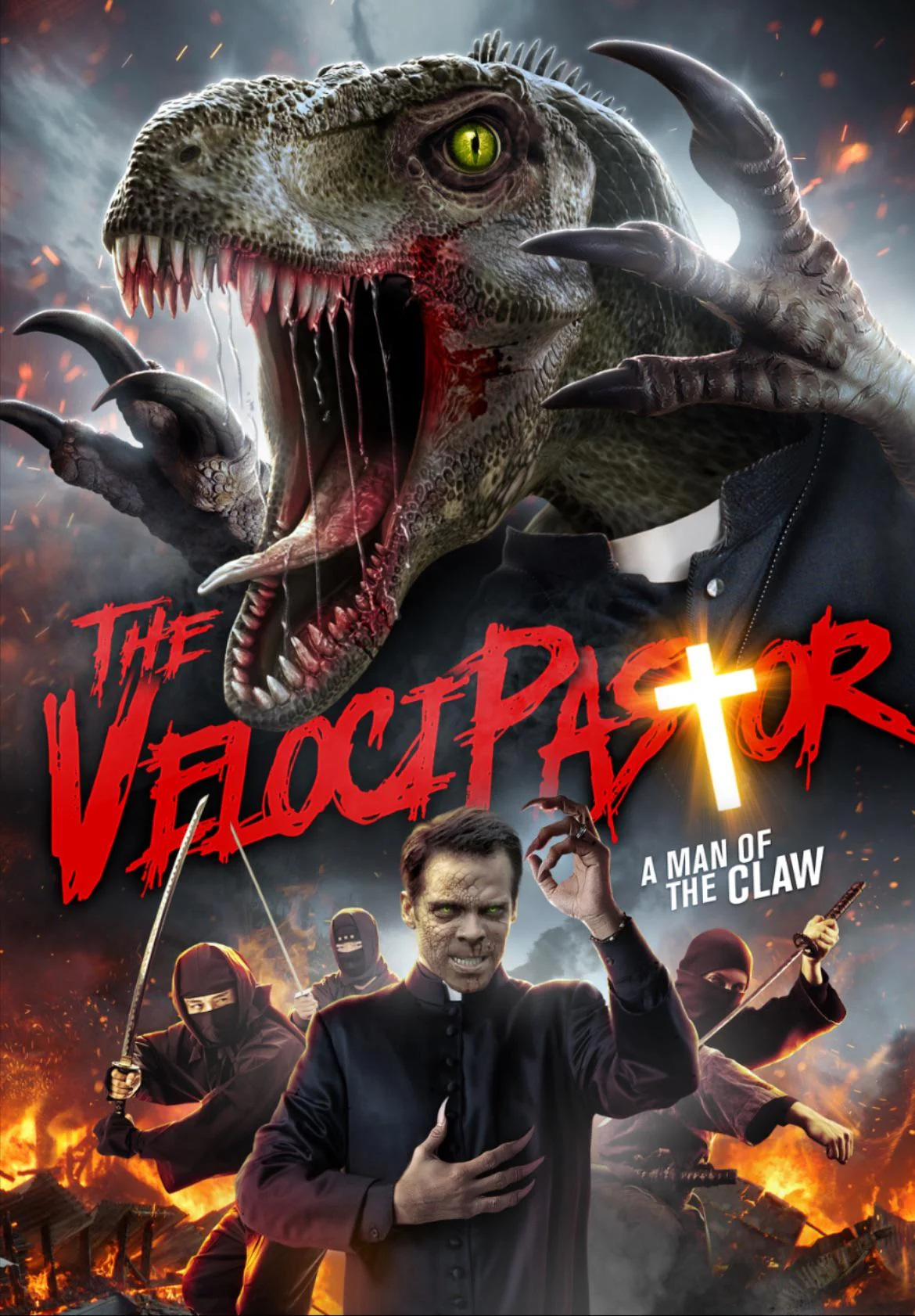
Velocipastor is the modern, self-aware evolution of the dinosaur B-movie: a micro-budget exploitation flick that knows exactly how dumb its central gag is and leans into it with glee. A grieving priest travels to China, gains the ability to transform into a dinosaur, and decides to use his new powers to fight ninjas and criminals. The dino form is represented by an outrageously cheap rubber suit that looks like it was bought from a Halloween clearance aisle, and the film famously cuts to a title card reading “VFX Car on Fire” instead of actually showing a burning vehicle, turning budget constraints into punchlines.
Audiences flocked to Velocipastor precisely because it wears its limitations on its sleeve instead of trying to hide them. In an era saturated with overly polished genre movies, there is something refreshing about a film that invites you to be in on the joke. Viewers treat it like a communal event – midnight screenings, drinking games, live tweeting – where the point is less about narrative immersion and more about celebrating DIY creativity and absurdity. It also speaks to a trend: modern cult hits often embrace camp intentionally, transforming what used to be accidental “so bad it’s good” charm into a deliberate aesthetic and marketing strategy.
Dinoshark (2010)

Dinoshark came out of the Syfy Channel era of monster mashups, where seemingly any two nouns could birth a movie. The concept is gloriously simple: a prehistoric shark thawed from ice terrorizes modern-day beachgoers with an over-the-top design that looks like someone glued dinosaur horns onto a standard killer shark model. The plot sticks closely to creature-feature formula, but the real draw is the parade of increasingly ridiculous attacks, all rendered in cheap but enthusiastic digital effects.
People tuned into Dinoshark the same way they tuned into Sharknado and its cousins: as participatory, social television. These films became live events where viewers joked on social media in real time, riffed on the logic gaps, and waited eagerly for each new implausible kill. The absurd portmanteau title itself works like a dare; you watch partly to see if the movie can possibly live up to how stupid the name sounds. In that sense, Dinoshark is less a story and more a shared meme, an example of how B-movie dinosaurs survived into the streaming age by becoming commentary fuel rather than solitary guilty pleasures.
Future War (1997)

Future War is a delirious stew of ideas: time-traveling cyborgs, escaped slaves, street gangs, and, crucially, dinosaur-like “trackers” that look like rubbery velociraptors shrunk down for convenience. The film follows a fugitive from a future space-faring civilization who ends up in present-day Los Angeles and joins forces with a former sex worker turned nun. The dinos are supposedly bio-engineered hunting beasts, but they often appear as small puppets running through miniature sets, giving the whole thing an oddly toy-like aesthetic.
The movie’s notoriety grew after it was skewered on Mystery Science Theater 3000, which helped cement its reputation as a pinnacle of earnest low-budget confusion. Viewers who discover it now are often chasing that same bizarre tonal collision: deadly serious dialogue about cosmic slavery delivered alongside tiny snarling lizards and random martial arts sequences. The absurdity of the dinosaurs, clearly outmatched by the script’s ambitions, becomes part of the charm. It is like watching someone try to stage an epic sci-fi saga using only leftover props from three unrelated school plays, and refusing to compromise on scope.
Why We Keep Coming Back to Absurd Dinosaur B-Movies
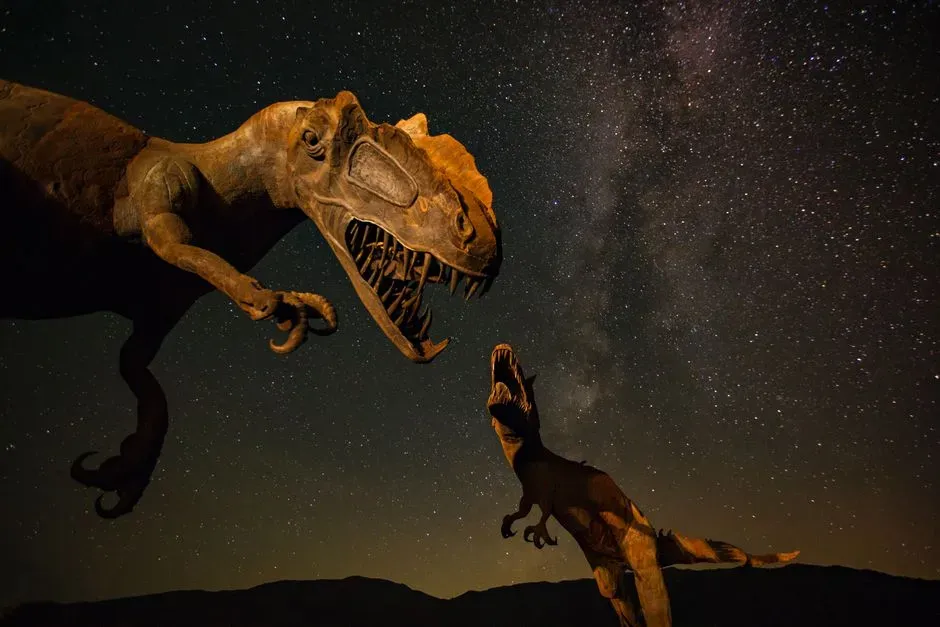
Looking across these movies, a pattern emerges: the more outlandish the premise and the cheaper the execution, the more fiercely some viewers defend them. Part of that is nostalgia – memories of late-night cable, VHS rentals, and the thrill of feeling like you had discovered some forbidden, ridiculous artifact your parents would never choose. But it is also about texture. In an age when dinosaurs are usually hyper-realistic digital models, there is a weird comfort in seeing visible seams, clumsy puppetry, and overreaching scripts that swing for the fences and miss spectacularly.
Personally, I think we watch these films because they expose something honest about why we love movies in the first place. Underneath the rubber suits and nonsense science is a simple promise: you will see something you have not quite seen before, even if it is for the “wrong” reasons. These B-movies are reminders that cinema is not only about perfection; it is also about enthusiasm, bad ideas taken too seriously, and communities of fans who turn failure into folklore. In a world obsessed with flawless franchises and safe bets, the question almost flips: how could we not keep watching the misfit dinosaur movies that dare to be so gloriously wrong?