Every time you scroll your phone before bed, argue over the last slice of pizza, or instinctively flinch at a sudden noise, you are acting out something much older than you are. Buried under modern apps, skyscrapers, and streaming services is a nervous system tuned for campfires, small tribes, and unpredictable danger. We like to think of ourselves as hyper-modern, but our brains are still running surprisingly ancient code.
Once you start noticing these old patterns, it becomes almost unnerving. Why do we gossip? Why do crowds feel both comforting and scary? Why does a dark, quiet hallway in a safe house still feel wrong? These quirks are not random; they are echoes of strategies that helped our ancestors stay alive long before cities, cars, or even written language. Let’s dig into a handful of ancient human habits that never really left us – and see how they quietly shape our everyday lives.
The Tribal Brain: Why We Still Crave Belonging and “Us vs. Them”

Think about how it feels to be part of a tight group – a fandom, a team, a friend circle, even a favorite online community. That warm feeling of belonging is not just emotional; it is deeply biological. For most of human history, surviving alone was nearly impossible, so our brains were wired to attach strongly to small groups and treat them as home base. Modern research on social pain shows that rejection or exclusion lights up many of the same brain areas as physical pain, which fits perfectly with a world where being cast out from your group could literally mean death.
The flip side of this tribal instinct is that we still tend to split the world into “us” and “them,” often without realizing it. Today it might show up as sports rivalries, political polarization, or intense brand loyalty, but underneath is the same old pattern: favoring our in-group, distrusting outsiders, and bonding over shared enemies as much as shared goals. I’ve caught myself feeling irrationally defensive over things as trivial as a favorite band being criticized, and it’s sobering to realize that the same machinery once fueled life-or-death loyalty. The habit is ancient; our challenge now is to notice it and choose when it actually serves us.
Hypervigilance: Why We Jump at Shadows and Bad News

If ten nice things happen to you in a day and one nasty comment ruins your mood, that is your survival brain doing exactly what it evolved to do. For early humans, overlooking a danger was far more costly than missing a pleasant detail, so we evolved a strong negativity bias. Our attention naturally clings to threats, bad news, and worst-case scenarios. That same bias is part of why doomscrolling feels so magnetic – the most alarming headlines hijack instincts that once listened for predators rustling in the dark.
Even in safe environments, ancient vigilance systems keep firing. A sudden noise at night, a shadow in the corner of your eye, a stranger’s odd body language – all of these can trigger a quick jolt of stress before your conscious mind has time to weigh the facts. Personally, I still feel my heart rate spike when I hear an unexpected knock after midnight, even though the “danger” is usually a package or a neighbor. Our hardware has not fully adapted to a world where most threats are psychological, not physical, so we are left with Stone Age alarm systems trying to interpret push notifications and office politics.
Hoarding and Overeating: The Scarcity Instinct in an Age of Plenty

Have you ever kept clothes you never wear, saved leftovers you know you will not eat, or inhaled snacks long past the point of hunger? That tug toward “more, just in case” is an ancient response to a world of unpredictable food and resources. For hunter-gatherer ancestors, feast-and-famine cycles were real, so overeating when food was available and hanging onto useful stuff could mean the difference between making it through a bad season or not. The people who were more cautious about scarcity often survived better.
Now we live in societies where many of us are surrounded by constant access to food and consumer goods, but the scarcity instinct has not received that memo. Ultra-processed foods are engineered to trigger cravings in a brain that evolved to prize rare calories, which helps explain late-night binges that feel terrible afterward but weirdly logical in the moment. I notice this in myself when I eat as if a meal might be my last, even after years of consistent food security. The habit is not a moral failing; it is a mismatch between ancient wiring and supermarket aisles overflowing with options.
Gossip and Storytelling: Our Original Social Technology
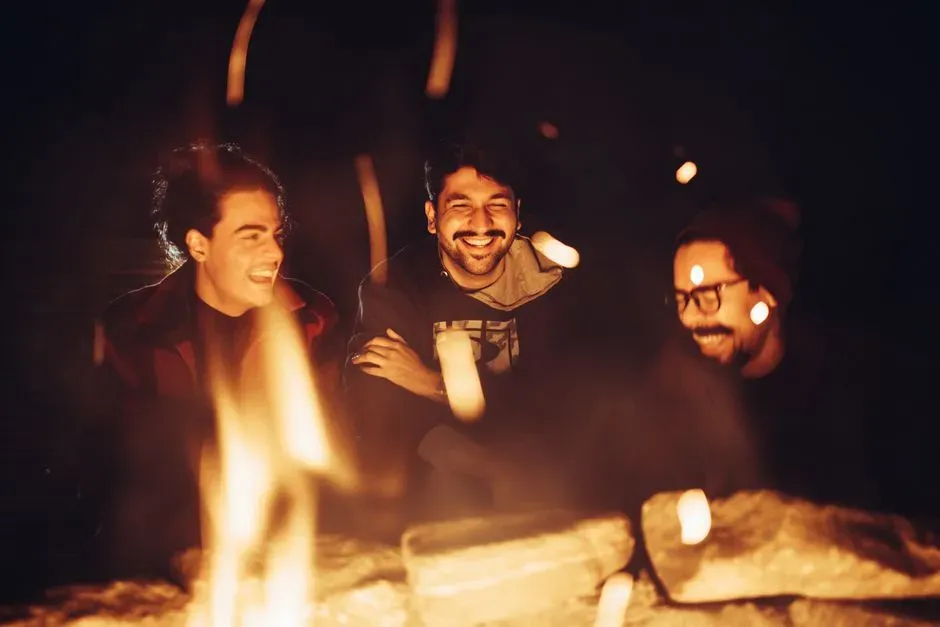
Gossip has a bad reputation, but from an evolutionary perspective it was one of our earliest and most powerful tools. In small groups, knowing who was trustworthy, who was selfish, and who had broken norms could protect everyone from danger. Sharing stories about others acted as a decentralized reputation system – long before social media ratings or legal contracts. That urge you feel to talk about who said what, who did what, and why it matters is not just idle chatter; it is a leftover from a time when information meant survival.
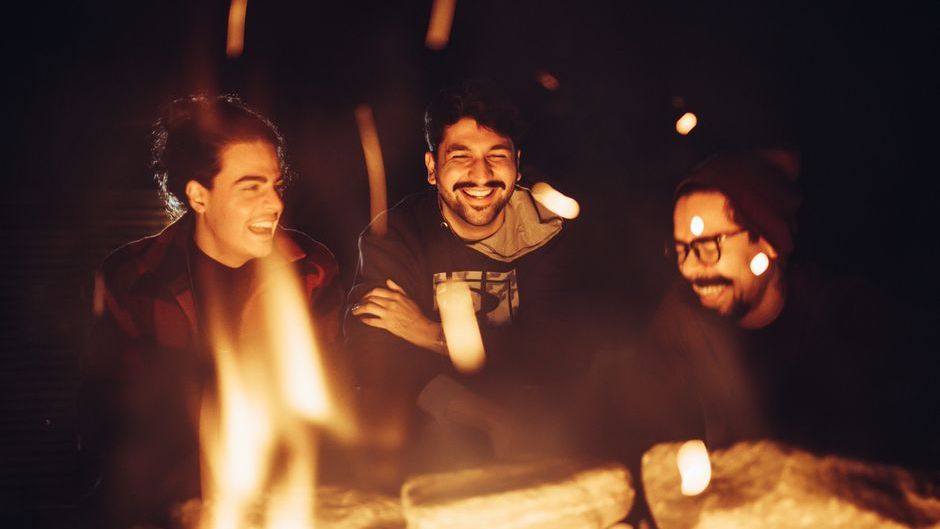
Storytelling more broadly is another ancient habit that still shapes how we think. Our brains latch onto narratives with characters, conflicts, and resolutions much more easily than abstract facts. I’ve noticed I remember complex ideas far better when I anchor them to a personal story or a vivid metaphor, and I am hardly unique in that. From binge-worthy shows to true crime podcasts to office rumors, we continually feed an old hunger for tales that explain how and why people behave the way they do. It is not that we like drama for its own sake; we are still rehearsing social rules in story form, just as our ancestors did around the fire.
Rituals, Superstitions, and the Need for Control

Touching wood, wearing a “lucky” shirt, tapping a doorframe before a big game – these little rituals might seem irrational, but they echo much older practices meant to bring order to a chaotic world. Early humans faced constant uncertainty about weather, illness, hunting success, and conflict, so they created rituals and symbolic acts to feel some measure of control. Even when there was no direct effect on reality, the sense of predictability and shared meaning reduced anxiety and unified the group.
Modern life is still full of uncertainty, just of a different flavor: job markets, health scares, global events you cannot influence. It is no surprise that we reach for rituals, whether that is a specific morning routine, a pre-meeting pep talk, or a tiny superstition before boarding a plane. I have my own habits – like always organizing my workspace in a particular way before tackling something stressful – that logically should not matter but make tasks feel more manageable. The ancient need underneath is simple: when the world feels too big and random, humans create patterns, even if we have to invent them.
Crowding Together: Our Love-Hate Relationship with Proximity

Humans are social primates; staying physically close to others offered safety in numbers against predators and enemies. That basic preference for proximity survives in our enjoyment of concerts, festivals, bustling cafes, and even open-plan offices, despite the complaints. Being near others, hearing their voices, and reading subtle body cues provide constant reassurance to a brain that equates isolation with danger. That is part of why loneliness feels not just sad but physically uncomfortable, and why social deprivation can be so damaging to mental and physical health.
At the same time, we carry limits around how much closeness we can tolerate, shaped by the small group sizes of our ancestral past. Overcrowded trains, packed elevators, or jammed waiting rooms can quickly feel suffocating, even if everyone is perfectly polite. I remember feeling oddly panicky on a subway so full I could not move my arms – not because I was in real danger, but because my body reacted as if I had lost the ability to escape. We are built to seek others out but also to guard our personal space, negotiating the same tension that defined life in tight-knit bands long before cities existed.
Exploration, Curiosity, and the Urge to Wander

From toddlers opening every cabinet to adults daydreaming about faraway countries, curiosity is another ancient habit that refuses to fade. For early humans, exploring new territories, plants, and tools sometimes carried risk, but it also brought crucial rewards: new food sources, better shelter materials, and improved strategies. Brains that got a chemical “reward” for learning and novelty had an edge, so we inherited that itch to poke, prod, and discover. Even in stable environments, doing the same thing every day eventually grates on us because our nervous systems are tuned for variety.
Today, that drive shows up as travel dreams, enthusiasm for new hobbies, or falling down internet rabbit holes at two in the morning. When I get deeply absorbed in a new topic – say, learning a skill I will probably never use professionally – it feels strangely satisfying in a way that is hard to justify logically. That satisfaction comes from ancient exploration circuits lighting up, even though the “territory” is now digital or conceptual instead of physical land. Underneath the modern packaging, we are still the kind of animal that wants to see what lies over the next hill.
Sleep Cycles, Firelight, and Our Battle with the Night

Our uneasy relationship with nighttime is one more echo of a world ruled by natural light. Before artificial illumination, humans lived by the rising and setting of the sun, with fire providing a small, warm bubble of safety in the dark. Many people today still find it easier to relax in dim, warm light and struggle with harsh brightness at night, mirroring the glow of a campfire versus the threat of a pitch-black landscape. Fear of the dark, especially in children, is not a silly quirk so much as a leftover alert system from a time when most predators hunted at night.
Even our sleep patterns carry traces of older habits. Historical records and sleep science suggest that humans may have once slept in two segments, with a wakeful period in the middle of the night used for talking, thinking, or quiet tasks. While modern schedules push us toward a single long sleep, many people still wake up in the middle of the night and panic about it. When that happens to me, it helps to remember that my body is not necessarily malfunctioning; it might just be following an older rhythm that does not perfectly match alarm clocks and office hours. The conflict between our ancient biological clocks and twenty-four-hour culture is not a personal flaw – it is a design mismatch.
Conclusion: Ancient Code in a Modern World
When you zoom out, it becomes hard to see modern humans as truly modern at all. Our social media tribes, late-night anxiety spirals, comfort rituals, endless curiosity, and love-hate relationship with crowds all rest on neurological foundations laid hundreds of thousands of years ago. We like to imagine we have outgrown our past, but most days we are just apes in nicer clothes, running Stone Age software on futuristic hardware. To me, that is both humbling and oddly comforting; it explains so many of the contradictions in how we behave.
The real question is not whether we can erase these ancient habits, because we probably cannot and, in many cases, should not. The more honest and useful goal is to notice when old instincts help us – like bonding, storytelling, curiosity – and when they quietly sabotage us in a world they were never built for. Instead of pretending we are purely rational, I think we are better off treating our ancestral wiring like a powerful but somewhat stubborn roommate we have to negotiate with. In a way, self-knowledge is just learning to converse with your inner caveman or cavewoman. Now that you can see those ancient habits a bit more clearly, which one do you notice most in your own life?