Imagine a fish that swam alongside dinosaurs, witnessed the extinction of countless species, and somehow managed to survive in complete secrecy for over 60 million years. That fish exists. Even crazier, nobody knew about it until someone literally stumbled upon one in a pile of fishing nets. The coelacanth is often described as a living fossil, which sounds like something straight out of a science fiction novel. Yet here we are in 2026, still discovering new things about this bizarre deep sea creature that refuses to follow the rules of evolution the way we thought it should.
What makes the coelacanth so captivating is not just its age or its eerie, prehistoric appearance. It’s the fact that this fish was supposed to be dead. Scientists had written it off entirely, closing the book on its chapter in natural history. Then December 1938 arrived with a surprise no one saw coming.
The Moment Science Was Stunned: Discovery of the Impossible Fish
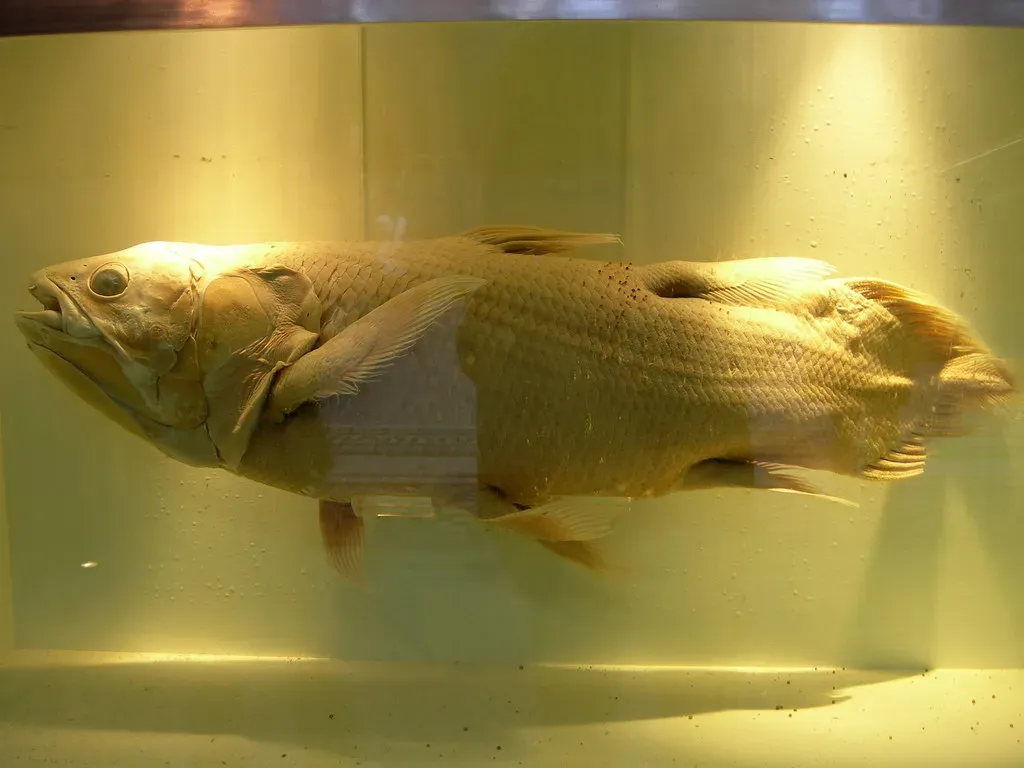
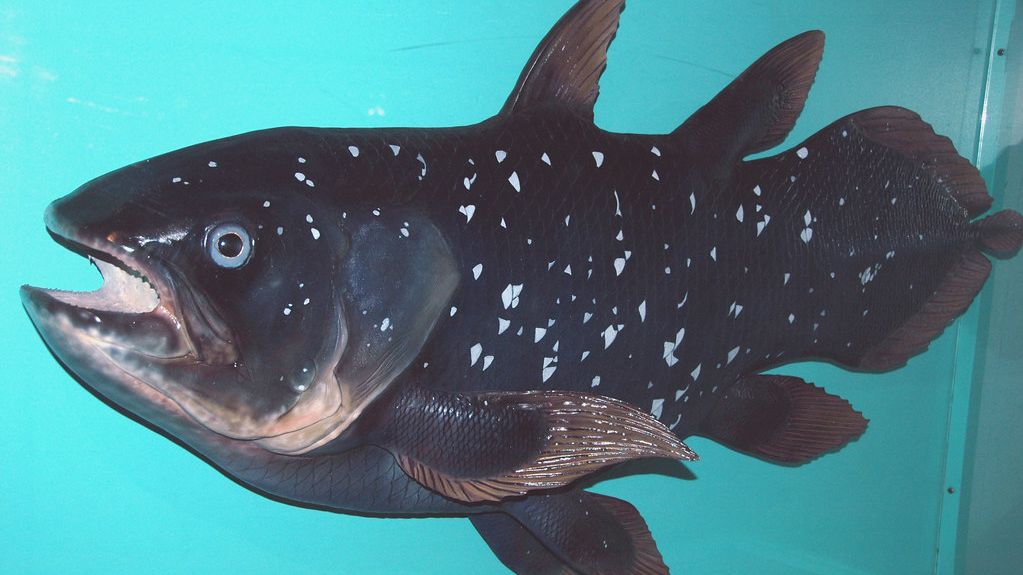
On December 22, 1938, museum curator Marjorie Courtenay-Latimer discovered a strange fish among a local fisherman’s catch off the east coast of South Africa, near the Chalumna River. She couldn’t identify it. This wasn’t some regional oddity she’d missed in her studies; this was something genuinely alien. The fish was large, with odd lobed fins and thick, armor-like scales that shimmered with an unsettling blue sheen.
Courtenay-Latimer contacted ichthyologist J. L. B. Smith, who confirmed the fish’s importance, reportedly sending back an urgent message urging her to preserve every part of it. Its discovery over 60 million years after its supposed extinction makes the coelacanth the best-known example of a Lazarus taxon, essentially an organism that vanishes from the fossil record only to reappear much later, as if rising from the dead. The discovery made international headlines. People couldn’t wrap their minds around it.
Ancient Lineage: Swimming Through 400 Million Years
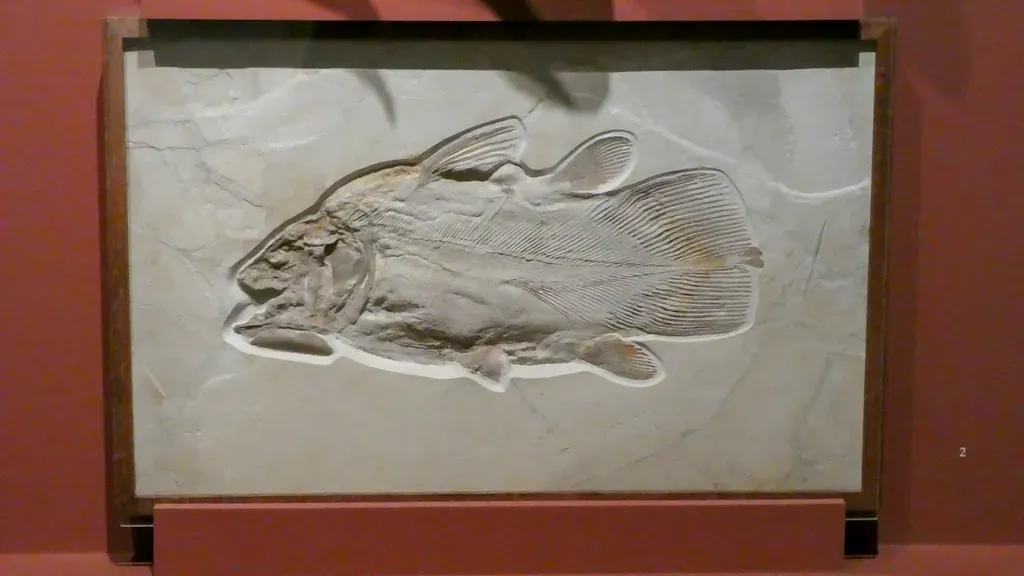
The oldest identified coelacanth fossils are around 420 to 410 million years old, dating to the early Devonian period. Let’s be real, that’s an almost incomprehensible stretch of time. To put it in perspective, coelacanths were already ancient when the first dinosaurs appeared. Over 100 fossil species of coelacanth have been described, showing they were once incredibly diverse, inhabiting both marine and freshwater environments across the globe.
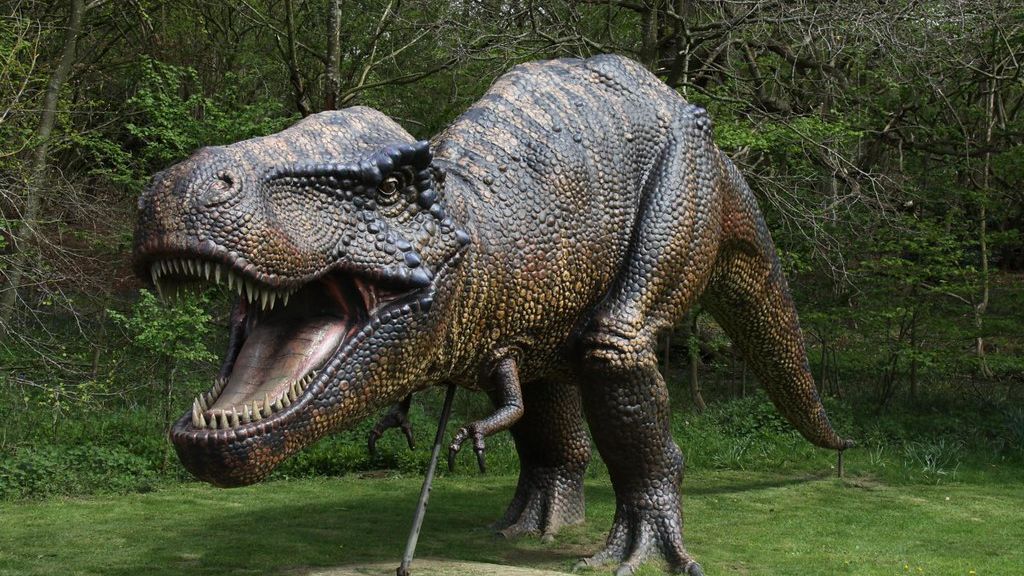
They were thought to have become extinct in the Late Cretaceous, around 66 million years ago, wiped out during the same mass extinction event that killed the dinosaurs. For nearly a century, that was the accepted story. Fossilized remains told scientists everything they thought they needed to know. The living species we know today, however, are just the tiniest sliver of what once was a widespread and varied group of fish.
Bizarre Anatomy: Built Different From Any Other Fish
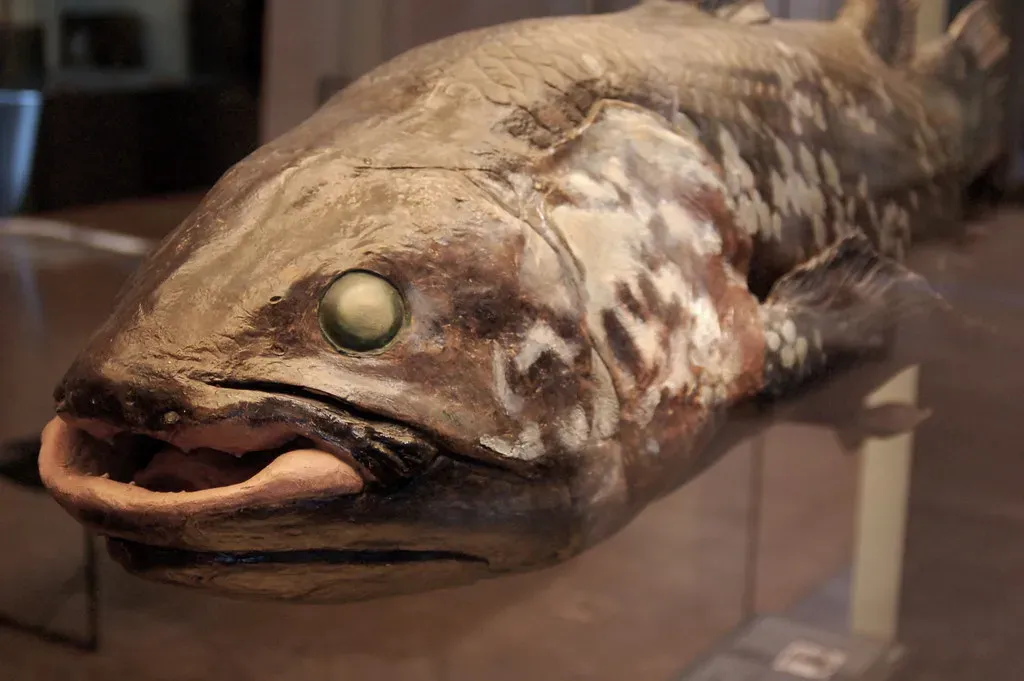
Coelacanths have eight fins, including two dorsal fins, two pectoral fins, two pelvic fins, one anal fin and one caudal fin, with a tail that is split by a terminal tuft of fin rays forming a trilobate or three-lobed structure. Honestly, if you saw one swimming toward you in murky water, you’d probably think twice about what century you were in. The fins are fleshy and lobed, extending from the body almost like stubby limbs. They have fleshy, limb-like fins internally supported by bone, and these fins move in a synchronized pattern similar to four-limbed animals.
At the back of the skull, the coelacanth possesses a hinge called the intracranial joint, which allows it to open its mouth extremely wide. This feature is unique among living vertebrates. The coelacanth has a special electrosensory organ in the snout called the rostral organ, filled with gel and enabling it to sense low-frequency electrical signals in the dark. Basically, it hunts using electrical pulses, something you’d expect from a sci-fi creature, not a fish that’s been doing this for hundreds of millions of years.
Deep Sea Hideaway: Where the Coelacanth Lives
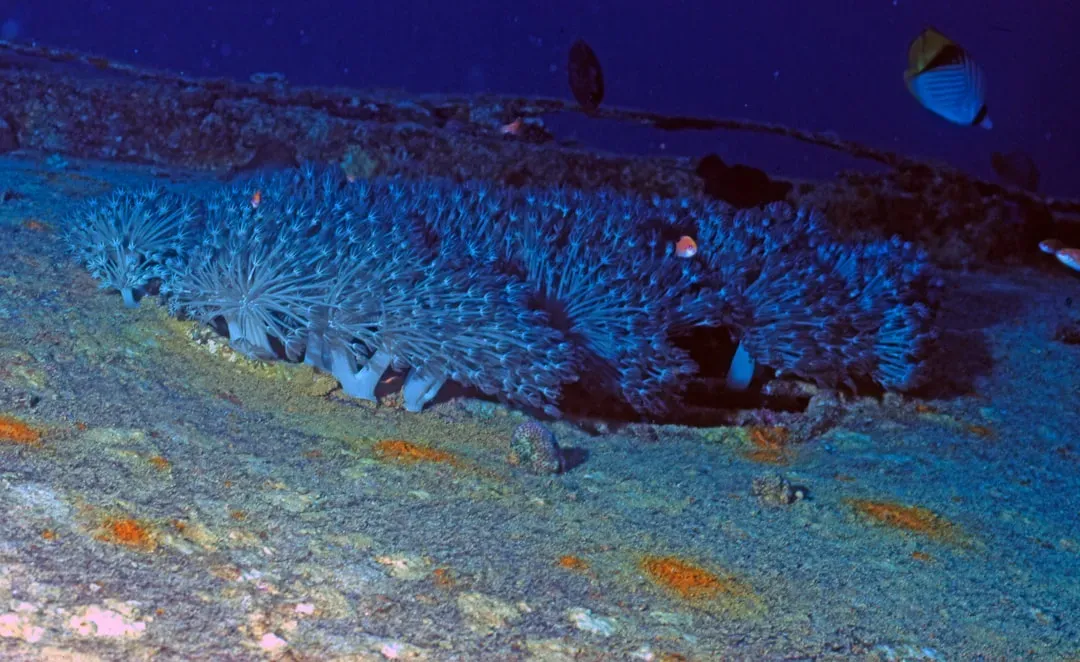
Coelacanths live in temperate waters in the twilight zone, generally between 500 and 800 feet, off steep rocky slopes of volcanic islands. These are not shallow reef dwellers; they prefer the cold, dark depths where sunlight barely penetrates. During the day, they retreat into underwater caves formed by volcanic rock or limestone formations. In the daytime, Comoran specimens are known to cluster together in caves in submarine lava deposits, from which they venture at night to feed.
The environment is harsh and unforgiving, with temperatures hovering around 18 degrees Celsius. Coelacanths are known primarily from the Comoros Islands between Madagascar and the east coast of Africa, but also live elsewhere along the east African coast and in Indonesian waters. It’s remarkable how limited their range is considering their ancient ancestry. They’ve specialized so thoroughly for deep water life that they’re almost prisoners of their own habitat.
Hunting in the Abyss: A Prehistoric Predator
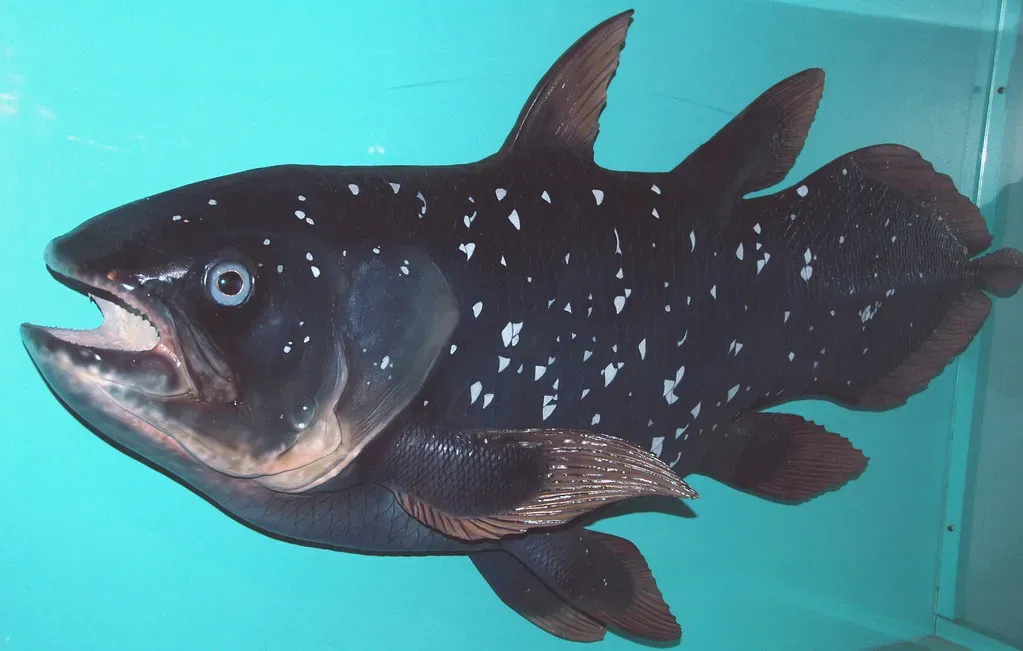
The coelacanth is a slow nocturnal drift-hunter that eats a variety of benthic and epibenthic prey, such as cephalopods, eels, cuttlefish, and deepwater fish. They don’t chase down prey like most predators. Instead, they drift slowly with the current, conserving energy, and snap up anything that wanders too close. From observations of their feeding, coelacanths do not pursue prey, but will simply snap up any prey of suitable size which passes within 20 centimeters of the front of their mouths.
Some individuals have been observed doing something truly odd: swimming upside down or performing headstands near cave crevices. Some individuals have been seen performing headstands as feeding behavior, allowing coelacanth to slurp prey from crevices within lava caves. It’s a bizarre sight, like watching a creature that doesn’t quite know which way is up, yet it’s a perfectly adapted hunting technique for extracting hidden prey from rocky outcrops.
Slow Motion Reproduction: The Longest Pregnancy on Earth
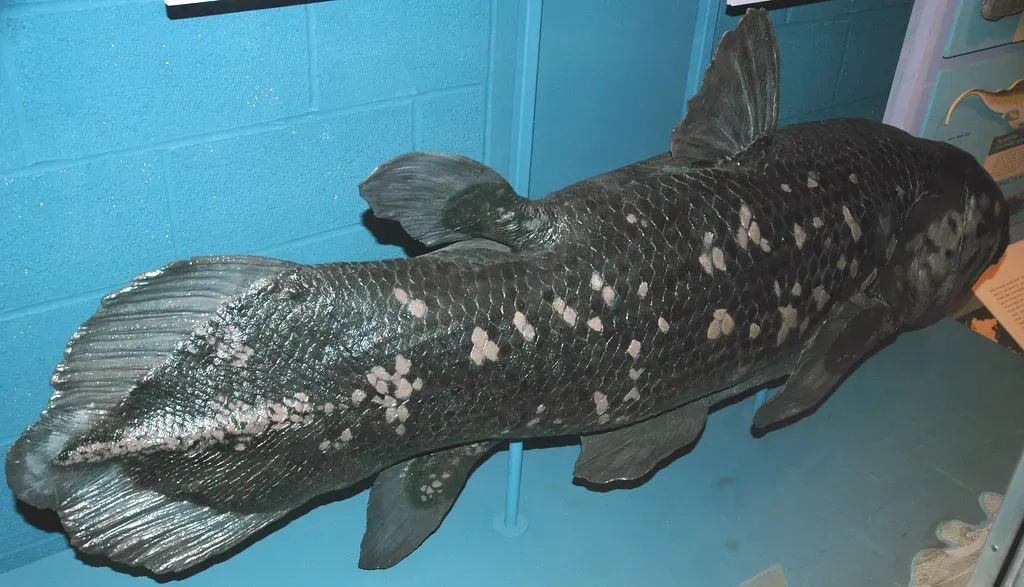
Female coelacanths reach maturity between 58 and 66 years and give birth to live young after a gestation period of approximately five years, which is the longest gestation period of any vertebrate species. Five years. Let that sink in. An elephant’s pregnancy lasts less than two years, which already feels absurdly long. Coelacanths take it to another level entirely. Male coelacanths reach maturity between 40 and 69 years.
The mode of reproduction is ovoviviparity, involving internal fertilization of eggs, followed by gestation during which embryos feed off the yolk sac, culminating in live births of fully formed young. The pups emerge ready to fend for themselves, receiving no parental care whatsoever. The lifespan of coelacanths is estimated to be approximately 100 years of age. This slow reproduction rate makes them incredibly vulnerable; losing even a handful of individuals from a population can take generations to recover.
Evolutionary Significance: A Window Into Our Past
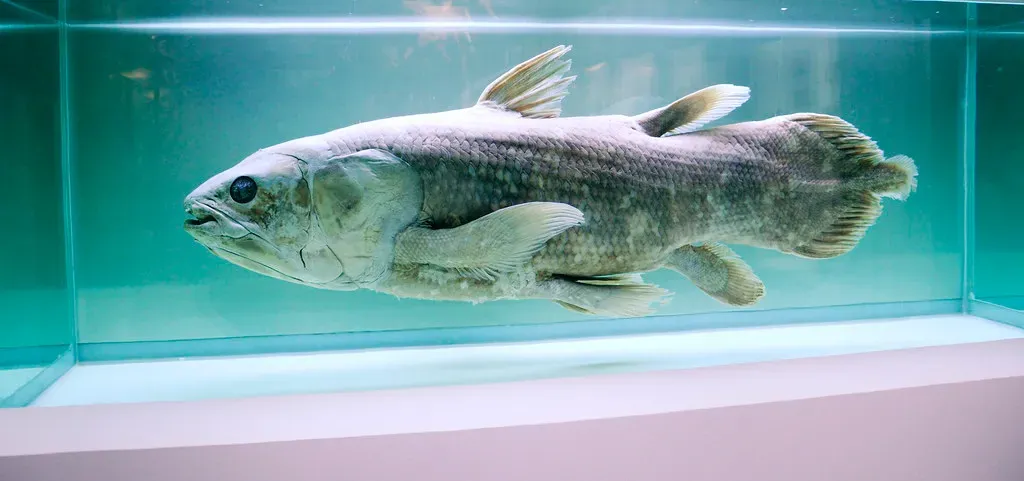
As sarcopterygians, coelacanths are more closely related to lungfish and tetrapods, including amphibians, reptiles, birds and mammals, than to ray-finned fish. Think about that for a moment. You, as a human, are more closely related to the coelacanth than the coelacanth is to most other fish swimming in the ocean. Scientists disagree on the exact placement of the coelacanth in the evolutionary history of vertebrates, however, they are likely closely related to but distinct from the ancestor of mammals, birds, and reptiles.
The key evolutionary placement of the coelacanth in the tree of life means that discoveries about them have implications for our understanding of what the first bony vertebrates were like, and research shows that many of the muscles and structures in the coelacanth’s face and jaw have been misidentified, rewriting the early evolutionary history of cranial muscles in jawed vertebrates. Every time scientists study this fish, they learn something new about where we came from.
Conservation Crisis: Fighting to Save a Survivor
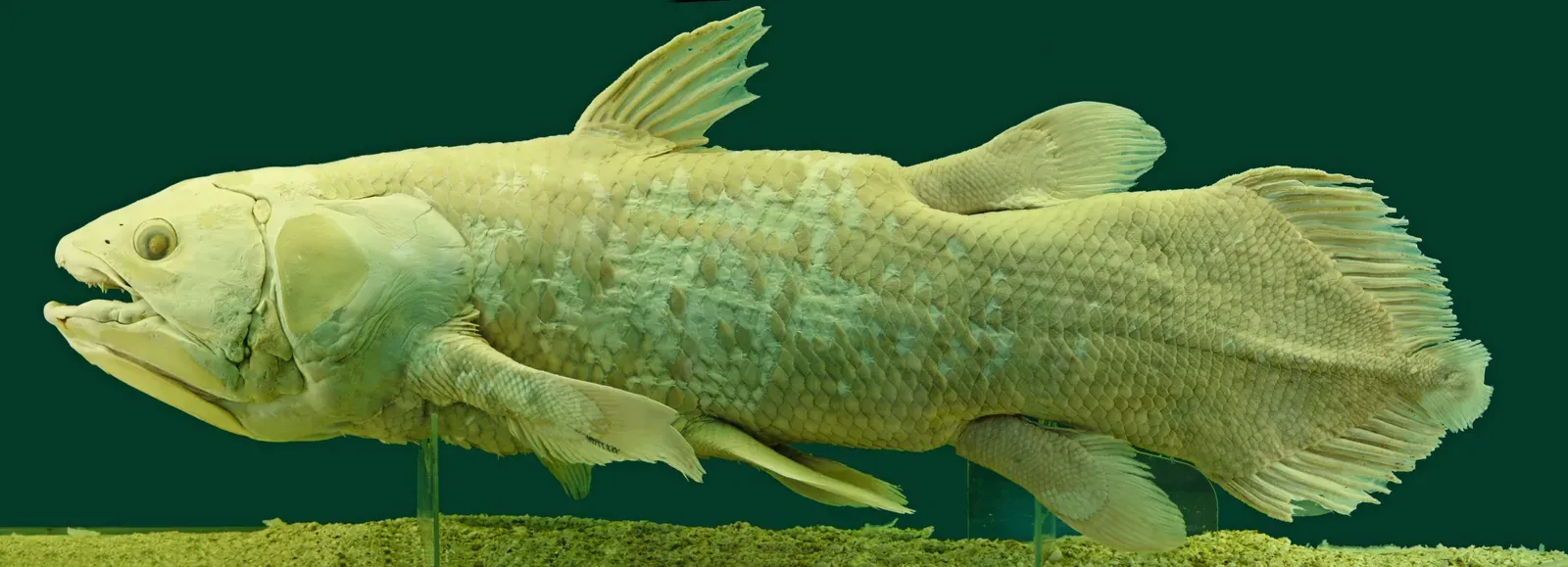
The West Indian Ocean coelacanth has been assessed as critically endangered on the IUCN Red List. In 1998, the total population was estimated to have been 500 or fewer individuals, with a maximum of 370 individuals residing near Grand Comoro. Those numbers are frighteningly low. In 2016, NOAA Fisheries listed the Tanzanian distinct population segment of African coelacanth as threatened under the Endangered Species Act.
Historically, fisheries bycatch has been the most significant threat to the coelacanth, with the Tanzanian population particularly subject to bycatch in the shark gillnet fishery, which has been expanding over the last decade. They’re not targeted intentionally; they’re collateral damage. The main threats include bycatch in shark gillnet fisheries and habitat destruction via deep-sea port construction. The fish that survived for 400 million years, through mass extinctions and planetary upheavals, now faces its greatest challenge from fishing nets and coastal development.
Conclusion: The Fish That Rewrote the Rules
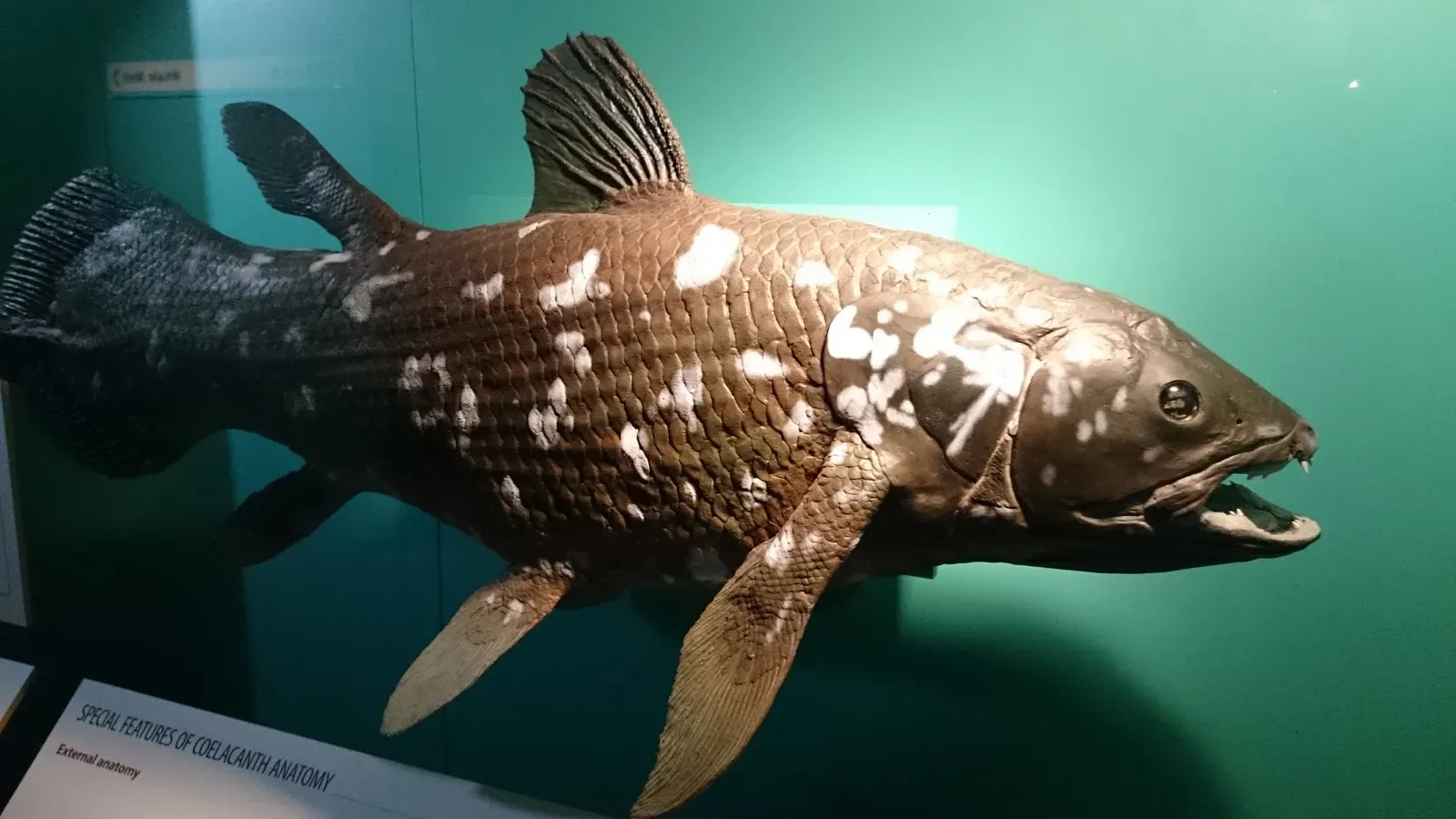
The coelacanth is proof that nature still holds secrets, even in an age where we think we’ve cataloged everything. This fish didn’t just survive; it thrived in obscurity, living quietly in the deep sea while the world above moved on without it. Its discovery in 1938 reminded scientists that extinction isn’t always as final as fossils suggest, and that life finds a way to persist in the most unexpected corners of the planet.
What strikes me most is how fragile this ancient lineage has become. After dodging extinction for hundreds of millions of years, the coelacanth now teeters on the edge because of human activity. We have a responsibility to protect what remains. These fish offer us a living connection to our own evolutionary past, a glimpse into what the world looked like before humans, before dinosaurs, before almost everything we know.
What do you think? Should we be doing more to protect these living fossils, or is their story just another reminder that nothing lasts forever?