The Crystal Palace dinosaurs stand as remarkable monuments to Victorian scientific ambition, artistic vision, and the evolving understanding of prehistoric life. Created in the 1850s, these life-sized sculptures represent the world’s first attempt to visualize extinct animals in three dimensions for public education and awareness. Located in London’s Crystal Palace Park, these concrete and metal behemoths—now weathered by time—continue to captivate visitors, offering a fascinating glimpse into the history of paleontology. Though scientifically outdated by modern standards, these sculptures played a pivotal role in shaping how generations of people imagined dinosaurs and other extinct creatures, establishing a visual legacy that continues to influence our collective understanding of prehistoric life to this day.
The Victorian Context: Science and Spectacle
The Crystal Palace dinosaurs emerged during a period of intense scientific excitement and discovery in Victorian England. Following the Great Exhibition of 1851, when Joseph Paxton’s revolutionary glass and iron Crystal Palace had drawn millions of visitors, the structure was relocated to Sydenham Hill in south London. The newly established Crystal Palace Company sought to create educational attractions in the surrounding parkland that would continue to draw crowds. Science had captured the public imagination, with geology and paleontology enjoying particular popularity among both scholars and everyday citizens. The expanding British Empire brought specimens from around the world to London’s museums, while industrial excavations across Britain regularly uncovered fossils. Against this backdrop of scientific fervor and commercial opportunity, the idea to create life-sized models of extinct animals represented an ambitious fusion of education and entertainment that perfectly embodied the Victorian spirit of progress and public enlightenment.
Benjamin Waterhouse Hawkins: The Artist Behind the Beasts
The Crystal Palace dinosaurs were the creation of sculptor Benjamin Waterhouse Hawkins, a skilled natural history artist who brought the extinct creatures to dimensional life. Born in 1807, Hawkins had established himself as a talented scientific illustrator before taking on the monumental task of creating the Crystal Palace prehistoric menagerie. He worked closely with Sir Richard Owen, the prominent anatomist who had coined the term “Dinosauria” in 1842, to ensure the models incorporated the latest scientific understanding. Hawkins established a workshop on the Crystal Palace grounds where he and his assistants constructed iron frameworks, overlaid them with brick and cement, and meticulously sculpted the external details. The scale of the project was immense – the largest models weighed over 30 tons and required innovative construction techniques. Hawkins was so proud of his creations that he famously hosted a dinner party inside his unfinished Iguanodon model on New Year’s Eve 1853, a theatrical gesture that captured headlines and public interest.
Sir Richard Owen’s Scientific Influence

Sir Richard Owen, one of the 19th century’s most influential and controversial scientific figures, provided the scientific guidance for the Crystal Palace dinosaurs. As Superintendent of the Natural History Department of the British Museum and founder of what would become the Natural History Museum, Owen wielded enormous authority in matters of paleontology. He advised Hawkins on the anatomical reconstructions, working from often fragmentary fossil evidence to envision complete animals. Owen favored interpretations of dinosaurs as massive, reptilian creatures, quite different from our modern understanding of them as active, often bird-like animals. His rivalry with other scientists, particularly with Charles Darwin following the publication of “On the Origin of Species,” colored some of his scientific judgments. Owen’s influence on the Crystal Palace sculptures enshrined his vision of prehistoric life in the public imagination, portraying dinosaurs as lumbering reptilian beasts – a concept that would dominate popular understanding for over a century until revisionist theories emerged in the 1960s.
The Dinosaur Court: A Tour of Prehistoric Life

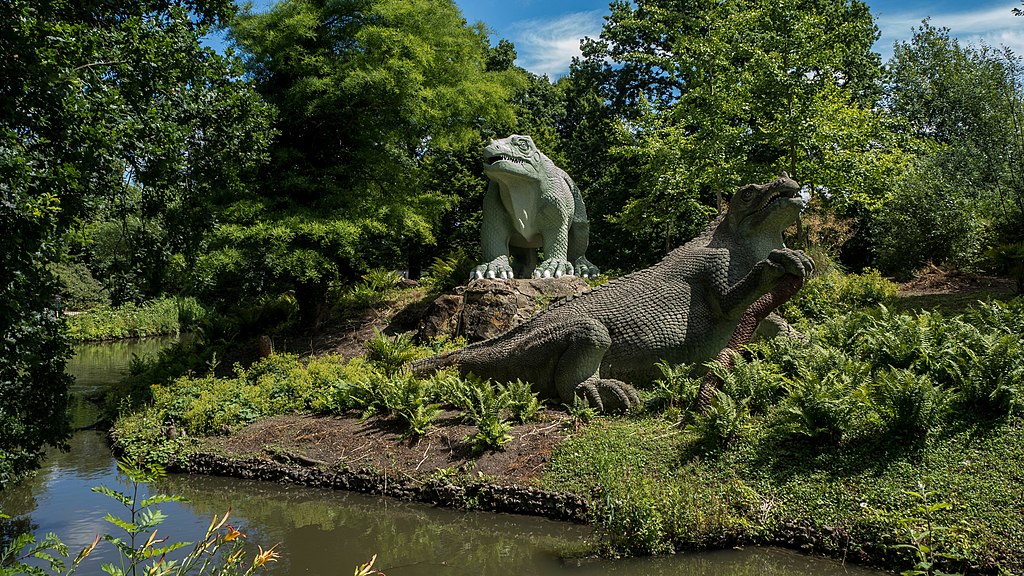
The Crystal Palace dinosaurs are arranged in a carefully designed landscape that takes visitors on a journey through geological time. The sculptures are set on islands in a series of lakes, creating natural barriers between different prehistoric periods. The tour begins with the Paleozoic section featuring early fish, amphibians, and mammal-like reptiles from the Permian period. Visitors then encounter the Mesozoic island, home to the most famous dinosaurs, including Iguanodon, Megalosaurus, and Hylaeosaurus – the three species that formed Owen’s original dinosaur concept. The Cenozoic area includes extinct mammals like the Irish Elk and the American mastodon. The entire arrangement was revolutionary in its educational approach, presenting what we would now recognize as an immersive museum experience. Each model was accompanied by informational plaques explaining the creatures’ presumed habits and environments. This three-dimensional textbook of prehistoric life represented a revolutionary approach to public science education, making complex scientific concepts accessible through visual storytelling.
Megalosaurus: The First Dinosaur to Be Named

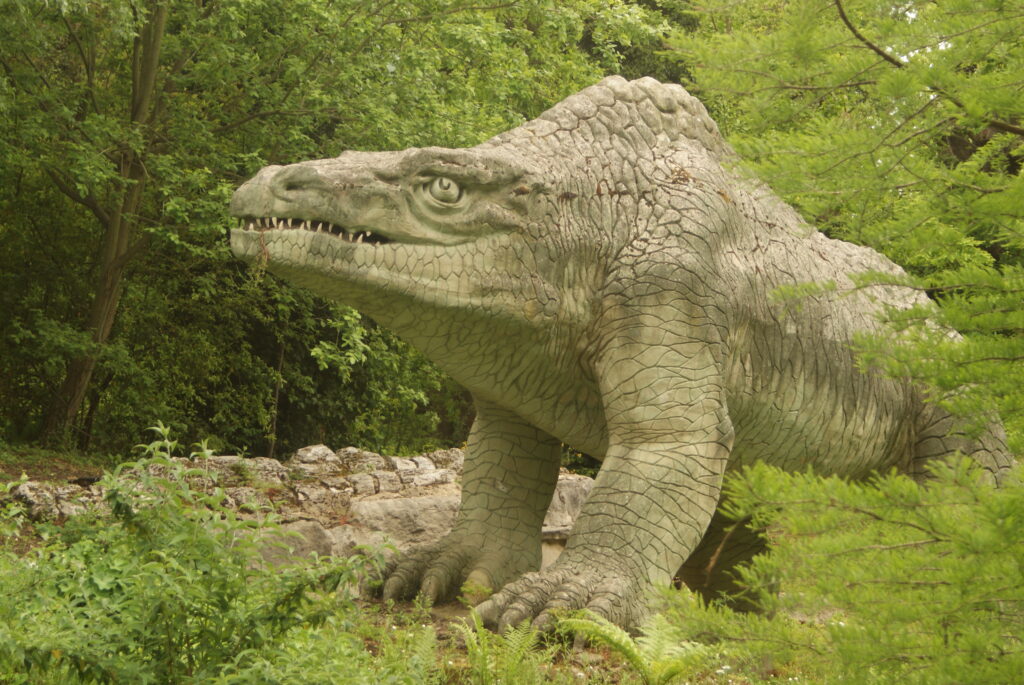
The Crystal Palace Megalosaurus holds particular significance as a representation of the first dinosaur ever scientifically named and described. William Buckland had officially described Megalosaurus in 1824, working from fragmentary remains including a lower jawbone with teeth. With such limited fossil evidence, Hawkins and Owen imagined Megalosaurus as a massive quadrupedal reptile with a bulky body and crocodile-like features. The Crystal Palace sculpture depicts the animal as a stout, heavy-set creature with thick limbs placed directly beneath its body, quite different from modern reconstructions that show Megalosaurus as a bipedal predator somewhat similar to Allosaurus. The sculpture’s skin texture was modeled after reptiles, with prominent scales and ridges based on speculation rather than fossil evidence. This interpretation reflected the limited understanding of the time, when dinosaurs were still conceptualized within familiar reptilian frameworks rather than recognized as a distinct and diverse group with unique anatomical features.
Iguanodon: From Four Legs to Two
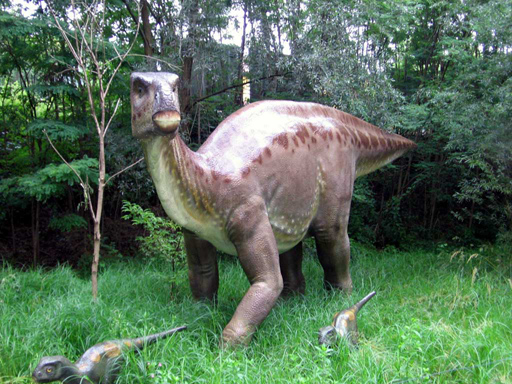
The Crystal Palace Iguanodon sculptures represent one of the most fascinating chapters in changing dinosaur interpretations. When Gideon Mantell first discovered Iguanodon teeth in 1822, he noted their similarity to modern iguana teeth (hence the name), but had little skeletal material to work with. Based on limited fossil evidence, Owen directed Hawkins to create Iguanodon as a massive quadrupedal beast resembling a rhinoceros with scales. Most notably, a conical spike that we now know was the dinosaur’s thumb was incorrectly placed on the creature’s nose like a horn. The Crystal Palace sculptures show Iguanodon as heavy-bodied, thick-limbed animals with bulky torsos supported by column-like legs. Later discoveries, particularly the multiple complete skeletons found in a Belgian coal mine in 1878, would dramatically revise this image, revealing Iguanodon as capable of both bipedal and quadrupedal locomotion, with a much more gracile build than the Crystal Palace models suggest. This evolution in understanding makes the sculptures valuable documents of how scientific knowledge develops and changes over time.
Scientific Accuracy: What They Got Right and Wrong

Viewed through a modern lens, the Crystal Palace dinosaurs contain a mixture of remarkable insights and significant misconceptions. Among their most notable errors was the depiction of dinosaurs as essentially scaled-up lizards or crocodiles with sprawling limbs, when we now know most had a more upright posture with legs positioned beneath their bodies. The sculptures also failed to recognize the relationship between dinosaurs and birds, a connection not established until the late 19th century with the discovery of Archaeopteryx. However, the models did correctly capture some aspects of prehistoric life. The scale and majesty of these creatures came through convincingly, helping the public understand that Earth had once been home to animals vastly different from modern fauna. Some non-dinosaurian reconstructions, like the marine reptiles and early amphibians, were remarkably accurate given the available evidence. The models should be judged not by modern standards but as products of their time, representing the best scientific understanding available to Owen and Hawkins in the 1850s.
Opening Day: Public Reception and Impact
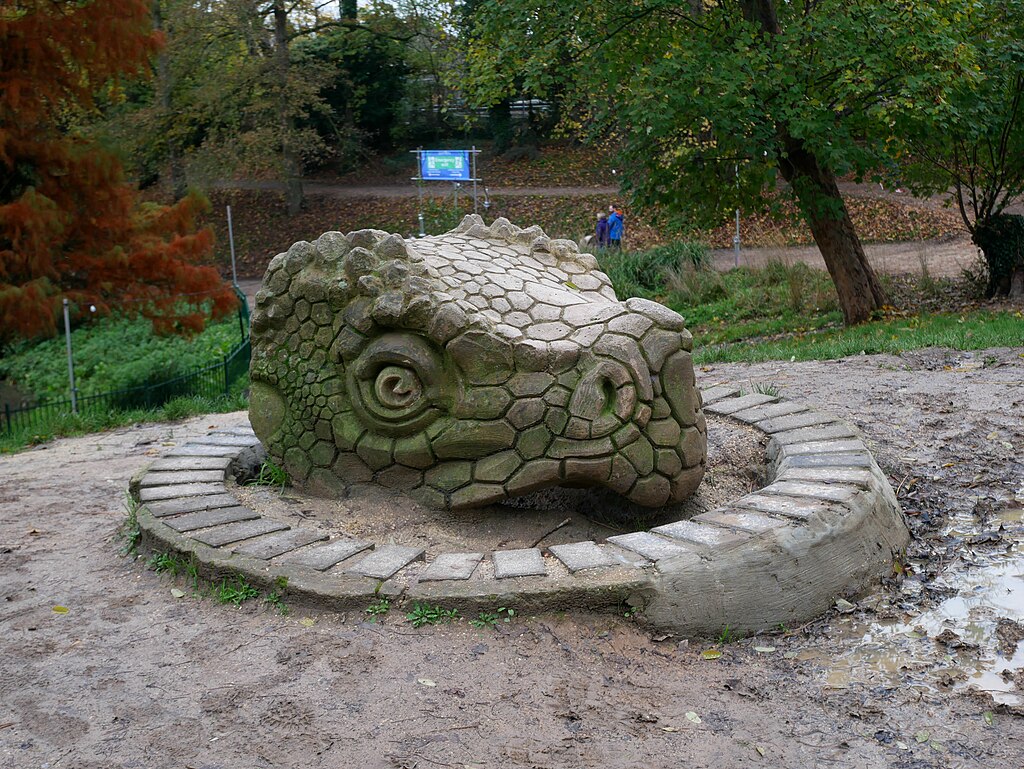
The Crystal Palace Park, including its prehistoric inhabitants, opened to the public with great fanfare on June 10, 1854, with Queen Victoria and Prince Albert among the distinguished guests. Contemporary accounts describe visitors’ astonishment at encountering these life-sized visions of prehistoric creatures, which for many represented their first exposure to the concept of extinct animals and deep time. The sculptures immediately captured the public imagination, drawing crowds of visitors eager to experience this journey into Earth’s mysterious past. Newspaper reports described scenes of wonder and occasional alarm, particularly among children confronted with the massive, sometimes fearsome-looking beasts. Guidebooks, postcards, and miniature replicas quickly became popular souvenirs, spreading images of the sculptures far beyond London. The dinosaurs became a cultural phenomenon, influencing literature, art, and even children’s toys of the Victorian era. The Crystal Palace dinosaurs effectively democratized paleontological knowledge, making concepts previously confined to scientific circles accessible to everyday people across social classes.
Preservation Challenges Through the Centuries

The Crystal Palace dinosaurs have faced numerous threats to their existence over their 170-year history. Constructed primarily of brick, cement, and metal frameworks, the sculptures were not built with long-term preservation in mind, and their outdoor setting has exposed them to pollution, weather damage, and vegetation growth. The structures have required multiple restorations over the decades, with major conservation efforts undertaken in the 1950s, 1980s, and 2000s. The sculptures suffered additional damage when the Crystal Palace itself burned down in 1936, though they fortunately survived this catastrophe. Vandalism has also been an ongoing issue, with several sculptures suffering broken parts or graffiti over the years. In recognition of their historical and cultural significance, the dinosaurs were designated as Grade I listed buildings in 2007, giving them the highest level of protection in the UK’s preservation system. The Friends of Crystal Palace Dinosaurs, a community organization formed in 2013, now works actively to protect and promote these unique heritage assets.
Cultural Legacy: From Victorian Science to Pop Culture

The cultural impact of the Crystal Palace dinosaurs extends far beyond their physical location in South London. These sculptures established the first popular images of dinosaurs in the public consciousness, creating visual archetypes that would influence generations of paleoart. The concept of dinosaurs as massive, scaly beasts that originated with these sculptures persisted in popular culture well into the 20th century, appearing in films like “King Kong” (1933) and “The Lost World” (1925). Children’s literature frequently incorporated images inspired by the Crystal Palace models, embedding these interpretations in young minds. The sculptures also established the dinosaur as a symbol of scientific progress and natural history education. Museums worldwide adopted the Crystal Palace approach of displaying life-sized reconstructions alongside fossil specimens, a practice that continues in modern natural history exhibitions. Though scientifically outdated, the cultural significance of these sculptures has only grown with time, as they represent not just prehistoric animals but also humanity’s evolving relationship with the distant past.
Hawkins’ Abandoned American Dream
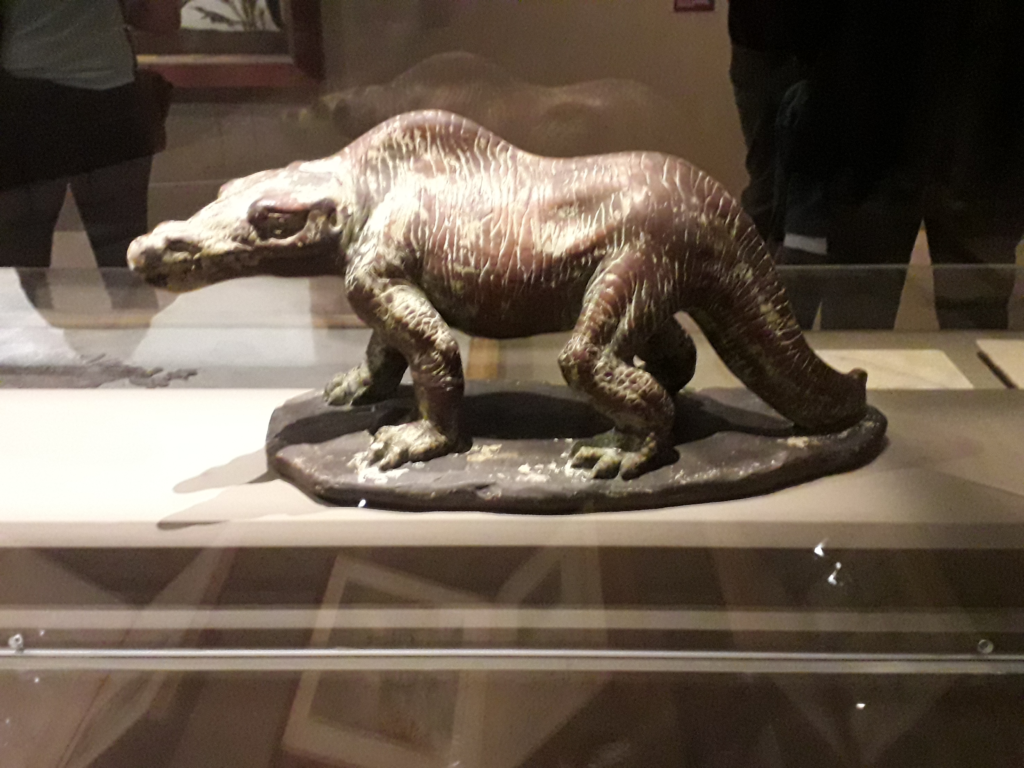
The success of the Crystal Palace dinosaurs prompted Benjamin Waterhouse Hawkins to attempt a similar project in America, though with dramatically different results. In 1868, Hawkins was invited to create prehistoric sculptures for Central Park in New York City. He established a workshop and began constructing his American dinosaurs with great enthusiasm, planning an even more ambitious display than his London creation. Hawkins completed several models and had the foundations laid for a grand Paleozoic Museum in the park. However, his project collided with the corrupt politics of Tammany Hall and the notorious Boss Tweed, who saw no personal profit in the educational venture. In 1871, Tweed’s men broke into Hawkins’ workshop and deliberately destroyed all his models and molds. The remains were reportedly buried somewhere in Central Park, where they may still lie today – a paleontological treasure within a treasure. Devastated but undeterred, Hawkins spent his remaining years lecturing and creating smaller museum displays, though he never again attempted anything on the scale of the Crystal Palace dinosaurs.
Modern Scientific Views: How Our Understanding Has Changed

The contrast between the Crystal Palace dinosaurs and modern paleontological reconstructions highlights the remarkable progress in our understanding of prehistoric life. Today’s scientists benefit from vastly more fossil evidence, including complete skeletons, soft tissue impressions, and even preserved pigments that occasionally provide clues about coloration. Contemporary research has firmly established the evolutionary relationship between dinosaurs and birds, leading to reconstructions that often include feathers or proto-feathers on many dinosaur species. Modern analyses of bone structure and biomechanics have transformed our understanding of how dinosaurs moved, suggesting much more active lifestyles than the lumbering creatures depicted at Crystal Palace. Advanced technologies like CT scanning and computer modeling allow paleontologists to study aspects of dinosaur biology that were completely inaccessible to Victorian scientists, from brain shape to potential running speeds. Perhaps most significantly, the scientific method itself has evolved, with hypotheses about prehistoric life now subjected to rigorous testing using multiple lines of evidence rather than relying primarily on anatomical comparisons with modern animals.
The Dinosaurs as Heritage: Their Protected Status Today

The Crystal Palace dinosaurs have transitioned from being merely scientific models to becoming important cultural artifacts in their own right. In 1973, they were listed as Grade II historic structures by English Heritage, a designation upgraded to Grade I in 2007, placing them among Britain’s most valued historical monuments. This protection recognizes not just their artistic merit but their significance in the history of science and public education. In 2020, the sculptures were added to the Heritage at Risk Register due to their deteriorating condition, highlighting the ongoing conservation challenges they face. This designation helped secure £3.8 million in funding from the Heritage Lottery Fund and Bromley Council for major restoration work beginning in 2023. The dinosaurs now enjoy protection under multiple heritage frameworks, including designation as part of a Conservation Area and inclusion in the Register of Historic Parks and Gardens. Their current status reflects a sophisticated understanding that these sculptures, while scientifically outdated, represent a crucial chapter in how humans have visualized and related to Earth’s prehistoric past.
Visiting the Crystal Palace Dinosaurs Today

Today’s visitors to Crystal Palace Park can experience these Victorian wonders much as their original audience did, with some notable differences in context. The sculptures remain in their original locations on islands in the park’s lakes, creating natural viewing distances that sometimes frustrate those hoping for closer inspection. However, the Friends of Crystal Palace Dinosaurs occasionally organize special guided tours that provide closer access. Interpretive signs now explain both the historical significance of the sculptures and how they differ from modern scientific understanding, creating an educational experience about both prehistoric life and the history of science itself. The surrounding park offers additional attractions, including a maze, sports facilities, and a small museum that provides context about the original Crystal Palace building. While the dinosaurs once stood in the shadow of the magnificent glass exhibition hall, today they are the park’s primary historical attraction following the palace’s destruction by fire in 1936. Easily accessible via public transportation from central London, the Crystal Palace dinosaurs continue to delight visitors of all ages, connecting them to both the deep prehistoric past and the more recent Victorian era.
Conclusion
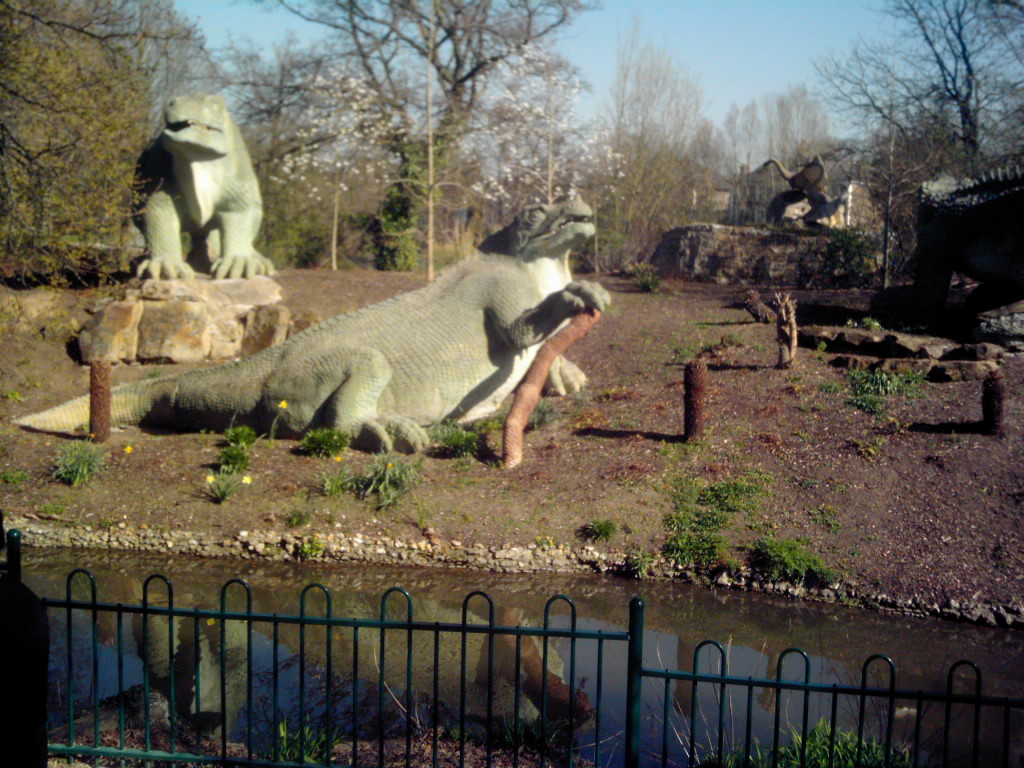
The Crystal Palace dinosaurs occupy a unique position at the intersection of art, science, and cultural history. Though they no longer represent scientific accuracy, their value has only increased with time as they document a crucial moment in the development of paleontology and public science education. These sculptures remind us that scientific knowledge is constantly evolving, with each generation building upon and sometimes correcting the understanding of those who came before. As both scientific milestones and artistic achievements, the Crystal Palace dinosaurs continue to inspire wonder while connecting us to our Victorian predecessors who, like us, struggled to comprehend and visualize the strange creatures that once dominated our planet. In their weathered concrete forms, these sculptures embody the enduring human fascination with prehistoric life and our ongoing quest to understand Earth’s extraordinary past.