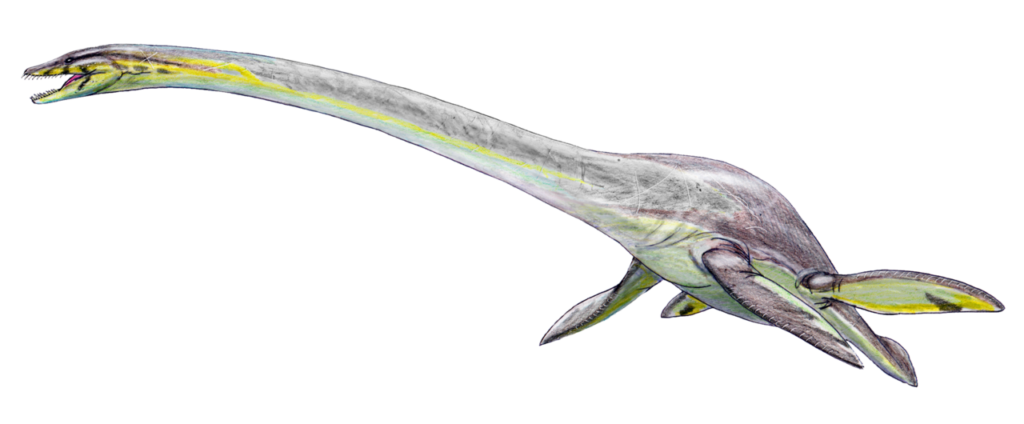
If you’ve ever seen a drawing of a sea monster with a tiny body and a ridiculously long neck, you were probably looking at something inspired by Elasmosaurus. This Late Cretaceous marine reptile looks so strange to modern eyes that it almost feels like a prank nature played on paleontologists. Yet, piece by fossilized piece, scientists have built a picture of a real animal that once patrolled ancient oceans with a body plan that seems to defy common sense.
When I first learned that Elasmosaurus had more than seventy neck vertebrae, my brain did the equivalent of a double take; human necks, by comparison, have just seven. The more you dig into its anatomy and lifestyle, the more it starts to feel less like a mythical monster and more like a highly specialized, oddly elegant solution to surviving in a dangerous underwater world. Let’s dive into what we actually know about this long‑necked legend and why its strange proportions might have made perfect sense in the seas it called home.
A Marine Reptile, Not a Dinosaur
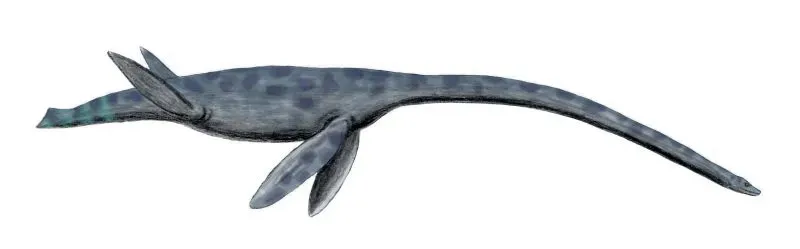
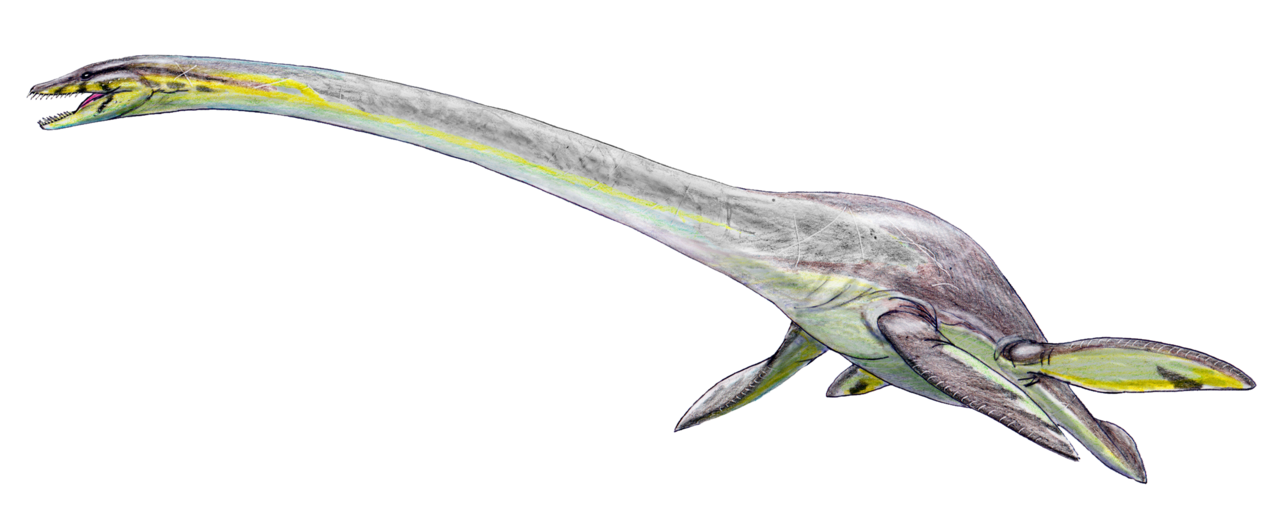
One of the first surprising truths about Elasmosaurus is that it wasn’t a dinosaur at all. It belonged to a group of marine reptiles called plesiosaurs, which shared the age of dinosaurs but lived a very different kind of life out at sea. Picture a body shaped somewhat like a streamlined turtle without a shell, flippers instead of legs, and a neck so long it looked almost like someone dragged the head icon too far in a design program. That was Elasmosaurus: a plesiosaur with an exaggerated twist.
Elasmosaurus lived during the Late Cretaceous period, roughly toward the final chapters of the dinosaur era, when shallow inland seas cut across what is now North America. Fossils have been found in deposits that were once part of the Western Interior Seaway, a warm, sprawling body of water that turned a big slice of the continent into an ocean world. Instead of stomping across forests or deserts like a classic dinosaur, Elasmosaurus cruised through these ancient seas, probably sharing the water with giant mosasaurs, sharks, and schools of fish that saw it as both predator and potential prey.
Anatomy of an Impossible Neck
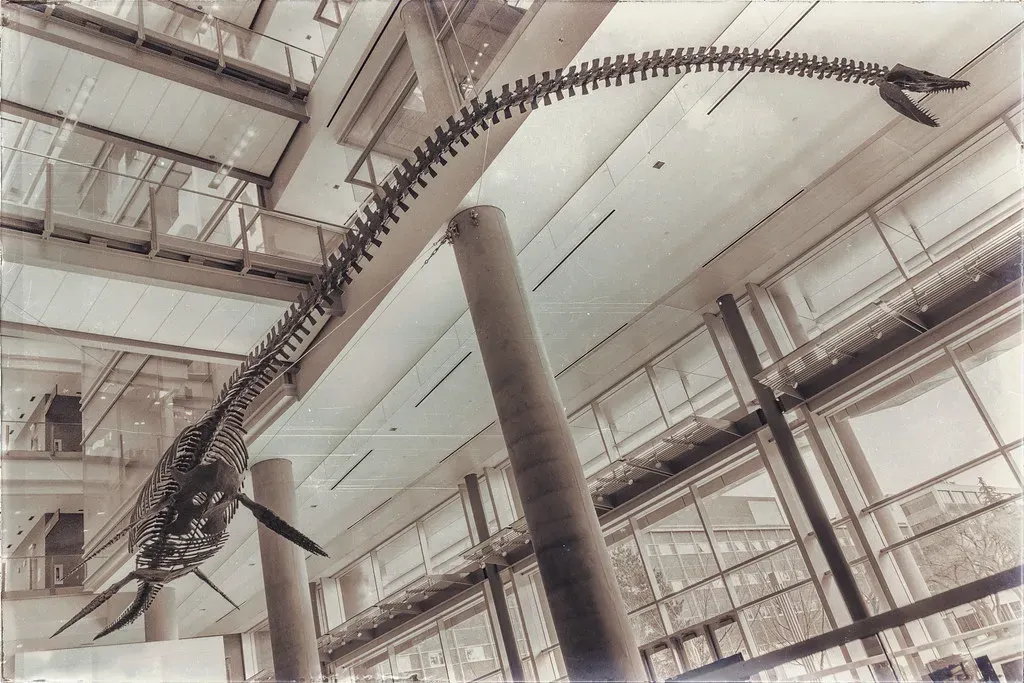
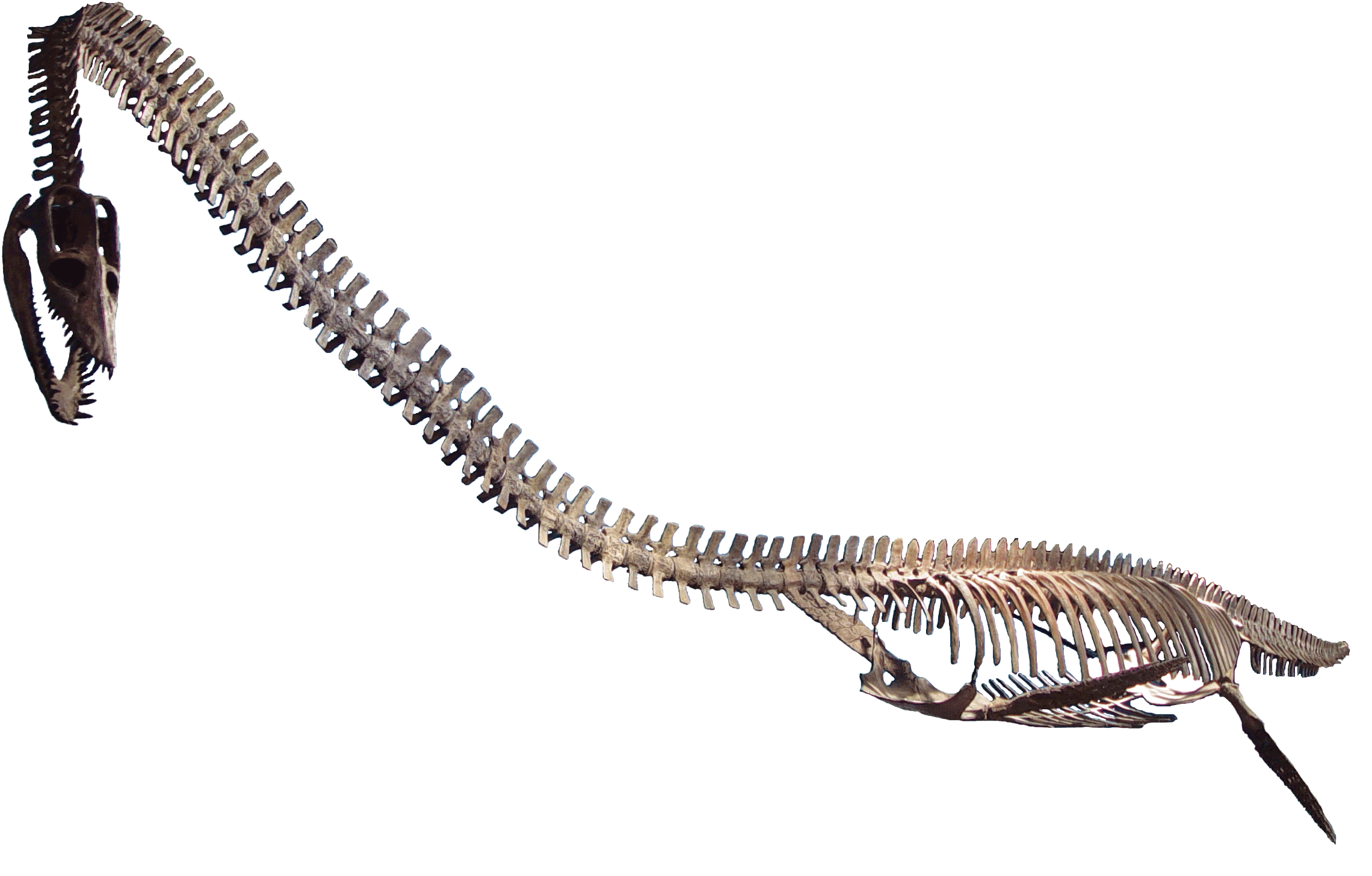
The neck of Elasmosaurus is the feature that steals the show, and honestly, it deserves the spotlight. This animal had more than seventy neck vertebrae, a frankly outrageous number compared to the vast majority of vertebrates, which tend to hover close to that seven‑vertebra norm in their necks. All those bones created a long, flexible structure that could extend several times the length of its torso, ending in a relatively small head equipped with sharp, interlocking teeth. It is as if evolution decided to build a fishing rod out of vertebrae and muscle.
Despite how flexible that sounds, the neck was not a rubbery cartoon noodle. Biomechanical studies suggest it was better at gentle side‑to‑side and up‑and‑down sweeps than extreme, swan‑like bends. The vertebrae had to balance flexibility with stability, supporting muscles, blood vessels, and nerves without snapping under the pressure of water resistance or sudden movements. Instead of whipping around dramatically, the neck likely moved in smooth, controlled arcs, more like a crane arm than a garden hose, allowing Elasmosaurus to reposition its head precisely while the rest of its body stayed relatively steady.
How Do You Swim With a Neck Like That?
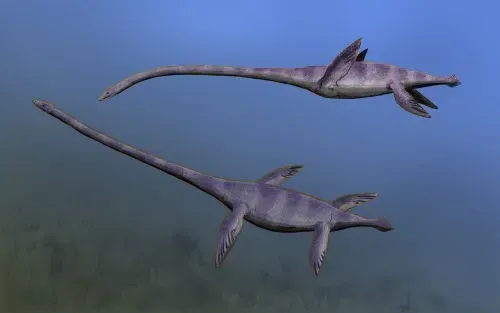
At first glance, that neck looks like a terrible idea for a swimmer, like strapping a long pole to the front of a speedboat. Drag is the enemy of efficient movement, and a long, thin neck pushing through water could create plenty of it. But Elasmosaurus probably did not swim like a torpedo. Instead, its big, powerful flippers suggest a style closer to underwater flight, with the body and neck gliding more than charging, using sweeping strokes to move gracefully through the water column at moderate speeds.
Paleontologists think that instead of racing through the water with its neck straight out in front, Elasmosaurus may have often held it at a gentle angle, letting the body do most of the moving and the neck fine‑tuning the head’s position. The long neck could trail slightly or curve in an S‑shape to reduce resistance, with only subtle adjustments at the tip as it targeted prey. That approach would have allowed Elasmosaurus to conserve energy, something any large marine predator needs to do if it wants to survive long term in a world where every meal costs effort to catch.
A Stealth Hunter in the Ancient Seas
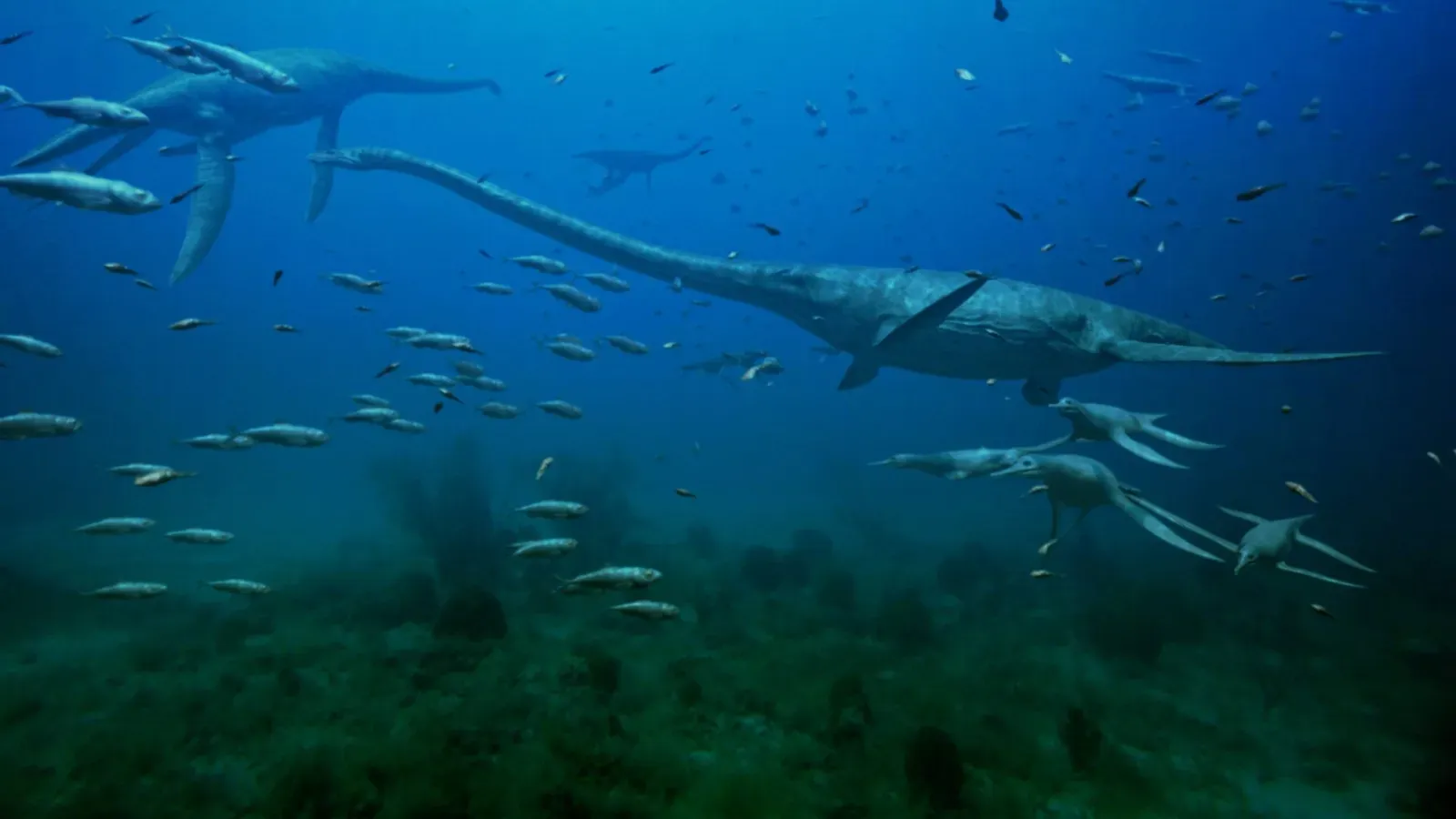
The most compelling idea about Elasmosaurus is that the neck turned it into a stealth hunter. Instead of lunging its whole body at schools of fish, which would scatter at the first hint of a looming shadow, Elasmosaurus could keep its bulk at a distance and snake just its head and neck forward. That small, narrow head could slip into a cloud of prey before they fully recognized the danger, snapping up fish, squid‑like animals, or other small marine creatures with its slender, tooth‑lined jaws. It is like a person trying to grab a snack from a table without getting out of their chair, except the stakes were survival.
Stomach contents and tooth structure in related plesiosaurs back up the idea of a diet focused on relatively small, agile prey rather than huge, thrashing animals. This fits well with a hunting strategy based on patience and precision instead of brute force. In my view, this makes Elasmosaurus less of a cinematic monster and more of an underwater ambush specialist, quietly drifting close and then reaching out with that elongated neck at exactly the right moment. It is an elegant, if slightly creepy, way to make a living in a crowded ancient ocean full of competitors.
From Misplaced Skull to Cultural Sea Monster
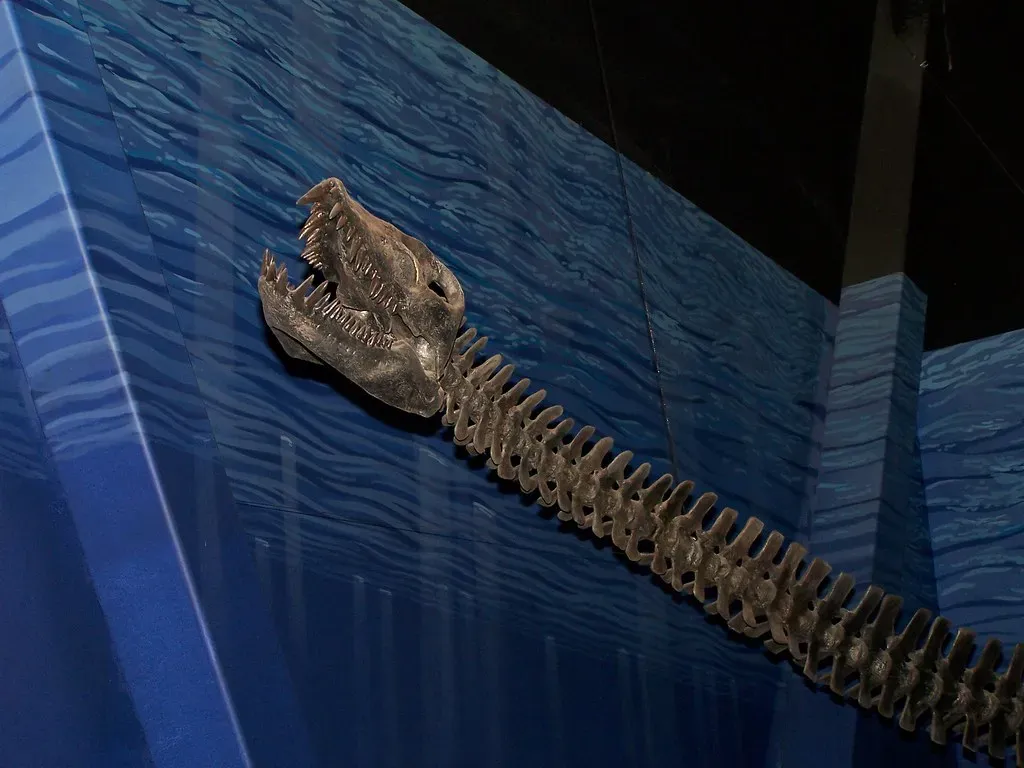
Elasmosaurus has not just confused modern observers; it actually tripped up one of the most famous paleontologists in history. When it was first described in the nineteenth century, its discoverer initially reconstructed the animal with the skull on what was actually the tail end, putting the long neck where the tail should be. Only later did careful study reveal that the layout had been flipped and that the animal’s astonishing neck was attached to the head, not trailing behind it. That early mistake shows just how counterintuitive the real anatomy seemed even to experts of the time.
Over the decades, the silhouette of Elasmosaurus and other long‑necked plesiosaurs blurred into our cultural idea of sea serpents and lake monsters. When people imagine creatures like the classic loch‑monster archetype, they are almost always picturing something that looks suspiciously plesiosaur‑like: tiny head, long neck, bulky body. While there is no good scientific reason to think any plesiosaurs survived into modern times, the fossil record of animals like Elasmosaurus helps explain why our myths and stories gravitate toward that particular shape. It is a reminder of how prehistoric life can echo through human imagination long after the real animals disappeared.
Why Evolution Took the Risk on Such a Strange Body
From an evolutionary perspective, building an animal with an extremely long neck is a bold move. That neck would have required extra energy to grow and maintain, more complex blood flow, and potentially greater vulnerability to injury or attack. For natural selection to favor such a design, the benefits had to outweigh the costs in a very real, survival‑and‑reproduction sense. The most likely payoff was access to food that other predators could not reach as efficiently, giving Elasmosaurus a reliable niche in the ecosystem of the Western Interior Seaway.
If you think of the ocean as a crowded marketplace, most predators fight over the same stalls; Elasmosaurus, with its neck, walked down a different aisle. It could reach into schooling prey or approach from odd angles, using its specialized body plan to get enough food without losing out to faster, bulkier rivals. That does not mean it was perfect or invincible, just that it worked well enough, for long enough, to leave a fossil legacy. To me, that is one of the most fascinating parts of its story: this animal looks bizarre to us, but to its own time and place, it was simply one more way evolution answered the question of how to eat and not be eaten.
What Elasmosaurus Really Tells Us About “Monsters”
When you strip away the drama and movie‑monster hype, Elasmosaurus turns out to be less a nightmare and more a strangely efficient problem‑solver. Its incredibly long neck was not some random flourish; it was a calculated trade‑off that probably made it a quiet menace to schools of fish but also created weaknesses and limits we are only starting to understand. I think that tension between strength and vulnerability is what makes it so compelling: it thrived not by being the biggest terror in the sea, but by being just weird enough to exploit a specific way of hunting.
In my opinion, the most important lesson Elasmosaurus offers is that nature’s “monsters” are usually just animals that happen to fall outside our comfort zone for what a body should look like. Its outlandish proportions challenge our sense of what counts as normal, yet they clearly worked in the world it inhabited. Next time you see a sketch of a long‑necked sea creature, instead of asking whether something like that could still be lurking in a lake somewhere, it might be more interesting to ask what kind of environment could have made it successful in the first place. Did you expect that such an unbelievable neck could turn out to be a very practical solution to a very real ancient problem?