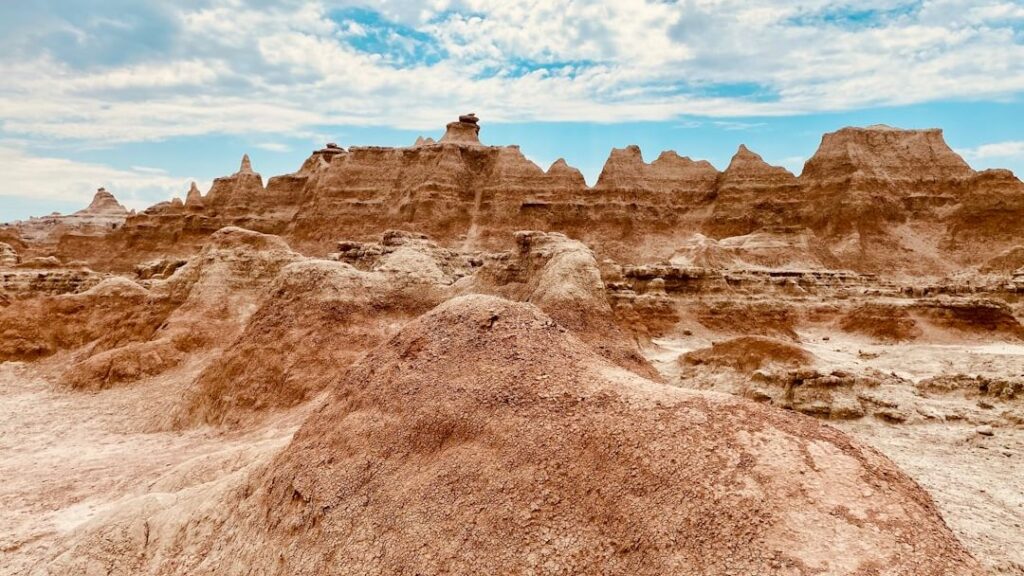
Picture yourself standing on a desolate lunar landscape, surrounded by jagged rock formations that seem to melt into one another under an unforgiving sun. This isn’t science fiction. This is the Dakota Badlands, where every step you take might place your foot exactly where a prehistoric giant once walked. The landscape here holds secrets buried under layers of time, and you don’t need a PhD to stumble upon a piece of history that’s been waiting millions of years to be discovered.
The area is considered to be the birthplace of vertebrate paleontology in the American West, yet it remains one of those places where the past literally erodes into the present every single day. Let’s be real, most people drive through South Dakota thinking about Mount Rushmore, maybe some bison. They have no idea they’re passing through one of the planet’s most extraordinary windows into ancient life.
An Ancient Sea That Became a Fossil Factory
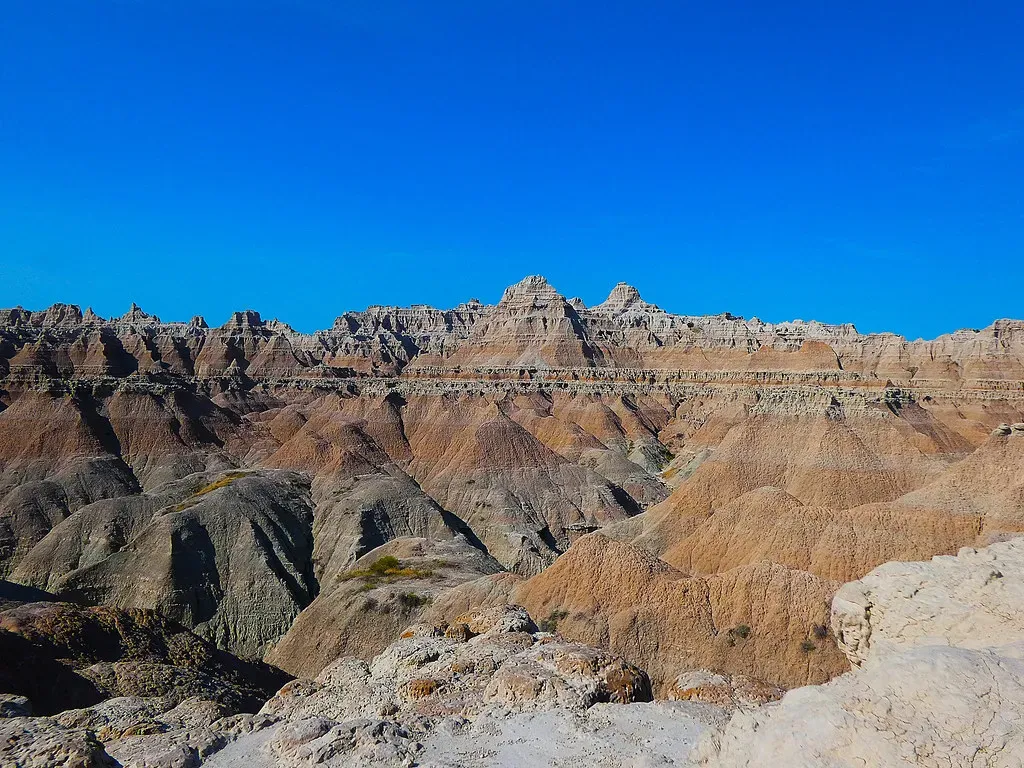
The Badlands started as an inland sea that over millions of years transitions to a swampy floodplain, then transitioned into a forest and then into the barren landscape that is eroded by wind, water, and ice. Think about that for a second. Where you see stark, crumbling buttes today, massive marine reptiles once glided through warm waters.
The oldest Cretaceous rocks exposed in the park consist of marine mudrocks deposited about 75 million years ago, and marine conditions remained in the Badlands region for an additional 10 million years. During this time, creatures like mosasaurs ruled the depths. These weren’t your average aquatic animals. Mosasaur, a giant marine reptile, could measure over 50 feet long. After the sea receded, the stage was set for one of nature’s most remarkable preservation processes.
The Dinosaur Connection You Didn’t Expect
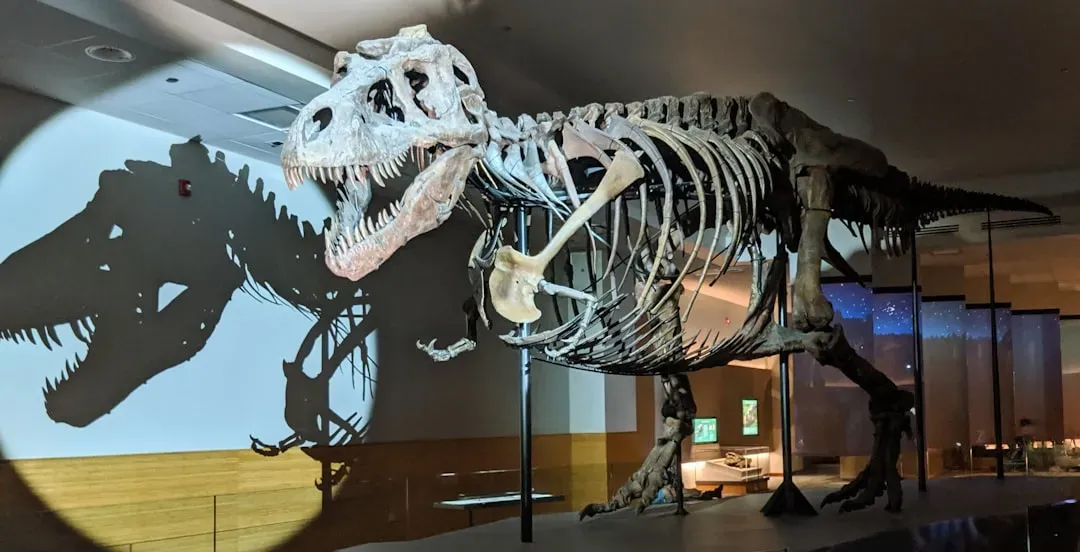
Here’s where things get interesting, and maybe a bit confusing. The Park does not contain any dinosaur fossils in Badlands National Park itself. However, venture north into the North Dakota Badlands, and you enter genuine dinosaur territory. Dinosaur fossils found on excavations include the remains of the iconic Tyrannosaurus rex, Hadrosaurus, and Triceratops.
It is estimated that more than 600 species of dinosaurs have been found in the state, including some of the most iconic, such as Triceratops, Tyrannosaurus Rex, and Ankylosaurus. The Hell Creek Formation in North Dakota’s badlands holds these treasures from the very end of the dinosaur age. A rare juvenile Tyrannosaurus rex fossil was found by three children during a family hike in the North Dakota Badlands in July 2022. Just kids on a walk. That’s the kind of place this is.
The Age of Mammals Takes Center Stage
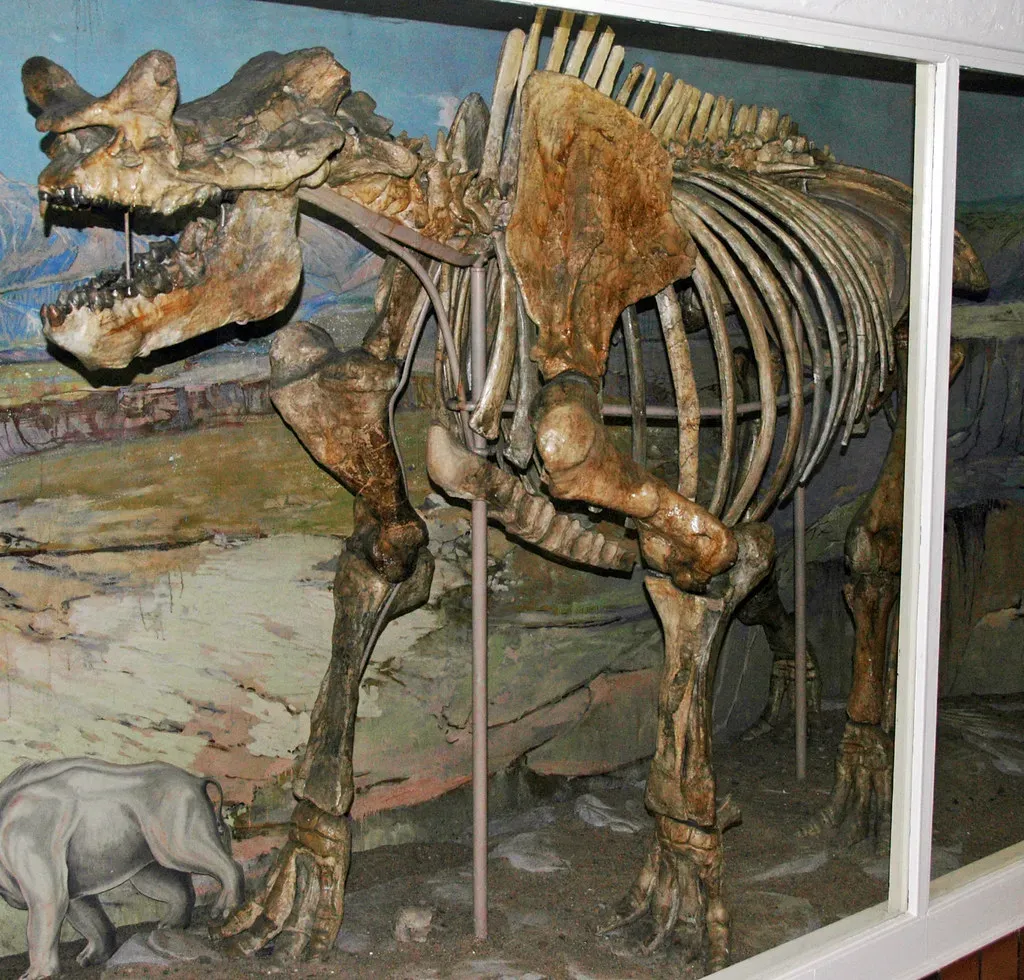
What South Dakota’s Badlands lack in dinosaurs, they more than compensate for with mammal fossils. Fossils found in the park range from 75- to 28-million years old and many are in excellent condition. This spans a critical period when mammals went from small, insignificant creatures scurrying in dinosaurs’ shadows to the dominant life forms on Earth.
The fossils found in Badlands tend to range from 34 and 37 million years old, and commonly found fossils include parts of ancient alligators, Dinictis (saber-tooth cat), ancient camels, ancient rhinoceros, larger rodents, and small rodents. Imagine camels and rhinos wandering South Dakota. They uncovered tons of fossils from at least 175 different species of Oligocene life during a 1940 expedition. The diversity is staggering. Honestly, it makes you wonder what else is out there, still waiting beneath your feet.
How Erosion Becomes Your Personal Paleontologist
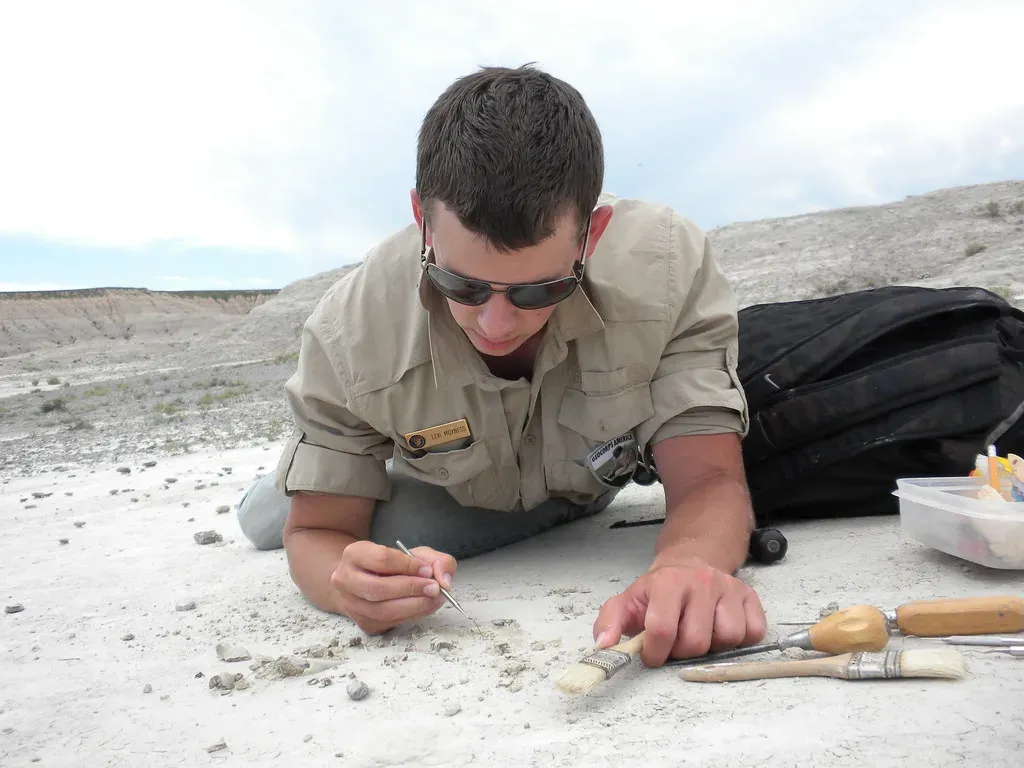
The Badlands don’t keep their secrets buried forever. They erode at about one inch a year, which sounds slow until you realize that’s twelve inches per decade. Every rainstorm, every winter freeze, every gust of wind exposes something new. You have to let the wind and water reveal the fossils, and there is a team of Paleontologists who dig up fossils, but most fossils are found by you and me.
Park visitors especially those under the age of 10 seem to find most the fossils. Kids scrambling up and down the formations, paying attention to details adults miss. Over 375 fossils were reported by visitors in 2019 alone. You don’t need fancy equipment or years of training. You just need to look carefully and know what you’re seeing.
The Famous Pig Dig That Wasn’t About Pigs
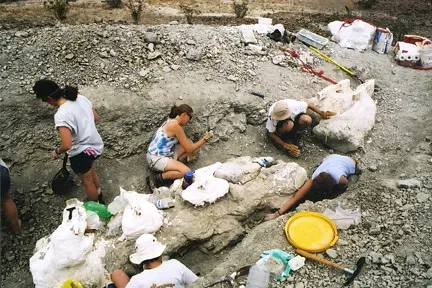
Digging began in 1993 after two park visitors reported seeing a large backbone protruding from the ground, and the site became known as Pig Dig because it was believed the exposed fossil was the remains of an ancient pig-like mammal called Archaeotherium, but the fossil was later identified as the bones of a hornless rhinoceros called Subhyracodon. The nickname stuck anyway, because that’s how these things go.
The Big Pig Dig was one of the longest paleontology digs in Badlands National Park, recovering almost 20,000 fossils. Twenty thousand individual specimens from a single site. Scientists believe that 33 million years ago this was a spring-fed watering hole. Animals came to drink, some died there, and the sediments preserved them in extraordinary detail. It’s like nature’s own time capsule, sealed and forgotten until curious hikers noticed a bone sticking out of a hillside.
What to Do If You Actually Find Something
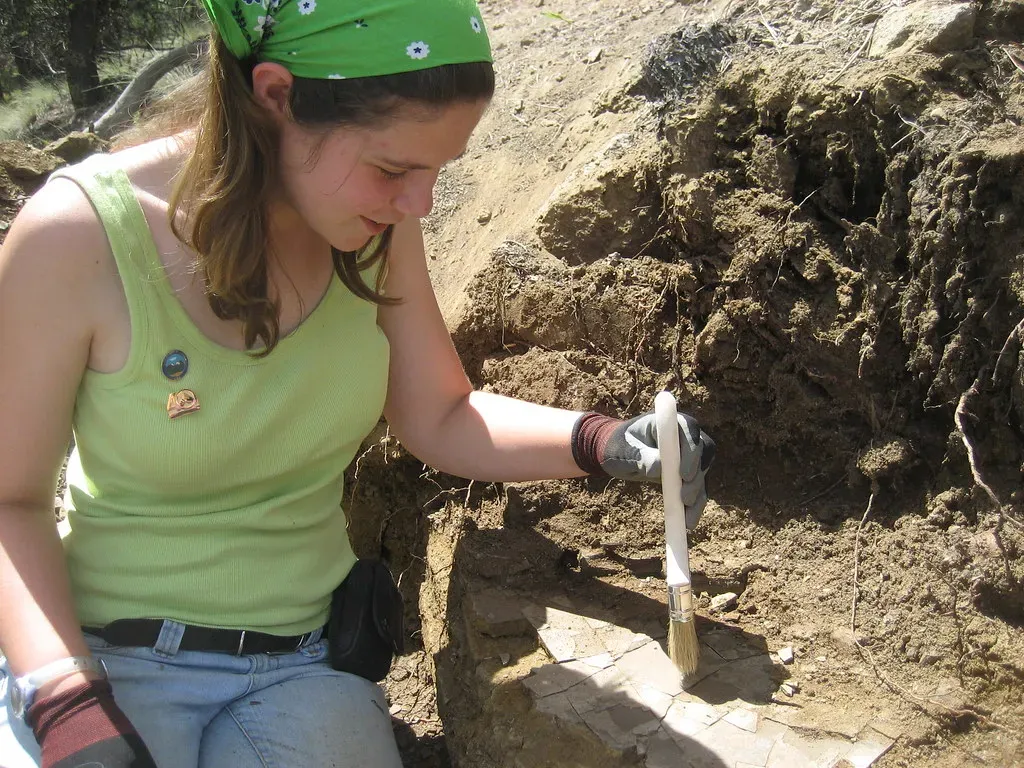
Let’s say you’re hiking through the formations and something catches your eye. A piece of bone, maybe a tooth. Your first instinct might be to pocket it, take it home as a souvenir. Resist that urge. To aid with the investigation, preservation, and recovery of the fossils, Badlands has a form for visitors to fill out should they find a fossil, and Park Service will send a paleontologist out to investigate all fossil reports.
It is likely that you are the first human being to ever see that specimen, and there is a good chance that any new fossil discovery could provide new information on the Badlands story. Taking it removes that context forever. Where was it found? What layer of rock? What else was nearby? These details matter enormously to scientists trying to reconstruct ancient ecosystems. You could be part of a real discovery, contributing to actual science, just by reporting what you see and leaving it where you found it.
The Badlands Are Disappearing Before Your Eyes
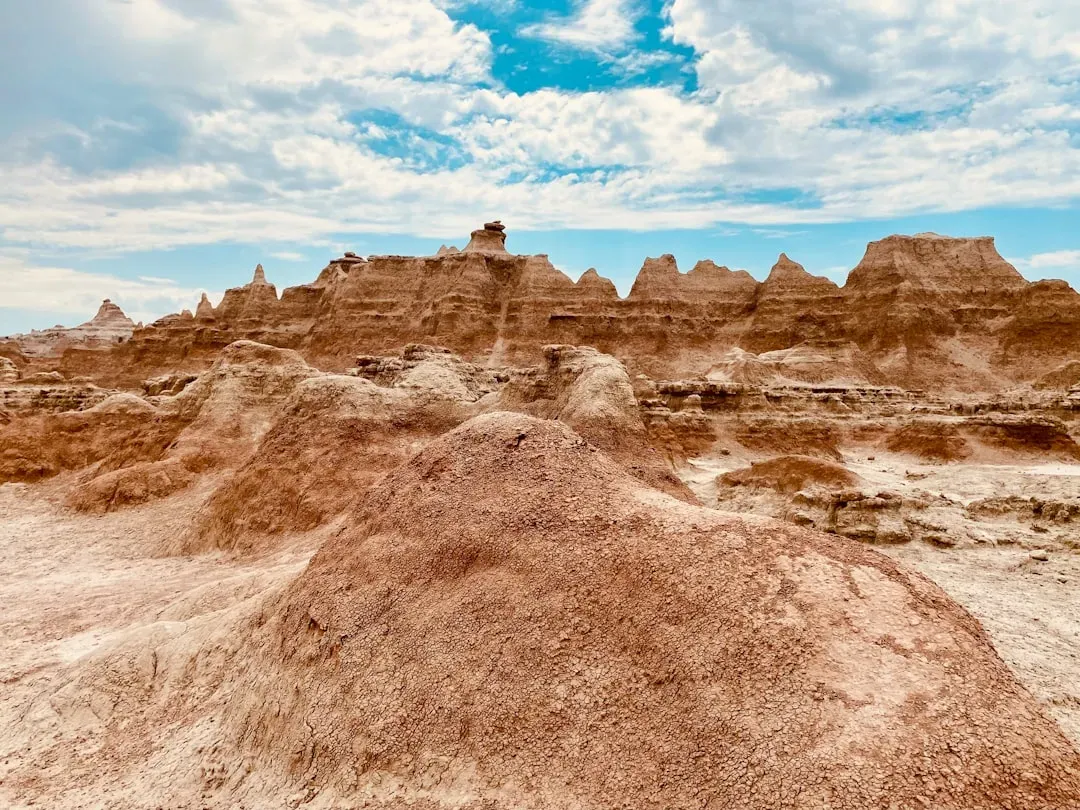
The Badlands formations have a lifespan of approximately one million years, and they erode at about one inch a year. Do the math. These spectacular landscapes won’t last forever in geological terms. Every year, more rock crumbles. Every storm washes more sediment downstream. It’s simultaneously revealing new fossils and destroying the formations that hold them.
This creates an urgency you don’t feel at most national parks. Yellowstone’s geysers will keep erupting. The Grand Canyon will remain grand for millions of years yet. The Badlands? They’re in their final act, geologically speaking. Visitors, rangers, and scientists have discovered a variety of fossils from baculites to mosasaurs to mammals such as Oreodonts, Hoplophoneus, and the recently-discovered housecat-sized deer Santuccimeryx elissae. New species are still being identified from specimens found just recently. You’re watching active science happen in real time, in a landscape that won’t look quite the same when your grandchildren visit.
The Dakota Badlands challenge everything you think you know about where fossils come from and who gets to find them. This isn’t some exclusive domain of academics with federal grants. It’s a place where a family on vacation can genuinely contribute to paleontology. The next time you find yourself anywhere near South Dakota or North Dakota, consider taking a detour through these ancient, eroding hills. Walk carefully, look closely, and remember that you’re treading on ground that holds millions of years of stories. Who knows what you might be the first person in history to see? What fossil might you help preserve for future generations by simply paying attention and reporting what you find?