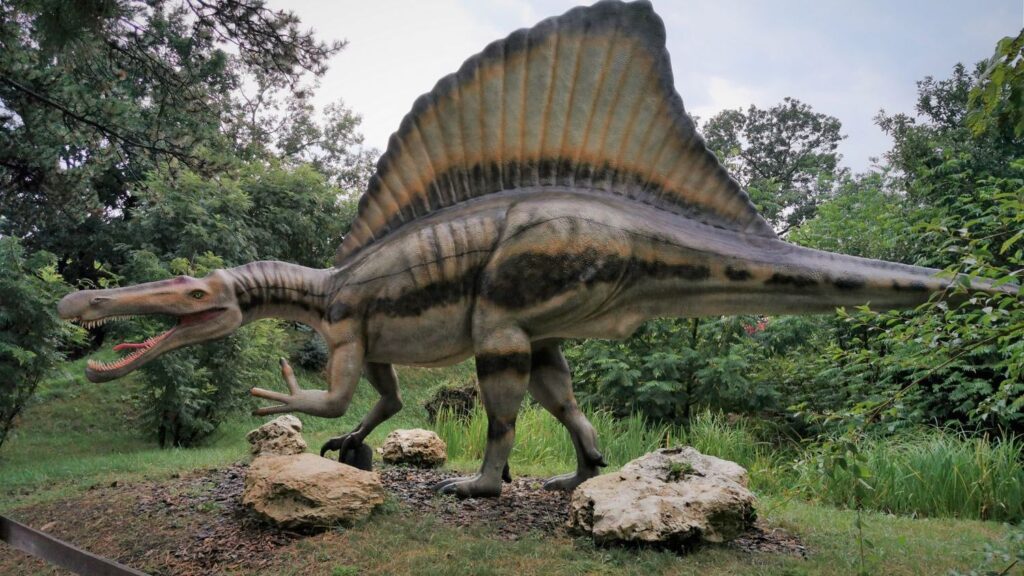
Picture a crocodile the size of a bus, with a crocodile-like skull full of knife-blade teeth, a long tail, and rising from its spine a towering sail of bone and skin. That is the strange, haunting image of Spinosaurus, the dinosaur that seems to have broken almost every rule we thought we knew about how big predators should look and live. Ever since its fossils were first described in the early twentieth century, this “sail-backed” giant has been a scientific troublemaker, forcing paleontologists to constantly rethink what a dinosaur could be.
What makes Spinosaurus particularly fascinating is not just that it looked bizarre, but that even after more than a century, experts still cannot fully agree on what its famous sail was for, or how this animal actually lived day to day. Was that sail a radiator, a billboard, a hump, or something else entirely? Was Spinosaurus truly a semi-aquatic hunter, slicing through rivers after fish like a monstrous heron, or mostly a land-based predator that just happened to like water? The debate is intense, sometimes heated, and still very much alive, which is exactly why this dinosaur keeps capturing our imagination.
The Strange Discovery of a Sail-Backed Giant
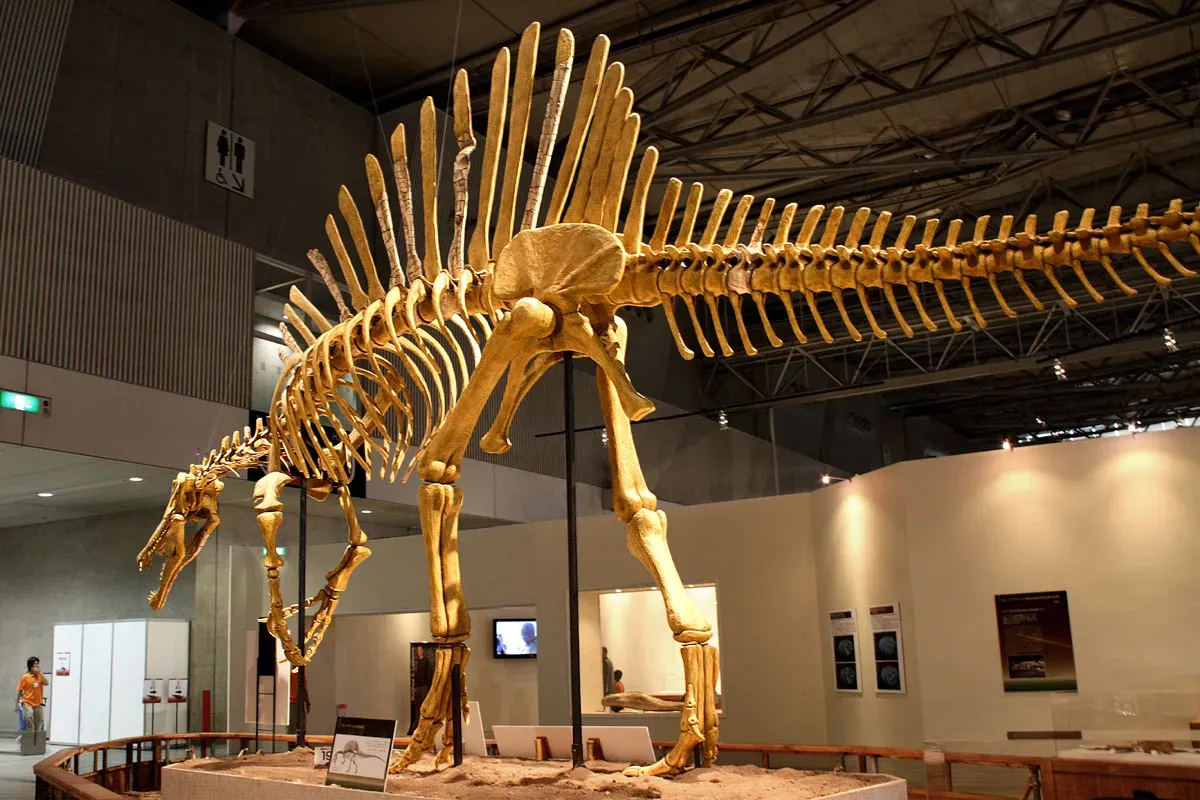
Spinosaurus entered science in the early 1900s, when fossils from North Africa revealed a huge carnivorous dinosaur with odd, elongated neural spines jutting from its back. These spines, some taller than a grown person, immediately set it apart from more familiar predators like Tyrannosaurus or Allosaurus. Early illustrations leaned on guesswork, showing Spinosaurus as a kind of T. rex with a high, neat sail, prowling dry land with jaws agape and sail proudly on display. It looked dramatic, but the truth was that the original fossils were incomplete and fragile.
To make matters worse, many of those crucial early bones were destroyed during World War II when the museum housing them was bombed. For decades, scientists had to rely on old drawings, notes, and a handful of scattered finds from other sites. That meant Spinosaurus became a creature half-built from evidence and half-built from imagination. In a way, that loss helped fuel the mystery: without a full skeleton to anchor ideas, the dinosaur’s sail, lifestyle, and proportions became a kind of scientific Rorschach test, where different researchers saw very different animals in the same faint outline.
What Exactly Was That Enormous Sail Made Of?
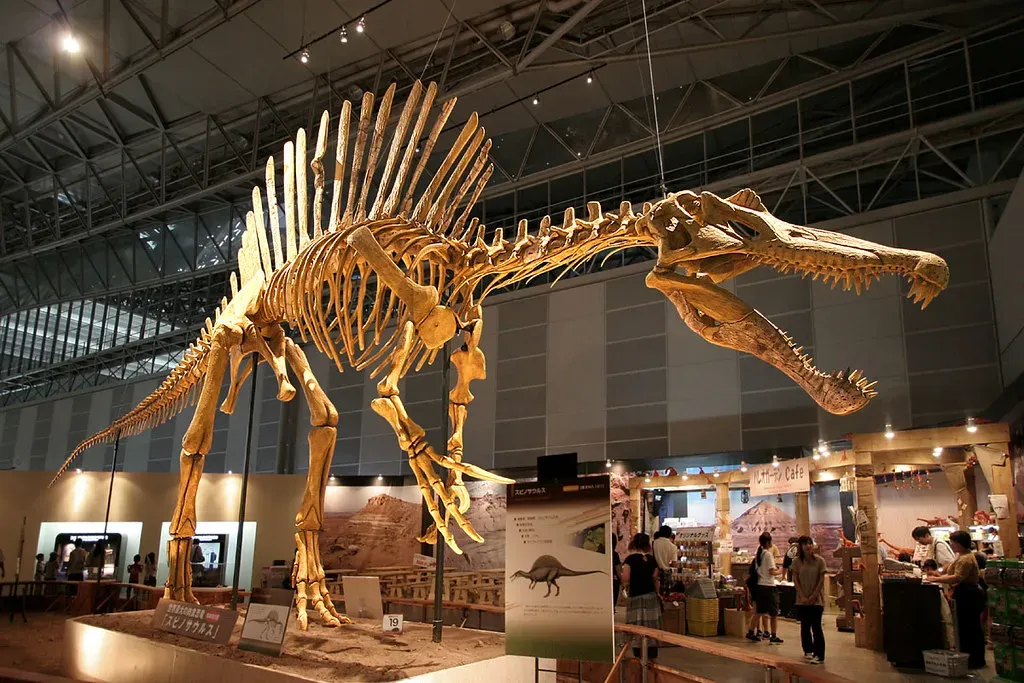
The famous “sail” of Spinosaurus was not some flimsy fin; it was built from tall neural spines rising from the vertebrae, like oversized fence posts growing out of the backbone. In life, those spines were almost certainly covered with skin, muscle, blood vessels, and other soft tissues we rarely get to see in fossils. The simplest mental image is a smooth, skin-covered sail, perhaps brightly colored, stretching between the spines. But another widely discussed idea is that these spines may have supported something more like a hump or thickened mass of fat and muscle rather than a classic thin sail.
Comparisons to modern animals are key here. Some mammals, such as bison, have elongated vertebral spines under a bulky shoulder hump; some reptiles have ridges or low sails that help regulate temperature or display. The same hard evidence – the spines themselves – can fit several soft-tissue reconstructions that all look very different in a living animal. Since skin and fat almost never fossilize, scientists are stuck with detective work: analyzing bone texture, biomechanics, and patterns in related species, then arguing over which model seems most plausible. That is one of the main reasons the debate refuses to die.
Why Would a Dinosaur Need a Sail on Its Back?
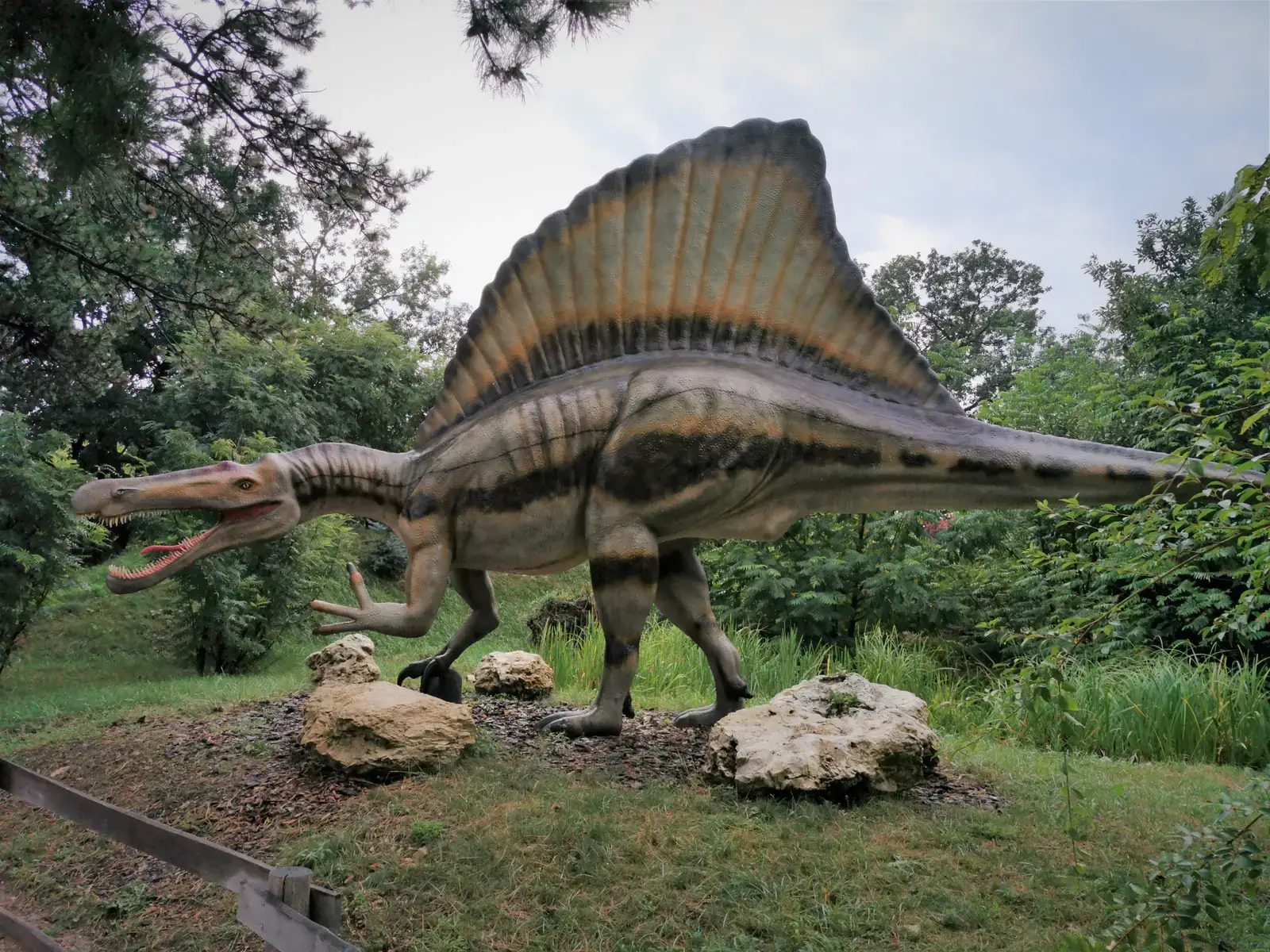
The first go-to explanation for the sail was thermoregulation: the idea that a big, thin, blood-rich structure could help the animal warm up or cool down like a biological solar panel or radiator. The story is appealing – Spinosaurus could turn its sail to catch the morning sun, then pivot to present a larger surface to breezes when it needed to dump heat. However, more recent analyses show that this explanation alone might be too neat. The shape and thickness of the spines, plus the environment this dinosaur lived in, make some scientists doubt that the sail was a perfect temperature-control device.
Another major camp favors display: the sail might have been a billboard advertising health, strength, or species identity, much like a peacock tail or a deer’s antlers. In that view, a tall, visible sail would help individuals recognize mates, intimidate rivals, or impress potential partners, even at a distance above tall riverbank vegetation. This fits well with how many modern animals use exaggerated body parts for visual communication. The catch is that it is hard to test directly in fossils, so we are again left with probability, analogy, and a lot of spirited debate about what makes evolutionary sense for a giant semi-aquatic predator.
Spinosaurus and the Big Semi-Aquatic Dinosaur Debate
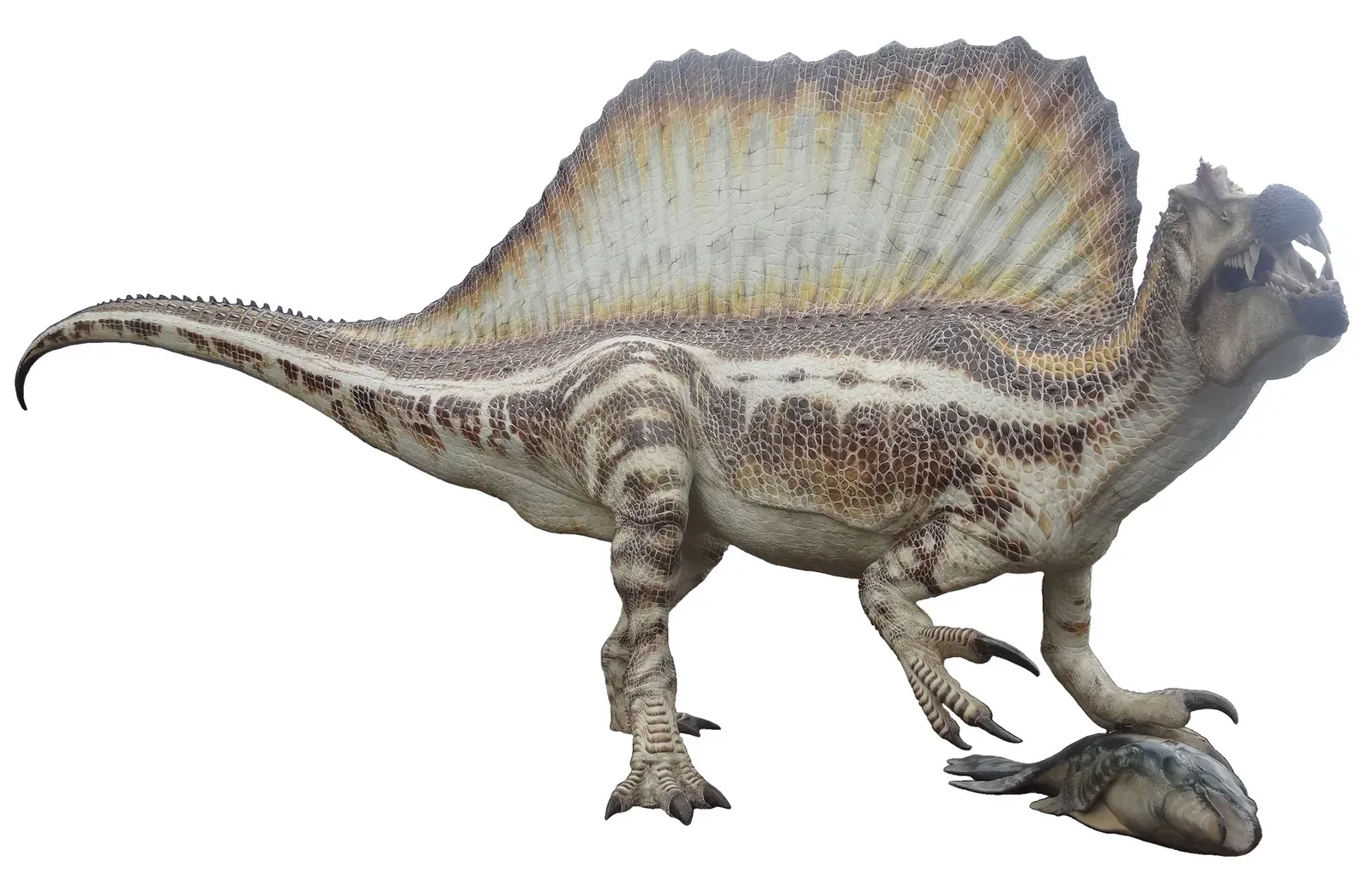
In the last two decades, new fossils from North Africa have painted a radically different picture of Spinosaurus from the old land-only predator stereotype. Its skull is long and narrow, more like a crocodile than a typical big theropod, with conical teeth suited to gripping slippery prey rather than slicing large chunks of flesh. The nostrils sit farther back on the snout than in most theropods, which could help when breathing near the water’s surface. Bones from its limbs and tail show dense, heavy structures often associated with animals that spend significant time in the water, helping with ballast and stability.
Some researchers argue that these features, plus a tail that seems well built for lateral undulation, make Spinosaurus the first truly semi-aquatic dinosaur known, actively swimming and hunting fish in large rivers. Others push back, suggesting that while it likely spent plenty of time near or in water, it might have been more of a wader, stalking shallows like a gigantic stork or heron, occasionally swimming but not a powerhouse underwater chaser. These differing reconstructions lead to dramatically different visuals: one shows Spinosaurus as an almost crocodile-like river monster, the other as a towering shoreline hunter, its sail cutting a silhouette against the reeds.
Did the Sail Help It Hunt in Water or on Land?
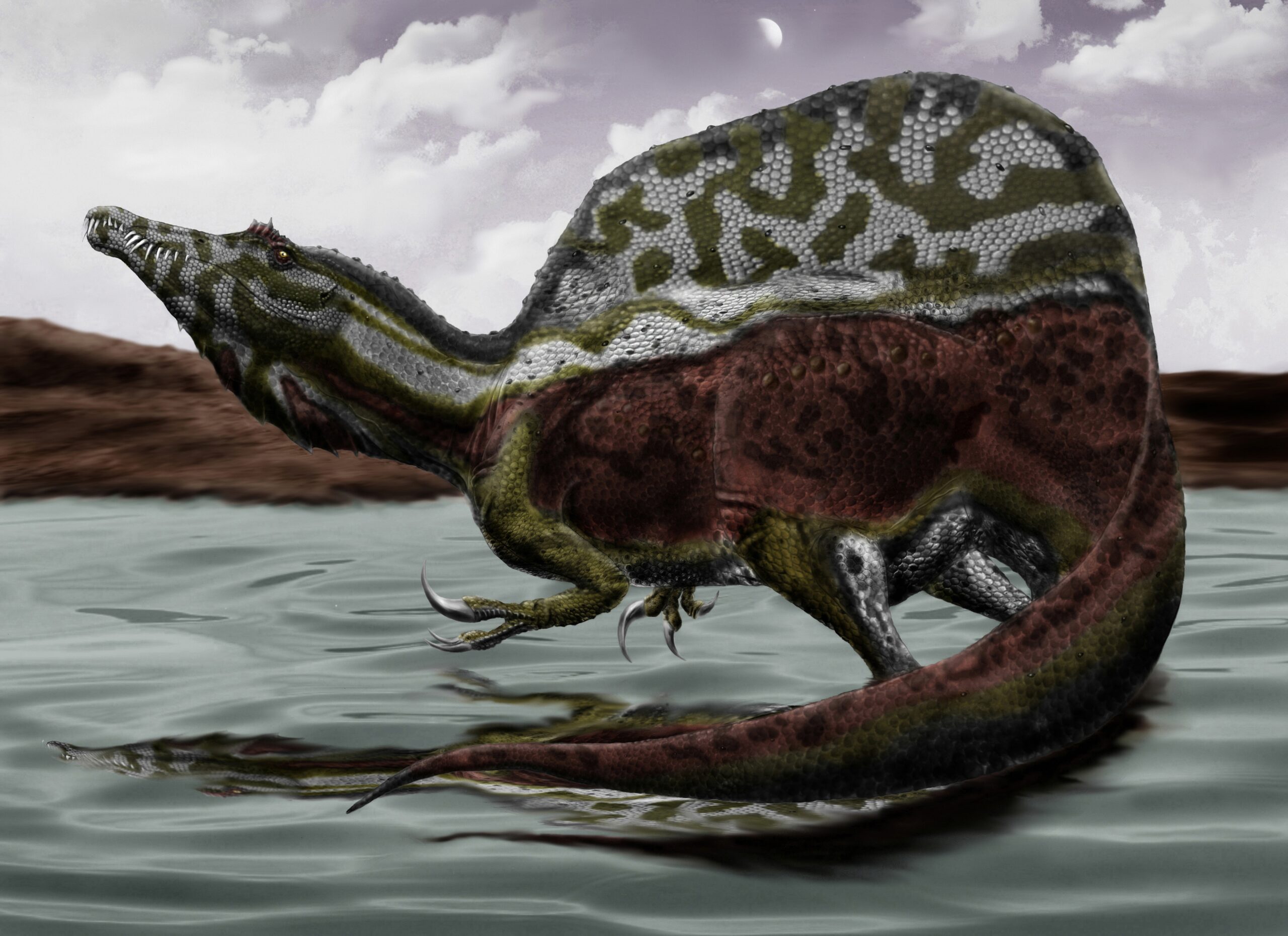
Once you start imagining Spinosaurus in or near water, the role of the sail becomes even more intriguing. One idea suggests that the sail could have broken up the animal’s outline from above, making it less obvious to prey in murky river systems, somewhat like how the shape of a crocodile’s back helps it blend into ripples and vegetation. Another possibility is that the sail played a role in maneuvering or stability when Spinosaurus partially submerged its body, though the physics of using a tall dorsal structure in water are not straightforward. The sail might have even created drag in some positions, which complicates any simple “hydrodynamic fin” story.
On land, the sail would have been highly visible, which circles back to display or intimidation. Imagine being another predator or a smaller dinosaur and seeing that enormous, jagged sail rise over the trees; even if it offered no direct combat advantage, the psychological impact would be immense. It could also have served as a kind of size exaggeration, making the animal appear even larger than its real mass would justify. The tricky part is that the same structure had to function in both environments, land and water, so any satisfying explanation needs to make sense across that full lifestyle, not just in one setting.
Why Scientists Still Argue About the Same Bones
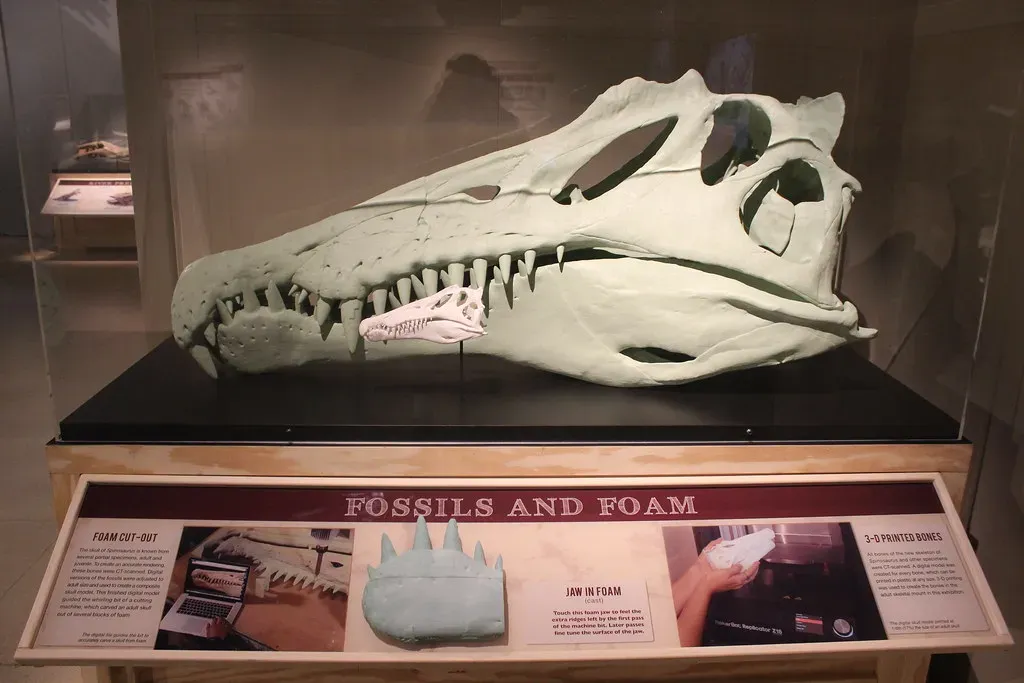
Part of the reason the Spinosaurus debate is so persistent is that the fossil record for this animal is still frustratingly incomplete and scattered. Different skeletons, found in different rock layers and localities, may represent different individuals, ages, or even closely related species, making it risky to simply mash them together into one “perfect” reconstruction. On top of that, erosion, historical collecting practices, and past damage mean that some crucial bones are missing or distorted. Small changes in how you interpret a few vertebrae or limb bones can cascade into very different body plans and lifestyles.
Another issue is that scientists bring different methods and assumptions to the table. Some focus heavily on biomechanics and physics, running digital models to test how well a certain body shape could swim or walk. Others lean more on comparisons with living animals, emphasizing ecological plausibility and evolutionary context. When new studies appear, they may challenge earlier reconstructions, leading to headlines about scientists being “wrong” or “changing their minds,” when what is really happening is the normal, sometimes messy process of refining ideas in light of better data. Spinosaurus, with its lost original fossils and patchwork record, sits right at the center of that scientific tug-of-war.
Other Sail-Backed Creatures and What They Teach Us
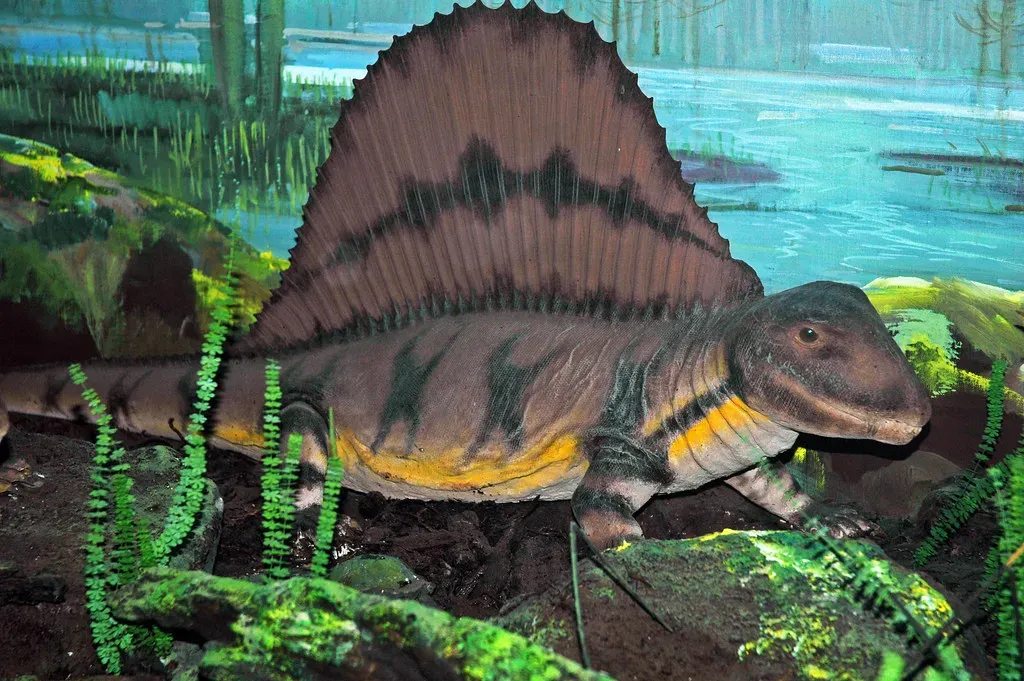
Spinosaurus is not alone in sporting a dramatic back structure; earlier in Earth’s history, creatures like Dimetrodon also carried large sails supported by elongated spines. Dimetrodon was not a dinosaur but a distant, reptile-like relative of mammals, yet its sail sparks many of the same questions: Was it for temperature control, display, or something else? The fact that such similar skeletal features evolved in unrelated lineages suggests that tall spinal structures can be evolutionarily useful in more than one way. This is a classic example of convergent evolution, where similar solutions arise independently in response to similar pressures or opportunities.
However, scientists caution against assuming that all sails served the same function. Dimetrodon lived in a different time, with different climates, ecosystems, and competitors, and its body proportions are quite unlike Spinosaurus. The comparison helps highlight which ideas are broadly plausible – like display or thermoregulation – without locking any single explanation in as the definitive answer. In a sense, other sail-backed animals show us that nature likes to experiment with big, bold shapes, but they also remind us that function can be flexible. A sail might be a radiator in one species, a mating signal in another, and a multi-purpose structure in a third.
What This Ongoing Debate Really Says About Science
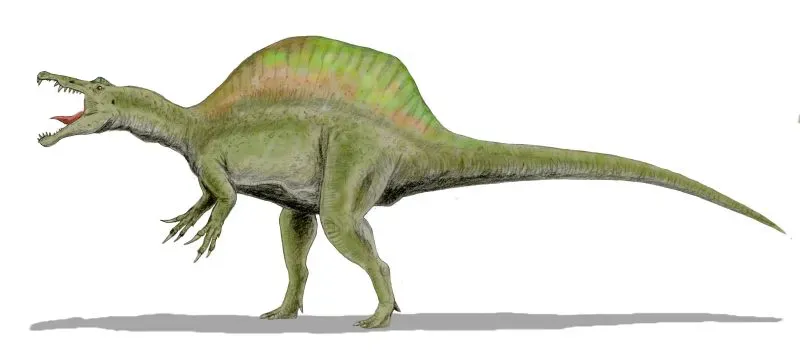
For me, the story of Spinosaurus is less about one weird dinosaur and more about how science actually works when evidence is incomplete. It is tempting to want a clean, final answer – this is how big it was, this is exactly what the sail did, this is how it hunted – but real research on creatures from deep time rarely ties things up that neatly. Instead, you get shifting models, passionate arguments, and years where a new fossil or better analysis suddenly makes everyone rethink what they thought they knew. It can feel chaotic from the outside, but that friction is where progress happens.
My own opinion is that we should embrace the uncertainty around Spinosaurus instead of treating it as a flaw. The fact that experts can look at the same bones and reach different, well-argued conclusions is not a sign that nobody knows anything; it is a sign that we are right at the edge of what the data can currently tell us. As new finds emerge from the Sahara and new technologies sharpen our view of old fossils, the picture will keep evolving. In the meantime, that tall, mysterious sail acts like a flag planted in the middle of scientific curiosity, reminding us that some of the most interesting stories are the ones that are still being written. And honestly, is there anything more fitting for a dinosaur than to remain just a bit untamed in our imagination?