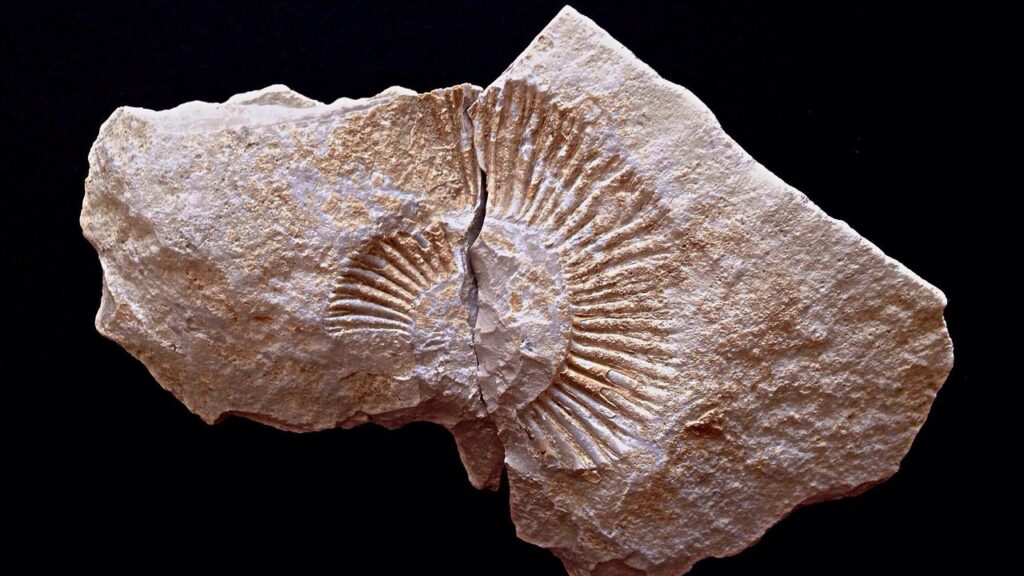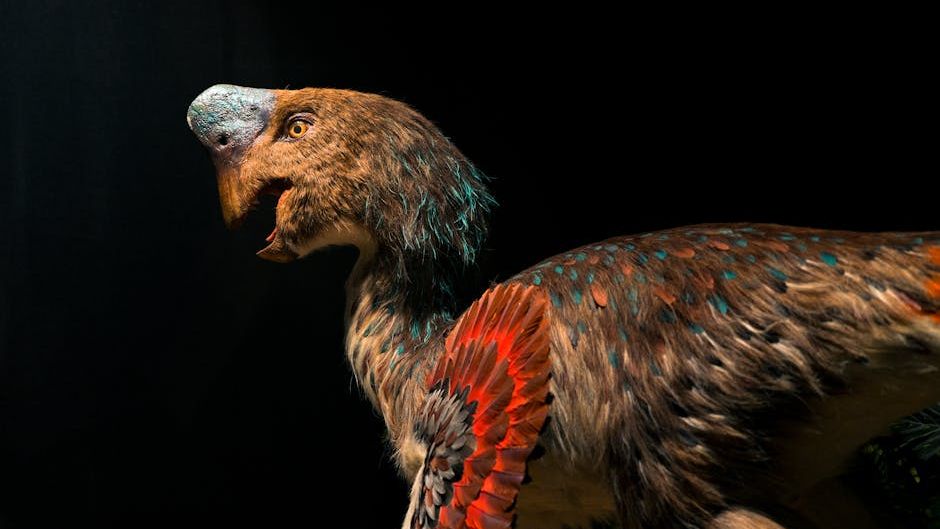
Imagine holding a single feather in your hand, knowing that it has the power to rewrite everything humanity once believed about the ancient rulers of our planet. That is, in essence, what happened in 1861 when a lone feather embedded in Bavarian limestone launched one of the most extraordinary scientific revolutions the world of paleontology has ever seen. The story of feathered dinosaurs is not just about creatures from a distant past. It is a living, breathing narrative about how life transforms itself in ways no one could have predicted.
You might think of dinosaurs as cold, scaly, thundering beasts. The reality, it turns out, is far more beautiful, far more surprising, and honestly, far more complex. Science has fundamentally reshaped that picture, one fossil at a time. So let’s dive in.
The Moment Science Changed Its Mind About Dinosaurs
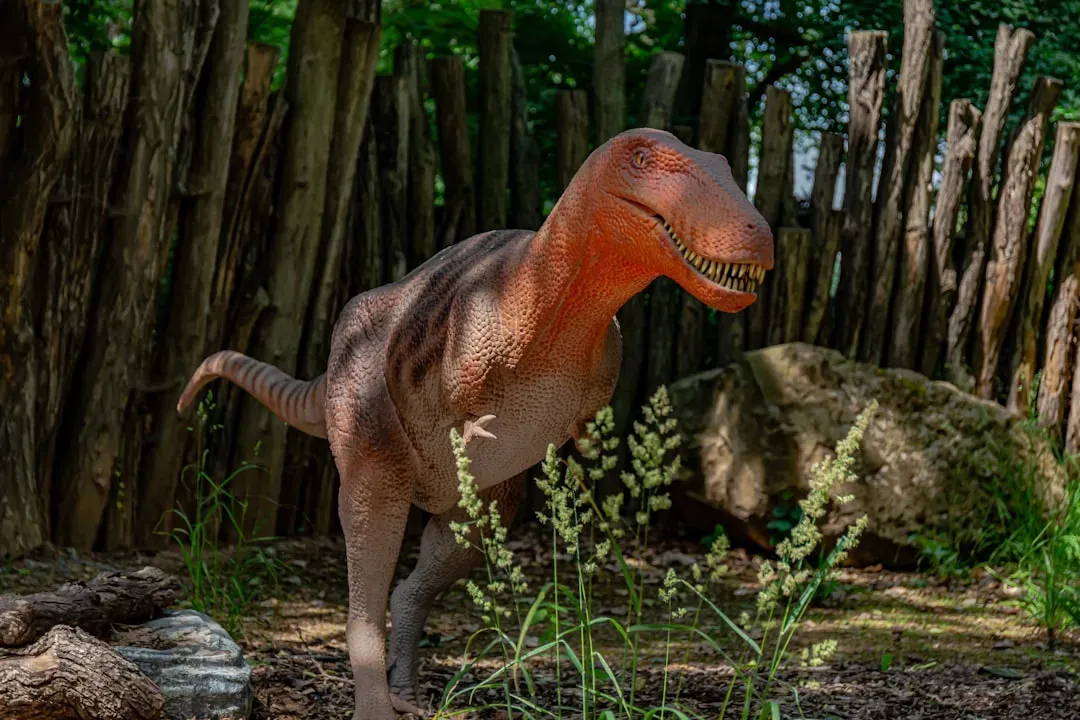
For most of modern history, the very word “dinosaur” conjured up images of giant reptilian monsters. Since scientific research began on dinosaurs in the early 1800s, they were generally believed to be closely related to modern reptiles such as lizards, and the word dinosaur itself, coined in 1842 by paleontologist Richard Owen, comes from the Greek for “terrible lizard.” That framing stuck for well over a century, shaping how scientists, artists, and the general public understood these animals.
That view began to shift during the so-called dinosaur renaissance in scientific research in the late 1960s, and by the mid-1990s, significant evidence had emerged that dinosaurs were much more closely related to birds, which descended directly from an earlier group of theropod dinosaurs. It was a slow but seismic shift, one that required extraordinary fossil evidence to become truly convincing to the broader scientific world.
Archaeopteryx: The Fossil That Started It All
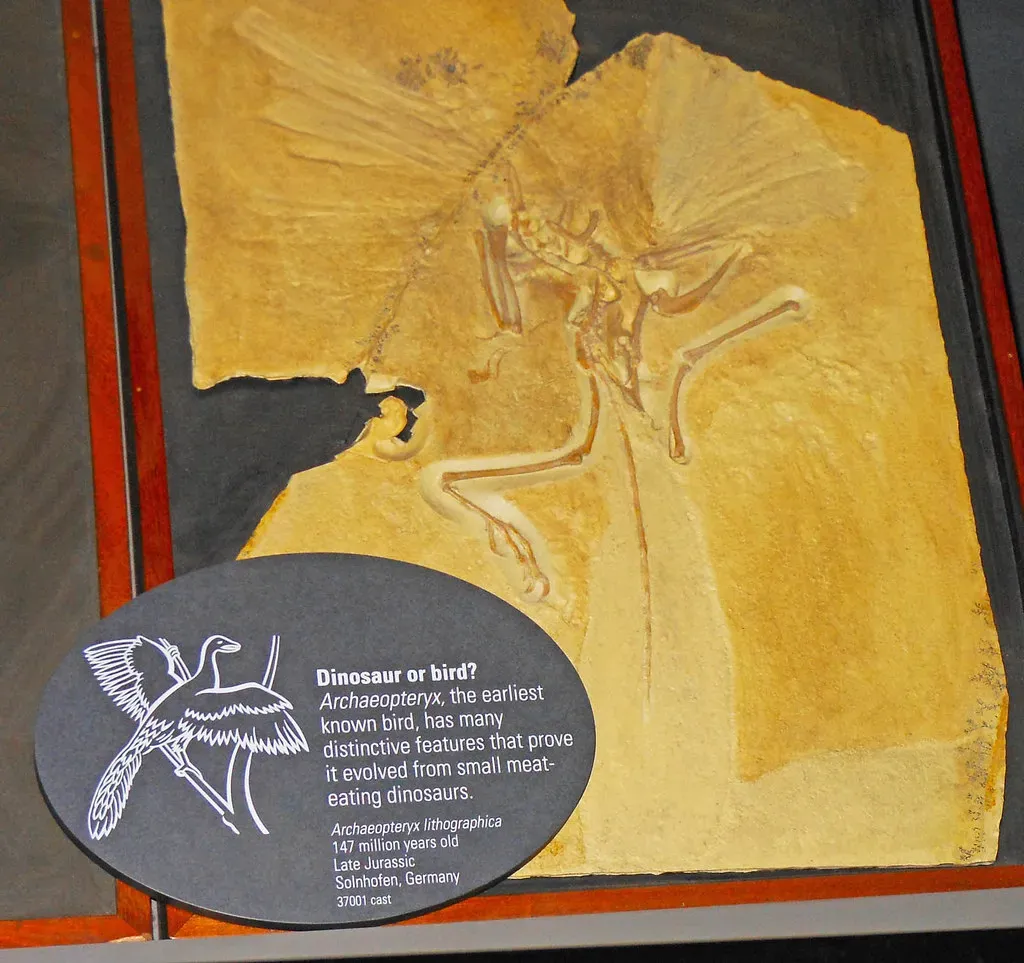
The first Archaeopteryx discovery, a single feather, was unearthed in 1860 or 1861 and described by Hermann von Meyer. Simple as that sounds, its timing was nothing short of extraordinary. Darwin’s book was just two years in print and the public’s interest in scientific discoveries was at an all-time high, so a fossil thought by some to be intermediate between birds and reptiles was not going to be passively catalogued and set aside.
Most of the specimens of Archaeopteryx that have been discovered come from the Solnhofen limestone in Bavaria, southern Germany, approximately 150.8 to 148.5 million years ago. Archaeopteryx was roughly the size of a raven, with broad wings that were rounded at the ends and a long tail compared to its body length, and it could reach up to 50 centimeters in body length with a wingspan of about 70 centimeters. For its size, it was a creature suspended perfectly between two worlds.
The Liaoning Discoveries That Shook the Scientific World
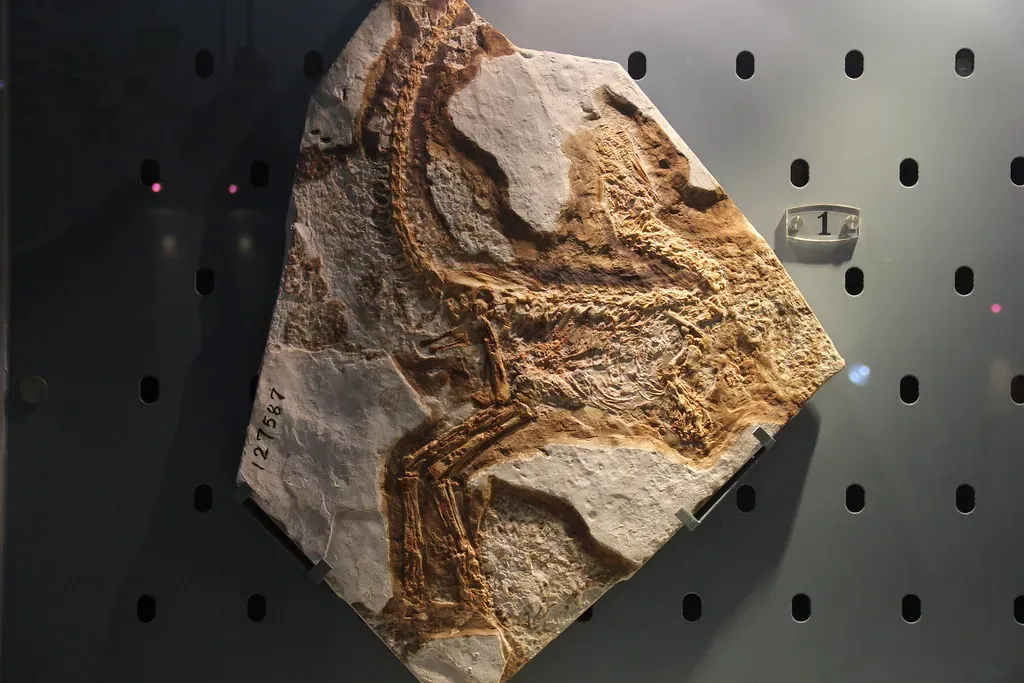
The most important discoveries at Liaoning have been a host of feathered dinosaur fossils, with a steady stream of new finds filling in the picture of the dinosaur-bird connection and adding more to theories of the evolutionary development of feathers and flight. You have to picture this: a region in northeastern China essentially became the most valuable window into prehistoric life on Earth, yielding fossil after fossil that no one could have imagined.
In 1996, Chinese paleontologists working in the province of Liaoning in northeastern China discovered the fossil of a 5-foot-long theropod they called Sinosauropteryx. The head, back, and tail of the Sinosauropteryx were covered with a soft, fuzzy type of feather similar to down, and the feathers would not have been able to allow the creature to fly. This was the smoking gun the scientific community had been waiting for, and it arrived with spectacular clarity.
From Scales to Feathers: A Hidden Evolutionary Step
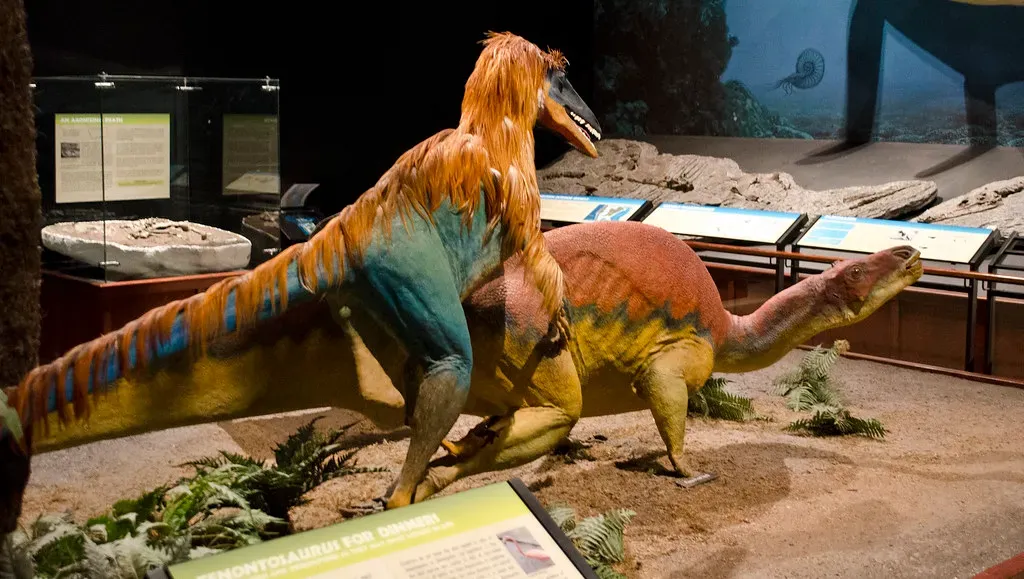
Paleontologists at University College Cork in Ireland have discovered that some feathered dinosaurs had scaly skin like reptiles today, shedding new light on the evolutionary transition from scales to feathers. Think of it like a renovation that happened one room at a time, rather than tearing down the whole house at once. Nature, it seems, preferred gradual transformation.
Research suggests that soft, bird-like skin initially developed only in feathered regions of the body, while the rest of the skin was still scaly, like in modern reptiles. This zoned development would have maintained essential skin functions, such as protection against abrasion, dehydration and parasites, meaning the first dinosaur to experiment with feathers could survive and pass down the genes for feathers to their offspring. Honestly, when you think about it, that is elegantly logical, even poetic.
What Feathers Were Actually For: Not Just Flying
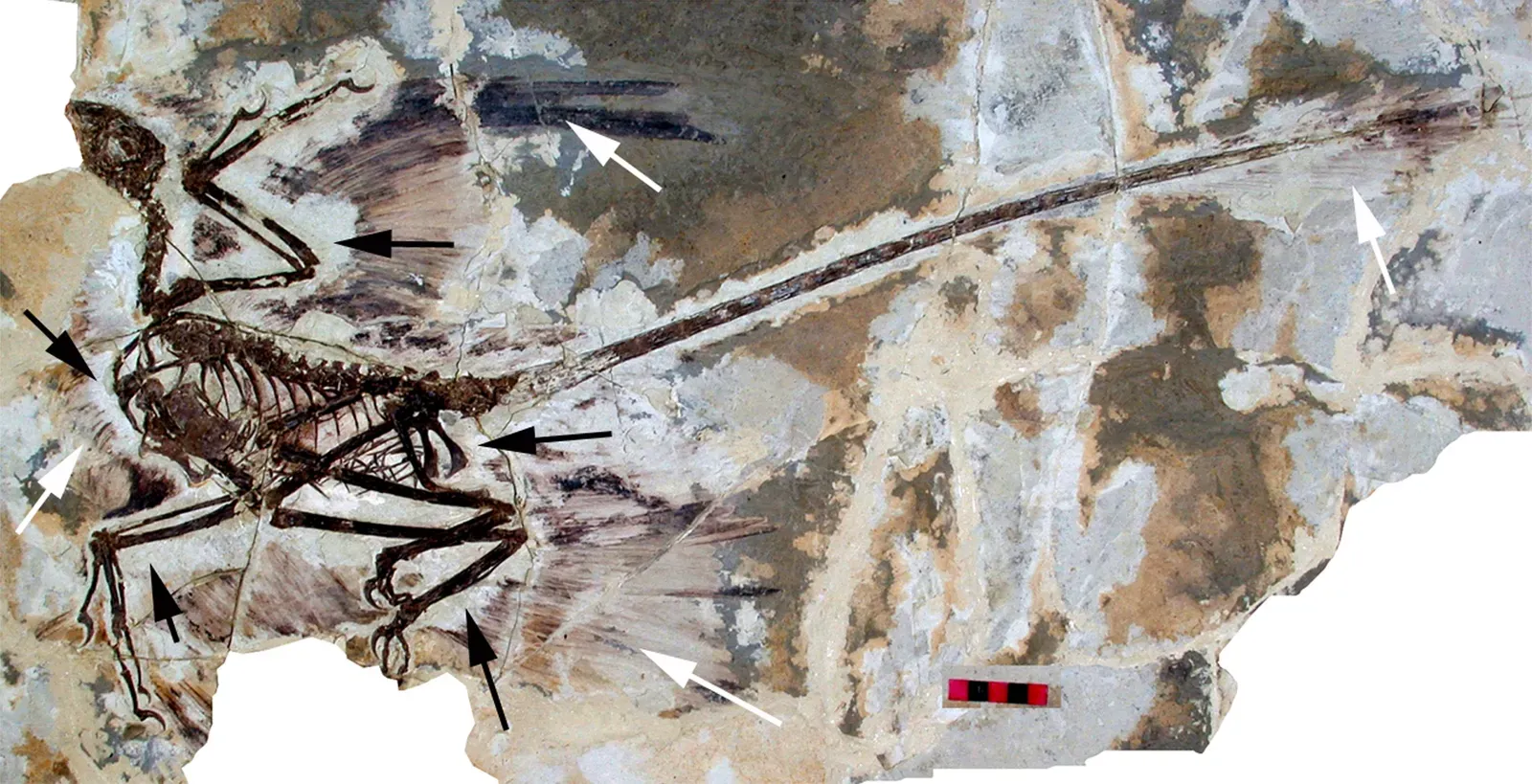
Many traditional views on the origin and early evolution of bird feathers have since been revolutionized, as scientists now know that feathers are not restricted to birds, but are also found in some non-avian dinosaurs, and they probably did not originally evolve for flight, but rather in some other functional context such as insulation, display, or camouflage. Let’s be real, this completely flips the old narrative on its head.
It has been suggested that feathers had originally functioned as thermal insulation, as it remains their function in the down feathers of infant birds prior to their eventual modification into structures that support flight. Pigmented and iridescent feathers may also have provided greater attractiveness to mates, providing enhanced reproductive success when compared to non-colored feathers. In other words, feathers were arguably as much about survival and seduction as they were about taking to the skies.
Feathers Beyond the Theropods: A Wider Family Affair
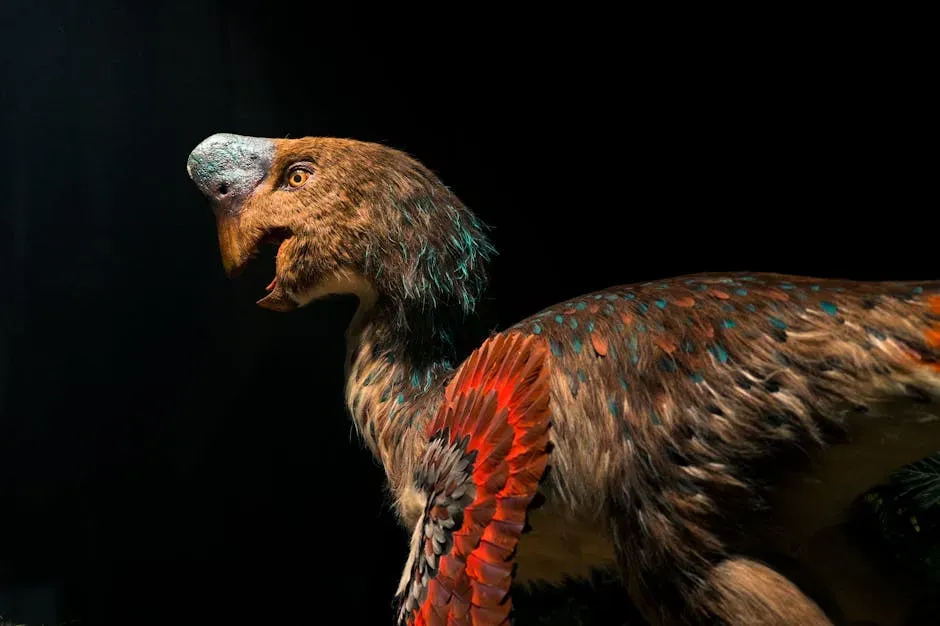
Almost all dinosaurs were probably covered in feathers, Siberian fossils of a tufted, two-legged running dinosaur dating from roughly 160 million years ago suggest. This was a stunning proposal because for years the feather conversation was largely limited to theropods. The discovery of feathery structures far outside that group forced a dramatic rethink.
Although the vast majority of feather discoveries have been in coelurosaurian theropods, feather-like integument has also been discovered in at least three ornithischians, suggesting that feathers may have been present on the last common ancestor of a large dinosaur group including both theropods and ornithischians. It is even possible that feathers first developed in even earlier archosaurs, in light of the discovery of vaned feathers in pterosaurs. The tree of feathered life, you might say, had many more branches than anyone expected.
Color, Display, and the Social Lives of Feathered Dinosaurs
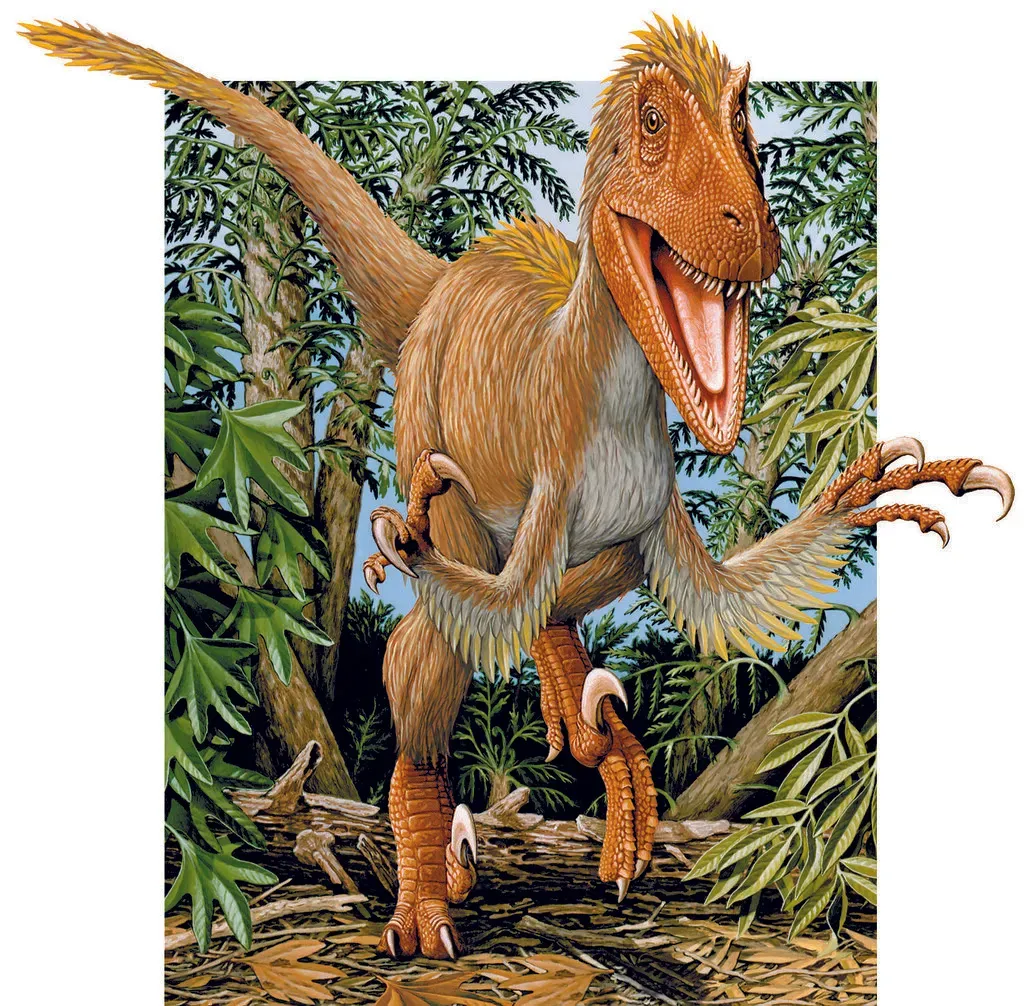
When paleontologists researched what color the feathers of Sinosauropteryx might be, they found that it was rust red with a red and white-striped tail, not unlike today’s red pandas. The overall color pattern would have helped the dinosaur blend into the undergrowth, while the banded tail could have been a striking visual signal. I find this detail completely astonishing. The idea of a predatory dinosaur essentially using its tail the way a cat does is hard to shake from your imagination.
In 2002, experts announced that long, bristle-like structures had been found along the tail of an exceptional fossil of the small horned dinosaur Psittacosaurus. The dinosaur’s bristles are similar in structure to other protofeathers, and they only covered a portion of the tail. The fact that they are only present on part of the dinosaur’s body and are extravagantly long suggests that they evolved to help Psittacosaurus identify and communicate with each other. Social behavior, identity, attraction. Even 120 million years ago, looking good apparently mattered.
The Living Legacy: Birds as Modern Dinosaurs
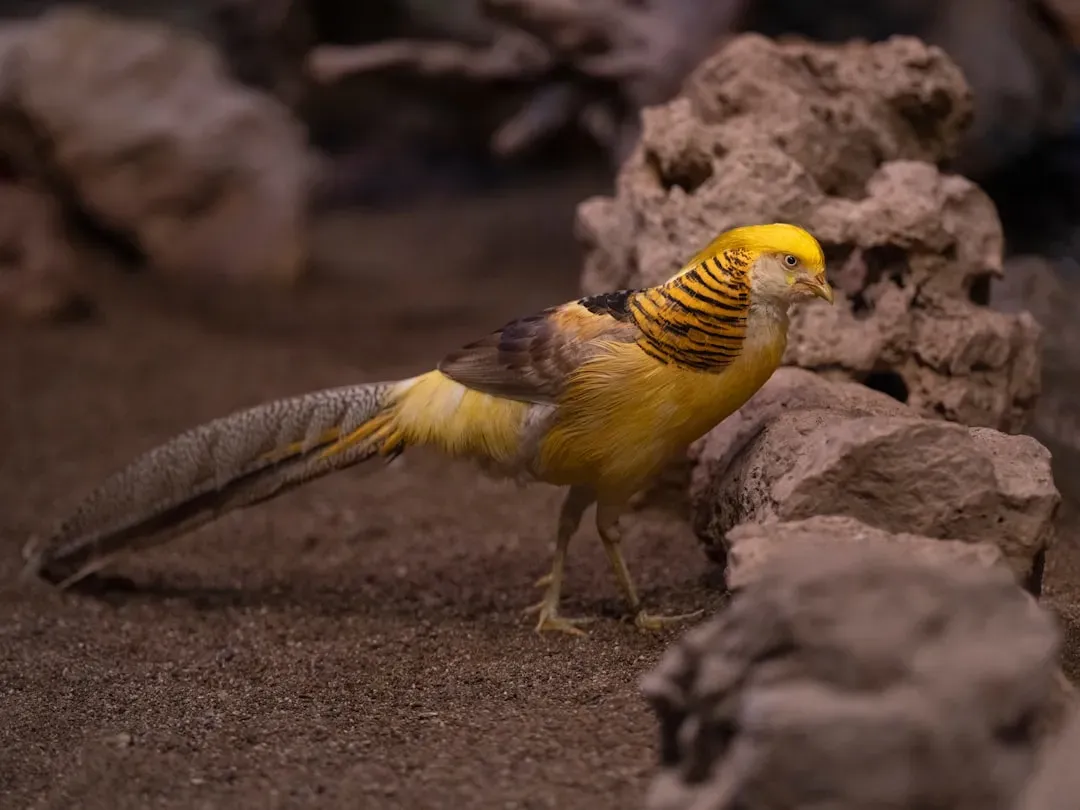
Many scientists now believe that modern birds are living dinosaurs. Specifically, a group of two-legged carnivorous dinosaurs called theropods seems to have evaded the great extinction event 65 million years ago by developing feathers, bigger and more adaptable brains, and smaller, more airborne forms. Every sparrow on your windowsill, every crow on your roof, every flamingo you see at the zoo carries within it the deep genetic echo of something ancient and extraordinary.
Birds are inextricably linked to feathers, which allow them to fly, keep warm and put on dramatic displays. Feathers, however, predate birds, having first belonged to extinct dinosaurs. Finding out exactly when feathers evolved, and which animals had them, could offer important new insights into the distant past. These advances have changed conventional understanding of dinosaurs and impacted conceptions of both birds and feathers. The conversation, in other words, is far from over.
Conclusion
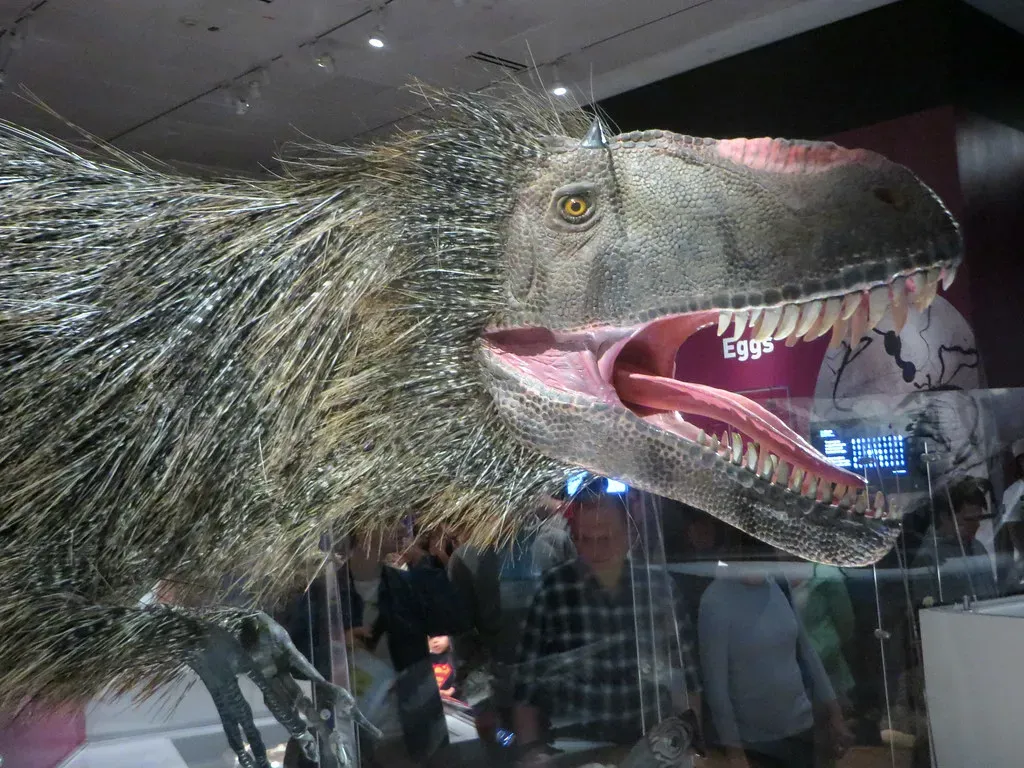
The emergence of feathered dinosaurs is one of the most transformative stories in the history of life on Earth. It shattered the old picture of dinosaurs as cold, scaly, simple creatures and replaced it with something far richer, far more dynamic, and far more connected to the living world around you today. Feathers were never just tools for flight. They were instruments of warmth, of desire, of identity and survival.
What makes this story so persistently captivating is how much of it is still being written. Every new fossil dug from the earth in Liaoning, in Siberia, in Bavaria, adds another sentence to a narrative that began over 150 million years ago. You are, in a very real sense, living in the world that feathered dinosaurs built. The next time a bird lands near you, take a second look. You might be staring into deep time itself. What does it feel like to know that dinosaurs never truly disappeared? Tell us in the comments.