Imagine a vast, frozen wilderness stretching between two continents – no roads, no maps, no written language, and absolutely no guarantee of survival on the other side. Now imagine that some of humanity’s earliest and bravest ancestors actually crossed it. That is, in essence, the incredible origin story of the First Americans, a story that archaeologists, geneticists, and anthropologists are still piecing together today.
The Paleo-Indians remain one of the most fascinating puzzles in the entire history of human civilization. You might think we know everything about how the Americas were first settled, but the deeper you dig, the more surprising, contested, and breathtaking the evidence becomes. Let’s dive in.
Who Were the Paleo-Indians? Defining the First People of the New World
When you look at the sweep of American history, it’s easy to forget just how deep the human story on this continent really goes. The earliest arrivals and their physical and cultural descendants, collectively called Paleo-Indians, appear to have occupied the Americas for perhaps 10,000 to 40,000 years – a period of time longer than all the succeeding cultures combined. That number alone is staggering. Think about what that means in terms of generations of human life, survival, and adaptation.
Paleo-Indian culture refers to the earliest known inhabitants of the Americas, particularly those recognized for their distinctive lithic technology, such as the Clovis projectile point. This culture is believed to have emerged around 9500 to 9000 B.C.E., with its roots traced to northeastern Asia and the migration of peoples across the Bering Land Bridge. Yet here is the thing – that timeline itself is now considered outdated, and scientists are actively rewriting it as you read this.
Archaeologists and anthropologists use surviving crafted lithic flaked tools to classify cultural periods. So in many ways, you are learning about entire civilizations from their trash – their discarded tools, their weapon tips, their stone flakes. It’s a humbling reminder of how fragile the archaeological record really is.
The Great Migration: Crossing Beringia into an Unknown World
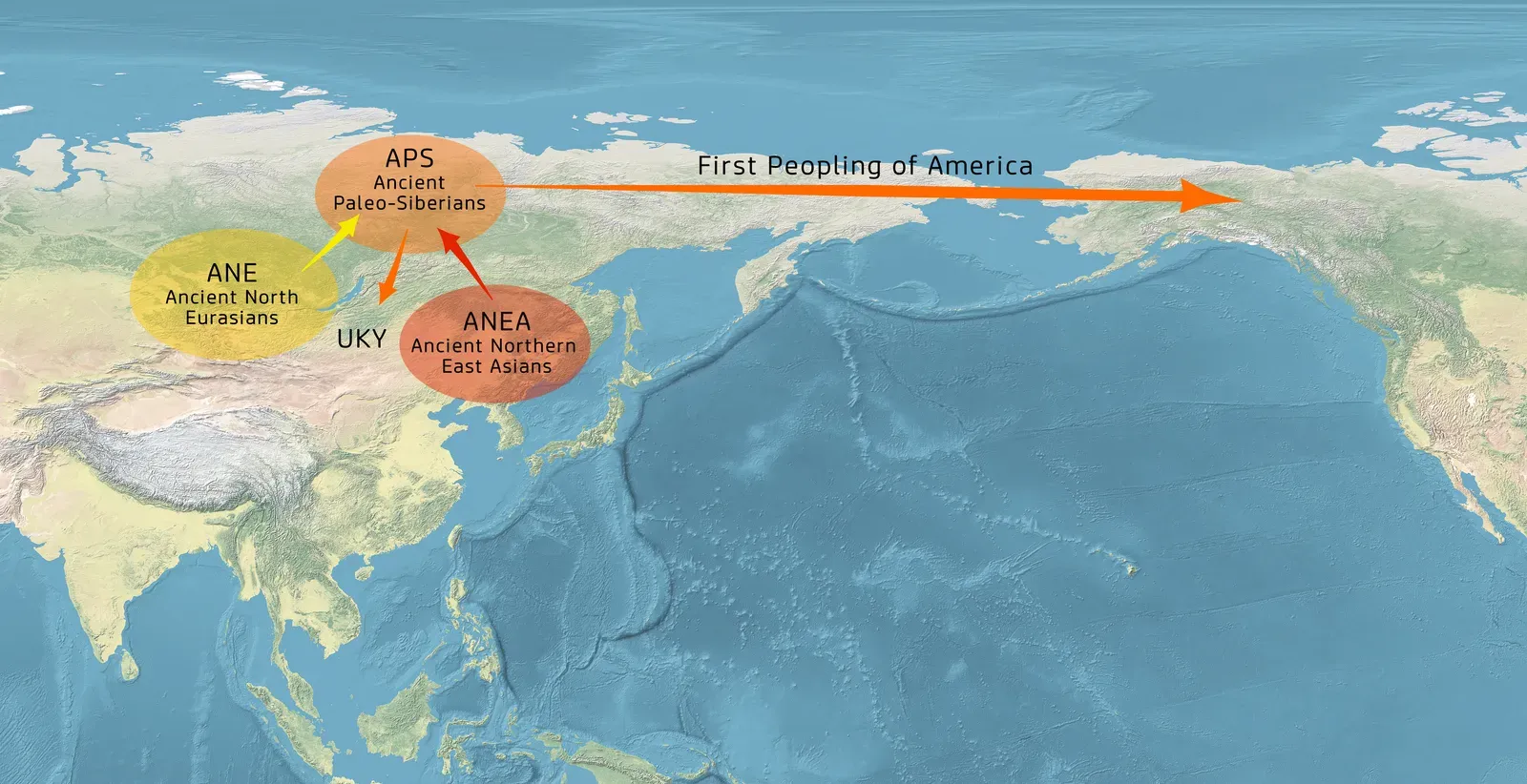
It is believed that the peopling of the Americas began when Paleolithic hunter-gatherers entered North America from the North Asian Mammoth steppe via the Beringia land bridge, which had formed between northeastern Siberia and western Alaska due to the lowering of sea level during the Last Glacial Maximum. Honestly, calling it a “bridge” almost undersells the thing. The land bridge at its maximum extent would have measured more than 600 miles wide from north to south, representing an expanse of territory indistinguishable from the areas of Siberia and Alaska it connected.
Genetic and environmental evidence indicates that after the ancestors of Native Americans left Asia, they spent around 10,000 years on the land bridge that once linked Siberia and Alaska. That is not a quick dash across a frozen highway. That is generations of people living, hunting, and surviving on a landscape that no longer even exists above water. From around 16,500 to 13,500 BCE, ice-free corridors developed along the Pacific coast and valleys of North America, which allowed land animals, followed by humans, to migrate south into the interior of the continent.
Evidence from full genomic studies suggests that the first people in the Americas diverged from Ancient East Asians about 36,000 years ago and expanded northwards into Siberia, where they encountered and interacted with a different Paleolithic Siberian population known as Ancient North Eurasians, giving rise to both Paleosiberian peoples and Ancient Native Americans, which later migrated towards the Beringian region. Modern genetics, it seems, is the new archaeology – and the story it tells is anything but simple.
The Clovis Culture: The Hunters Who Changed Everything
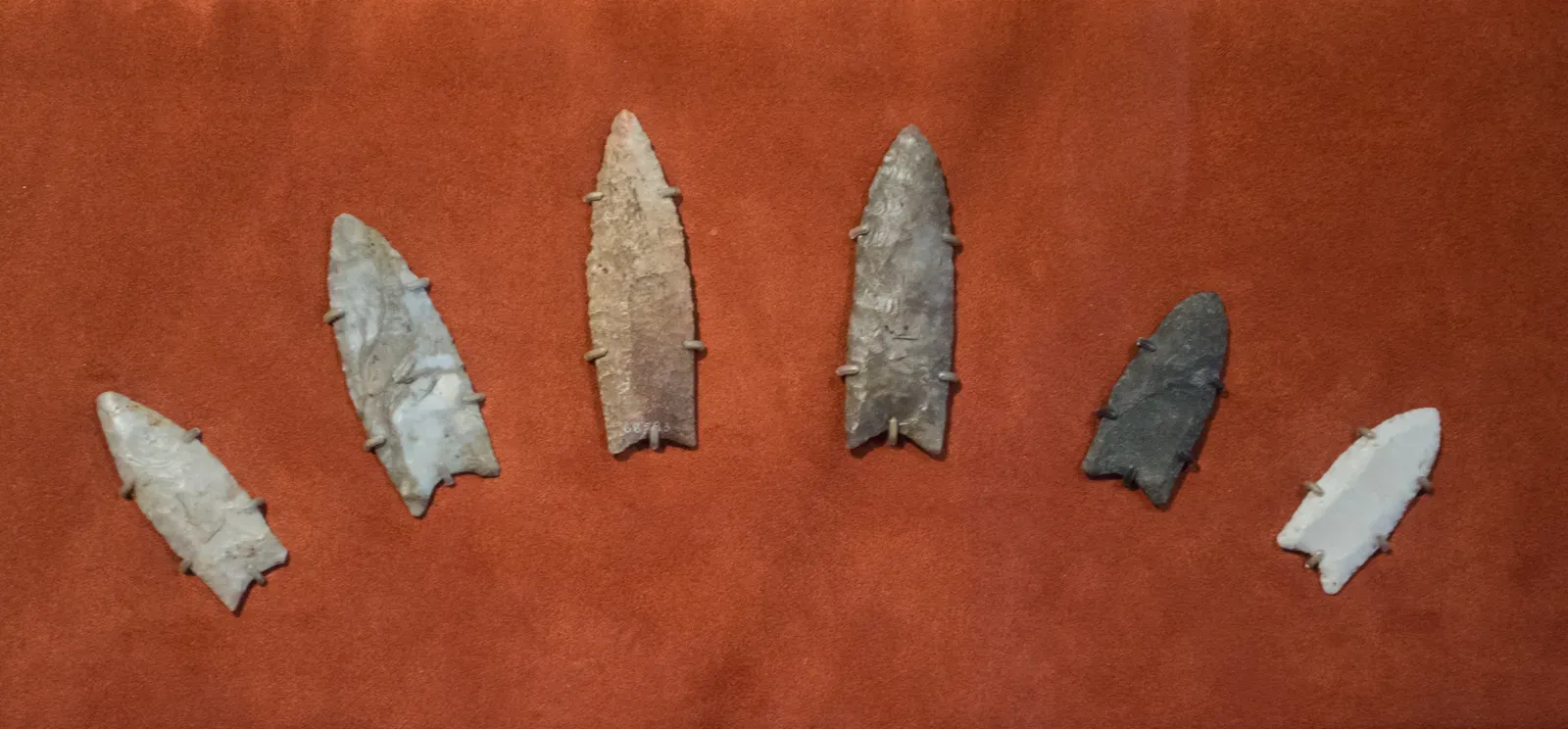
Until recently, it was generally believed that the first Paleo-Indian people to arrive in North America belonged to the Clovis culture. This archaeological phase was named after the city of Clovis, New Mexico, where in 1936 unique Clovis points were found in situ at the site of Blackwater Draw, where they were directly associated with the bones of Pleistocene animals. Finding a spear point buried alongside a mammoth skeleton is exactly the kind of discovery that rewrites history books.
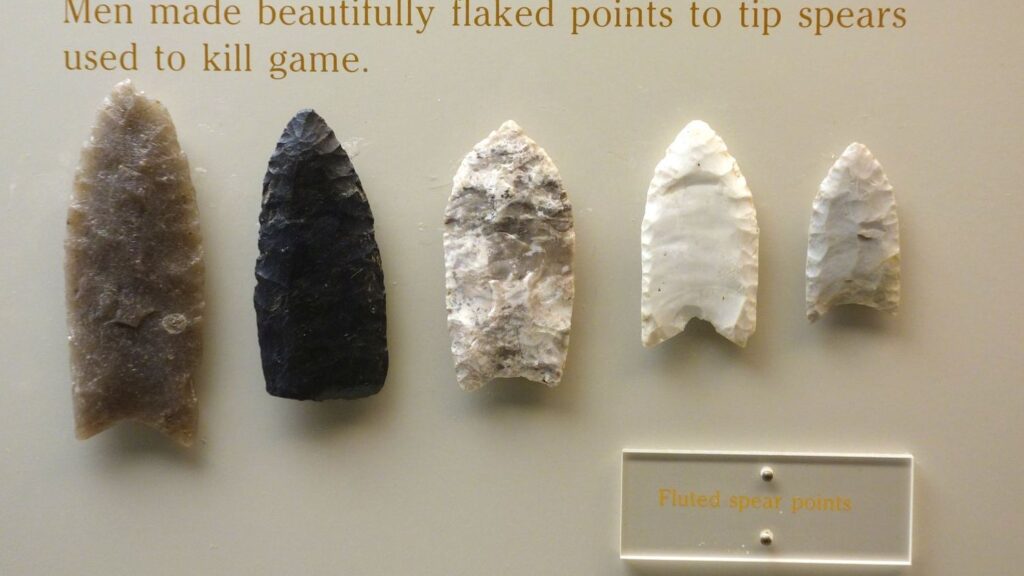
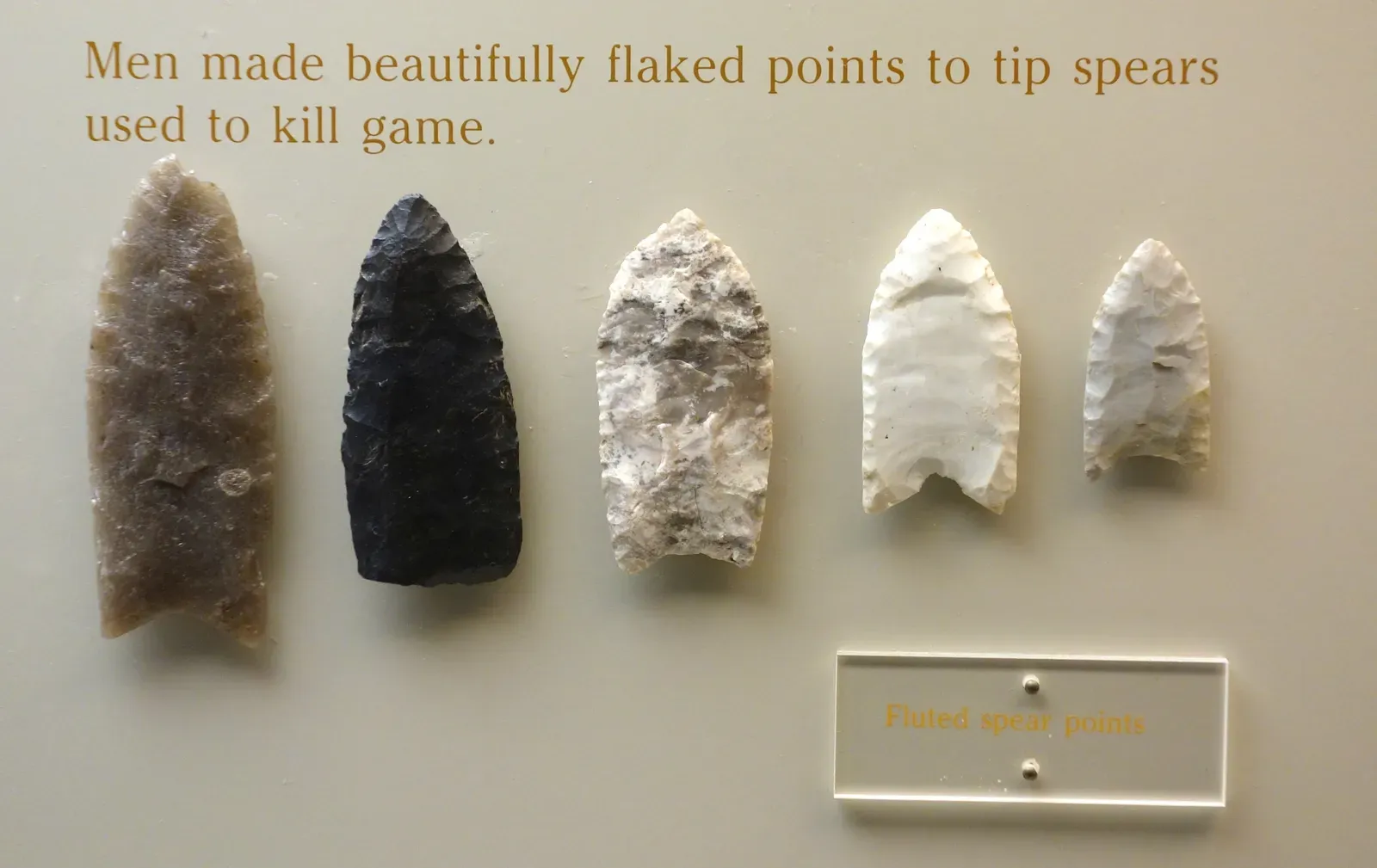
The most distinctive part of the Clovis culture toolkit are Clovis points, which are projectile points with a fluted, lanceolate shape. Clovis points are typically large, sometimes exceeding 10 centimetres in length. These points were multifunctional, also serving as cutting tools. Think of it like the Swiss Army knife of the Ice Age. The Clovis peoples are thought to have been highly mobile groups of hunter-gatherers who were reliant on hunting big game. Clovis peoples had a particularly strong association with mammoths, and to a lesser extent with mastodon, gomphothere, bison, and horse, though they also consumed smaller animals and plants.
Beyond its nutritional importance, megafauna hunting also held cultural significance for the Clovis people. Successful hunts were likely celebrated as communal events, fostering social bonds and a sense of shared identity. Additionally, the spiritual significance of these animals may have influenced hunting rituals and practices. So you are not just looking at prehistoric hunters – you are looking at a complex society with culture, ceremony, and community.
The Folsom Tradition: Adaptation After the Mammoths Vanished
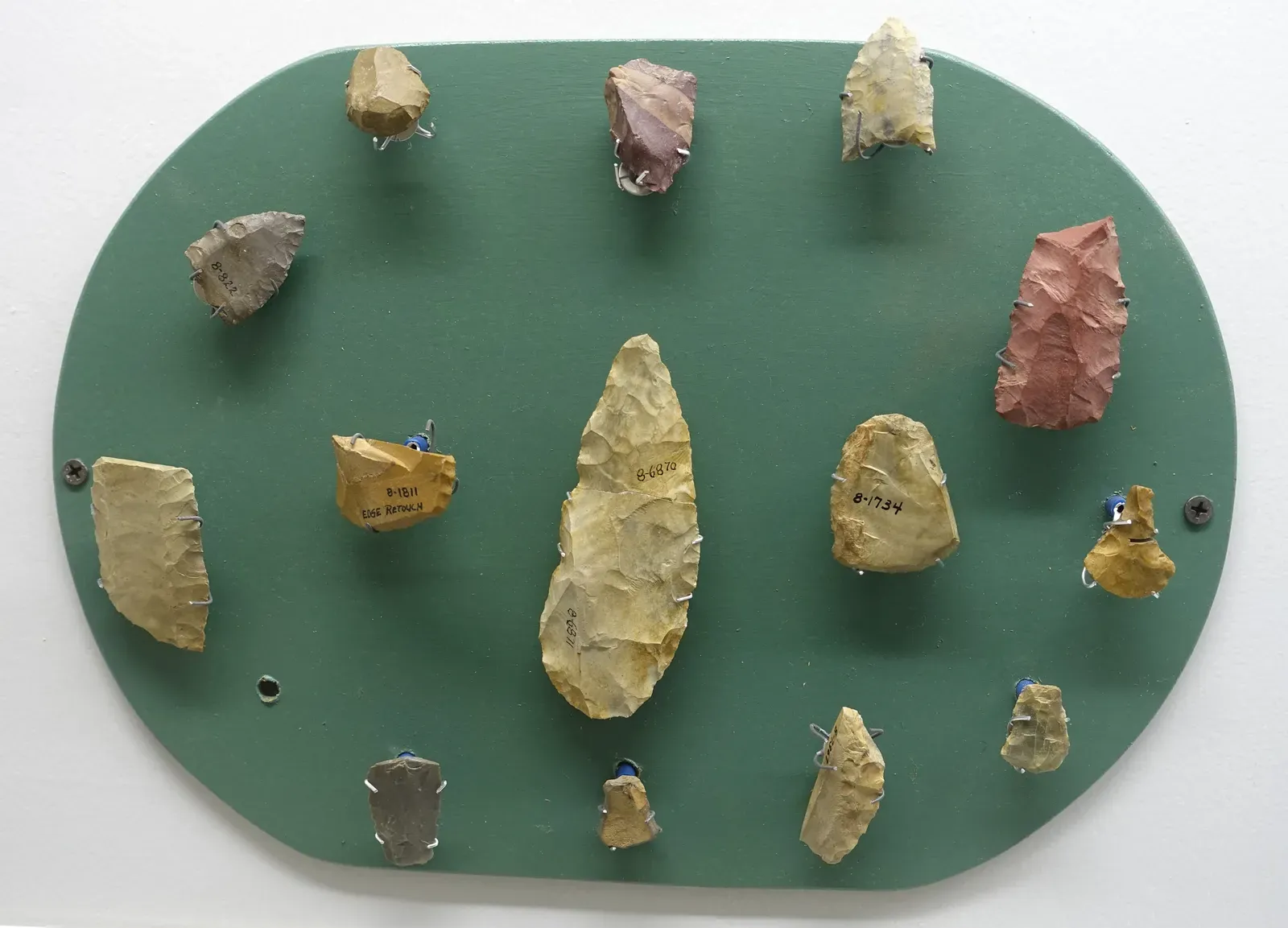
The Folsom tradition is a Paleo-Indian archaeological culture that occupied much of central North America from around 10,800 BCE to 10,200 BCE. What makes it so significant? The mammoths were largely gone by then, and these people had to reinvent their entire way of life. Dating to slightly later, around 12,800 to 12,000 years ago, Folsom points are generally smaller, thinner, and exhibit a much longer, more elegant flute that often extends nearly to the tip. While Clovis hunters primarily targeted a range of megafauna including mammoths and mastodons, Folsom hunters are strongly associated with the specialized hunting of Bison antiquus, a larger, now-extinct ancestor of modern bison.
The Lindenmeier site, a Folsom campsite in northeastern Colorado, has yielded a variety of scrapers, gravers used to engrave bone or wood, and bone tools. That detail about engraving bone or wood is worth pausing over. You are looking at early artistry, early expression – people who carved not just for survival, but perhaps for meaning. Bayesian statistical analysis of radiocarbon dates found that the earliest Folsom dates overlap with the latest Clovis dates, indicating that the two technologies overlapped for multiple generations and supporting the idea that Folsom represents a technological innovation within Clovis.
Later Paleo-Indian groups were also hunter-gatherers who manifested varying degrees of mobility and subsistence strategies, which in many areas included the systematic production of both extinct and modern bison, usually via communal hunting techniques. Despite a focus on bison, these later Paleo-Indian groups also exploited a wide array of medium-sized to small game as well as plants, waterfowl, and other nonmegafaunal resources. So the old image of the single-minded mammoth killer is far more complicated than you might have imagined.
Before Clovis: The Game-Changing Evidence from Monte Verde and Beyond
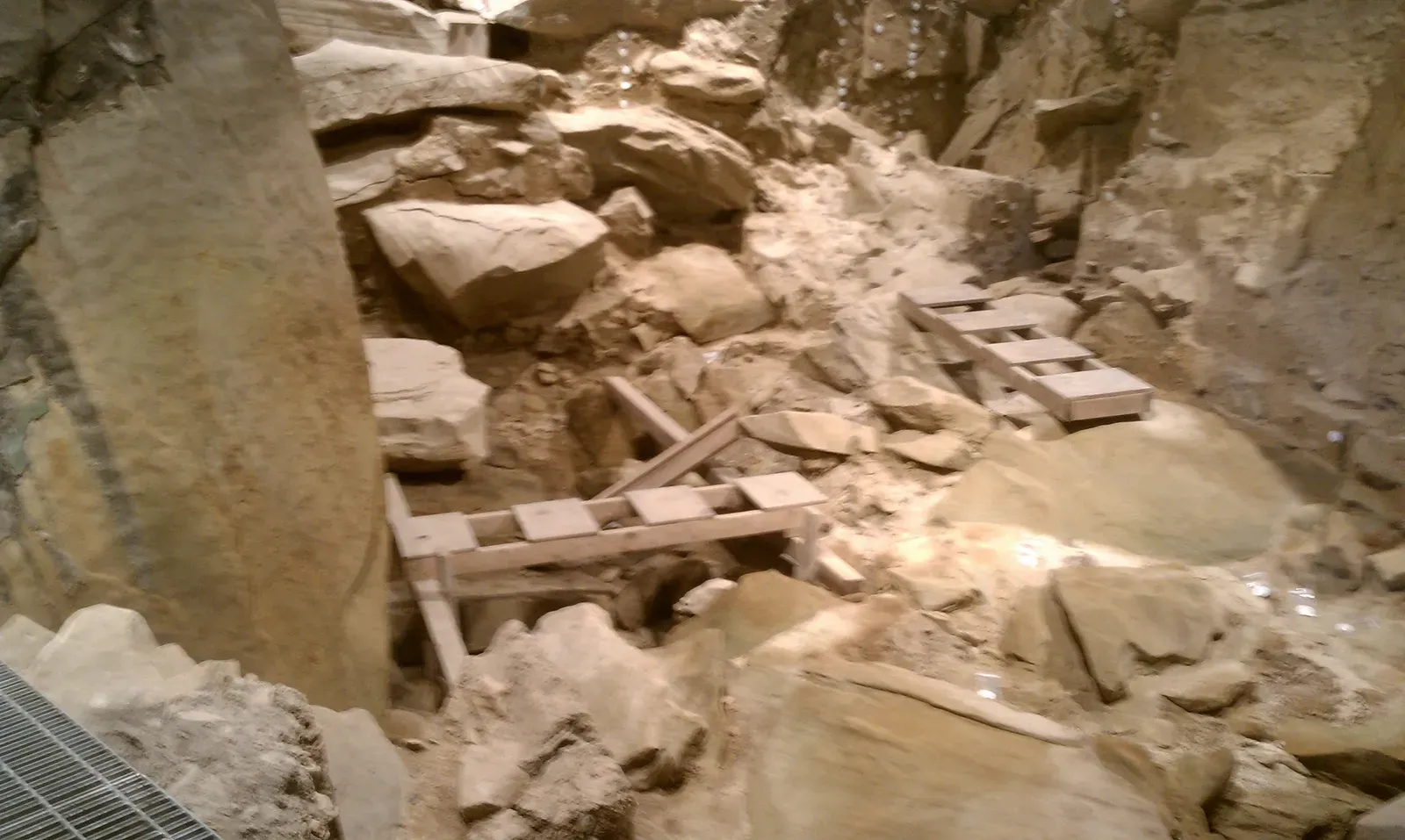
Here is where things get genuinely thrilling – and, I think, a little mind-bending. For decades, the “Clovis First” model dominated archaeology like an ironclad rule. Then the evidence started cracking it. The Monte Verde II site has been considered key evidence showing that the human settlement of the Americas pre-dates the Clovis culture by at least 1,000 years. This contradicts the previously accepted “Clovis First” model which holds that settlement of the Americas began after 13,500 BP.
Material evidence gathered at Monte Verde has reshaped the way archaeologists think about the earliest inhabitants of the Americas. Radiocarbon dating has provided a date of 14,000 BP and possibly as far back as 14,800 to 33,000 BP. To put that in perspective – 33,000 years ago, humans in Europe were painting cave walls at Chauvet. Archaeological sites such as Meadowcroft Rockshelter in Pennsylvania and Monte Verde in Chile challenge the notion that Clovis was the sole progenitor of Paleo-Indian cultures, suggesting instead that diverse groups arrived in the New World much earlier, around 18,000 B.C.E.
In addition to Meadowcroft, other pre-Clovis sites have been discovered at widely separated locations in North America, including Cactus Hill and Saltville in Virginia, Topper in South Carolina, the Nenana complex sites in Alaska, and a cluster of Chesrow complex sites in Wisconsin. All these localities are as old as or significantly older than Clovis, and none appears to be related to that entity. The pre-Clovis debate has essentially ripped open the entire question of who the first Americans were, and you can be sure that question is far from settled.
Hunting Giants: Megafauna, Survival Tactics, and the Paleo-Indian Way of Life
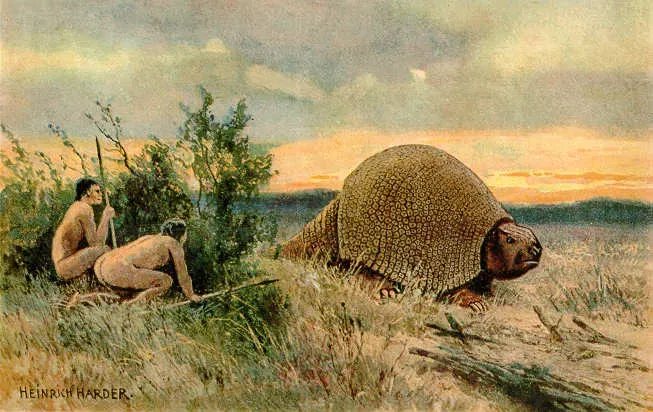
Upon arriving in the New World, the Paleo-Indian people entered what might be described as a hunter’s paradise. The land was filled with large game such as mastodons, mammoths, giant ground sloths, peccaries, and prehistoric camels, horses, and bison. Honestly, you have to try to picture what that world looked like – herds of creatures that today only exist in museum reconstructions, roaming a continent that had never seen a human before.
These megafauna had no prior experience with people and therefore lacked behavioral adaptations against hunters, which in turn made them easier targets. The Paleo-Indians hunted in groups, composed of a dozen or so hunters. A favorite hunting strategy seems to have been creeping up on a target and wounding it with their spears. Once the wounded animal ran off, the hunters would follow close behind and harass it until it was exhausted enough for the final blow to be safely delivered.
While the fluted point was the lethal tip, its true potential was unlocked by another ingenious device: the atlatl, or spear-thrower. This simple yet revolutionary tool transformed a hand-thrown spear into a weapon of formidable power and accuracy. Think of the atlatl like an early mechanical advantage – the difference between throwing a tennis ball by hand and launching it with a racquet. They became master naturalists as a matter of survival, intimately acquainted with the seasons and the animal and plant life of their environment.
Spiritual Lives and Social Structures: More Than Just Hunters
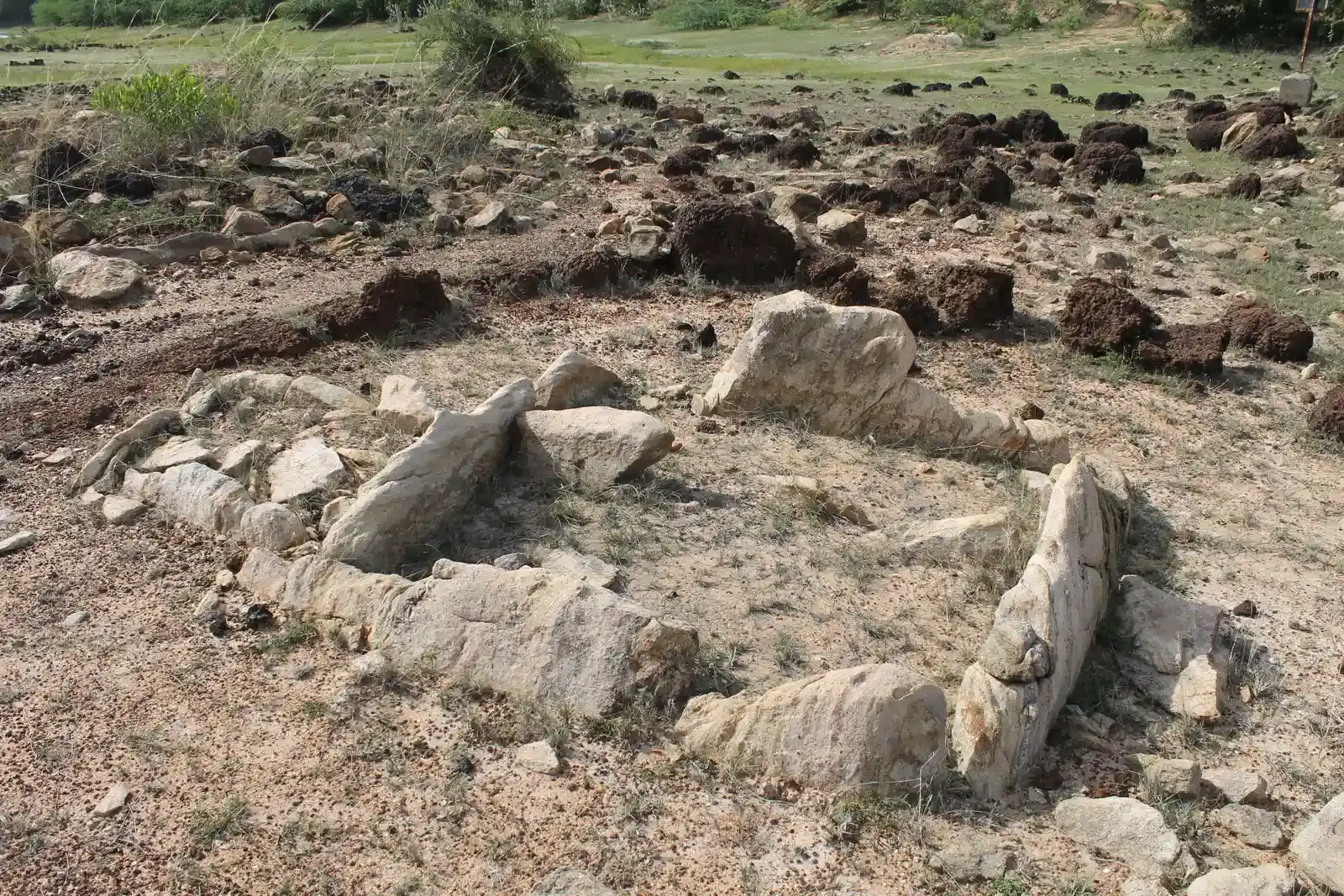
You might assume that Paleo-Indians were too consumed with bare survival to develop anything resembling a spiritual or social life. That assumption, it turns out, would be wrong. It is believed that these hunters and gatherers had some notion of an afterlife when archaeologists unearthed two remains buried with various artifacts. This includes full stone points and intentionally broken bone foreshafts. The bodies and the artifacts also had red ochre sprinkled on top of them. From this discovery, archaeologists can infer that the Paleo-Indians participated in rituals as a means of coping with death.
The so-called Paleoamericans likely banded together in groups of thirty to fifty and located themselves near high-quality stone resources. While keeping a base camp, they may have established smaller settlements for more specialized tasks such as tool-making and hunting. The bands probably lacked central leadership, moved often, and traded with one another. So you are looking at early human communities that were flexible, collaborative, and resourceful – much more nuanced than the old popular image of cavemen dragging clubs around.
Based on the religious practices of the later Virginia Indians, they likely were animists, investing various natural forces with spiritual power. This tracks with what we see in many indigenous traditions worldwide – a deeply held belief that the world around you is alive and must be respected, not just conquered. They buried their friends and relatives with love and care, which says something profound about their humanity that no stone tool can fully capture.
The End of an Era: Climate, Extinction, and the Transformation into New Cultures
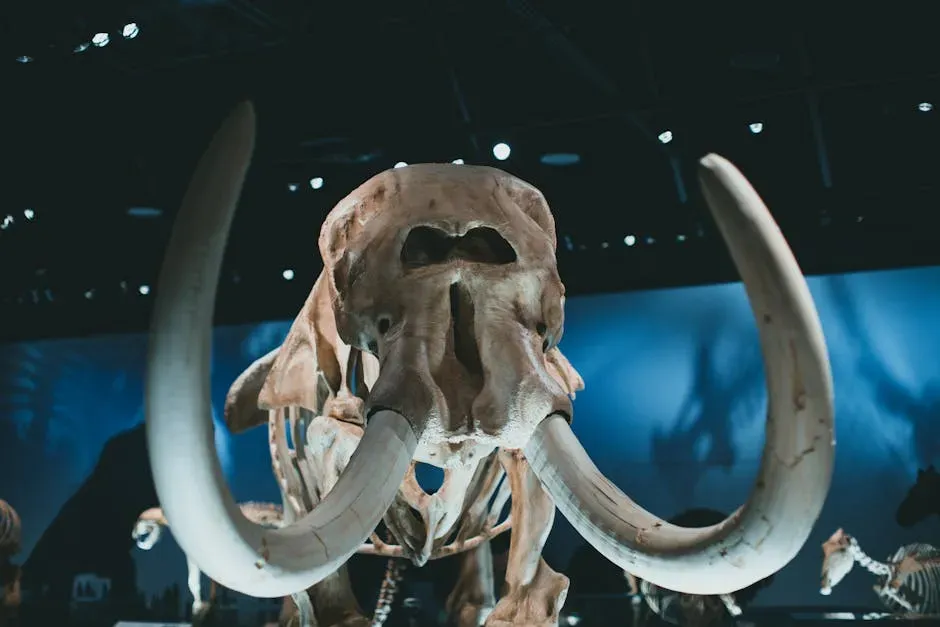
Every great chapter of history eventually closes, and the Paleo-Indian period is no different. Paleoindians lived alongside and hunted many now-extinct megafauna, with most large animals across the Americas becoming extinct towards the end of the Paleoindian period as part of the Late Pleistocene megafauna extinctions. Whether you believe it was overhunting, climate change, or a brutal combination of both, the result was the same: a world transformed almost beyond recognition.
Authorities differ as to whether the extinctions of megafauna were caused by climate change, specifically the Younger Dryas, or over-hunting by Paleo-Indians, or both. It’s hard to say for sure, but the debate is as fierce today as it has ever been. As the last glacial maximum receded, the climate began to warm, leading to significant environmental changes. Forests replaced grasslands, and many of the megafauna that had thrived in the colder, open environments began to decline, eventually leading to their extinction around the end of the Paleo-Indian period.
From 8000 to 7000 BCE, the climate stabilized, leading to a rise in population and lithic technology advances, resulting in a more sedentary lifestyle during the following Archaic Period. In other words, the story didn’t end – it simply transformed. The Paleo-Indians laid the groundwork for the rich tapestry of indigenous cultures that would later develop across North America. Their early innovations in tool-making, social organization, and subsistence practices influenced subsequent generations and contributed to the cultural diversity of the continent.
Conclusion: A Story Still Being Written
The Paleo-Indians are, in many ways, the ultimate cold case. You have fragments of tools, buried bones, traces of red ochre on ancient remains, and genetic code buried inside the DNA of millions of living people. Each new discovery shifts the picture. Each new excavation rewrites what you thought you knew.
What’s remarkable is that by studying these ancient peoples – their migrations, their technologies, their social bonds, and their spiritual lives – you are really studying the roots of all human resilience. They crossed a land bridge into an unknown continent, hunted creatures the size of buses, adapted when the world around them changed, and built the foundations of every Indigenous culture that followed.
are not just fascinating historical puzzles. They are a reminder that the human capacity to adapt, explore, and endure is older and deeper than almost anything else we know. What part of their story surprises you most? Tell us in the comments.