

Somewhere on a dark plain, maybe around a flickering fire, a small child points at lightning ripping across the sky and looks up at an elder with wide eyes. In that pause, in that puzzled stare, you can almost hear the question that changed our species forever: Why? We will never know the exact moment it happened, or who said it first, but that first “why” was probably less a word and more a tiny mental earthquake, a crack in the wall between instinct and reflection.
Thinking about that moment is oddly emotional. It is not just a question about the past; it is a question about what makes us human right now. Every time a kid asks why the sky is blue, or you lie awake wondering why your life turned out the way it did, you are replaying the same ancient move: refusing to accept the world as a mute backdrop and insisting it explain itself. Tracing that first “why” is a little like trying to find the first spark that eventually became the internet, cities, science, and your late-night spirals of overthinking.
The Day Curiosity Turned Into a Question

Before there was language, there was still wondering. Even other animals clearly get confused or surprised: a chimp gets tense when a snake appears, a wolf hesitates at a cliff edge, a crow tilts its head at a strange object. But all of that is more like “What is that?” or “Is this safe?”, not the open-ended, almost rebellious spirit of “Why?” That first human “why” likely came when curiosity and language finally snapped together, turning a raw feeling into a sharp tool.
Imagine an early human child watching someone die unexpectedly, or seeing the sun disappear in an eclipse. Fear alone would not be enough; something deeper would press for a reason, even if no one had a good answer. At some point, a sound or gesture meant “why” well enough that others understood: it asked for a cause, not just a label. From that day on, humans were no longer just reacting to the world; they were disputing it, interrogating it, and quietly refusing to let it stay meaningless.
The Ancient Brain Behind the Word “Why”
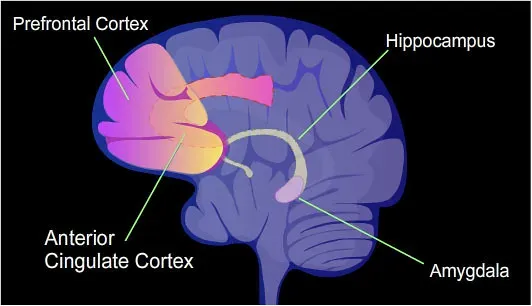
Under the hood, “why” is a weirdly advanced move for a brain. It needs memory to notice that something new or wrong has happened, imagination to picture alternatives, and language to package all that into a question another person can answer. Neuroscientists today point to the frontal lobes, especially the prefrontal cortex, as the part that helps us think ahead, weigh options, and reason about causes. When a child asks “why,” you are watching this part of the brain flex like a newly discovered muscle.
But here is the twist: the brain structures that support curiosity and causal thinking existed in earlier hominins long before modern language. That suggests the mental roots of “why” probably predate the actual spoken word by a long stretch. First came this restless drive to search for patterns, then came sounds and symbols to express it. The eventual word for “why” in any language is like a label slapped on a feeling that had been roaming the human mind for hundreds of thousands of years.
From Gestures and Grunts to Abstract Questions

Early communication was likely a mix of pointing, facial expressions, tone, and simple vocalizations. A raised eyebrow, a confused look, a questioning grunt while gesturing at the sky could all function as proto-questions. That first “why” probably did not sound like any modern word at all; it might have been more like a whine, an urgent vocal nudge that clearly meant “explain this” or “what caused that.” The important part is not the syllable itself but the shared understanding that a reason was being requested.
As language became more complex, human groups could move beyond immediate, practical questions and start asking about invisible causes: spirits, intentions, luck, destiny. At that point, “why” began to stretch past the physical into the symbolic. It is one thing to wonder why a rock rolled down a hill; it is another to ask why someone got sick, why a hunt failed, or why we are even here at all. That shift from visible to invisible causes turned “why” into a gateway to myth, philosophy, and eventually science.
When “Why?” Created Stories, Gods, and Meaning
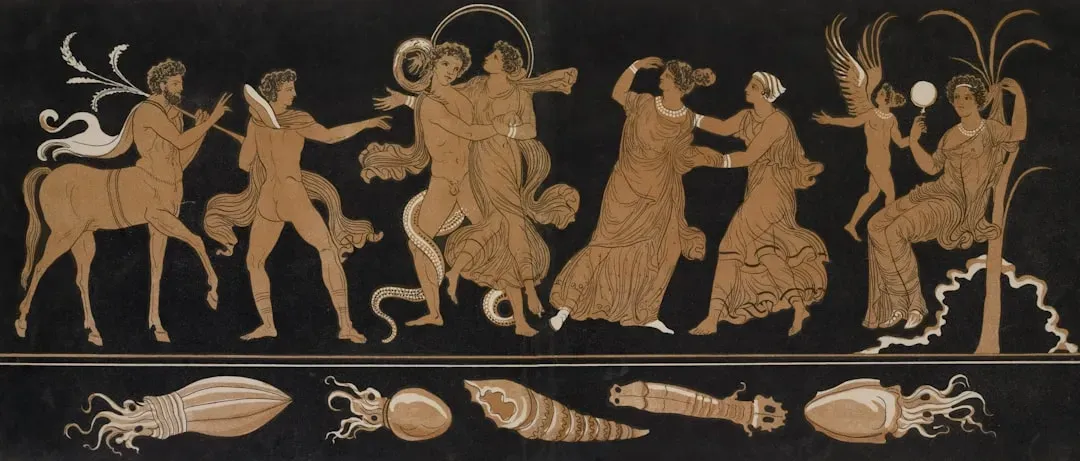
As far back as we can see in ancient cultures, humans have told origin stories to answer why the world is the way it is. The patterns are strikingly similar: why is there death, why do seasons change, why are some people powerful and others not, why do bad things happen to good people? Long before telescopes or microscopes, people answered these questions with myths, spirits, and gods, because those were the best tools they had to make reality feel less arbitrary.
It is easy to laugh at those early explanations from a modern, science-soaked perspective, but they were completely rational responses to an intense need for meaning. A world without “why” is terrifying, like walking through a storm with no idea where it came from or when it will end. Stories, even inaccurate ones, gave people the comfort that events had reasons, that someone or something was in charge. That deep craving for explanation is the same emotional engine still powering us when we search online for answers after hearing bad news.
Over time, “why” questions did not just shape stories; they shaped entire social systems. Religious rituals, taboos, and moral codes are often answers to “why should we live this way?” Around ancient hearths and temple courtyards, people debated why certain behaviors angered the gods, why sacrifice or prayer might change fate, and why some rules were non-negotiable. These explanations created a shared sense of order in a chaotic world, even when the underlying facts were not scientifically accurate.
Paradoxically, those same religious and mythic explanations laid groundwork for more systematic inquiry. Once you get used to the idea that a world needs reasons, you eventually start checking whether those reasons hold up. This is the seed of philosophy: not just accepting traditional answers, but interrogating them with more and more refined versions of “why.” So even when early answers were wrong, the habit of asking the question moved humanity forward.
Why “Why?” Is the Engine of Science and Technology

If you strip science down to its core, it is basically weaponized “why.” Why does this plant heal a wound? Why does the shadow change length during the day? Why does heating water turn it into steam? Those questions led to experiments, and experiments led to technologies that completely rewired daily life. Fire, metalworking, agriculture, navigation, engines, electricity, digital devices – all of them were born from people refusing to accept “that is just how it is” as a final answer.
What really changed the game was not just asking why, but testing the answers. When people began comparing explanations, keeping records, and discarding ideas that did not fit the evidence, “why” transformed from a comforting story generator into a ruthless filter. It became less about soothing the mind and more about matching reality. That shift powered the scientific revolution, and it is still unfolding every time someone in a lab, a workshop, or a garage asks why something failed and how it can be made better.
In my own life, the moments that changed my path were usually triggered by a stubborn “why.” Why am I working like this? Why do I believe this assumption? Why does everyone accept this rule? Even when I did not find perfect answers, the act of questioning forced me to see hidden structures: social pressures, old fears, unexamined habits. On a personal scale, “why” is like a flashlight you suddenly remember you had in your pocket the whole time.
On a global scale, we see the same dynamic in modern technology. The reason your phone can navigate you across a city, translate languages, and stream music is that countless generations of people kept asking why things behaved the way they did, drilling down from planets to atoms to electrons to information. You do not see those questions when you tap a screen, but they are embedded in every microchip and algorithm you use without thinking.
When “Why?” Hurts: Anxiety, Overthinking, and Existential Dread

Of course, there is a darker side to all this. The same mental power that helped us invent vaccines and space telescopes also fuels sleepless nights and midlife crises. Many people know the feeling of spiraling through unanswerable questions: Why did this happen to me? Why did that relationship end? Why am I even here? Our brains seem wired not only to seek explanations but to keep demanding them long after they stop being useful or comforting.
Psychologists have pointed out that excessive, repetitive “why” questions about ourselves can slide into rumination and depression. The mind tries to find a neat cause for messy, complex situations where there may be no simple reason at all. It is a bit like trying to debug a glitchy program written by millions of lines of history, biology, and chance. Part of growing up, in an emotional sense, is learning which “why” questions deserve your energy and which ones you have to gently let go.
There is also the existential layer: that heavy awareness that someday you will die, and that many events in life are brutally indifferent to your plans. Once a mind can ask “why am I alive, and why will I die?”, it cannot completely un-ask it. Philosophers, spiritual traditions, and therapists have all wrestled with how to live well under that weight. The question never really disappears; we just learn to live alongside it.
I sometimes think of “why” as a powerful medicine with side effects. Used well, it cures ignorance and opens up new possibilities. Used blindly, it can poison your happiness by making you chase impossible, total explanations. The trick is not to stop asking, but to balance your curiosity with a bit of humility about the limits of what any mind can fully grasp.
Children, Language, and the Personal Birth of “Why”

Even if we cannot pinpoint the first “why” in human history, we can watch it happen every day in childhood. At a certain age, kids suddenly hit a phase where “why” becomes their favorite word. Why is the sky blue? Why do I have to sleep? Why can’t I eat ice cream for breakfast? Developmental researchers see this as a sign that children are building internal models of how the world works, and they are stress-testing those models constantly.
Every adult who has been around a curious kid knows it can be both adorable and exhausting. You answer one “why,” and it births three more. Underneath the chaos, though, something profound is happening: the child is learning that events have causes, rules have justifications, and adults are not infallible sources of truth. That tiny rebellion – refusing to just obey or accept without reason – is a replay of our species-wide leap from animal-like reactions to thoughtful, questioning minds.
The First “Why?” and What It Means for Us Now

We will probably never know who the first human was to truly ask “why,” or what specific mystery pushed them over the edge from silent confusion to articulated curiosity. But we can say this much with confidence: that moment, whenever it happened, was not small. It marked the birth of explanation, storytelling, science, philosophy, and every late-night argument you have ever had about whether life has a purpose or is just a cosmic accident. In that sense, the first “why” might be the quietest revolution in history.
Personally, I think we underestimate how radical it is to live in a species that will not shut up about reasons. It would be simpler to accept things as they are, to never wonder about origins or meanings. Yet here we are, carrying around this ancient, restless question in everything from cutting-edge physics to breakup texts. Maybe the real challenge is not to find one final answer, but to choose our “whys” wisely and let them shape us into more awake, more honest humans. When you think about your own life, which question of “why” has changed you the most, and what are you going to do with it now?