Imagine diving into a warm Cretaceous sea and realizing, too late, that the biggest threat is not a shark, not even a mosasaur, but a short‑necked marine reptile with a head almost as long as you are tall and a bite built to crush bone. That monster has a name – Kronosaurus – and for a while it was thought to be one of the largest marine predators that ever lived. Today, though, it sits awkwardly in the background of popular dinosaur culture, overshadowed by T. rex on land and mosasaurs on screen, even though in its heyday it would have turned almost anything around it into shredded meat.
What makes Kronosaurus so fascinating is how much of it we know, and how much we still do not. Its fossils are patchy, its size has been debated and revised, and even its image in museums had to be publicly corrected. Yet every bone we have tells the same story: this was a powerful, fast, front‑loaded killing machine cruising shallow epicontinental seas. Let’s dive into what we really know about this forgotten predator, why scientists argue about it, and how it rewrites our mental picture of ancient oceans.
The Real Kronosaurus: What It Was (And Was Not)
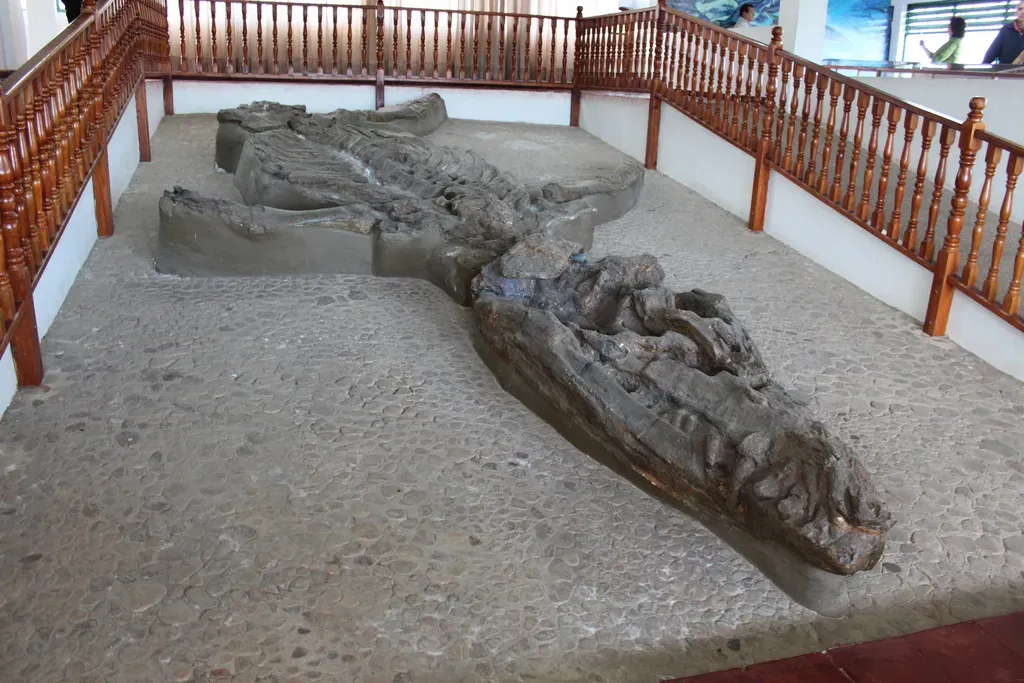
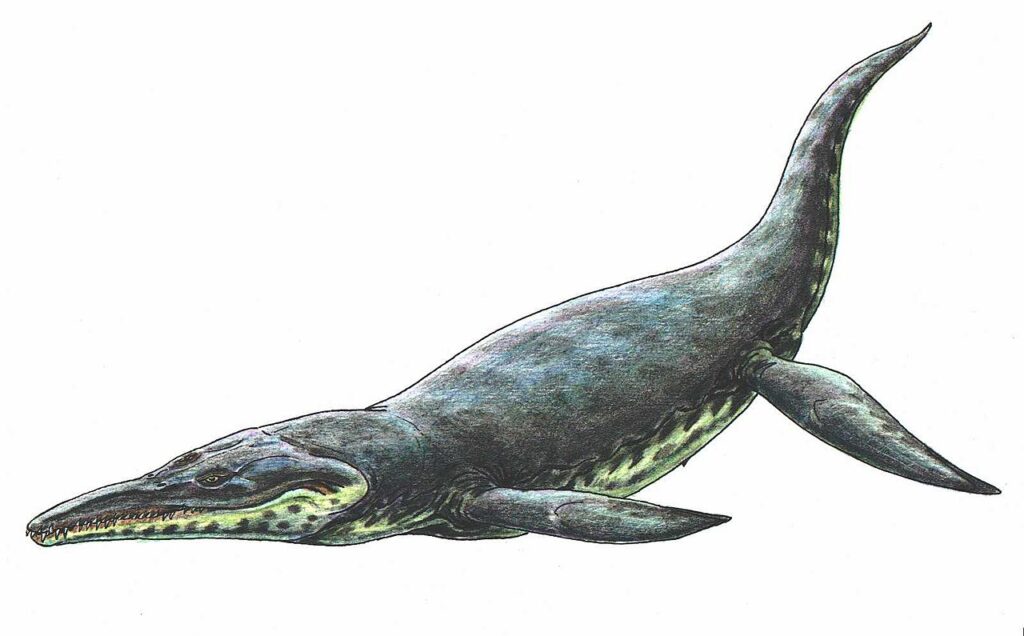
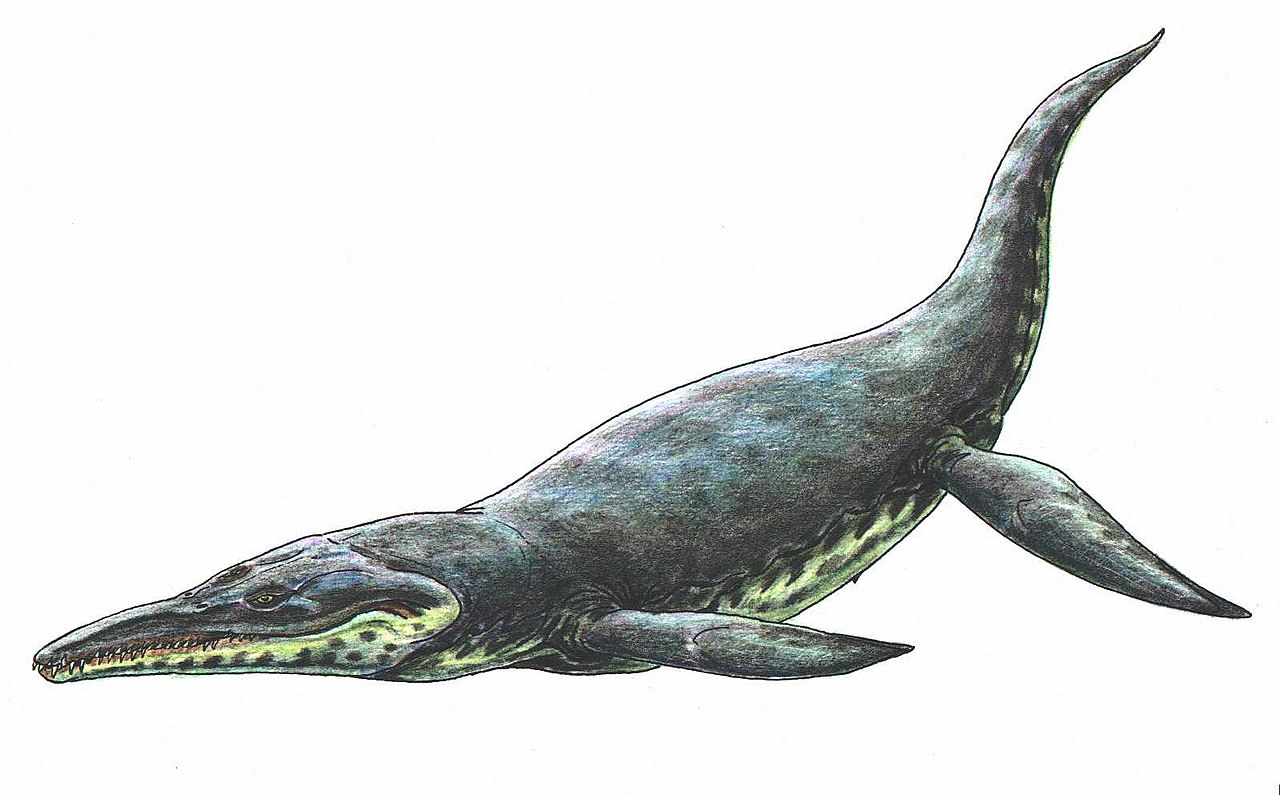
At its core, Kronosaurus is not a dinosaur and not a fish, but a marine reptile in the group called pliosaurs, close relatives of the long‑necked plesiosaurs many people picture from old sea monster stories. Instead of a tiny head on a snake‑like neck, pliosaurs like Kronosaurus flipped the design: a huge, crocodile‑like skull, a short and muscular neck, a barrel‑shaped body, and four broad flippers acting like underwater wings. It lived during the Early Cretaceous period, roughly between about one hundred twenty‑five and one hundred million years ago, mostly in what is now Australia and northern South America.
That basic identity matters because it sets realistic expectations for what Kronosaurus could do. It was air‑breathing, probably warm‑blooded or at least with a relatively high metabolism compared to most modern reptiles, and it gave birth at sea rather than hauling out to lay eggs like sea turtles. It did not move like a shark or dolphin with a tail beating side to side, but more like a four‑engined underwater bird, using powerful strokes of its front and rear paddles for speed and maneuverability. When people imagine it as a giant lizard with flippers slapped on, they miss the point: this was a specialized, highly adapted marine hunter, not just a land reptile that fell into the ocean by accident.
How Big Was Kronosaurus Really?
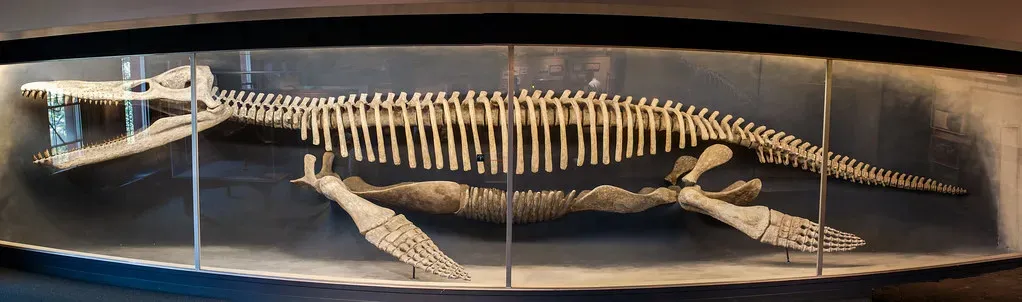
If you saw the famous mounted skeleton of Kronosaurus in certain museum halls decades ago, you might remember something absurdly huge, approaching the length of a city bus. For years, that mount was advertised at around thirteen meters, or more than forty feet, making it sound like a rival to the largest mosasaurs. Later work showed that the reconstruction had a serious problem: its tail and some body parts were stretched out and filled in with too many artificial vertebrae. In plain language, the original display accidentally gave Kronosaurus extra backbone it never earned.
When paleontologists revisited the fossils and measured more carefully, the estimated length dropped into a still‑impressive but more modest range of roughly nine to around ten or so meters for large individuals. That is still larger than a great white shark and in line with a big orca, but not the unstoppable kaiju people once imagined. Personally, I find this revision oddly comforting and more interesting. It is a reminder that science corrects its own hype, even when that hype looks really good in a museum gift shop, and that a predator does not have to break records to be terrifyingly effective.
Skull, Teeth, And A Bite Designed To Break You
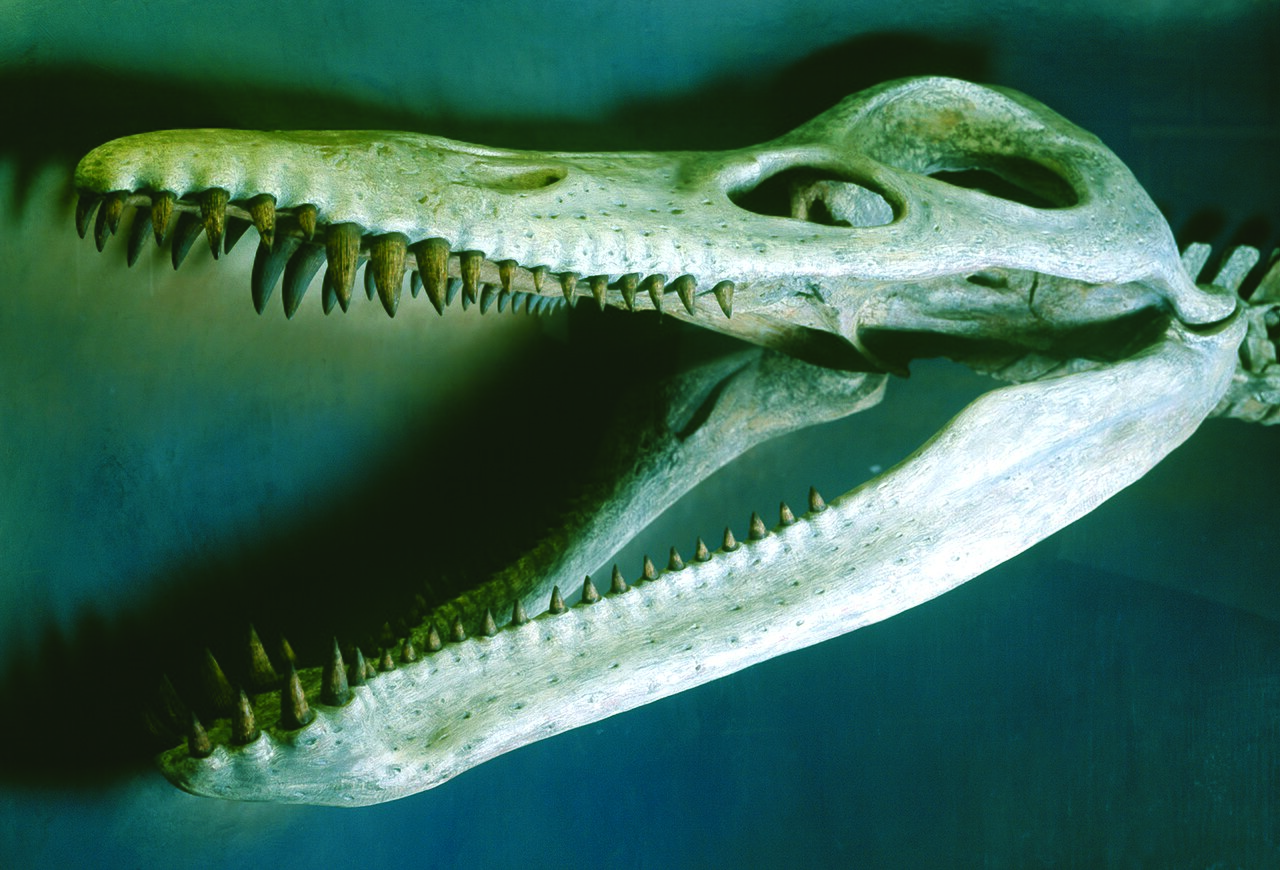
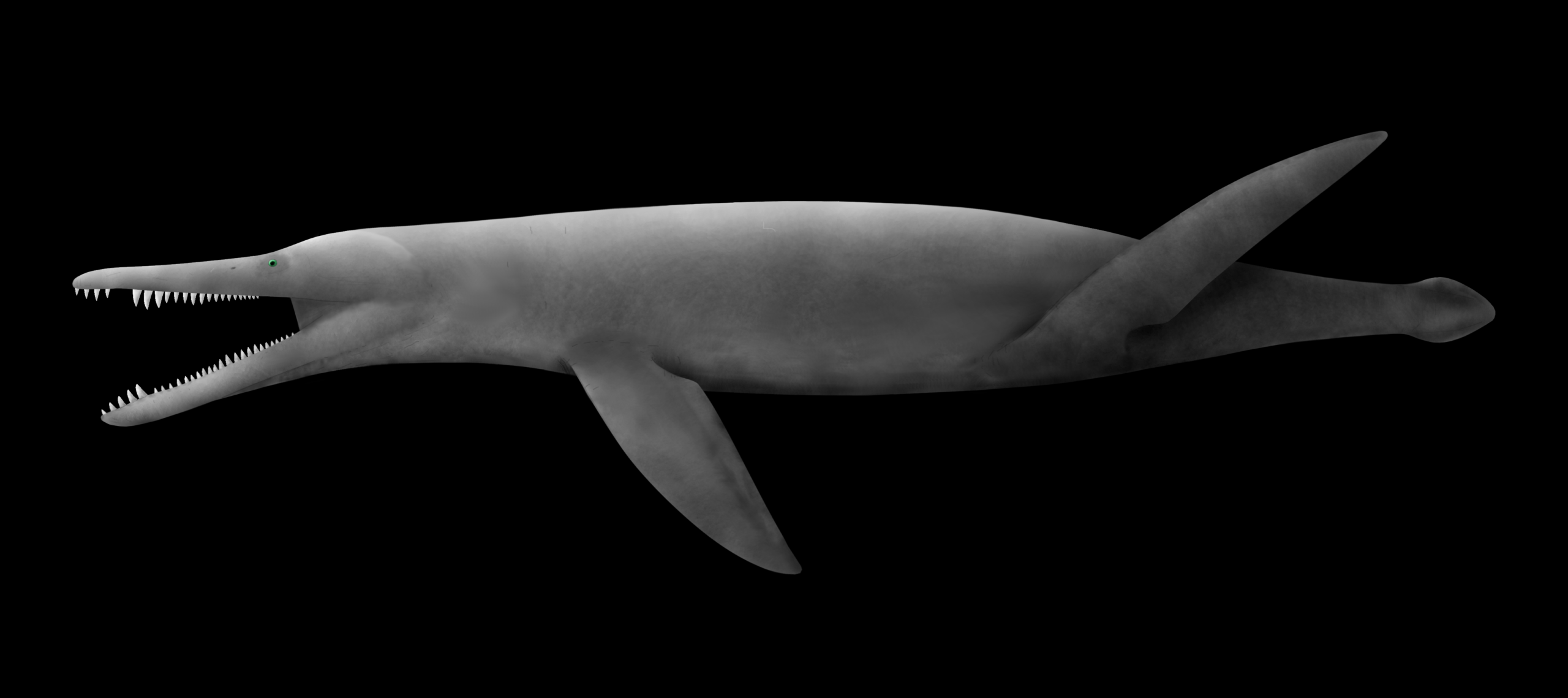
The skull of Kronosaurus is where the nightmare truly begins. Fossils show an elongated, robust head with massive jaw muscles anchored along a reinforced snout and cheek region, more like a biological ramming bar than a delicate fish‑catcher. Its teeth were large, conical, and interlocking, shaped less like the serrated blades of a shark and more like oversized, tapered spikes built to puncture and hold. This kind of dentition is perfect for grabbing big, struggling prey without snapping the teeth off at every impact.
Bite force estimates are inevitably approximate, but the underlying mechanics hint at a crushing power in the same general league as large modern apex predators, more than enough to crack through thick bone or shells. Some pliosaurs show bite marks on the bones of their victims and even on the bones of other pliosaurs, suggesting that these animals did not hesitate to attack large, armored targets. Thinking about it in modern terms, Kronosaurus was less like a nimble swordfish and more like an underwater bulldog, clamping down and refusing to let go while its body and flippers did the dirty work of ripping and twisting prey apart.
Life In The Cretaceous Seas: Where Kronosaurus Ruled
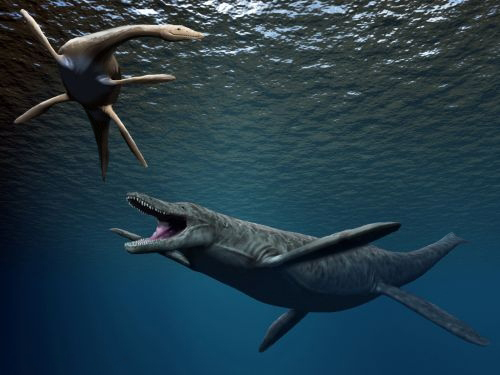
Most Kronosaurus fossils come from marine deposits that were once shallow, warm inland seas or coastal environments, particularly in what is now Queensland, Australia, and parts of Colombia. These waters were not empty blue deserts; they were crowded, chaotic ecosystems filled with ammonites, fish, turtles, early sharks, and other marine reptiles including long‑necked plesiosaurs and possibly smaller pliosaurs. In that mix, Kronosaurus occupied the top predator role, a roaming threat that could show up almost anywhere along the food chain and rearrange it in seconds.
Its body plan hints at a lifestyle balancing bursts of speed with wide‑ranging patrols. The strong front flippers and muscular neck would help it surge forward to ambush prey, while its relatively deep body suggests decent stamina in cruising mode. If you picture an orca moving through coastal waters, occasionally smashing into seal groups or fish schools, you are not far off from how Kronosaurus likely behaved in its own world. It probably did not own the entire ocean, but in its preferred hunting grounds, everything with flesh and bone had a very good reason to stay alert.
What Did Kronosaurus Eat And How Did It Hunt?
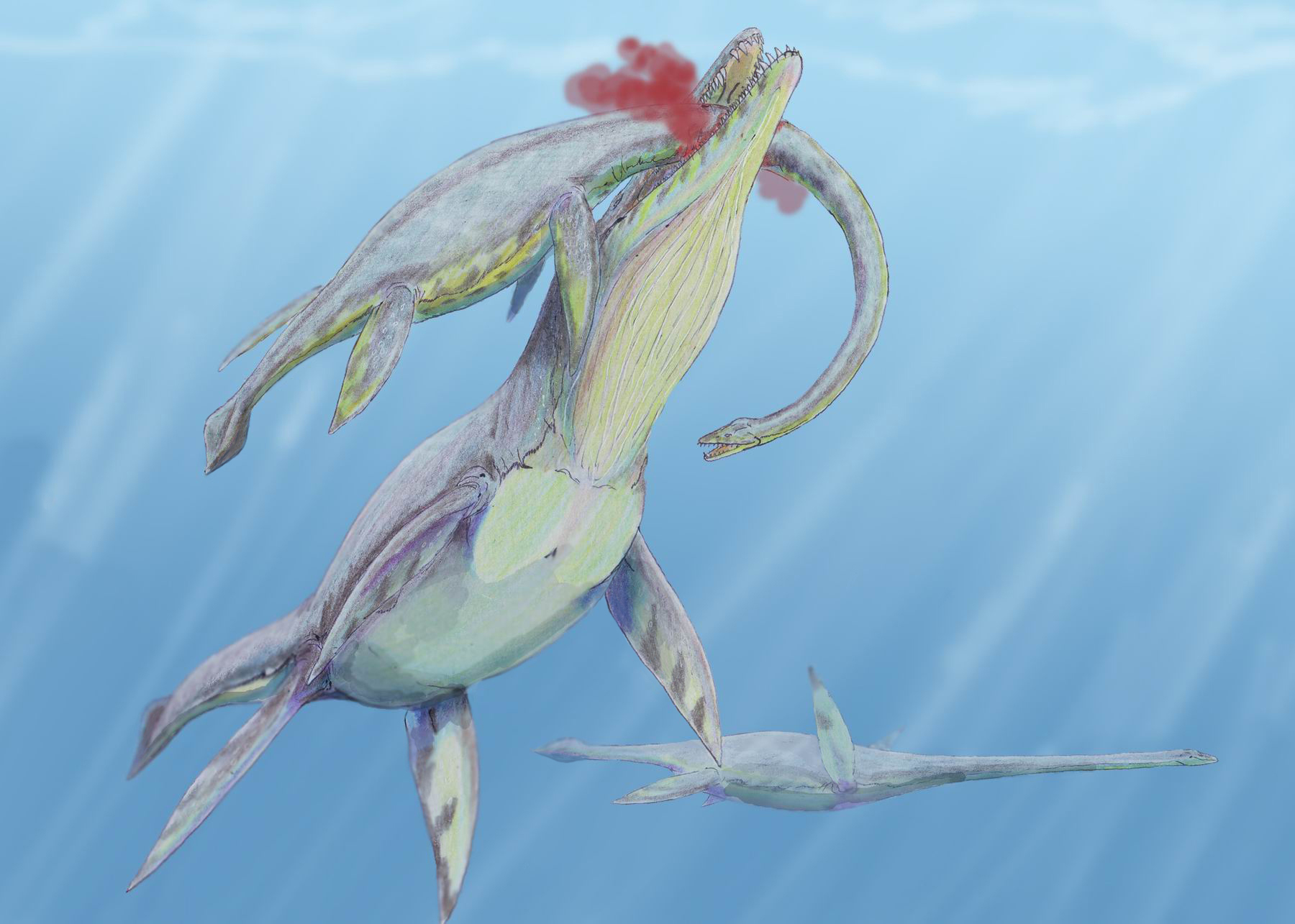
Direct gut contents for Kronosaurus are rare, but related pliosaurs have been found with the remains of large fish, turtles, and other marine reptiles in their body cavity, and the morphology of Kronosaurus fits that same general menu. Its long, powerful jaws and robust teeth were overkill for simple plankton feeders; they scream specialization for big, actively moving prey. Crushing turtle shells, biting through thick reptilian rib cages, or ripping limbs off struggling victims would have been well within its toolkit.
Hunting strategies probably combined ambush and brute force. In murky or moderately shallow waters, Kronosaurus could have approached from below or behind, using its flippers to adjust quietly and then launching forward in a short, explosive burst. Rather than a quick slash‑and‑run like some sharks, it seems more likely that it relied on a decisive strike followed by a violent thrashing or twisting motion to disable prey. To me, that makes it even more unsettling: this was not an elegant fencer of the sea but a heavyweight brawler, turning the water around it into a churning cloud of shock, blood, and broken bone.
Why A Monster Like Kronosaurus Was Forgotten
Given how dramatic Kronosaurus is on paper, it is strange how rarely it appears in documentaries, toys, and pop‑culture lineups compared with mosasaurs or even less well‑known marine reptiles. A big reason is simply fossil PR. Kronosaurus is known from incomplete and scattered remains, and for years its public image was tangled in that oversized museum mount, which eventually had to be quietly corrected. When your most famous reconstruction turns out to be significantly stretched, it can cool the public’s excitement and make artists hesitate to feature you.
There is also the timing problem: mosasaurs and giant sharks tend to hog the spotlight for late Cretaceous oceans, while Jurassic seas get the classic pliosaurs like Liopleurodon, even if their own sizes are also debated. Kronosaurus sits awkwardly in between, both in time and in fame, and ends up feeling like the overlooked middle child of marine monsters. My opinion is that we have seriously undersold it. A nine‑plus‑meter animal with a skull like a bone‑crushing battering ram is more terrifying, in a grounded way, than some of the overblown movie creatures. The fact that we are still arguing about its exact dimensions only adds to its mystique instead of weakening it.
A Predator Worth Remembering
When you strip away the outdated size posters and focus on what the bones actually say, Kronosaurus emerges as a powerful, fast, brutally equipped hunter that dominated its slice of the Early Cretaceous seas. It may not have been the absolute largest marine predator ever, and it probably will not win a popularity contest against movie‑fueled mosasaurs, but it sits comfortably in that elite tier of animals that shaped entire ecosystems simply by existing. In a way, its story is a quiet pushback against our obsession with extremes; you do not have to be the biggest or the flashiest to be genuinely terrifying.
Personally, I think Kronosaurus deserves a comeback, not as a cartoonish sea dragon but as a real animal with limits, trade‑offs, and a hunting style that feels all too plausible. There is something more chilling about a predator that could have actually worked, day after day, year after year, in real oceans full of real victims. Remembering Kronosaurus is really about remembering that ancient seas were not just stages for our favorite stars, but complex, evolving battlegrounds where creatures like this rewrote the rules. If you had to pick, would you rather share the water with a great white shark today, or gamble on meeting a Kronosaurus in its prime?