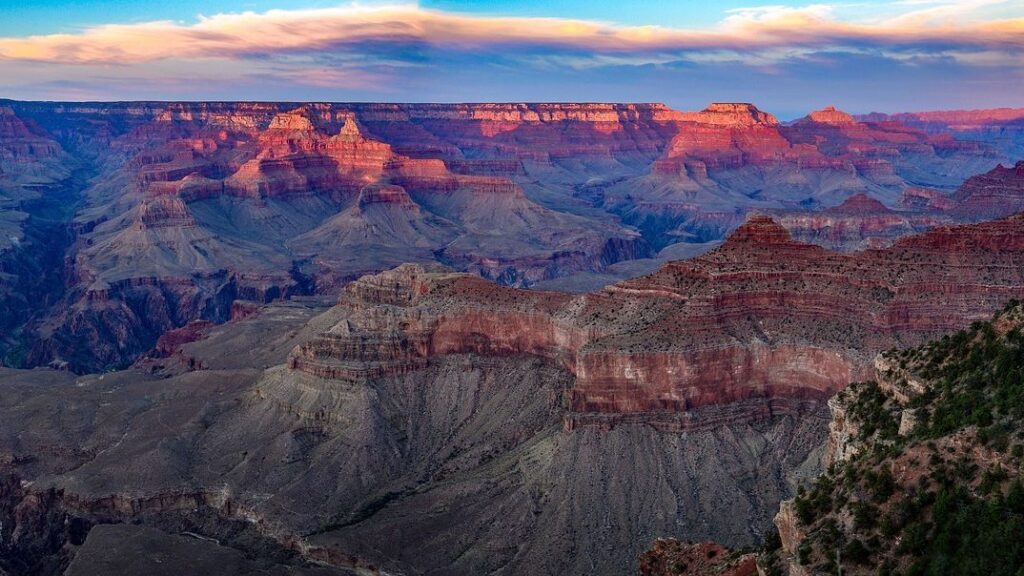
Few places on Earth make you feel as small as standing at the rim of the Grand Canyon. You’re not just looking at a big hole in the ground. You’re looking at time itself, stacked in bands of red, tan, and gray, stretching downward through eons you’ll never be able to fully grasp.
What makes the canyon extraordinary isn’t just its scale, though that’s genuinely staggering. It’s the fact that its walls function as a natural archive, recording events that took place long before complex life even existed. Scientists have spent more than a century studying it, and they’re still finding new chapters in the story.
A Window Into Nearly Two Billion Years of Earth’s History
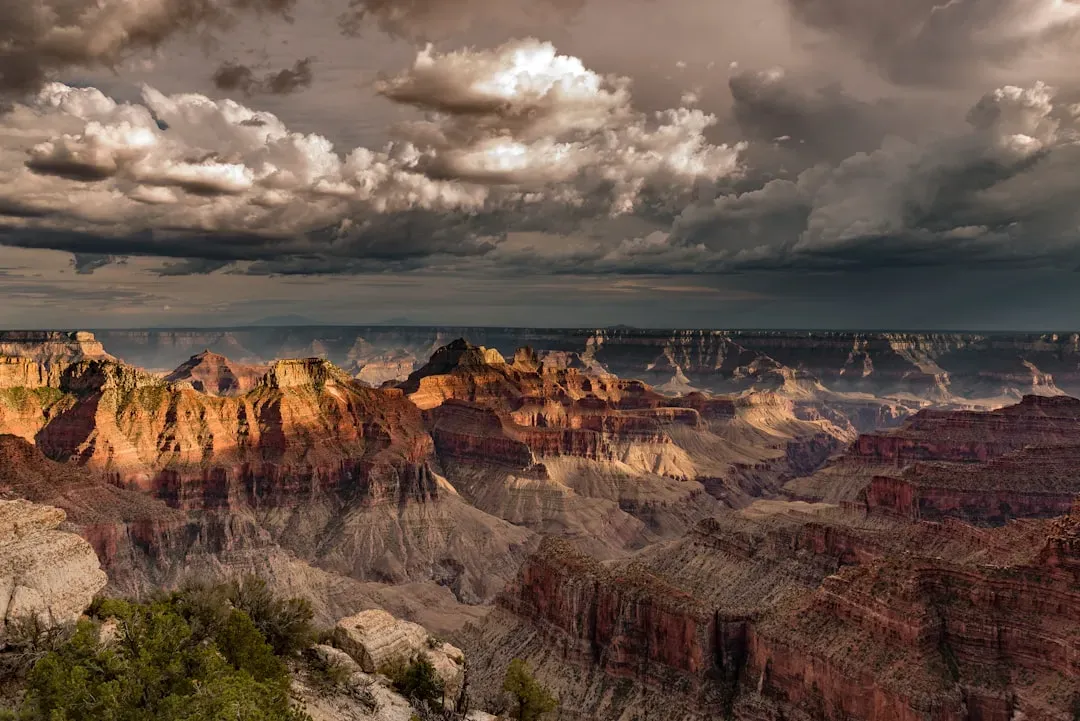
With one of the clearest exposures of the rock record and a long, diverse geologic history, the Grand Canyon is an ideal place to gain a sense of geological deep time. The rocks exposed in its walls record approximately one third of the planet’s entire history, spanning from the Precambrian all the way to the Permian Period of the Paleozoic Era.
The canyon extends more than 400 kilometers, from Lake Powell to Lake Mead, and cuts roughly 2 kilometers into the Earth’s crust, revealing nearly 1.7 billion years of geological history. That kind of vertical depth means that when you hike down into it, you’re moving through time in a way no textbook can fully replicate. In this one relatively small sliver of canyon, rocks representing roughly 40 percent of Earth’s entire history are exposed to human examination.
The Vishnu Basement Rocks: Earth’s Ancient Foundation
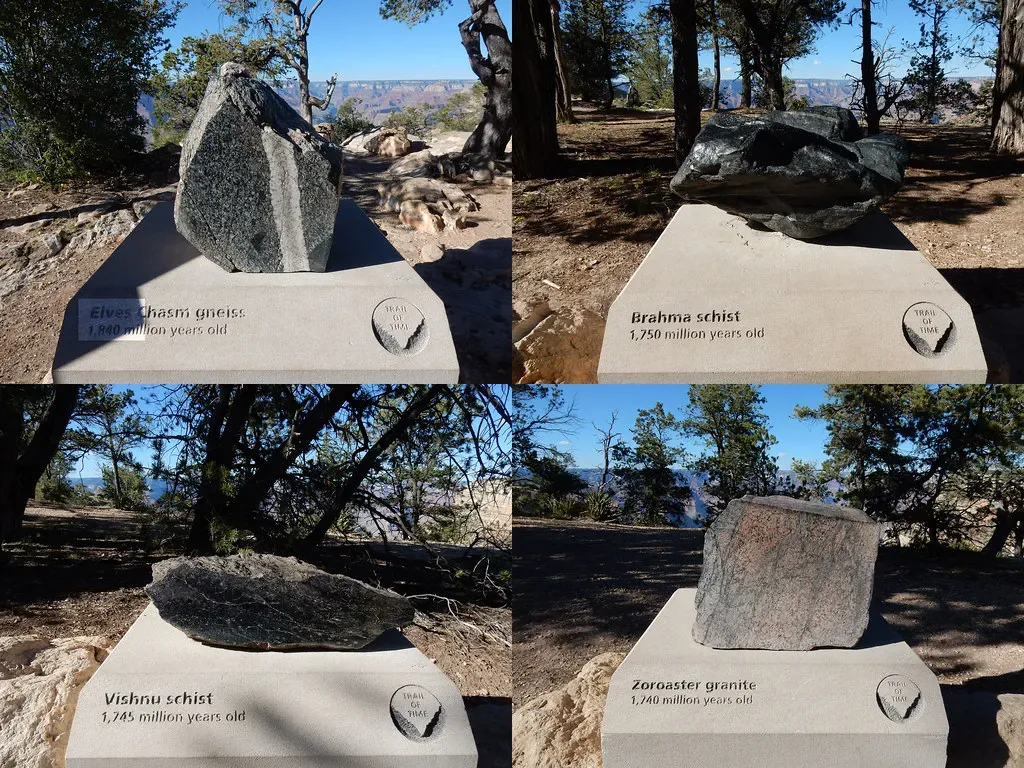
The oldest rocks in the Grand Canyon, found at the very bottom, are primarily metamorphic with igneous intrusions. The intrusive igneous rocks here are called Zoroaster Granite, and the combination of metamorphic and igneous rock found at this location is known as the Vishnu Basement Rocks. Primarily schist and granite, these rocks have visible crystals and are about 1.7 billion years old, from an era early in Earth’s history known as the Proterozoic.
The oldest known rock in the Grand Canyon, known as the Elves Chasm Gneiss, is located deep in the canyon’s depths as part of the Vishnu Basement Rocks and clocks in at an ancient 1.84 billion years old. The Vishnu Schist and Zoroaster Granite were once the roots of an ancient mountain range that could have been as high as today’s Rocky Mountains. To hold a piece of that rock in your hand is to touch the literal foundation of a continent.
Reading the Rock Layers Like a Book
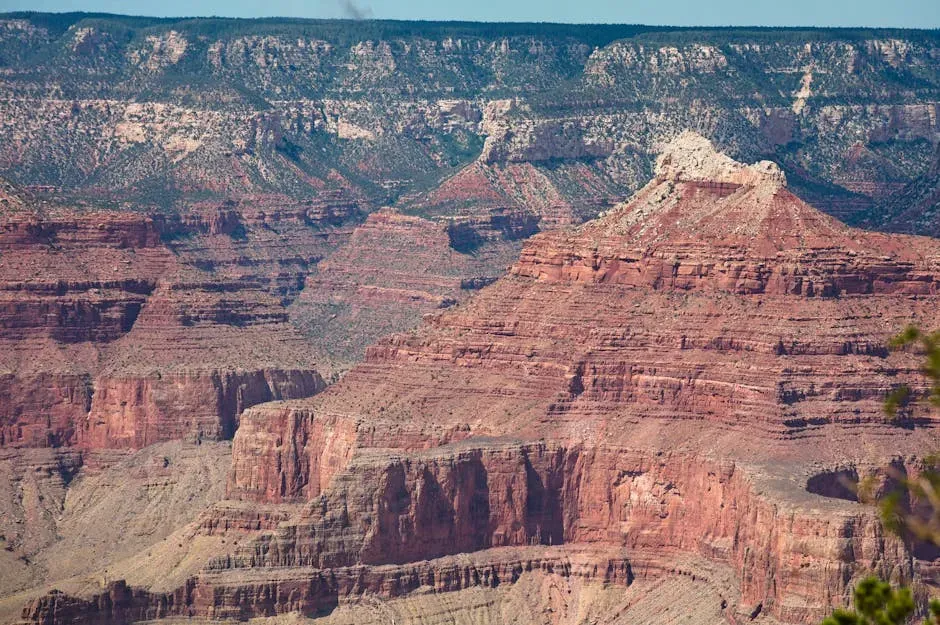
The nearly 40 major sedimentary rock layers exposed in the Grand Canyon range in age from about 200 million to nearly 2 billion years old. Most were deposited in warm, shallow seas and near ancient, long-gone shorelines in western North America. Each layer carries a different story, written in the language of minerals, fossils, and sediment grain size.
Stratigraphy is the study of rock layering and reveals a wealth of information about what Earth was like when each layer formed. In the Grand Canyon, clear horizontal layers of different rocks provide information about where, when, and how they were deposited, long before the canyon was even carved. Some layers were formed when the region was covered by shallow seas, while others were created when the land was a vast desert. The colors of the canyon walls, from reds and oranges to tans and grays, come from minerals in the rock that reacted with oxygen over time.
The Great Unconformity: A Billion Years of Missing Time
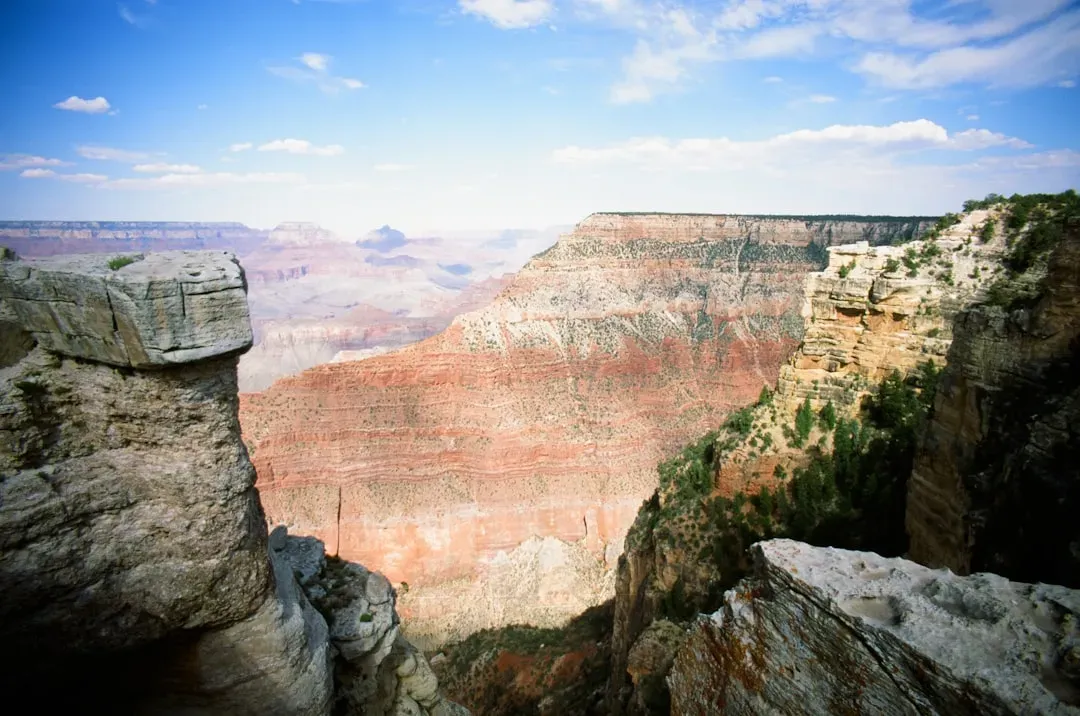
The Great Unconformity is a section of the Grand Canyon where two layers of rock with as much as a 1.3-billion-year age difference overlap. Researchers have long asked: what explains the missing layers of time in between? It’s one of geology’s most captivating puzzles, visible right there in the canyon walls for anyone willing to look closely enough.
The vertical mile of rock revealed in the Grand Canyon looks like a spectacularly complete rock record, yet more time is missing than is preserved. The canyon is the type location for a profound unconformity, found on many continents, that has Paleozoic sedimentary strata overlying the unroofed igneous and metamorphic core of ancient mountain belts. Across this contact, up to 1.3 billion years of Earth history has been removed by erosion in several stages. What makes it even stranger is that the Great Unconformity shows up in rocks worldwide, always in rocks from the same era, around 550 million years ago and earlier.
How the Colorado River Carved the Canyon
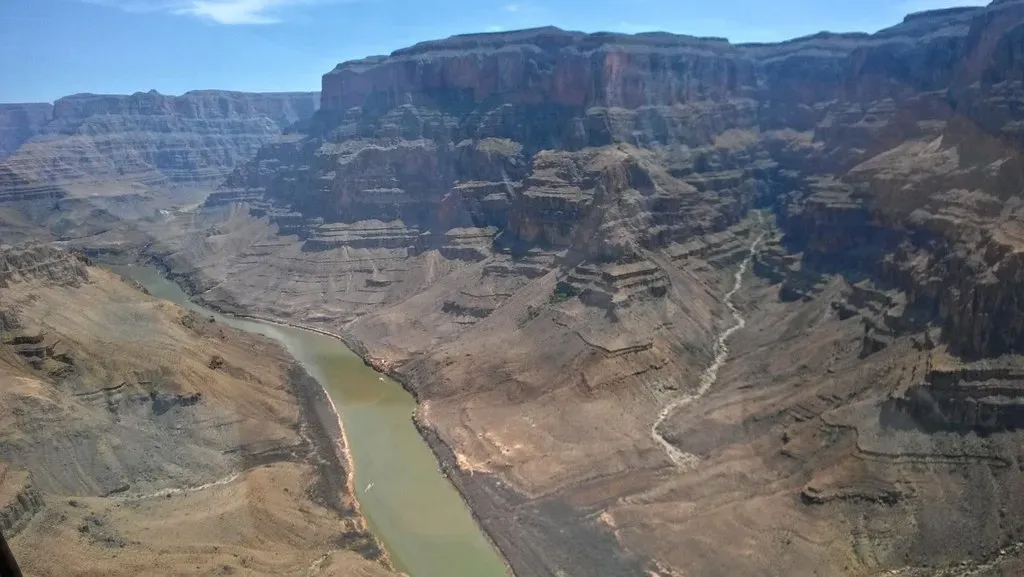
The Colorado Plateau is an uplifted area of flat plains, broad mesas, great canyons, and spectacular vistas. As the plateau rose, the Colorado River cut its way downward, creating the mile-deep chasm of the Grand Canyon. This extraordinary depth resulted from the powerful erosion of the river.
For nearly 150 years, scientists have been debating how and when the Grand Canyon formed. In recent decades, they’ve mostly split into two camps: those proposing a “young canyon” model in which the Colorado River alone carved much of the gorge in the past five million years or so, and those suggesting an “old canyon” model in which a series of ancient rivers carved ancestral canyons along more or less the same route. New research bolsters the notion that what actually happened lies somewhere between these two extremes. The canyon, it turns out, has a complicated biography.
Ancient Seas, Desert Dunes, and Changing Environments
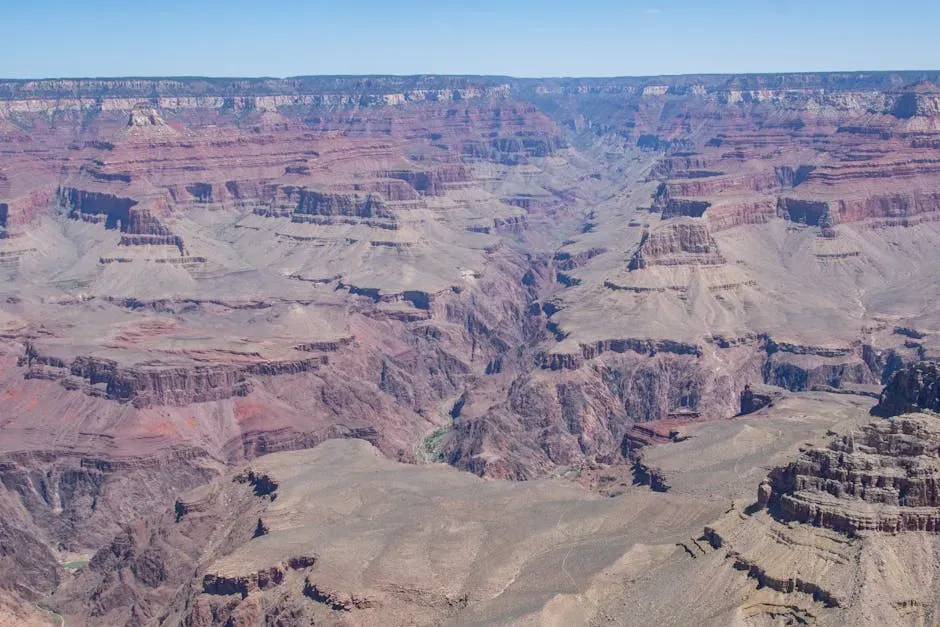
The canyon’s rocks preserve evidence of dramatically different environments that occupied the region across geological time. The Vishnu Schist records ancient volcanic arc activity and mountain building along primordial continental margins. The Tapeats Sandstone preserves fossil ripple marks and trace fossils documenting Cambrian beaches where primitive arthropods crawled through wet sand. The Redwall Limestone consists of countless fossilized marine organisms that inhabited warm tropical seas covering Arizona roughly 340 million years ago. The Coconino Sandstone’s spectacular cross-bedding records ancient sand dunes marching across Permian deserts.
The youngest of the Grand Canyon’s rock layers, the Kaibab Formation, forms the rims of the canyon and is a mere 270 million years old. That’s still even older than the dinosaurs. Shark teeth have been found in this formation as well as abundant fossils of marine invertebrates such as brachiopods, corals, mollusks, sea lilies, and worms, telling you that where you stand at the rim was once a warm, shallow sea floor.
The Grand Canyon as a Cradle of Early Life
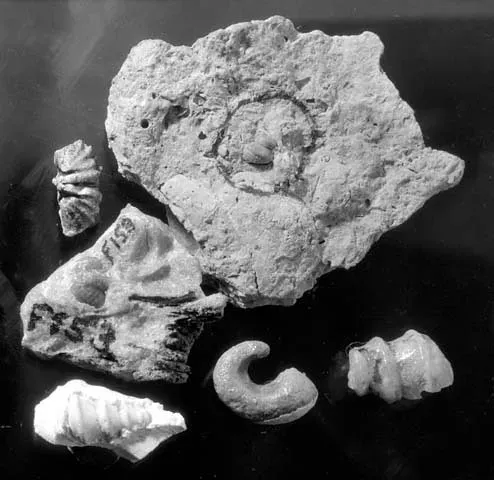
Long after its initial formation, the Grand Canyon played a crucial role in what’s known as the Cambrian explosion. Nearly all major groups of animals alive today can trace their evolutionary origins back to the Cambrian period. During this evolutionary turning point, the area that is now the Grand Canyon was underwater and teeming with rapidly evolving sea organisms.
Half a billion years ago, the Grand Canyon was a “Goldilocks zone” for the evolution of early animals, as a new fossil find reveals. During the Cambrian, the shallow sea covering the Grand Canyon was especially oxygen-rich thanks to its perfect depth. Ranging from about 130 to 165 feet deep, the ecosystem was undisturbed by the shoreline’s constant waves and sunlight could still reach photosynthesizing plants on the seafloor. Stromatolites and microfossils are among the oldest fossils present in the canyon, with the oldest examples found in the Mesoproterozoic Bass Formation, near the base of the Supergroup, approximately 1,255 million years old.
Indigenous Peoples and Thousands of Years of Human Connection
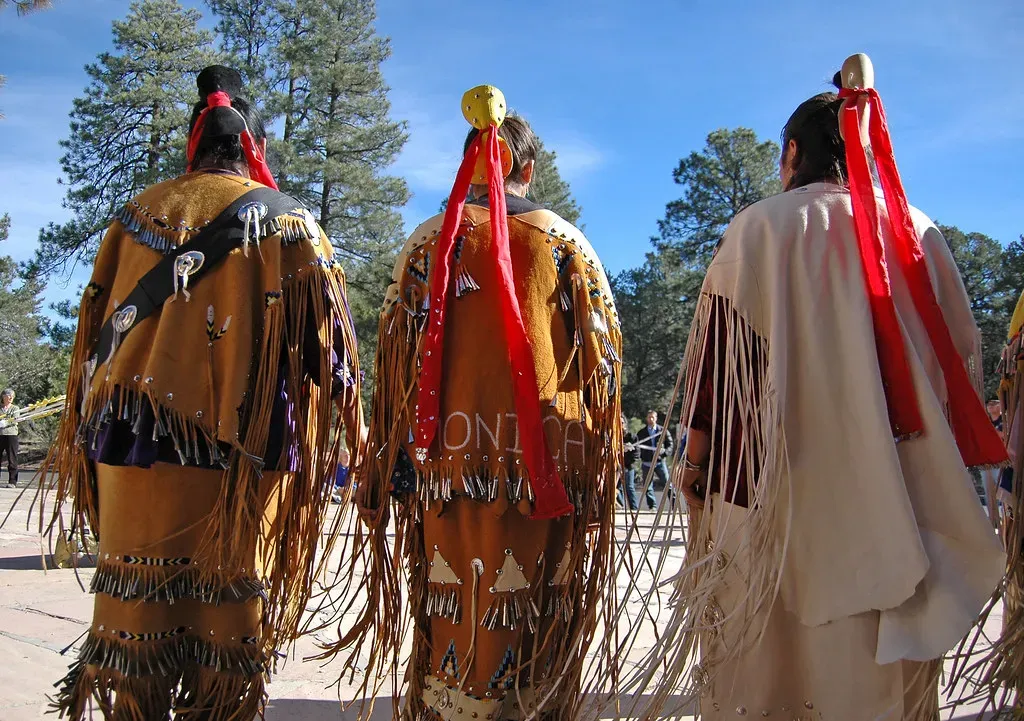
Human history at the Grand Canyon stretches back at least 12,000 years, with Indigenous tribes such as the Hopi, Navajo, Havasupai, and Hualapai calling the region home long before European explorers arrived. Human encounters with the Grand Canyon extend beyond the pragmatic uses of farming, hunting, and water supplies. Just as modern-day visitors react in awe at the grandeur, many indigenous people who lived in or passed through this place attached deep spiritual significance to the land. One of the ways we trace Native American links to the Grand Canyon is through creation stories and legends that have been carried down for centuries.
Archaeologists have recorded more than 4,300 places in the Grand Canyon where they found evidence of prehistoric human use. Civilian Conservation Corps workers in 1933 discovered small split-twig figurines in a Grand Canyon cave, and since then, hundreds of similar figurines shaped like deer or bighorn sheep were found in ten caves in the Grand Canyon as well as in seven caves from Utah to California. Radiocarbon dating tells us they were made between 2000 and 1000 B.C. These artifacts aren’t just curiosities. They are proof of a long, living relationship between people and this landscape.
Science Is Still Uncovering New Secrets
Beyond the classroom, research at the University of New Mexico extends to public education through the Trail of Time, a geological walking path at the Grand Canyon that brings millions of years of Earth’s history to life for visitors. The path provides a tangible connection to the canyon’s deep past, allowing the public to engage with science in an immersive way.
New tools have played a crucial role in mapping the canyon’s geological history. Technology like three-dimensional scanning has allowed researchers to create detailed, accurate models of the canyon’s rock formations. The geology of the Grand Canyon was first systematically studied by the explorer-geologist John Wesley Powell, in three epic exploratory trips between 1869 and 1872. More than a century later, we are still interpreting the details of its formation and of the fossil life contained within its steep rock walls. That fact, more than any other, speaks to just how deep and layered this place really is.
Conclusion
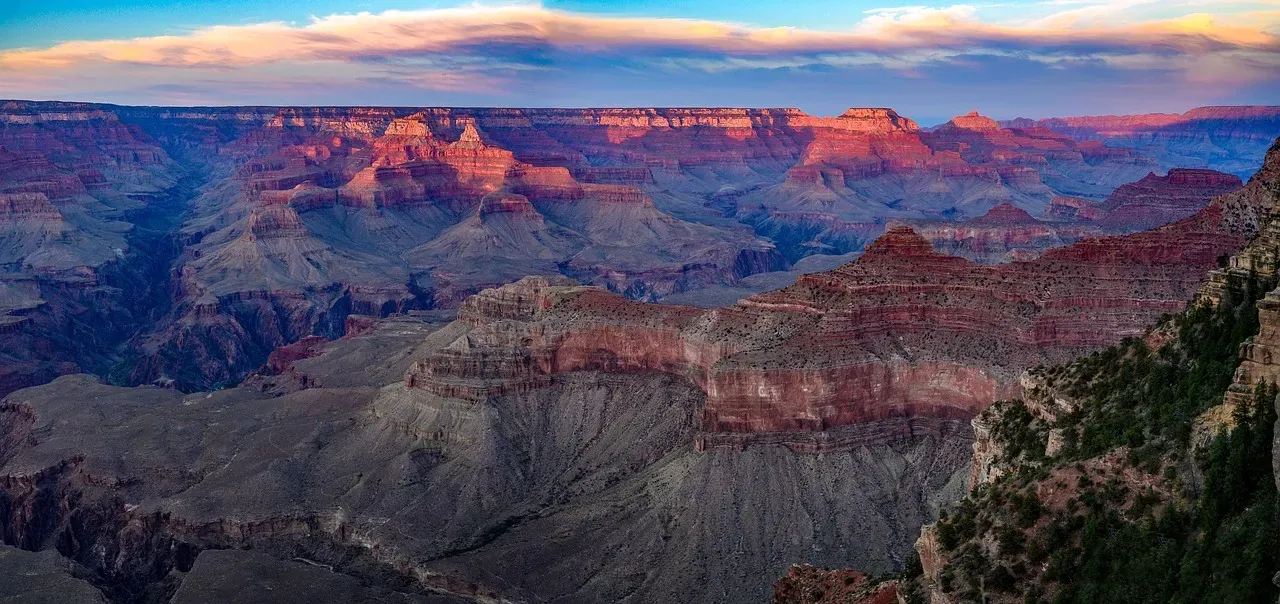
The Grand Canyon isn’t just a natural wonder you visit once for the view. It’s an open archive of Earth’s entire story, written in stone so old it challenges every ordinary sense of time. Considered one of the seven natural wonders of the world and the planet’s foremost example of canyon-cutting erosion, geologists over the past century have worked hard to unravel its mysteries. Because the canyon so clearly lays out many layers of the Earth’s crust, scientists from around the world have been drawn here, many making important scientific discoveries and changing the way people understand our planet.
Understanding the Grand Canyon’s geology is more than just appreciating its beauty. It’s about grasping the fundamental forces that shape our planet, including sedimentary deposition, plate tectonics, and the immense power of water over vast stretches of geological time. Every layer you pass as you descend into it is another page of a story that started nearly two billion years before any human eye was around to read it. The canyon doesn’t demand reverence, but it tends to inspire it anyway.