Imagine confidently announcing to the world that you’ve discovered a terrifying dragon-like beast from the deep past… and then spending the next hundred years finding out you were wrong about almost everything. That, in a nutshell, is the story of Iguanodon. It was the second dinosaur ever named, a celebrity of Victorian science, and a perfect case study in how even the smartest people can be wildly mistaken when they have only a few puzzle pieces.
Iguanodon’s journey runs from misidentified teeth and awkward four-legged monsters to sleek, dynamic herbivores that finally look like real animals instead of stone statues. Along the way you get ego, excitement, museum drama, and one of the biggest scientific glow‑ups in paleontology. If you’ve ever wondered how science changes its mind, or how we went from lumbering swamp lizards to Jurassic Park–era dinosaurs, Iguanodon is the story you’ve been waiting to hear.
A Handful of Teeth and a Giant Guess
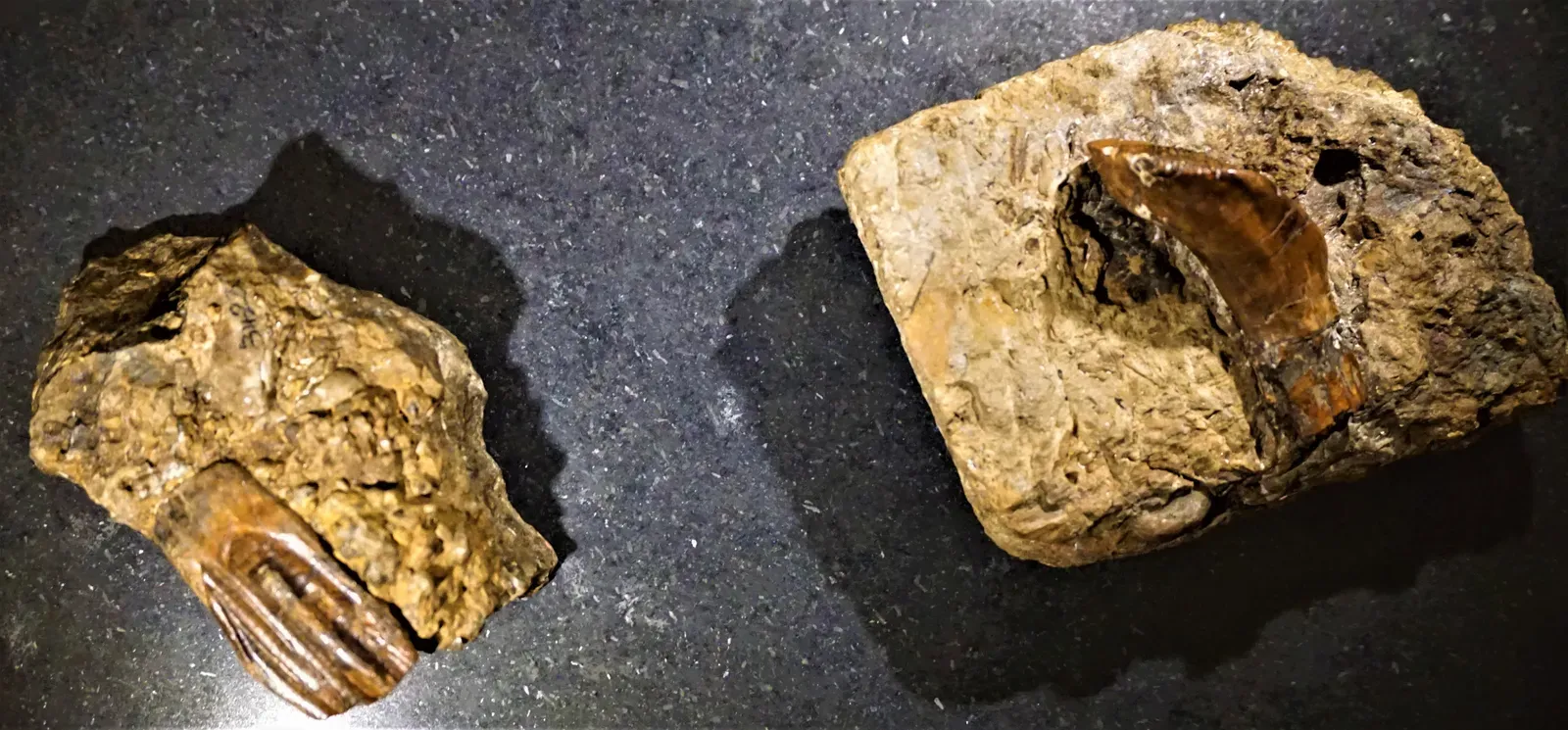
The entire Iguanodon saga starts, almost comically, with a few isolated teeth dug up in early nineteenth‑century England. These teeth were found in the Wealden rocks of southern England and eventually made their way to physician and fossil hunter Gideon Mantell, who noticed that they looked strangely similar to the teeth of a modern iguana, just massively scaled up. From this one resemblance, he proposed an animal that was basically a super‑iguana, a reptilian grazer blown up to epic proportions.
The problem, of course, is that teeth on their own do not tell you what the rest of the body looks like. With no skull, no limbs, and no spine, scientists were essentially filling in a coloring book with no outline. Early reconstructions pictured Iguanodon as a bulky, quadrupedal lizard with a long, sagging body and a thick tail dragging along the ground. It was closer to a fantasy monster than a living, breathing animal, but in an age with almost no dinosaur fossils, it felt convincing enough that it stuck for generations.
The Famous Nose Spike That Wasn’t a Nose at All
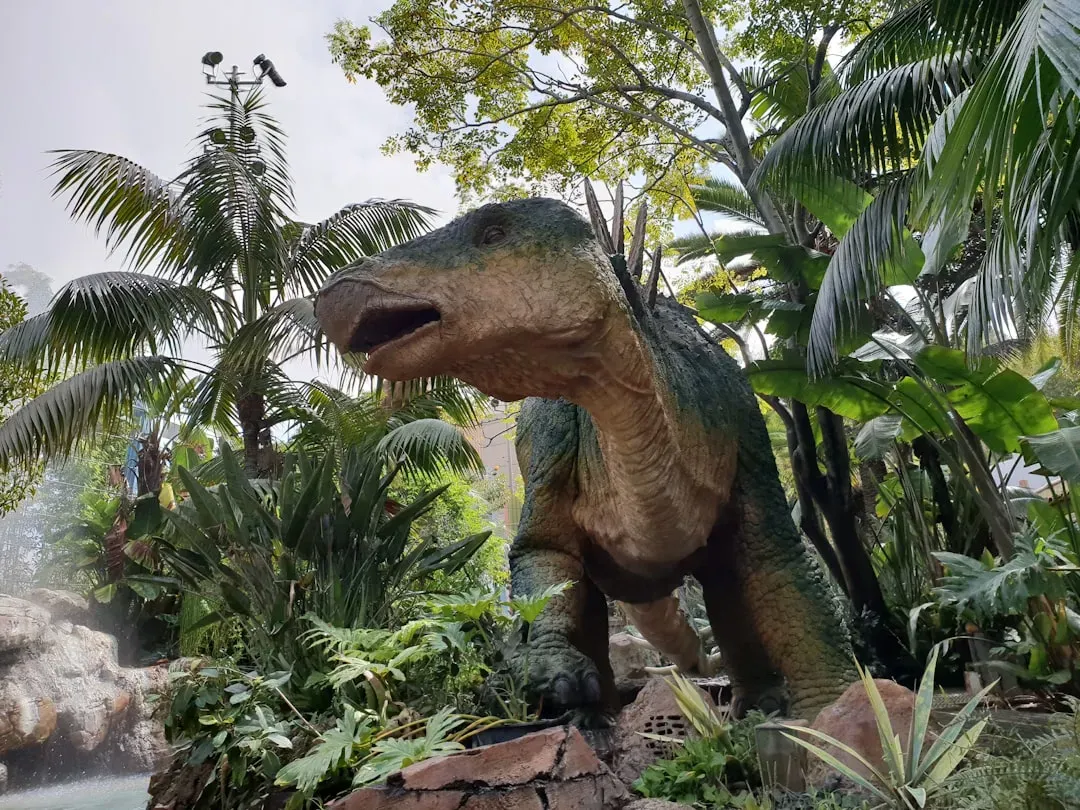
One of the most iconic early details about Iguanodon turned out to be gloriously wrong: the famous nose horn. When more bones were found, including a weird, conical spike‑shaped bone, early paleontologists decided it must have gone on the animal’s face. Victorian reconstructions showed Iguanodon with a rhino‑style horn on its snout, giving it an almost mythical, dragon‑like profile. This image ended up in textbooks, sculptures, and museum displays, and for decades people simply accepted that Iguanodon had a spiky nose.
Later, more complete skeletons blew that idea to pieces. It turned out that the “nose horn” was not a horn at all, but a thumb spike that sat on the hands. Instead of a nose weapon, Iguanodon had an intimidating spiked thumb, probably used for defense against predators or maybe in shoving matches with its own kind. That single correction completely changed the vibe of the animal, from a horned grazer to a plant‑eater armed with a built‑in stabbing tool. It is a perfect example of how one extra bone can flip a century of confident illustration on its head.
A Sluggish Swamp Lizard… or a Fast, Upright Walker?
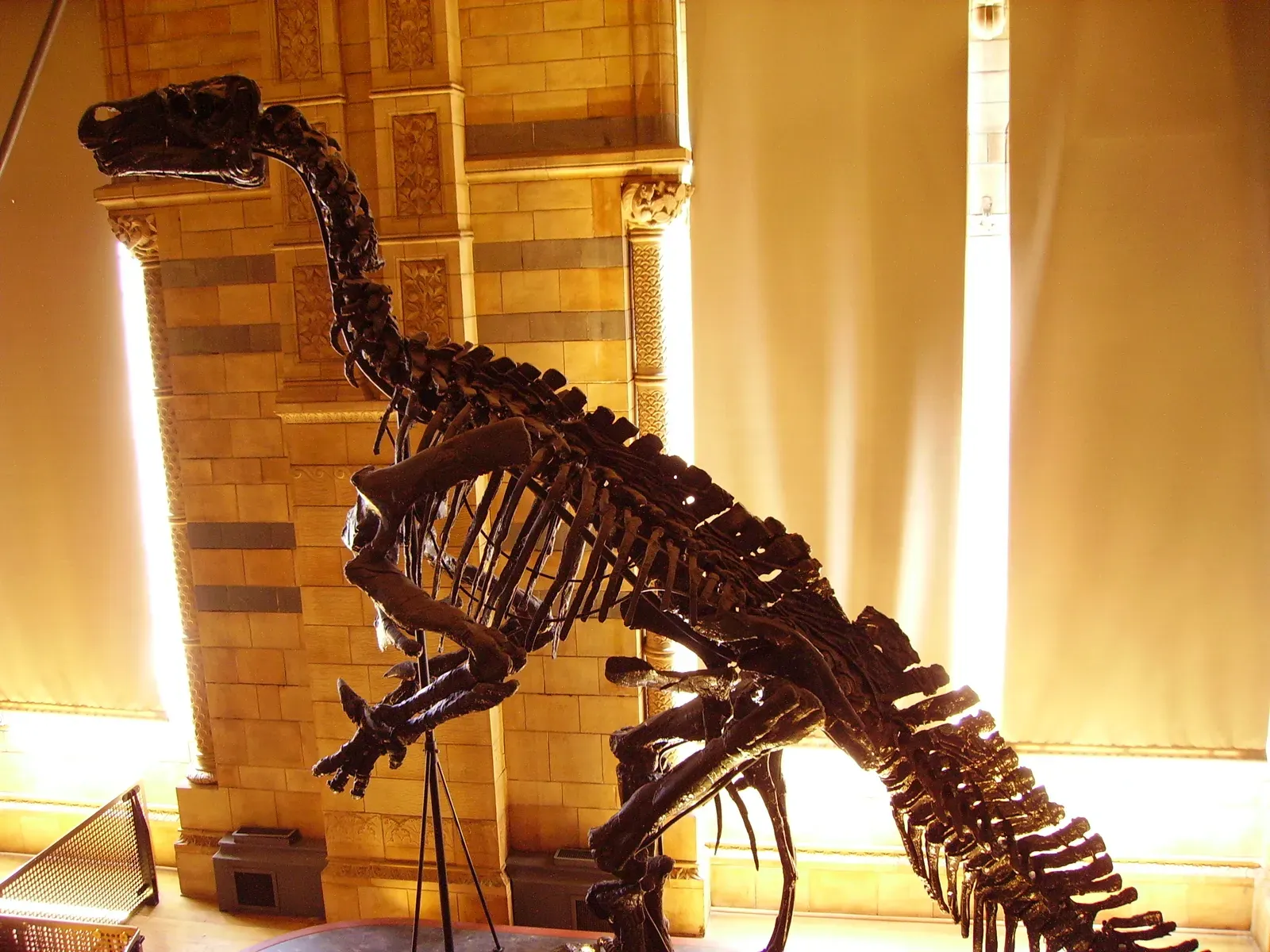
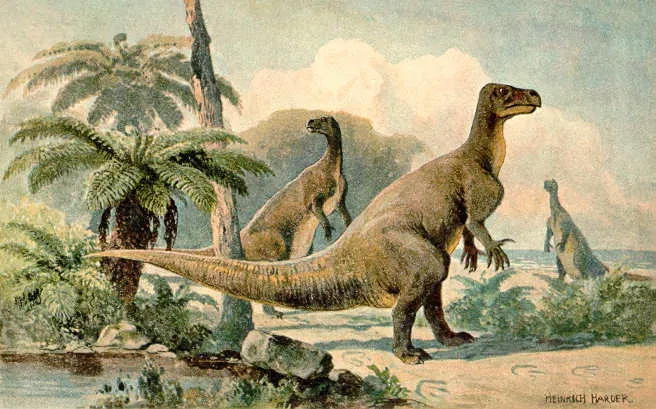
If you’d walked into a museum in the late nineteenth or early twentieth century, you would have seen Iguanodon mounted as a heavy, tail‑dragging quadruped that looked like it could barely move. The body was posed with its spine rigidly horizontal, the tail flat on the floor like a giant support beam, and the limbs splayed out in a way that screamed clumsy lizard rather than active, warm‑blooded animal. People genuinely thought dinosaurs were evolutionary dead‑ends: slow, cold, and doomed to extinction because they just could not keep up.
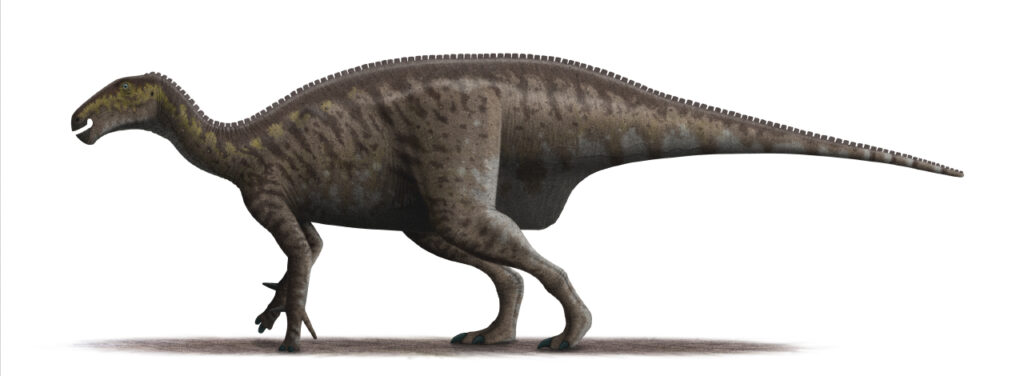
Everything changed as more complete skeletons were uncovered, most famously at Bernissart in Belgium, where dozens of Iguanodon individuals were found. These fossils showed limb proportions and hip structures that made much more sense if the animal could rear up or even move bipedally for at least part of the time. Modern reconstructions give Iguanodon a stiff, horizontal tail held off the ground, hindlimbs that take much of the weight, and forelimbs used more flexibly. Instead of a swamp‑crawling lizard, we now see an active, adaptable herbivore that could shift between walking on four legs and two, depending on what it was doing. The museum statues had to be literally broken apart and remounted to catch up with reality.
Misunderstanding the Hands, Feet, and Everyday Life
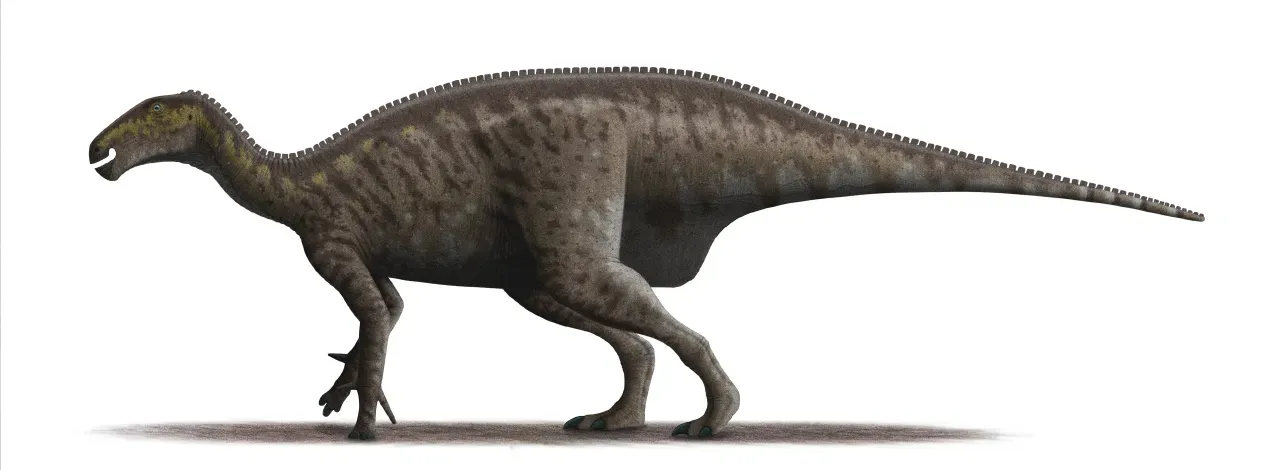
Early scientists treated Iguanodon’s limbs like generic reptile parts, but its hands and feet are anything but generic. The thumb spike, the hoof‑like middle fingers, and the more flexible little finger form a kind of multi‑tool hand that does not really resemble a modern reptile at all. For a long time, this complexity was flattened into clumsy, almost human‑like hands in illustrations, with artists either hiding the weird digits or simplifying them into something that matched their expectations rather than the bones. The idea that a dinosaur might have a specialized, almost tool‑like hand just did not fit the mental picture of the day.
By looking carefully at the joints and how the bones articulate, modern researchers have built a much more interesting view. The thumb spike likely stuck out sideways as a defensive weapon, the middle fingers supported weight in a hoof‑like way when walking on all fours, and the small finger could have helped grasp branches or bring food toward the mouth. Pair that with strong hind feet adapted for carrying significant weight and possibly moving at a decent clip, and you get an animal that led an active life: walking long distances, feeding in different positions, and defending itself when needed. The more we studied the limbs, the less Iguanodon looked like a sad lizard and the more it looked like a confident, well‑equipped herbivore.
From Lone Monster to Member of a Whole Dinosaur World
When Iguanodon was first named, it sat on a tiny pedestal as one of only a couple of known dinosaurs, which made it easy to overhype and misinterpret. Without cousins for comparison, scientists could not see which traits were unique and which were part of a larger pattern of dinosaur evolution. Iguanodon was treated as a sort of one‑off giant reptile, standing alone in the fossil record, and many early ideas about “what dinosaurs are” were basically just extrapolations from this one mangled picture.
Over the next century and more, that isolation vanished. Researchers discovered a whole family of similar plant‑eaters, often called iguanodontians, scattered across different continents and time slices. Suddenly, details like the thumb spike, the beaked mouth, and the body proportions could be compared across species. That made it clear that Iguanodon was not an oddity, but part of a big, successful group that eventually gave rise to even more famous dinosaurs like the duck‑billed hadrosaurs. The animal shifted in our minds from being a lonely Victorian monster to a key player in a far richer ecological and evolutionary story.
What Iguanodon Teaches Us About Being Wrong in Science
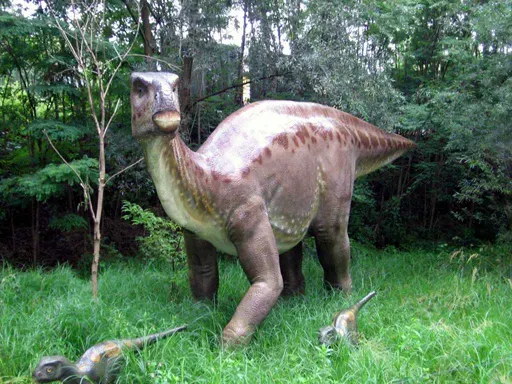
The most powerful part of the Iguanodon story is not just that scientists were wrong, but how openly and completely those mistakes were later fixed. Every new fossil, from an extra limb bone to a whole skeleton, forced researchers to redraw their diagrams, rebuild their models, and admit that beloved ideas had to go. You can almost feel the discomfort of those nineteenth‑century reconstructions being dismantled in museum basements, with tail bones lifted off the floor and fake nose horns taken down. It is humbling, and honestly a little embarrassing, but it is also exactly how science is supposed to work.
Personally, I find that oddly comforting. Iguanodon shows that you can be wrong for a very long time, even when acting in good faith, and still inch closer to the truth as you gather better evidence. The second dinosaur ever named turned out to be a spectacular example of scientific course correction: from super‑iguana to horn‑nosed lizard to thumb‑spiked, semi‑bipedal herbivore living in complex herds. If a single set of teeth can lead to a century of confident mistakes, what other assumptions from today will look laughable in another hundred years?