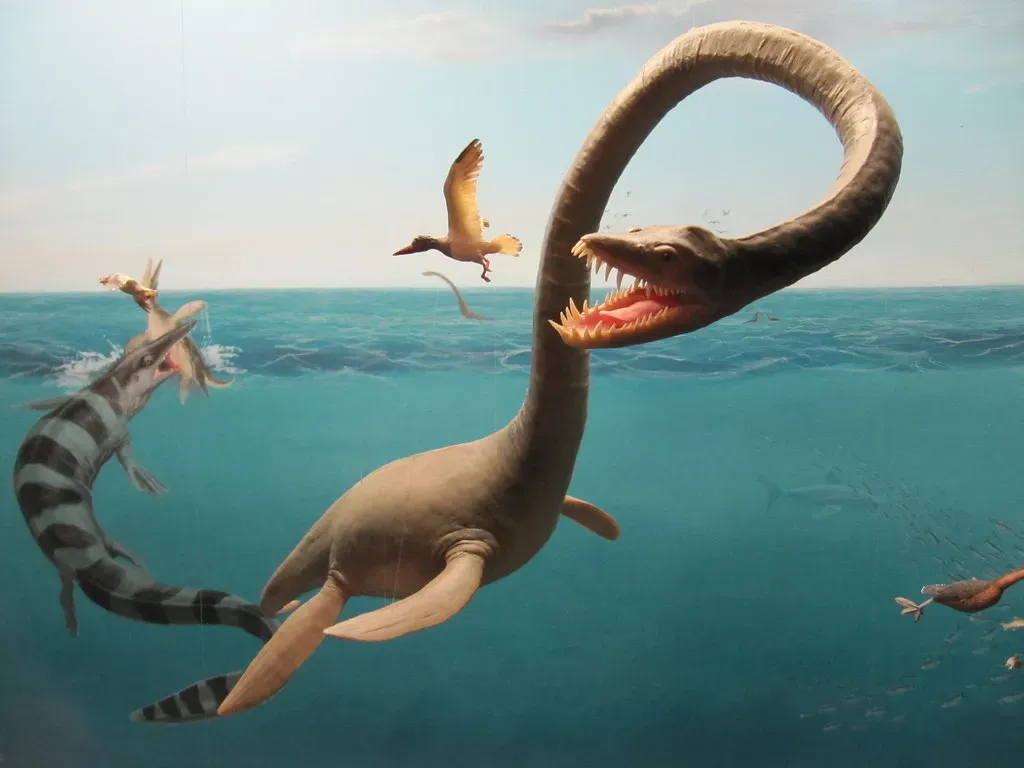
Picture this: you dive into a warm, ancient sea and instead of dolphins, sharks, and coral reefs, you’re suddenly sharing the water with a reptile the size of a bus, jaws like a bear trap, eyes locked on you. It sounds like a horror movie, but for tens of millions of years this was reality on our planet. Long before humans and long after the first dinosaurs appeared, the oceans were ruled by colossal marine reptiles that turned the seas into their own high-speed, tooth-filled arena.
What makes this lost world so fascinating is that almost nothing from it survives intact today. No living plesiosaurs hiding in deep lakes, no mosasaurs cruising offshore, no ichthyosaurs racing tuna in the open ocean. All we have are their bones, the rocks that buried them, and the detective work of modern science. Yet from those clues, a staggeringly vivid story has emerged – one that’s rewriting how we think about evolution, extinction, and what it really means to dominate a planet.
The Oceans That Time Erased
It’s easy to think of Earth’s oceans as timeless, but the seas that giant reptiles ruled were almost like an alien world. During much of the Mesozoic Era, especially the Jurassic and Cretaceous periods, global temperatures were higher, polar ice was limited or completely gone, and sea levels were so elevated that shallow, tropical seas spread across what is now dry land. Imagine much of the interior of North America, Europe, and parts of Africa covered by warm, sunlit waters teeming with life from surface to seafloor.
These flooded continents created long, connected inland seas that acted like superhighways for marine predators. In these environments, reptiles that originally evolved on land kept pushing further and further into the water, eventually becoming so adapted to ocean life that returning to land would’ve been almost impossible. The result was a rich, layered ecosystem of hunters and prey, where giant marine reptiles were the apex players in a food web that had been completely reshaped by rising seas.
Meet the Rulers: Mosasaurs, Plesiosaurs, and Ichthyosaurs
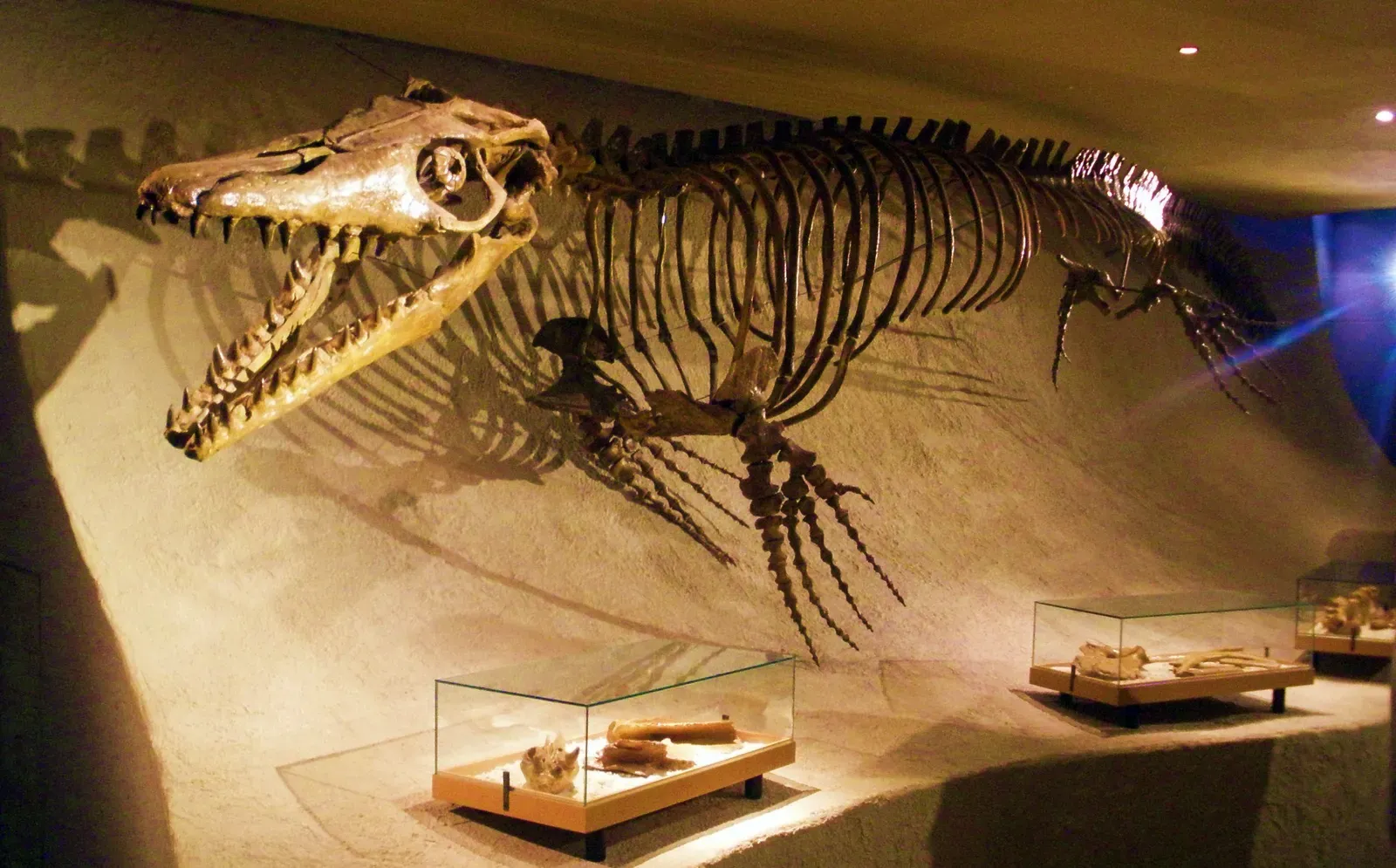
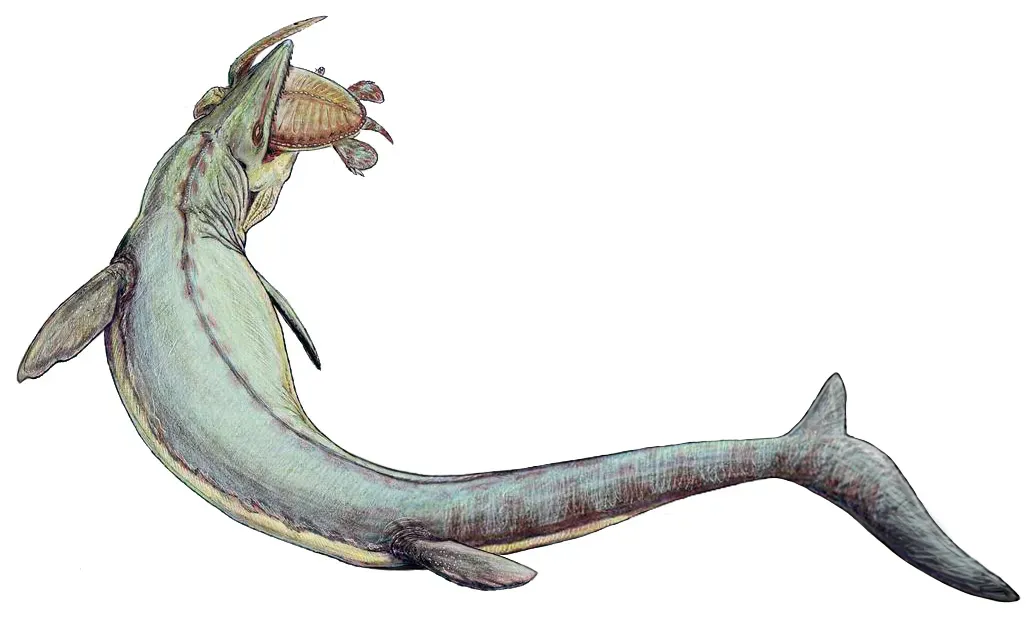
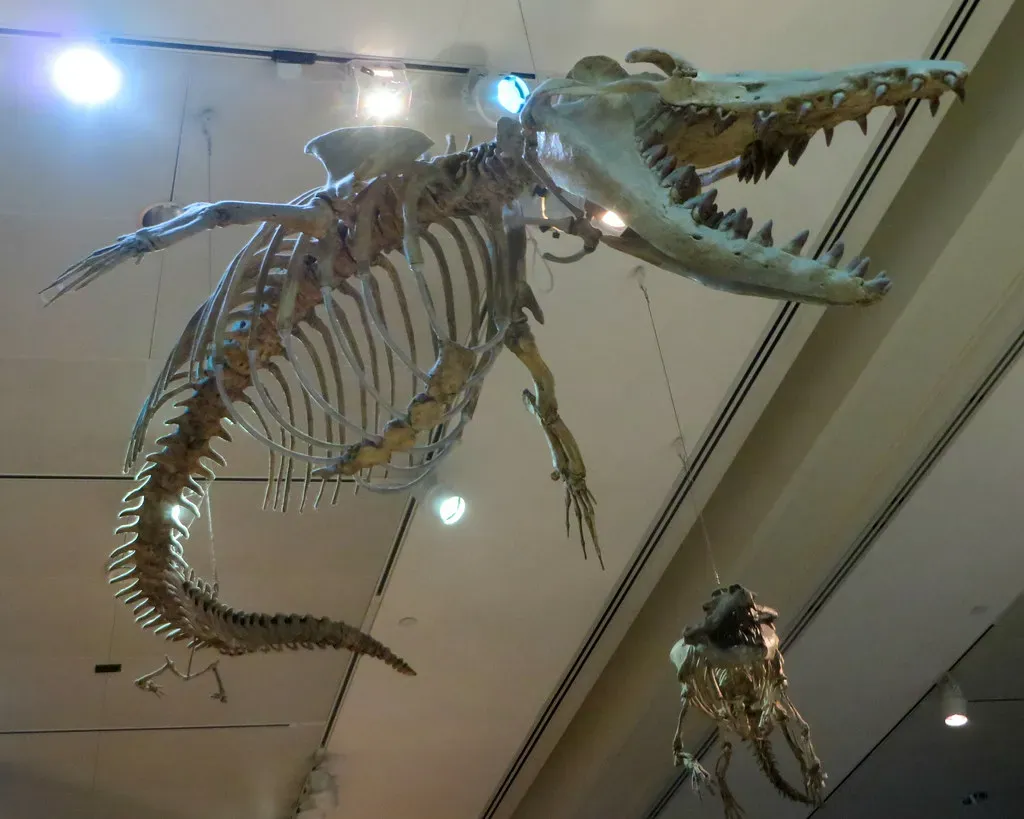
When people picture ancient marine reptiles, they often lump them all together, but these creatures were as different from one another as whales, seals, and swordfish are today. Mosasaurs, for example, were powerful, streamlined predators related to modern monitor lizards and snakes. They had long bodies, paddle-like limbs, and tails shaped for speed, turning them into torpedo-shaped ambush hunters that could swallow large prey in just a few bites. At their largest, some species stretched well beyond the length of most buses.
Plesiosaurs were another story entirely, with their wide bodies, four strong flippers, and variations that ranged from long-necked, small-headed fish grabbers to short-necked, big-skulled bruisers built for sheer biting power. Then there were ichthyosaurs, which almost looked like someone had mashed up a dolphin, a tuna, and a reptile into one animal. They had deep, streamlined bodies, huge eyes, and a vertical tail fin, all pointing to a lifestyle built around fast, sustained swimming in open water. In the same seas, very different reptilian body plans were competing, thriving, and sometimes replacing each other over millions of years.
Top Predators in a Prehistoric Blue Planet
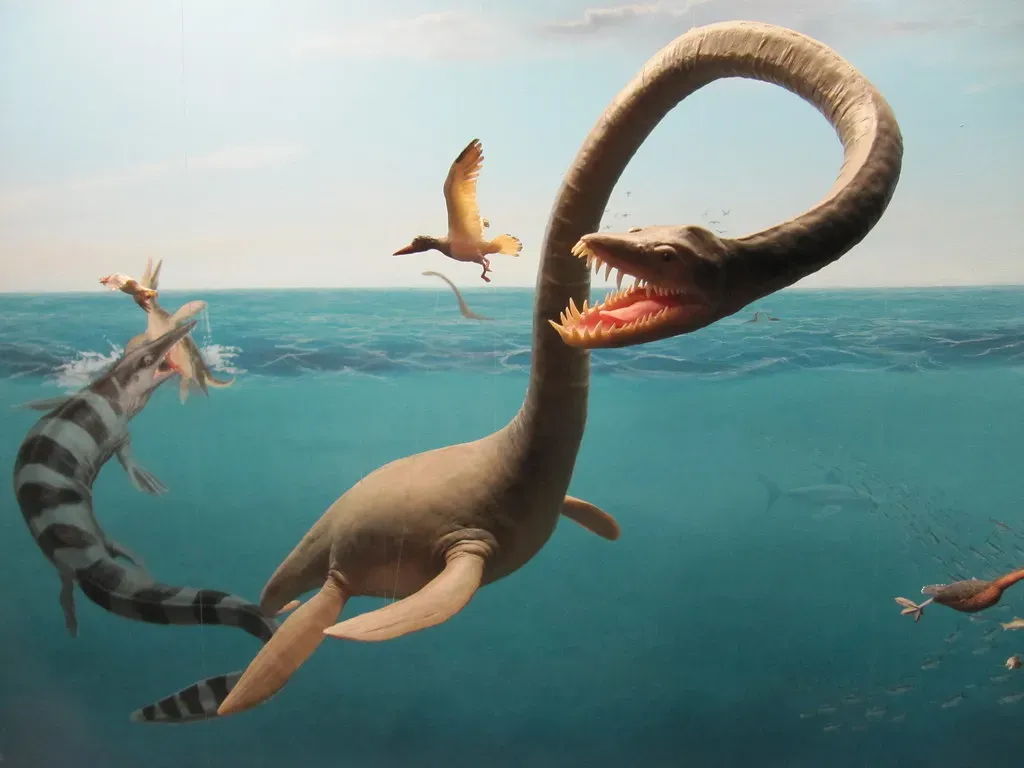
The giant marine reptiles were not just big; they sat at the very peak of their food chains, filling roles in the ancient oceans similar to those of orcas and great white sharks today. Large mosasaurs likely fed on almost anything they could overpower, including fish, ammonites, smaller reptiles, and even members of their own kind. Their skulls and jaws were built for gripping and tearing, with some species showing extra rows of teeth on the palate to help hold struggling prey. This was not a gentle ecosystem; it was a fierce arms race of speed, stealth, and bite force.
Short-necked plesiosaurs and some of the last ichthyosaurs also pushed into apex predator roles, with different hunting strategies depending on their body shape and habitat. Some specialists probably focused on fast-moving fish and squid, while others targeted slower, bulkier animals in shallower seas. Each group carved out its own niche in the shared ocean, and where their ranges overlapped, the seas would have been crowded with large, deadly hunters. If you could ride a time machine submarine back to the Late Cretaceous, you’d be surrounded by more massive predators per square mile than in almost any modern ocean.
Designs for Life Underwater: From Feet to Flippers
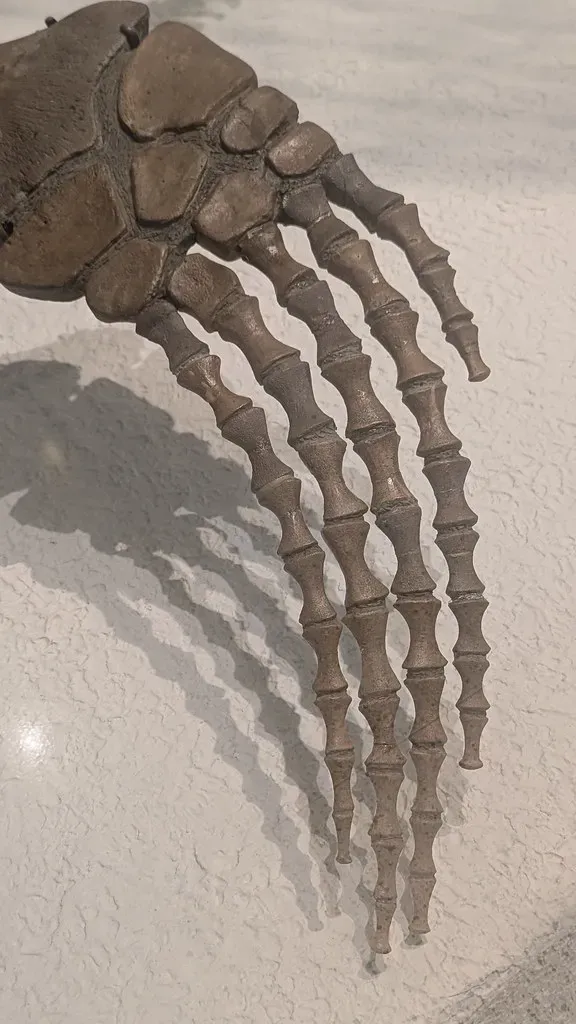
One of the most striking things about these reptiles is how completely their bodies were remodeled for life in the water. Early ancestors would have had legs and feet for walking on land, but over millions of years those limbs flattened and stiffened into powerful flippers. Plesiosaurs ended up with four strong paddles they used somewhat like underwater wings, flying through the sea in a way that still sparks debate among scientists who model their swimming. Ichthyosaurs, by contrast, streamlined their entire skeleton, with shortened necks and a body so fishlike that for a long time people mistook them for some strange kind of prehistoric dolphin.
Even their tails tell a story about how evolution experiments with form and function. Mosasaurs evolved a tail with a deep lower lobe that helped them generate explosive thrust, giving them the punch of a modern shark at the start of a chase. Ichthyosaurs developed a crescent-shaped tail fin that hints at long-distance, high-speed cruising in the open ocean. These changes did not happen overnight; they were the result of countless generations where slightly better swimmers hunted a little better, escaped predators a little more often, and passed on their traits until feet were a distant memory and flippers were the new normal.
Hunting, Parenting, and Surviving in a Ruthless Sea
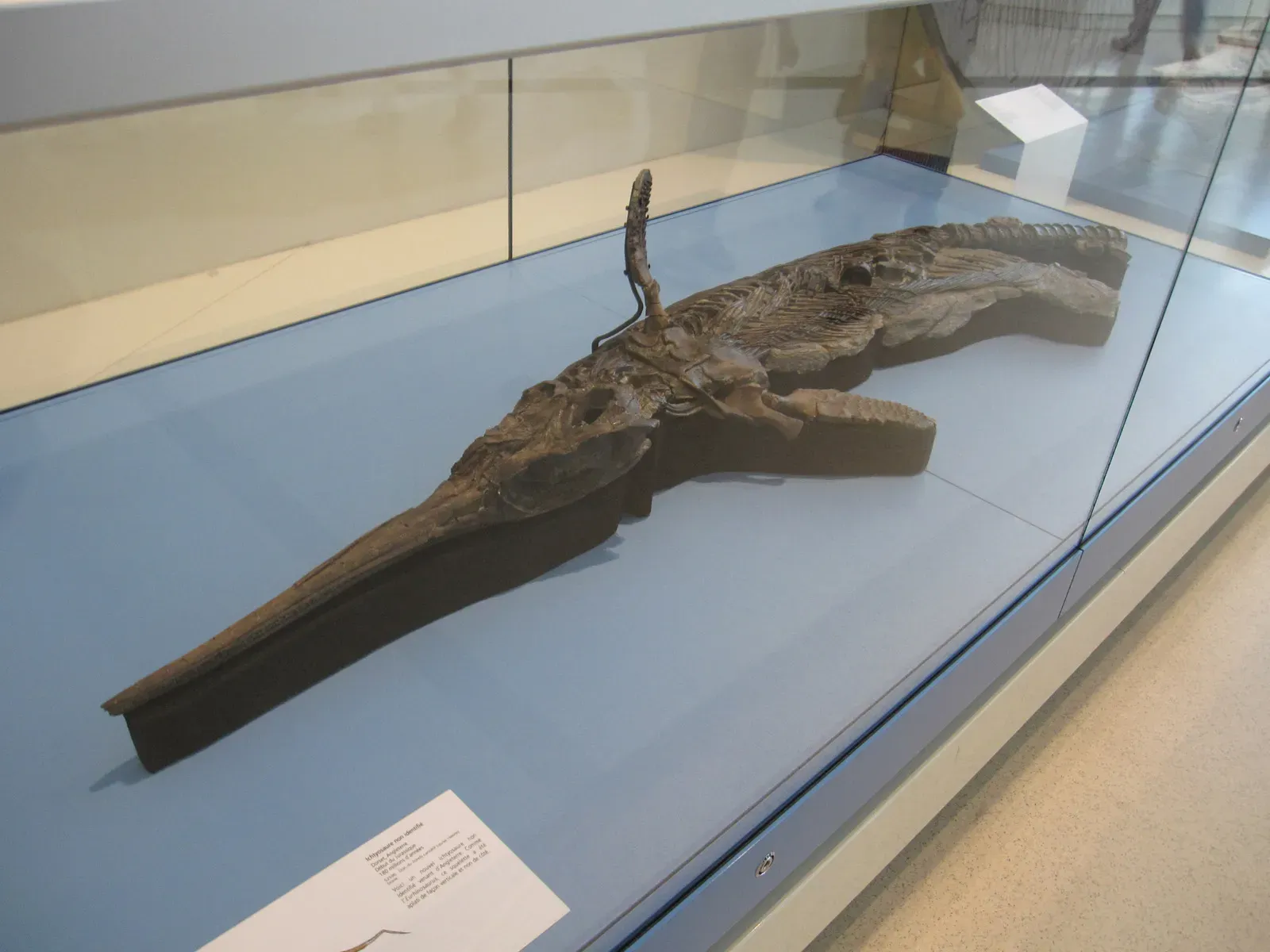
Life in the Mesozoic oceans was beautiful but brutal, and the behaviors of these marine reptiles had to match the intensity of their environment. Evidence from stomach contents and bite marks on fossils shows that many of them were opportunistic and not particularly picky: if it could be grabbed, crushed, or swallowed, it was on the menu. Some species had specialized teeth for cracking hard-shelled prey, while others had slender, needle-like teeth for snatching slippery fish and squid. The pattern looks very similar to modern marine ecosystems, where different predators divide up the available food by size, speed, and habitat.
One of the most surprisingly tender clues about their lives comes from fossils of pregnant ichthyosaurs and other marine reptiles that appear to have given birth to live young at sea. This means they were not dragging themselves onto beaches like sea turtles today but completing their entire life cycle in the water. Some specimens even show unborn young positioned headfirst or tail-first, suggesting different birth strategies. That small detail turns these animals from cold, distant monsters into something more familiar: parents navigating a dangerous ocean, trying to give their offspring even a slim chance of survival in a world packed with things that wanted to eat them.
The Great Vanishings: Extinction in the Ancient Oceans
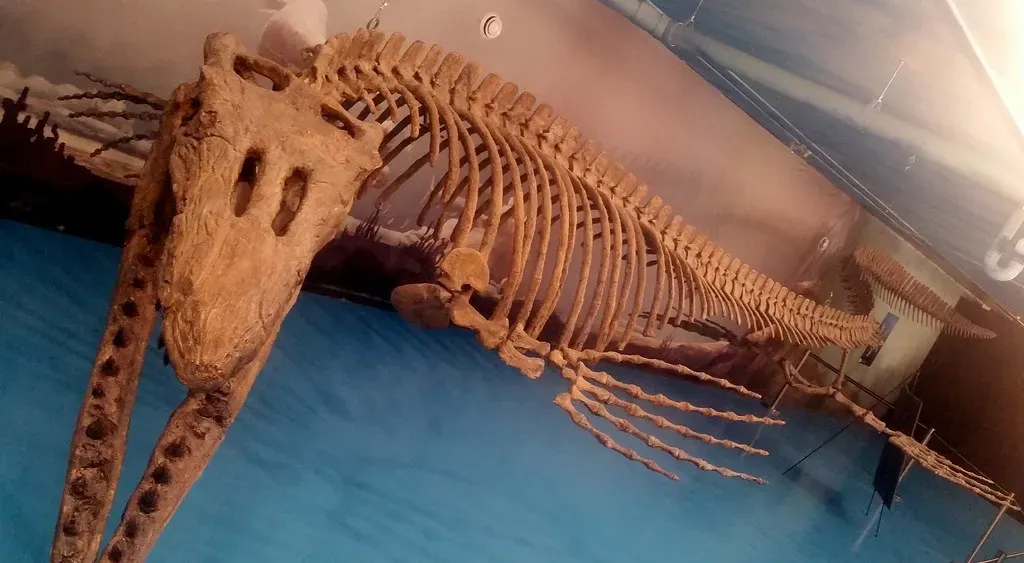
The story of giant marine reptiles is not just about dominance; it is also about disappearance. Ichthyosaurs, for example, were wildly successful for a long time, yet they faded out before the very end of the Cretaceous, likely because of shifting climates, changing sea levels, and evolving competitors stealing their place in the food web. Other groups declined in stages as ocean chemistry, temperatures, and coastlines changed, reminding us that even the best-adapted predators are at the mercy of slow, relentless environmental shifts. Extinction in these ancient seas was not a single event but more like a series of long, rolling waves.
The final blow for many of the last marine reptiles, especially the mosasaurs and certain plesiosaurs, came with the mass extinction at the end of the Cretaceous, the same catastrophe that wiped out non-avian dinosaurs. A combination of asteroid impact, volcanic activity, and climate disruption likely triggered a collapse in marine food webs, starting with plankton and radiating upward. When the base of the pyramid fell apart, the top-heavy giants had nowhere to go. In a relatively short geological moment, the oceans shifted from being ruled by reptilian super-predators to being open for new groups like sharks and, eventually, marine mammals to rise.
What Today’s Oceans Still Whisper About That Lost World
Even though giant marine reptiles are long gone, their legacy quietly echoes through the animals that dominate the seas today. When you look at an orca, a sperm whale, or even a fast-swimming tuna, you are seeing familiar themes: streamlined bodies, powerful tails, sharp teeth, and finely tuned senses for hunting in three dimensions. Evolution has circled back to similar solutions more than once, which suggests that certain body shapes and strategies are simply the best ways to thrive in a fluid, three-dimensional environment. In a sense, modern oceans are remixing an ancient evolutionary playlist.
On a more personal level, learning about these lost reptiles changes how you feel when you look at the sea. What seems calm and endless hides a deep, violent history of creatures that no longer exist but once ruled every wave and current. To me, that adds a layer of awe and a bit of humility; our species is brand new compared with the lineages that rose and fell long before us. Next time you stand on a beach, it is worth remembering that the water at your feet once filled with shadows of jaws, flippers, and eyes adapted to a world we can only reconstruct in fragments.
The Opinionated Takeaway: Why This Lost World Still Matters
It’s tempting to treat these giant marine reptiles as nothing more than cool monsters from a prehistoric bestiary, but that sells them short. Their story is a hard, uncomfortable reminder that dominance in nature is always temporary, no matter how perfectly a species seems tuned to its world. The mosasaurs and plesiosaurs were not just wiped out because they were flawed; they were swept away when the rules of the game changed faster than they could adapt. That should hit close to home for us, living in a time when human actions are rapidly reshaping climate and oceans in ways that echo some of the great upheavals of the past.
In my view, the lost world beneath the waves is not just about awe; it is a warning label written in stone. These fossils tell us that Earth is staggeringly resilient, but individual species – even the most fearsome – are not. We can either learn from that long record and adjust how we treat our modern oceans, or we can pretend we are somehow exempt from the same basic rules that toppled the ancient sea rulers. When you picture a mosasaur vanishing from the fossil record almost overnight in geological terms, you have to ask yourself: if giants like that were ultimately replaceable, what makes us think we are not?