If you think you know the story of life in prehistoric America, one fossil in particular forces you to pause and rethink it all. Scattered across the Midwest and beyond, strange spiral structures in ancient rocks have been confusing scientists, collectors, and curious onlookers for more than a century. They look like giant stone cinnamon rolls, or the tail of some coiled sea monster frozen in time.
This fossil is known as the fossilized corkscrew burrow of an ancient beaver-like animal, usually called the Devil’s Corkscrew, or by its scientific name, Daemonelix. It is arguably one of s ever found in the United States because for decades no one could even agree on what it was. As you follow its story, you end up learning not just about a single fossil, but about how science works, how easily we jump to conclusions, and how weird the ancient world under your feet really was.
A Stone Spiral That Makes No Sense at First Glance
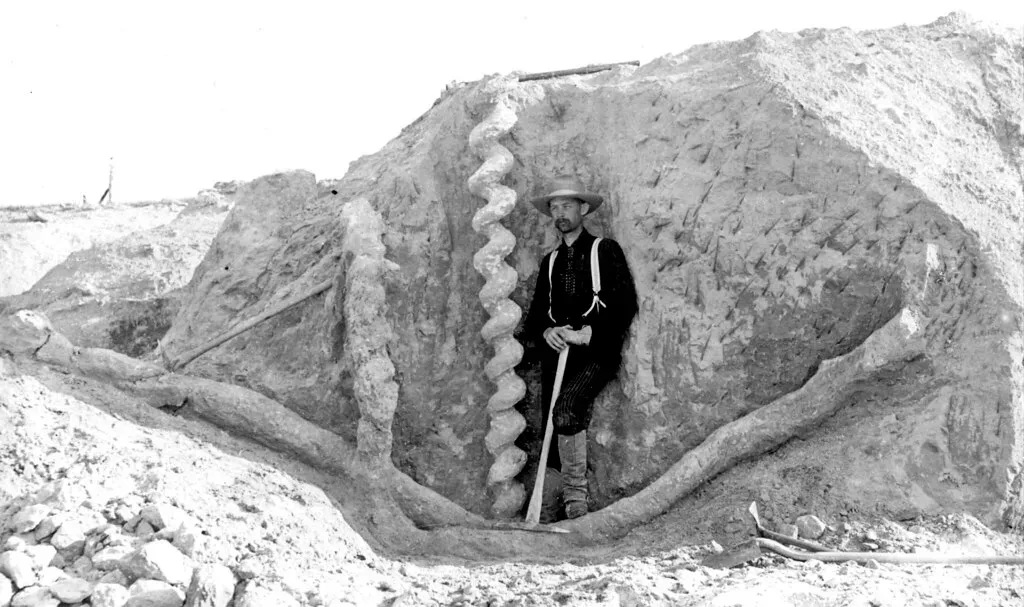
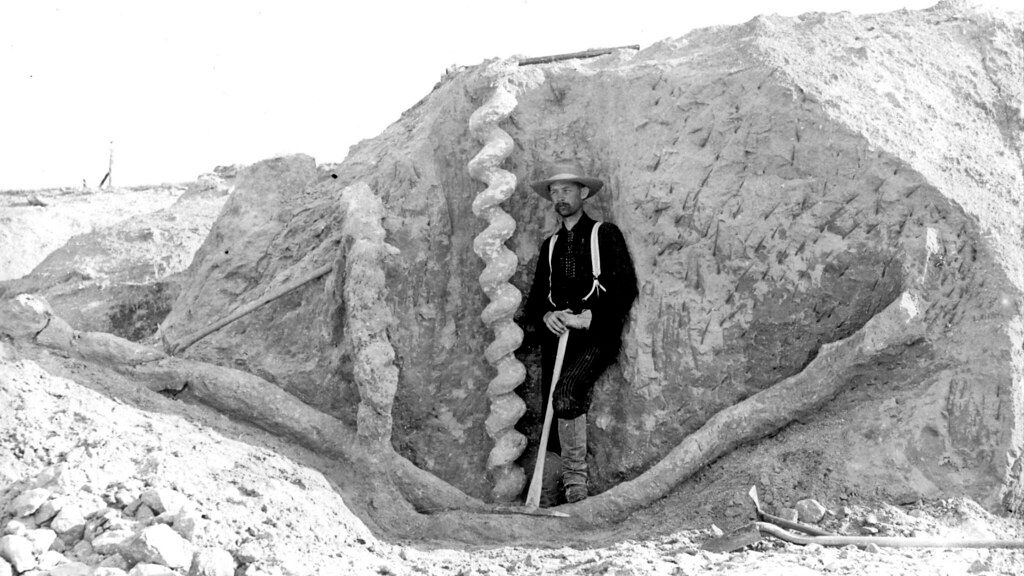
Imagine walking through the grasslands of Nebraska and suddenly seeing a towering spiral of stone twisting out of the ground. That is what early ranchers and geologists encountered in the late nineteenth century when they found the Devil’s Corkscrew fossils in what are now parts of the Great Plains, especially western Nebraska. These spirals are not tiny curiosities; some of them extend several meters down into the rock, like a stone staircase that never had steps.
The first reaction you might have is confusion, because they do not look like bones, shells, or plants. They look engineered, as if someone had taken a giant drill and twisted it through soft mud that later turned to stone. The spirals can include a vertical shaft and a twisted helix, sometimes capped by a bulbous structure at the top. You would not be blamed for thinking they belonged in a science fiction movie instead of a real landscape that once held ancient mammals and lush vegetation.
When Experts Could Not Agree What You Were Looking At
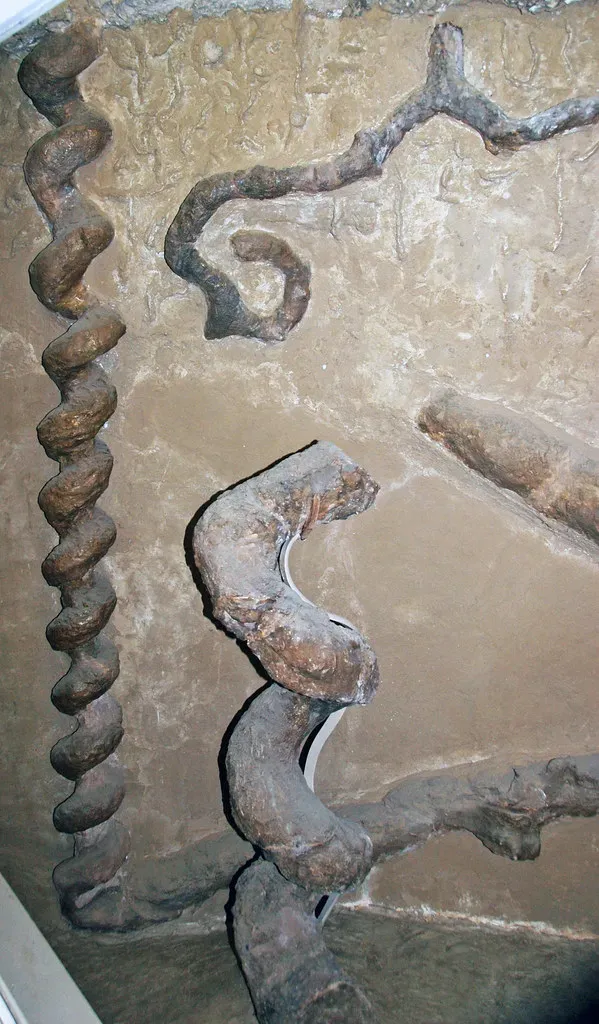
Now picture being a scientist in the late 1800s, trained on fossils of dinosaurs, shells, and straightforward bones, and then being handed one of these rock spirals with the task of explaining it. For a long time, no one had a good answer. Some paleontologists thought you were looking at the remains of a gigantic aquatic plant, like the root system of a long-lost swamp reed. Others argued it might be the trace of a sponge, an algae, or even the remains of a fresh-water coral.
You might think that in science, someone would quickly test these ideas and move on, but the truth is that the evidence was vague. The spirals did not have clear bone structures or obvious plant tissues preserved. They were simply shapes in rock, surrounded by sediments that told you the area used to be river floodplains and grassland environments in the late Miocene period, several million years ago. Without obvious clues, interpretations became almost like Rorschach tests: what you saw in the spiral said as much about your assumptions as it did about the fossil itself.
The Moment You Learn It Was Not a Plant at All
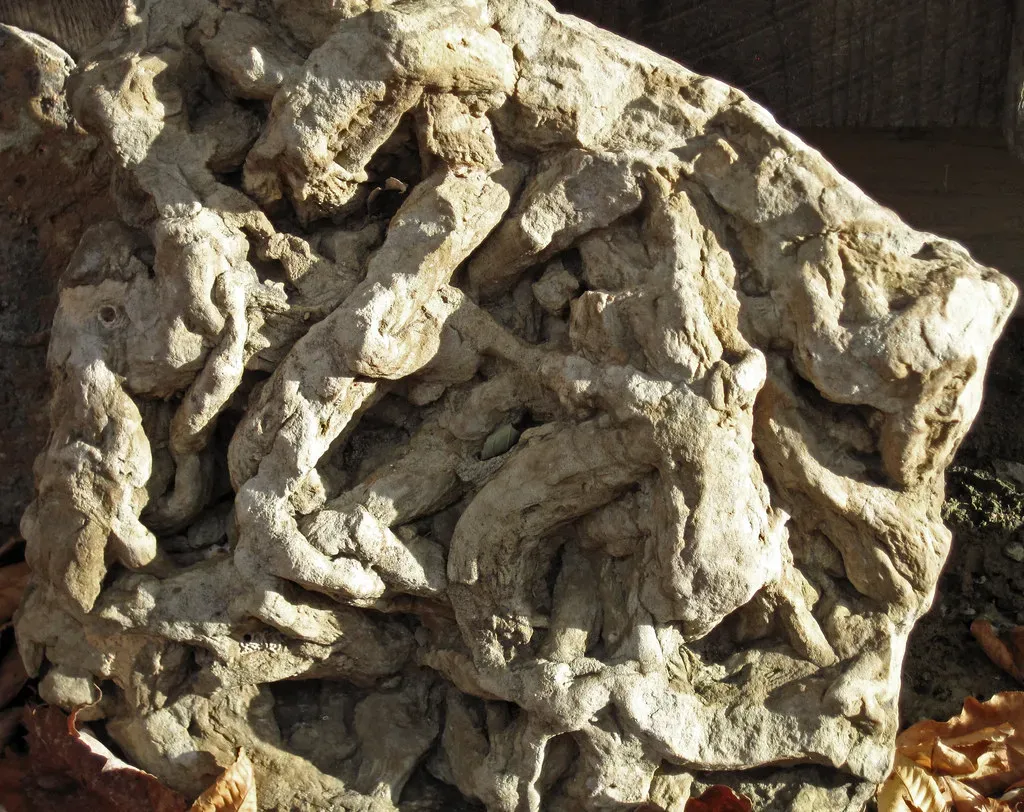
The real turning point came when you stop staring only at the shape and start examining what is preserved inside and around it. Eventually, researchers began to notice tiny mammal bones and bits of ancient rodent-like creatures embedded in or near some of the corkscrews. That is when the hypothesis shifted from exotic plant to animal behavior: maybe you were not seeing the fossil of a creature’s body, but the fossil of something it built.
This changed everything. You suddenly realize you are dealing with an ancient burrow preserved in three dimensions, not just some weird root. The corkscrew structure starts to make more sense as a tunnel dug by a mammal spiraling downward, possibly for stability, drainage, or temperature control. Instead of being a dead plant, the Devil’s Corkscrew becomes evidence of how a prehistoric animal lived, sheltered, and raised its young in a changing, sometimes harsh environment.
Meet the Ancient Burrow Builder: The Beaver-Like Palaeocastor
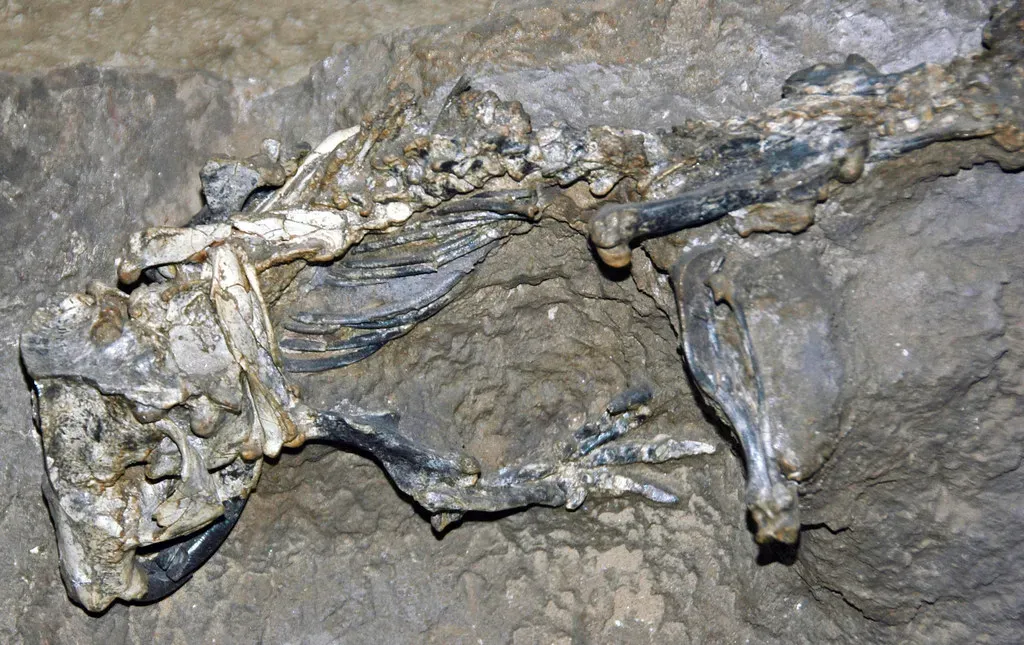
Once bones were clearly associated with the spirals, paleontologists connected the structures with an extinct rodent called Palaeocastor, whose name literally means “ancient beaver.” You can think of it as a distant cousin of modern beavers and prairie dogs, but adapted to a very specific lifestyle on the Miocene plains of North America. Instead of building dams in rivers like living beavers, this animal seems to have specialized in digging corkscrew-shaped tunnels deep into soft sediments.
When you picture this creature, you can imagine something roughly the size of a modern prairie dog or slightly larger, with strong digging claws and teeth capable of chipping away at firm soil. It probably fed on the vegetation that covered the ancient grasslands and retreated into its spiral burrows to escape predators, extreme temperatures, or seasonal fires. The Devil’s Corkscrew fossils, then, become more than just geological oddities; they are snapshots of a vanished animal’s engineering skills and daily life.
Why a Corkscrew Burrow Makes Surprisingly Good Sense
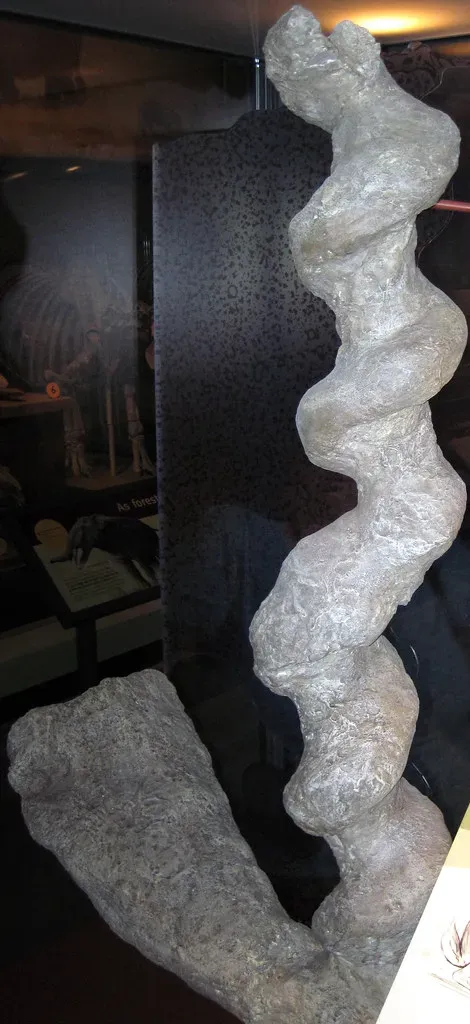
At first, a spiral burrow might sound like overkill, almost comedic in its complexity. But when you think about it from an engineering point of view, you start to see why it might have been clever. A spiral tunnel lets the animal go deep without needing a long horizontal runway on the surface, which might reduce how visible the entrance is to predators. It can also help manage water flow, preventing flooding by creating a kind of ramp for water to drain away or be absorbed gradually by the surrounding sediments.
You can also think of the corkscrew shape as a natural air and temperature regulator. In a simple straight tunnel, temperature differences between the surface and deeper layers can be sharp. A spiral path increases surface area and may slow down how quickly heat or cold moves through the burrow. For an animal living in an environment that could swing between hot and cold, that spiral design might have been the difference between comfort and stress, or even between life and death for newborns tucked away underground.
What This Fossil Tells You About Ancient American Landscapes
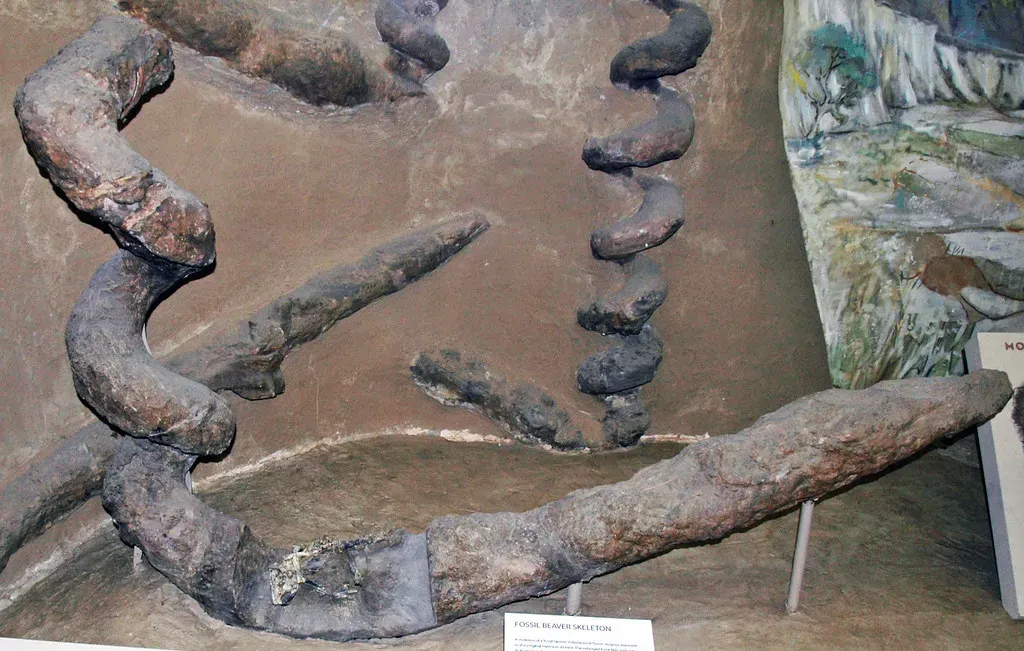
When you follow the story of the Devil’s Corkscrew, you are really walking across the Miocene Great Plains, a time when North America was undergoing major environmental change. The sediments that hold these spirals tell you the region was once a mix of grasslands, river floodplains, and scattered forests. Herds of early horses, camels, and other mammals moved through these environments, while predators prowled in the background. The presence of such intricate burrows shows you that small mammals were not just surviving here; they were thriving and innovating.
These fossils also remind you that the American landscape has been dynamic for millions of years. What is now a quiet ranch or a highway once hosted a network of spiral burrows, each one housing a family of ancient rodents. By studying the distribution, depth, and arrangement of the corkscrews, scientists can infer soil conditions, climate patterns, and even how crowded certain habitats were. You can think of each Devil’s Corkscrew as a time capsule that preserves both the behavior of its maker and the broader environmental story wrapped around it.
How a Misunderstood Fossil Shows You Science in Real Time
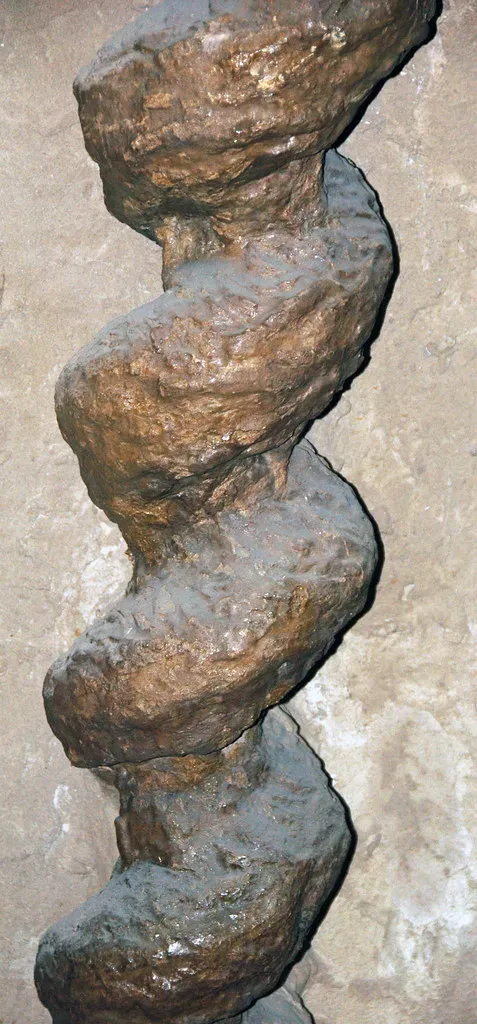
One of the most fascinating things about this fossil is how dramatically its interpretation changed over time. When you look back at early scientific papers that confidently labeled it a plant or sponge, it can seem almost amusing. But this is what real science looks like: you start with guesses, you test them against new evidence, and you are prepared to be wrong. The Devil’s Corkscrew is a perfect case study in how messy and human the process of understanding the past really is.
If you are used to seeing science as a neat series of facts in a textbook, this fossil pushes you to embrace uncertainty. No one got the correct answer immediately, and that is okay. Each mistaken idea still added something, like noticing the environments the corkscrews occurred in or cataloging their shapes and sizes. When you adopt that mindset in your own life, you stop seeing being wrong as a failure and start seeing it as a step toward a better explanation, whether you are decoding rocks or just trying to make sense of your own history.
Why This May Be America’s Most Mysterious Prehistoric Fossil
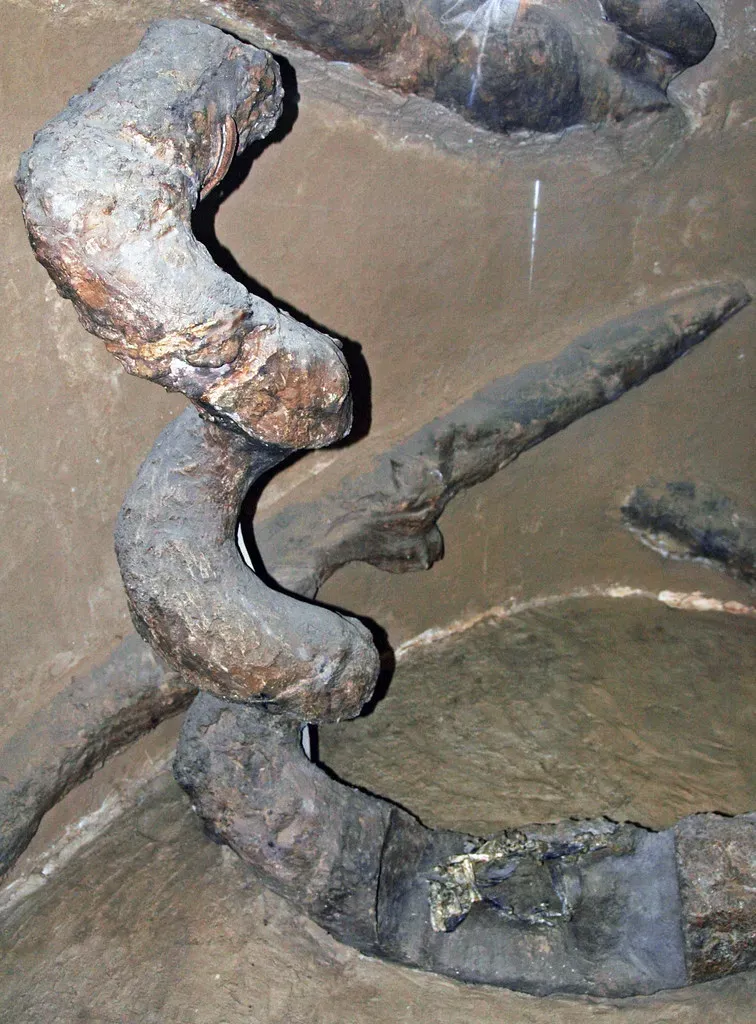
You might wonder why this particular fossil deserves to be called one of the most mysterious in American prehistory when there are famous dinosaurs and massive Ice Age beasts to choose from. The answer lies in how deeply it challenges your expectations. You expect fossils to be bones or shells, but here you are dealing with the preserved architecture of an animal’s home, twisted into a form that took generations to interpret. It blurs the line between geology and biology in a way that few fossils do.
On top of that, the Devil’s Corkscrew forces you to confront just how alien the familiar landscapes around you once were. Under fields, ranches, and quiet hillsides, you have relics of a world where tiny mammals carved spiral shafts into the earth with astonishing precision. Even now, scientists still debate the fine details: exactly how the animals dug, how many individuals shared a burrow, and how these structures evolved in response to climate and predators. That lingering uncertainty keeps the fossil firmly in the category of “mysterious,” even as you understand more about it with each new discovery.
What This Ancient Mystery Means for You Today
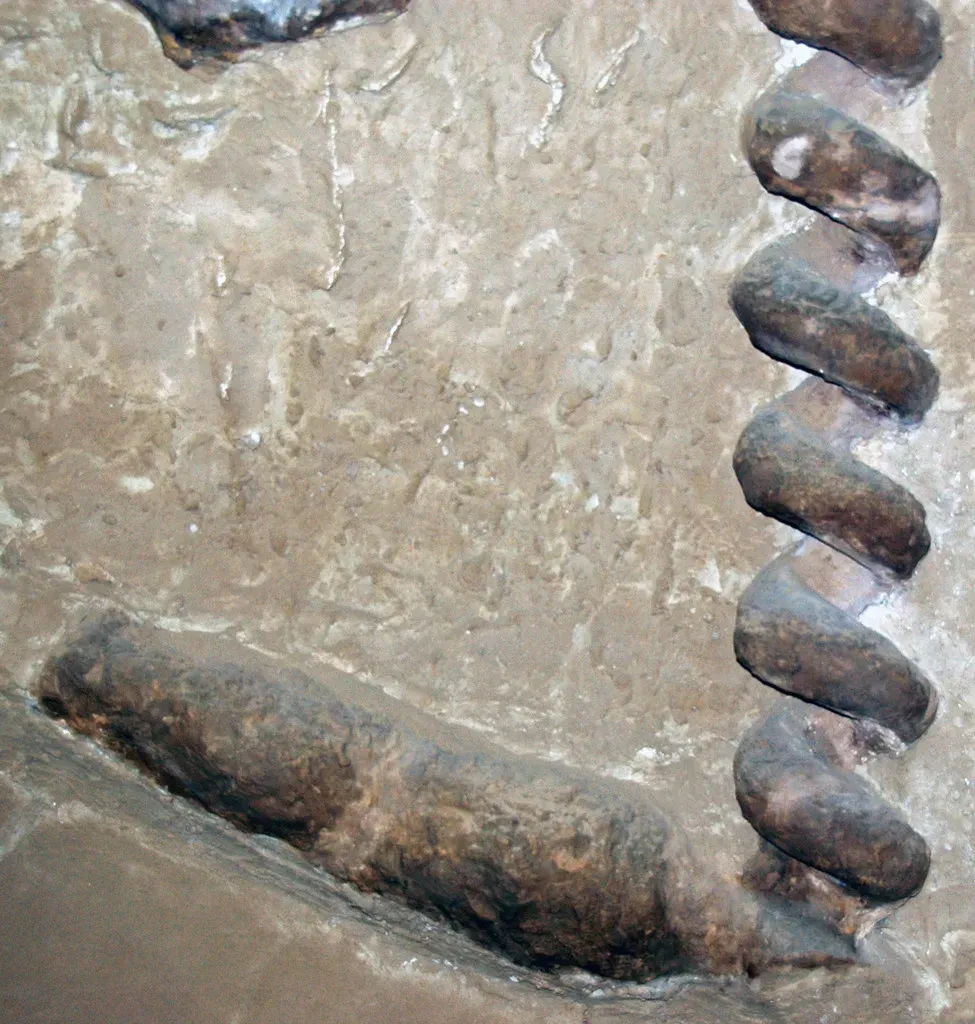
When you stand back and look at the whole story of the Devil’s Corkscrew, you realize it is not just about a strange shape in stone; it is a reminder of how much of Earth’s past you still do not fully grasp. Every time you drive across the plains or hike through open country, you are passing over layer upon layer of untold stories like this one, still hidden in the ground. The idea that an extinct rodent’s spiral burrow can survive for millions of years and then completely puzzle modern humans is both humbling and strangely comforting.
Personally, the first time I read about these fossils, I could not stop picturing a determined little animal spiraling its way into the earth, one clawful of soil at a time, unaware that its handiwork would become a scientific riddle in the far future. It makes you see your own everyday habits differently; you never know what small traces of your life might survive and confuse someone millions of years from now. In that sense, this is really a mirror, asking you how your own story might look when only a few strange traces are left behind. What would someone think if all they had of you was a spiral in stone?