Picture the world’s oceans roughly 70 to 80 million years ago – no humans, no modern whales, no great white sharks ruling the waves. Instead, something far more terrifying glided through warm, shallow prehistoric seas. Something with double-hinged jaws, a powerful shark-like tail, and an appetite for almost anything it could catch. These were the mosasaurs, and they were genuinely something else.
You might have heard the name tossed around in a Jurassic World movie or spotted a mosasaur skull behind a museum exhibit rope. Yet the real story of these ocean giants goes so much deeper than Hollywood lets on. Honestly, the more you learn about them, the more astonishing they become. So let’s dive in.
From Limestone Quarry to Scientific Sensation: The Discovery That Changed Everything
Here’s a fun thing to consider – the first known fossils of a mosasaur were not discovered by a scientist. In the mid-eighteenth century, Dutch miners made an extraordinary discovery. As they picked away at the rocks in a limestone quarry near the city of Maastricht in the Netherlands, the glint of fossil teeth shone in the darkness. More teeth followed, then bones, revealing the head of an ancient animal unlike anything ever seen before. Little did they know, but they had actually discovered the first known mosasaur fossils.
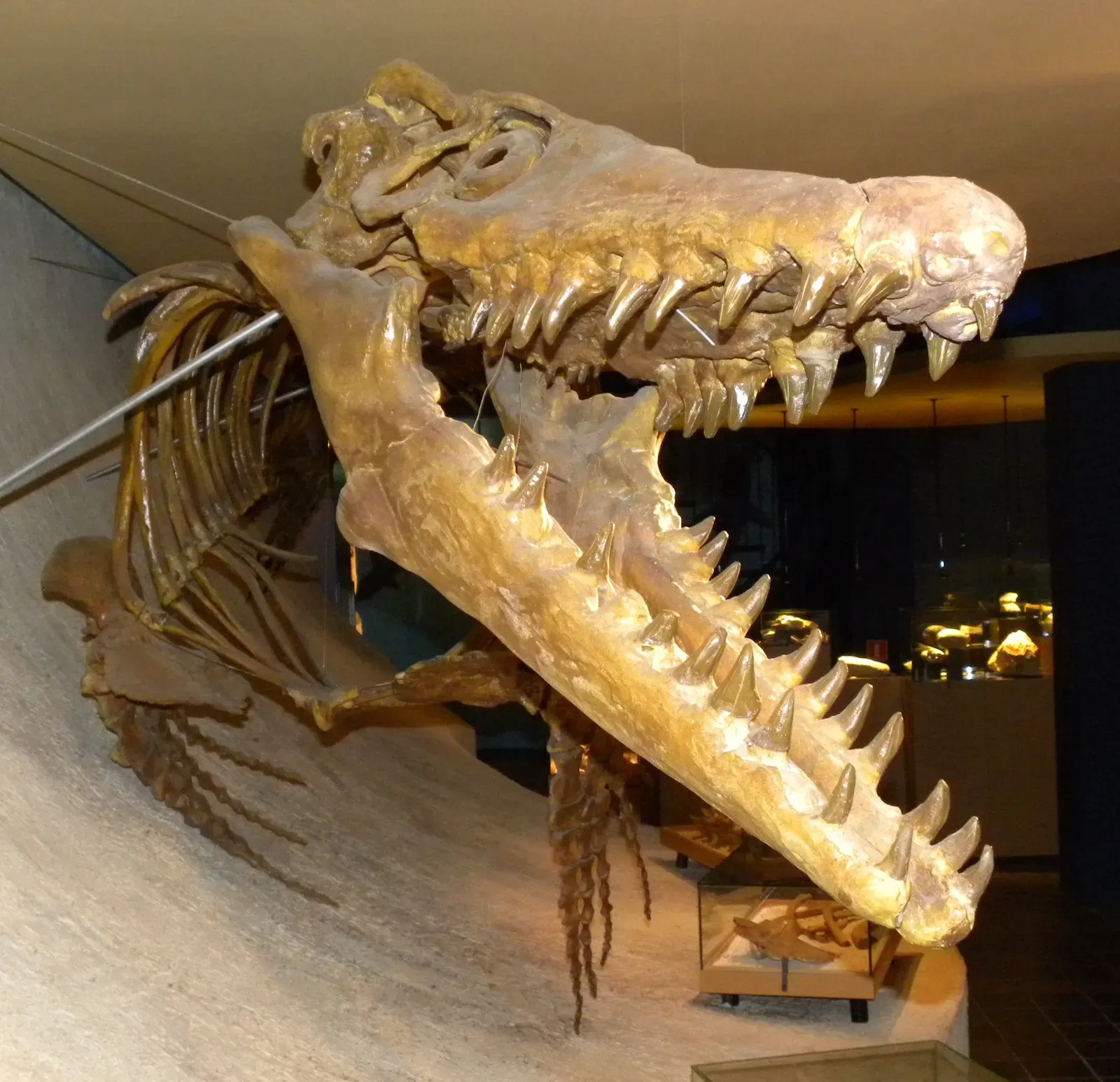
The scientific world did not know what to make of it at first. Scientists did not really pay much attention to what is now known as Mosasaurus until a second, better preserved skull was also discovered near Maastricht around a decade later. The discovery was widely publicized and came to the attention of many different experts, who suggested it could be a fish, a crocodile, or even a whale. In 1795, the French army invaded the Netherlands and seized the skull, taking it to Paris where it is still on display today. If that is not the most dramatic fossil origin story you have ever heard, you are simply not paying attention.
Closer to a Komodo Dragon Than a Dinosaur: What Mosasaurs Actually Were
Most people assume mosasaurs were dinosaurs, and you really cannot blame anyone for the confusion. Mosasaurs are an extinct group of large aquatic reptiles within the family Mosasauridae that lived during the Late Cretaceous. They belong to the order Squamata, which includes lizards and snakes. So when you look at a mosasaur, you are essentially looking at an enormous, ocean-going lizard – not a dinosaur at all.
Modern monitor lizards, such as the infamous Komodo dragon, are the closest living relatives of the Mosasaurus. Think about that for a moment. The same scaly, forked-tongued creature you might see lounging in a zoo exhibit today shares a family tree with one of history’s most fearsome ocean predators. When mosasaurs evolved from a terrestrial lifestyle to a marine one, they developed webbed paddles for swimming. Early mosasaur ancestors probably were not fully marine like a true mosasaur – it is likely that they fed in shallow coastal waters, only returning to land for resting and breeding like iguanas do today.
Built for Domination: The Anatomy of an Apex Predator
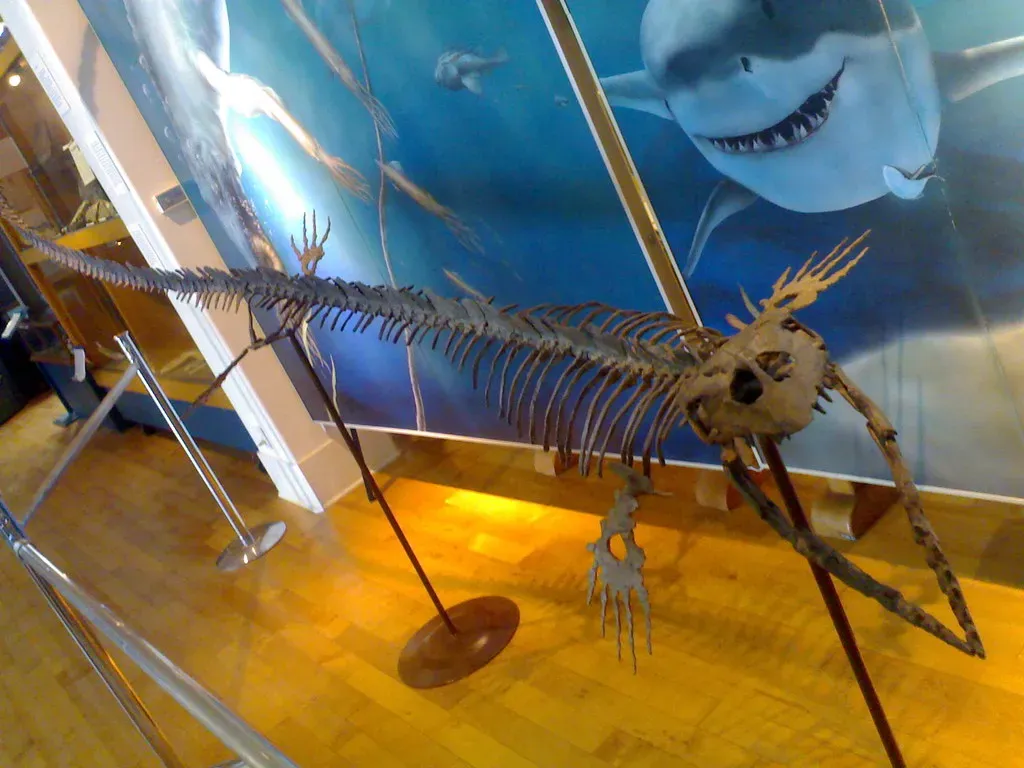
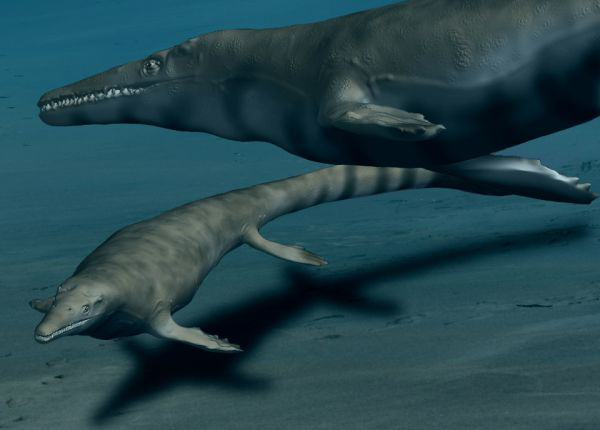
You would not have wanted to encounter one of these creatures in open water. Mosasaurs had a body shape similar to that of modern-day monitor lizards, but were more elongated and streamlined for swimming. Their limb bones were reduced in length and their paddles were formed by webbing between their long finger and toe bones. Their tails were broad and laterally compressed, terminating in a fluke-like structure that served as the primary source of propulsion.
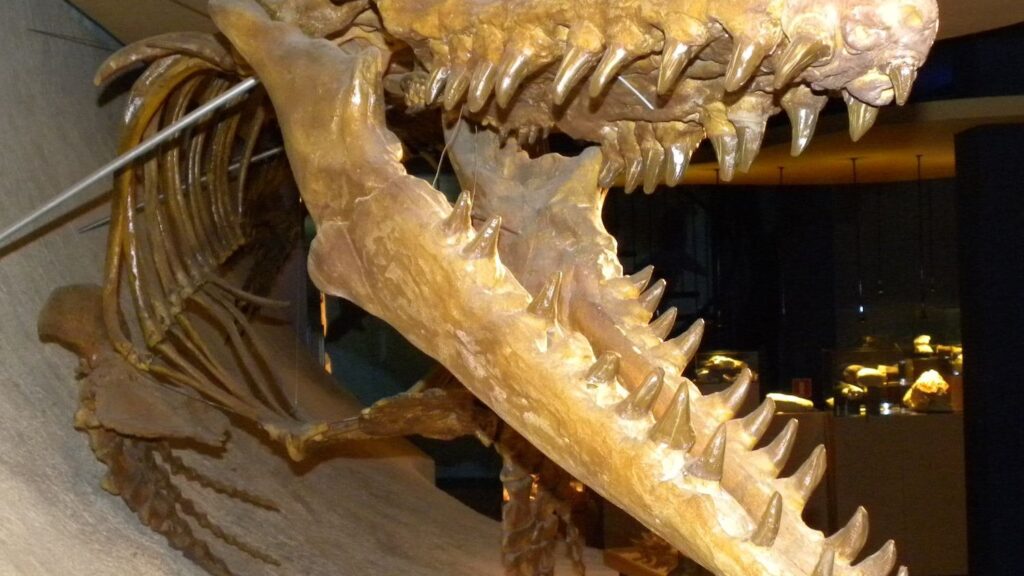
Their jaws, though, were what made them truly terrifying. Their jaws were powerful but also flexible, allowing them to swallow large prey whole. A second set of teeth on the palate – pterygoid teeth – helped drag prey backward into the throat once it was seized. This feature is especially important in marine environments, where prey is slippery and struggling. Analysis of their bones also indicates that mosasaurs would have been able to keep body temperature fixed several degrees above that of the surrounding seawater, meaning they were likely warm-blooded. A warm-blooded, double-jawed ocean lizard the length of a school bus. Let that sink in.
An Unbelievable Menu: What Mosasaurs Actually Ate
Let’s be real – if you were a creature in the Late Cretaceous ocean, you were essentially on the menu. Paleontologists have discovered the preserved remains of mosasaur stomachs which contain food like fish, sharks, cephalopods, birds, and even other mosasaurs. It is likely that mosasaurs were not picky and would eat pretty much anything that could fit into their enormous mouths – which, it turns out, was a lot.
Different species had surprisingly different eating preferences, though. Virtually all forms were active predators of fish and ammonites. A few, such as Globidens, had blunt, spherical teeth specialized for crushing mollusk shells. The smaller genera, such as Platecarpus and Dallasaurus, which were about one to six meters long, probably fed on fish and other small prey. Some evidence suggests that Mosasaurus had rather savage feeding behavior, as demonstrated by large tooth marks on the scutes of the giant sea turtle Allopleuron hoffmanni. The species likely hunted near the ocean surface as an ambush predator, using its large eyes to more effectively spot and capture prey.
Born in the Open Ocean: The Surprising Reproductive Life of Mosasaurs
Here is something that genuinely surprises most people. You might expect a giant reptile to crawl ashore and bury eggs in the sand, like a sea turtle. Mosasaurs did nothing of the sort. One of the most fascinating aspects of mosasaur behavior is that they were fully adapted to life at sea – not only as adults, but throughout their entire life cycle. Fossil evidence strongly indicates that mosasaurs gave birth to live young rather than returning to land to lay eggs. Embryonic remains have been discovered inside adult specimens, suggesting viviparity, or live birth. This adaptation would have been essential for large marine reptiles, allowing them to reproduce in open water without the limitations faced by sea turtles or other egg-laying reptiles.
Scientists reached this conclusion when a mosasaur skeleton containing five unborn young in its abdomen was discovered in South Dakota. The maximum number of young in one birth was likely around four or five. Young mosasaurs probably occupied different ecological roles than adults, feeding on smaller prey and inhabiting safer coastal nurseries until they grew large enough to compete with bigger predators. It is a fascinating parallel to how many modern marine mammals raise their young – remarkable for a creature that is, at its core, a giant lizard.
The Final Curtain: How and Why Mosasaurs Vanished
By the end of the Cretaceous Period, 66 million years ago, mosasaurs were still thriving. Though some smaller species had gone extinct as temperatures dropped from their peak near the start of the Late Cretaceous Period, larger species were still living all around the world. Their reign was not slowly fading. It was abruptly cut short.
By the end of the Cretaceous, mosasaurs were at the height of their evolutionary radiation, and their extinction was a sudden event. During the late Maastrichtian, global sea levels dropped, draining the continents of their nutrient-rich seaways and altering circulation and nutrient patterns, reducing the number of available habitats for mosasaurs. The genus adapted by accessing new habitats in more open waters. The most likely driving force in mosasaur evolution was high productivity in the Late Cretaceous, driven by tectonically controlled sea levels and climatically controlled ocean stratification and nutrient delivery. When productivity collapsed at the end of the Cretaceous, coincident with bolide impact, mosasaurs became extinct. The same catastrophic asteroid impact that wiped out non-avian dinosaurs ended the reign of these ocean giants simultaneously. No survivors. No second chances.
Conclusion: Ghosts of a Warmer Ocean
Mosasaurs ruled the world’s oceans for a stretch of time that dwarfs all of recorded human history. They were warm-blooded, live-bearing, double-jawed apex predators who ranged from tropical shallows to offshore depths, eating everything from ammonites to each other. They were, in every honest sense, extraordinary animals.
I think what makes them so compelling is the combination of the familiar and the alien. You see shades of the Komodo dragon, the orca, and the great white shark all rolled into one creature that no human eye has ever seen alive. The fossils tell a vivid story – a story of millions of years of dominance ended in what was, geologically speaking, barely a blink.
The next time you stand at the ocean’s edge, spare a thought for what once moved through those same waters. The sea has kept its secrets well. What would you discover if it gave just a few more of them up?