There are creatures that walk, swim, or slither into the imagination and simply refuse to leave. The megalodon is one of them. For millions of years, this colossal shark patrolled warm, ancient seas as an absolute force of nature. Few animals, extinct or living, have sparked as much awe, debate, and sheer human fascination as this prehistoric giant.
You might think you already know the megalodon story. Movies have told it badly. Pop science has oversimplified it. Hollywood made it 75 feet long and gave it a grudge against submarines. Here’s the thing though – the actual science is somehow even more staggering. Let’s dive in.
A Size That Defies Comprehension: How Big Was the Megalodon, Really?
If you thought the megalodon was enormous before, brace yourself, because recent science has pushed that number into territory that feels almost fictional. Scientists have reexamined the total body length of the megalodon, finding it to be as much as 30 feet longer than previously thought. That is not a minor revision. That is the difference between something large and something that simply belongs in a different category of existence.
If the Danish vertebrae represent the largest in the body, that individual could have measured about 24.3 meters, or 80 feet, long – currently the largest possible reasonable estimate for Otodus megalodon that can be justified based on science and the present fossil record. To put that in perspective, you are looking at the length of roughly two school buses end to end, cruising silently through prehistoric waters. Most scientifically accepted estimates for the megalodon’s maximum size fall into the 60 to 70 foot range, with a weight of 50 to 70 tons.
Not Your Great White on Steroids: The Real Body Shape Revealed
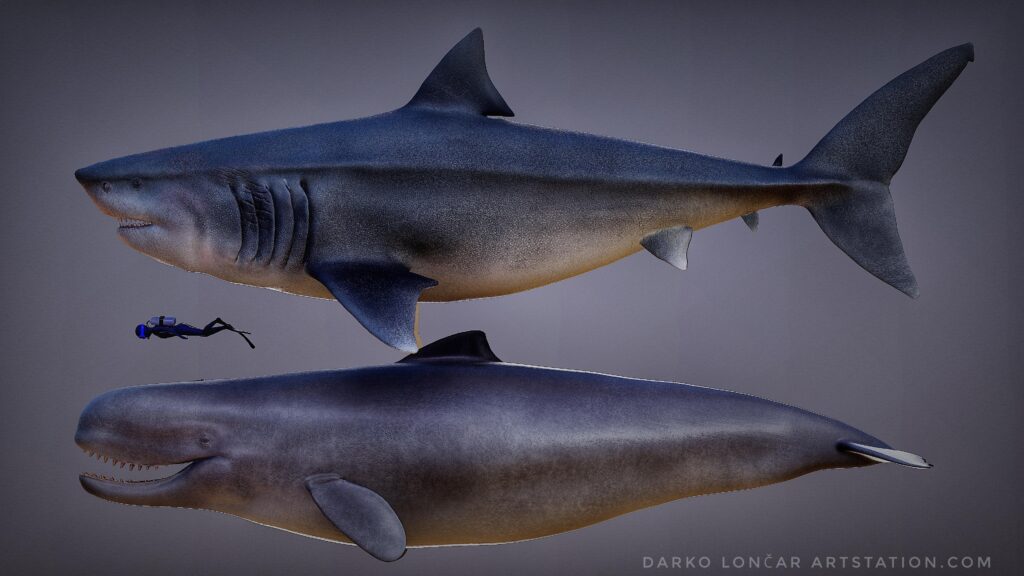
For decades, you have probably pictured the megalodon as a bloated, supercharged version of a great white shark. That image, while dramatic and cinematic, turns out to be almost entirely wrong. The megalodon was slenderer than previously thought, closer in build to a sleek lemon shark than a chunky great white. Honestly, that makes the creature even more unsettling to imagine, because a slender body at 80 feet is a very different kind of terrifying.
Modern-day gigantic sharks like the whale shark and basking shark, as well as many other gigantic aquatic vertebrates like whales, have slender bodies because large stocky bodies are hydrodynamically inefficient for swimming. In contrast, the great white shark with a stocky body can be large but cannot be gigantic, no more than about 7 meters, because of hydrodynamic constraints. This means that the megalodon’s slender, elongated form was not a quirk – it was the very key to achieving its legendary scale.
Jaws of Absolute Destruction: The Bite Force That Ruled the Seas
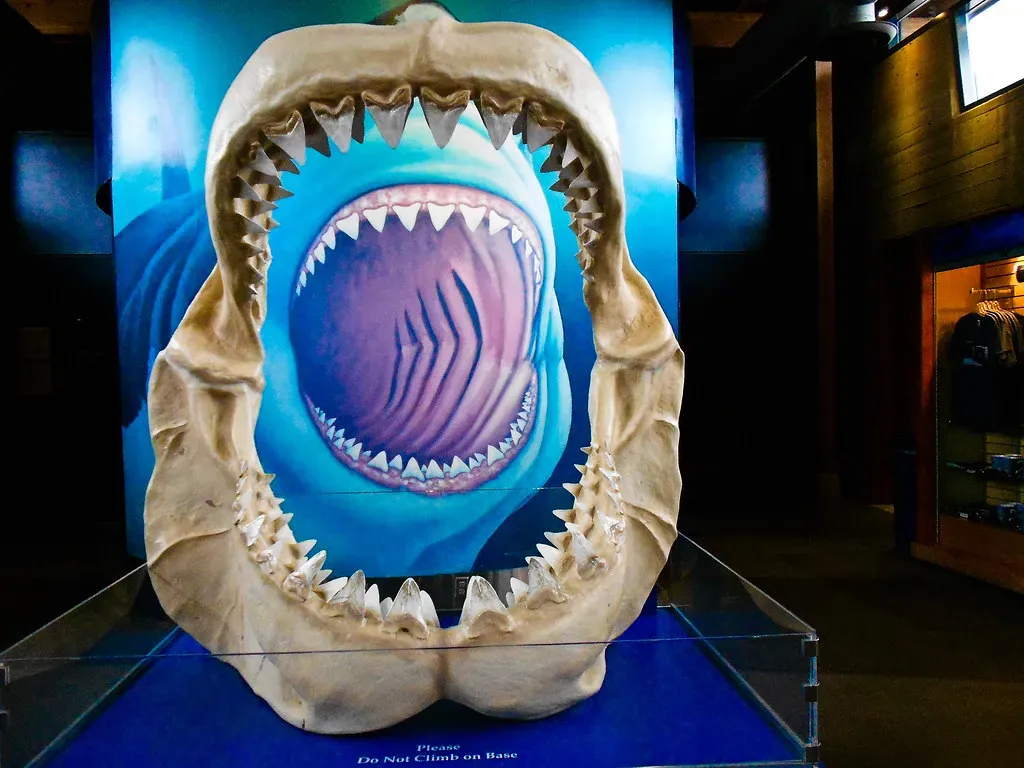
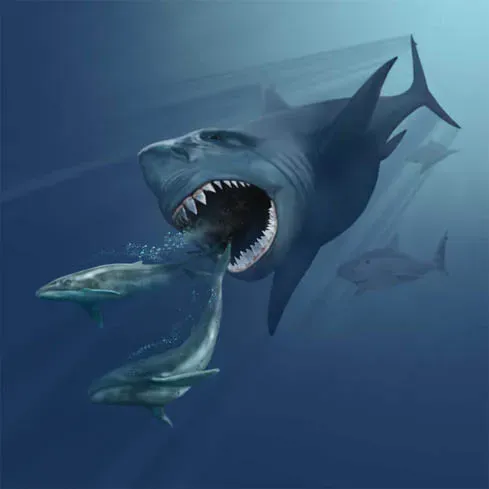
In order to tackle prey as large as whales, the megalodon had to be able to open its mouth wide. Its jaw is estimated to have spanned 2.7 by 3.4 meters wide – easily big enough to swallow two adult people side by side, or a London taxi cab. Think about that the next time you complain about traffic. A mouth so vast it could engulf a vehicle whole is not something evolution casually stumbles into. That is millions of years of predatory refinement.
These jaws were lined with 276 teeth, and studies reconstructing the shark’s bite force suggest that it may have been one of the most powerful predators ever to have existed. Studies have determined that megalodon could produce a bite force between 108,000 and 182,000 Newtons, making it one of the most powerful bites in the animal kingdom. For comparison, the human bite registers at roughly 1,300 Newtons. The megalodon’s jaws delivered something closer to an industrial hydraulic press made of cartilage and fury.
A Ravenous Appetite: The Daily Feeding Demands of a Superpredator
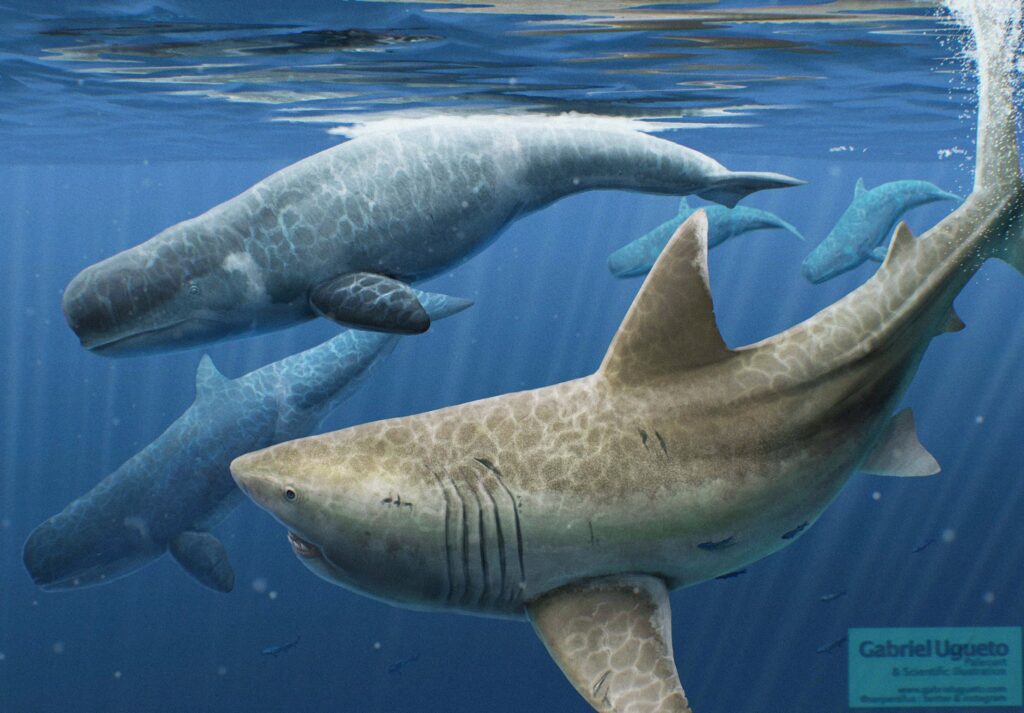
Here is where things get truly staggering. An adult megalodon would have needed to eat a whopping 98,175 calories per day, roughly 20 times higher than an adult great white shark. That number is hard to wrap your head around, so consider this: a fully grown African elephant needs around 70,000 calories a day just to keep its enormous body functioning. The megalodon needed more. Much more.
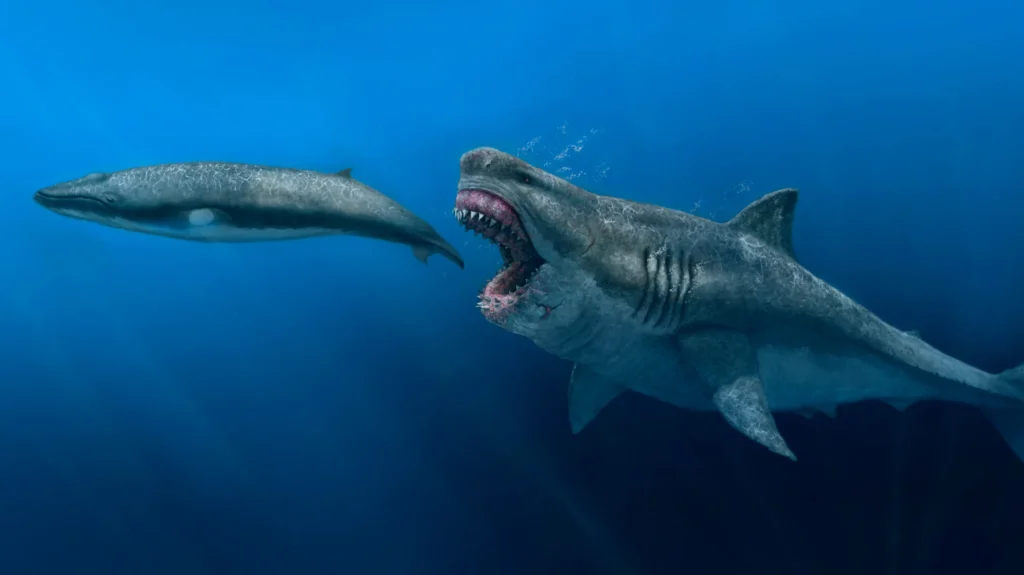
What did it eat to fuel this extraordinary demand? You might assume it hunted only the biggest whales, and sometimes it did. It appears that megalodon partook of a much broader range of prey than previously assumed. The shark was flexible enough to feed on marine mammals and large fish from the top of the food pyramid as well as lower levels, depending on availability. Direct fossil evidence indicates that megalodon preyed upon many cetacean species, such as dolphins, small whales, cetotheres, sperm whales, bowhead whales, and rorquals. It was less a specialist and more an opportunist of oceanic proportions.
Hunting Like a Ghost: Strategies, Speed, and Predatory Genius
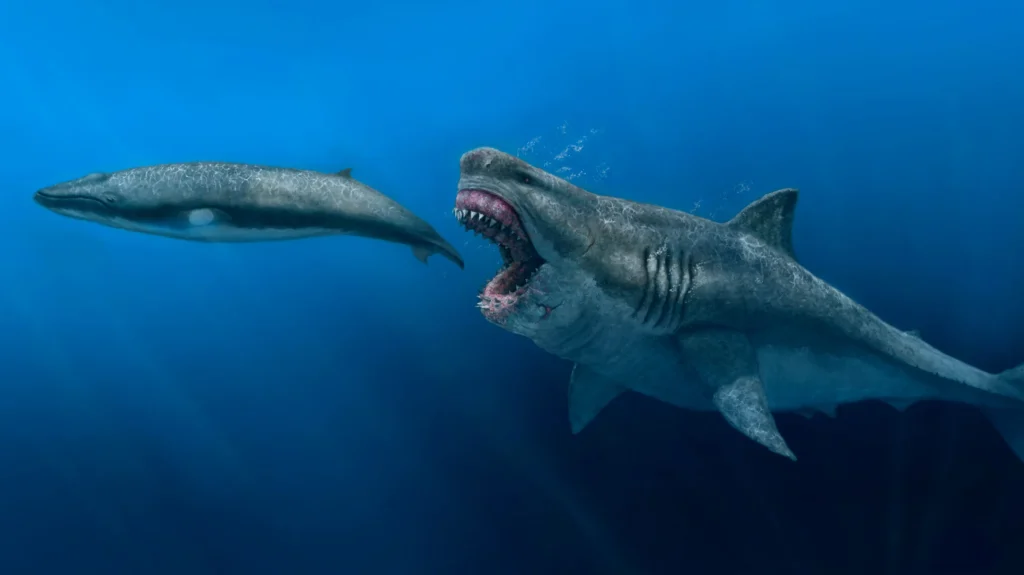
Unlike the great white, which attacks prey from the soft underside, megalodon probably used its strong jaws to break through the chest cavity and puncture the heart and lungs of its prey. That is a disturbingly precise hunting method. It suggests the megalodon was not just raw power but something more calculated, adapting its attack angle based on what it was targeting. Fossil remains of some small cetaceans suggest they were rammed with great force from below before being killed and eaten, based on compression fractures.
The giant shark’s partial warm-bloodedness may have allowed it to thrive as an efficient, dominant hunter for nearly 20 million years. Being regionally endothermic, meaning warm in key parts of the body, gave the megalodon a serious edge. A fish that runs hot can travel faster and farther in search of prey than one whose temperatures are dictated by the environment, suggesting the megalodon was a formidable and far-ranging predator in its time. I think this is one of the most underrated facts about this animal. It was not just big – it was metabolically equipped to dominate.
The Fall of a King: Why the Megalodon Vanished from the Earth
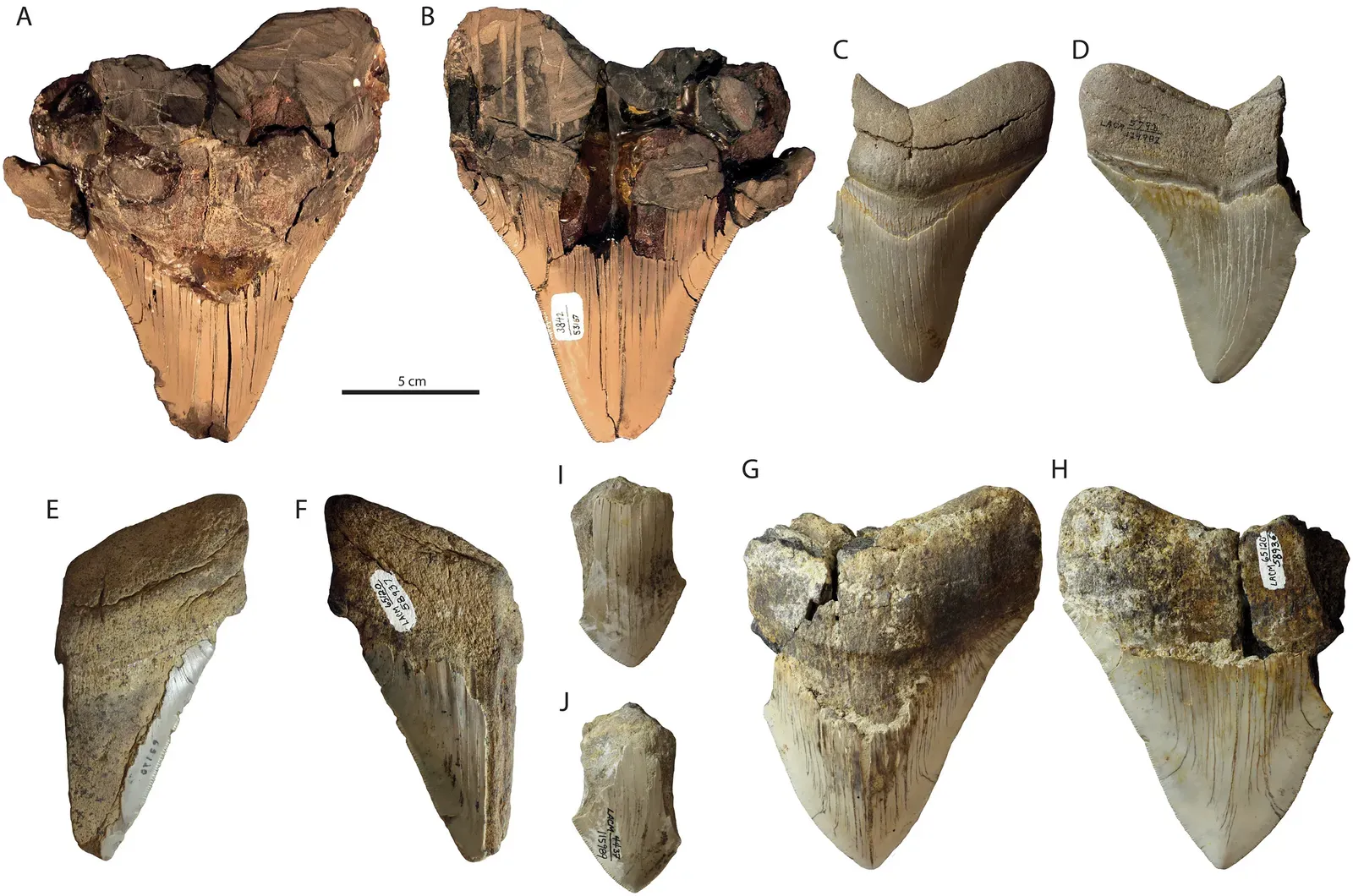
No creature, however powerful, is immune to the forces of a changing world. The combination of a decline in prey species, a changing climate, and increasing competition may have been enough to wipe out the largest shark ever. It’s hard to say for sure which single factor hit hardest, but the picture that emerges is one of a perfect storm that the megalodon simply could not survive. As the shark preferred warmer waters, oceanic cooling associated with the onset of the ice ages, coupled with the lowering of sea levels and resulting loss of suitable nursery areas, may have also contributed to its decline. A reduction in the diversity of baleen whales and a shift in their distribution toward polar regions may have reduced megalodon’s primary food source.
There is also a deeply ironic twist in the story. The appearance of the great white shark approximately five million years ago might have played a role in the megalodon’s extinction around 3.5 million years ago. As more experienced predators, adult great whites may have outcompeted young megalodons for food, contributing to the eventual decline of the species. Keeping a big body warm requires a great deal of food, meaning the megalodon had to feed relatively often to survive. When the food started disappearing, the pressure on such an energy-hungry animal became unbearable. The ocean’s king was essentially starved out of existence.
Conclusion
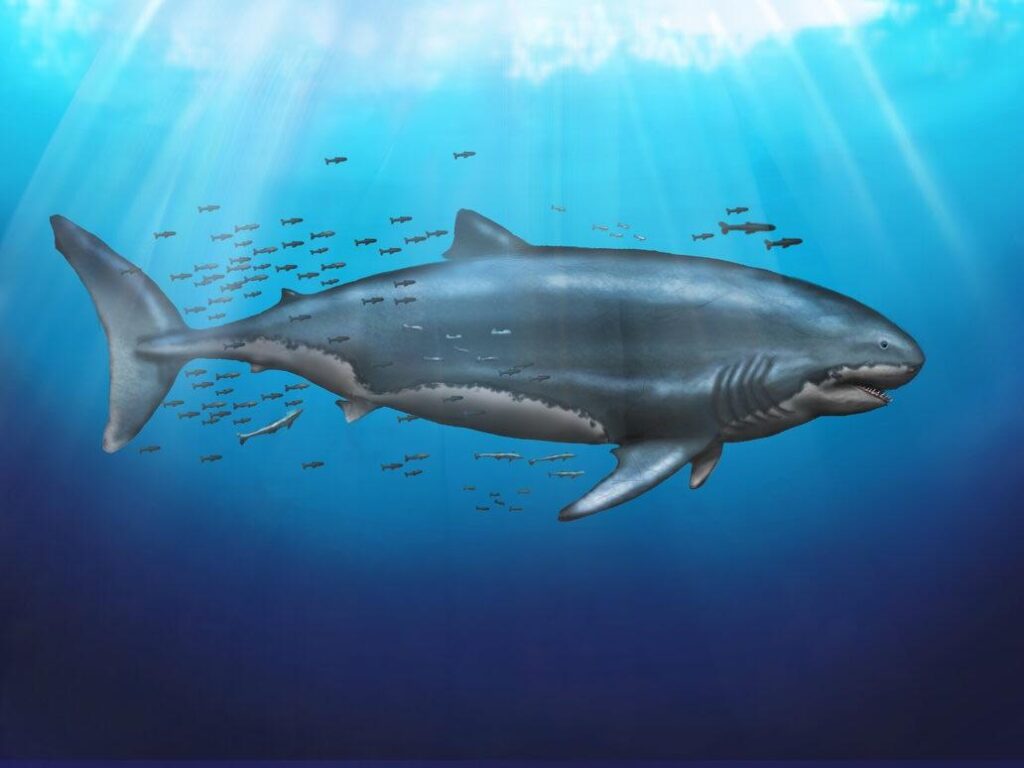
The megalodon is more than a prehistoric shark. It is a lesson in what evolution can achieve when given millions of years, warm seas, and an abundance of prey. The sheer size and power of the megalodon meant it could tackle almost any marine animal, making it the uncontested apex predator of its time. Yet even that throne eventually crumbled.
What makes the megalodon story so gripping in 2026 is not nostalgia – it is the fact that science keeps rewriting the script. The animal keeps getting bigger, stranger, and more ecologically complex with every new study. We are only now starting to understand what kind of creature really ruled those ancient seas. The true king of the ocean was not the monster Hollywood invented. It was something far more fascinating. So here is the question worth sitting with: if a predator this extraordinary could vanish completely from the Earth, what does that tell us about the fragility of even the mightiest among us? What do you think? Share your thoughts in the comments below.