You probably grew up with the idea that early Earth was a barren, hostile rock, simmering with volcanoes and getting hammered by space debris, with life arriving much later once things calmed down. When you look at the actual rocks, though, the story turns out to be far more dramatic and far more rushed. The oldest fossils on Earth suggest that life showed up astonishingly early, almost as soon as the planet had a stable crust and liquid water.
Instead of a long, empty prelude followed by a slow biological awakening, you’re looking at a planet that wasted no time. As soon as there were oceans, tiny microbial communities seem to have been testing the waters. That single fact forces you to rethink what you consider “normal” for planets and life. If life could emerge so quickly on a young, violent Earth, then maybe the universe is not as quiet or as empty as it sometimes feels.
Early Earth: A World You Would Never Survive, But Microbes Did
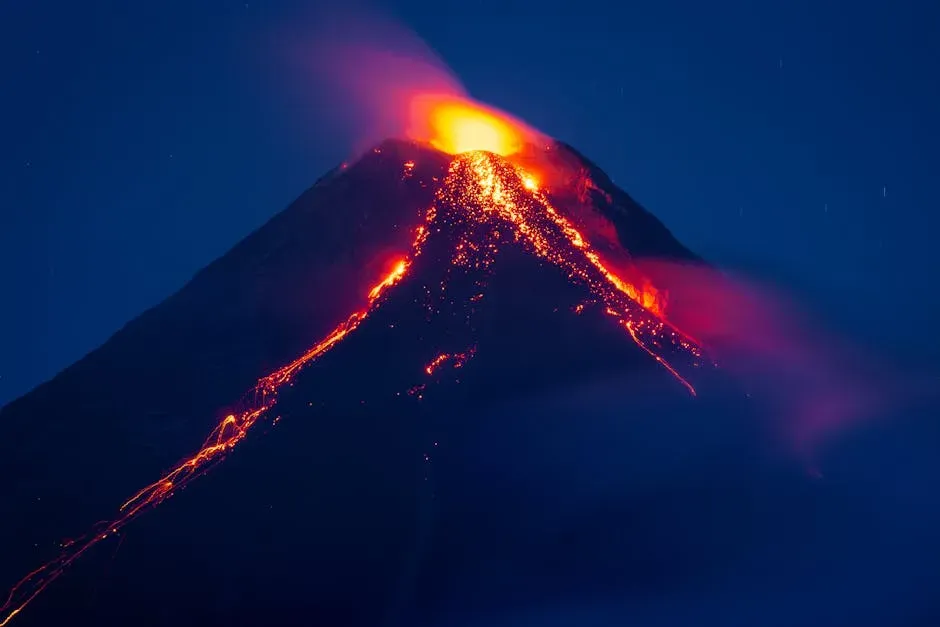
If you could step back in time more than four billion years, you would not recognize Earth. You would see a dimmer Sun, a sky likely tinted by volcanic gases, and oceans laced with dissolved metals and chemicals that would poison you in moments. Constant asteroid impacts and intense volcanism would shake the crust, and there probably were no continents like the ones you walk on today, just scattered volcanic islands and proto-continents rising from dark water.
Yet this violent scene still hid something familiar: liquid water, heat, and a rich chemical soup. Those ingredients, toxic to you, were a playground for chemistry. The surprising part is that the oldest fossil-like traces of life show up not that long after this chaos began to settle. In that kind of environment, any form of life that could grab energy and hold itself together had a huge advantage, and simple microbes seem to have done exactly that while the planet was still recovering from constant cosmic and geological blows.
Stromatolites: Ancient Microbial Cities Locked in Stone
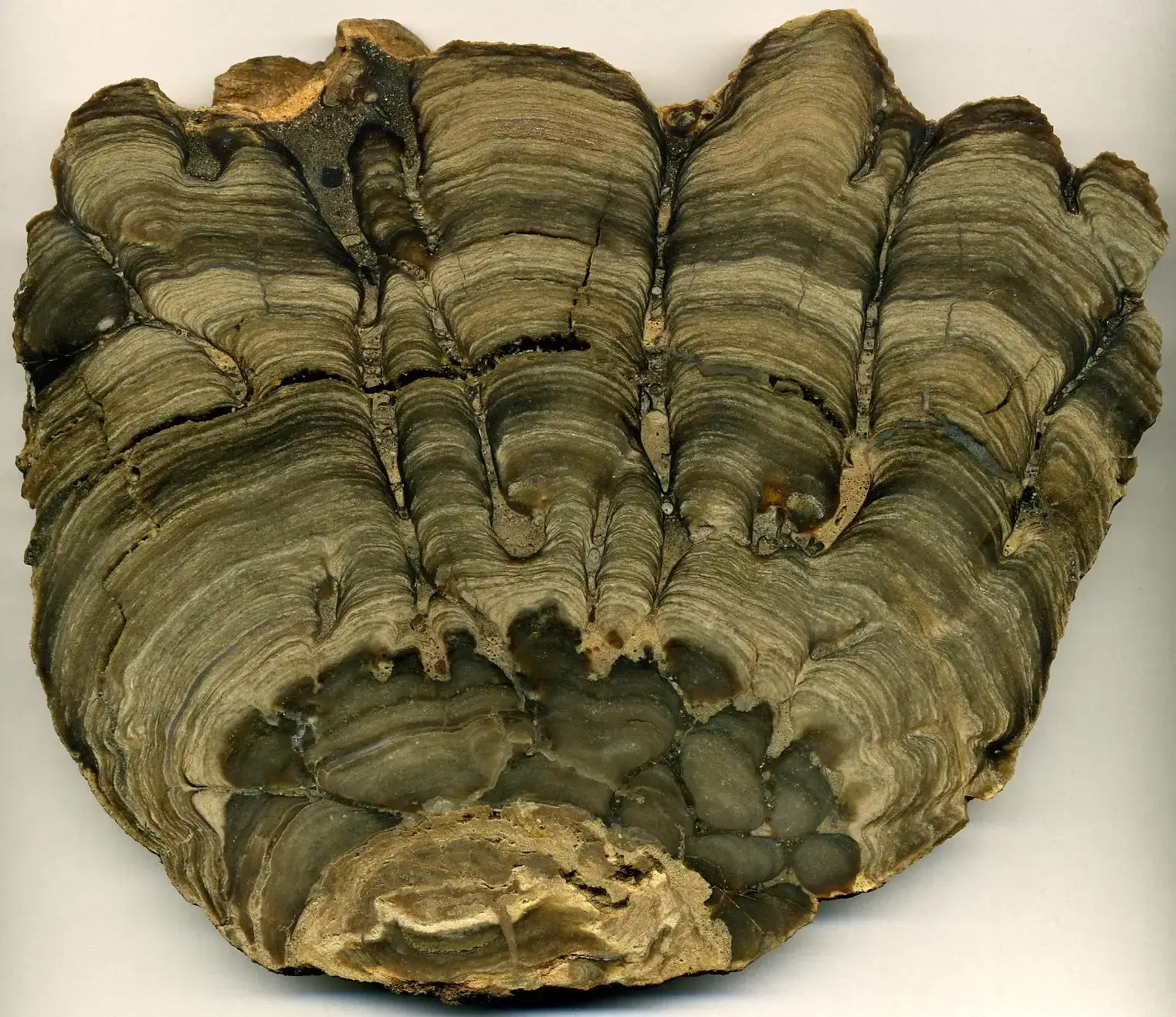
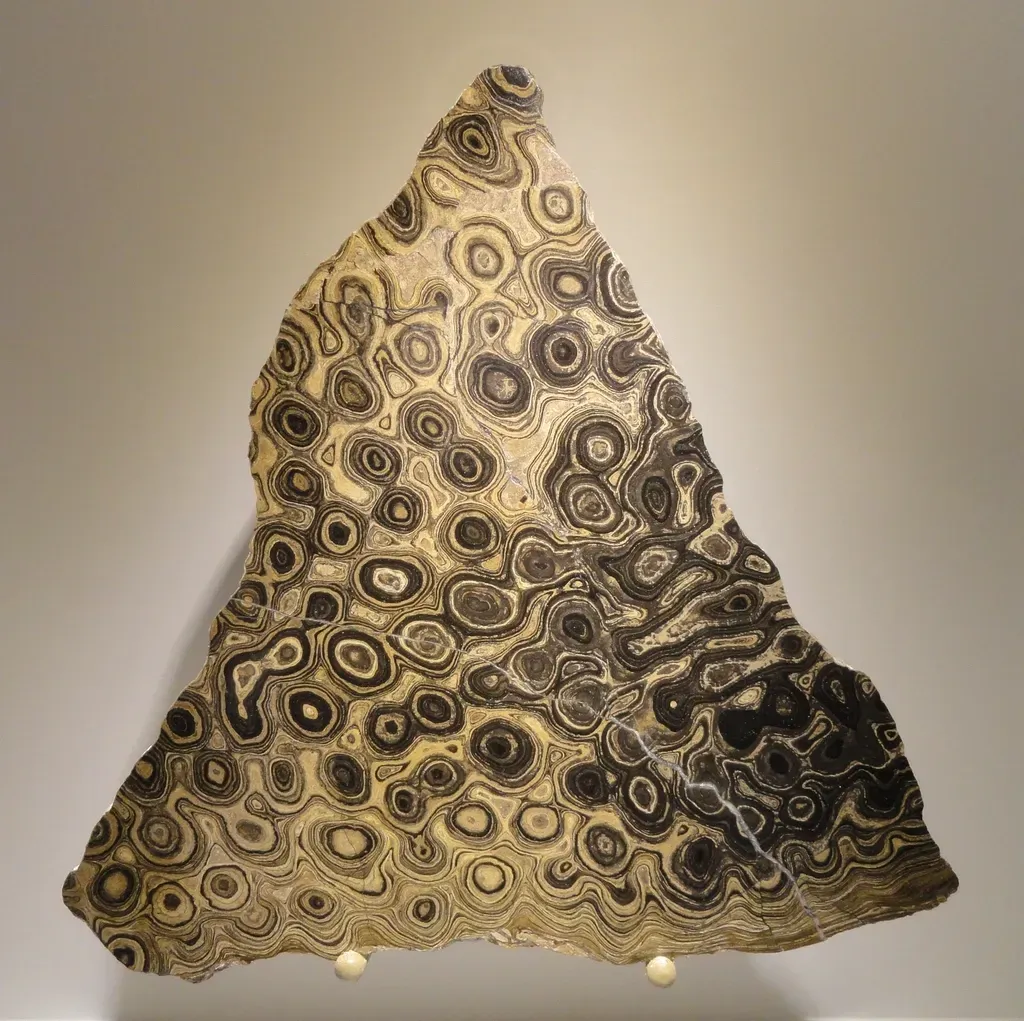
When you hear “fossil,” you might think of dinosaur bones or shells, but the oldest widely accepted fossils are not bones at all. They are stromatolites: layered rock structures built by microbial communities, mostly cyanobacteria, that trapped and glued together sediments in sticky biofilms. If you look at these structures in cross-section, you see distinctive, repeated layers that reflect how these microbes grew, trapped grains, and reacted to changing sunlight and water conditions over time.
What makes stromatolites so striking is that you can still find living versions today in places like shallow, salty lagoons and tidal flats. When you compare modern stromatolites with some ancient ones more than three billion years old, the resemblance is hard to ignore. You are essentially looking at the stone-built ruins of microbial “cities” that flourished on an alien version of Earth, showing you that complex microbial ecosystems were already thriving while the planet was still very young.
Carbon Clues: Chemical Fingerprints of Ancient Cells
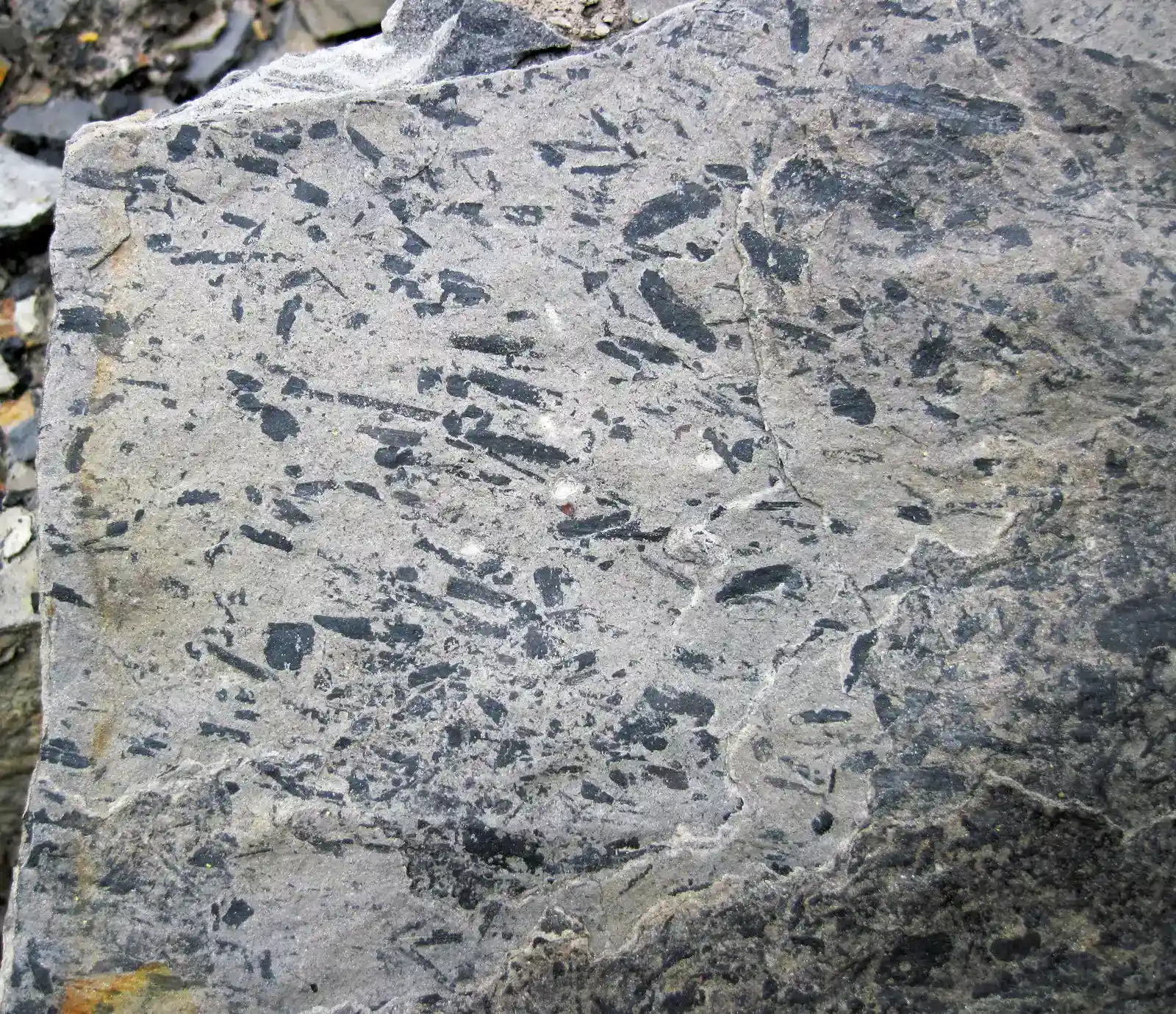
Not all fossils look like shapes in rock; some are more like subtle signatures hidden in the chemistry of ancient minerals. You can detect hints of early life from the ratios of different forms of carbon, often called isotopes, locked inside very old rocks. Living things tend to prefer lighter carbon when they build their molecules, and that preference leaves a characteristic imbalance that you can still measure billions of years later.
In rocks older than three and a half billion years, you find carbon that looks like it has been processed by biology rather than simple geology. You are not seeing cells themselves, but you are seeing their fingerprint, preserved like a faint scribble in the margins of Earth’s earliest chapters. When that chemical pattern shows up in rocks that ancient, it tells you that something alive was already at work, transforming its environment in ways that pure chemistry usually does not.
Hydrothermal Vents: Where Rock, Water, and Life Collide
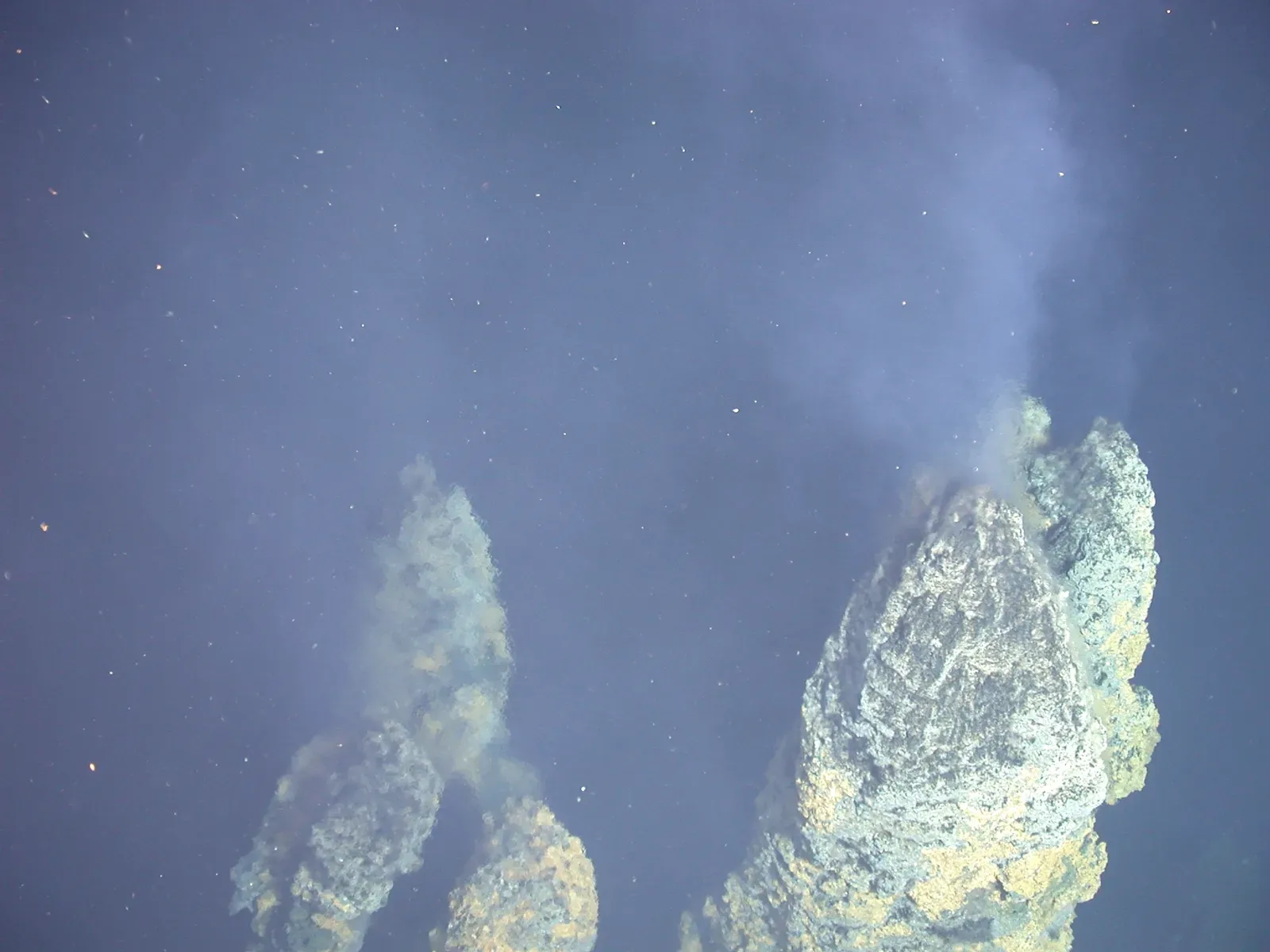
One of the most intriguing ideas about early life points you toward hydrothermal vents – those deep-sea systems where hot, mineral-rich water blasts out of the seafloor. Even today, you see entire ecosystems of microbes and animals clustered around them, feeding not on sunlight but on chemical energy. This kind of environment combines steep temperature gradients, abundant minerals, and protective structures where fragile molecules can concentrate and react.
Some of the oldest tiny, tube-like or filament-like structures reported in ancient rocks come from what appear to be ancient hydrothermal systems. When you picture superheated water rich in iron, sulfur, and other elements running through cracks in young ocean crust, you can imagine microscopic pioneers colonizing mineral surfaces. While scientists continue to debate the details and specific examples, the basic idea is that places where rock, water, and energy collide may have offered exactly the kind of chemical playground that early life needed.
Green Energy Before Plants: The Rise of Early Photosynthesizers
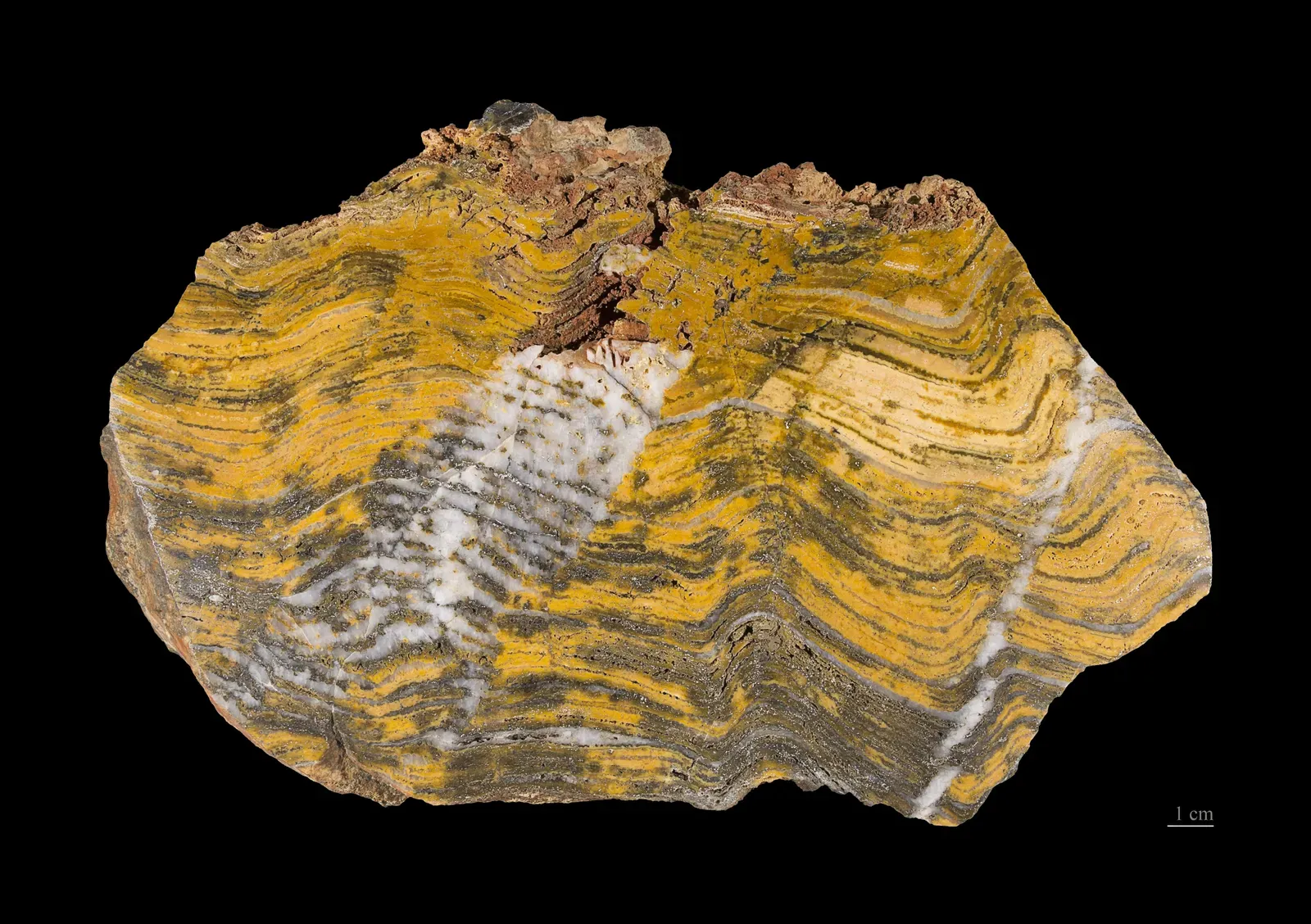
Long before forests, grasses, or even algae, early microbes were already figuring out how to use light. Some of the oldest stromatolite-building communities are thought to have included microbes capable of photosynthesis, using sunlight to power their metabolism. Early versions may not have produced oxygen right away, but over time, oxygen-producing photosynthesizers such as cyanobacteria dramatically altered the chemistry of the oceans and atmosphere.
As you imagine these shallow seas filled with microbial mats, bathed in sunlight from a dimmer young Sun, you realize that the story of life’s energy revolution began long before animals existed. Step by step, these tiny light-harvesters pumped out oxygen, slowly rusting the planet’s iron-rich oceans and paving the way for breathable air. When you look at the oldest fossils with that in mind, you are not just seeing old rocks; you are seeing the early setting of the stage that made your own oxygen-based life possible.
Controversy in the Crust: When a “Fossil” Might Just Be a Rock
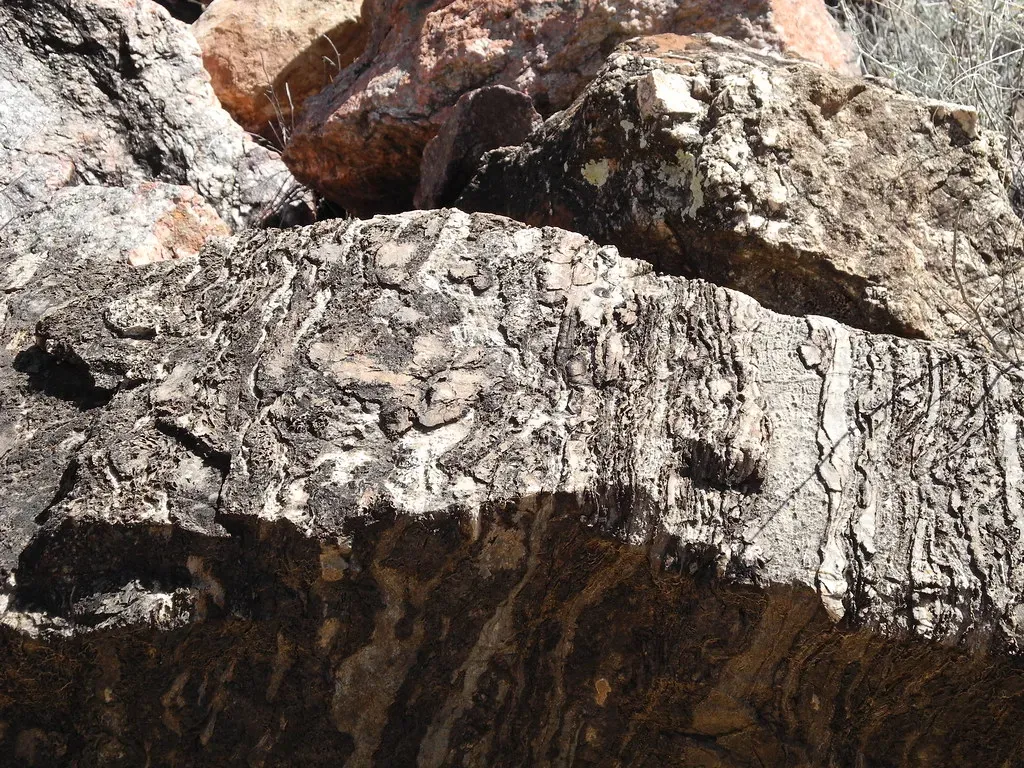
Not every claimed ancient fossil turns out to be a genuine trace of life, and this is where you have to be careful. Many of the oldest supposed fossils are tiny, ambiguous structures found in heavily altered rocks that have been squeezed, heated, and chemically changed over billions of years. Minerals can form shapes that resemble cells, filaments, or microtubes, so you cannot just trust your eyes; you need strong chemical and structural evidence to argue that something was truly once alive.
Some well-publicized claims of very ancient fossils have been challenged or reinterpreted as purely geological formations. When you follow these debates, you see how hard it is to reconstruct events from such a distant past, and why scientists often argue over dates and interpretations. For you, the takeaway is that while the broad picture – early life on a young Earth – is solid, the precise details of specific fossils, ages, and environments are still being refined and sometimes overturned as new techniques and better samples appear.
What Early Fossils Say About Life Beyond Earth
Once you accept that life seems to have shown up on Earth surprisingly early, it becomes very hard not to think about other worlds. If your own planet hosted microbes when the environment was still rough, then a rocky planet or icy moon with water and energy elsewhere might not need billions of calm years to start cooking up biology. Mars, ancient ocean worlds like Europa or Enceladus, and countless exoplanets around other stars suddenly look less like long shots and more like plausible laboratories for life’s chemistry.
At the same time, you need to be honest about what the fossils actually show: so far, you are only certain about early microbial life here, and nothing more complex for a very long time. That means you can reasonably suspect that simple life might be common, while complex, multicellular life could still be rare. The oldest fossils on Earth push you to be both more optimistic and more cautious at once – open to the idea that life can start quickly, but aware that going from microbes to minds may be the real cosmic challenge.
Your Place in a Four-Billion-Year Chain
When you trace the story from those oldest microbial traces to yourself, you realize you are part of an unbroken biological chain that stretches back billions of years. Every cell in your body is a descendant of those first pioneers that learned to harvest energy, copy themselves, and adapt to changing conditions. The ancient stromatolites, the carbon signatures, the vent communities – they are all snapshots of earlier chapters in the same story that now includes your genes, your thoughts, and your choices.
This perspective can change how you see everyday life. Eating, breathing, moving, and even thinking are all just elaborate modern twists on very old survival strategies that started with tiny, unseen ancestors in prehistoric seas. When you look at a piece of banded rock and know that it records the labor of long-dead microbes, you are not just looking at geology; you are looking at family history written in stone. It raises a quiet but powerful question: now that you know how deep your roots really go, what kind of future do you want to help write for the next branches of this ancient tree?
In the end, the oldest fossils on Earth do not just tell you when life began, they challenge you to rethink how fragile and yet how stubborn life can be. They show you a world where microbes seized opportunities in the harshest conditions and patiently transformed a hostile planet into a home that could eventually support forests, animals, and finally you. Those early traces in ancient rocks are a reminder that even the smallest forms of life can reshape an entire world over enough time. Knowing that, how differently do you feel when you look at the ground beneath your feet today?