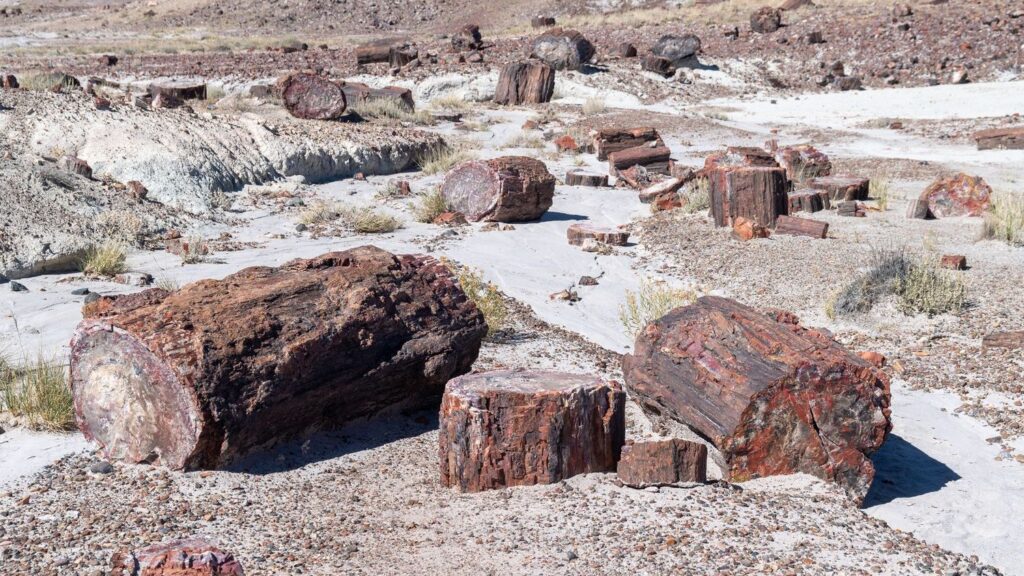
Imagine walking across a landscape where the ground beneath your feet holds the frozen remains of an entire prehistoric world, a world that thrived more than 200 million years ago when dinosaurs were just beginning their long reign over the Earth. That is exactly what you experience when you visit Petrified Forest National Park in northeastern Arizona. It is a place that defies simple description, where shimmering logs of crystallized stone scatter across a painted desert, and where every rain shower has the potential to expose a creature that has not been seen since the Triassic period.
Honestly, you might not expect much from a place described as a “forest” sitting in the middle of a dusty Arizona desert. Yet what you find here is one of the most extraordinary natural archives on the planet, a living textbook written in rock, color, and bone. Let’s dive in.
A Supercontinent Birthplace: Where Arizona Once Sat on the Equator
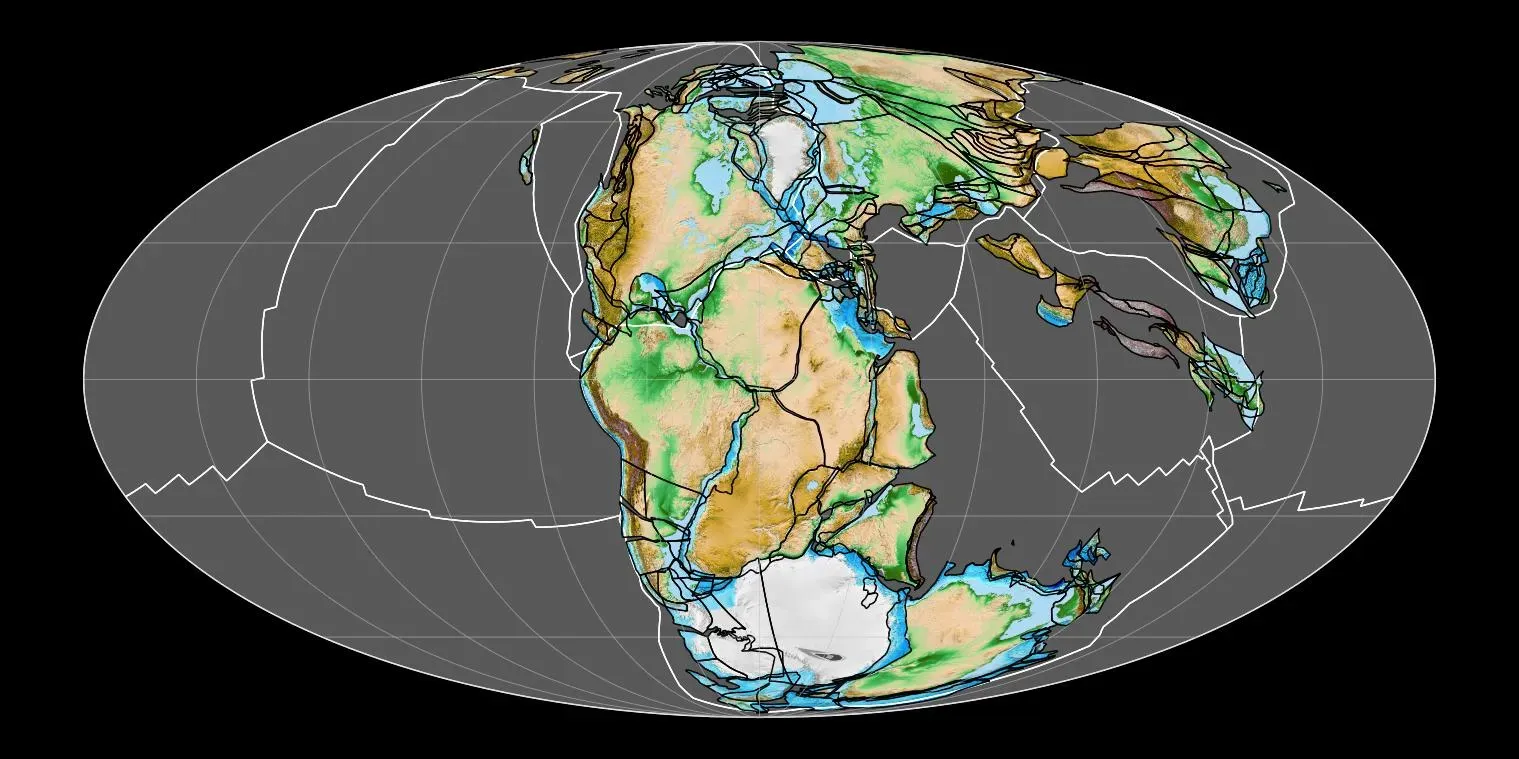
You are visiting a park that preserves traces of an ancient, vastly different landscape. Some 225 million years ago, during the Triassic Period, this area rested near Earth’s equator, part of the massive supercontinent Pangaea. Try to wrap your head around that for a moment. The dry, wind-sculpted badlands you are standing in were once a lush, humid zone near the center of a single giant landmass.
During this epoch, the region that is now the park was near the equator on the southwestern edge of the supercontinent Pangaea, and its climate was humid and sub-tropical. What later became northeastern Arizona was a low plain flanked by mountains to the south and southeast and a sea to the west. Streams flowing across the plain from the highlands deposited inorganic sediment and organic matter, including trees as well as other plants and animals that had entered or fallen into the water. It is almost like imagining Arizona as a lush floodplain crossed by ancient rivers, and the thought alone is genuinely staggering.
The Science of Turning Wood Into Stone
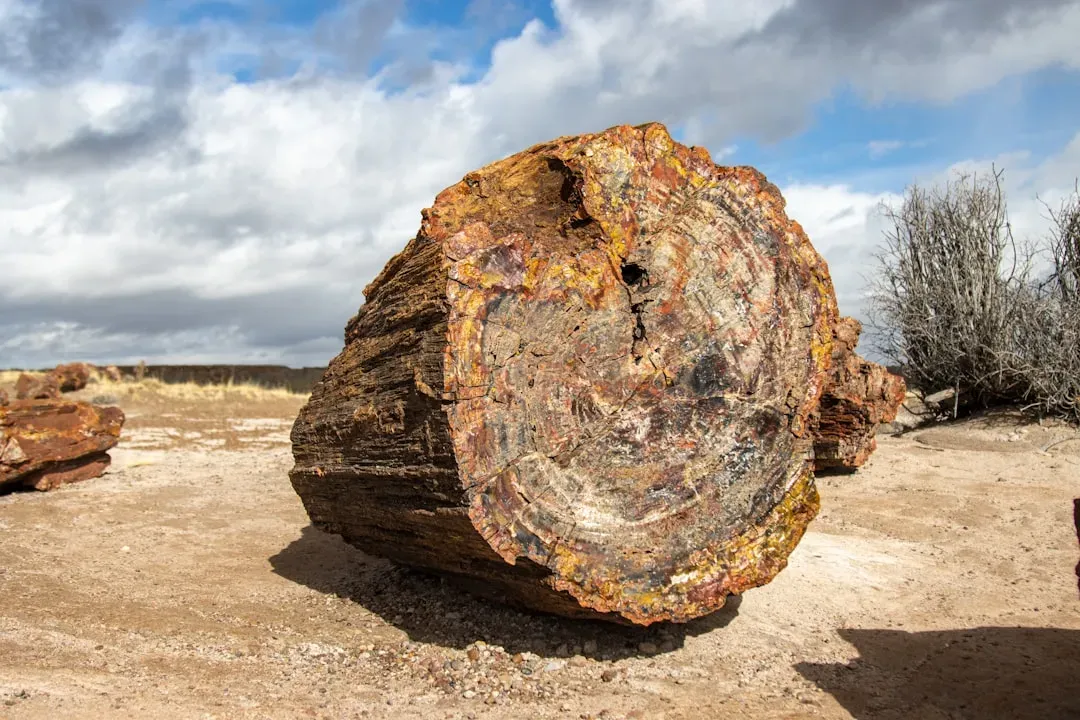
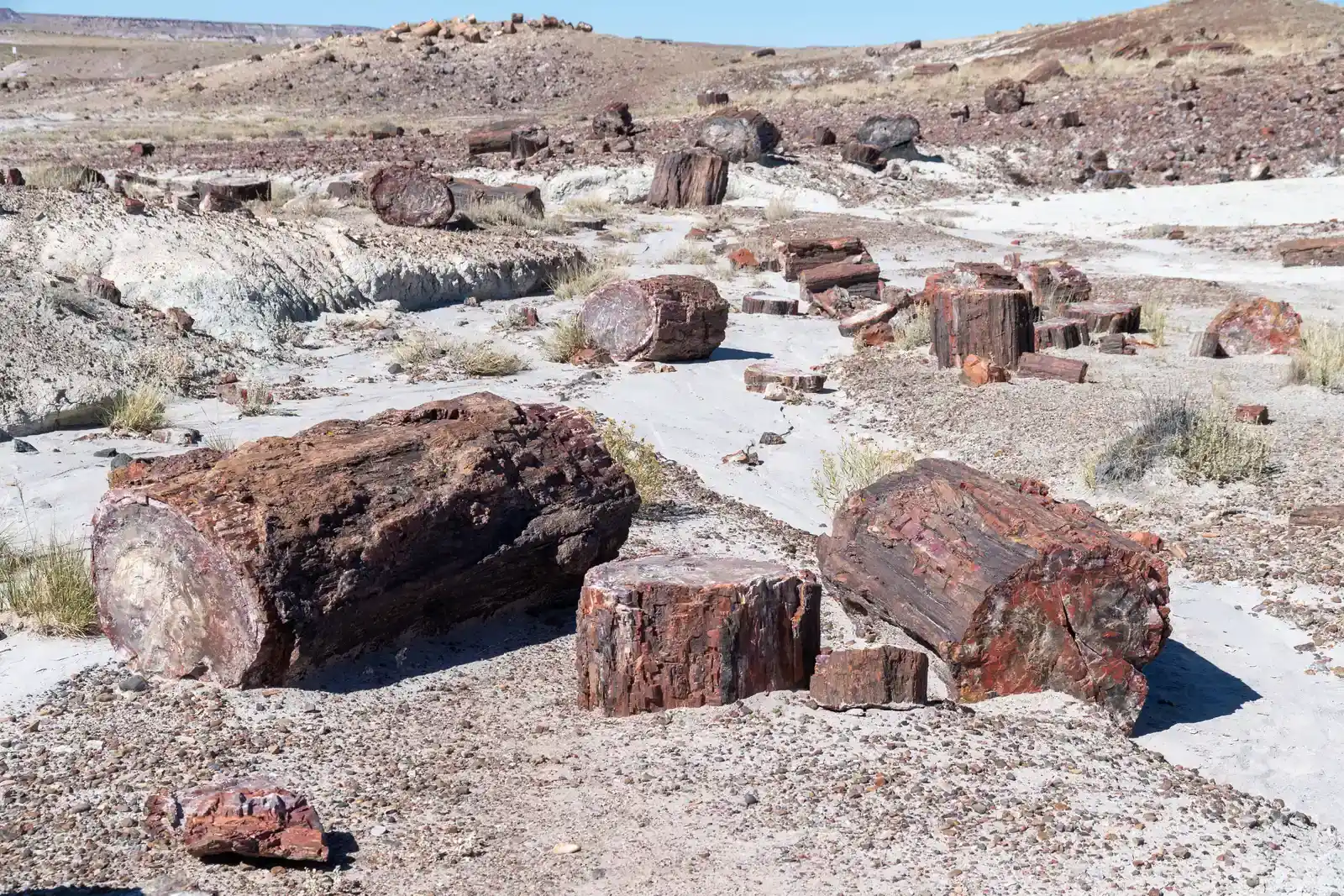
During the Late Triassic, downed trees accumulating in river channels in what became the park were buried periodically by sediment containing volcanic ash. Groundwater dissolved silica from the ash and carried it into the logs, where it formed quartz crystals that gradually replaced the organic matter. Traces of iron oxide and other substances combined with the silica to create varied colors in the petrified wood. Think of it like nature’s own slow-motion alchemy, working over millions of years with volcanic ingredients.
Brittle petrified logs often broke into pieces, giving the illusion of ancient trees having been deliberately sawed into segments. The national park contains one of the largest and most colorful concentrations of mineralized fossil wood in the world, including petrified logs of ancient conifer species that are more than 190 feet long. When you stand beside one of those massive logs gleaming in amethyst and red, you are looking at a tree that fell before the age of the dinosaurs had even fully begun.
The Chinle Formation: Earth’s Most Remarkable Rock Archive
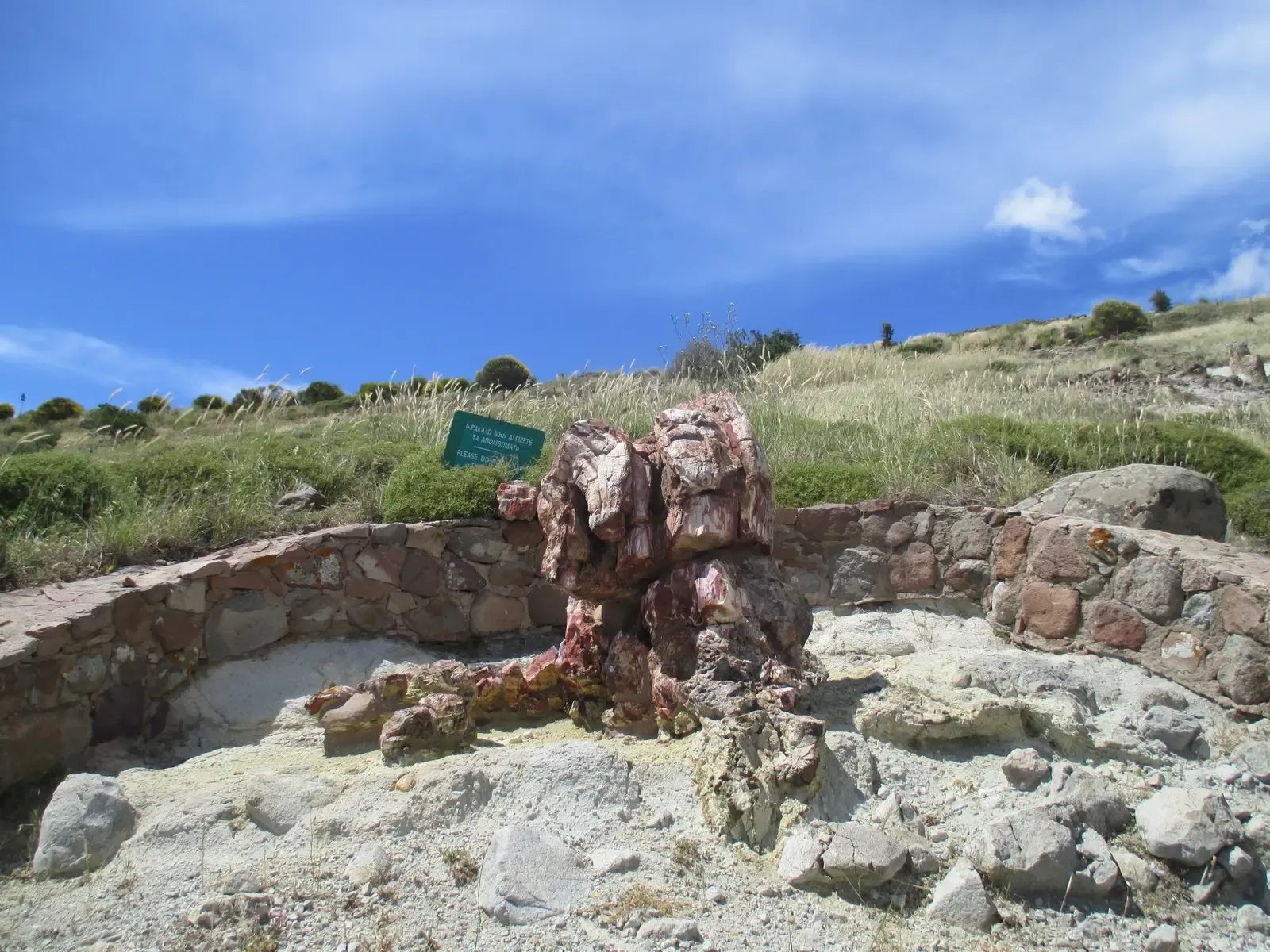
The park’s forests of petrified wood and other Upper Triassic fossil flora and fauna are globally significant because they provide a distinct record of diverse terrestrial ecosystems during “the dawn of dinosaurs” about 220 million years ago. This period tracks the evolutionary transition of nonmarine animals, especially tetrapods. Scientists now recognize Petrified Forest National Park as one of the best places in the world to study these changes in the geologic record.
The Chinle, considered to be one of the richest Late Triassic fossil-plant deposits in the world, contains more than 200 fossil plant taxa. Plant groups represented in the park include lycophytes, ferns, cycads, conifers, ginkgoes, as well as unclassified forms. Here’s the thing: when you look at those colorful banded hills stretching to the horizon, you are essentially staring at a geological calendar, each stripe marking a different chapter in deep time. Very few places on Earth allow you to read that calendar so clearly.
The Early Dinosaurs That Roamed This Ancient Landscape
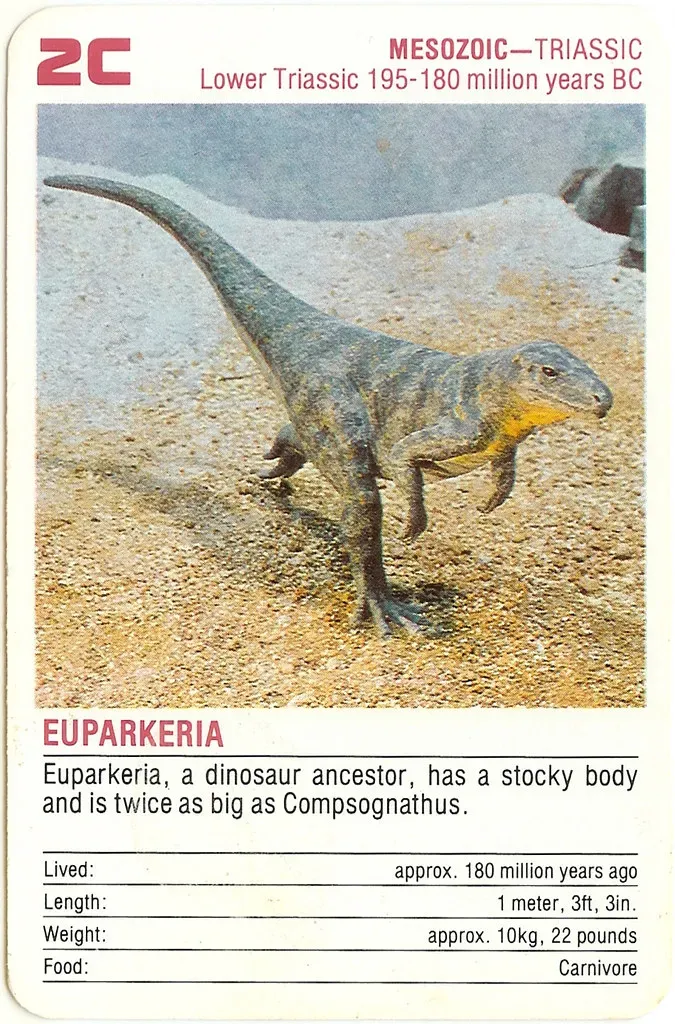
Specimens of iconic Triassic early reptiles such as crocodile-like phytosaurs and armored aetosaurs are associated with the Petrified Forest. Some of the earliest dinosaurs, such as Chindesaurus bryansmalli and Coelophysis bauri, have been unearthed there too. You might picture massive Jurassic giants when you think of dinosaurs, but these early Triassic creatures were far more modest, nimble, and frankly more interesting for what they represent in evolutionary history.
Overall, dinosaur fossils are quite rare in the Petrified Forest National Park, partly because the early dinosaurs were small and had hollow bones, like modern birds today. The park has also produced one of the most diverse assemblages of fossil vertebrates from the Late Triassic. Among the groups represented are early theropod dinosaurs, crocodile-line archosaurs, temnospondyl amphibians, lissamphibians, non-archosauromorph diapsids, and other dinosauromorphs and archosauromorphs. That is a mouthful, but what it essentially means is that you are dealing with the full cast of a world on the verge of transformation.
Groundbreaking New Discoveries Reshaping Paleontology
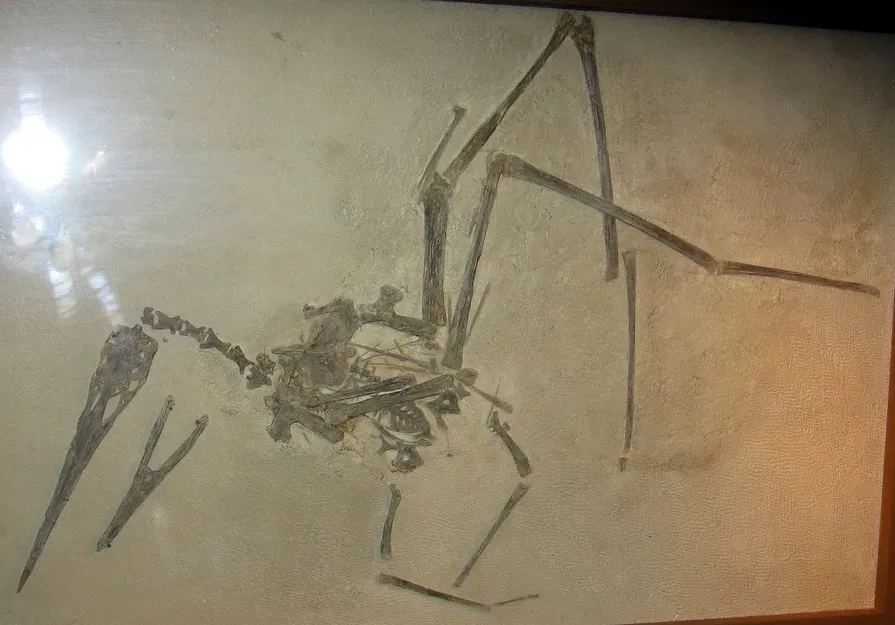
Uploaded by FunkMonk, CC BY-SA 2.0)
Smithsonian researchers have linked discoveries within Arizona’s Petrified Forest National Park with a previously unknown transitional period between old and new continental vertebrates. For the first time, scientists are able to prove that communities of land vertebrates from the older archaic reptiles to the more familiar, like turtles, were actually living together before a great extinction event at the end of the Triassic period. If that does not make the back of your neck tingle with curiosity, I am not sure what will.
Kligman says the fossil highlights one of the world’s oldest turtle fossils and the jawbone of a new species of pterosaur, a small flying reptile. That pterosaur was also determined to be the oldest in North America. Pterosaurs were flying reptiles that existed during the time of dinosaurs. They were the first animals with backbones to evolve powered flight, well before birds or bats came on the scene. The idea that the oldest North American pterosaur was hiding beneath Arizona’s desert floor is, I think, one of the most astonishing recent finds in paleontology.
The Painted Desert: A Rainbow Written in Ancient Rock
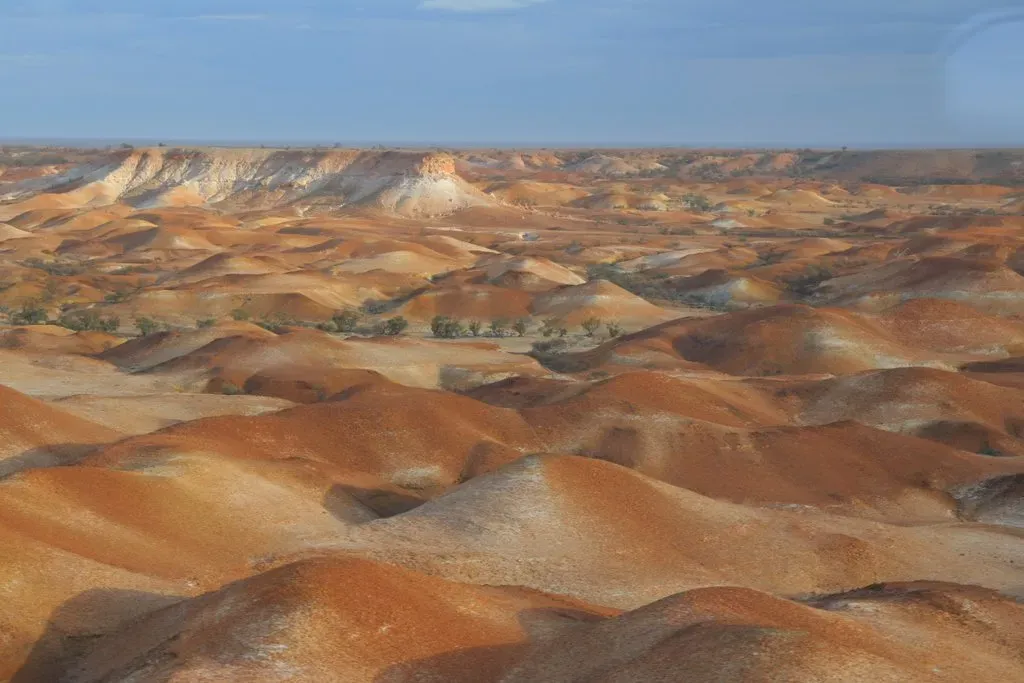
Beyond the petrified logs, the park’s northern section boasts the Painted Desert, a breathtaking expanse of badlands where erosion has sculpted hills into a kaleidoscope of reds, oranges, purples, and grays. These colors come from layers of sedimentary rock, each telling a chapter of the Earth’s history. Iron oxides create the fiery reds, while manganese oxides lend cooler purple tones.
Multi-hued badland hills, flat-topped mesas, and buttes of the Painted Desert are primarily composed of sandstones, conglomerates, and mudstones of the Chinle Formation that record fluvial deposition in an ancient river basin. The oldest geological formations in the park are about 227 million years old. Differently colored formations show different time periods. The Blue Mesa formations, for example, have thick bands of grey, purple, blue, and green mudstones. They are about 220 million years old. Walking through this landscape feels like paging through the world’s oldest storybook, one written in mineral and light.
13,000 Years of Human Footsteps
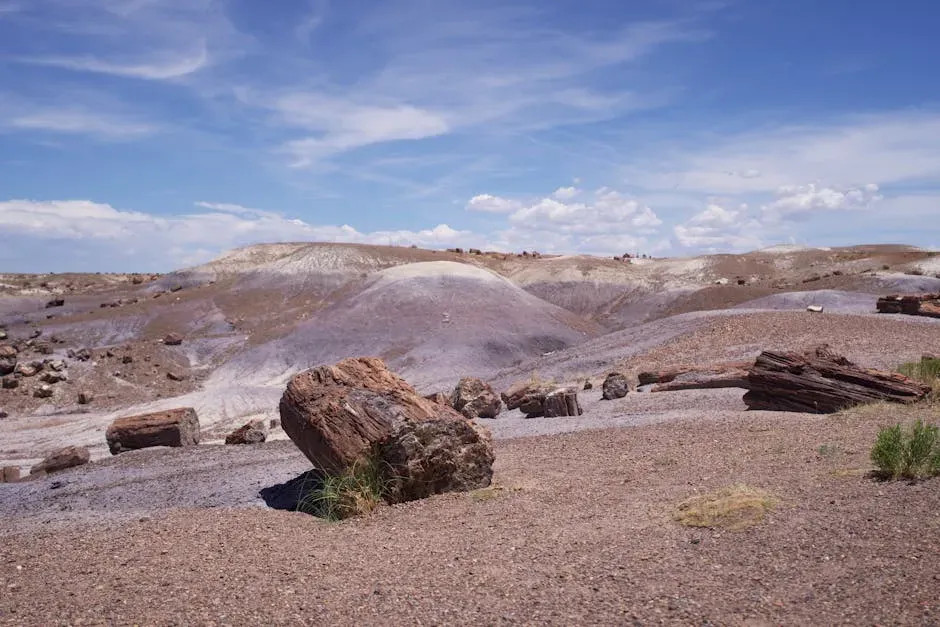
Petrified Forest National Park features more than 600 archaeological resources speaking to 13,000 years of human history. Clovis and Folsom-type spear points made from petrified wood are among the earliest artifacts of Paleoindians found in the park. You are standing in a place where ancient hunters shaped weapons from crystallized wood long before any civilization you studied in school had ever been conceived.
Ancestral Pueblo people constructed more than two of these large pueblos, including one at Puerco Pueblo, which overlooks the Puerco River near the middle of the park. There they built roughly 200 rooms around an open plaza. Some rooms had no windows or doors and could be entered by climbing a ladder and descending through a hole in the roof. At its peak, perhaps 200 people lived in this pueblo. The Ancestral Puebloans, whose ruins dot the park, were skilled farmers and artisans who adapted to the desert’s challenges. Their petroglyphs and pottery suggest a rich cultural life, with trade networks that stretched across the Southwest.
Petroglyphs, Stories Etched in Stone
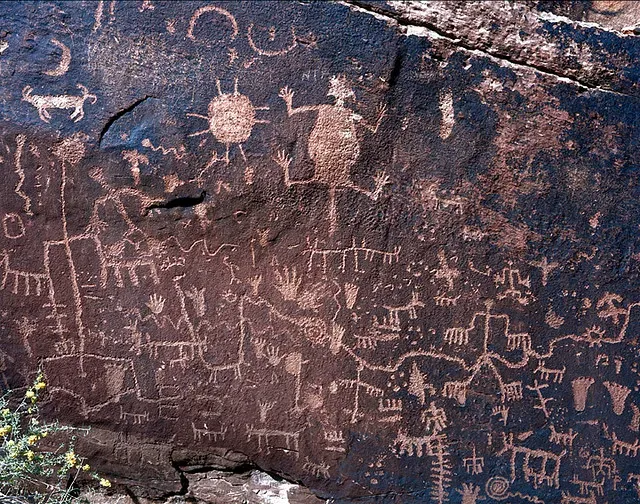
Most of the petroglyphs in Petrified Forest National Park are thought to be between 650 and 2,000 years old. The Newspaper Rock site preserves over 650 petroglyphs etched onto rock faces in one small area of Petrified Forest. Puerco Pueblo was constructed around 1100 CE and may have been home to as many as 200 people. On the opposite side of the road, Newspaper Rock is covered in more than 650 petroglyphs rendered by ancestral Puebloans. Honestly, standing at a viewpoint staring through binoculars at these densely carved boulders gives you a chill that no museum exhibit can replicate.
The petroglyphs and pictographs found in Petrified Forest National Park offer a diverse array of symbols and images, each with potential meanings and significance. While interpreting ancient rock art is challenging and often speculative, researchers have identified several common themes, including unique designs that may have represented specific family groups or clans. Visitors can try to decipher ancient petroglyphs on the walls, including one marking the summer solstice, while a small museum along the trail provides context through its cultural exhibitions. The more you look, the more you realize these walls are not blank stone. They are full of voices.
Protecting the Park: Conservation, Theft, and the Future
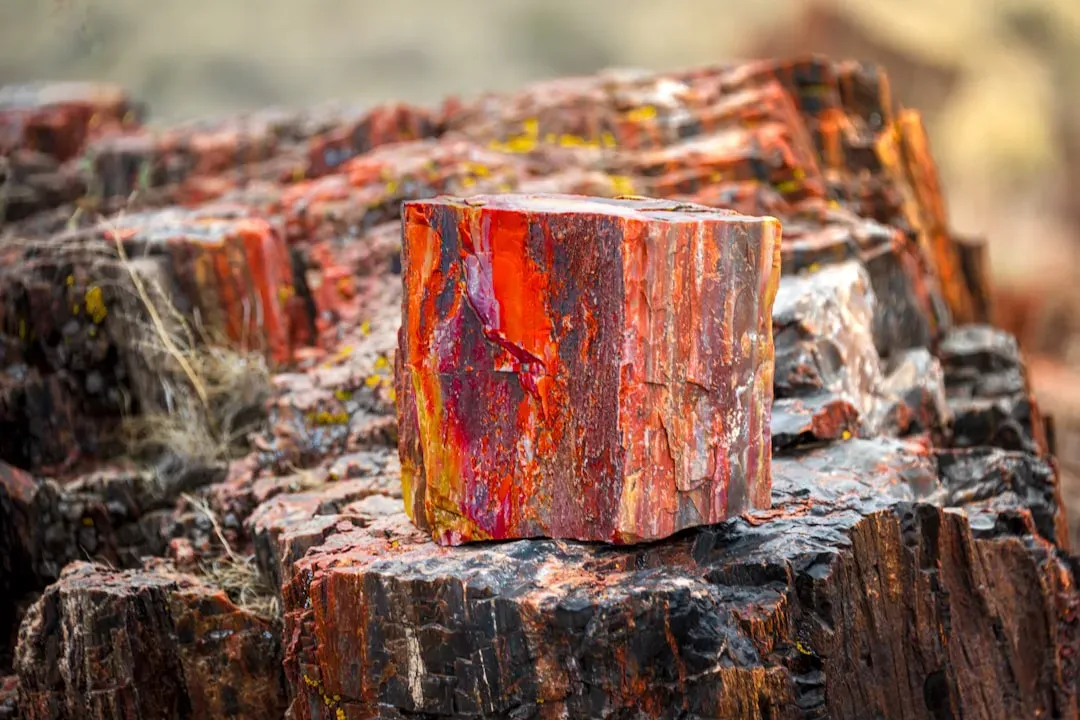
President Theodore Roosevelt originally created Petrified Forest as a national monument in 1906, and it became the first national park site specifically designated to protect fossils. The wood gradually crystallized into almost pure quartz, creating rainbows of color that dazzle visitors, and that many people find hard to resist stealing. Some poachers have claimed that bad luck plagued them as a result of their theft, and dozens of people attempt to return stolen fossils each year, though items can’t easily be returned to the places where they were originally taken from, creating headaches for park staff.
Once a fossil is lost through theft or negligence, its unique scientific and cultural value can never be recovered. National Park Service staff and other land managers now have clearer guidelines and enforcement measures to deter people from stealing these specimens, as well as a mandate to inventory and monitor the fossils in their care. Fossil discoveries at Petrified Forest National Park have shaped the understanding of the late Triassic world, and new discoveries continue to highlight its global significance. The stakes could not be higher. Every piece of stone left in place is a potential future discovery. Every piece removed is a page torn from the planet’s oldest book.
Conclusion: A Place That Makes Time Feel Personal
There is genuinely no other place quite like the Petrified Forest. You can visit a dozen national parks and come away with memories of dramatic views or impressive wildlife. Here, you come away with something harder to put into words: a bone-deep sense of time, a humbling awareness that the world has been alive and teeming and dying and renewing itself for far longer than any human story can account for.
From the crystallized trunks of trees that fell before the first dinosaurs dominated the Earth, to the faint scratched spirals of people who lived here a thousand years ago, every layer of this park speaks. Petrified Forest National Park contains one of the largest and most colorful deposits of mineralized wood in the world, and its forests of petrified wood and other Upper Triassic fossil flora and fauna are globally significant because they provide a distinct record of diverse terrestrial ecosystems during the dawn of dinosaurs. You owe it to yourself to stand in this desert, look at those glittering logs, and feel just how briefly we have all been here. What would you have guessed was hiding beneath Arizona’s desert floor?