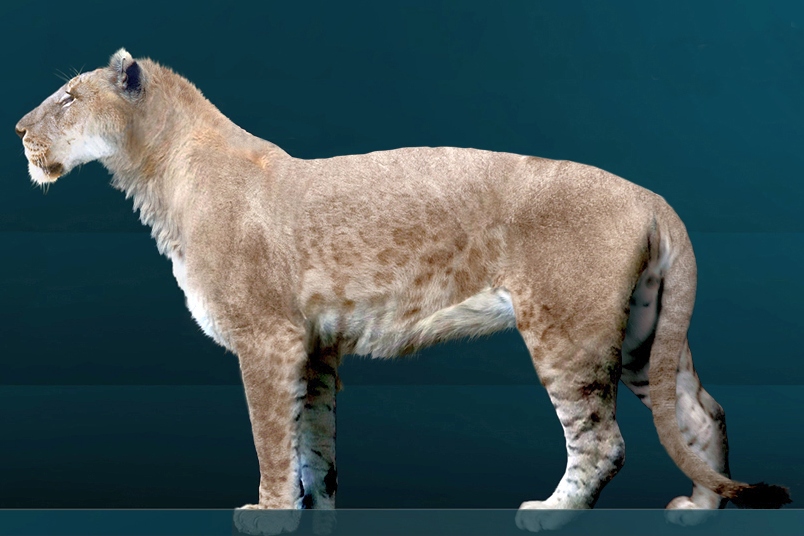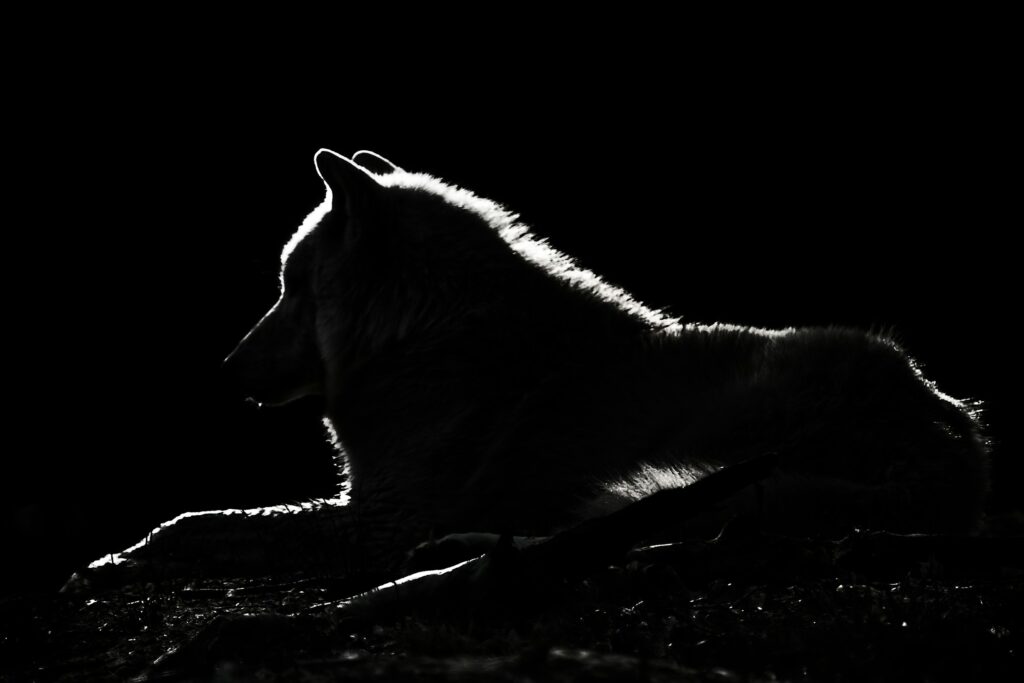
Picture a wolf twice as stubborn as anything alive today, with a skull built like a sledgehammer and a bite strong enough to crack a bison’s leg bone open for marrow. Now picture it running in coordinated packs across Ice Age Los Angeles, sharing turf with saber-tooth cats and mammoths. That animal was real. It wasn’t a myth, and it wasn’t a special-effects team’s fantasy creature – it was a distinct species that dominated an entire continent for hundreds of thousands of years.
Then, in what amounts to a geological blink, it was gone. Scientists still don’t fully agree on why. And in 2025, a biotech company said they’d solved that mystery by bringing it back – a claim that’s a lot more complicated than the headlines let on. Here’s what actually happened to the animal, and what’s happening to its name right now.
Not the Wolf You Think You Know
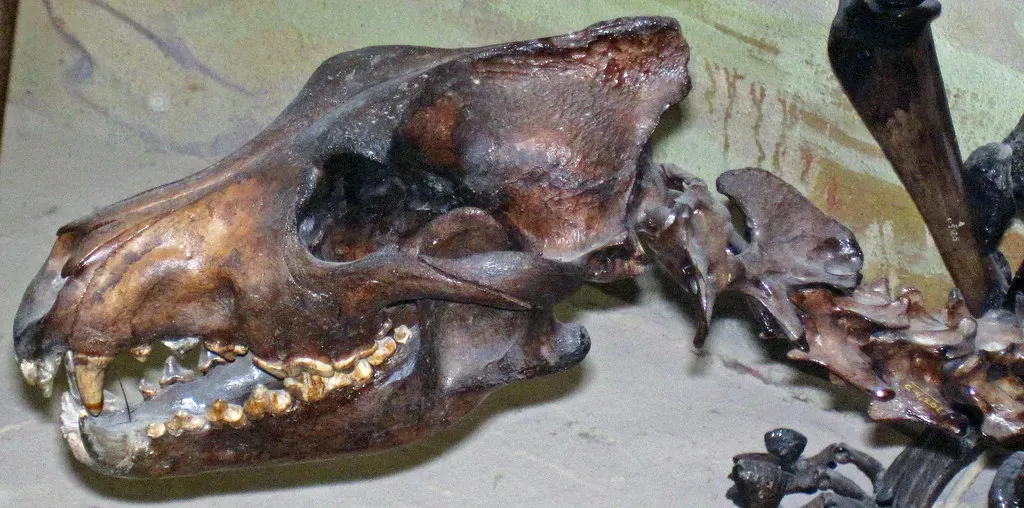
Forget everything pop culture taught you. The dire wolf wasn’t a scaled-up husky or a mythical monster from a fantasy kingdom – it was one of the most formidable predators of the Pleistocene, as real as the bison and mammoths it hunted. Scientifically, it’s known as Aenocyon dirus, and long before any TV show borrowed its name, it was already one of the most feared hunters on the continent.
The name itself tells you how early paleontologists felt standing over its bones. First described in the mid-19th century as Canis dirus, the word “dirus” comes from Latin for “dreadful” or “ominous.” Scientists don’t hand out a name like that casually. They gave it to this animal because the skull in front of them earned it.
The Skull Built to Crush Bone
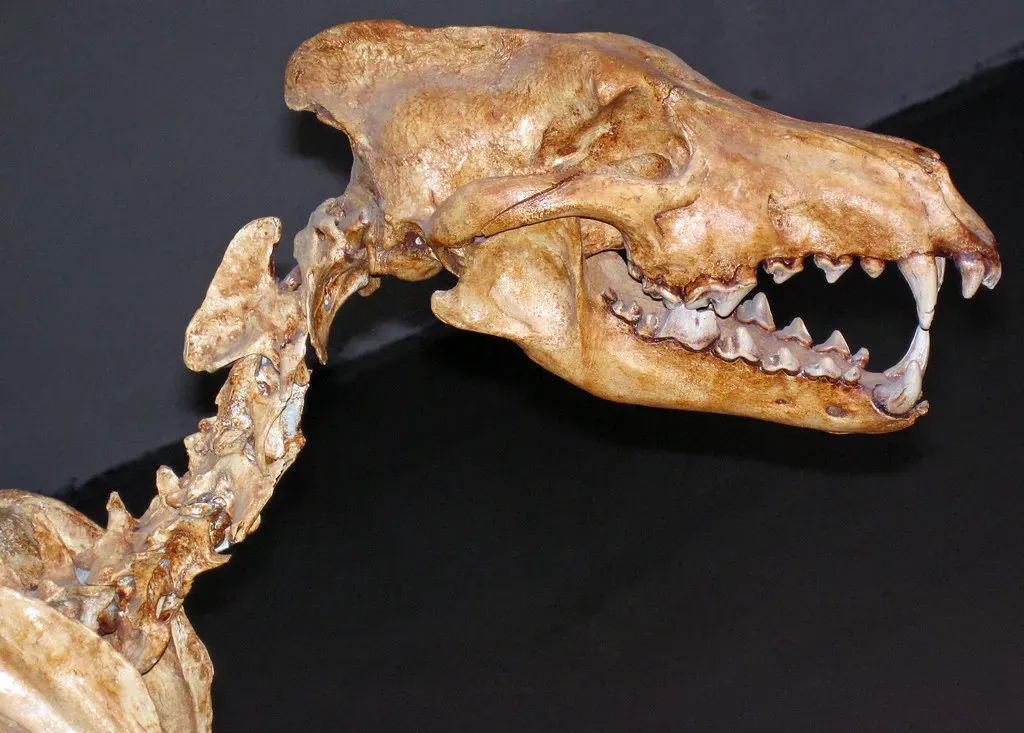
Here’s where the myths and the measurements start to diverge. Depending on the fossil population, dire wolves ran roughly five to six feet in length, stood about 38 inches at the shoulder, and weighed between 130 and 150 pounds. Some outlier specimens went further still – up to 25% bigger than today’s largest gray wolves, tipping the scale at nearly 200 pounds.
But the real weapon wasn’t size. It was the skull. A full-grown dire wolf’s skull could stretch up to 12 inches long, built to deliver a crushing bite that fossil analysis suggests was strong enough to tackle large prey and grind through bone. Compared to a gray wolf of the same size, its skull was broader, its jaw heavier, its teeth noticeably larger. This wasn’t an animal built for speed. It was built to hold on and not let go.
Fast Facts
- Body length: roughly 5 to 6 feet, nose to tail
- Shoulder height: about 38 inches
- Typical weight: 130 to 150 pounds, with large outliers near 200
- Skull length: up to 12 inches, broader and heavier-jawed than a gray wolf’s
Ruling America’s Ice Age Grasslands
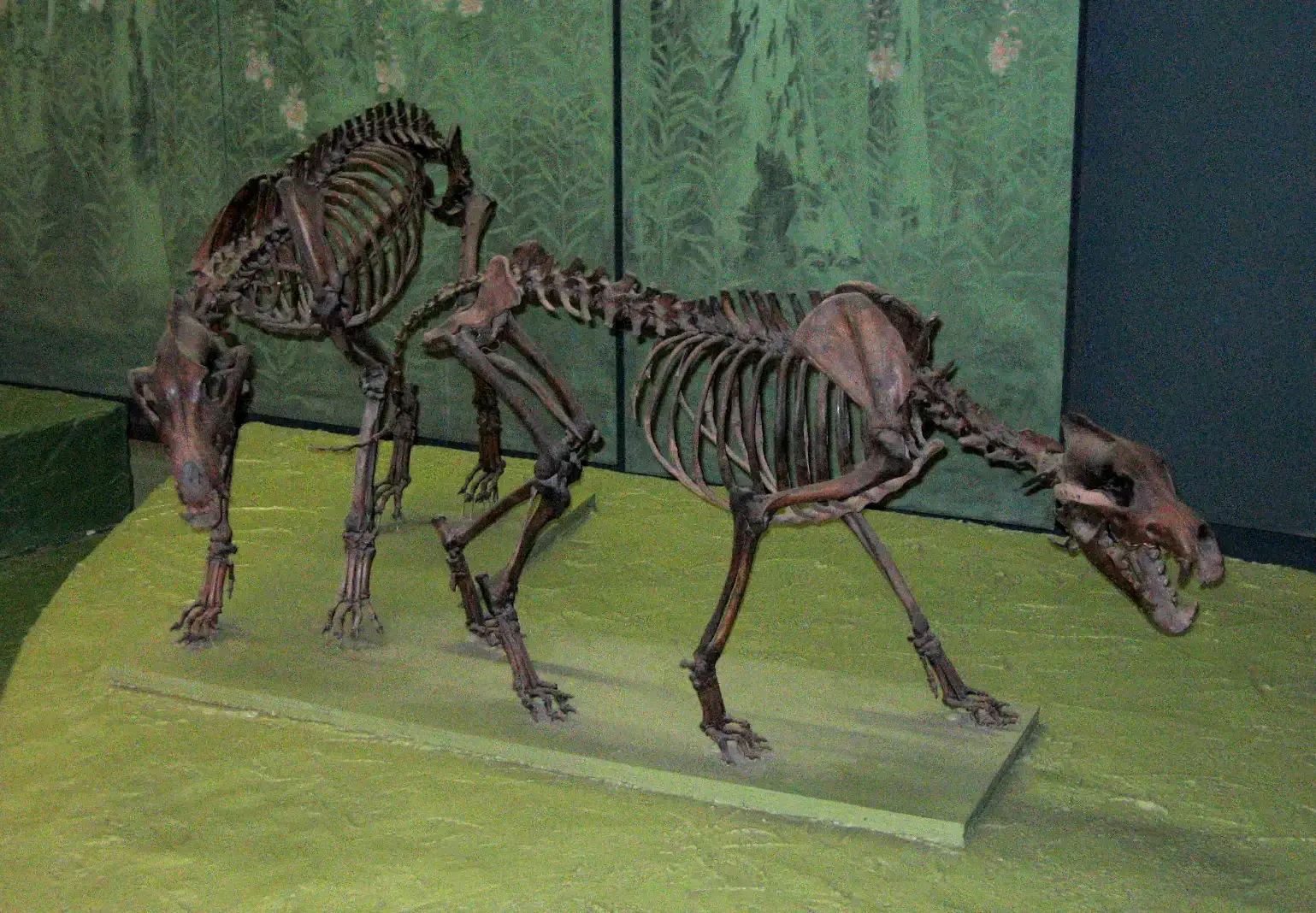
The dire wolf wasn’t some rare regional oddity – it was a continental force. Its fossils turn up across North and South America, making it one of the most well-documented predators of the last Ice Age. Wide open grasslands, river valleys, and lowland plains gave it exactly the terrain it needed to run down herds of large, slow-moving herbivores.
Contrary to the “frozen tundra beast” image most people carry around, this was actually a southern-leaning animal. It never lived in the Arctic or the northern boreal forest – it ranged through most of the United States, Mexico, and beyond, sharing habitat with saber-toothed cats and mammoths. That’s not a peaceful neighborhood. That’s a predator gauntlet, and the dire wolf held its ground in it for hundreds of thousands of years.
The Prey That Fed a Giant
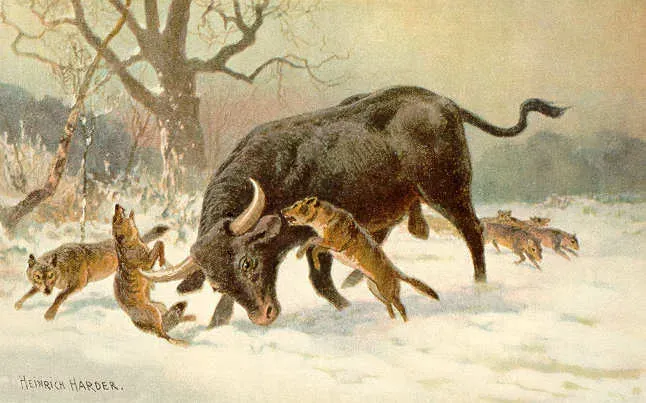
A predator this size needed serious calories, and it wasn’t picky about how it got them. Its diet included bison, wild horses, prehistoric camels, giant ground sloths, and occasionally mammoths, along with scavenged carcasses cracked open with those bone-crushing jaws. Isotope studies from fossil sites consistently point to large ungulates, especially bison and horses, as its primary target.
Here’s the detail that surprises most people: this wasn’t a lone hunter picking off stragglers. Dire wolves hunted in coordinated packs strong enough to take down an adult bison weighing up to 599 kilograms. Researchers believe they lived in organized packs with real social hierarchies, where an alpha pair bred and the whole pack helped raise the pups – a structure built for hunting efficiency as much as survival.
La Brea’s Tar Pit Time Capsule
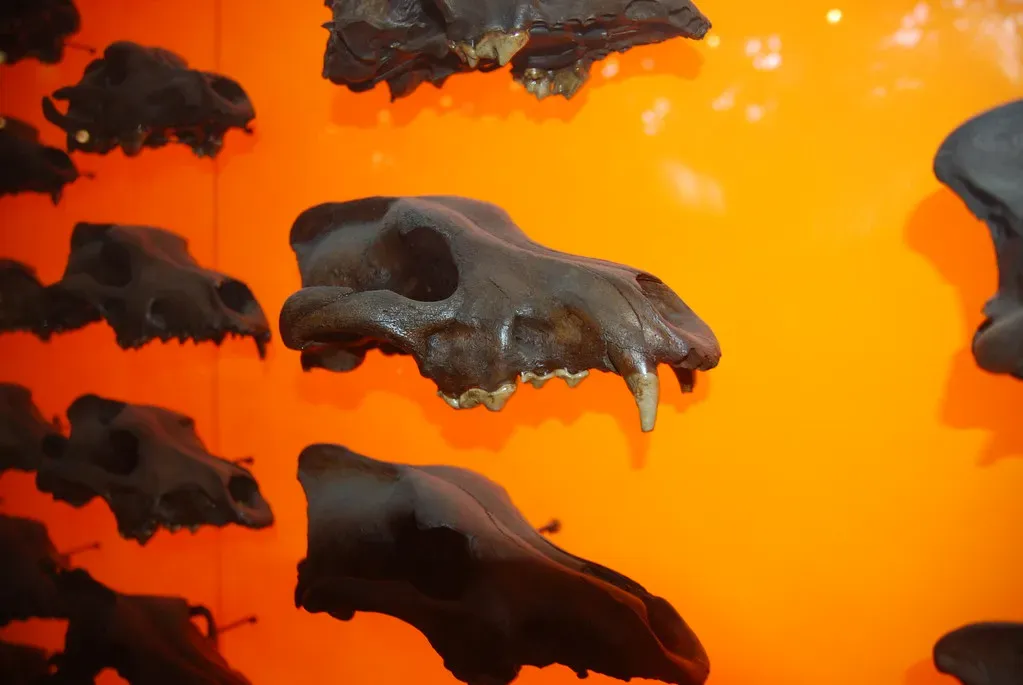
If you want to understand the dire wolf, you go to Los Angeles – specifically, to a set of ancient asphalt seeps that turned into an accidental prehistoric graveyard. Thousands of dire wolf and saber-tooth fossils were pulled from the same sticky ground at the La Brea Tar Pits. The numbers here are staggering for a single extinct species from one location.
The La Brea Tar Pits alone yielded 4,000 dire wolf specimens, and today you can walk up to a wall display of 404 dire wolf skulls in one place. That’s not a handful of bones pieced together by guesswork – that’s a population-level dataset letting scientists study age, injury, diet, and pack behavior with real statistical confidence. The tar acted as a trap that lured and doomed Ice Age animals for thousands of years, and the dire wolf, it turns out, was one of its most common victims.
At a Glance
- 4,000+ dire wolf specimens recovered from La Brea alone
- 404 dire wolf skulls displayed together in a single wall exhibit
- One of the richest single-species fossil records of any Ice Age predator
- Same tar seeps also trapped saber-tooth cats, giving researchers a full predator snapshot
Not Actually Related to Wolves At All
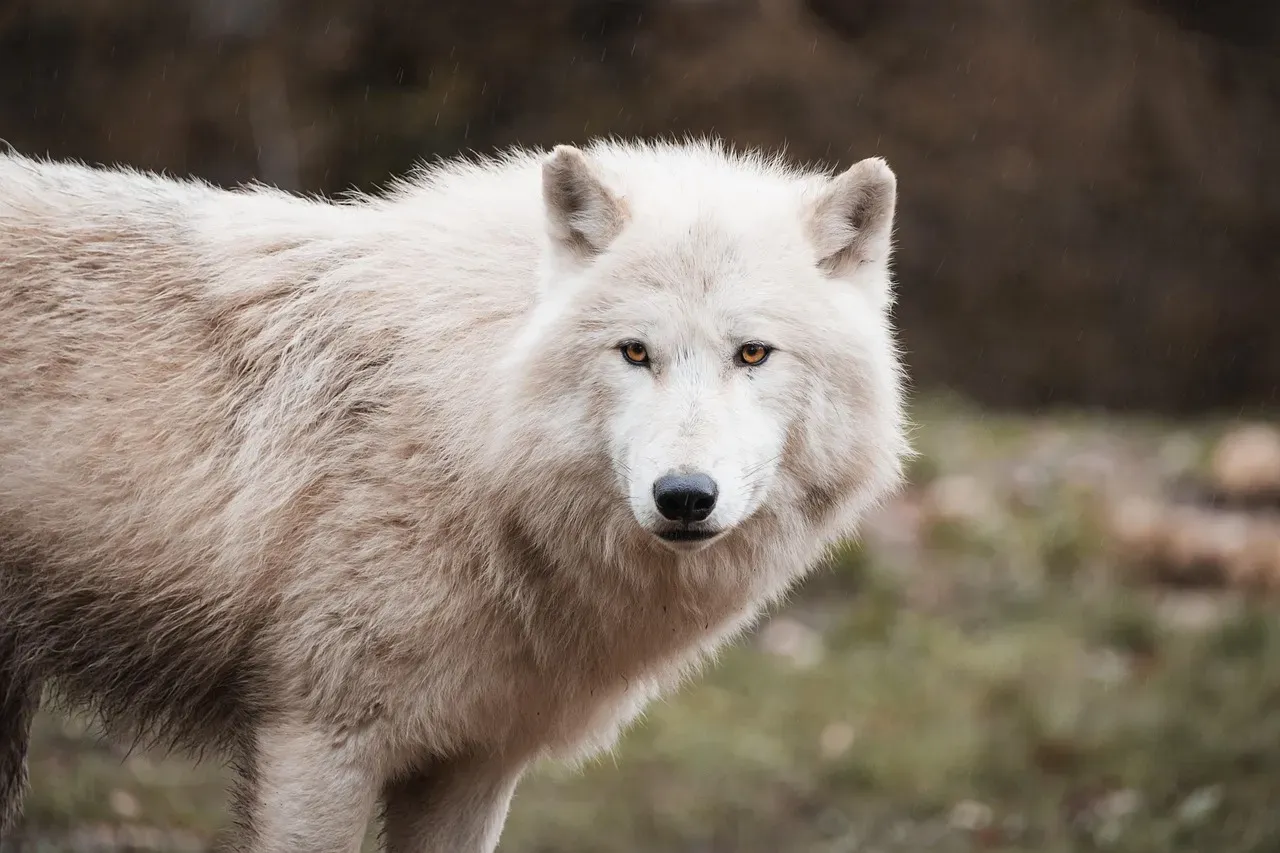
This is the part that upends everything the name “dire wolf” implies. For over a century, scientists assumed it was just an oversized cousin of the gray wolf. Then genetic sequencing blew that assumption apart. A landmark 2021 study led by Dr. Angela Perri sequenced dire wolf genomes dating from 13,000 to over 50,000 years old, and found that dire wolves split off from other canids nearly 5.7 million years ago – making them genetically closer to jackals than to gray wolves.
That single discovery rewrote the animal’s entire family tree. Dire wolves and gray wolves look alike because of convergent evolution, not close kinship – similar lifestyles produced similar bodies, not shared ancestry. It’s a humbling reminder that appearances lie, even to trained paleontologists who’d been staring at the same skeleton for a hundred and fifty years.
Quick Compare
- Dire wolf: split from other canids roughly 5.7 million years ago
- Gray wolf: shares a much more recent common ancestor with living wolves and jackals
- Dire wolf skull: broader, heavier-jawed, bigger teeth for the same body size
- Shared look: the result of convergent evolution, not family ties
The Mystery Extinction Nobody Can Fully Explain
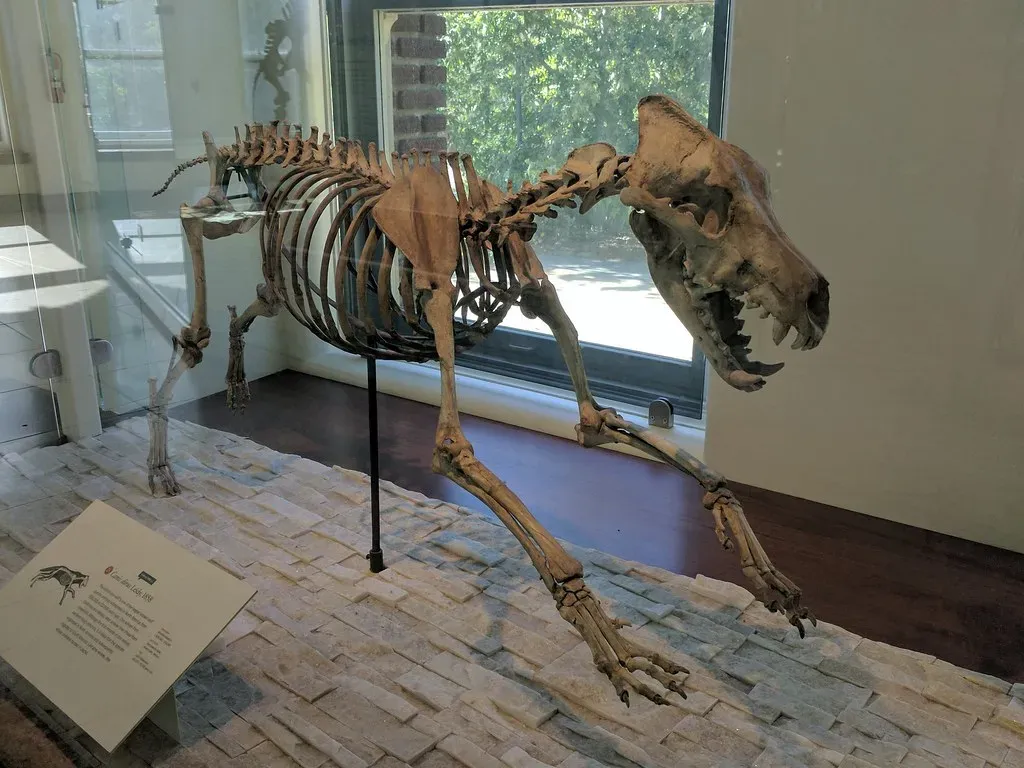
Here’s an uncomfortable truth: nobody has a single, clean answer for why the dire wolf vanished while other predators survived. What we have instead is a pile of competing theories, all partially convincing and none fully satisfying. Scientists point to the loss of large prey, climate change shrinking open grasslands, and competition from more adaptable predators like gray wolves that could switch to smaller game.
The most telling clue is the body itself – the same build that made it a bison-crushing machine became a liability once the glaciers receded and big prey grew scarce. Some researchers float dramatic contributing factors, including climate shifts and even a large comet impact. Others argue humans played a decisive role, competing directly with dire wolves for the same shrinking pool of large mammals.
How Fast It Disappeared – And Why That Should Worry Us
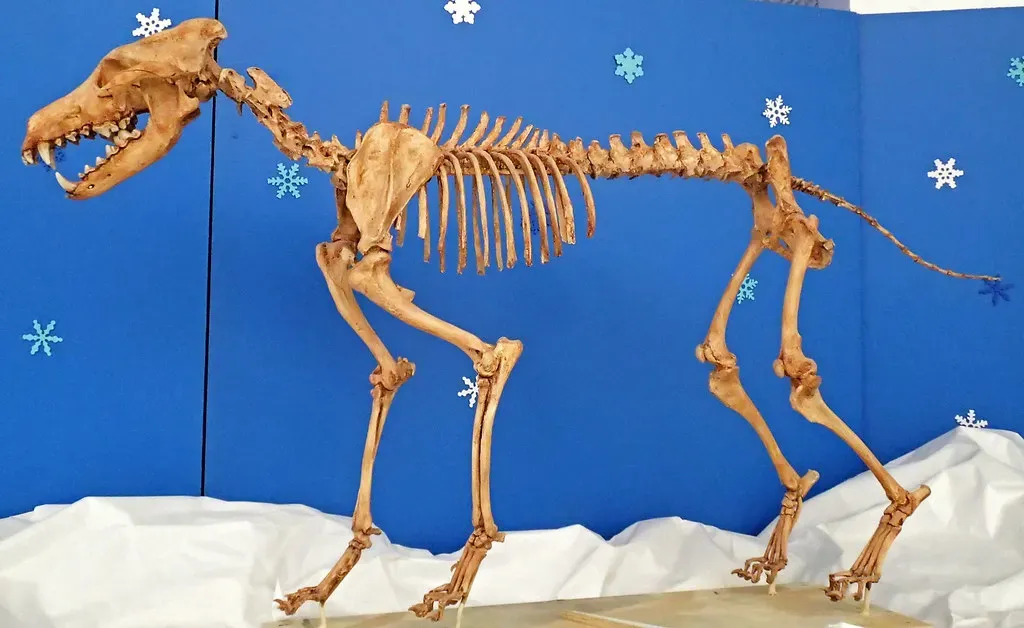
This is the detail that should genuinely unsettle you. This wasn’t a slow fade over tens of thousands of years – it was closer to an ecological collapse. Evidence suggests the extinction happened in as few as 100 to 1,000 years, right at the end of the Pleistocene. For a species that had dominated its ecosystem for hundreds of thousands of years, that’s essentially an overnight collapse in geological terms.
The timing lines up with one of the most brutal die-offs in Earth’s recent history – the Quaternary extinction event, which wiped out many large mammals across the Americas between 12,700 and 10,000 years ago. An apex predator that had outcompeted saber-tooth cats for territory couldn’t survive losing its food supply. It’s a blunt lesson: being the strongest hunter in the room means nothing if the room empties out.
Game of Thrones Made It Famous – Science Made It Real
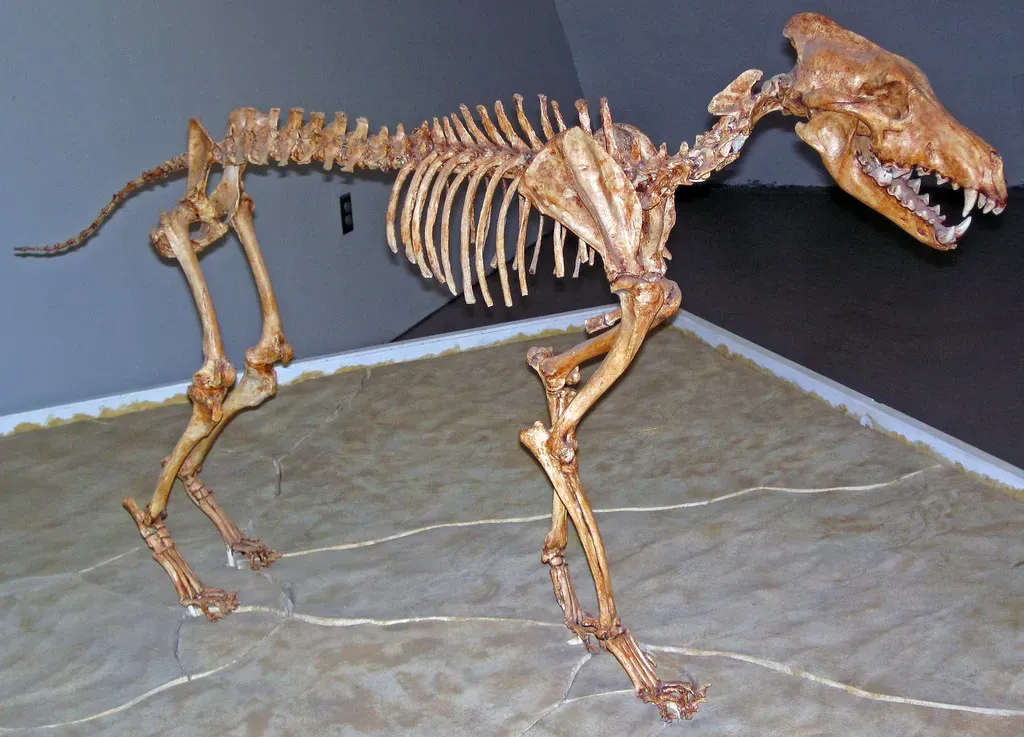
Here’s an opinion worth sitting with: most people only know the dire wolf because of a fantasy TV show, and that’s honestly done the real animal a disservice. The fictional versions were portrayed as house-sized, near-magical companions, which makes the actual science feel almost like a letdown by comparison – until you realize the real story is arguably cooler.
Despite its demise, the dire wolf has left a lasting legacy, not just in the fossil record but in the public imagination, as a symbol of power and resilience. The irony is that most fans quoting the show have never heard of La Brea, jackal ancestry, or bison-crushing bite force. A real Ice Age predator that hunted mammoths in what’s now downtown Los Angeles doesn’t need Hollywood exaggeration – it just needed better marketing a century earlier.
The De-Extinction Controversy: Is It Really Back?
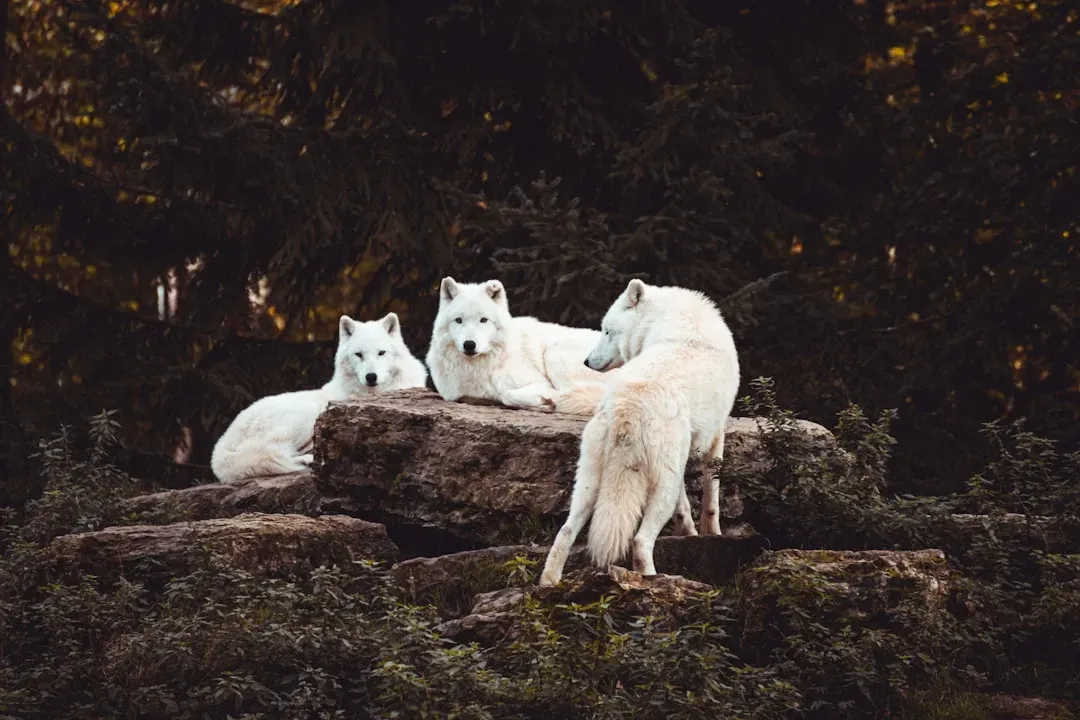
In April 2025, headlines exploded with claims that the dire wolf was no longer extinct. Dallas-based biotech company Colossal Biosciences announced that a species which died out some 12,500 years ago “lives again,” created using ancient DNA, cloning, and gene-editing technology applied to gray wolf cells. Three pups – Romulus, Remus, and Khaleesi – became instant celebrities overnight.
Here’s the controversial part, worth saying plainly: these are not dire wolves. The company used comparative genomics and multiplex CRISPR editing to make twenty genetic edits across fourteen loci in a gray wolf cell line, informed by roughly 91% of the reconstructed dire wolf genome. Even Colossal’s own chief scientist admitted as much.
These are grey wolves with 20 edits. It’s impossible to bring back an organism identical to a species that used to be alive.
Beth Shapiro, Colossal Biosciences Chief Scientist
Critics have been just as blunt, noting that despite the headlines, these animals are genetically modified gray wolves – descended from the wrong side of the family tree entirely, since real dire wolves split off millions of years before gray wolves even existed.
Worth Knowing
- The three pups are named Romulus, Remus, and Khaleesi
- Their genome carries just 20 edits across 14 loci, built on a gray wolf cell line
- Edits were guided by about 91% of the reconstructed dire wolf genome
- The announcement came in April 2025, roughly 12,500 years after the species died out
The Bottom Line
The dire wolf’s story isn’t really about extinction – it’s about the danger of assumptions. Scientists assumed it was a big gray wolf; genetics proved it was a jackal relative that split off 5.7 million years ago. The public assumed Colossal “brought it back”; the company’s own scientists admit it’s a gray wolf with edits, not a resurrected species.
That’s the more important lesson here than any fossil measurement: marketing language and biological reality are not the same thing, no matter how convincing the press release sounds. The dire wolf earned its “dreadful” name through 400,000 years of real dominance on this continent – not through twenty edits in a Dallas lab. Calling three gray wolf pups a resurrected species isn’t science. It’s branding wearing science’s coat.