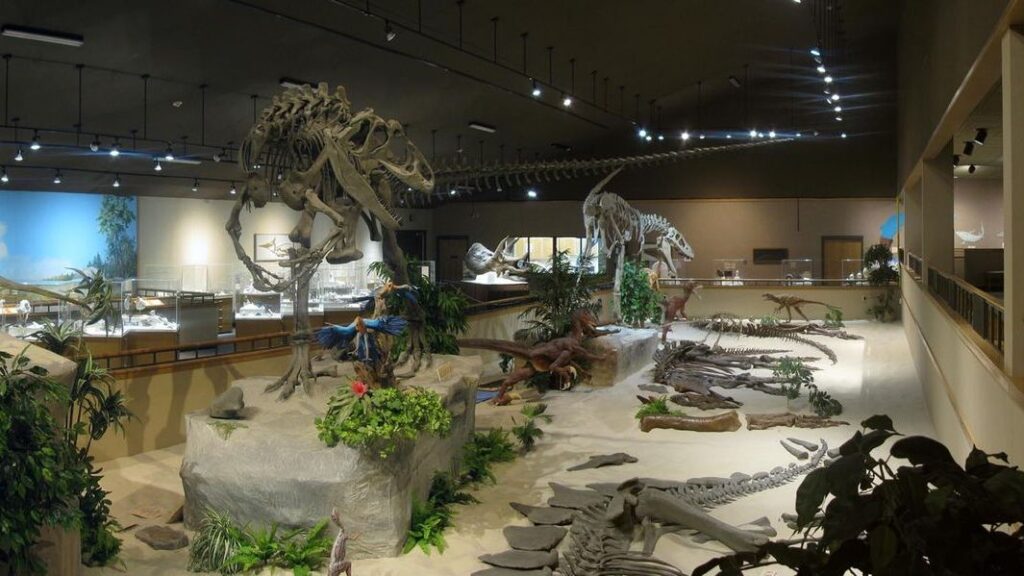
If you have ever stood beneath a towering dinosaur skeleton or stared at a timeline of human evolution, you probably felt that quiet thrill of certainty: this is how it was. That feeling is powerful, and museums know it. Glass cases, clean diagrams, and confident labels make deep time feel tidy, like a story that has finally been solved instead of a puzzle we are still fumbling through. But the reality behind the scenes is much messier, and experts argue fiercely over details that get smoothed away on museum walls.
That does not mean museums are lying, or that science is broken. It means we often confuse the latest best guess with unshakable truth. In prehistoric research, where a single new fossil can rewrite chapters of the story, some popular “facts” lean more on habit and storytelling than on solid agreement. Let’s pull back the curtain a bit and look at some of the biggest places where museums still talk in absolutes while the scientists themselves are quietly saying, “Well… it’s complicated.”
The Exact Colors and Patterns of Dinosaurs
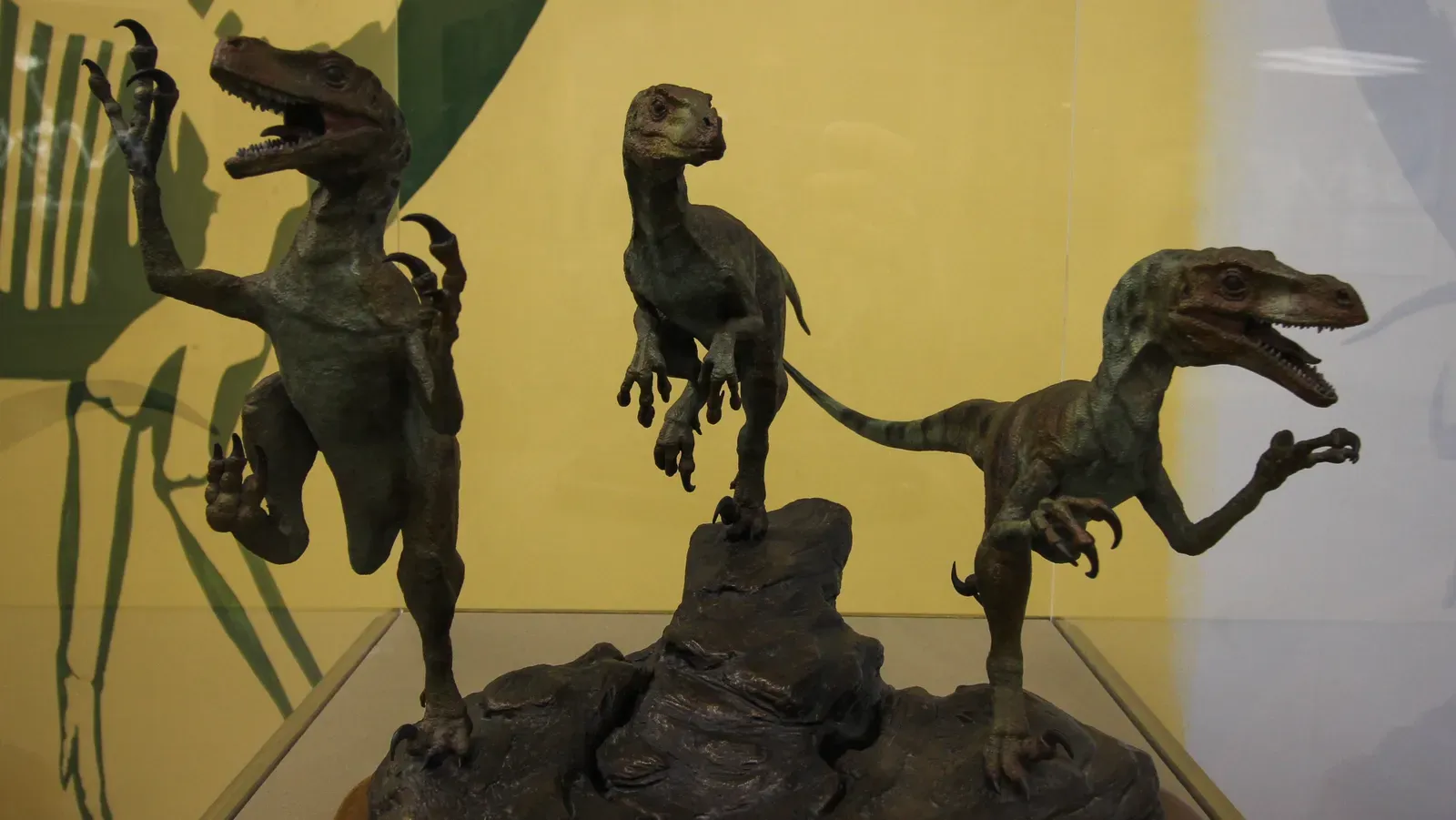
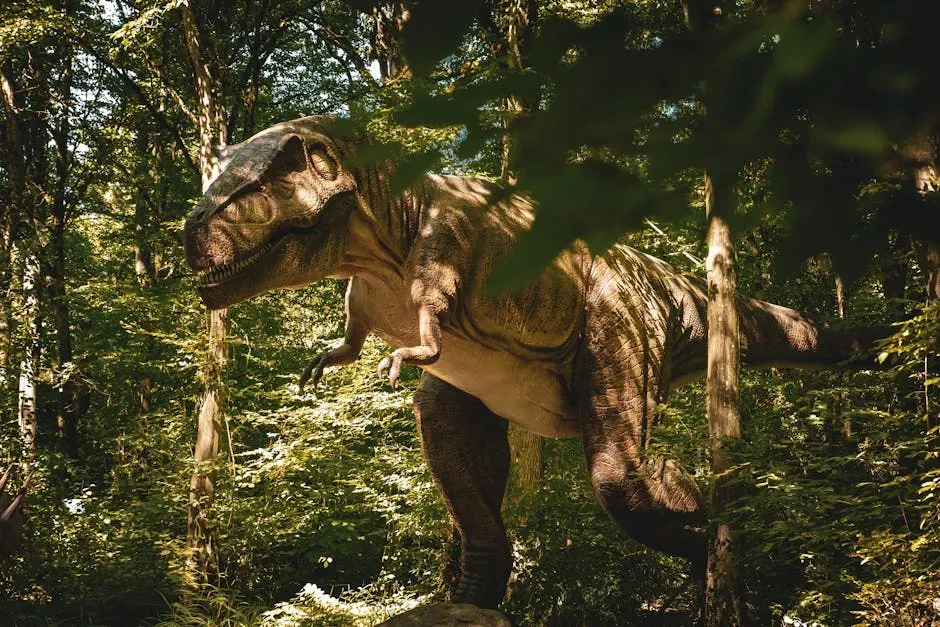
Walk into any modern dinosaur exhibit and you will be greeted by a parade of boldly colored giants: stripy raptors, green-and-brown T. rex, maybe even a feathered, parrot-bright Velociraptor. It looks convincing, almost cinematic, and it is certainly more exciting than the drab gray monsters of old textbooks. But the truth is that in most cases, scientists do not know the exact colors or patterns of these animals and are still debating how far reconstructions should go. For a tiny handful of fossils, microscopic pigment structures hint at certain shades, but those are rare exceptions, not the rule.
Most museum color schemes are educated guesswork, layered with artistic license and a pinch of fashion. One decade, everything is swampy green and brown; the next, curators embrace bright birdlike tones and dramatic striping because it fits a new narrative of dinosaurs as active and dynamic. Some paleontologists argue that bold, speculative color helps the public connect emotionally, while others worry that it crosses a line into implied certainty. Either way, when a label simply shows a vibrant dinosaur with no hint of doubt, it quietly turns a live scientific argument into what looks like settled fact.
The Classic Family Tree of Dinosaurs
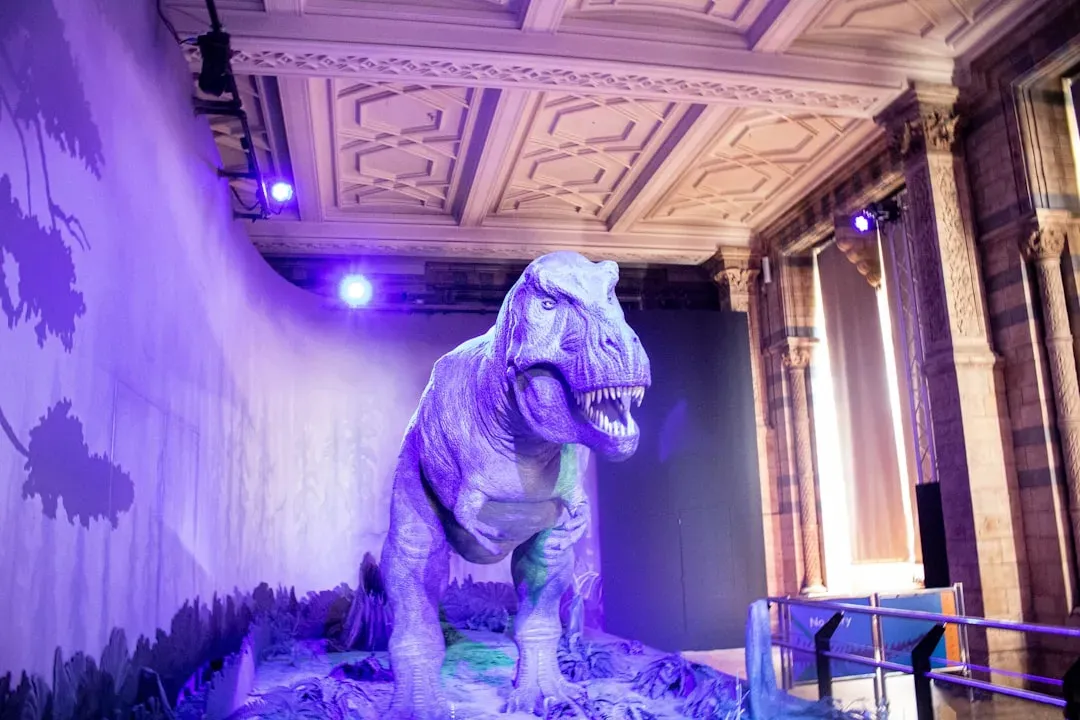
For years, museum visitors have learned a tidy story: dinosaurs split into two big groups based on their hip bones, the lizard-hipped saurischians and the bird-hipped ornithischians. This neat diagram appears on countless wall panels and children’s books, often presented as if it were as solid as the periodic table. But over the last decade, several high-profile studies have shaken that comfortable tree, suggesting radically different ways the major dinosaur groups might be related. Some analyses blend or rearrange the traditional branches in ways that would upend those familiar diagrams.
Among specialists, the debate is very much alive, with new datasets and statistical methods sometimes supporting one arrangement and then another. Yet in many museums, the old two-branch tree still sits on the wall, untouched, because updating it would be expensive, confusing, and difficult to explain in a single paragraph. The result is a strange split reality: in academic papers, dinosaur relationships are a vibrant, unsettled field; on the museum floor, they look carved in stone. When visitors absorb that clean chart, they rarely realize it rests on assumptions that are being actively re-examined.
How Dinosaurs Stood, Walked, and Fought
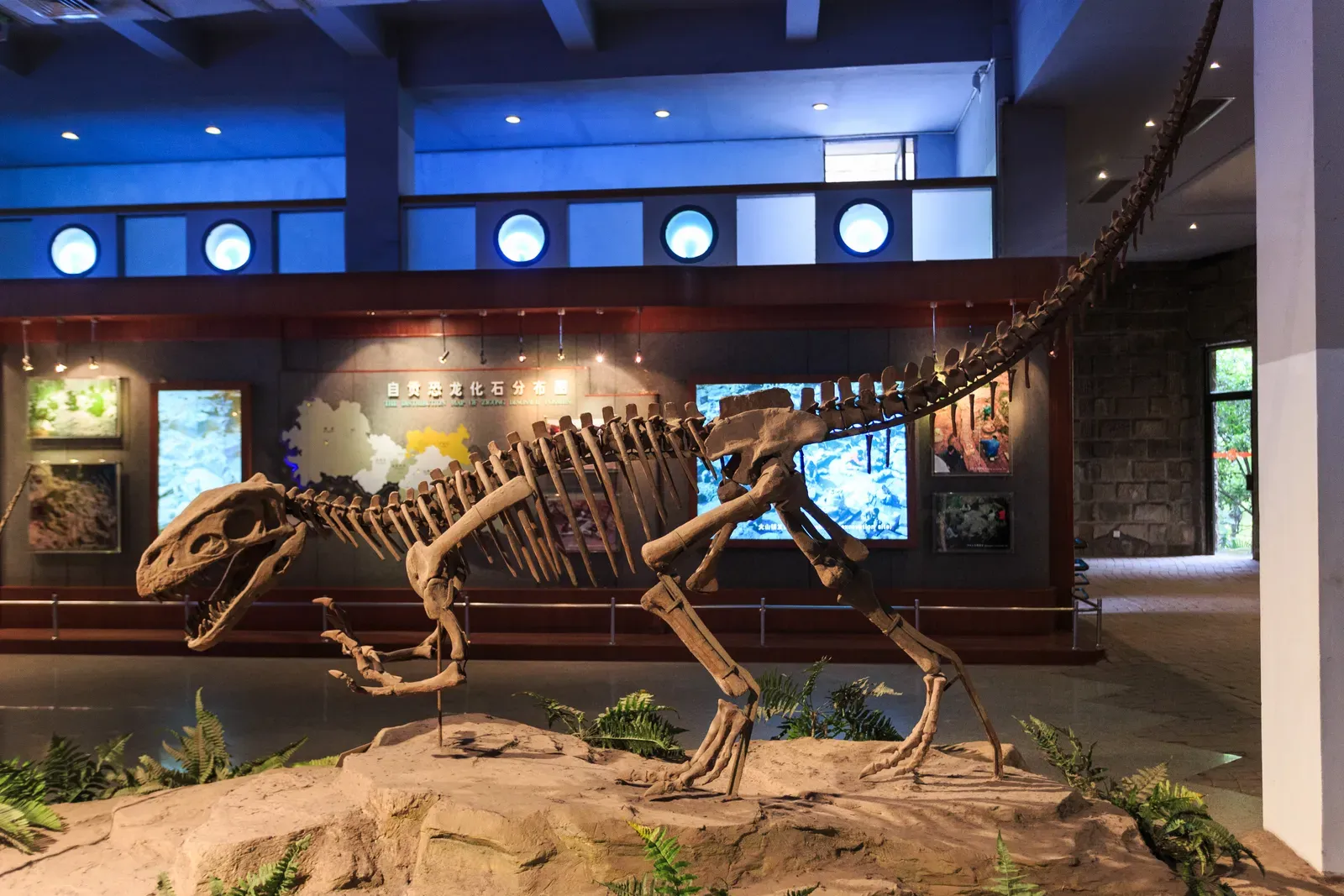
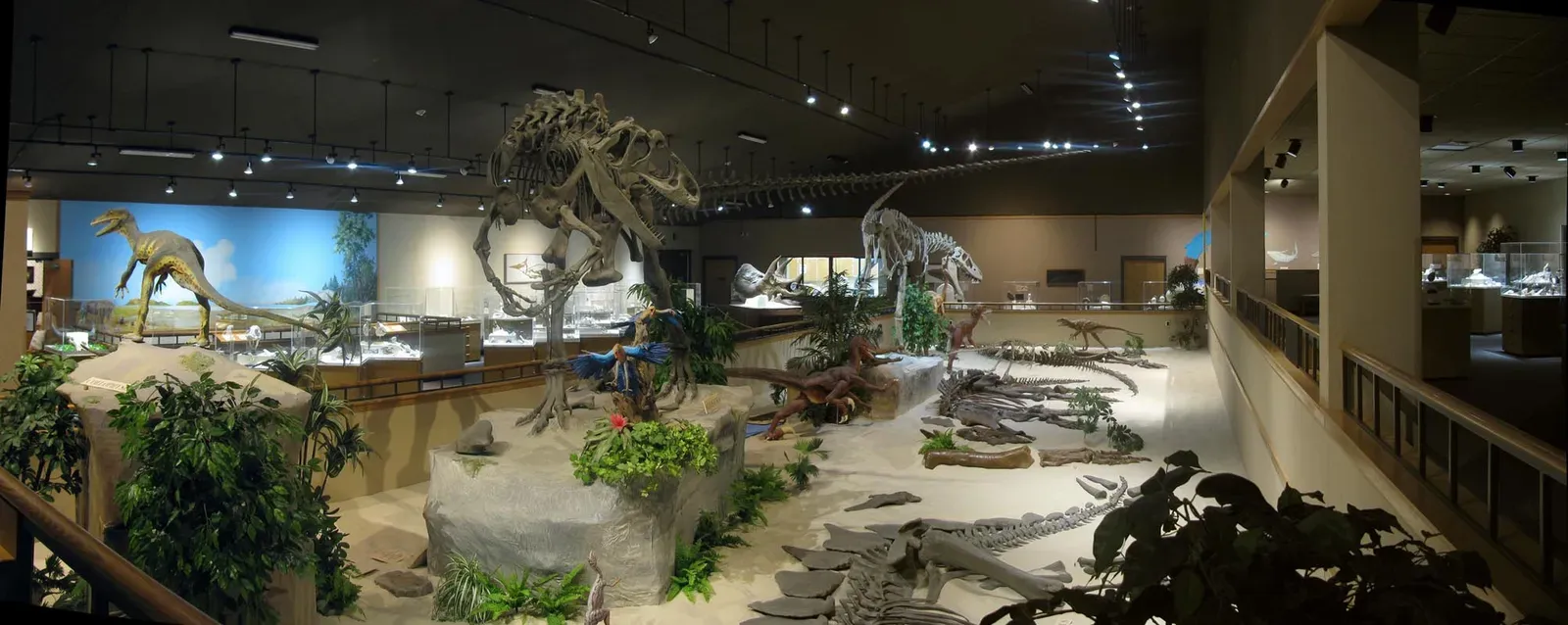
It is easy to forget that most dinosaur skeletons in museums are not found in those majestic poses. They are assembled, adjusted, and sometimes dramatically re-posed based on current interpretations of muscle, balance, and behavior. A roaring T. rex lunging forward or two rearing sauropods battling with their necks looks thrilling, but those scenes are often stitched together from a patchwork of biomechanical models, analogies to modern animals, and curatorial taste. For several famous species, scientists still debate basic things like tail posture, arm position, and gait.
In research, these disagreements can be sharp. One group uses digital simulations to argue that a dinosaur’s tail had to be held almost horizontal; another suggests a slightly different build and comes to a contrasting conclusion. Some researchers see certain predators as fast, agile hunters, while others reconstruct them as slower ambush specialists. Still, once a life-sized mount has been installed at great cost, it tends to stay there, its stance quietly fossilizing a particular interpretation. Visitors walk around it snapping photos, rarely aware that the same animal might be mounted differently if a different team had won the argument.
The Neat, Linear Story of Human Evolution
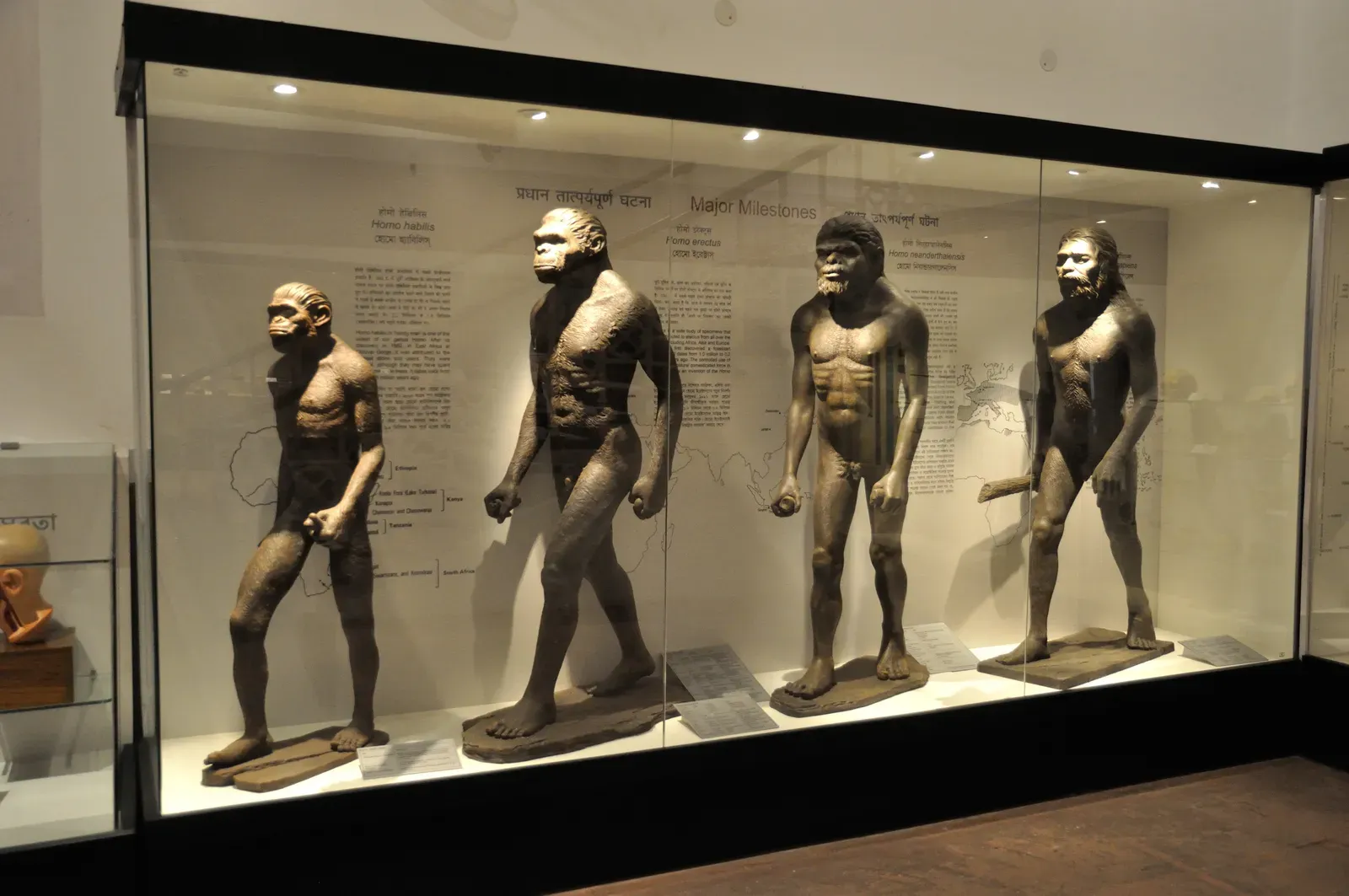
Human evolution displays are some of the most emotionally loaded sections in any natural history museum. The classic progression line – stooped ape slowly straightening into upright modern human – is instantly recognizable and still appears in many exhibits in one form or another. It is simple, powerful, and wildly misleading. Experts today emphasize that our evolutionary history is more like a tangled bush than a ladder, with multiple hominin species existing at the same time, branching, overlapping, and sometimes interbreeding. Even the exact relationships among well-known species are hotly debated.
Behind closed doors, paleoanthropologists argue about where to place new skulls on that family tree, whether certain fossils represent distinct species or just variation within one species, and how much weight to give different anatomical traits. Genetic studies have added more twists, showing that ancient humans mixed with cousins like Neanderthals and Denisovans in complex ways. Yet on the museum floor, visitors often encounter a cleaner, more linear story, partly because it is easier to explain in a quick label. The nuance gets flattened, and the old ladder-of-progress idea survives in people’s minds long after experts have tried to bury it.
Exact Dates and Causes of Mass Extinctions
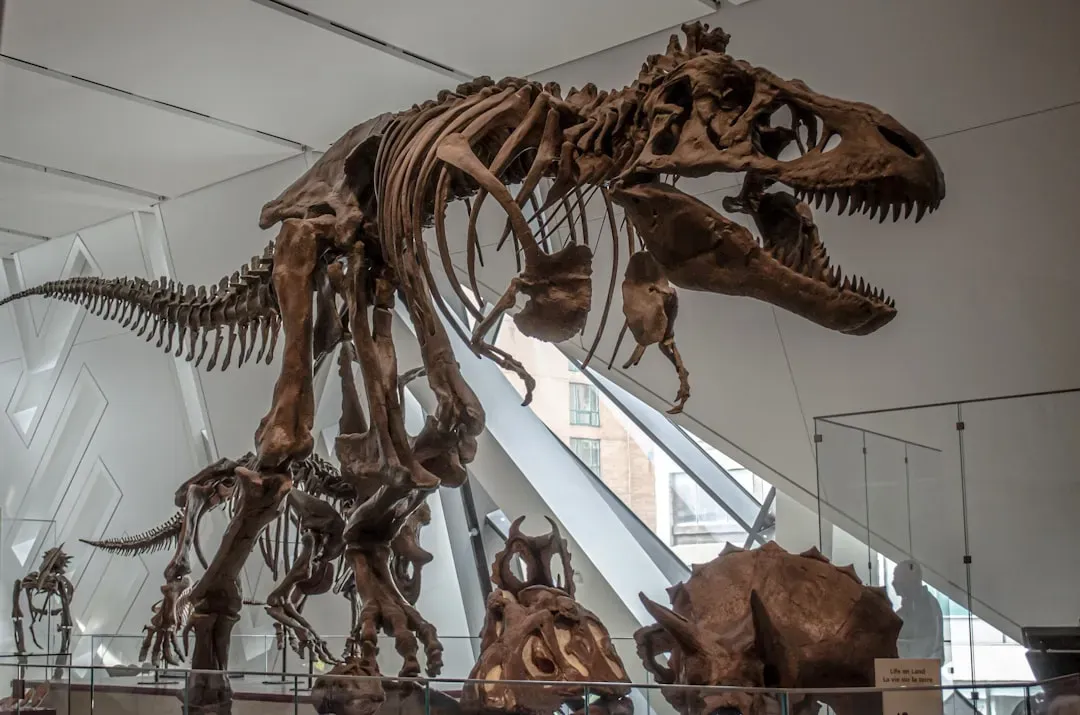
Many museum panels talk about prehistoric mass extinctions with crisp finality: this group died out at this time, because of this cause. It feels decisive, even comforting, to imagine a single bullet-point answer, like an asteroid on a cosmic to-do list. For some events, there is indeed strong evidence that a major impact or volcanic episode played a key role, but experts still debate the timing, the interactions with climate shifts, and how gradual or sudden the ecological collapse really was. The fossil record is patchy, and the way we date rocks still leaves room for interpretation.
In scholarly papers, you will find competing models that lean more toward volcanic gases, toward asteroid impacts, or toward complex combinations of multiple stressors. Some researchers argue for drawn-out extinctions stretching across millions of years, while others see sharper tipping points. Those arguments rarely make it into the public-facing story, which often favors an easy villain and a dramatic, almost cinematic narrative. So visitors walk away believing that entire worlds winked out almost overnight from a single cause, even though the best evidence often points to messy cascades of change rather than clean, one-shot catastrophes.
The Behavior of Extinct Animals Drawn from Modern Analogies
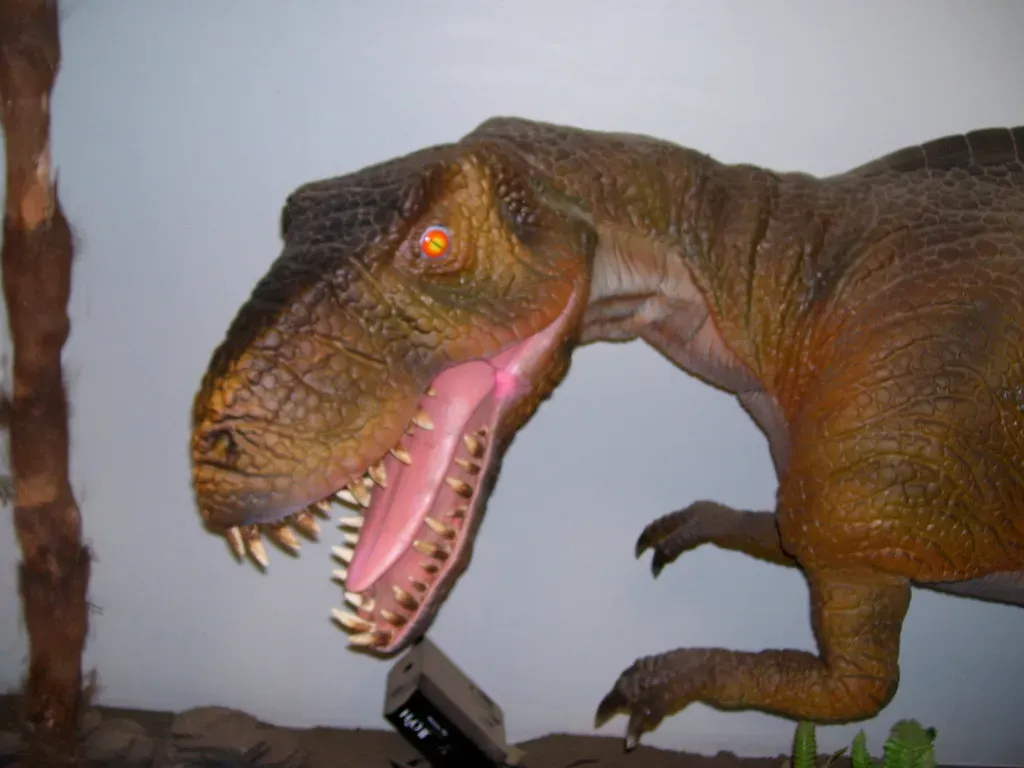
Prehistoric exhibits are full of behavior: herds migrating, parents guarding nests, predators hunting in coordinated packs. None of these scenes are directly observed facts; they are reconstructions built on analogy. Curators and illustrators look at modern animals – lions on the savanna, penguins huddling with chicks, birds building nests – and then project similar behavior onto ancient species with vaguely comparable anatomy. In some cases, there is supporting evidence, like trackways or nesting grounds, but even then, the fine details remain uncertain, and experts may interpret the same site in very different ways.
Among specialists, there is ongoing tension between cautious minimalism and vivid storytelling. Some researchers prefer to say as little as possible about behavior, pointing out how easy it is to mislead by over-imagining family lives and social structures. Others argue that without behavior, prehistoric life feels dead on arrival to most visitors, and that carefully labeled speculation is a fair trade-off for engagement. On the museum wall, however, that careful labeling often shrinks to a single confident sentence. By the time a pack of feathered predators is frozen mid-hunt in a mural, the line between inference and fact has blurred almost completely for the average viewer.
Simple Climate Narratives About Prehistoric Worlds
Many exhibits introduce ancient ecosystems with broad, cinematic statements: a lush, steamy greenhouse world, a frigid ice age desert, a time when the entire planet was warm and wet. These broad strokes are useful, but they often hide the fact that prehistoric climates were locally diverse and far from perfectly understood. Different proxies – such as fossil plants, isotopes in shells, or the distribution of certain rock types – sometimes point in slightly different directions. Scientists can disagree over how hot, how seasonal, or how stable a given period really was.
In the research world, debates rage over whether some times were dominated by gradual trends or by wild swings, and how often regional climates bucked the global average. Yet in museums, the climate story is frequently flattened into a single sweeping mood, like the color grading on a film. That simplification can subtly mislead visitors about how climate science actually works, and it can feed a false sense that ancient climate systems are fully mapped, static backgrounds rather than evolving puzzles. The irony is that these simplified prehistoric stories sometimes shape how people think about present-day climate change, even though the underlying evidence is far more complex and contested than the tidy wall text suggests.
Conclusion: Museums, Myths, and the Courage to Say “We Don’t Know”
Here is the uncomfortable truth: most of the “facts” that really lodge in our brains from museum visits are exactly the ones that should come with the biggest asterisks. The colors, poses, family trees, and cinematic scenes feel real because they are presented with confidence and repetition, not because experts have stopped arguing about them. I have lost count of how many times I have walked through a gallery, admired a beautiful mount or mural, and then later read a paper tearing that same reconstruction apart. It is a strange disconnect, like living in two different versions of the past at once.
That does not mean we should distrust museums or abandon big exhibits. It means we should demand more intellectual honesty and a bit more humility on the labels, even if it complicates the story. A small note saying “this is one leading hypothesis” or “scientists debate this” will not ruin the magic; if anything, it might invite visitors into the real adventure of science, where uncertainty is a feature, not a flaw. The past is not a finished documentary; it is a rough cut that keeps getting re-edited as new fossils and methods appear. So next time you stand under a dinosaur or trace your finger along a human evolution timeline, ask yourself: which parts of this are solid ground, and which parts are painted sky that might change with the next discovery?