Picture an ancient world where massive beasts roamed across continents, their thunderous footsteps echoing through primeval forests and grasslands. Among these creatures walked something truly bizarre, a nightmare fusion of pig and hippo that stood taller than most horses you’d see today. These weren’t your ordinary farm animals.
You might find it hard to believe that such a creature actually existed. Yet fossil evidence tells a fascinating story about a family of prehistoric mammals so formidable they earned themselves the nickname “hell pigs.” This was no exaggeration either, considering their bone-crushing jaws and aggressive nature.
What Exactly Were These Creatures
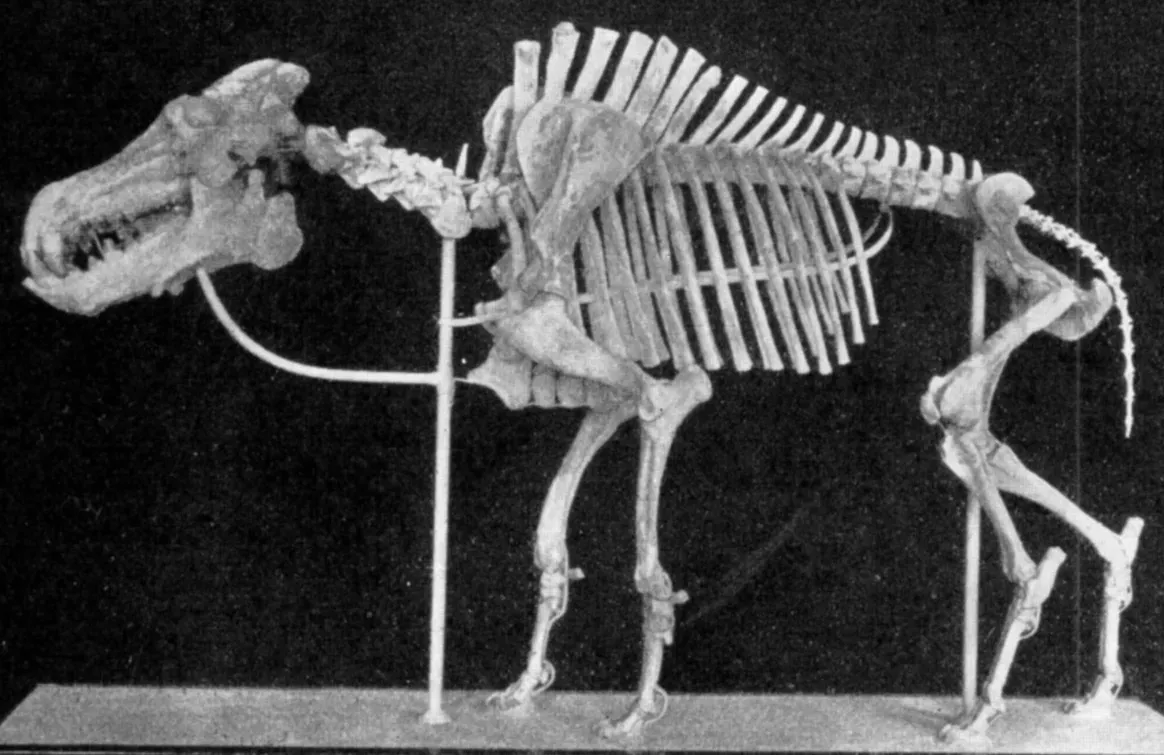
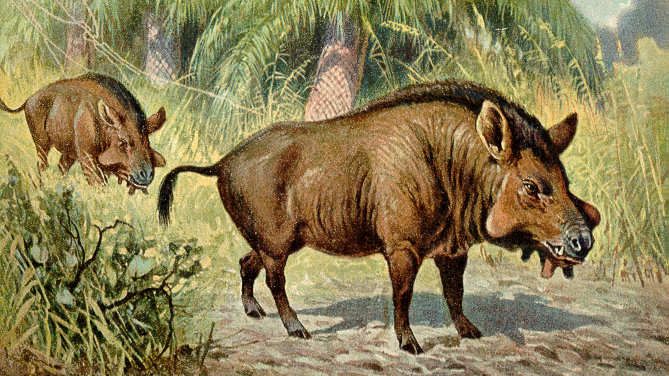
The entelodont was the largest prehistoric pig to inhabit North America, reaching the size of a Clydesdale horse and weighing up to 2,000 pounds. This extinct family of pig-like mammals inhabited the Northern Hemisphere from about 38 to 15 million years ago. They lived during a period when the planet was transforming dramatically.
Researchers face difficulty classifying the entelodont, with some studies marking it as an ancient predecessor of modern pigs, while newer research suggests they may have been more closely related to hippos and whales. Think about that for a moment. These creatures defied simple categorization precisely because evolution had shaped them into something unique. Their appearance alone would have sent chills down your spine.
The Terrifying Physical Appearance
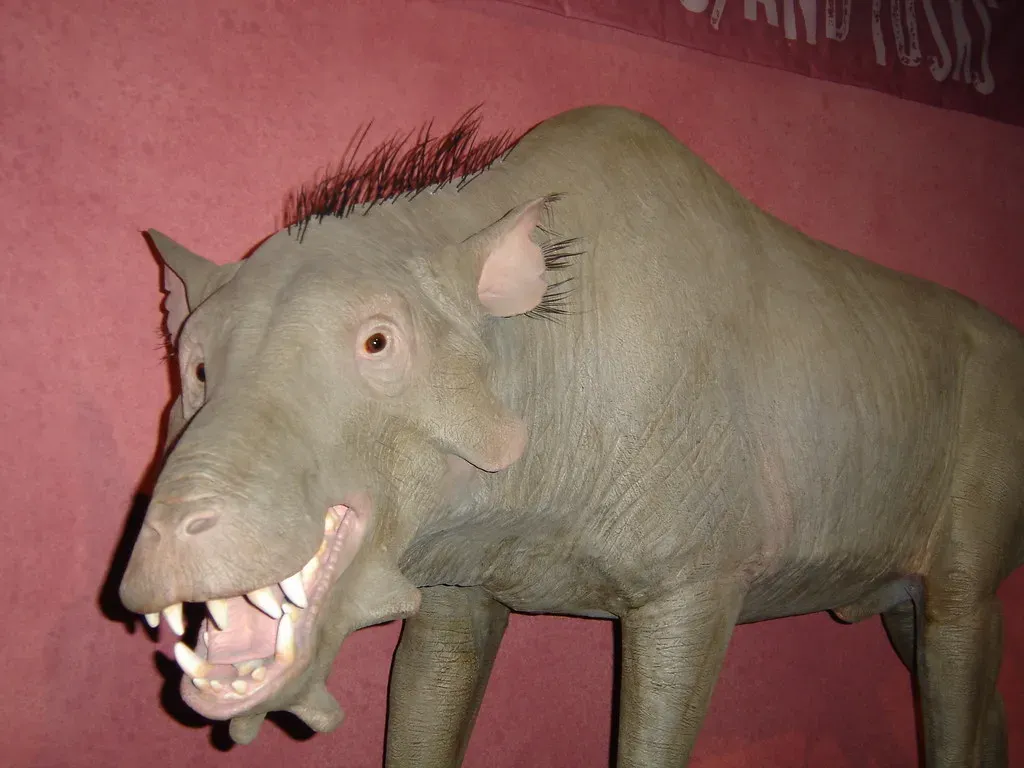
The entelodont’s face resembled a beastly pig or warthog, with a low, extended snout and extremely large teeth, with cheekbones projecting outwards like two sides of a flamboyant bony mustache. Built like a tank with a very large body standing on surprisingly thin legs, these long, slender legs and lightweight bones helped the enormous entelodont run at fast speeds.
Let’s be real here, running into one of these things would have been absolutely terrifying. Its head was massive compared to the rest of its muscular form, yet it had a small brain around the size of an orange. Entelodonts could open their jaws up to 90 degrees wide, and when they clamped down, they could crush bone with more force than a modern crocodile or hippopotamus. Their intimidating presence served a practical purpose in their competitive world.
An Omnivore With Dangerous Versatility
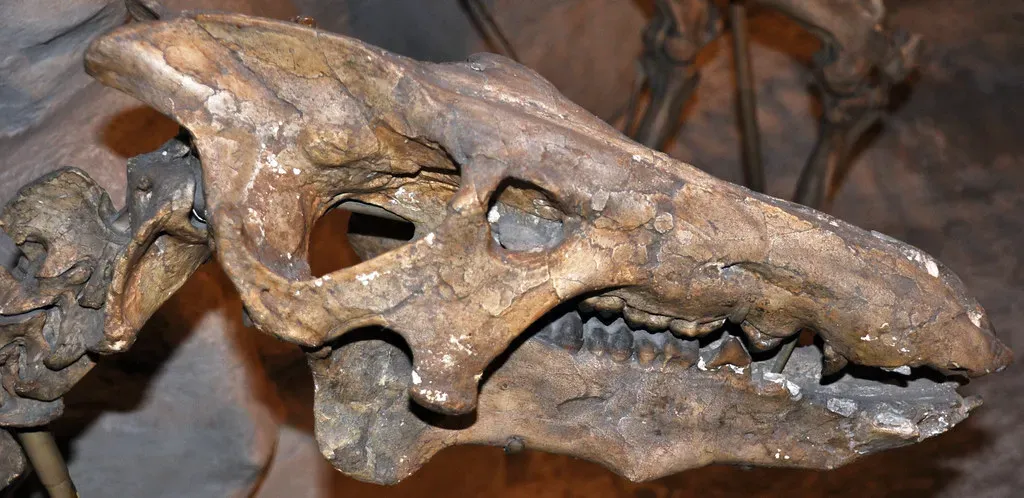
Fossils from the Badlands of South Dakota clarified that the entelodont was an omnivore, eating both plants and meat, with several animal skeletons from prehistoric watering holes bearing entelodont teeth marks, even large animals like rhinos. Their diet remained incredibly flexible depending on availability. Paleontologists have discovered large grooves on their tusk-like canine teeth from digging for plant roots and tubers like many modern pigs.
The name Entelodon is Greek for perfect teeth or complete teeth, referring to their four different kinds of teeth, with canine teeth so large they stuck out of the mouth like massive tusks. Imagine encountering those teeth coming at you through the undergrowth. Their varied dentition meant they could tackle virtually any food source, making them supremely adaptable.
The Mighty Daeodon Dominated Them All
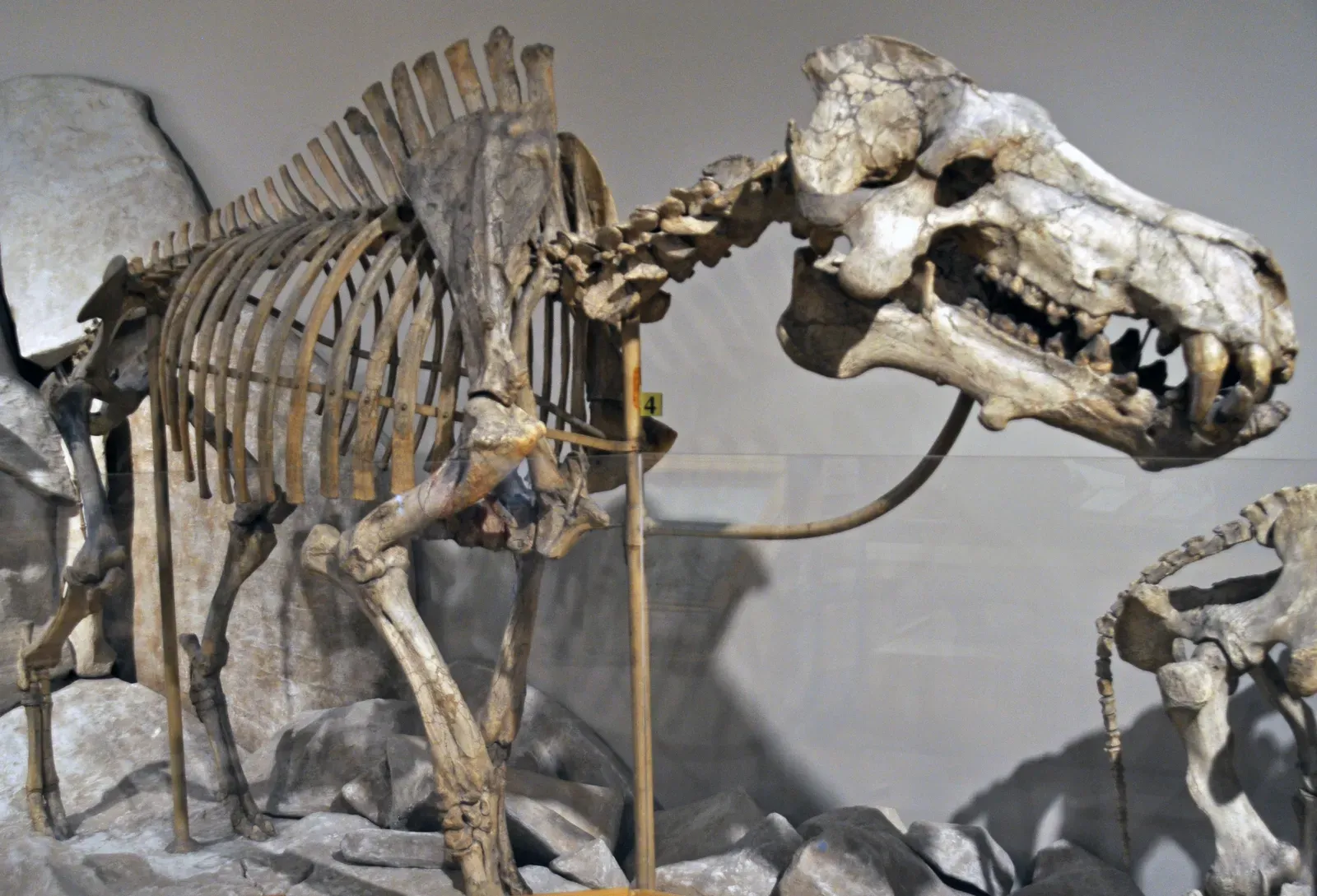
Daeodon shoshonensis is the largest known entelodont, with adults having skulls about 90 cm long and standing about 1.77 m tall at the shoulders, with large males estimated to have weighed at least 750 kg. This species represented the pinnacle of entelodont evolution. Daeodon stood roughly 2m tall, weighed half a ton, and had a head almost a metre long, requiring unusually long neural spines between its shoulders that formed a muscular hump similar to today’s bison.
Daeodon’s jaws were incredibly strong, capable of crushing bones, and lined with long incisors, sturdy canines, and square-shaped molars, with teeth covered in remarkably thick enamel that allowed them to crack bones and access calorie-rich marrow like today’s hyenas. Honestly, this animal was built for dominance. These physical adaptations gave Daeodon an edge over competitors for resources.
Hunting Strategies and Behavioral Traits
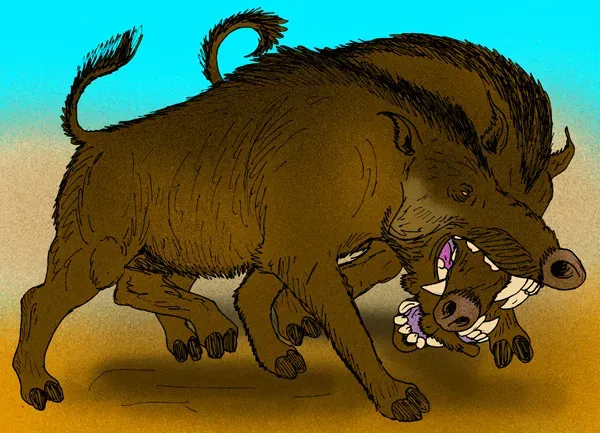
Scientists believe that the entelodont, a creature with cloven hooves instead of claws, would hunt prey by running alongside it before ramming into it with brute force. Their hunting style relied on power rather than speed. Their large olfactory lobes and stereoscopic vision, combined with their anatomy, led to the generally accepted conclusion that they were predators as well as opportunistic scavengers.
Clues left on daeodon fossils reveal that male snouts are covered in puncture marks, suggesting they were probably an aggressive and competitive species, with males likely fighting each other for dominance using their mandibles in defense. Competition among males must have been fierce and brutal. Daeodon bones are usually found few and far between, suggesting this was a solitary creature. Solitary existence made sense for such a large, resource-demanding animal.
Where They Lived and What They Faced
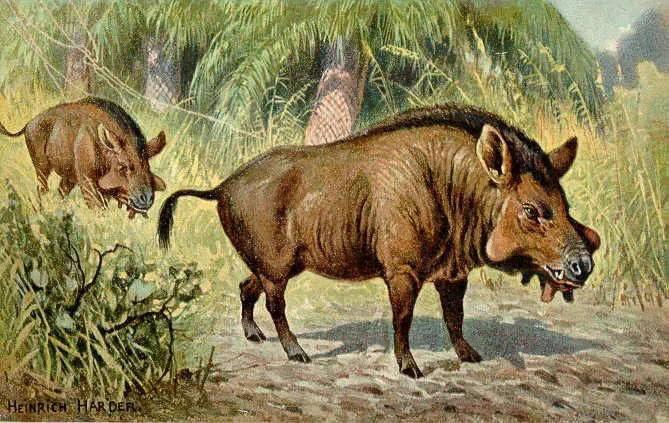
These pig-like animals earned the nicknames hell pigs, killer pigs, and pigs from hell, with the first entelodonts appearing in Mongolia around 50 million years ago before spreading across Asia and into Europe and North America where they ruled the floodplains and woodlands. They colonized vast territories across multiple continents. The Agate Springs bonebed was a floodplain environment with wet and dry seasons, where Daeodon shared the landscape with small gazelle-like camels, large browsing chalicotheres, several species of predatory amphicyonids that lived in packs, land beavers, and thousands of small herd-living rhinoceros.
This ecosystem teemed with diversity and competition. The environment constantly challenged these creatures to adapt or perish. Their survival depended on remaining flexible in their feeding habits and maintaining their physical dominance.
The Mystery of Their Extinction
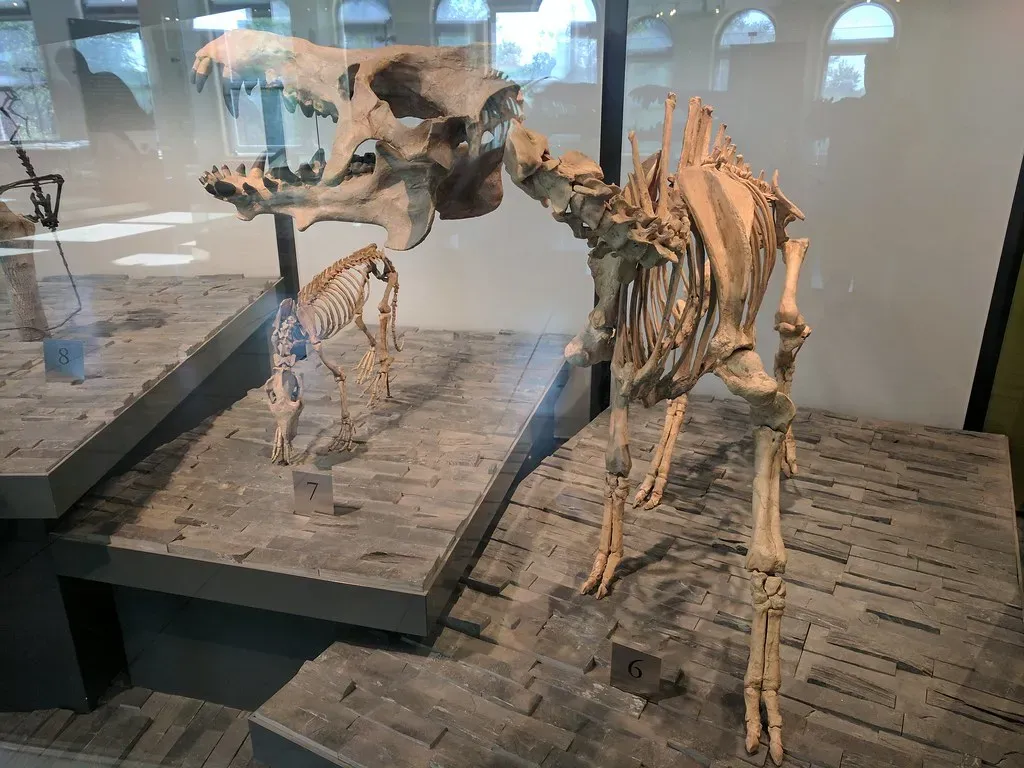
The last entelodonts died out about 16 million years ago, with no one knowing exactly why they went extinct, though the spread of new mammalian predators like extinct bear dogs could have had something to do with it. Daeodon most likely went extinct during the middle Miocene when the environment underwent massive transformation with severe drought spells, with thick forests becoming sweeping prairies, presenting daeodons with new survival challenges that led to mass extinction.
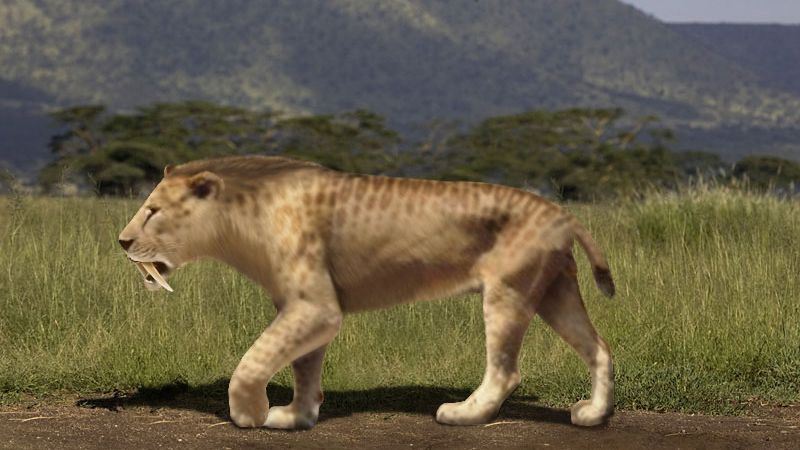
Towards the end of their existence, larger more vicious animals appeared in North America, including bear-dogs that crossed from Eurasia using the Bering Land Bridge and saber-toothed cats, both of which were faster and fiercer than Daeodon. The world was changing rapidly around them. Competition intensified while their preferred habitats transformed beyond recognition.
A Legacy Written in Stone
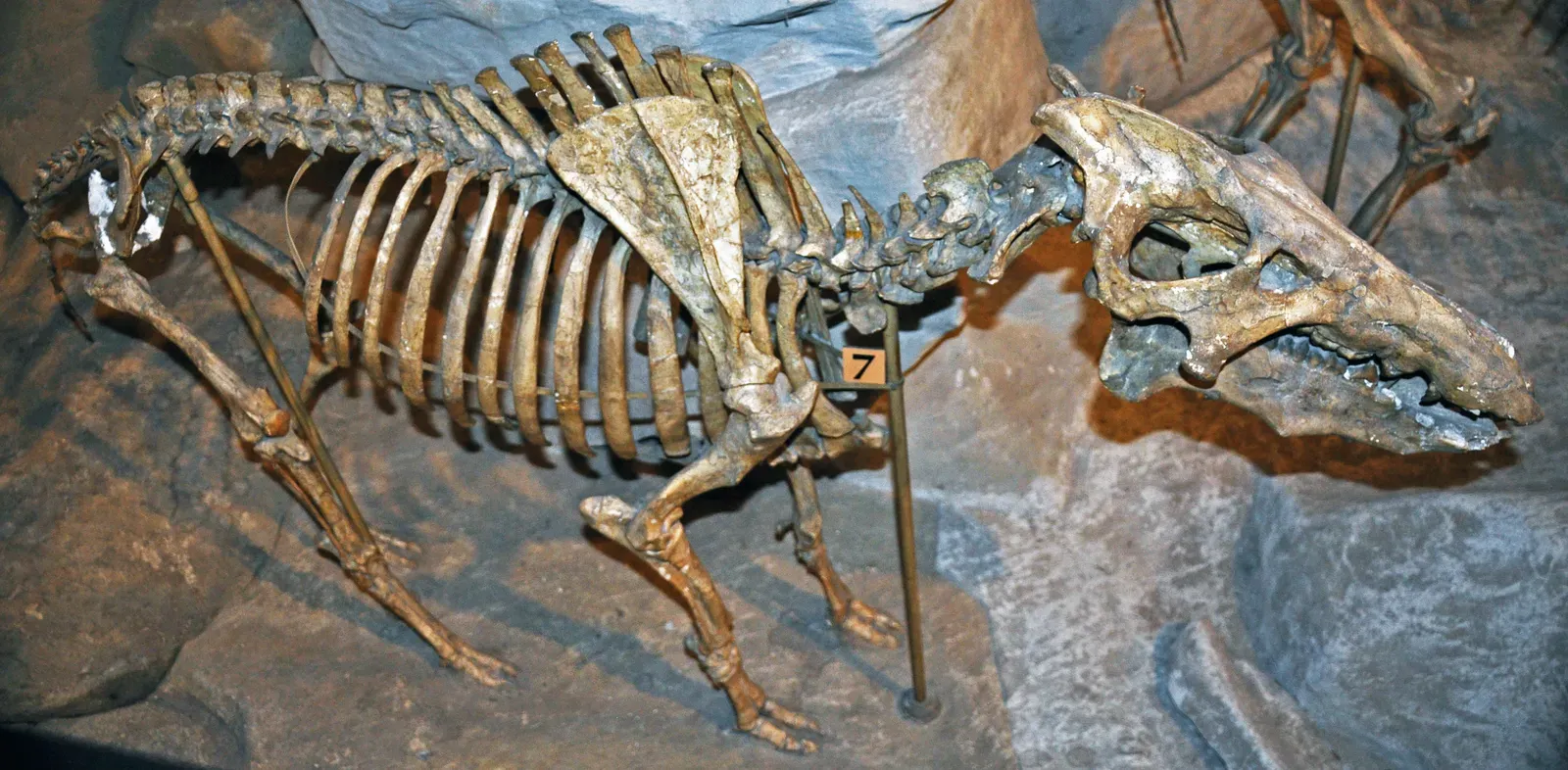
Despite ultimately facing extinction, entelodonts persisted for more than 20 million years and ranged across Europe, Asia, and North America, making them one of the most successful predators of the Cenozoic. Their fossil remains continue to reveal secrets about a bygone era. These creatures dominated their environments for an extraordinarily long time before eventually succumbing to changing conditions.
The nearly complete Daeodon found at Agate Springs Ranch and first described in 1905 was known for over 90 years as Dinohyus, until a 1998 study found that Dinohyus was indistinguishable from Daeodon, with Daeodon’s earlier naming taking precedence. Scientific understanding of these animals has evolved considerably over time. Museums worldwide display these remarkable specimens, allowing us to glimpse a world where pig-like giants ruled the land. The entelodonts remind us that Earth’s history contains creatures as strange and wonderful as anything we could imagine. What do you think it would have been like to witness one of these magnificent beasts in its prime?