If you ever needed proof that science is a messy, trial‑and‑error kind of business, Iguanodon is it. For decades, this plant‑eating dinosaur was imagined as everything from a fanged iguana the size of a bus to a squat, rhino‑like beast with a horn on its nose. Only later did it settle into the form we now know: a bulky but surprisingly versatile herbivore with that iconic, mysterious thumb spike. I still remember standing in front of the looming skeleton in a museum as a kid, wondering how professionals with fancy titles could get something so big so wrong for so long.
The story of Iguanodon is not just about bones and Latin names; it is about how humans see what they expect to see. Early fossil hunters looked at scattered teeth and a few odd bones and tried to force them into familiar shapes, like someone trying to finish a jigsaw puzzle with the wrong picture on the box. The result was a century‑long saga of misinterpretations, bold guesses, bruised egos, and quiet course corrections. And buried in that saga is a surprisingly modern lesson about how we handle uncertainty, change our minds, and admit we were off the mark.
The First Clues: Iguana Teeth That Changed Everything
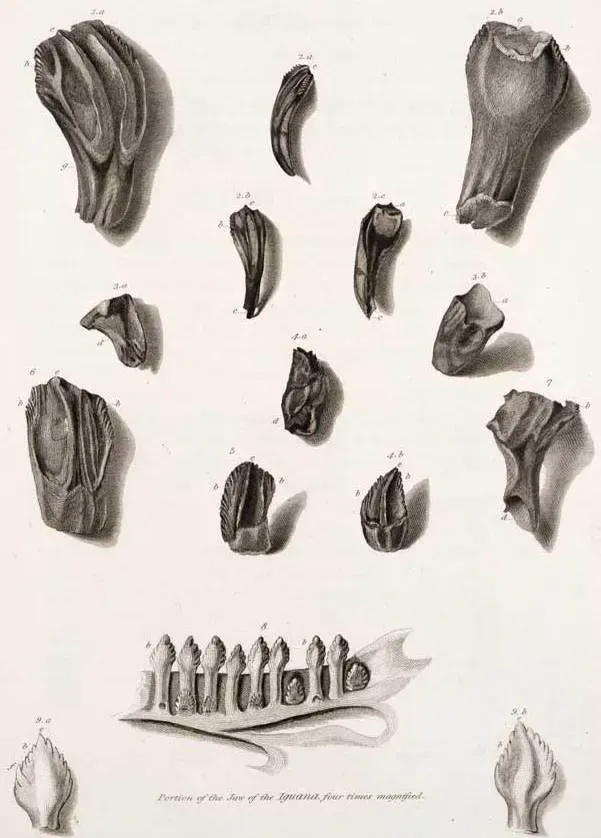
Imagine being handed a handful of oddly shaped teeth and being told to reinvent prehistory with them. That was essentially the position English doctor and fossil obsessive Gideon Mantell found himself in during the early 1820s. The teeth he acquired from quarries in southern England looked uncannily like the teeth of an iguana, but massively scaled up, suggesting a herbivore far larger than anything alive on land at the time. Mantell realized he was looking at something new and unsettling, a reptile so big it did not fit any existing category comfortably.
He eventually coined the name Iguanodon, literally “iguana tooth,” anchoring the animal forever to that first comparison. At the time, giants like this were almost unthinkable; the very idea that Earth had once been ruled by colossal reptiles was still controversial. Mantell’s interpretation clashed with some powerful scientific figures who insisted he was exaggerating or misreading the evidence. From the start, then, Iguanodon sat at the center of a quiet scientific turf war, not because of what it was, but because of what it implied: that the past was stranger and more violent than many people were prepared to accept.
The Great Mix‑Up: When a Thumb Became a Horn
Of all the ways scientists got Iguanodon wrong, the most famous is almost comical: they put its thumb on its nose. Early skeletons were partial and disarticulated, more bone soup than neat skeleton, and among them was a chunky, conical spike. Without a complete hand to guide them, nineteenth‑century anatomists assumed the spike must be a horn, and they stuck it on the nose as a weapon, like a prehistoric rhinoceros gone rogue. It seemed logical at the time; who would ever guess a dinosaur evolved a weaponized thumb?
This misplaced spike made it into paintings, textbooks, and even the famous life‑size Crystal Palace sculptures in London, cementing the error in the public imagination. I love this detail because it shows how easily a small anatomical mistake can cascade into an entire false vision of an animal’s life. Once the “nose horn” image caught on, it took decades and better fossils to dislodge it. When more complete skeletons later revealed the spike belonged on the hand, it was a humbling reminder: nature does not care how tidy our mental categories are, and evolution will happily produce something that looks ridiculous to us.
The Bernissart Revelation: A Coal Mine Full of Dinosaurs
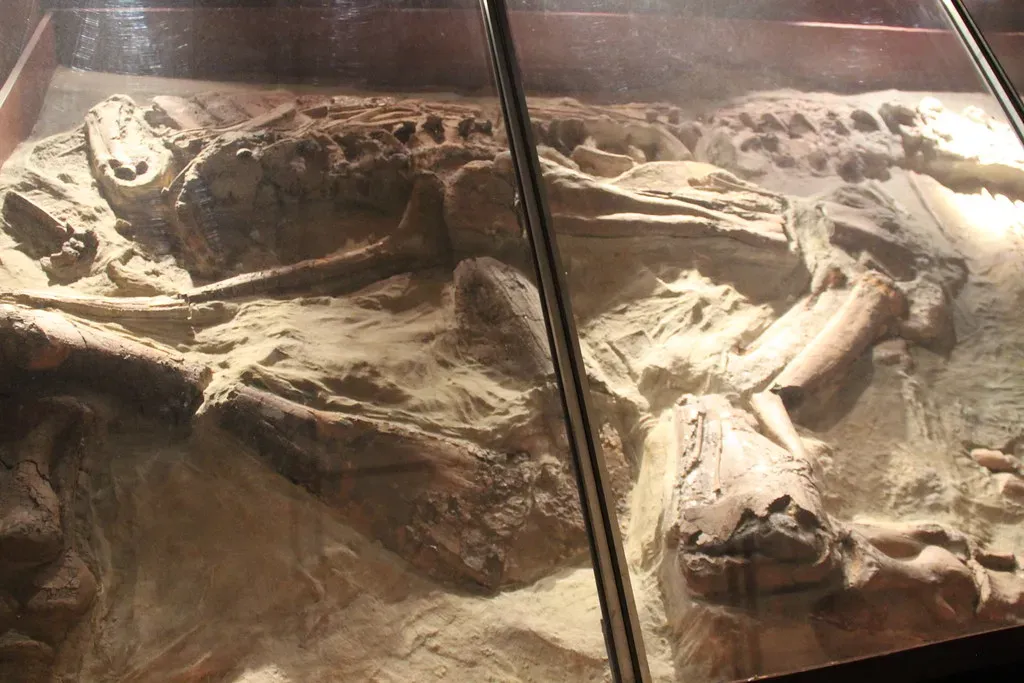
The turning point in Iguanodon’s story came not in a grand laboratory but deep underground in a Belgian coal mine in 1878. Miners digging through the Sainte‑Barbe clays near the town of Bernissart stumbled across what they thought was petrified wood, but it turned out to be an astonishing mass grave of dinosaurs. Dozens of Iguanodon skeletons lay entombed in the rock, many of them nearly complete and still partially articulated. For a science used to working from scraps and fragments, this was like finding a full library after years of reading only torn pages.
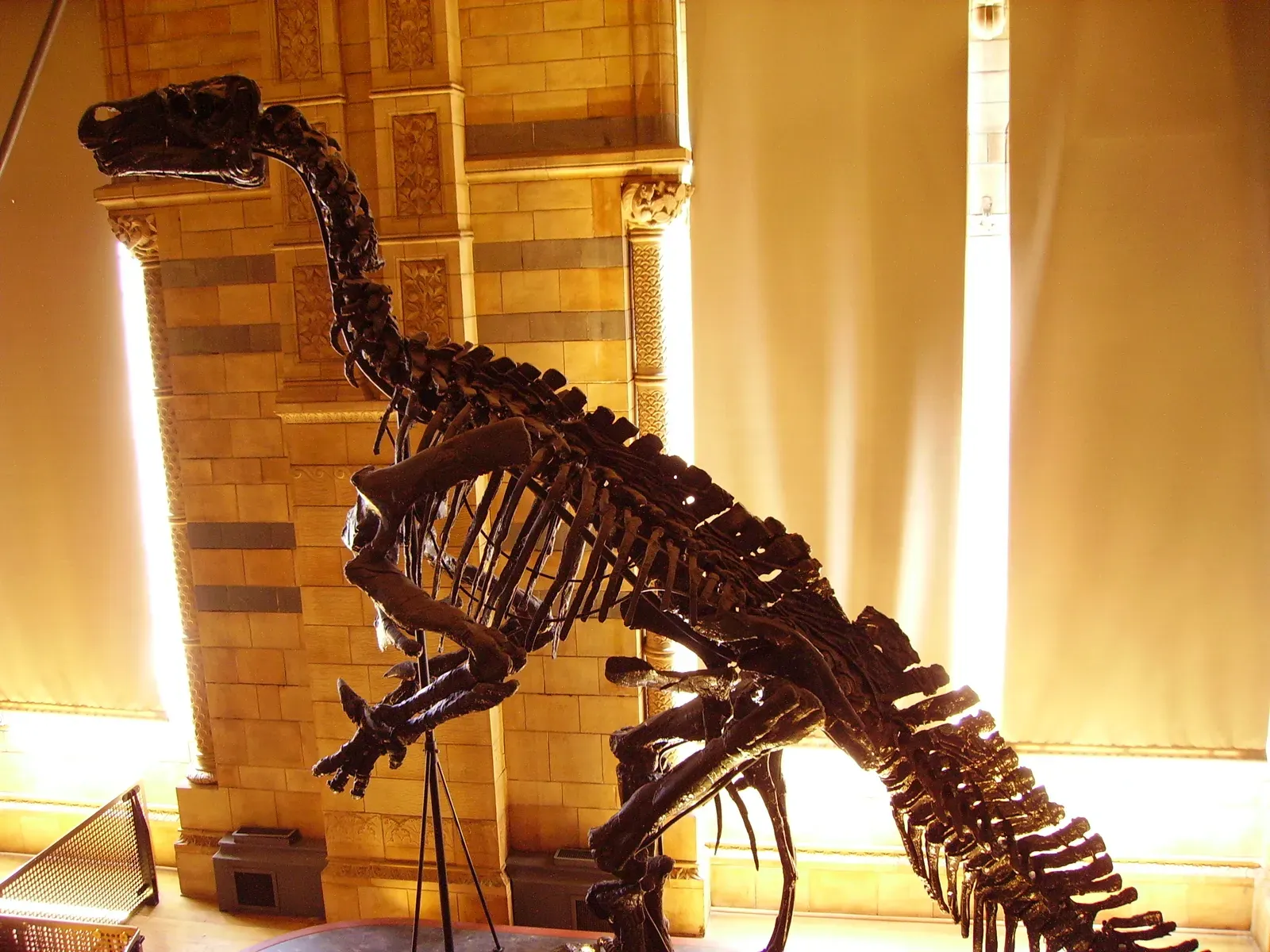
With full skeletons in front of them, paleontologists finally had a reliable blueprint for Iguanodon’s anatomy. The thumb spikes were clearly attached to the hands, the limbs were different lengths, and the overall posture looked nothing like the squat, low‑slung monsters of earlier reconstructions. The Bernissart fossils became a sort of fossil courtroom, quietly overruling decades of guesswork. There is something poetic about that: after years of speculation built on crumbs, the Earth itself delivered an overwhelming stack of evidence and basically said, “Here, start over properly.”
Rebuilding the Dinosaur: From Lumbering Lizard to Dynamic Herbivore
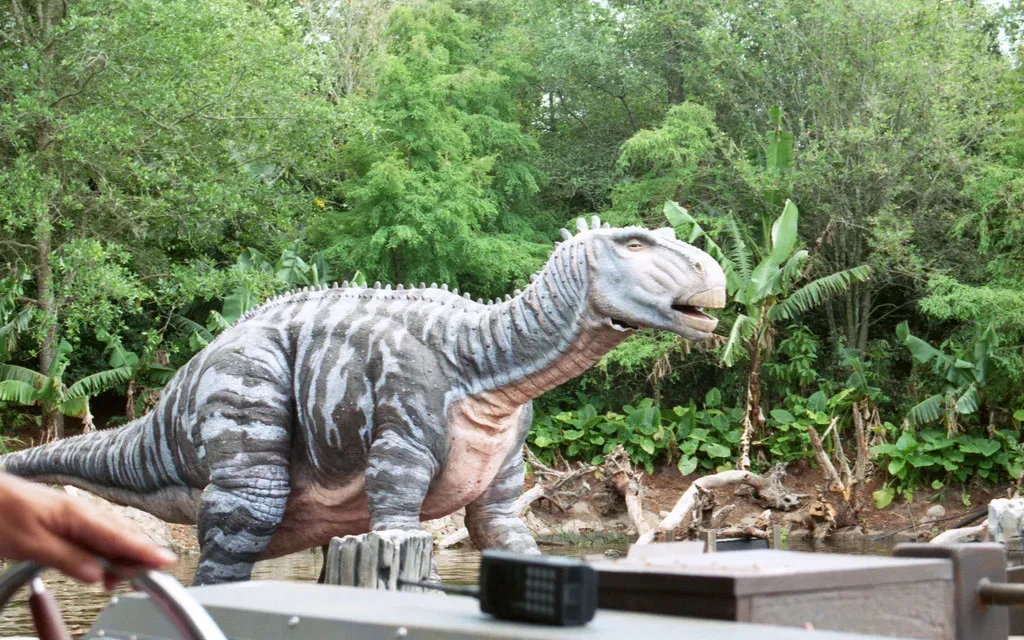
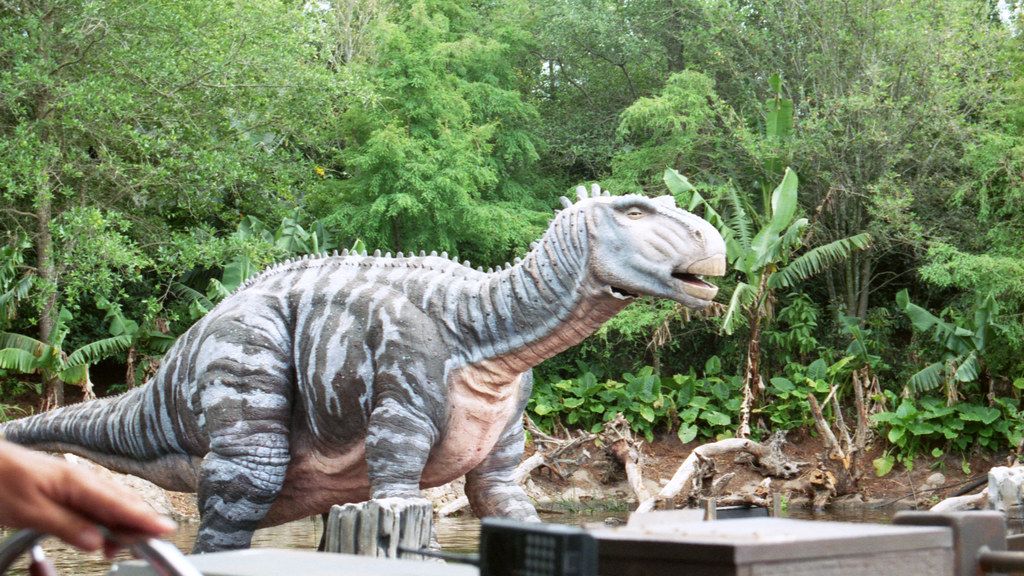
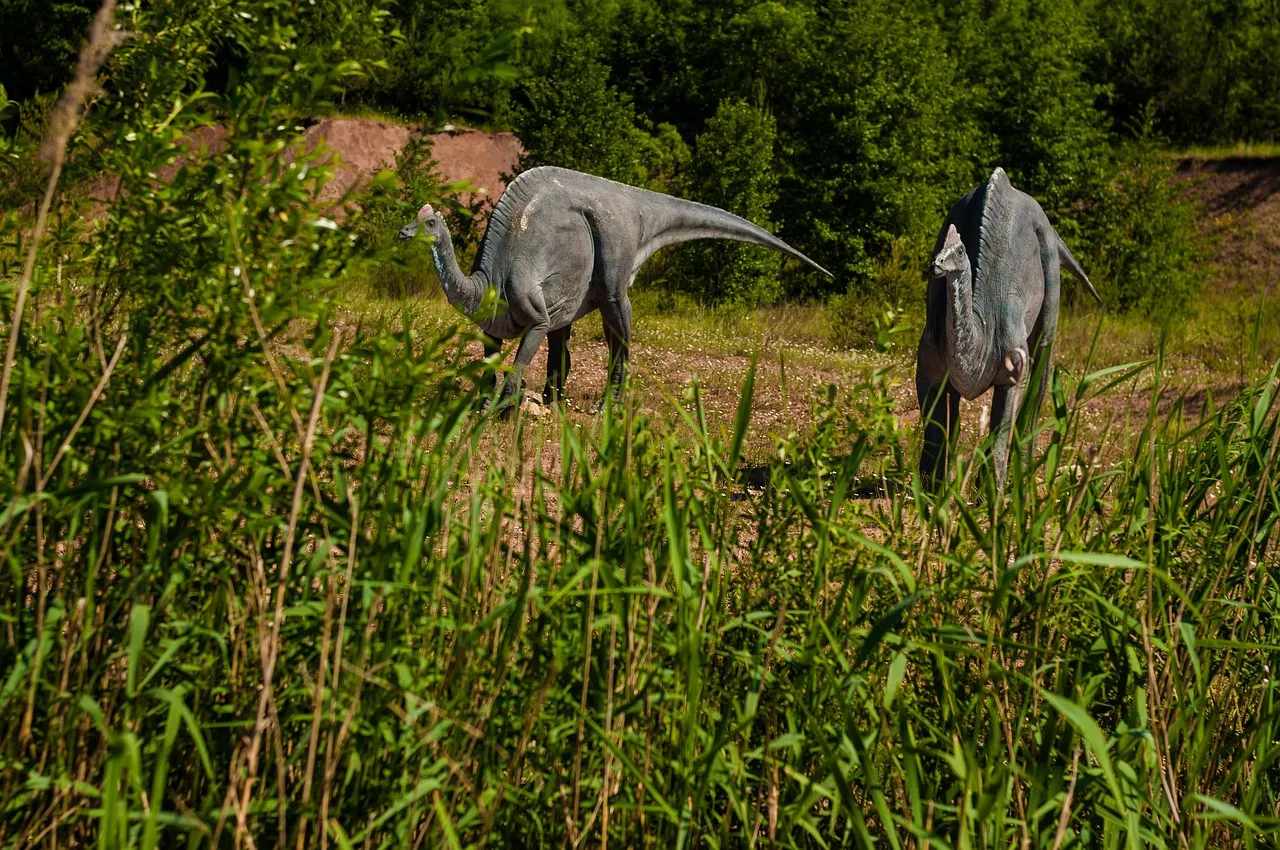
Armed with the Bernissart skeletons, scientists began to rebuild Iguanodon’s image from the ground up, and it quickly stopped looking like an overgrown iguana. The animal’s back legs were long and powerful, its forelimbs shorter but still robust, and its tail stiff enough to act like a counterbalance. This suggested a creature that could likely shift between walking on all fours and rearing up on two legs, far more flexible and dynamic than the lumbering parade float it had once been portrayed as. Suddenly, Iguanodon looked less like a reptilian cow and more like a serious athlete of the Early Cretaceous.
The new posture also forced scientists to admit how deeply earlier biases had influenced them. In a century that associated reptiles with slow, cold, and stupid, it was easy to imagine all dinosaurs as heavy, lumbering sluggards. Iguanodon’s revised stance, with its elevated chest and active tail, chipped away at that stereotype. It helped pave the way for the modern view of many dinosaurs as active, adaptable animals rather than scaled‑up lizards. In that sense, every time you picture a dinosaur running rather than just dragging its belly along, you are unconsciously borrowing from the lessons Iguanodon forced on the field.
The Thumb Spike Mystery: Weapon, Tool, or Both?
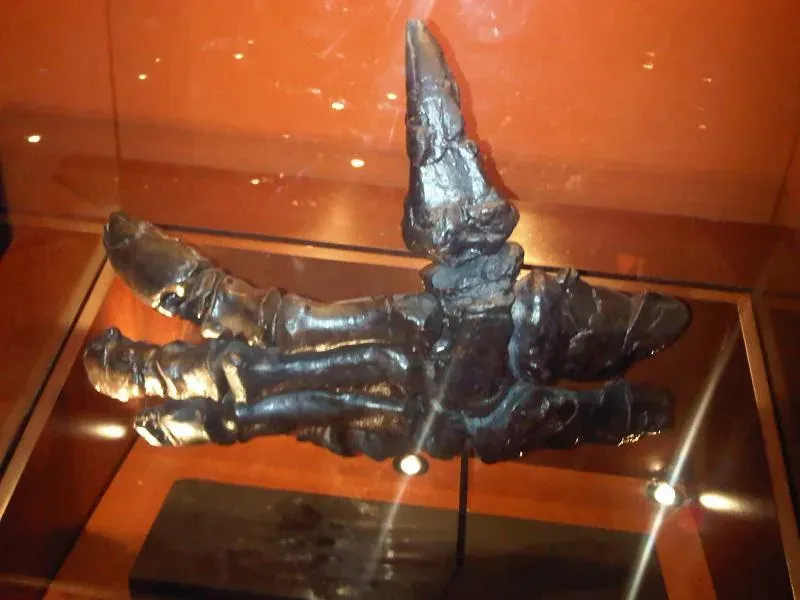
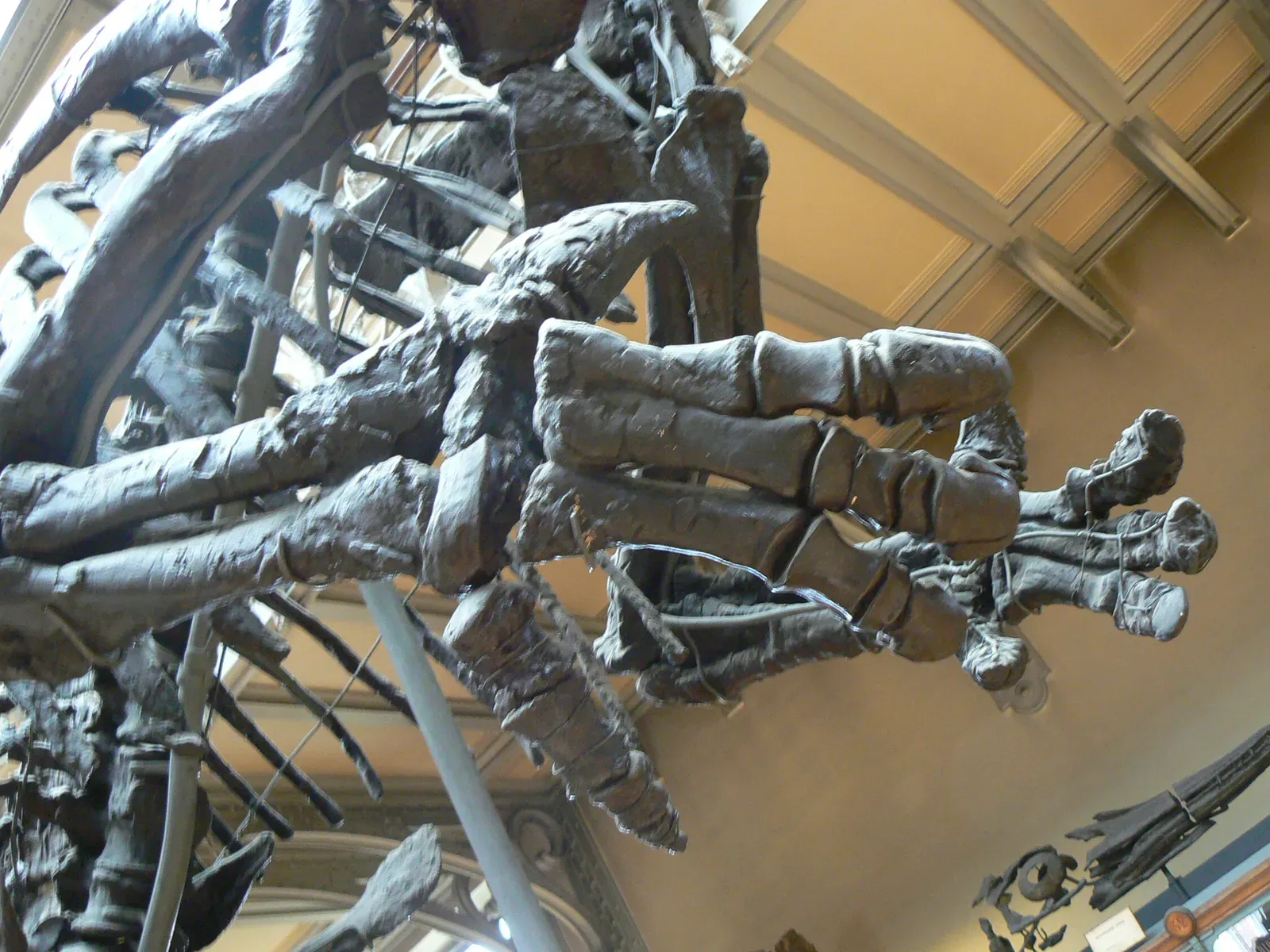
Even after its nose horn was demoted to a thumb, the spike itself refused to give up its secrets easily. On a fully reconstructed hand, Iguanodon’s anatomy is frankly weird: a cluster of three stiff, weight‑bearing middle fingers, a flexible outer “pinky” that may have helped it grasp branches, and then that thick, conical spike jutting from the thumb. It is a design that looks like it was sketched by a committee that could not agree on whether they were building a walking foot, a climbing hand, or a combat blade. Unsurprisingly, scientists have argued for generations about what the spike was really for.
One popular idea is that the spike was a defensive weapon, something Iguanodon could drive into the flank of a predator that got too close. Another camp suggests it functioned more like a specialized tool for manipulating plants, maybe stripping leaves or breaking tough vegetation. Personally, I suspect the truth is messy and multitasking, as it usually is in biology: a structure that could be used aggressively if needed but was probably more often pressed into service during feeding and social behavior. What is clear is that the thumb spike turned out to be stranger and more interesting than the simple horn early scientists imagined, which feels like a fitting metaphor for the whole Iguanodon saga.
A Dinosaur That Helped Invent Dinosaurs Themselves
Iguanodon was not just any random fossil; it arrived right at the moment Western science was struggling to even define what a dinosaur was. Alongside Megalosaurus and Hylaeosaurus, it helped shape the original concept of “Dinosauria” in the mid‑nineteenth century, anchoring the idea of large, extinct land reptiles as a distinct group. That means every schoolkid drawing a T. rex or a Triceratops today is working in a conceptual space that Iguanodon helped carve out. It is like an early band that never became as famous as the acts it influenced, but without it the entire genre would sound different.
Because it was discovered so early and kept being reinterpreted, Iguanodon became a kind of real‑time case study in scientific self‑correction. Each new skeleton, each new analysis about how its joints moved or how much it weighed, nudged its image in a new direction. To me, that makes Iguanodon more interesting than some of the flashier, spike‑covered dinosaurs that hog the limelight. You can trace changing scientific fashions, methods, and assumptions across its illustrations like rings in a tree trunk. It is not just a dinosaur; it is a timeline of how we think about dinosaurs.
What Iguanodon Teaches Us About Being Wrong
For all its technical details, the Iguanodon story hits on something very human: our discomfort with being wrong in public. Early reconstructions with nose horns and awkward postures were not acts of fraud; they were honest guesses made with limited data. Yet once those guesses were published and carved in stone – literally, in the case of the Crystal Palace statues – backing away from them meant admitting that the picture everyone had grown used to was off. Watching paleontologists gradually revise Iguanodon over the decades feels a lot like watching someone quietly repaint a mural while the crowd pretends not to notice.
My own opinion is that this saga should be held up more, not less, as a scientific success story. Iguanodon shows that being wrong is not a failure; refusing to update is. Each correction, from moving the horn to the hand to straightening the tail and rethinking its gait, made the animal less cartoonish and more real. In an age where people cling to first impressions and treat uncertainty like weakness, Iguanodon is a reminder that changing your mind in the face of better evidence is not just acceptable, it is the whole point. If one of the first dinosaurs we named could go from horn‑nosed monster to thumb‑spiked, semi‑bipedal grazer, maybe we can allow our own cherished ideas to evolve a little too. Did you expect one confused plant‑eater to have that much to say about us?