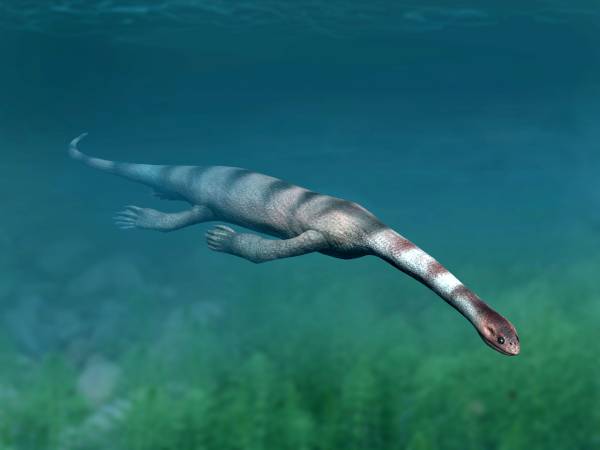
Imagine a reptile the length of your forearm, with a swan-like neck, tiny needle teeth, and paddle-shaped limbs built for underwater flight. It sounds like something dreamed up for an indie sci‑fi film, but Keichousaurus was very real, gliding through warm Triassic seas over two hundred million years ago. Its fossils are small enough to fit on a bookshelf, yet they open a surprisingly big window into how life bounced back after one of the worst mass extinctions in Earth’s history.
Keichousaurus is one of those creatures that feels both oddly familiar and deeply alien. It is not quite a dinosaur, not quite a lizard, not quite anything alive today, but a strange evolutionary experiment in miniaturized marine life. The more paleontologists study its bones, the clearer it becomes that this little reptile lived a life far more complex than its size suggests. To really appreciate it, you have to zoom in and treat this tiny body as if it were an entire ecosystem of clues.
A Pocket-Sized Reptile in a Giant’s World
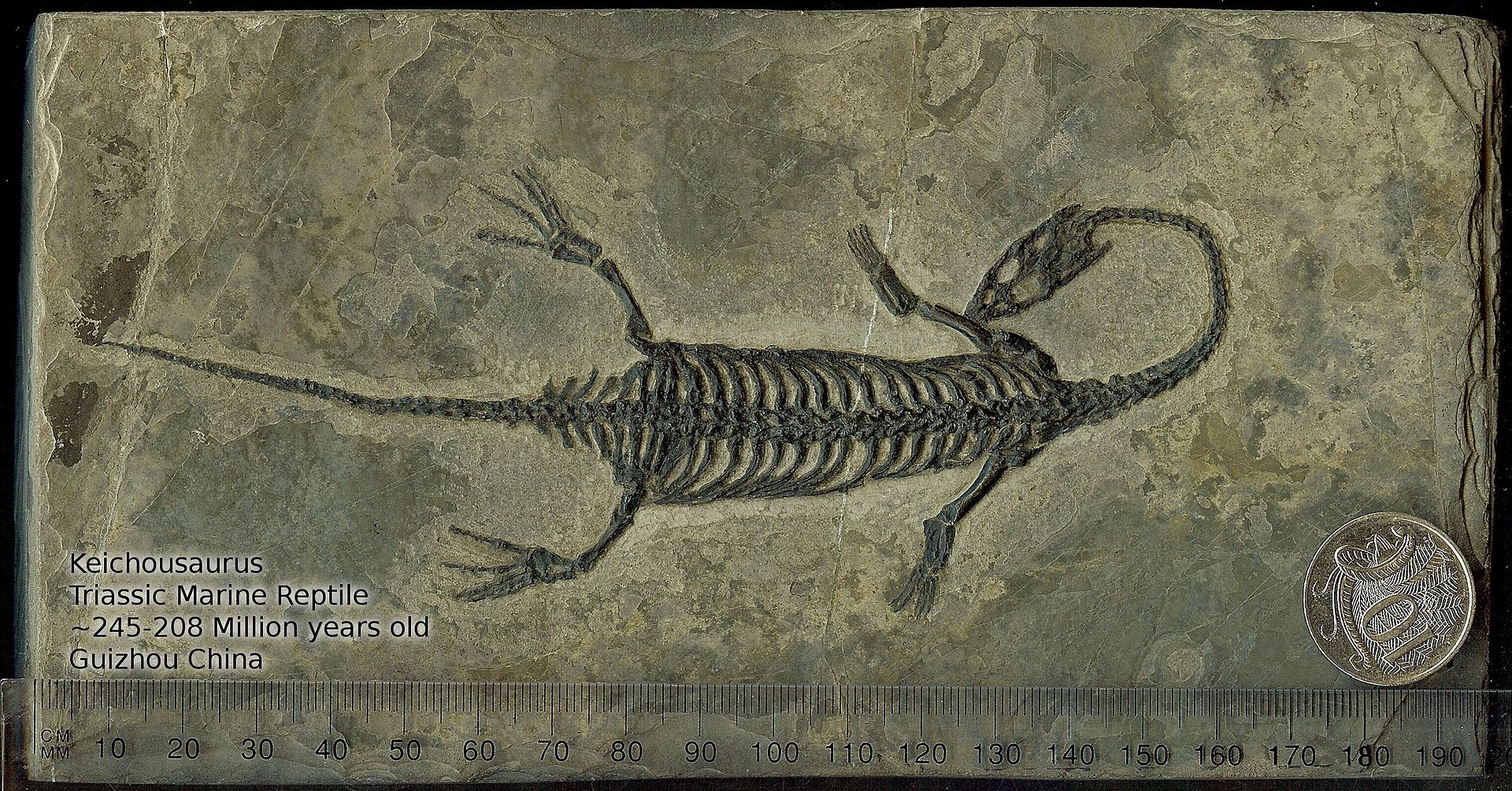
At a time when many marine reptiles were evolving into hulking, multi-meter predators, Keichousaurus took the opposite path and stayed small, usually around the size of a house cat from nose to tail. This alone makes it feel almost defiant, like a tiny sports car weaving through a traffic jam of trucks and buses. Instead of trying to dominate the food chain through brute strength, it seems to have survived by being nimble, quick, and specialized. In the fossil record, that kind of strategy often leaves a subtle but very telling signature.
Its small size also means that every bone matters more to scientists. When your entire skeleton is not much longer than a human hand, the relative length of a finger bone or the curve of a rib can completely change how we picture your lifestyle. Keichousaurus has become one of those species that students and researchers revisit again and again because it shows how evolution can favor “less” instead of “more.” In a world obsessed with giant prehistoric monsters, this little reptile quietly proves that being tiny can be a winning move.
Born on Land, Living at Sea: A Semi-Aquatic Balancing Act
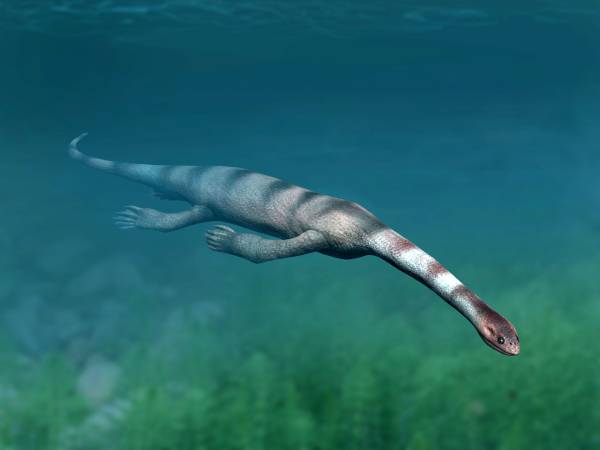
One of the strangest things about Keichousaurus is how it sits on the border between land and sea, never fully choosing a side. Its body is streamlined and its limbs are clearly modified into paddles, signaling a strong adaptation to swimming. At the same time, its overall proportions and some details in the limbs and spine suggest it was not an effortless deep-diver like later marine reptiles. You can almost imagine it hugging the shallow coasts, not straying too far from the comfort of solid ground.
This in-between lifestyle makes sense when you remember that early marine reptiles were still experimenting with what “life in the water” really meant. Keichousaurus was part of this grand trial-and-error period, likely feeding in coastal shallows while still depending on land for crucial parts of its life cycle, such as breeding or resting. Rather than being a failed step toward full ocean living, it feels more like a stable compromise, perfectly suited to warm, protected lagoons and nearshore environments. That delicate balance between land and sea is exactly what makes its biology so intriguing.
Neck Like a Periscope: How Its Body Was Built
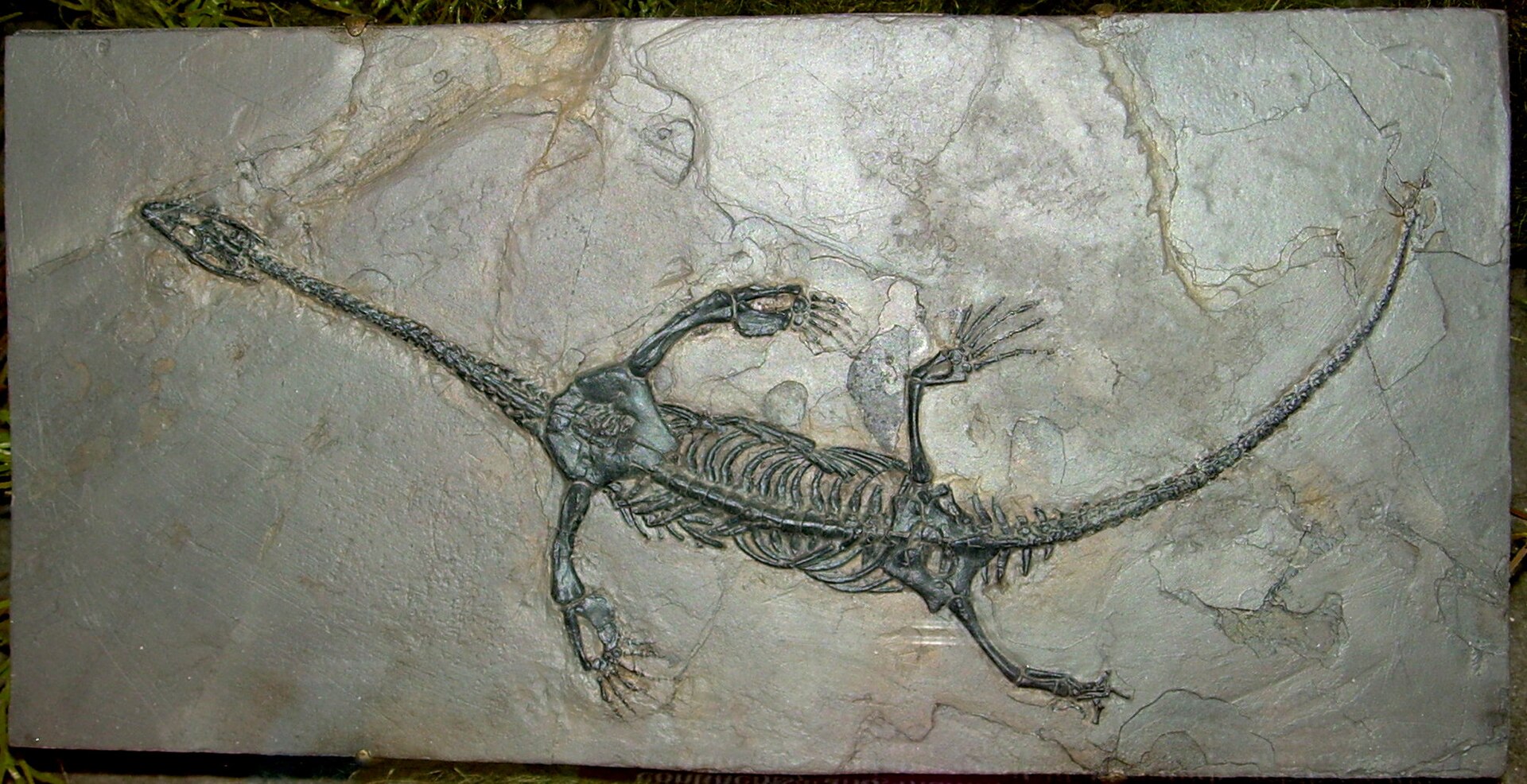
When you first see a well-preserved Keichousaurus fossil, the neck jumps out immediately: it is long, slender, and strangely elegant compared with the rest of the body. This extended neck likely gave it a huge advantage in ambush feeding, allowing it to move its head closer to prey while keeping the bulk of its body relatively still. Think of a stealthy periscope rising just enough above the seafloor grasses to snap at passing fish or small invertebrates. In evolution, small movements often mean small energy costs, and that can matter a lot over a lifetime.
The rest of the skeleton follows a similar theme of lightness and precision rather than brute power. The torso is compact, the tail is relatively simple, and the limbs are transformed into paddles that look better suited to maneuvering than to explosive speed. Its fingers and toes are elongated, spreading out to create more surface area for each stroke through the water. Nothing about Keichousaurus screams “top predator,” but everything about it whispers “efficient specialist,” and that, in my opinion, is far more interesting than yet another giant with big teeth.
What (and How) Did Such a Tiny Marine Reptile Eat?
With its needle-like teeth and narrow jaws, Keichousaurus was clearly not built to crush big, hard-shelled prey. Instead, its feeding toolkit points strongly toward small, soft-bodied animals: little fish, shrimplike creatures, and perhaps other tiny swimmers lurking in the murky shallows. Its long neck would have allowed careful, targeted strikes, a bit like a heron snapping at minnows, except played out in slow motion underwater instead of in the air. This style of feeding fits beautifully with its overall body plan, which favors reach and precision over raw bite force.
There is also a good chance that Keichousaurus hunted close to the seafloor, weaving through patches of vegetation and rocky shelters where small prey could hide. In that kind of setting, being small is an asset, not a limitation; it lets you slip into tight spaces that bigger predators simply cannot enter. I like to picture it as the underwater equivalent of a cat exploring every corner of a cluttered attic, finding spiders and mice that a larger animal would never notice. If that mental image feels a bit charming, that is exactly the point: this was a predator, but on a scale that makes its world almost intimate.
Clues from Fossils: Families, Death Poses, and Ancient Lagoons
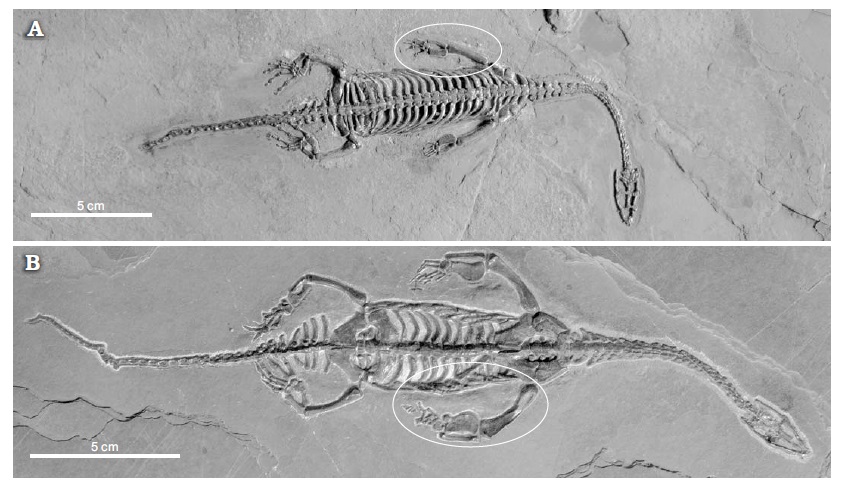
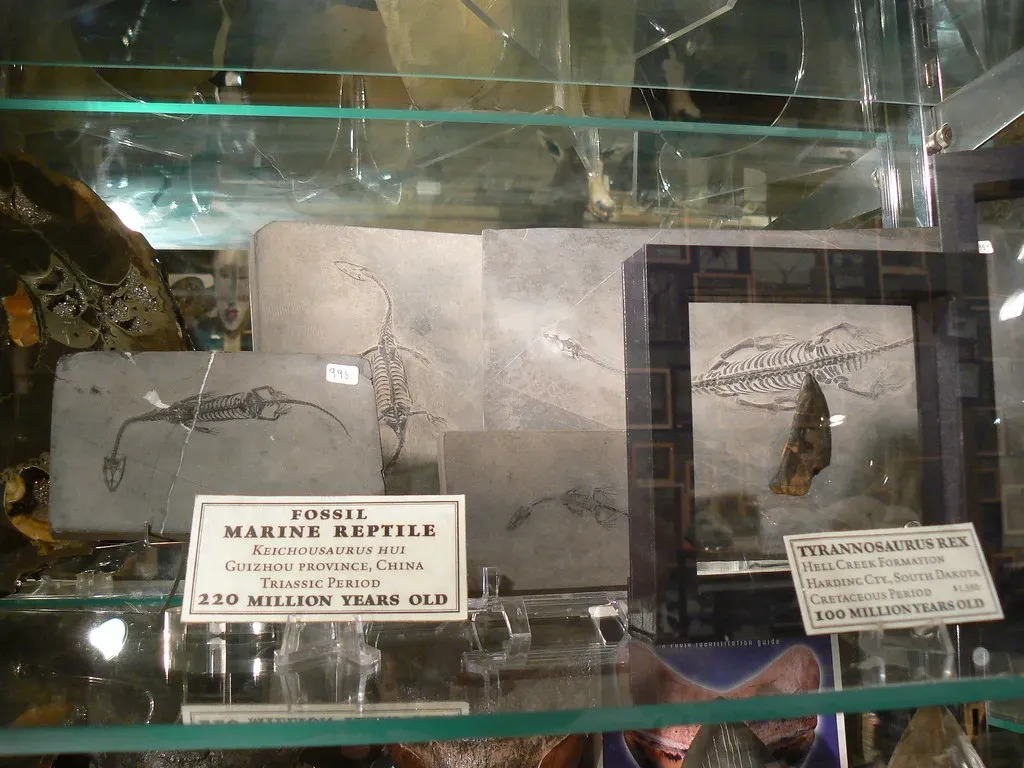
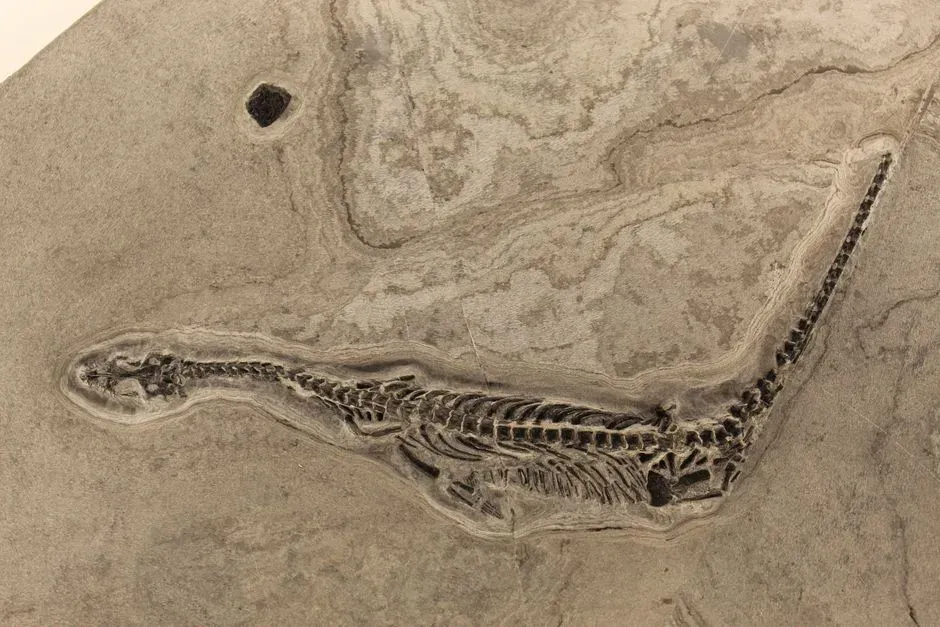
Keichousaurus is known from rich fossil deposits that often preserve entire skeletons laid out in remarkable detail, and that level of completeness is a goldmine for paleontologists. The way these animals are found, frequently in fine-grained rocks that were once quiet lagoon floors, suggests they lived in calm, relatively sheltered environments rather than the open ocean. Many specimens are preserved in what scientists casually call the “death pose,” with the neck arched back, a sign of how muscles and ligaments contracted after death in the surrounding sediment-rich water. It is a haunting, repeated snapshot of the moment life stopped.
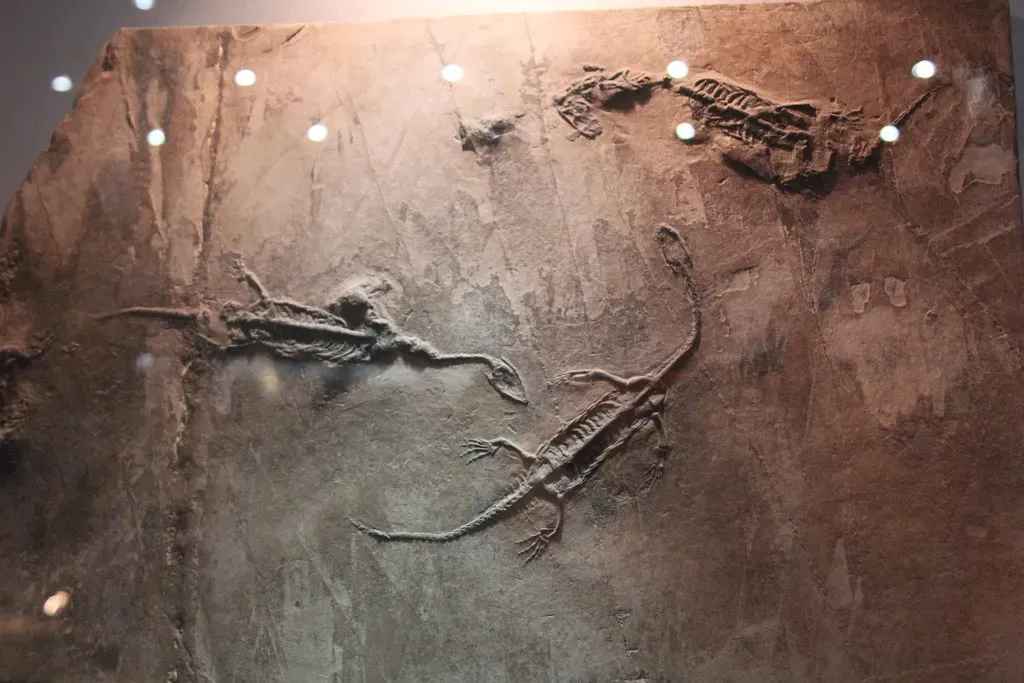
Some fossils have been interpreted as possible evidence of social behavior or at least shared habitats, with multiple individuals preserved close together. That does not automatically mean they formed tight-knit groups the way dolphins do today, but it hints that they were not always solitary drifters. When you add in possible evidence of different growth stages, from smaller juveniles to larger adults, you start to get the sense of a whole community using the same ancient lagoons over time. To me, that is one of the most gripping parts of the story: these were not just isolated bones, but members of a living, breathing population in a recovering world.
After the Apocalypse: Keichousaurus in a Recovering Planet
Keichousaurus lived during the Triassic, not that long after the devastating end-Permian mass extinction that wiped out a staggering portion of Earth’s species. In that context, its very existence takes on a deeper meaning. This little reptile was part of nature’s rebuilding project, one of many new forms trying out fresh ways to live in ecosystems that were still stabilizing. It is as if the planet hit a reset button, and Keichousaurus was one of the small, clever programs that booted up in the aftermath.
I think that makes its story quietly inspiring. While blockbuster documentaries focus on giant pliosaurs or monstrous ichthyosaurs, Keichousaurus represents the understated resilience of life at a smaller scale. It carved out a role as a modest coastal hunter, experimented with semi-aquatic living, and contributed to the complex food webs that would later support larger, more spectacular creatures. In a way, its “strange life” is not strange at all; it is exactly what evolution does best after a crisis, filling in the gaps with unexpected, beautifully adapted survivors.
Why This Tiny Reptile Still Matters Today
In my view, Keichousaurus deserves far more fame than it gets, precisely because it is not a giant, not a headline-stealing monster, but a small specialist that thrived by embracing its niche. It reminds us that evolutionary success is not about size, drama, or how easily you can sell toys and movie tickets; it is about fit. This reptile fit its time and place so well that we keep finding its fossils, laid out like postcards from a long-vanished coastline. That kind of persistent presence in the rocks is its own quiet form of glory.
There is also a modern echo in its story that I find hard to ignore. As our own world changes – oceans warming, coastlines shifting – small, adaptable species may again be the ones that carry ecosystems through turbulent times. Keichousaurus, frozen in stone for millions of years, is a reminder that resilience often comes in compact packages. If anything, its strange, delicate life nudges us to pay closer attention to the overlooked creatures in our own seas and wetlands. After all, if you had to guess which fossils would tell the most surprising stories two hundred million years from now, would you really bet only on the giants?