If you only know Triceratops as the three-horned dinosaur that squared off against Tyrannosaurus in dramatic museum displays, you’re missing the most interesting part of its story. This animal was not just a walking shield, it was a surprisingly nuanced mix of calm plant-eater and serious battlefield hardware, more like a tank that preferred to be left alone. That contrast between its peaceful lifestyle and its built‑in weapons makes Triceratops one of the most fascinating dinosaurs to rethink with modern science.
Over the last few decades, paleontologists have uncovered new fossils, reanalyzed old ones, and used modern imaging to look inside those famous skulls. The emerging picture is richer than the simple “horns versus teeth” narrative many of us grew up with. Triceratops seems to have relied on a layered defense strategy: social behavior, body size, posture, warning signals, and only then the violent last‑resort horn attacks we love to imagine. Once you see how all those pieces fit together, this “gentle giant” becomes much more real – and, honestly, way cooler.
A Massive Herbivore Built More for Calm Than Combat
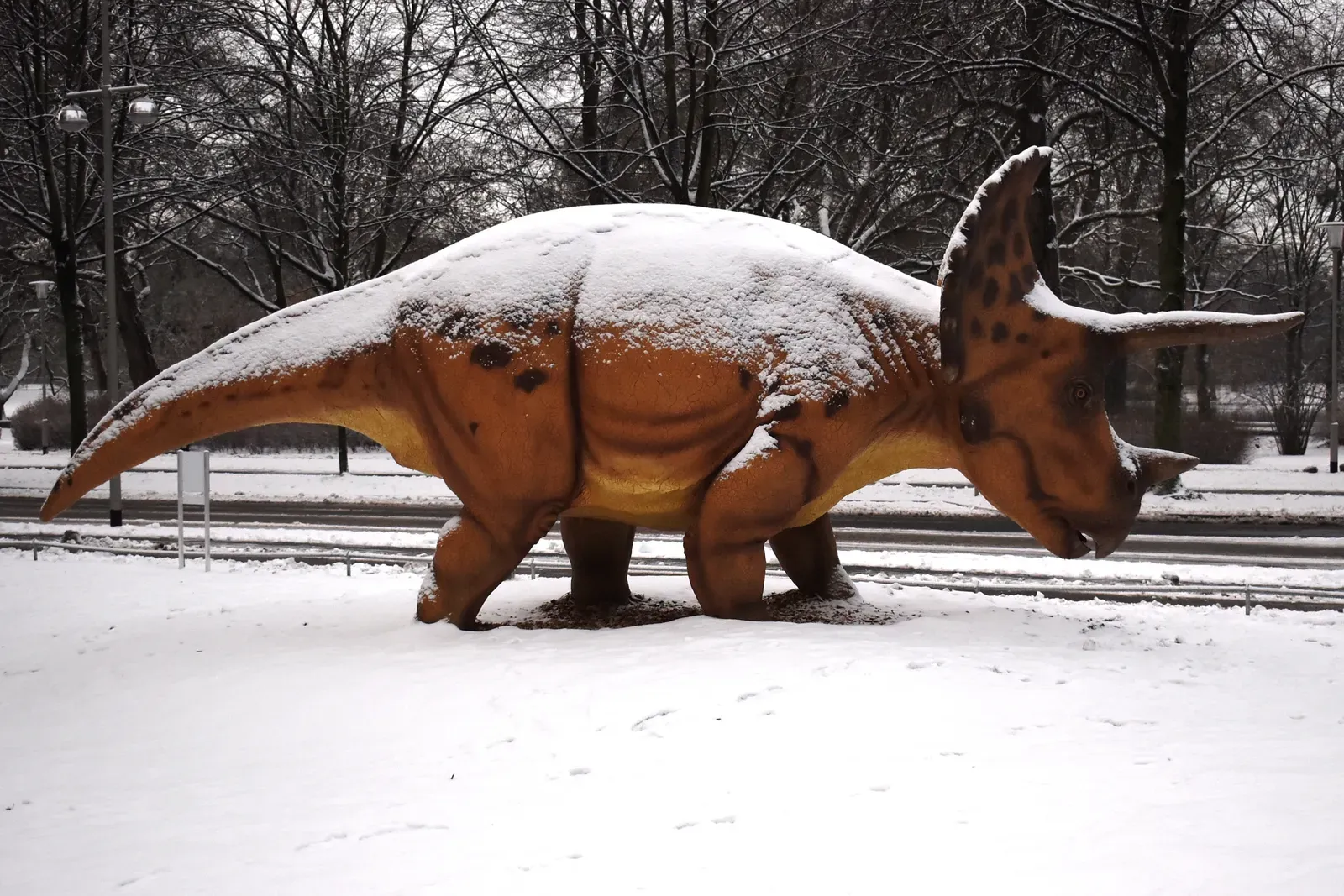
The first thing to remember about Triceratops is that it was a plant‑eater, not a predator chasing drama all day. It spent most of its life doing very ordinary things: walking, grazing, chewing, and moving between food and water sources, probably in areas that were lush with low‑growing plants. Its beak and rows of shearing teeth were designed to crop and slice vegetation, a bit like a living lawnmower with a built‑in food processor. Most of its energy likely went into eating enough to fuel a body weighing as much as an elephant or more.
That lifestyle matters because it explains why “gentle” is a fair description for much of its behavior. Large herbivores today – think rhinos or bison – spend the bulk of their time quietly feeding and only switch into aggression when they feel threatened. Triceratops almost certainly fit that same pattern. Its long, heavy body, sturdy legs, and broad stance all suggest an animal that valued stability, not speed. It was not built like a sprinter or a pursuit predator; it was built to stay upright, keep its head steady, and power its way through a day’s worth of plants.
The Famous Horns: Weapons, Signals, or Both?
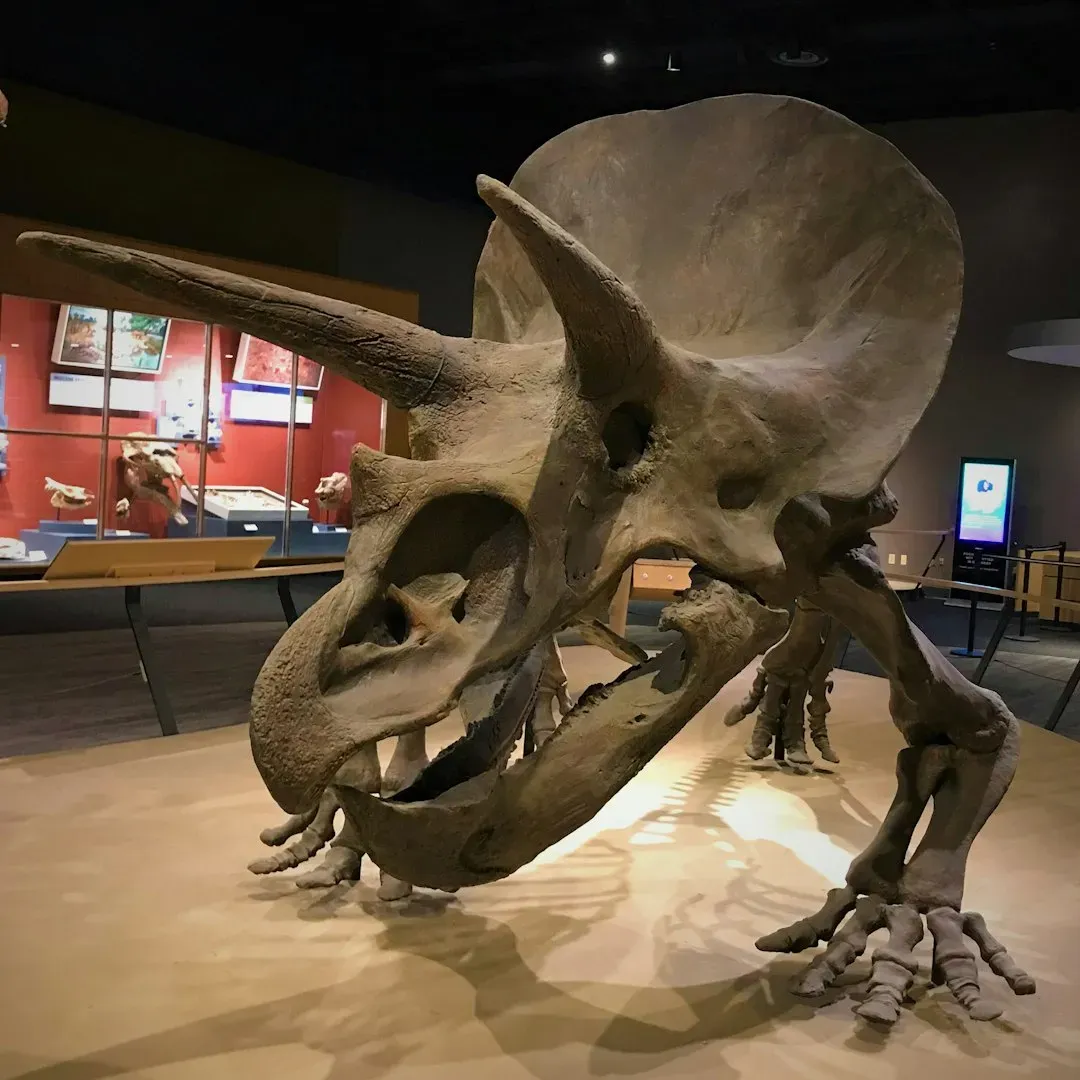
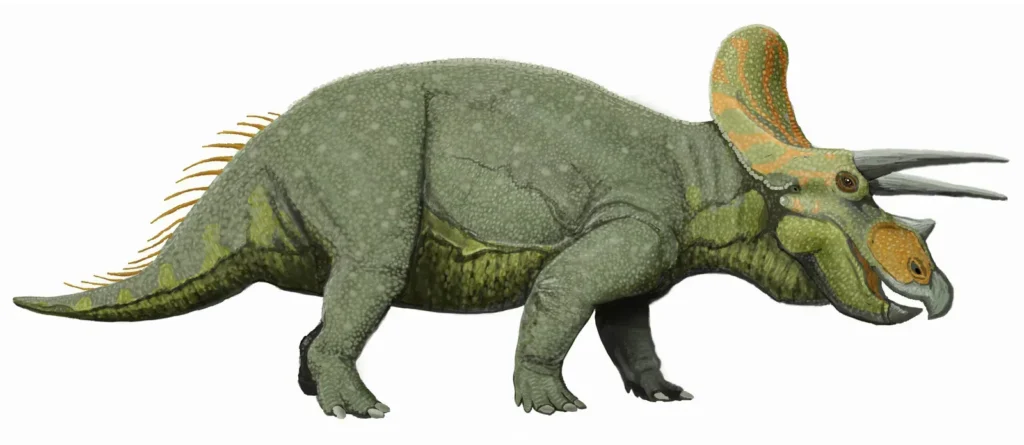
Those iconic horns are usually drawn locked with a Tyrannosaurus skull, but scientists have long wondered if that was their everyday purpose. The brow horns above the eyes could grow impressively long and thick, shaped more like spears than decorative spikes. At the same time, the smaller nose horn and the elaborate frill behind the head gave the skull a distinctive silhouette that would be hard to miss from a distance. That combination makes it hard to believe these features were just random or purely ornamental.
There’s good evidence that the horns were used in defense at least some of the time, because researchers have found healed injuries on Triceratops skulls that match the size and shape of another Triceratops horn. That suggests they sometimes locked horns with each other, a bit like modern antelope or deer testing strength. So the horns seem to have pulled double duty: broadcast signals about identity, age, or status, and serious weapons when necessary. In other words, they weren’t walking around in constant combat mode, but when things got tense, those horns were far from empty decorations.
The Frill: More Than Just a Bony Shield
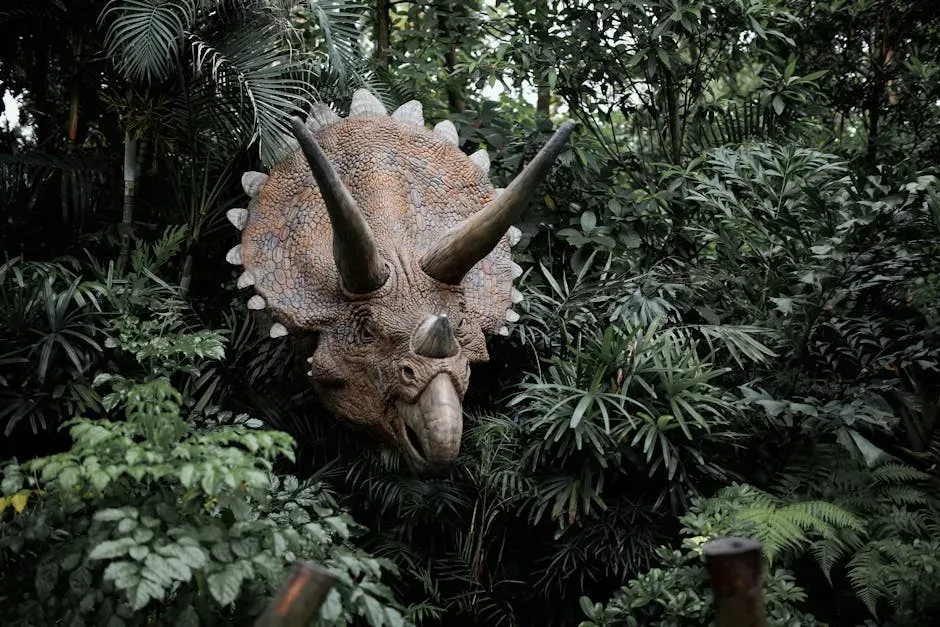
The frill of Triceratops – that broad plate of bone behind the skull – has sparked even more debate than the horns. At first glance, it looks like a simple shield protecting the neck from bites, and that’s probably one of its jobs. A predator going for a killing throat bite would meet bone instead of soft tissue, which is a powerful discouragement. The strong neck muscles anchoring to the frill would have helped Triceratops hold its head low and solid, turning the front half of its body into a kind of armored wedge.
But there are details that hint at a more subtle role. Blood vessels and surface textures preserved on some skulls suggest the frill may have supported a layer of keratin, skin, or even bright coloration in life. That opens the door to the idea that the frill functioned as a display board: advertising health, maturity, or readiness to mate. If that’s right, then Triceratops used the same piece of anatomy for both social communication and defense. It’s like wearing a sturdy motorcycle helmet that also happens to be a neon billboard about who you are.
Size and Stance: Intimidation as the First Line of Defense
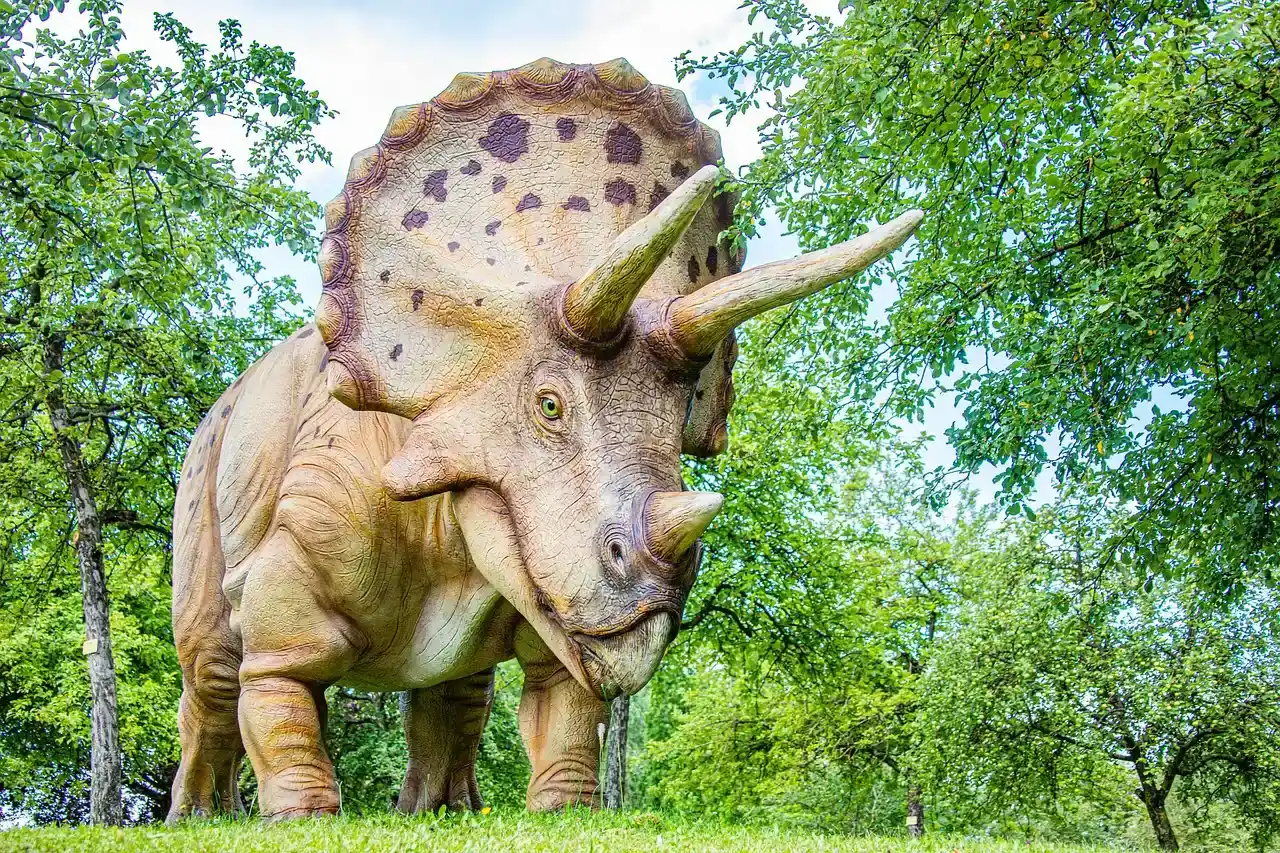
One of the most underrated defensive tactics of Triceratops was simply being huge. Predators think in terms of risk versus reward, and attacking a fully grown multi‑ton animal with a wall of bone and horns at the front is a serious risk. Just like lions today rarely bother with the biggest, healthiest buffalo in a herd, large Cretaceous predators would have weighed their options. Often, the safest move would have been to leave a healthy adult Triceratops alone and search for easier prey, like juveniles or smaller herbivores.
Its body design amplified that natural intimidation. Triceratops carried most of its bulk low to the ground with pillar‑like legs directly under its body, creating a stable base. That posture is awful for sprinting, but great for holding a firm position or driving forward in a short, powerful charge. A low center of gravity also meant that knocking it over would have been extremely difficult. Standing your ground only works as a tactic if you can actually stay standing, and Triceratops seems to have been very good at that.
Social Behavior and Safety in Numbers
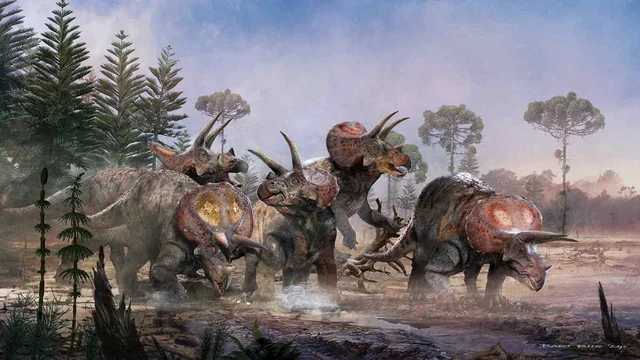
While there is still healthy debate about just how social Triceratops was, there are signs that these dinosaurs sometimes moved or lived in groups, especially when young. Other horned dinosaurs show clear evidence of herd behavior, including mass bone beds where many individuals died together. Even if Triceratops was not as strictly herding as some of its relatives, it likely benefited from at least loose group living, particularly for juveniles that were more vulnerable to predators. Being near adults with horns is a pretty good insurance plan if you are small and tasty.
In modern ecosystems, grouping up is one of the simplest and most effective defenses available to herbivores. Herds make it harder for predators to single out one individual, allow many eyes and ears to detect danger earlier, and can even coordinate movements that confuse an attacker. Triceratops probably enjoyed many of those same advantages when it was not alone. I like to picture a mixed group spread across a floodplain, with younger animals shadowing adults; a predator sizing up that scene would have to think twice before making a move.
Turning the Head into a Living Shield and Spear
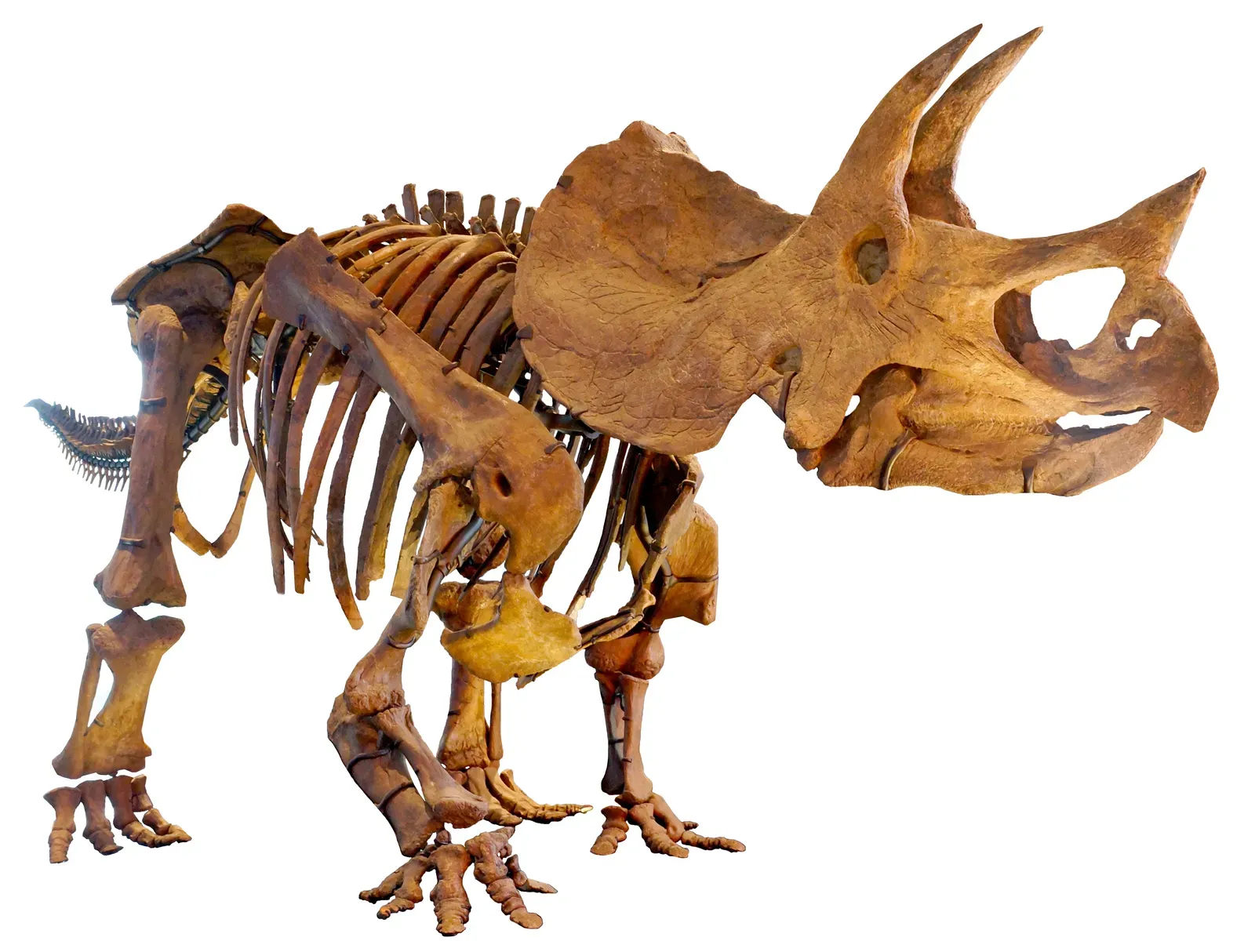
When we imagine Triceratops defending itself, we often picture a dramatic charge, but its most effective tactic may have relied on subtle positioning. With the head held low and the horns pointing forward, the entire front end of the dinosaur essentially turned into a shielded spear. Instead of leaping or swiping, it could simply face the threat, brace its legs, and present an uninviting wall of bone and horn. That is a very different style of defense from a predator’s agile darting; it is about deterrence more than pursuit.
If a confrontation escalated, a short, powerful thrust of the head and body could transform that deterrent into a serious attack. Evidence of horn punctures in the bones of large predators suggests that at least some carnivores got too close and paid the price. I often think of this as the dinosaur equivalent of a person who is calm and soft‑spoken until truly cornered, and then suddenly becomes unshakable. Triceratops likely relied on posture, angles, and timing to turn a seemingly slow body into a devastating defensive machine when there was no other choice.
Why “Gentle Giant” Still Makes Sense
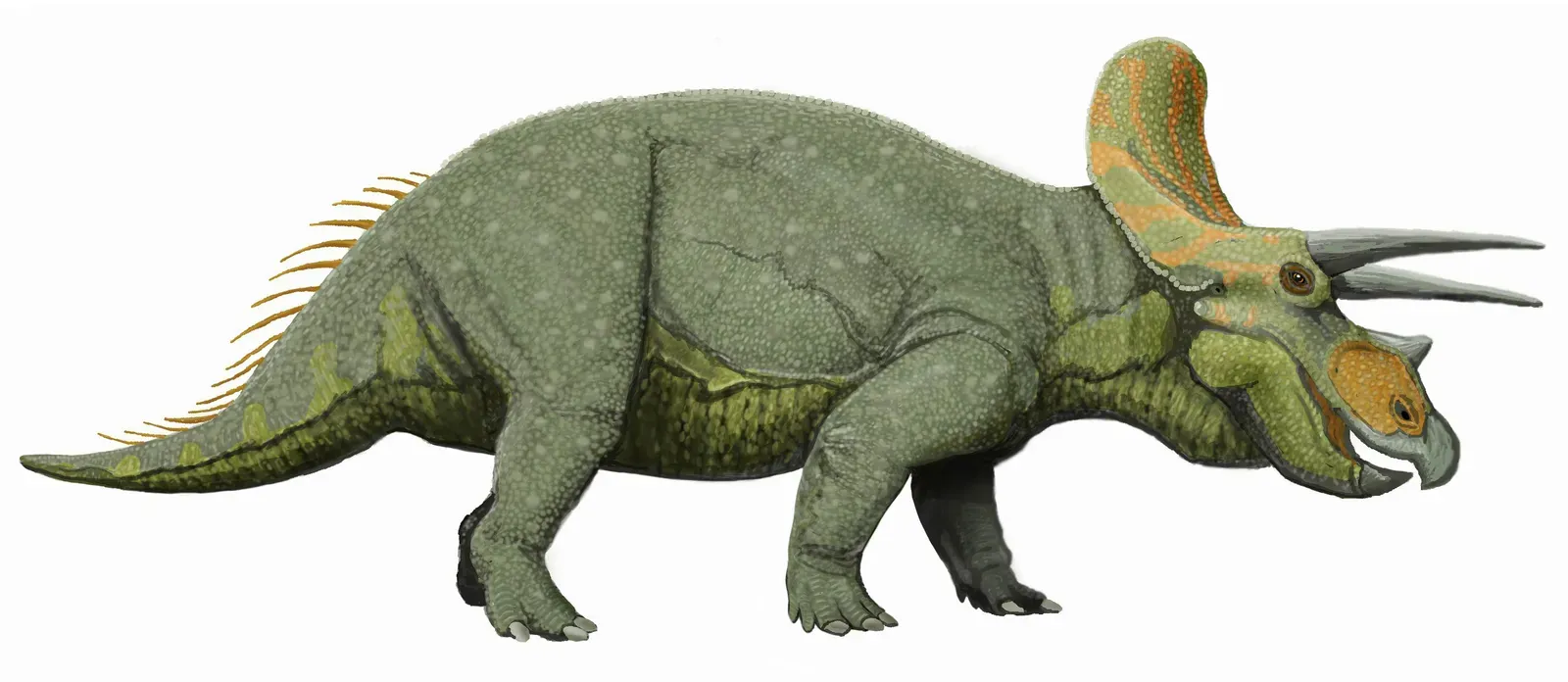
With all this armor and weaponry, calling Triceratops gentle might sound odd at first, but it actually fits once you remember how rarely wild animals seek out fights. True aggression is expensive: injuries heal slowly, infections are a real danger, and time spent fighting is time not spent feeding or reproducing. A dinosaur that survived long enough to grow massive horns and thick frills had already won many rounds of that quiet, everyday struggle. Its best strategy was to avoid needless conflict and only unleash its full defenses when absolutely required.
To me, that combination of calm routine and extreme potential makes Triceratops strangely relatable. It was a creature adapted to a busy, dangerous world, relying on visibility, size, and smart body design to keep problems at arm’s length. Only when a threat crossed a line did the situation flip into something brutal and high‑stakes. That balance – peaceful most of the time, but fully prepared when pushed – is exactly why this dinosaur deserves to be seen as a gentle giant with surprisingly sophisticated defensive tactics, not just a static skull on a museum wall.
Conclusion: Rethinking Power, Peace, and the Triceratops
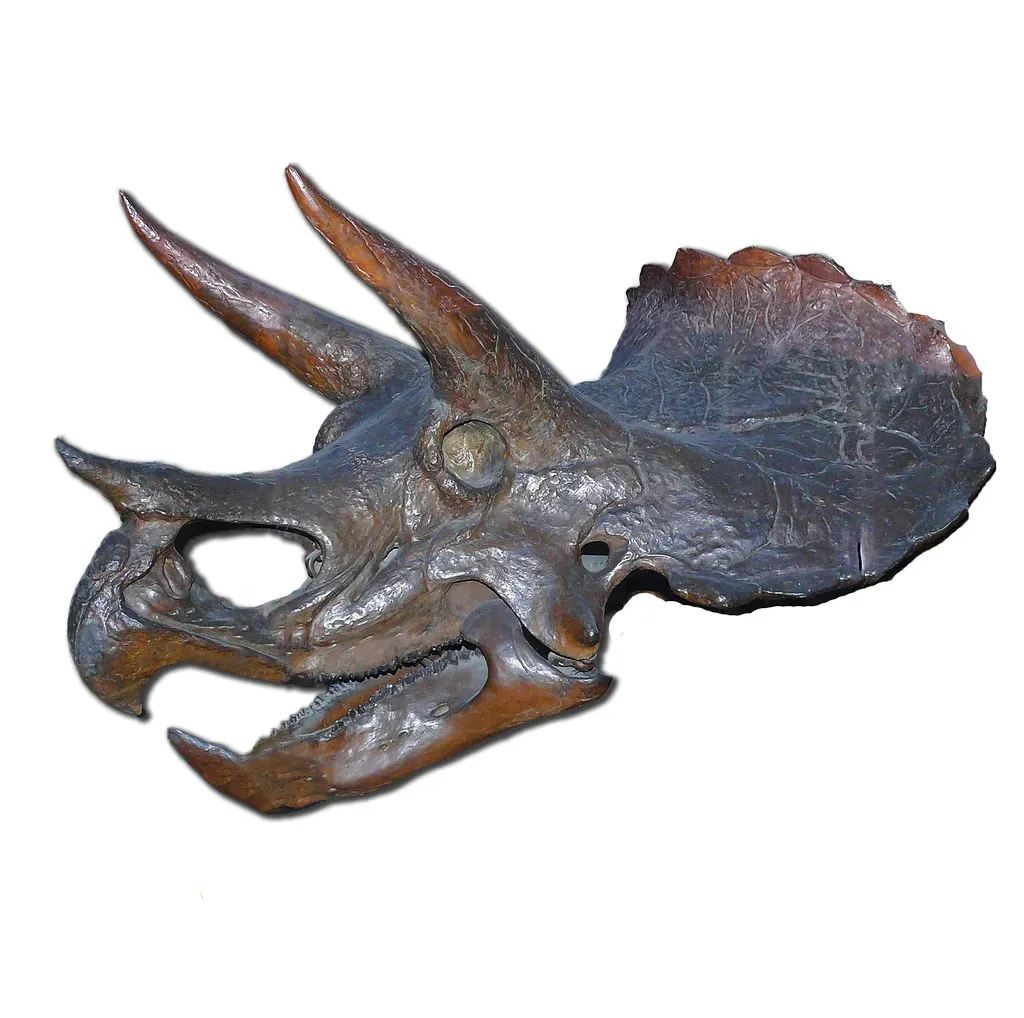
Looking at Triceratops through a modern lens, it stops being just a monster from a children’s book and starts to feel like a real animal with a layered survival strategy. It used size, posture, group living, visual signals, and then horns and frill as its ultimate backup plan. That is a surprisingly elegant way to navigate a world full of predators armed with teeth and claws. Instead of charging around in constant battle, Triceratops seems to have invested in not needing to fight very often at all.
My own take is that we tend to romanticize the violence and underestimate the intelligence of that approach. There is something oddly inspiring about a creature that carried so much power yet appears to have used it sparingly, holding it in reserve for the worst moments. In a way, Triceratops reminds us that real strength often looks like calm, restraint, and good positioning, not nonstop aggression. The next time you see that familiar three‑horned skull, it might be worth asking yourself: was this dinosaur more warrior, or wise guardian of its own peace?