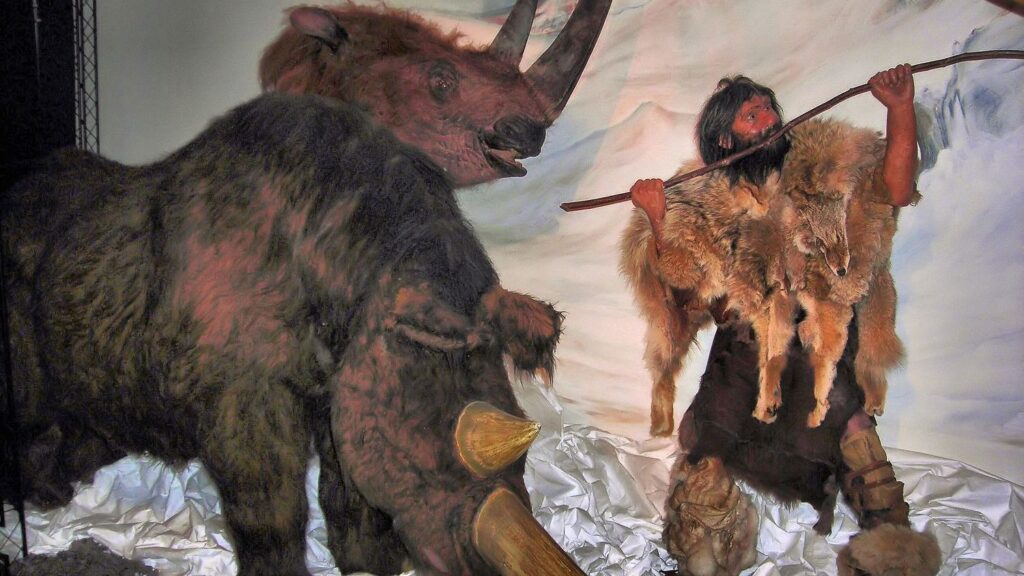
Imagine stepping foot onto a continent teeming with creatures so massive, so strange, and so powerful that today’s wildlife would barely compare. That was North America tens of thousands of years ago. Woolly mammoths the size of small houses. Giant ground sloths tall enough to stare into a second-story window. Saber-toothed cats prowling the shadows. And wandering among them all – small bands of humans, armed with little more than sharpened stone and sheer audacity.
The story of how those first people related to, competed with, hunted, feared, and even partnered with the animals of ancient North America is one of the most gripping chapters in all of human history. It is a story full of surprises, unsolved mysteries, and a few findings that have genuinely forced scientists to rewrite the textbooks. So let’s dive in.
Who Were the First Arrivals, and When Did You Get Here?
Let’s be real – for decades, scientists thought they had this one figured out. The mainstream view held that the first humans entered North America by crossing a land bridge connecting Siberia to Alaska, somewhere around 14,000 years ago. It is believed that the peopling of the Americas began when Paleolithic hunter-gatherers entered North America from the North Asian Mammoth steppe via the Beringia land bridge, which had formed between northeastern Siberia and western Alaska due to the lowering of sea level during the Last Glacial Maximum. Straightforward enough, right? Well, not quite.
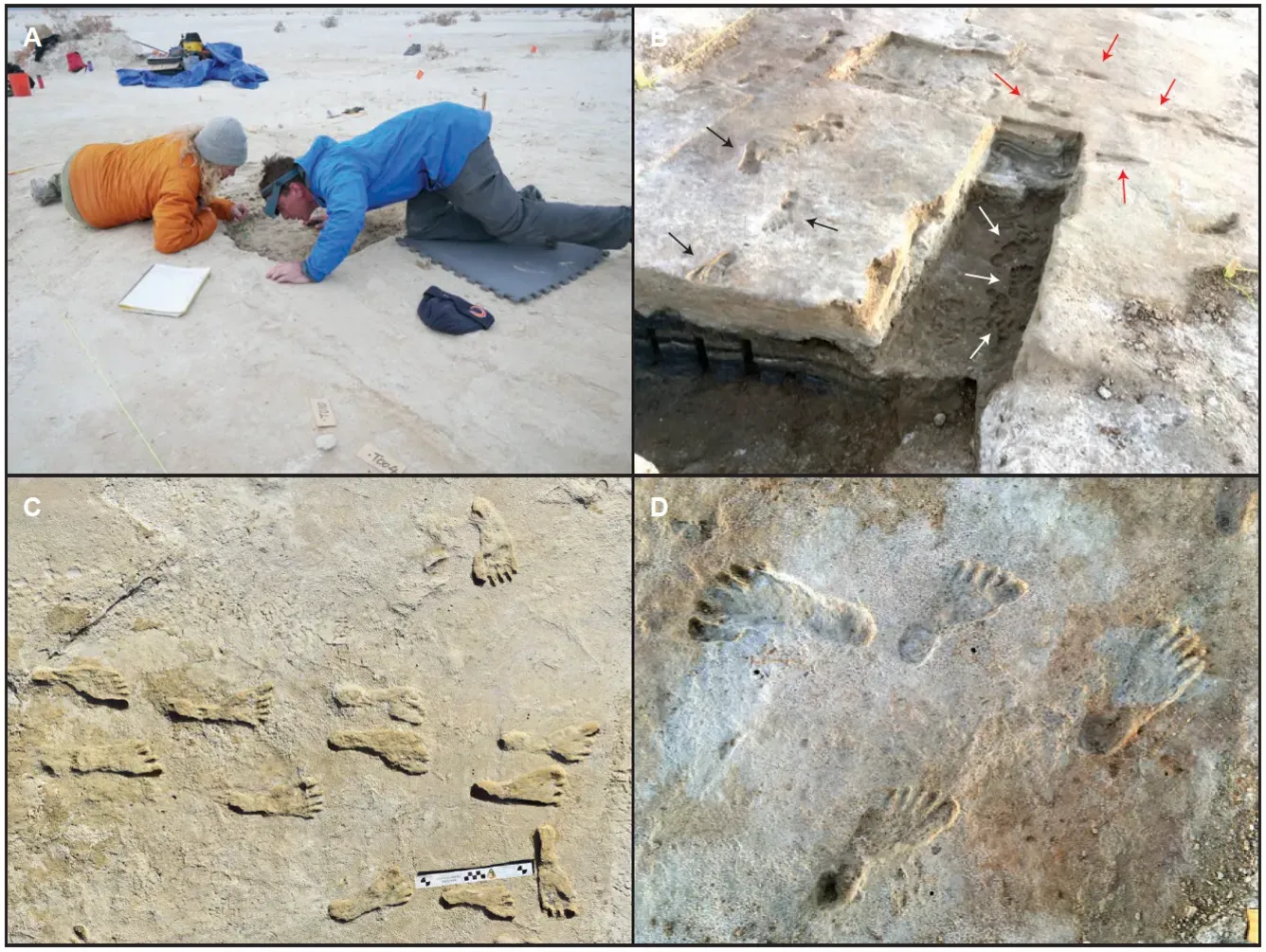
Then came the footprints that changed everything. Human footprints at White Sands National Park in New Mexico show that human activity occurred in the Americas as long as 23,000 years ago – about 10,000 years earlier than previously thought – and provide the earliest unequivocal evidence of human activity in the Americas. Think about that for a moment. Your ancestors were walking across a shallow lakebed in New Mexico during the peak of the Ice Age, at a time when enormous glaciers still sealed off most of the northern routes. It forces you to completely reimagine how and when the first people truly arrived.
A World Full of Giants: The Animals You Would Have Encountered
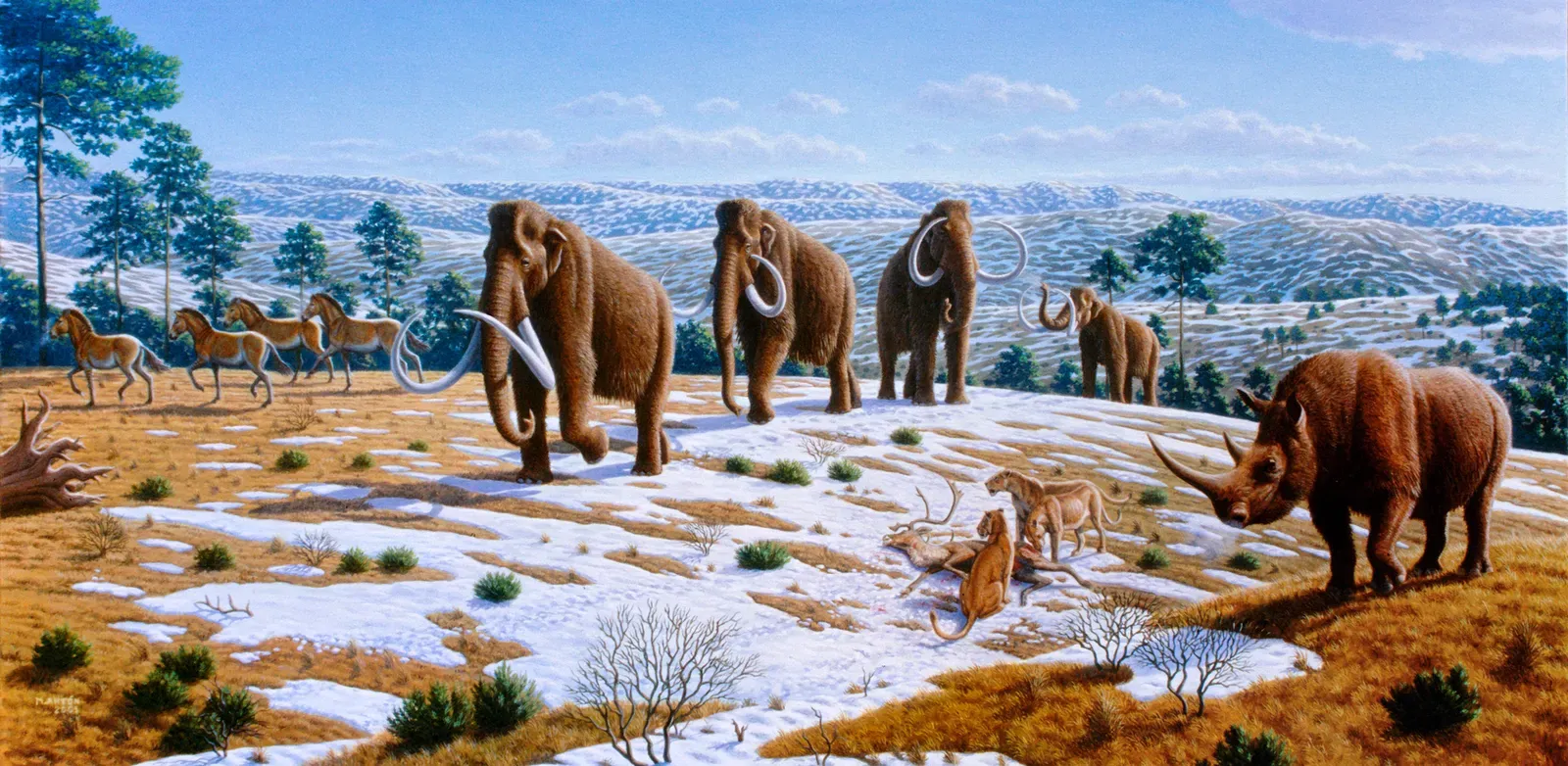
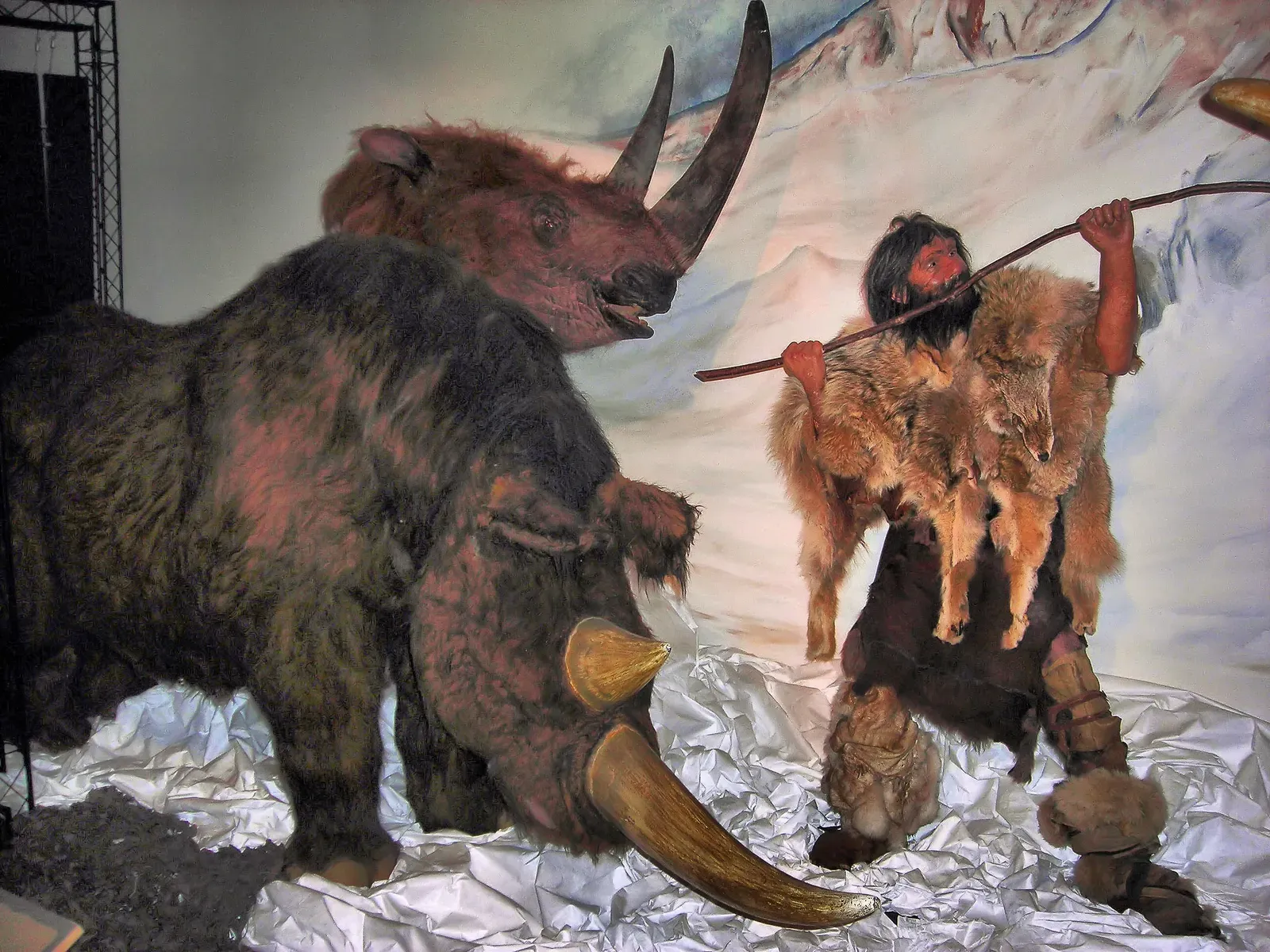
The earliest people who lived in North America shared the landscape with huge animals. On any day these hunter-gatherers might encounter a giant, snarling saber-toothed cat ready to pounce, or a group of elephant-like mammoths stripping tree branches. Honestly, it sounds less like a continent and more like the most dangerous safari imaginable. But that was simply Tuesday for Paleo-Indians.
About 13,000 years ago, North America had a mammal megafauna community that was more diverse than in modern-day Africa, including woolly mammoths, llamas, camels, ground sloths, short-faced bears, Smilodon, and cave lions. You would have shared your backyard – so to speak – with creatures you cannot even picture now. The giant short-faced bear was the largest carnivorous mammal to ever roam North America. Standing on its hind legs, an adult giant short-faced bear boasted a vertical reach of more than 14 feet. That is not an animal you want to meet on a dark path through the forest.
Tracking Footprints: What the Evidence Tells You About Coexistence
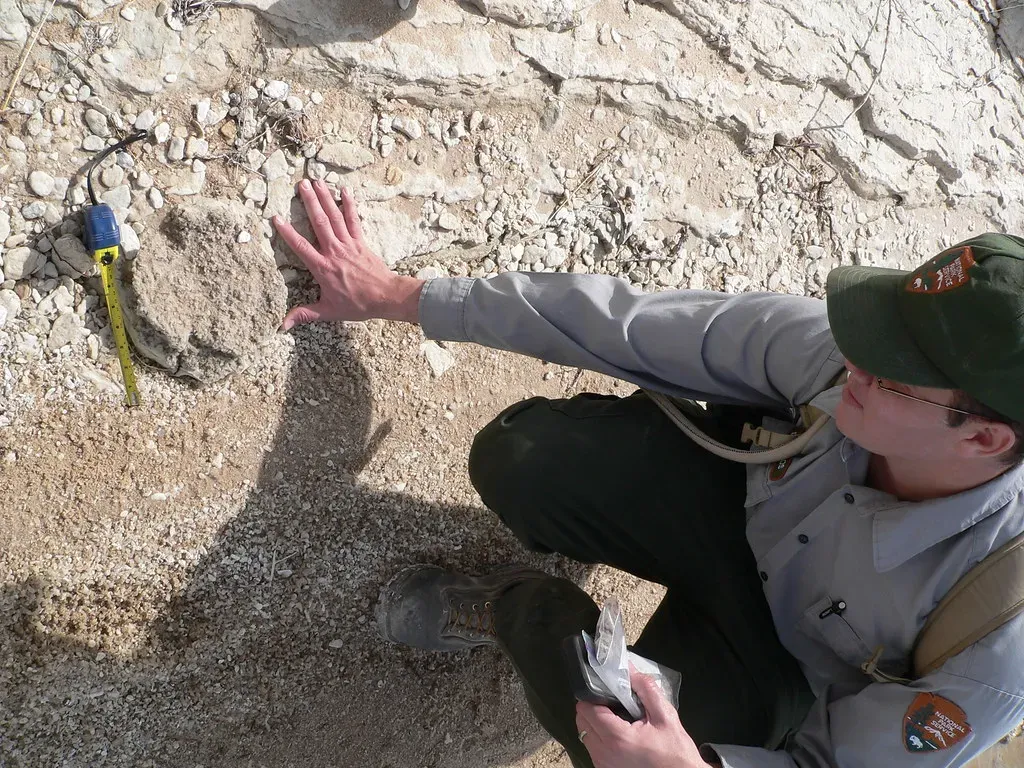
Here is something that genuinely gives you pause. Tracks of mammoth, giant ground sloth, dire wolves, and birds are also all present at the White Sands site. You are not looking at humans and animals from separate chapters of history. You are looking at their paths literally crossing in the same ancient mud, at the same time. That is coexistence in the most direct, physical sense possible.
The overlap of humans and megafauna for at least two millennia suggests that if people were hunting megafauna, the practices were sustainable, at least initially. This is a crucial point that often gets overlooked. The early relationship between humans and the megafauna was not immediately catastrophic. You could even argue that for a long stretch of time, a strange kind of balance existed between these ancient hunters and the enormous animals they shared the land with.
Tools, Tactics, and the Art of Hunting Big Game
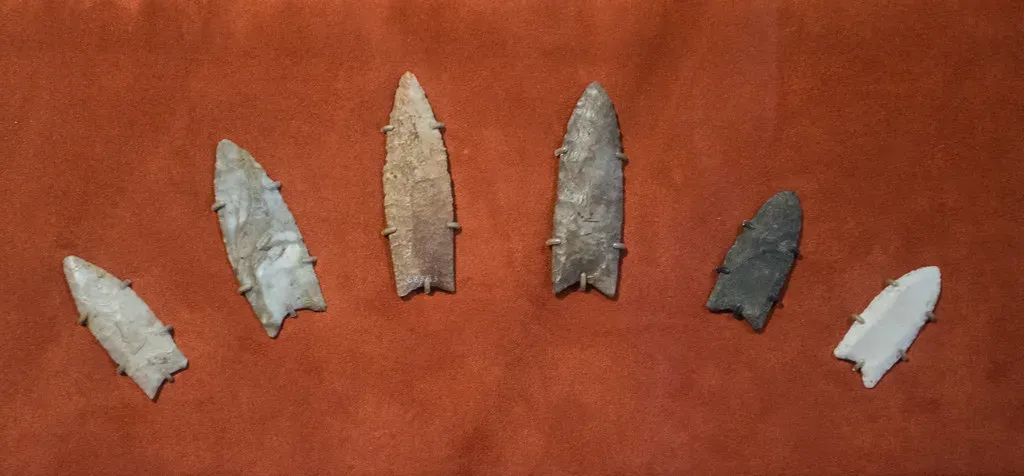
Around 13,000 years ago, the Clovis culture emerged in North America. They used finely crafted spear points. This innovation made it easier to hunt big game. Calling a sharpened stone a technological revolution might sound like a stretch, but consider what it meant for the early humans who wielded it. These tools changed the entire power dynamic between people and the dangerous creatures sharing their world. You were no longer just prey – you were a hunter in a serious, organized sense.
Early Paleo-American Clovis points have a distinct fluted shape, likely designed to facilitate hafting onto a spear or knife handle for use in hunting and butchery. These include iconic Clovis spearpoints with their distinctive flutes – concave areas left behind by removed stone flakes that extend from the base to the middle of the point. People most likely made the points this way so they could easily affix them to a spear shaft. Imagine the ingenuity that went into engineering a weapon perfectly shaped for both killing and processing an animal the size of an elephant. It was prehistoric precision engineering.
The Dire Wolves, the Saber-Toothed Cats, and the Predators You Feared
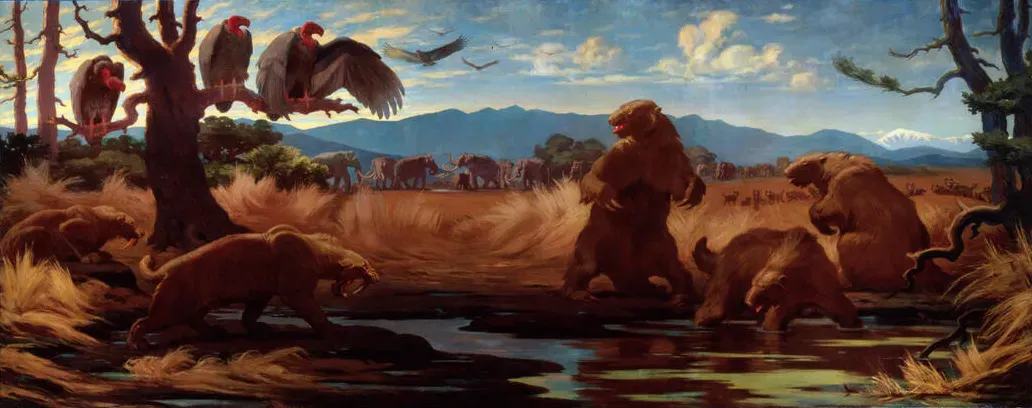
You did not just interact with the animals you hunted. Some animals were hunting you right back. Dire wolves were a canine species that hunted the plains and forests. They were similar to modern grey wolves, but heavier, with bigger heads, jaws and teeth giving them a strong bite, ideal for killing large prey like camels, horses, and bison. These were not the direwolves of television fantasy. They were real, effective killing machines that roamed virtually every corner of the continent.
Twenty thousand years ago, lions roamed the entire planet. The American cave lion called this continent home and was one of the largest known cats, almost twenty-five percent bigger than the lions we see in Africa and India today. It stood 1.2 metres at the shoulder and weighed up to 420 kilograms. It is hard to even fully grasp what it must have felt like to live alongside something like that. Ancient ancestors likely utilized spears and hunted these animals in groups to fight off these impressive predators. While ambush attacks on prey helped the deadly cat survive for years, they began to die out between 8,000 and 10,000 years ago.
The Dog That Crossed the Land Bridge With You
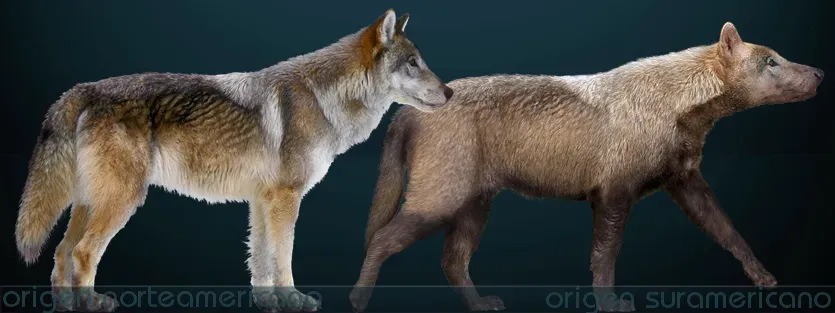
Of all the animal relationships forged by early North Americans, none is more profound or more personal than the one with dogs. And here is something remarkable you might not have known: you did not befriend dogs after you arrived in America. You brought them with you. Dogs were domesticated in Siberia by approximately 23,000 years ago, possibly while both people and wolves were isolated during the harsh climate of the Last Glacial Maximum. The archaeologically documented presence of dogs in the Americas by at least 10,000 years ago suggests that dogs accompanied the early human groups who moved from northeast Asia across the Bering Land Bridge into the Americas.
A study suggested that dogs were actually domesticated twice, in Europe and Asia, but another study published later pushes back on these results and suggests one domestication but provides evidence that this event took place even earlier, occurring between 20,000 and 40,000 years ago. Recently published research has also unearthed genetic traces of a “New World Dog” that migrated with humans across the Bering Strait. These dogs are thought to be descended from dogs domesticated in Siberia roughly 23,000 years ago. It’s hard to say for sure exactly how it all unfolded, but the partnership between humans and dogs is ancient, intimate, and deeply woven into the story of how your ancestors survived the American continent.
Animals as Spirit and Symbol: The Sacred Bond Beyond Survival
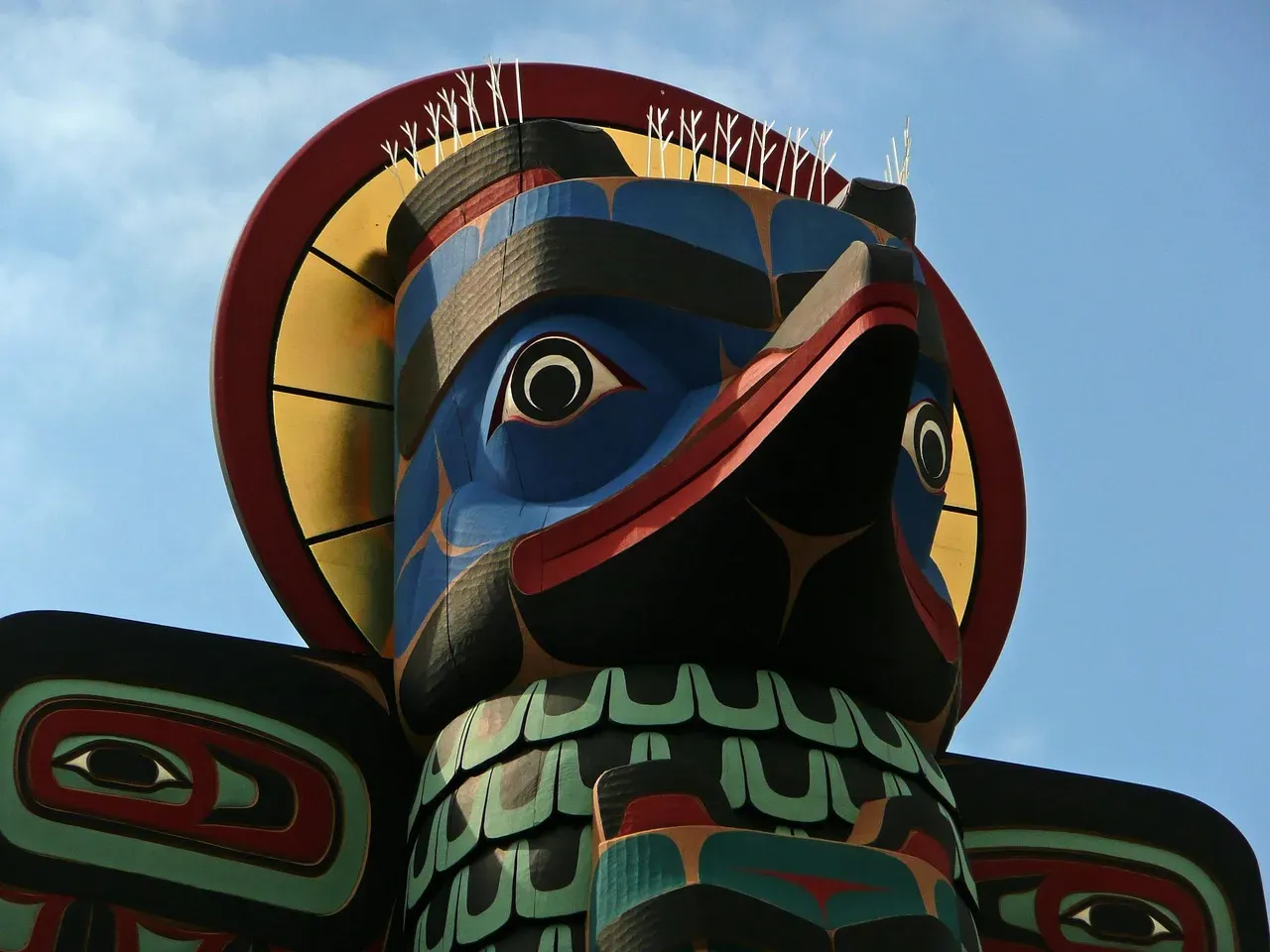
Not every interaction between early North Americans and animals was about food or danger. For many Indigenous cultures across the continent, animals occupied a central place in the spiritual cosmos. Native Americans practiced animism, in which all creatures and objects are believed to possess a soul. This means that not only are animals and plants perceived as alive and sentient, but also rocks, rivers, shadows, thunder, and other types of weather systems. Your relationship with the animal world was not purely practical. It was existential.
Through individual connection to the spirits within everything, the identity of the typical Native American could be said to expand beyond his or her own body to include the natural setting, and particularly the animals within it. Specific examples include the animal guides that young males received during vision quests, the animal ancestors of Northwest Pacific tribes, and the integral role animals played within creation stories. In Native American traditions, animals are sometimes used to communicate the values and spiritual beliefs of Native communities. Animals’ importance is also evident in the creation stories of many tribes. Animal imagery is often used to share family, clan, and personal stories. You were not just surviving alongside these creatures. You were learning from them, honoring them, and weaving them into the very fabric of your identity.
Conclusion: A Relationship That Shaped Everything
The is not a simple one. It is layered, complex, and still unfolding as new discoveries continue to reshape what we thought we knew. You had your ancestors arriving far earlier than expected, living alongside creatures that dwarf anything alive today, forging the world’s oldest inter-species partnership with wolves turned dogs, and building entire spiritual worldviews around the animals they depended on.
What you take away from this story matters. Ending up on the business end of a spear had such a significant impact on large mammals because they have a naturally slow replacement rate. Gestation periods are long, and so is the process of maturation. The 46 species of megaherbivores that have been lost to history simply could not have reproduced fast enough to offset human kills. The decisions your ancestors made, whether driven by survival, hunger, or spiritual practice, reverberated through ecosystems in ways that still echo today.
The ancient humans who walked beside mammoths in New Mexico, who crossed a frozen world with their wolf-companions, who offered prayers to the bear before the hunt – they were not so different from you. They were just navigating a far wilder world. What do you think that kind of relationship with nature felt like? Tell us in the comments.