Imagine waking up one morning and finding out that your house has been quietly stretching in every direction all along. Not just your house, but your entire neighborhood, your city, your continent – everything – slowly pulling away from everything else, and the faster it gets, the faster it keeps going. That is, in a very rough sense, what astronomers realized about our universe: space itself is expanding, and the expansion is speeding up rather than slowing down. That single discovery flipped modern cosmology on its head and forced scientists to admit that something deeply mysterious is at work in the fabric of reality.
I still remember the first time I tried to visualize this: I pictured tiny galaxies drawn on a balloon and someone steadily blowing air into it. It felt strangely unsettling to think that there is no “outside wall” and no real center – just more and more space between everything. Now we know that this expansion is not just continuing but accelerating, driven by a kind of cosmic push we barely understand. And the more we measure, the clearer it becomes that the universe is not behaving the way we once confidently expected it to. That gap between expectation and reality is where this story gets truly wild.
The Shocking Moment We Realized the Expansion Is Accelerating
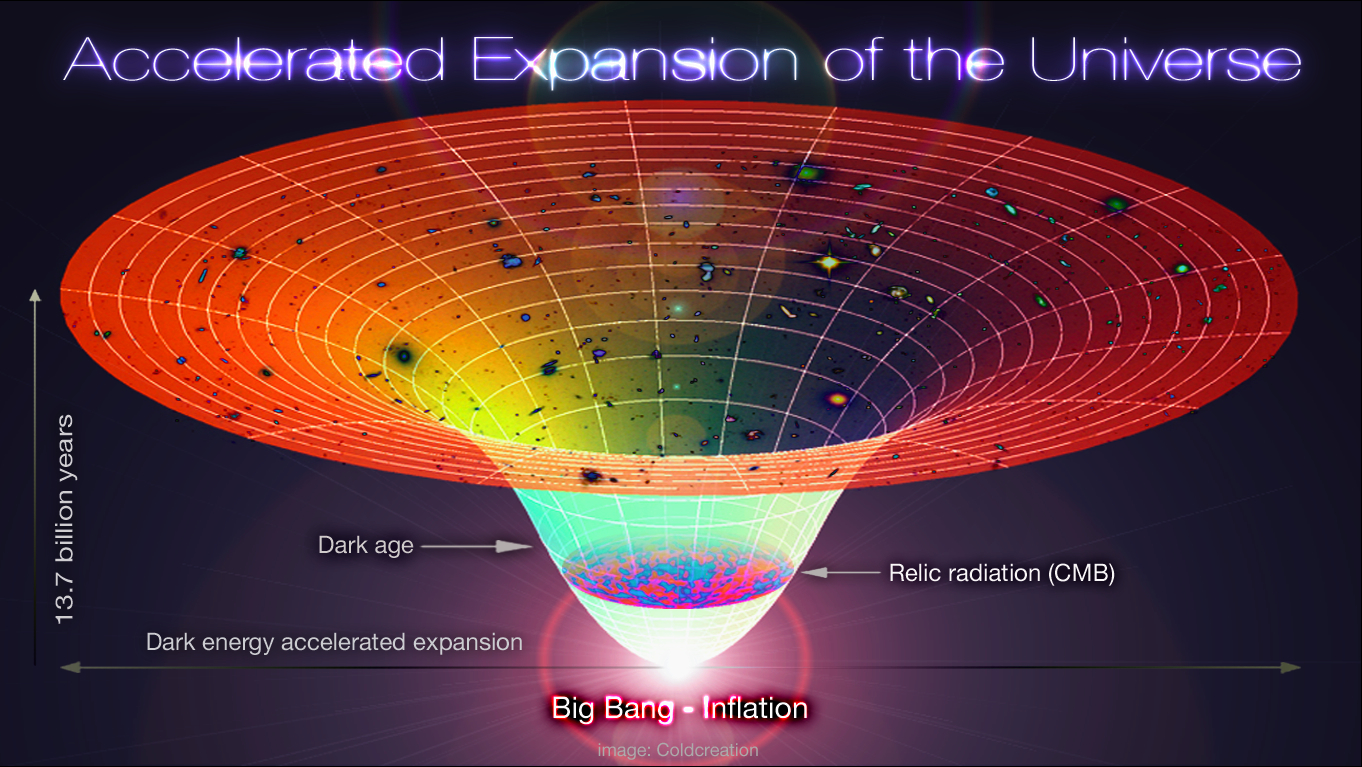
For most of the twentieth century, astronomers assumed that while the universe was expanding, gravity from all the matter in it would slowly tug that expansion back. The big debate was whether the universe would eventually halt and collapse in a “big crunch” or stretch forever, gradually slowing like a car running out of fuel. Then, in the late 1990s, two independent teams studying distant stellar explosions known as Type Ia supernovae stumbled onto something no one had seriously planned to find: those exploding stars looked dimmer than expected, meaning they were farther away than they should have been if the expansion were slowing.
What that implied was quietly revolutionary: the universe had not just been expanding, it had started speeding up. Instead of gravity putting on the brakes, something else seemed to be pressing the accelerator. When the results were first discussed, many scientists assumed someone had made a mistake, because the idea was so at odds with existing theories. But as more data rolled in from more supernovae, different telescopes, and better analyses, the conclusion held up. Cosmology went from asking how fast the universe is slowing down to asking what on earth is making it race ahead faster than ever.
Dark Energy: The Invisible Engine Behind the Cosmic Acceleration
To explain this runaway expansion, cosmologists introduced one of the strangest ideas in modern science: dark energy. Dark energy is not a substance you can scoop into a jar, and nobody has ever detected it in a laboratory. Instead, it is a name we give to the apparent effect that some unknown ingredient is having on the universe on the largest scales. Observations of the cosmic microwave background, galaxy clustering, and supernovae all point in the same direction: the vast majority of the energy content of the cosmos is in this invisible form that seems to push space apart.
If you break down the universe into a rough energy budget, ordinary matter – the stuff that makes up stars, planets, you, and me – is only a small slice. Dark matter, a separate invisible component that tugs with gravity but does not emit light, takes a bigger share. But dark energy dominates, accounting for most of the total cosmic energy. It acts a bit like a built-in pressure of empty space, driving the expansion to accelerate rather than fade. The scary and beautiful part is that, as far as we can tell today, we are living in a universe where this mysterious, unseen influence sets the long-term fate of everything.
Why Different Measurements of the Expansion Rate Do Not Agree
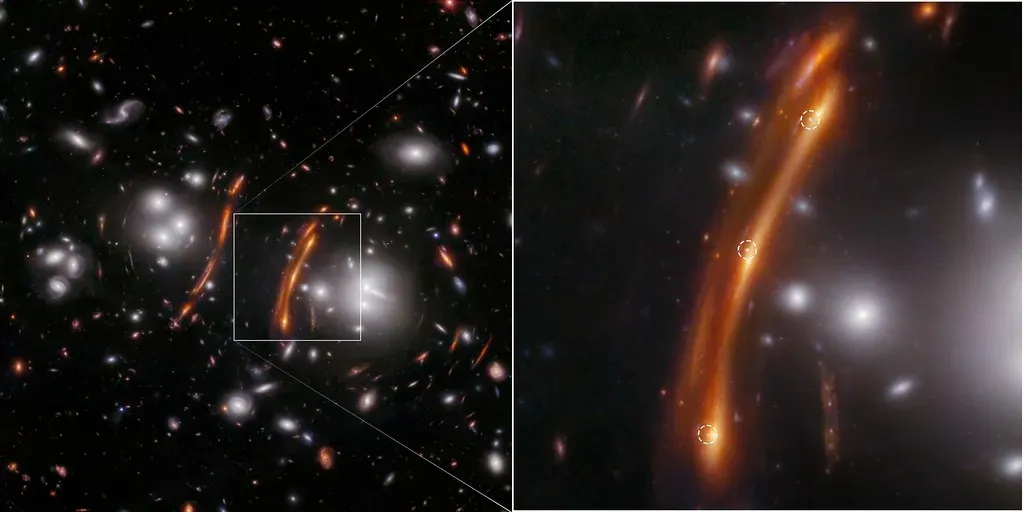
As if an accelerating universe were not puzzling enough, astronomers have run into another headache: different ways of measuring the current expansion rate do not quite match. One method, often called the “distance ladder,” uses relatively nearby stars and galaxies, standard candles like Type Ia supernovae, and very detailed calibration to estimate how fast galaxies are receding today. This approach tends to give a higher value for the expansion rate, meaning the universe is growing faster right now than some models predict.
Another method works almost in reverse, using the early universe’s imprint on the cosmic microwave background – the leftover glow from shortly after the Big Bang – to infer how rapidly space should be expanding today. That route, which leans on data from satellites that map this ancient light with extreme precision, points to a slightly slower expansion. The mismatch between these two carefully constructed measurements has become known as the Hubble tension. It may be a sign of subtle system errors in our observations, but it may also be the universe’s way of hinting that our theories are missing a crucial piece.
How We Measure an Expanding Universe from a Small Rock in Space
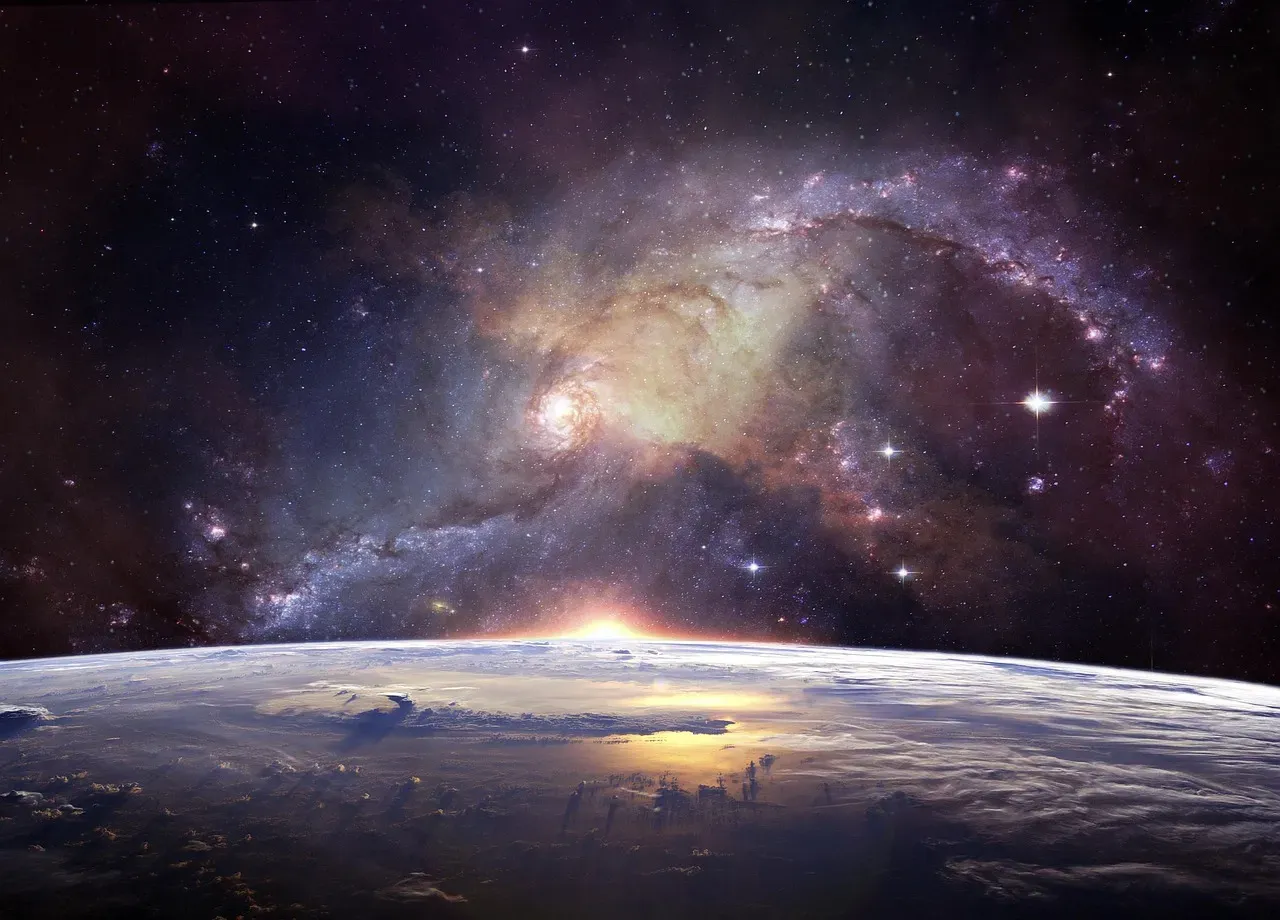
It feels almost absurd to think that from this tiny planet, orbiting an average star in a fairly ordinary galaxy, we can estimate the size and age of the visible universe. Yet that is exactly what modern cosmology does using sophisticated tools. When we say the universe is expanding, we are not watching galaxies fly like rockets through pre-existing space. Instead, we are measuring how the light from distant objects is stretched as space itself expands, a phenomenon known as redshift. The farther away a galaxy is, the more its light is shifted toward the red end of the spectrum, and the stronger that shift, the faster it appears to be receding.
Telescopes on the ground and in orbit collect this stretched light across many wavelengths, from radio to infrared to visible and beyond. Astronomers then combine those measurements with distance estimates obtained through several clever techniques: parallax for nearby stars, variable stars as distance markers, and supernovae that have remarkably uniform brightness at their peak. Each method locks into the next, like a nested set of measuring sticks. It is a delicate, error-prone process, but as instruments improve and surveys grow, our view of the expanding universe becomes sharper, even as the underlying mysteries grow deeper.
What a Faster-Than-Expected Expansion Means for Cosmic Destiny
The universe’s accelerating expansion is not just an abstract curiosity; it shapes how the entire story of time might unfold. In a universe where expansion slows, gravity could eventually win in some scenarios, pulling everything back together in a catastrophic collapse. In an accelerating universe dominated by dark energy, though, space keeps stretching faster, and distant galaxies drift ever farther beyond our cosmic horizon. Over unimaginably long timescales, the night sky would grow emptier as light from faraway galaxies can no longer reach us at all.
If dark energy stays constant, the expansion ramps up but does so in a relatively gentle way on human and even stellar timescales. If its strength changes over time, things get stranger. Some speculative models suggest a future where the expansion becomes so intense that it could eventually tear apart galaxy clusters, then galaxies themselves, and in the most extreme versions, even atoms in a so-called “big rip.” We are nowhere near certain that such a fate is real, and many physicists are skeptical of these more dramatic endings. Still, the fact that we must seriously consider such possibilities tells you how radically our picture of the cosmos has shifted.
The Hunt for New Physics: Are Our Theories Incomplete?
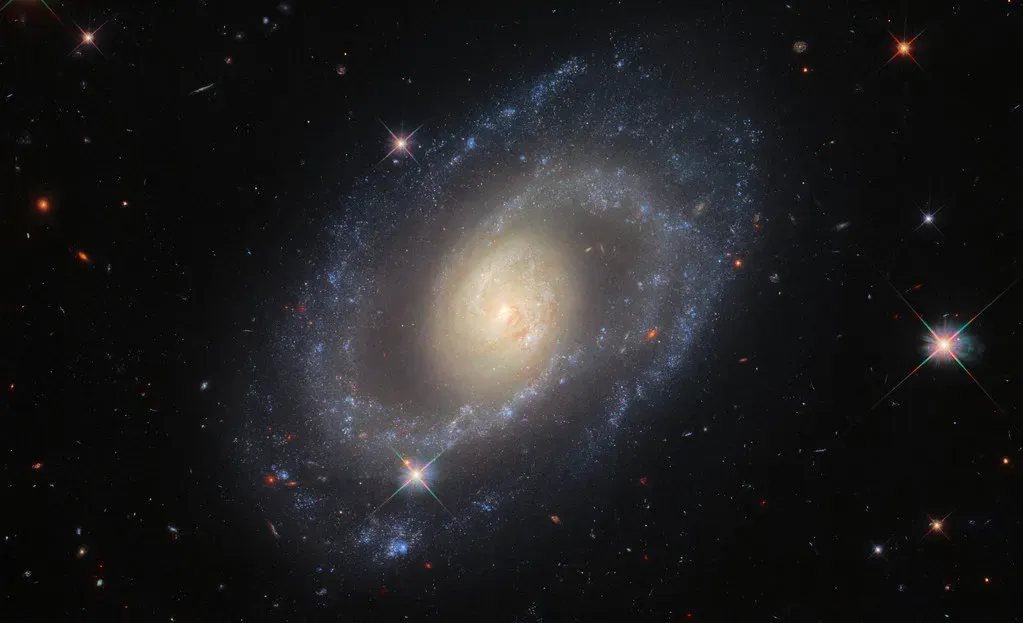
Every time astronomers sharpen their measurements and the numbers still refuse to fit neatly, the possibility grows that our core theories may need an upgrade. The standard model of cosmology rests on general relativity, Einstein’s powerful description of gravity, combined with assumptions about dark matter, dark energy, and the contents of the early universe. So far, this framework explains an impressive range of observations, from the distribution of galaxies to the pattern of tiny fluctuations in the cosmic microwave background. Yet the Hubble tension and the nature of dark energy both whisper that we might be missing something fundamental.
Some researchers are exploring the idea that dark energy is not a simple, constant property of space but instead evolves over time, changing its strength as the universe ages. Others are testing modified gravity theories, in which Einstein’s equations get subtle tweaks at very large scales. These are bold proposals, and they have to match a long list of existing data if they are going to survive. The truth is, we are in a rare and exciting phase where long-trusted ideas are being questioned not out of whim, but because precision measurements are forcing us to stretch our imagination about how the cosmos really works.
Living in a Runaway Universe: Awe, Anxiety, and Perspective
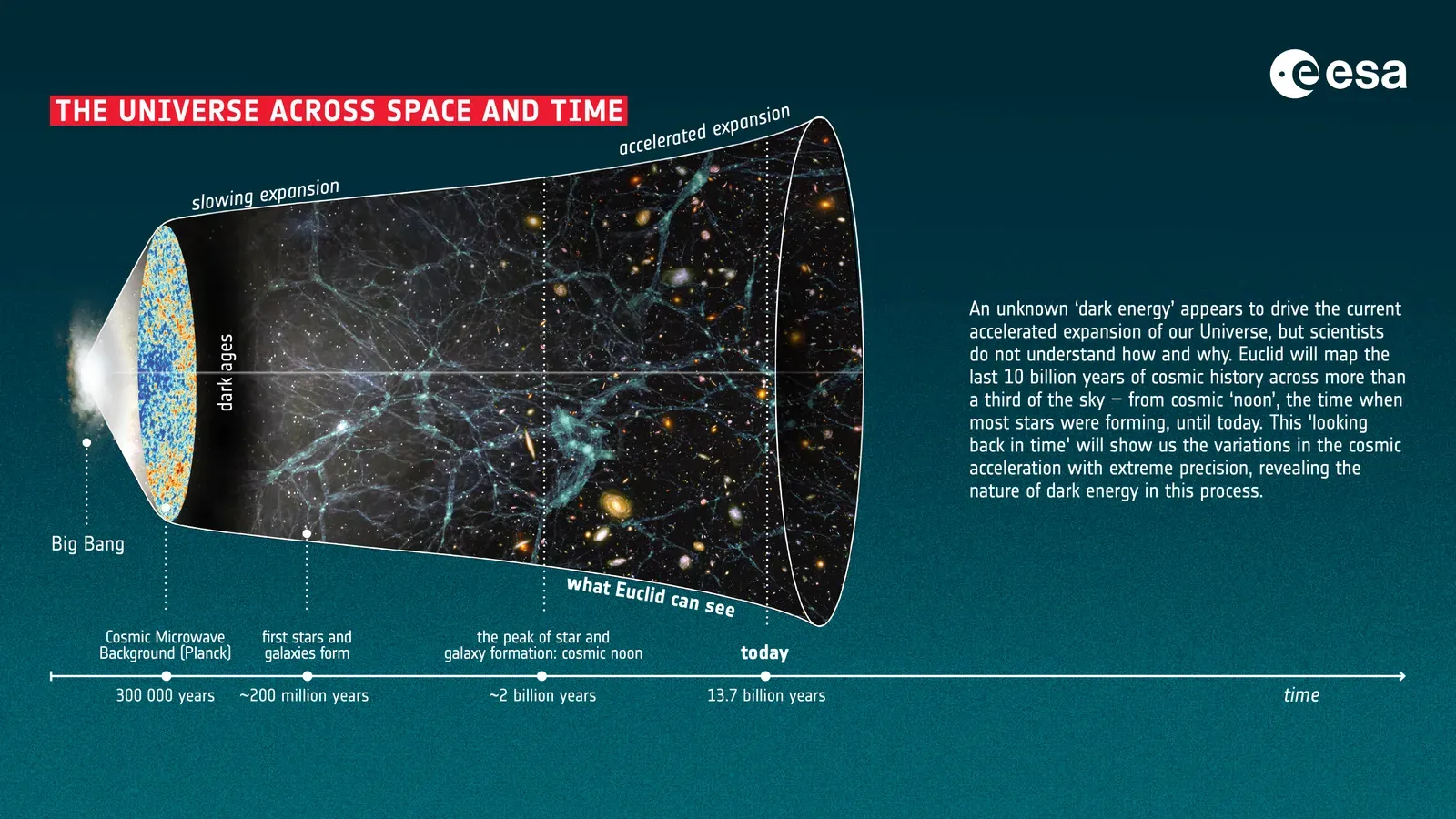
There is something emotionally strange about learning that the universe is not just expanding, but accelerating into an ever more isolated future. On one hand, it can feel a little lonely to realize that distant galaxies are doomed to slip beyond our sight, taking with them any chance of contact. The universe, in this picture, is like a crowd of people on an escalator where the steps get longer over time, pulling everyone farther apart so gradually that no one notices until it is far too late. It raises unsettling questions about meaning, permanence, and how tiny our place in this grand story really is.
On the other hand, I find it quietly inspiring that from our speck of rock, a species that only recently invented telescopes has pieced together even this much of the tale. The fact that we discovered the accelerating expansion at all is a testament to curiosity and stubbornness: people measured, remeasured, argued, and eventually accepted a result that nobody had gone looking for. In my view, the universe expanding faster than we imagined is not a sign that things are out of control; it is a reminder that reality is richer and stranger than our first guesses. The real tragedy would not be living in a runaway universe. It would be having a universe this surprising and never bothering to ask how it works. Did you expect the cosmos to be this wild?