Think about this for a second. You are picturing a Tyrannosaurus rex or a Brachiosaurus right now, aren’t you? Those colossal animals define an entire chapter of Earth’s history, but almost nobody talks about where they actually came from. The real story of the first dinosaurs is far stranger, humbler, and honestly more fascinating than the giants you know from museum halls and movies.
It begins not with a roar, but with a catastrophe. A world rocked by mass extinction, extreme heat, and relentless volcanic fury set the unlikely stage upon which some of the most extraordinary creatures to ever walk this planet would quietly make their entrance. You might expect dominance to begin with a bang. Instead, it started as a whisper.
So let’s dive into the untold origin story that shaped life on Earth as you know it today.
The World Before Dinosaurs: A Planet Recovering from Near-Total Collapse
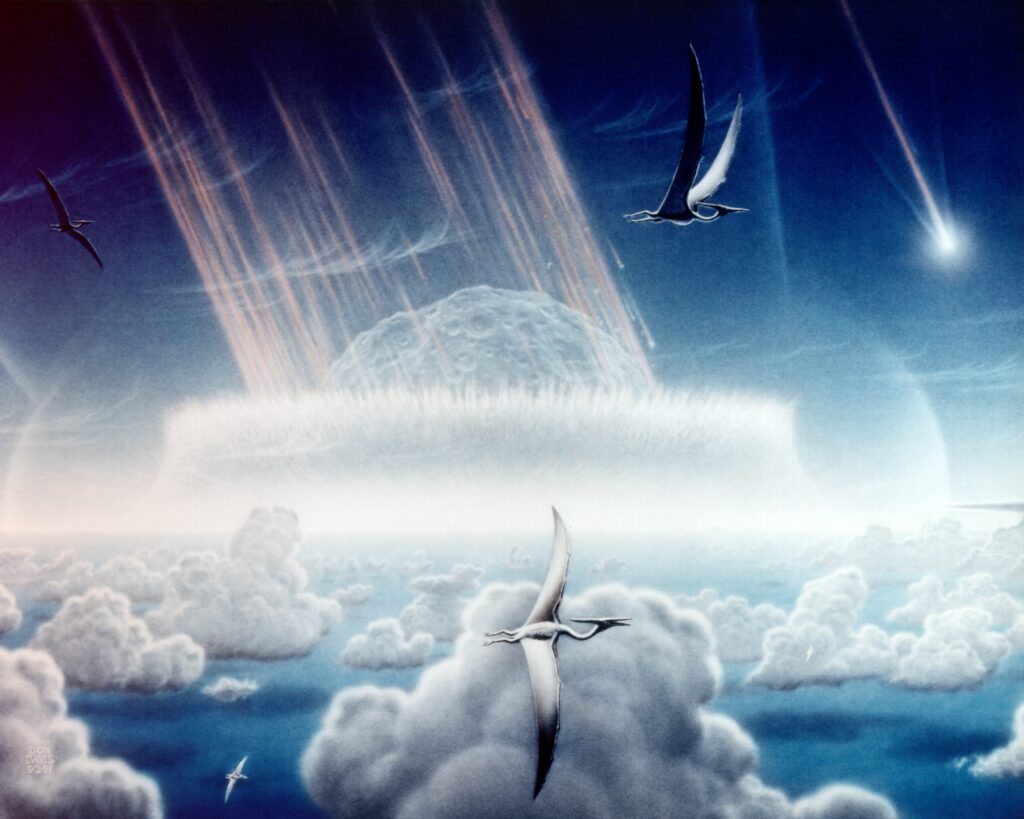
The Permian-Triassic extinction event, also known as the Great Dying, took place roughly 252 million years ago and was one of the most significant events in the history of our planet. Honestly, “significant” is a bit of an understatement. Dinosaurs diverged from their archosaur ancestors during the Middle to Late Triassic epochs, roughly 20 million years after the devastating Permian-Triassic extinction event wiped out an estimated 96% of all marine species and 70% of terrestrial vertebrate species.
The start of the Triassic period was a desolate time in Earth’s history. Something, whether a bout of violent volcanic eruptions, climate change, or perhaps a fatal run-in with a comet or asteroid, had triggered the extinction of more than 90 percent of Earth’s species. Yet it was also a time of tremendous change and rejuvenation. Life that survived the so-called Great Dying repopulated the planet, diversified into freshly exposed ecological niches, and gave rise to new creatures. The wreckage of one world became the foundation of another.
The Stage Is Set: What Triassic Earth Actually Looked Like
![The Stage Is Set: What Triassic Earth Actually Looked Like (I did myself based on [1], also I added it on my dinosaur website (the link is [2]), CC BY-SA 2.5)](https://nvmwebsites-budwg5g9avh3epea.z03.azurefd.net/dinoworld/b6d3179306e2ce1827034db401e5bf89.webp)
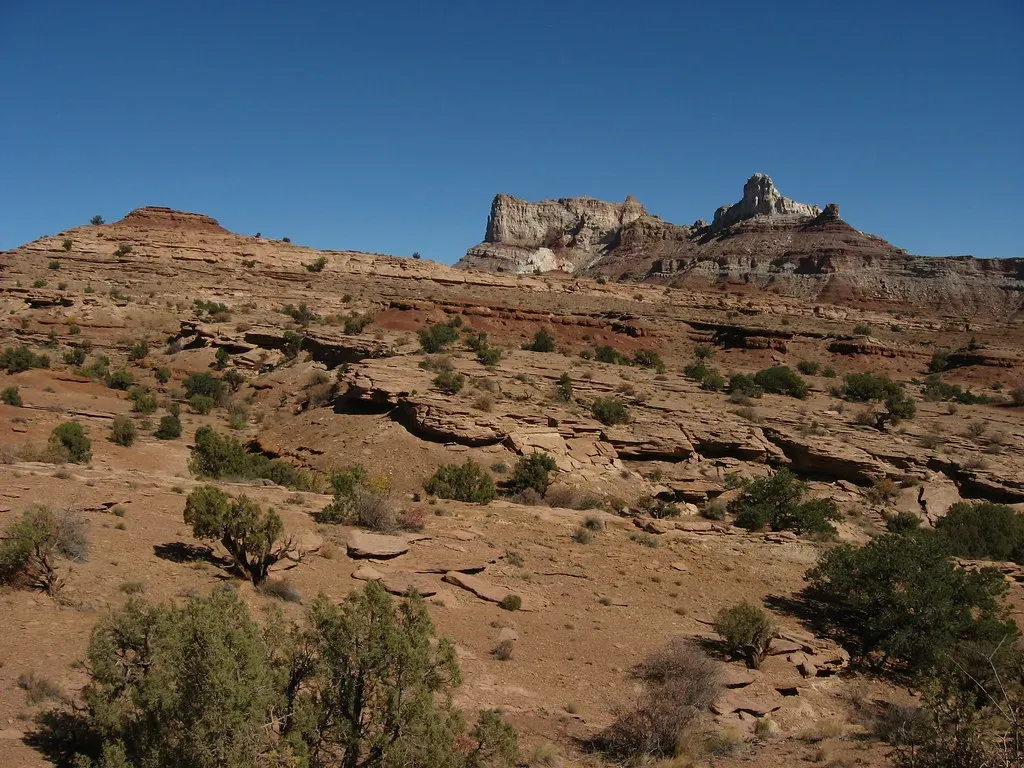
You might imagine the world of the early dinosaurs as lush jungle. It wasn’t. The vast supercontinent of Pangaea dominated the globe during the Triassic. The global climate during the Triassic was mostly hot and dry, with deserts spanning much of Pangaea’s interior. Think of it like one enormous continent baking under an unrelenting sun, with extreme seasonal swings near its coasts.
By the start of the Triassic, all the Earth’s landmasses had coalesced to form Pangaea, a supercontinent shaped like a giant C that straddled the Equator and extended toward the Poles. Almost as soon as the supercontinent formed, it started to come undone. By the end of the period, tectonic forces had slowly begun to split the supercontinent in two: Laurasia in the north and Gondwana in the south. This gradual tearing apart of the land would prove enormously important to everything that followed.
The First Dinosaurs: Surprisingly Small, Surprisingly Humble
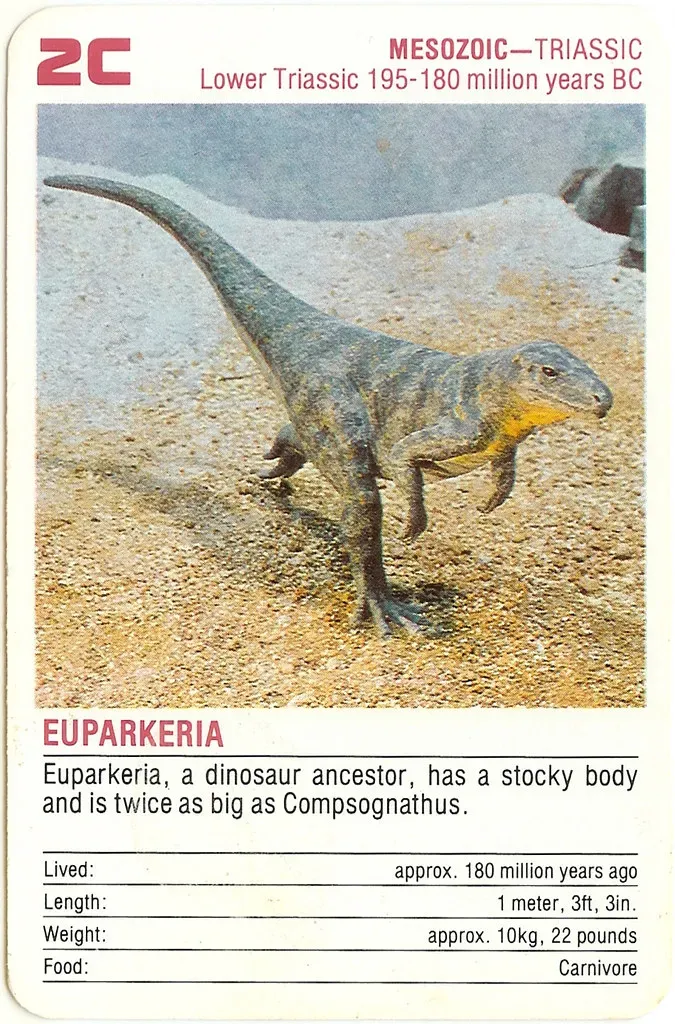
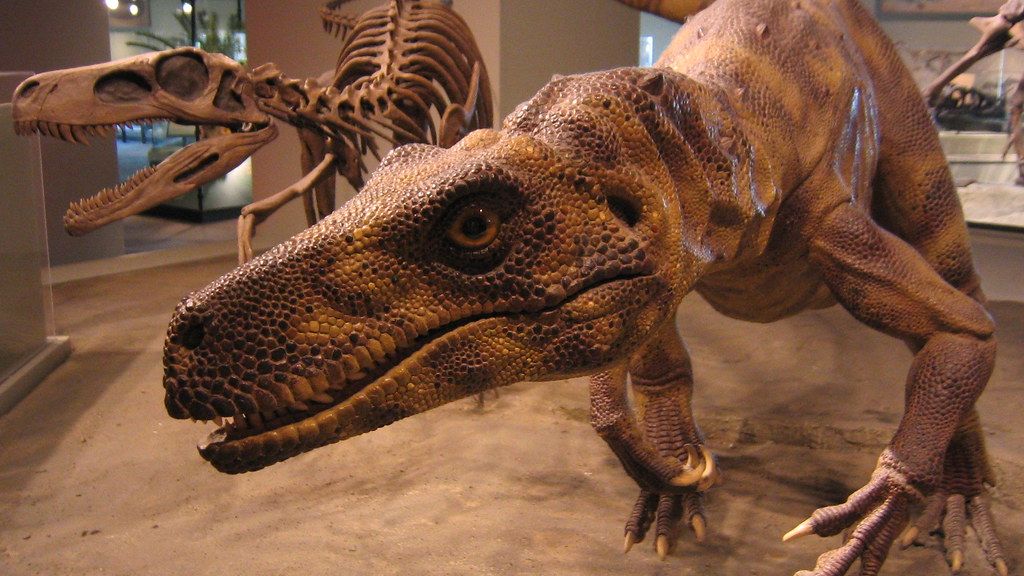
Here is the thing that surprises most people. It was around 240 million years ago that the first dinosaurs appear in the fossil record. These dinosaurs were small, bipedal creatures that would have darted across the variable landscape. There was no grand entrance, no immediate domination. You would have walked right past one without much alarm.
They first appeared during the Triassic period, between 243 and 233.23 million years ago, although the exact origin and timing of the evolution of dinosaurs is a subject of active research. When dinosaurs appeared, they were not the dominant terrestrial animals. They were simply one more small player in a busy, competitive world ruled by far larger and more established reptiles.
Where Did They Actually Come From? The Geographic Mystery
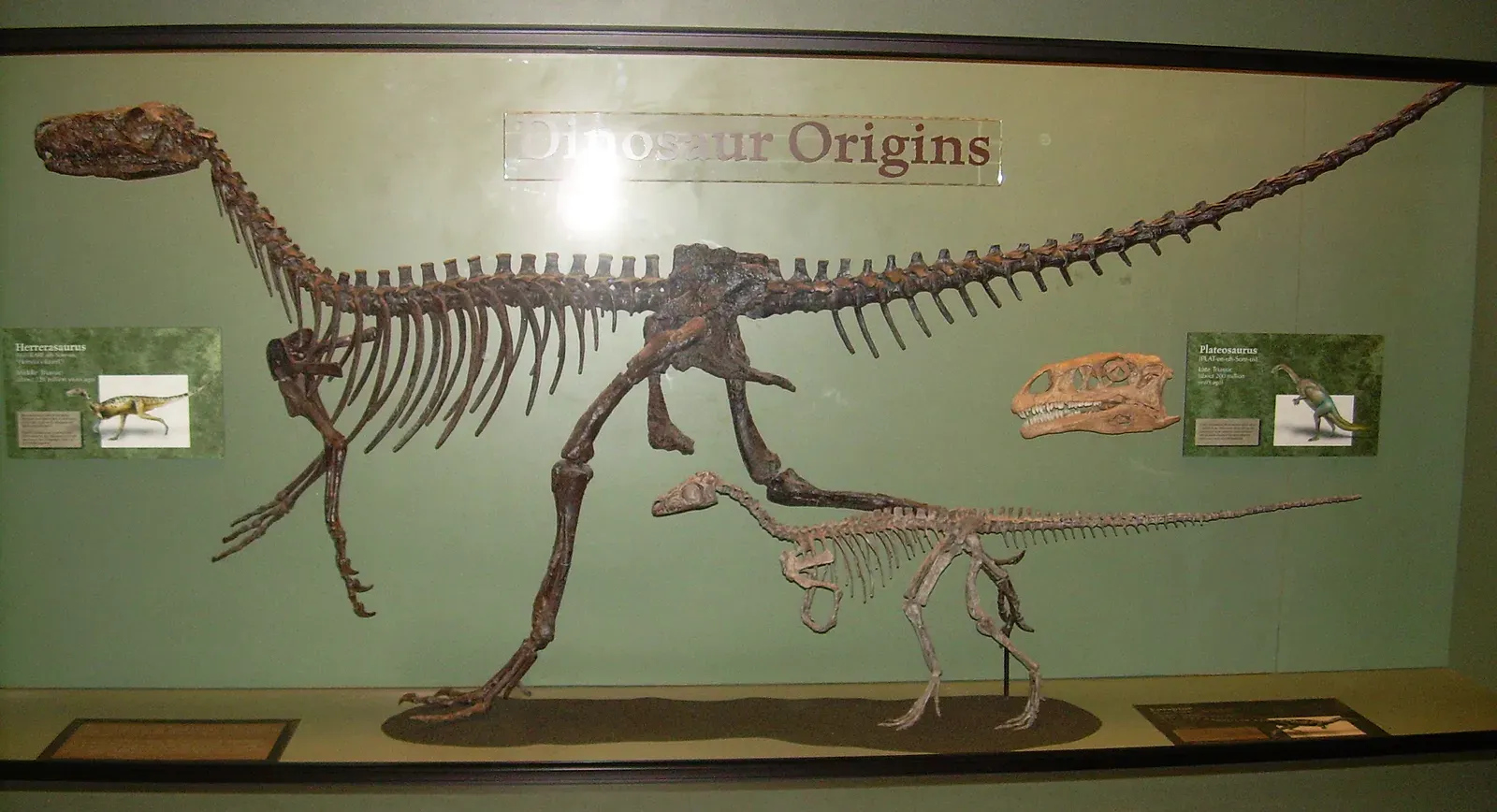
The oldest known definitive dinosaurs are 230-million-year-old fossils from Argentina and Brazil, including species such as Eoraptor and Herrerasaurus. For a long time, scientists assumed South America was the cradle of all dinosaur life. It’s a reasonable guess given the evidence, but more recent research complicates that tidy picture considerably.
The remains of the earliest dinosaurs may lie undiscovered in the Amazon and other equatorial regions of South America and Africa. Currently, the oldest known dinosaur fossils date back about 230 million years and were unearthed further south in places including Brazil, Argentina and Zimbabwe. The differences between these fossils suggest dinosaurs had already been evolving for some time, pointing to an origin millions of years earlier. A study published in the journal Current Biology accounted for gaps in the fossil record and concluded that the earliest dinosaurs likely emerged in a hot equatorial region in what was then the supercontinent Gondwana, an area of land that encompasses the Amazon, Congo basin, and Sahara Desert today. In other words, the real cradle of dinosaurs might be buried under the Amazon rainforest or the Sahara Desert right now. I find that genuinely mind-bending.
The Evolutionary Edge: How Dinosaur Bodies Were Built Differently
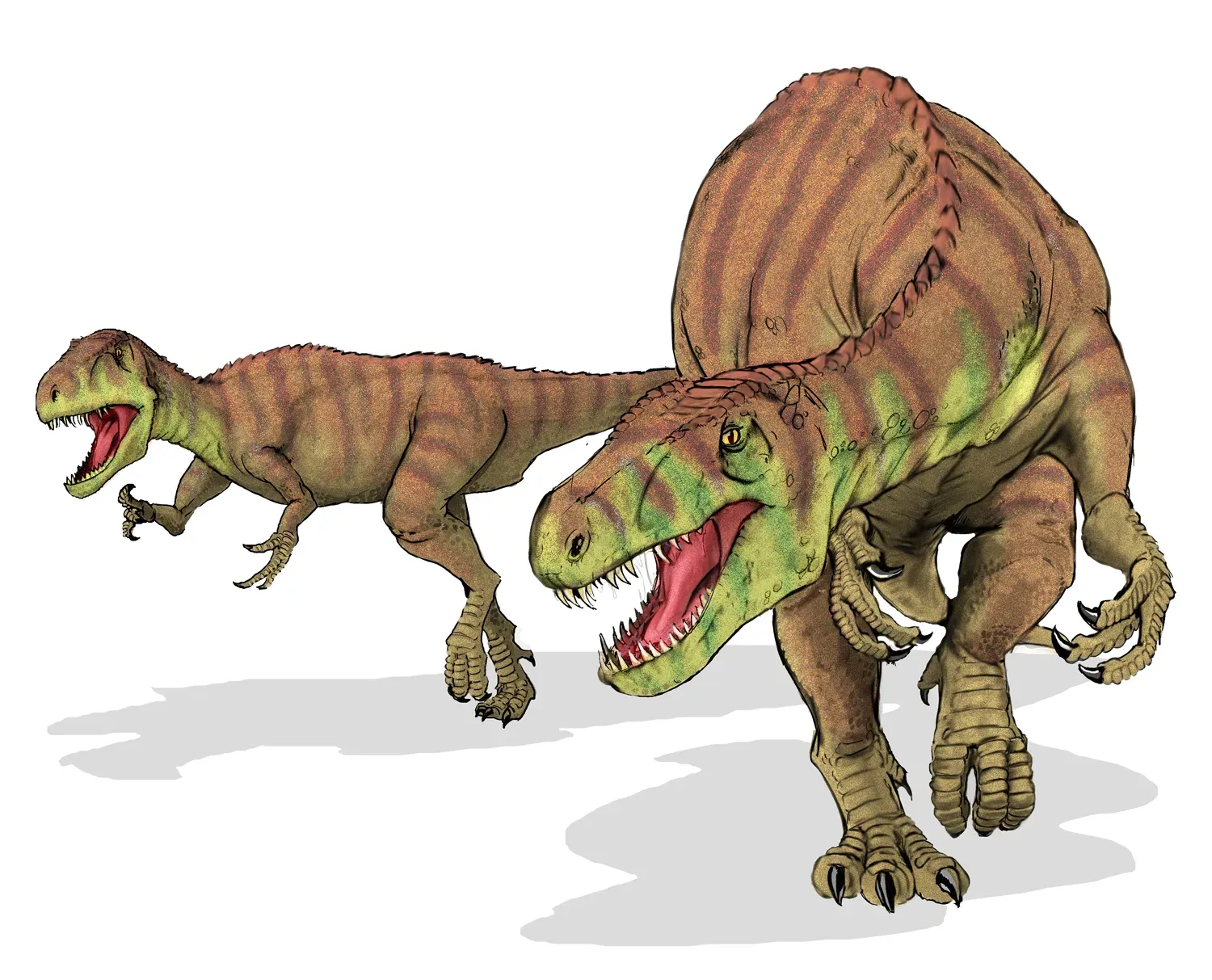
You might wonder why dinosaurs ultimately succeeded where so many other reptiles failed. Part of the answer lies in their bodies. Dinosaurs stand with their hind limbs erect in a manner similar to most modern mammals, but distinct from most other reptiles, whose limbs sprawl out to either side. This posture is due to the development of a laterally facing recess in the pelvis and a corresponding inwardly facing distinct head on the femur. Their erect posture enabled early dinosaurs to breathe easily while moving, which likely permitted stamina and activity levels that surpassed those of sprawling reptiles.
Think of it this way: a lizard running flat-out has to stop and catch its breath because the sideways sprawl of its body literally compresses its lungs with every stride. The sinuous motion of the body alternately collapses the lung on each side, preventing breathing during running. That is why lizards have to stop completely and pant after they run, even though they risk capture. Early dinosaurs didn’t have that problem. The first dinosaurs were only a metre long, up high on their legs, and bipedal. Their leg posture meant they could move fast and catch their prey while escaping larger predators.
Early Rivals: The Creatures That Nearly Stopped Them
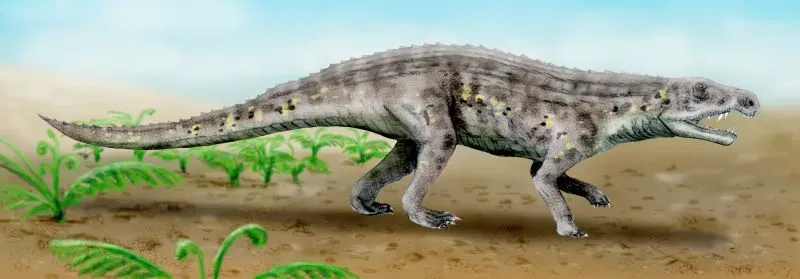
Let’s be real: dinosaurs were not the top dogs of the Triassic. Not even close. Initially, early dinosaurs were vastly outnumbered by their reptile cousins. These included the ancestors of crocodiles, the pseudosuchians, an abundant group including enormous species up to 10 metres long, and pterosaurs, the first animals to evolve powered flight. Imagine being barely a metre long and sharing your world with crocodile relatives the size of a bus. That was daily life for the first dinosaurs.
Pseudosuchians were far more ecologically dominant in the Triassic, including large herbivores such as aetosaurs, large carnivores, and the first crocodylomorphs. By the Late Triassic there was a shift in dominance between the mammal-like reptiles and the archosaurs. There are various theories as to what may have caused this, such as competition in a climate that was becoming steadily warmer and dryer, or evolutionary stagnation. It seems that archosaurs were better able to fill the empty niches left following the extinction of some of the synapsid lineages. The door to dominance was slowly creaking open, but something dramatic still needed to happen.
The Great Turning Point: An Extinction That Changed Everything
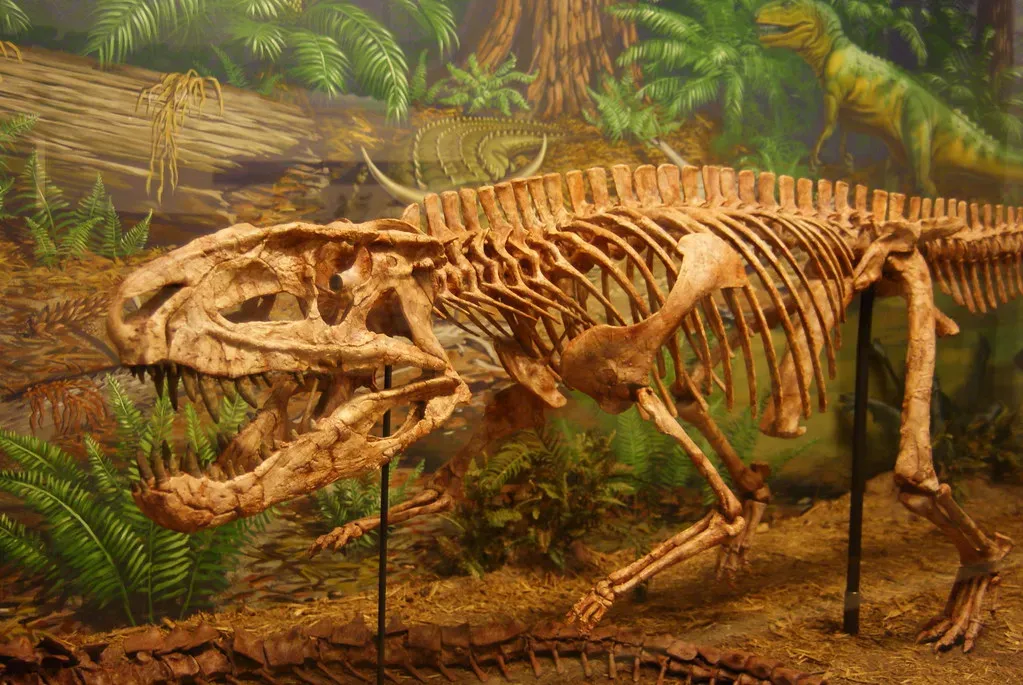
The Triassic-Jurassic extinction event marks the boundary between the Triassic and Jurassic periods, 201.4 million years ago. It represents one of five major extinction events during the Phanerozoic, profoundly affecting life on land and in the oceans. This was the moment everything changed. It’s hard to say for sure exactly what triggered it, but the consequences were catastrophic and, for dinosaurs, ultimately transformative.
On land, all archosauromorph reptiles other than crocodylomorphs, dinosaurs, and pterosaurs became extinct. Crocodylomorphs, dinosaurs, pterosaurs, and mammals were left largely untouched, allowing them to become the dominant land animals for the next 135 million years. These extinctions within the Triassic and at its end allowed the dinosaurs to expand into many niches that had become unoccupied. Dinosaurs became increasingly dominant, abundant and diverse, and remained that way for the next 150 million years. One world ended. Another, ruled by dinosaurs, began.
Conclusion: The Unlikely Champions of Deep Time
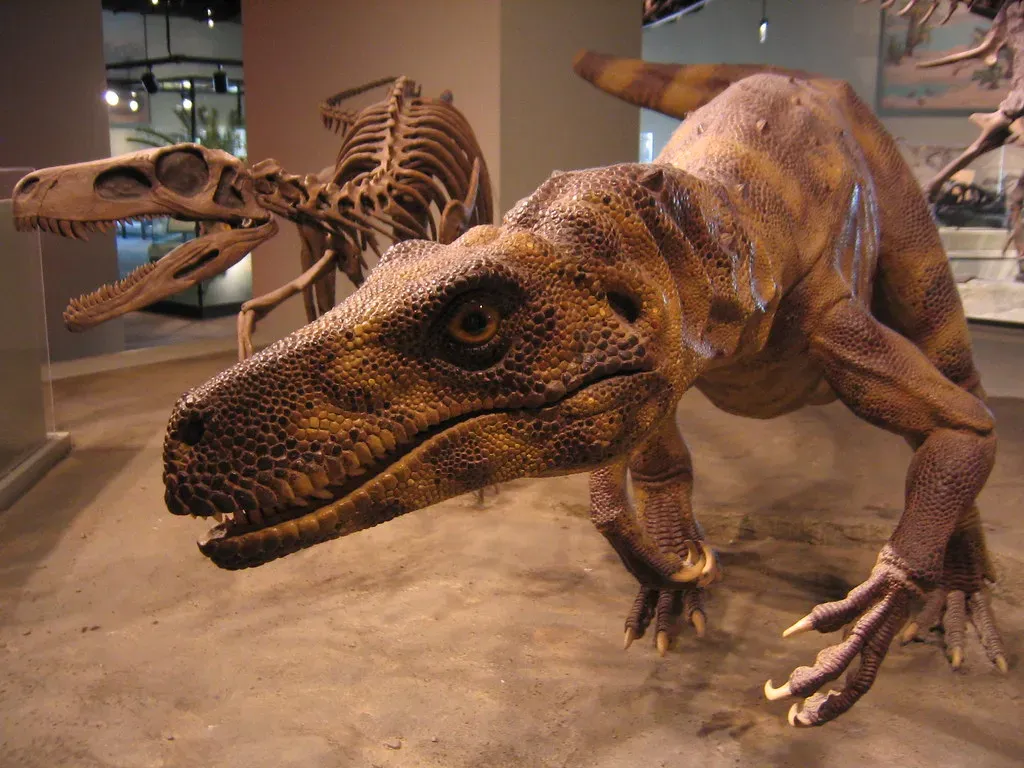
The story of the first dinosaurs is not really a story of obvious winners. They became the dominant terrestrial vertebrates after the Triassic-Jurassic extinction event 201.3 million years ago, and their dominance continued throughout the Jurassic and Cretaceous periods. Yet for tens of millions of years before that, they were underdogs. Outnumbered, outsized, and operating in the shadows of far more powerful creatures.
What you see in the fossil record of those early Triassic creatures is something surprisingly relatable: small, scrappy survivors in a brutal world, equipped with just enough biological advantages to outlast the competition when catastrophe came calling. Their erect posture, their bipedal agility, their adaptability to extreme heat, and perhaps most importantly, their resilience through crisis after crisis, are what carried them through. Not raw power. Not lucky accidents alone. A combination of the right body, the right moment, and the right world-ending event that cleared the way.
It makes you wonder. If things had gone slightly differently at the end of the Triassic, would dinosaurs have ever risen at all? And what does that say about the role of catastrophe in shaping the history of life on Earth? Share your thoughts in the comments.