
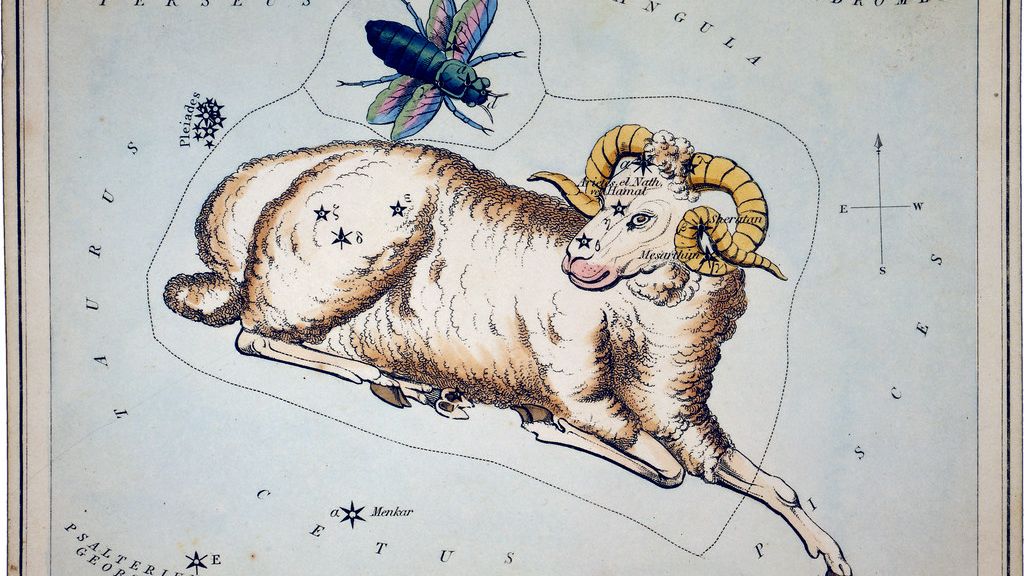
If you dropped the modern zodiac into a smoky Bronze Age city – think mud-brick walls, flickering oil lamps, and crowded markets – some signs would almost beg to become legends. Not every sign would end up carved into temple walls or whispered about around the fire, though. Certain archetypes fit ancient myths so perfectly that it’s hard not to imagine them turning into gods, heroes, monsters, or culture-bringers in that world of bronze blades and barley fields.
Of course, astrology as we know it today evolved long after the earliest Bronze Age cultures, and actual ancient beliefs were far more complex and region-specific. But the basic psychological archetypes of the zodiac – warrior, ruler, trickster, seer – line up uncannily well with the stories early civilizations loved to tell. Looking at each sign through that lens, some emerge as obvious candidates for mythic status, the kinds of figures people would pray to, fear, or blame when the river flooded or the war went badly.
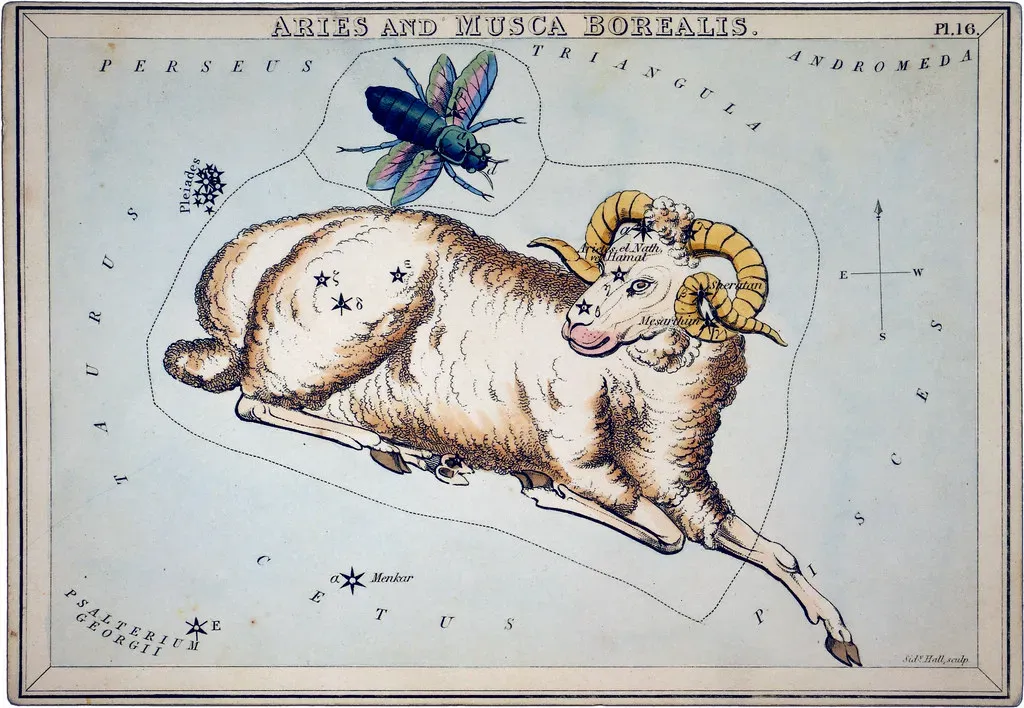
Aries: The Bronze Age War Champion Turned Living Legend
Picture a dusty battlefield at dawn: chariots creaking, shields glinting, and at the front, there’s Aries. As an archetype, Aries is fiery, impulsive, and obsessed with proving courage, which fits squarely into the kind of heroic culture that thrived in the Bronze Age. Societies then tended to glorify the warrior who rushed first into danger, who brought back trophies, who treated fear like an insult. That is exactly the kind of person who becomes a myth – not because they were safe or wise, but because they were larger than life and often terrifying.
In an age when battles literally decided which city survived the year, a fearless warrior was not just admired; they were seen as touched by something beyond human. Aries could easily become a storm-war god in the collective imagination, the one villagers blamed when sudden raids hit or thanked when enemies fled in panic. Over time, that hot-blooded fighter who never backed down would be retold as part human, part divine, a patron of soldiers and reckless young men eager to prove themselves. In a Bronze Age myth cycle, Aries does not stay mortal for long – they blaze onto the stage, win impossible battles, and then get frozen in time as the embodiment of raw, aggressive courage.
Leo: The Solar King Everyone Pretends Is Only Human

Every Bronze Age city needed a story that said, in essence, “Our ruler is special; obey them or the gods will be angry.” Leo fits that role almost too well. Leo’s archetype thrives on recognition, majesty, and theatrical leadership – qualities that, in a world of palaces, processions, and ritual displays, would be turned into sacred spectacle. Imagine a Leo king or queen processing through the streets under a golden canopy, the crowd chanting, the sun blazing behind their head like a halo. Even without astrology, people in early civilizations tended to associate political power with cosmic favor; Leo becomes the human vessel of that idea.
As the stories get retold, Leo is no longer just a charismatic ruler but a semi-divine “child of the sun,” a being whose authority reaches beyond human law. In myth, that shows up as exaggerated tales of impossible bravery, wisdom, and generosity: the king who saves the city from famine by sheer will, the queen whose presence alone calms riots or rallies warriors. The gap between propaganda and reality might be huge, but myth does not care. Leo is perfectly placed to become a founding ancestor god or a legendary monarch whose golden age people invoke every time things go wrong. In a Bronze Age mythos, Leo’s need to be adored becomes a cosmic mandate to shine forever.
Scorpio: The Feared Sorcerer of Death, Secrets, and Oaths
If any sign was destined to end up tattooed into the collective nightmare of a Bronze Age culture, it’s Scorpio. This archetype is about intensity, taboo, loyalty, and the line between life and death – themes that ancient societies treated with almost obsessive ritual care. Bronze Age people lived close to mortality: plague, childbirth, war, and famine were constant threats. The person who seemed unafraid of that darkness, who could handle corpses, poisons, secrets, or the raw emotions of grief and betrayal, would be both needed and feared.
Over time, this figure becomes the basis for myths about the underworld gatekeeper, the god or hero who descends and returns, or the enforcer of sacred oaths. An archetypal Scorpio could be immortalized as a deity who punishes betrayal, protects buried treasure, or oversees initiation rites no one is allowed to talk about. The sign’s reputation for obsession and intensity translates well into those legends of lovers who follow each other into the land of the dead or priests who sacrifice their comfort to guard forbidden knowledge. In a Bronze Age mythic framework, Scorpio is less the friendly village healer and more the shadowy figure whose name you whisper when you hope the dead stay buried and promises stay unbroken.
Sagittarius: The Wanderer Who Brings Back Fire, Stories, and Dangerous Ideas
Bronze Age civilizations did not grow in isolation; they traded, traveled, and borrowed like crazy. That is where Sagittarius walks in, dusty from the road, with a bag of new ideas. This archetype is curious, restless, and drawn to distant horizons – exactly the kind of person who would join caravans, follow foreign armies, or sit around foreign hearths learning different ways of thinking. In that context, Sagittarius becomes the mythic traveler who brings back sacred knowledge, new gods, or technologies: the hero who returns with advanced metallurgy, new rituals, or even new ways to explain the sky.
Because Sagittarius is also associated with belief systems and big-picture meaning, their myth would not just be about movement, but about worldview shifts. They might become the cultural hero who explains why the stars move the way they do, or why neighboring tribes worship another version of the same sky god. Of course, that kind of figure is also disruptive; old priests do not always like new stories. So Sagittarius could be remembered both as a blessed messenger and a dangerous troublemaker whose teachings sparked schisms, reforms, and long arguments. Either way, in a Bronze Age mythic lineup, this sign naturally turns into the archetype of the journeying sage whose arrows of insight travel much farther than their own lifetime.
Capricorn: The Mountain-Born Lawgiver and Builder of Kingdoms
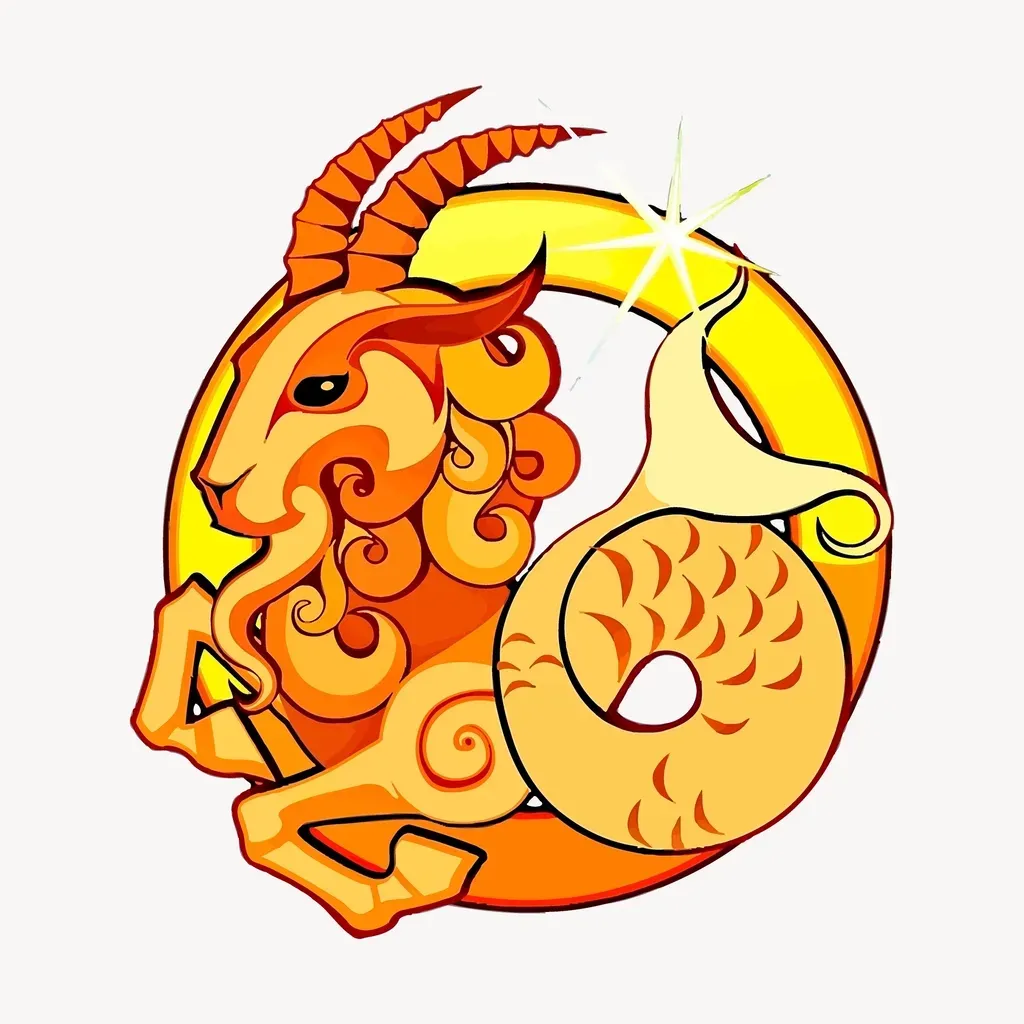
Every civilization that survives more than a few harvests has to answer boring but essential questions: Who works? Who rules? What happens if someone refuses? Capricorn thrives at exactly that intersection of ambition, structure, and endurance. This archetype is pragmatic, status-aware, and deeply oriented toward building systems that last. In a Bronze Age context, that turns into legends about the lawgiver who climbs the mountain and comes back with rules, or the stern founder who drags a fractious people into a functioning kingdom through sheer discipline.
Capricorn’s myth would not be the flashiest, but it might be the one etched deepest into temples and legal codes. You can easily imagine this sign becoming the patron of scribes, judges, and builders – the spirit invoked when city walls go up or when a new calendar is carved into stone. In stories, Capricorn is the one who refuses the easy path, who sacrifices comfort for legacy, and that stubbornness gets reinterpreted as divine will. Over generations, people might forget the messy human compromises and just remember a near-mythic ancestor who “created order from chaos.” In a Bronze Age mythscape obsessed with kingship, lineage, and boundary stones, Capricorn is an obvious candidate for deification as the guardian of hierarchy itself.
Aquarius: The Rebel Visionary Who Tries to Rewrite the Cosmic Rules

Bronze Age societies were often rigid, but they were not static. Floods, invasions, and technological shifts constantly forced people to renegotiate how their world worked. This is where Aquarius steps in: the archetype of the outsider thinker, the disruptor who sees the group from the edge rather than the center. In that environment, Aquarius becomes the mythic reformer or culture hero who challenges existing gods, invents strange rituals, or proposes unsettlingly new ideas about equality, freedom, or shared resources. They might not be embraced in their lifetime, but myth loves a misunderstood genius.
Because Aquarius is linked with collectives and the future, their stories would lean into attempts to change how society itself is organized. Picture a legendary figure who insists that certain taboos are unjust, that strangers can become citizens, or that knowledge should be shared instead of hoarded by priests. In a Bronze Age setting, such moves would be both threatening and fascinating. Over time, Aquarius might be remembered as a god of floods of change, carrying a vessel of sacred water that dissolves old boundaries. Not every civilization would make room for this kind of mythic rebel, but the ones that did would credit Aquarius with dragging them, sometimes screaming, into a new era.
Pisces: The Sacred Dreamer Who Bridges Mortals and the Invisible World
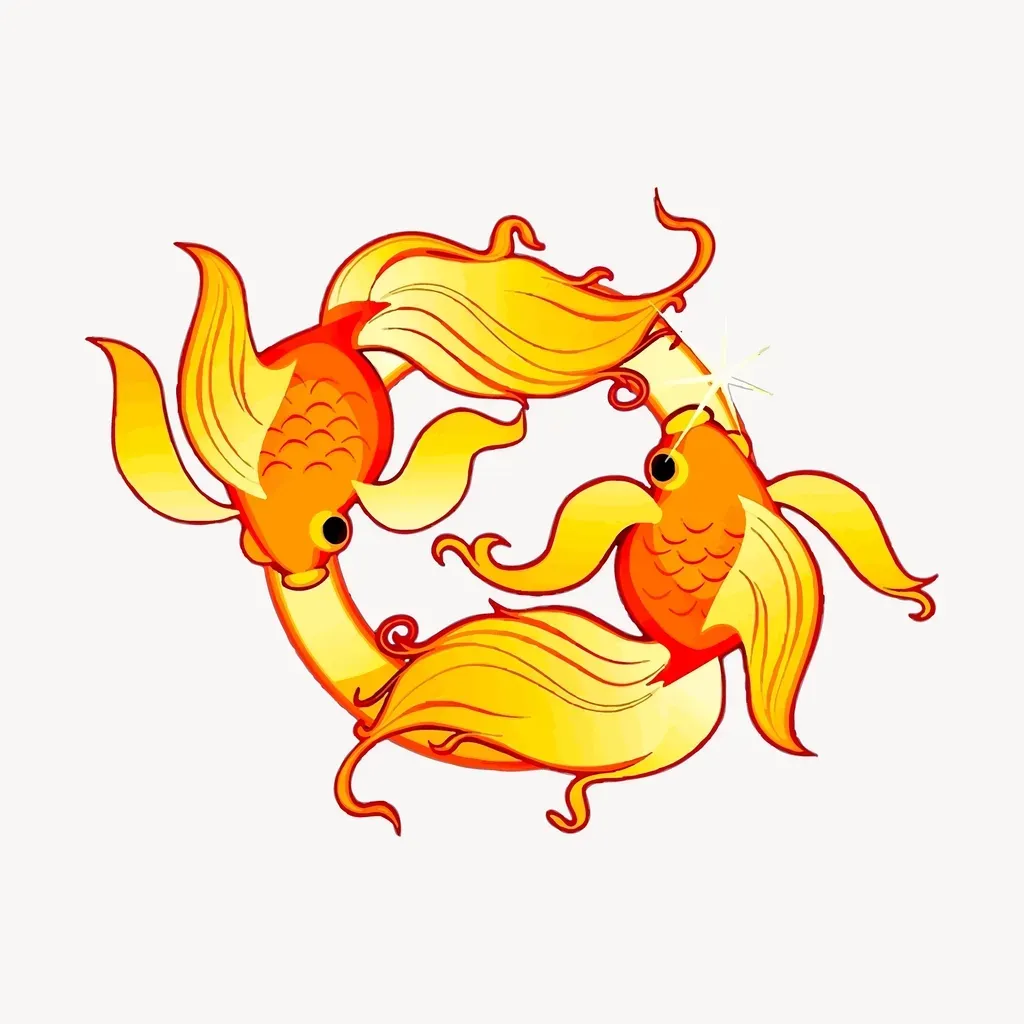
For Bronze Age people, dreams, omens, and altered states were not psychological curiosities; they were serious channels of communication with the unseen. Pisces, associated with imagination, spirituality, and emotional permeability, is almost tailor-made to become mythic in that space. This archetype belongs to the seers who fast by rivers, the temple sleepers who wait for healing dreams, and the musicians whose chants send whole crowds into trances. In such a culture, a person who seemed permanently half in another world could easily be seen as a vessel for divine messages rather than just “sensitive.”
In myth, Pisces would show up as the compassionate healer, the wandering oracle, or the sacrificial figure who absorbs collective pain. Their legends might describe someone who speaks with river spirits, who receives guidance during floods, or who brings comforting rituals to ease the fear of death. Because Pisces blurs boundaries, this sign’s myth often drifts into themes of sacrifice and redemption – someone giving up their own safety or clarity to maintain a fragile link with the divine. In a Bronze Age civilization, where survival often felt at the mercy of invisible forces, a figure like Pisces would not just be admired, they would be woven tightly into the religious fabric as a living, then legendary, bridge between worlds.
Conclusion: Myth Favors the Extreme, Not the “Nice”
Looking at these signs through a Bronze Age lens, a pattern jumps out: myth tends to immortalize extremes, not well-balanced personalities. The warrior who goes too far, the king who shines too brightly, the seer who walks too close to the dead, the rebel who questions too much – these are the types that evolve into gods, monsters, and culture heroes. Signs like Aries, Leo, Scorpio, Sagittarius, Capricorn, Aquarius, and Pisces all carry those intense, socially disruptive qualities that ancient storytellers loved to exaggerate and preserve. They are not always the most comfortable people to live with, but they are unforgettable, and myth is basically humanity’s long-term memory for whatever we cannot stop talking about.
From my own perspective, that is why thinking about the zodiac in a Bronze Age setting is so revealing: it strips away modern self-help language and shows which archetypes would actually move the needle in a high-stakes, fragile world. You can still see echoes of that today in who we turn into cultural legends – daring leaders, radical thinkers, spiritual icons, and people who break rules so loudly the story outlives them. Whether or not you take astrology literally, it gives a vivid symbolic language for those human patterns. And it leaves a final, uncomfortable question hanging in the air: if you were born back then, would you be carved into a temple wall, or just be one more nameless figure in the crowd?