Have you ever wondered what kind of creatures stalked the ancient American landscape before the Ice Age froze everything over? Most of us picture mammoths and woolly rhinos trudging through snowy wastelands. That’s the classic image, right? Still, what dominated the continent before the glaciers arrived tells a far more fascinating story. We’re talking about a time when enormous sloths lazed beneath towering trees, saber-toothed predators prowled dense forests, and armored giants waddled across open plains.
These weren’t dinosaurs. They were mammals that thrived during the Pliocene and early Pleistocene epochs, long before humans arrived and long before sheets of ice redrew the map. Let’s dive into the remarkable world of five prehistoric beasts that once ruled America.
Giant Ground Sloths: The Colossal Vegetarians
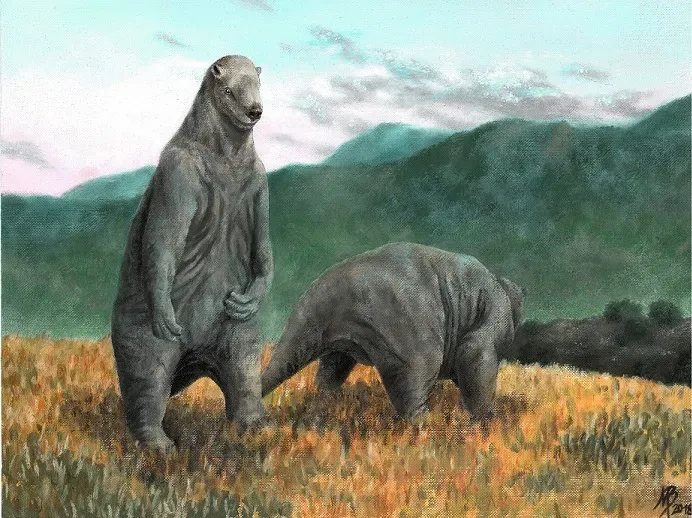
You might picture sloths as small, slow tree-dwellers, yet giant ground sloths evolved in South America around thirty-five million years ago and migrated into North America roughly eight million years ago. These weren’t your typical cuddly creatures. Some species grew to absolutely staggering sizes, comparable to modern elephants in sheer mass.
Megatherium americanum, one of the largest known ground sloths, had a total body length of around six meters and weighed approximately three thousand seven hundred to four thousand kilograms, comparable to an Asian elephant. Picture something that massive moving through ancient forests, using its long front claws to pull down branches and strip leaves. Megalonyx, which is thought to be descended from Pliometanastes, a ground sloth that arrived in North America during the late Miocene around nine million years ago. This creature eventually increased in size over evolutionary time. Honestly, it’s hard to imagine the ground shaking beneath something that heavy yet entirely herbivorous. They were the gentle giants of their era.
Smilodon: The Forest-Stalking Saber-Tooth
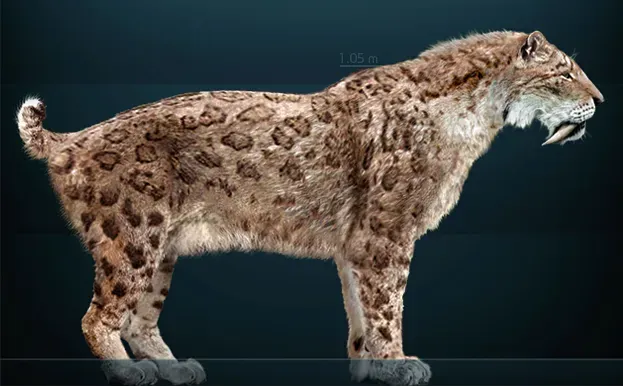
Smilodon lived in the Americas during the Pleistocene to early Holocene epoch, from two point five million years ago to at latest eight thousand two hundred years ago. This cat has become legendary for its massive canine teeth. Let’s be real, those fangs were designed for precision killing, not brute force crushing like modern big cats.
Recent research flipped the script on how we imagined these predators. Analyses of hundreds of teeth from La Brea revealed that Smilodon could weigh up to six hundred pounds and sported seven-inch-long canine teeth, with evidence suggesting it may have been a forest dweller that primarily feasted on leaf-browsing creatures. Instead of chasing bison across open plains like we once thought, these cats probably ambushed prey in wooded environments. Smilodon was about twenty-five percent larger than the modern lion, making it one of the largest known felids to ever exist, and a dominant apex predator in North American ecosystems. They ruled through stealth and power, not speed.
American Lion: The Mighty Panthera Atrox
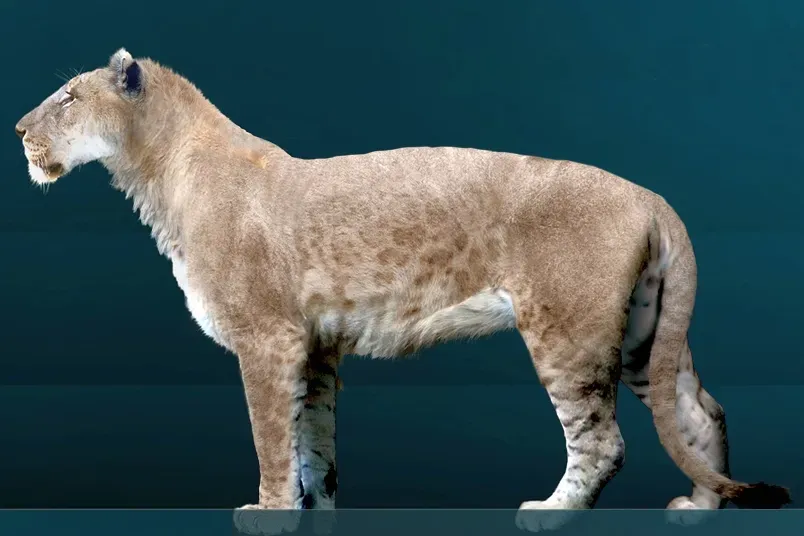
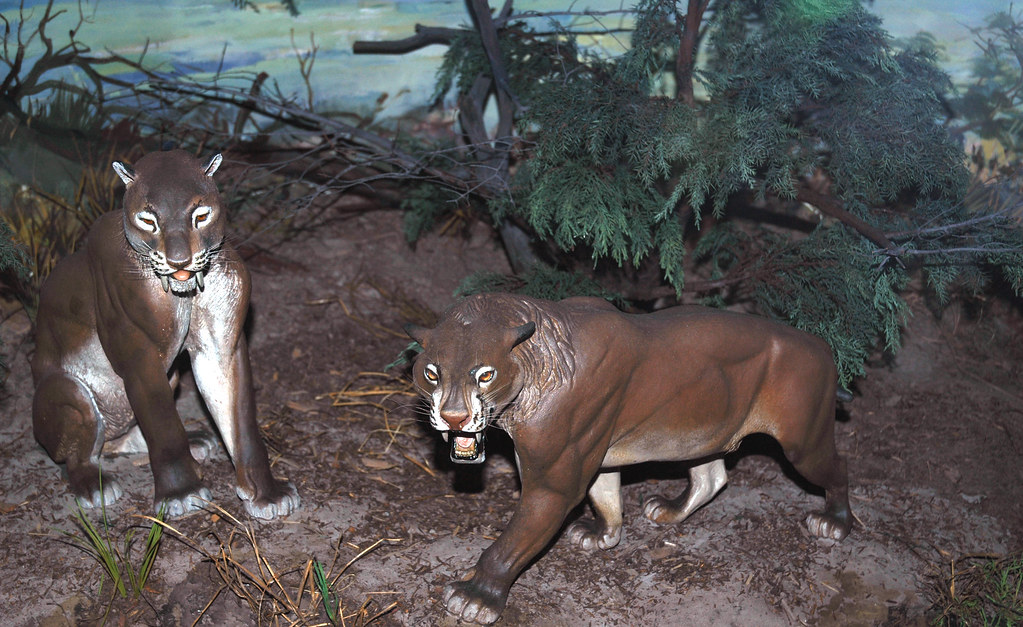
The American lion, scientifically known as Panthera atrox with a species name meaning savage or cruel, was native to North America during the Late Pleistocene from around one hundred twenty-nine thousand to twelve thousand eight hundred years ago. This wasn’t just any big cat. It was larger, fiercer, and possibly smarter than anything prowling today’s savannahs.
Genetic evidence suggests that its closest living relative is the lion, with the American lion representing an offshoot from the lineage of the largely Eurasian cave lion, from which it is suggested to have split around one hundred sixty-five thousand years ago. CT scans of their skulls reveal that American lions had the largest brains of any member of the cat family, with bigger brains potentially meaning a larger mental capacity for navigating things like social structures. Whether they lived in prides like modern lions remains a mystery, though some researchers believe their brain size hints at complex social behavior. It’s fascinating to consider that intelligence, not just brawn, made them formidable rulers of prehistoric North America.
Glyptodon: The Armored Tank on Four Legs
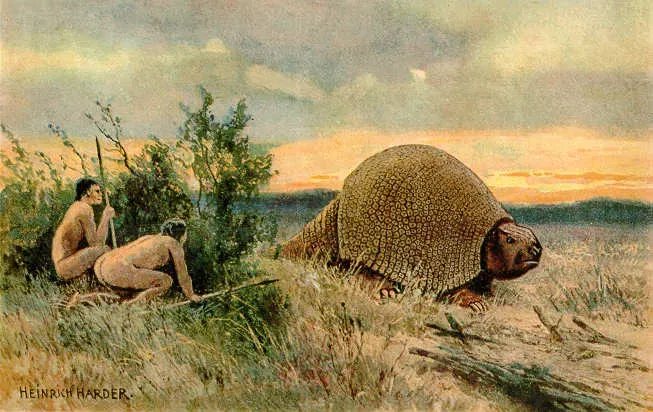
Imagine a creature that looked like someone crossed an armadillo with a Volkswagen Beetle and gave it a spiked tail. That was Glyptodon. Glyptodon lived from the Pliocene, around three point two million years ago, to the early Holocene, around eleven thousand years ago, in South America. The armored, one-ton creature probably traveled across the Isthmus of Panama to North America, and flourished in what is now coastal Texas and Florida about two million years ago.
The creature looked like a giant version of its distant relative, the armadillo, with a shell made of bony plates just like an armadillo. This wasn’t flexible armor, though. The shell was a solid dome that couldn’t roll up like modern armadillos. Glyptodon specimens regularly grew to ten feet in length and weighed one ton. Their tail was equally impressive, covered in protective rings and potentially tipped with bony clubs used for defense. Here’s the thing: despite being built like a tank, they were strict herbivores munching on grasses and water plants.
The Short-Faced Bear: North America’s Largest Carnivore
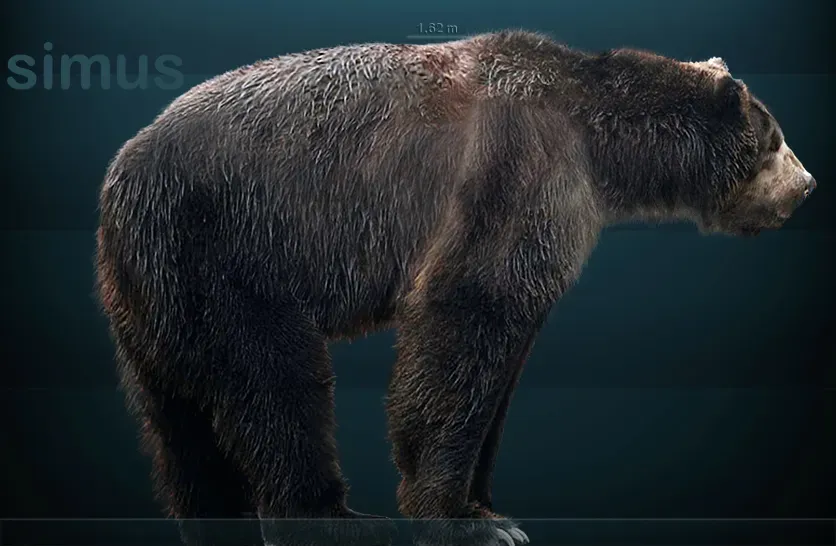
The giant short-faced bear, known as Arctodus simus, was the largest carnivorous mammal to ever roam North America, with an adult standing on its hind legs boasting a vertical reach of more than fourteen feet. Let that sink in for a moment. A bear tall enough to look into a second-story window. This wasn’t something you’d want to meet in the wild.
The most striking difference between modern North American bears and the giant short-faced bear were its long, lean and muscular legs, and paleontologists calculate that it could reach speeds topping forty miles per hour, making it the fastest bear to ever live. That combination of size, speed, and strength made it a terror unlike anything we have today. Some researchers believe it was more of a scavenger, using its intimidating presence to steal kills from other predators. Still, with legs built for running and a massive frame, it could absolutely have been an active hunter when it needed to be.
Conclusion
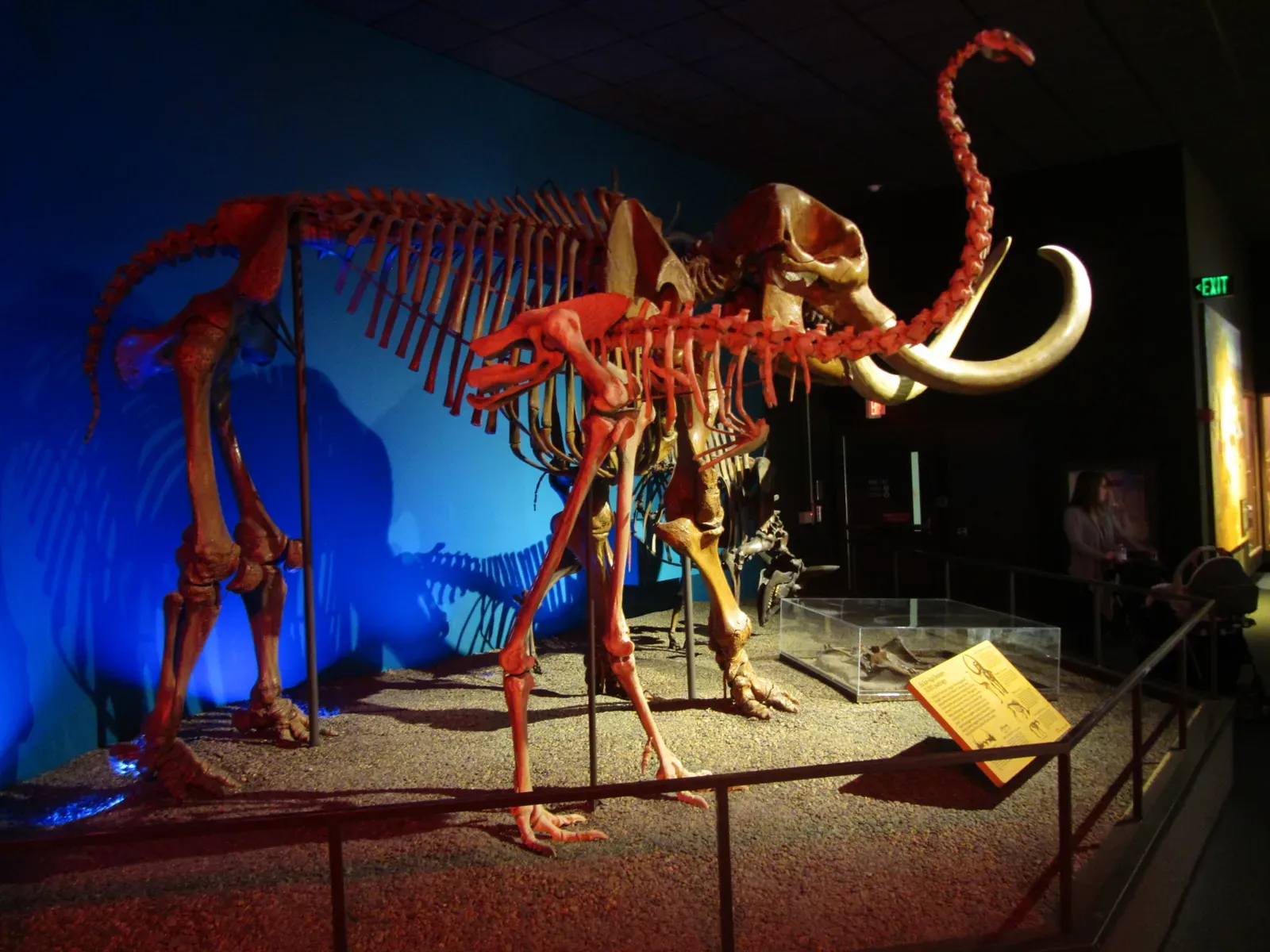
These five prehistoric mammals paint a picture of an America vastly different from the frozen tundra we associate with the Ice Age. Before the glaciers advanced, the continent teemed with colossal ground sloths browsing on vegetation, saber-toothed cats stalking through shadowy forests, mighty lions commanding respect with both strength and intelligence, armored glyptodonts grazing peacefully, and towering short-faced bears dominating as apex predators. Each played a unique role in shaping the ecosystems they inhabited.
In North America, about five dozen kinds of mammals went extinct as the ice slowly retreated, with all glyptodont species becoming extinct around twelve thousand years ago as part of the end-Pleistocene extinction event, simultaneously with the vast majority of other large mammals in the Americas. What caused their disappearance remains hotly debated among scientists, with theories ranging from climate change to human hunting. What do you think wiped them out? Would you have wanted to see these giants roaming the landscape?