Northern elephant seals navigate perilous ocean migrations where every moment counts toward survival.
A High-Stakes Trade-Off Emerges
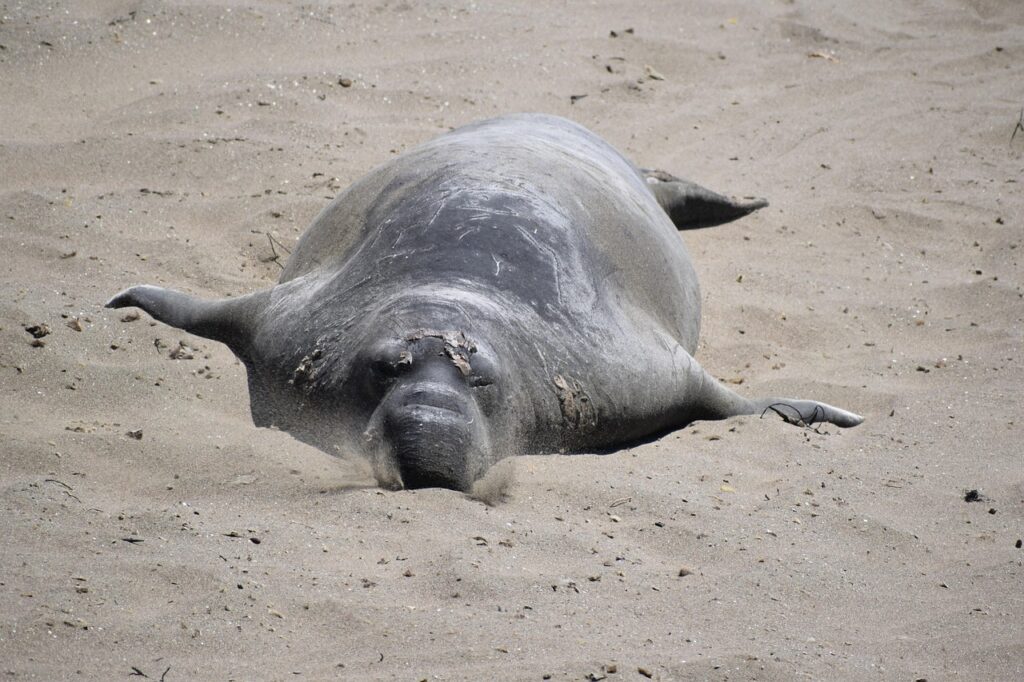
Thinner Elephant Seals Forage More Fiercely, Rest Less to Combat Hunger (Image Credits: Pixabay)
Researchers uncovered a critical behavioral shift in these massive marine mammals. Seals in poorer body condition, often thinner from inadequate feeding, ramped up their foraging efforts despite lower efficiency. This adjustment came at a steep price: reduced time for essential rest.
Sensors affixed to the seals’ jaws and backs captured precise data on movement, hunting activity, and sleep patterns. Thinner individuals spent extended periods searching for prey, burning extra energy in the process. Such prolonged hunts not only failed to fully replenish their reserves but also exacerbated their lean state.
Body Condition Dictates Ocean Strategy
Foraging demands intense effort, pitting energy gain against expenditure. Plump seals maintained balanced routines, but their skinnier counterparts altered course dramatically. They prioritized food quests over recovery, sacrificing sleep to extend hunting windows.
Poorer-conditioned seals proved less adept at locating meals, prolonging each pursuit. This inefficiency trapped them in a cycle: more time foraging led to less rest, hindering full recovery. Scientists noted how these animals fine-tuned behaviors to counter energetic shortfalls.
- Sensors tracked jaw movements to pinpoint foraging bouts.
- Back-mounted devices monitored dive profiles and rest phases.
- Thinner seals extended surface intervals for prey detection.
- Rest dives shortened as foraging dominated daily cycles.
- Overall energy budgets tilted toward intake over restoration.
Unpacking the Mechanisms Behind the Shift
Sleep sustains vital functions, yet skimping on it allowed extra foraging opportunities. Northern elephant seals (*Mirounga angustirostris*) demonstrated remarkable adaptability during pre-breeding voyages. When food proved elusive, leaner animals pushed boundaries, trading downtime for potential meals.
This response highlighted ecological pressures in vast marine realms. Predators lurked in shallows, while deep waters offered safer repose – but prime hunting aligned with riskier daylight hours. Thinner seals gambled more, diving persistently to break negative energy loops.
Broader Implications for Marine Life
These findings illuminated survival tactics amid fluctuating resources. As oceans warm and prey distributions shift, such trade-offs could signal population vulnerabilities. Researchers emphasized behavioral flexibility as key to resilience.
Monitoring these patterns aids conservation efforts. Understanding how seals juggle rest and rations informs predictions about thriving species in altered environments.
Key Takeaways
- Thinner seals forage longer but with reduced success rates.
- Sleep reductions compensate for extended hunting sessions.
- Sensor technology reveals precise activity-energy links.
Northern elephant seals showcase nature’s ingenuity in energy management, reminding us of the delicate balances wild animals strike daily. How might climate shifts test these limits further? Share your thoughts in the comments.