There’s a new T. rex from the dinosaur age – and it ruled the seas with a skull-crushing bite – Image for illustrative purposes only (Image credits: Unsplash)
In the warm, shallow waters that covered much of North America during the final chapters of the dinosaur age, a newly identified marine predator took its place among the era’s top hunters. Researchers have formally described Tylosaurus rex, a species of mosasaur that reached lengths of up to 43 feet and possessed a bite capable of crushing bone. The discovery adds a sharper picture of how these lizard-like reptiles dominated ocean ecosystems while dinosaurs ruled the land.
Tracing the Path to Recognition
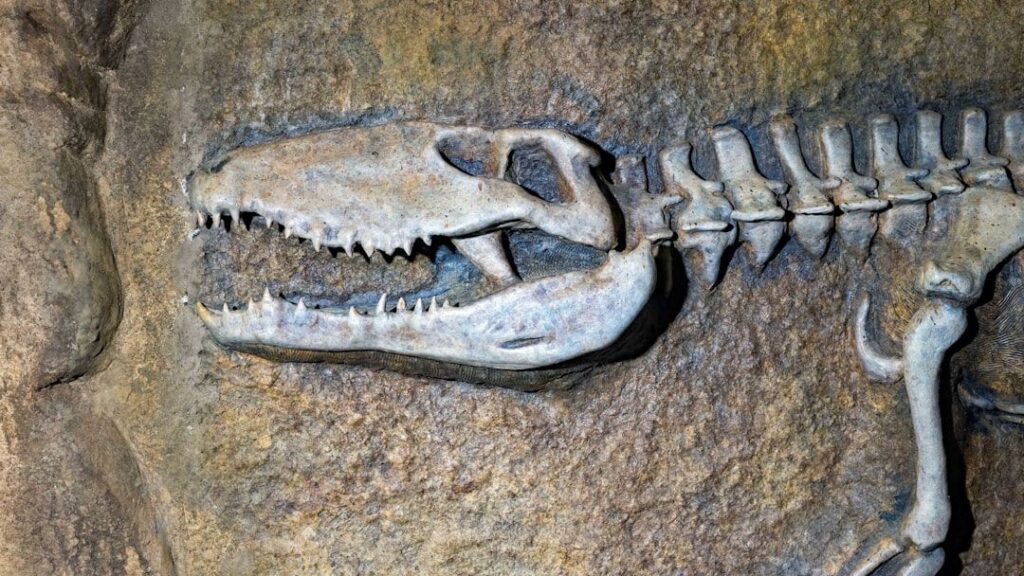
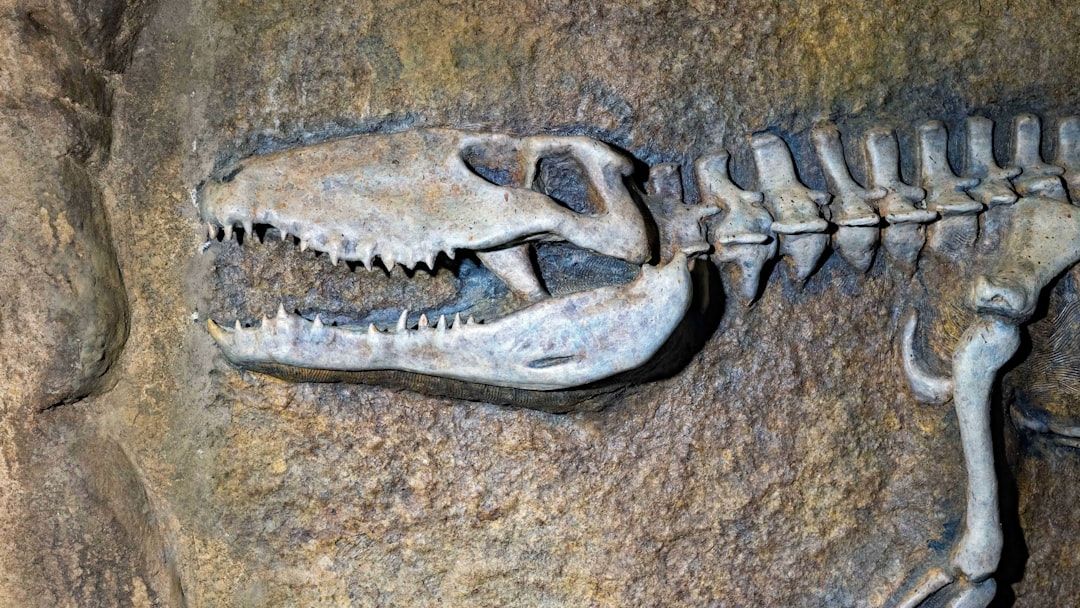
Fossil material long stored in museum collections has now been reexamined with modern techniques, revealing features that distinguish this animal from previously known mosasaurs. The process involved careful comparison of skull fragments and vertebrae, confirming both the species’ size and its placement within the Tylosaurus lineage. Such revisions are common in paleontology, where incremental finds gradually refine the record of ancient life.
The work underscores how much remains to be learned from existing specimens rather than solely from new excavations. By applying updated anatomical criteria, the team clarified traits that had been overlooked or misattributed in earlier studies. This measured approach helps avoid overinterpreting incomplete remains while still advancing understanding of marine reptile diversity.
Adaptations That Defined a Sea Hunter
Tylosaurus rex stood out for its finely serrated teeth, which likely aided in gripping and tearing prey. Combined with a robust skull structure, these features point to a bite force strong enough to subdue sizable marine animals, including other reptiles and large fish. Such dental and cranial specializations reflect the intense competition that shaped life in the Late Cretaceous oceans.
Body proportions further suggest an animal built for both speed and power in open water. Its elongated form would have allowed efficient cruising across coastal and deeper marine environments. These physical traits align with the broader pattern seen in mosasaurs, which evolved from smaller terrestrial ancestors into apex predators over millions of years.
Placing the Find in a Changing Prehistoric World
The appearance of Tylosaurus rex coincides with a period of significant ecological turnover in the seas. As other marine groups declined or diversified, mosasaurs expanded into vacated niches, becoming some of the most successful predators of their time. This new species illustrates how even well-studied fossil groups can yield surprises when examined closely.
Questions persist about its exact diet, growth patterns, and interactions with contemporaries. Additional fossils and biomechanical modeling may eventually address these gaps, yet the current description already strengthens the case for high predator diversity in the final stages of the Cretaceous. Ongoing fieldwork and museum research continue to refine timelines and relationships among these ancient swimmers.
What stands out now
- Up to 43 feet long with serrated teeth suited for powerful bites
- Named Tylosaurus rex after detailed reanalysis of existing fossils
- Highlights the rich predator community in Late Cretaceous oceans
- Further study needed on precise feeding habits and ecology
The identification of Tylosaurus rex serves as a reminder that the story of life before the asteroid impact is still being written one careful description at a time. Each new species helps map the complex web of interactions that once filled Earth’s seas and skies.