The deep ocean, a vast and mysterious realm that influences global climate patterns and harbors untold biodiversity, now confronts the looming specter of industrial extraction.
The Growing Demand Driving Seabed Exploration

The Growing Demand Driving Seabed Exploration (Image Credits: Unsplash)
A surge in the need for metals essential to renewable energy technologies has propelled interest in the ocean floor. Companies and nations eye polymetallic nodules rich in cobalt, nickel, and manganese, materials vital for batteries in electric vehicles and solar panels. This push intensified as terrestrial supplies dwindled, leading to exploratory contracts covering millions of square kilometers of seabed.
International bodies granted licenses for these ventures, with operations targeting depths exceeding 4,000 meters. Proponents argue that such mining could meet rising demands without further land-based environmental harm. Yet, the scale of proposed activities raises alarms about long-term consequences for marine environments.
Direct Threats to Marine Life and Habitats
Recent field tests revealed stark losses in seafloor biodiversity following simulated mining operations. Machines designed to scoop up nodules left tracks where macrofaunal density plummeted and species richness declined by significant margins. These disturbances not only destroy immediate habitats but also generate sediment plumes that spread across wide areas, smothering filter-feeding organisms and disrupting food chains.
Noise from equipment and vessel traffic further compounds the damage, altering migration patterns and communication among deep-sea creatures. Studies documented community-level shifts extending beyond the mining zones, affecting ecosystems hundreds of kilometers away. Vulnerable species, many discovered only in recent years, face extinction risks before scientists can fully catalog them. The International Union for Conservation of Nature highlighted how such activities could wipe out habitats critical for slow-recovering deep-sea life.
Far-Reaching Effects on Climate and Ecosystems
Beyond local devastation, deep-sea mining imperils the ocean’s role in carbon sequestration and oxygen production. Fine sediments disturbed by extraction release stored carbon, potentially accelerating climate change. Metallic nodules themselves contribute to oxygen generation at extreme depths, a process essential for sustaining sparse but unique life forms.
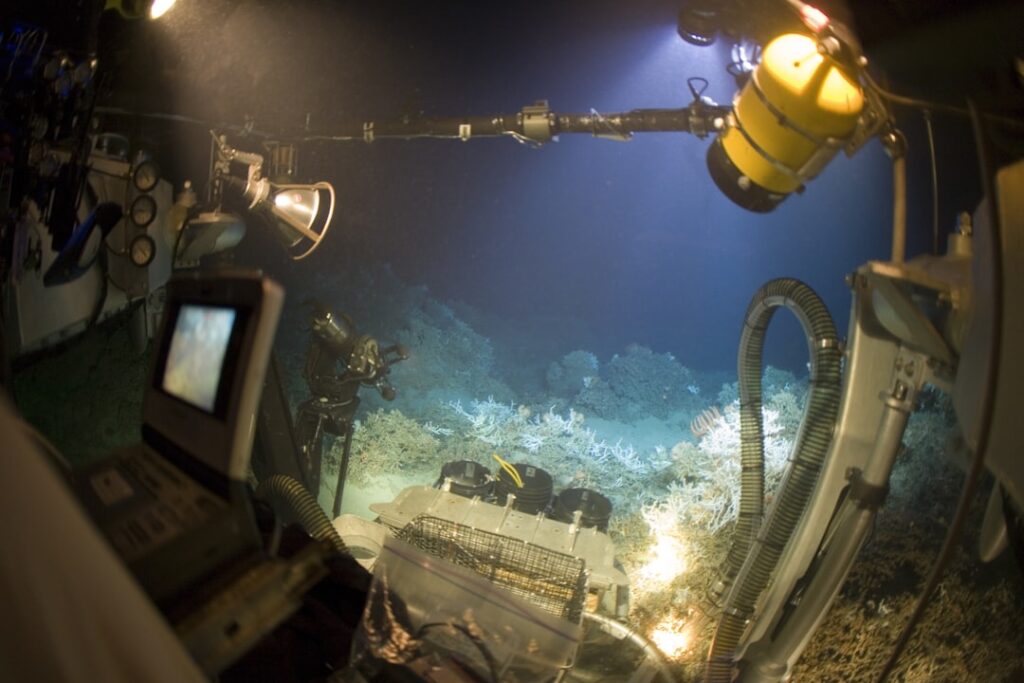
Exploration in areas like the Clarion-Clipperton Zone uncovered thousands of new species, underscoring the biodiversity at stake. Mining here could obliterate these nascent discoveries and the services they provide, such as nutrient cycling. Environmental groups warn that plumes might alter water chemistry over vast regions, impacting migratory species and surface fisheries indirectly. The deep sea’s isolation once shielded it from human interference, but current plans threaten this sanctuary permanently.
International Efforts to Safeguard the Seas
Governments and organizations have responded with increasing urgency to these risks. The High Seas Treaty, which entered into force recently, aims to protect two-thirds of the world’s oceans, including areas beyond national jurisdictions. It establishes frameworks for environmental impact assessments and marine protected areas, potentially curbing unregulated mining.
Calls for a global moratorium grow louder, backed by scientific evidence of irreversible harm. Advocacy campaigns emphasize the need for comprehensive studies before any commercial operations proceed. Countries like those in the Pacific have voiced opposition, citing cultural and ecological ties to ocean health. Regulatory bodies now face pressure to enforce stricter standards, balancing resource needs with planetary preservation.
- Deep-sea mining disrupts habitats through sediment plumes and noise, leading to biodiversity loss.
- It endangers climate regulation by releasing stored carbon and affecting oxygen production.
- A moratorium and stronger international agreements offer the best path to mitigate risks.
As the deep ocean teeters on the brink of transformation, the imperative to prioritize conservation over short-term gains has never been clearer. Protecting these uncharted depths ensures the survival of irreplaceable ecosystems for future generations. What steps do you believe should be taken next? Share your thoughts in the comments.