Have you ever wondered why earthquakes rattle certain regions while leaving others untouched? Or why volcanoes burst forth in dramatic displays of molten rock in some places but not in others? The answer lies beneath your feet, in a process that has been reshaping our planet for billions of years. Earth is far from the static, unchanging sphere it appears to be on the surface.
Beneath the ground we walk on, massive forces are constantly at work, tearing continents apart, pushing mountains skyward, and recycling ocean floors. Think of our planet as a living, breathing machine with an engine that never stops running. It’s hard to imagine, honestly, but the solid ground beneath us is actually moving, shifting, and transforming in ways that have shaped the world as we know it today. So let’s dive into what makes this incredible planetary machinery tick.
The Building Blocks: What Are Tectonic Plates?
Your world is built on roughly seven or eight major plates, along with numerous smaller fragments that piece together like a colossal jigsaw puzzle. These massive sections called plates include both oceanic and continental crust. Some carry entire continents on their backs, while others lie hidden beneath the ocean.
The crust is attached to the uppermost part of the mantle, together forming the solid lithosphere. Below the lithosphere is a layer called the asthenosphere, which is a portion of the mantle that is weaker and less rigid due to pressure and temperature conditions. Picture it like this: the rigid plates float atop a softer, more pliable layer, allowing them to glide around like giant rafts on a slow-moving sea. The rigid lithosphere moves on the asthenosphere both horizontally and vertically.
The Engine Beneath: Mantle Convection Drives Movement
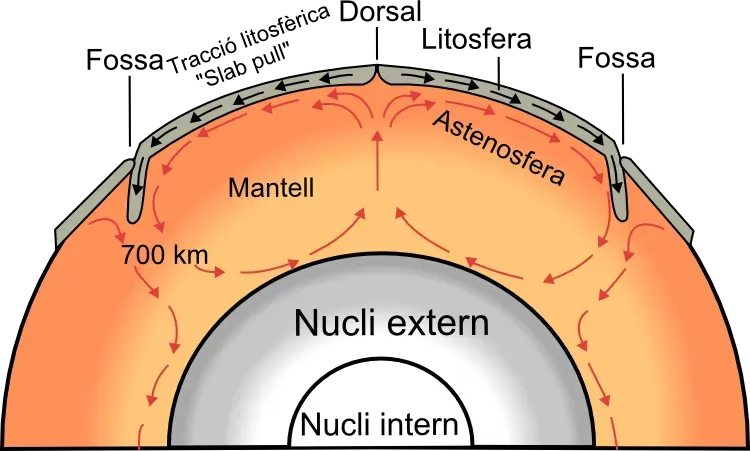
Here’s where things get really interesting. Plates are constantly in motion, and move about 3 cm (a little over an inch) per year because of slow convection currents in the mantle due to Earth’s internal heat. You might think that sounds incredibly slow, yet over millions of years, this gradual movement has reshaped entire continents.
Through convection, hot regions of the asthenosphere heated from below rise closer to the surface, propelling the plates, and displace colder, denser material, which sinks back to lower parts of the mantle. Lateral density variations in the mantle result in convection currents, the slow creeping motion of Earth’s solid mantle. It’s similar to what happens in a pot of boiling water, except this process takes place over millions of years in solid rock. The heat comes from radioactive decay deep within Earth’s core and from leftover heat from the planet’s formation billions of years ago.
Where Plates Meet: The Three Types of Boundaries
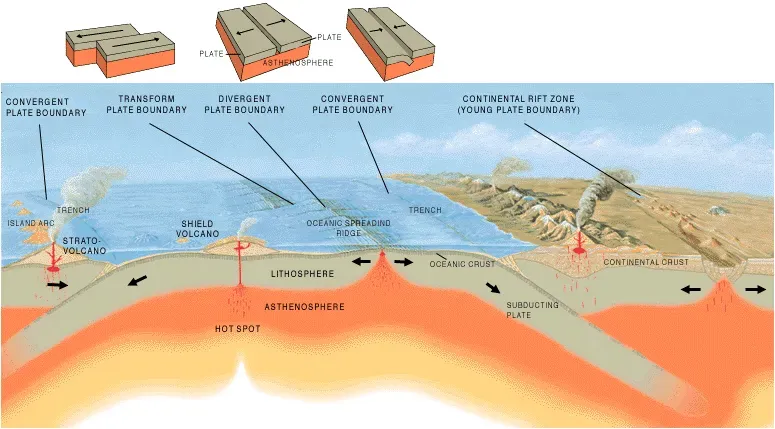
Plates interact in three ways: plates move away from each other at divergent boundaries, plates move towards each other at convergent boundaries, and plates slide past each other at transform boundaries. Each type creates dramatically different landscapes and geological events.
At divergent boundaries where two plates move away from each other, molten rock from the mantle erupts along the opening, forming new crust, with earthquakes that occur along these zones being relatively small. About 80% of earthquakes occur where plates are pushed together, called convergent boundaries. Meanwhile, earthquakes are common along transform boundaries, though at these margins crust is cracked and broken but is not created or destroyed. The type of boundary determines not only what happens at the surface but also the intensity of geological activity you might experience.
Divergent Boundaries: Where New Earth Is Born
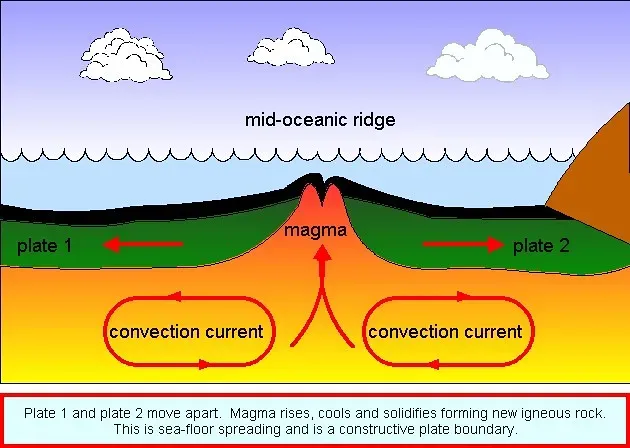
When two tectonic plates move away from each other at divergent boundaries, magma rises from the Earth’s mantle to the surface, solidifying to create new oceanic crust. These spreading centers are essentially factories for producing fresh seafloor. The Mid-Atlantic Ridge and East Pacific Rise form as the ocean plate splits, with the ridge forming at the spreading center as the ocean basin expands.
Let’s be real, most of this action happens underwater where we can’t see it. Mid-ocean ridges are the largest continuous geological features on Earth, extending tens of thousands of kilometers long, running through and connecting most of the ocean basins. The Great Rift Valley in Africa, the Red Sea and the Gulf of Aden all formed as a result of divergent plate motion. So when you see these dramatic landscape features, you’re looking at places where Earth is literally pulling itself apart.
Convergent Boundaries: Collision Zones of Destruction
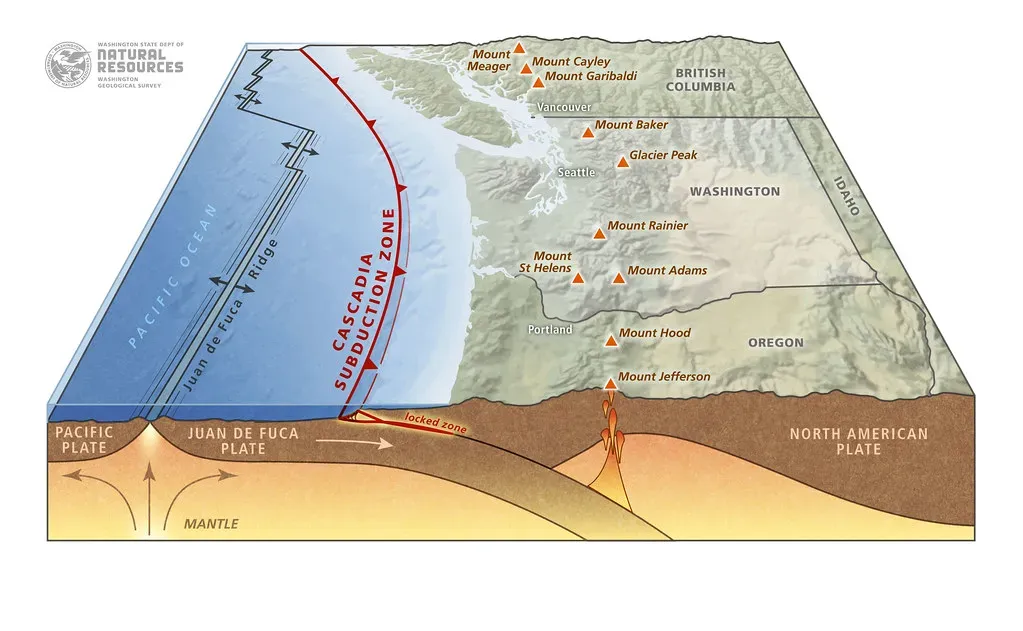
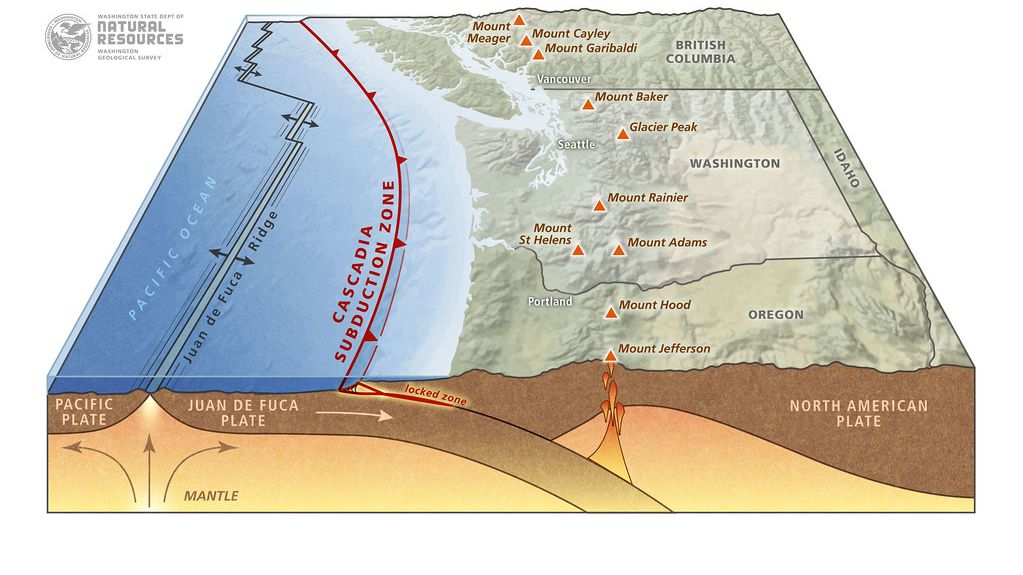
When a continental plate meets an oceanic plate, the thinner, denser oceanic plate sinks beneath the thicker continental plate in a process called subduction, causing deep ocean trenches to form. This is where some of the most violent geological events occur. If the subducting rock becomes stuck, vast amounts of energy build up, and once the pressure exceeds the resistance of the rock slab, it ruptures, creating powerful earthquakes.
Another form of convergent boundary is a collision where two continental plates meet head-on, and since neither plate is stronger than the other, they crumple and are pushed up. The plate edges are compressed, folded, and uplifted forming mountain ranges like the Himalayas and Alps. Think about the sheer force required to lift rock thousands of meters into the sky. That’s the power of plate tectonics at convergent boundaries.
Transform Boundaries: Grinding Past Each Other
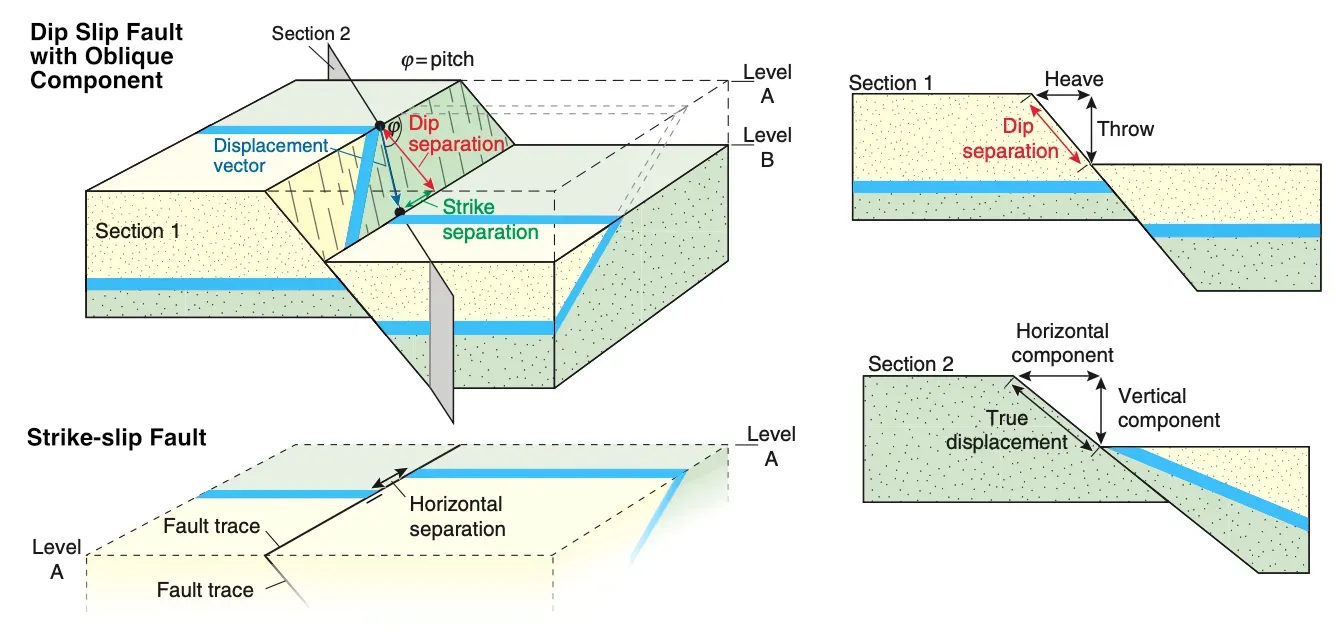
Two plates sliding past each other forms a transform plate boundary, with one of the most famous occurring at the San Andreas fault zone, which extends underwater. These boundaries are fascinating because unlike the other two types, they neither create nor destroy crust. Instead, they’re zones of intense friction and stress.
As the plates move past each other, they sometimes get caught and pressure builds up, until the plates finally give and slip due to the increased pressure, releasing energy as seismic waves and causing earthquakes. Transform boundaries can produce great earthquakes but volcanoes are rare, with the San Andreas fault being a well known example that is responsible for many of California’s earthquakes. It’s hard to say for sure, but scientists estimate that stress can build for decades or even centuries before releasing in a single devastating moment.
Earthquakes and Volcanoes: The Violent Expressions
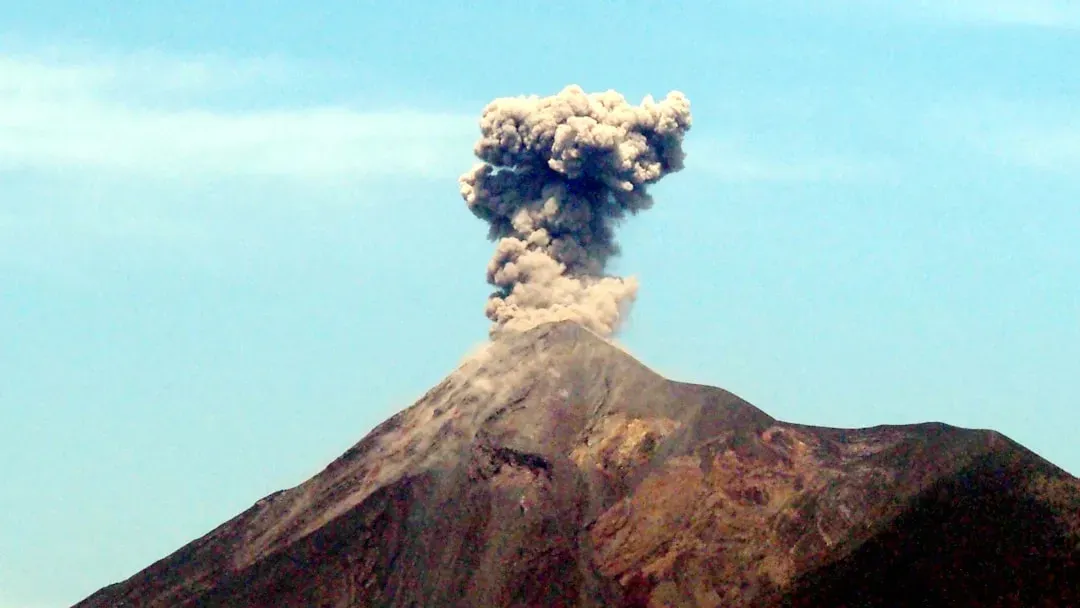
Subducting plates where one tectonic plate is being driven under another are associated with volcanoes and earthquakes, with this activity focused along the edge of the plate boundary where two plates come into contact, forming regions such as the Pacific Ring of Fire which generates 75% of the world’s volcanoes and 80% of the world’s earthquakes. That’s an absolutely staggering concentration of geological violence in one region.
The uplift and sinking of land, earthquakes (the sudden release of energy that causes shaking), and volcanic eruptions are all evidence of interactions and stress due to the movement of the plates. The movement of faults at plate boundaries can provide a convenient pathway for magma to reach the surface. The tectonic activity along the Ring of Fire results in about 90% of the world’s earthquakes, including the Valdivia Earthquake of Chile in 1960, and is where an estimated 75% of the planet’s volcanoes are located. The numbers are honestly mind-boggling when you consider how much of Earth’s geological fury is concentrated in this one horseshoe-shaped zone.
The Big Picture: Why Plate Tectonics Matters
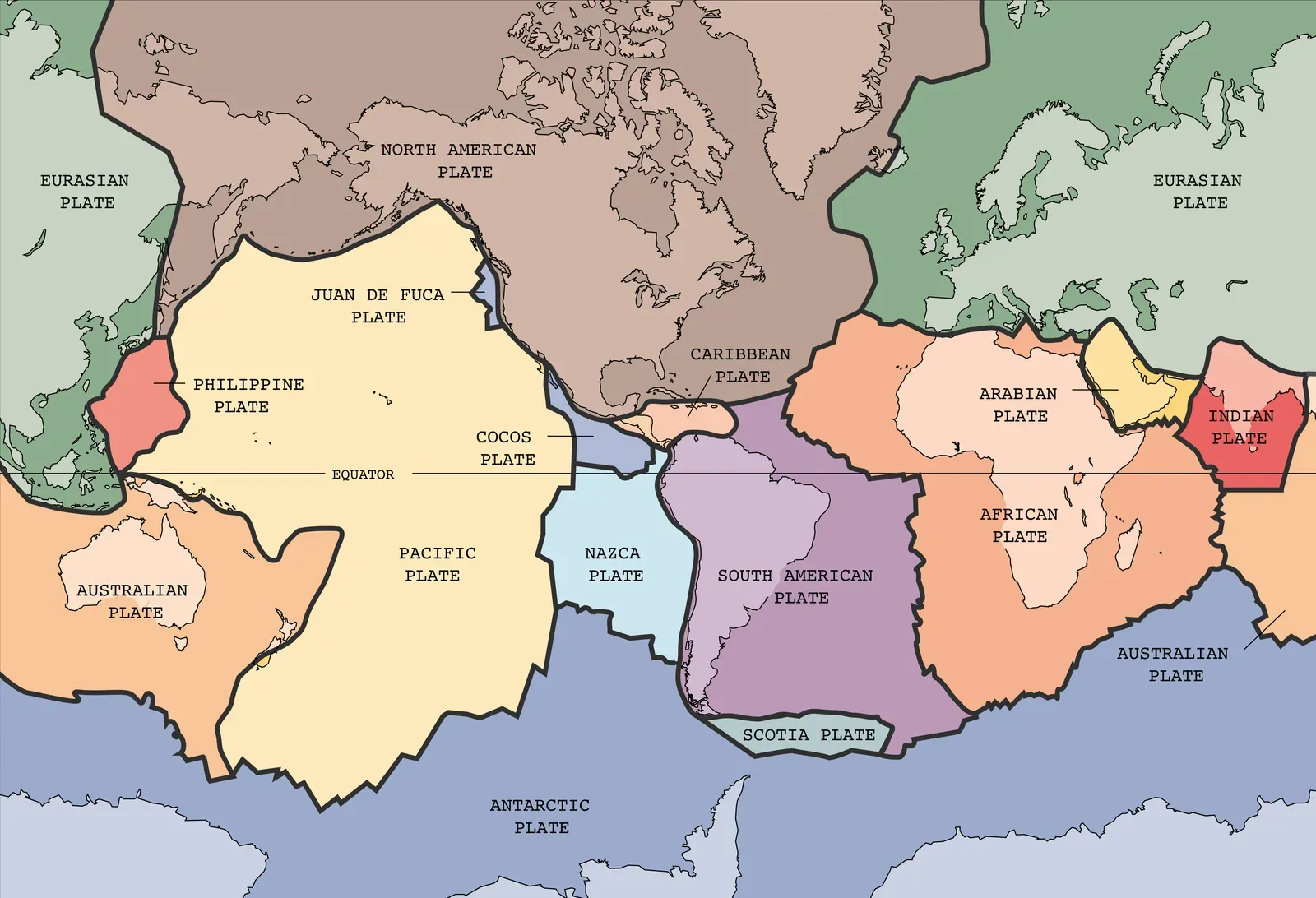
Plate motion may seem slow, but over millions of years plate tectonics shapes the distribution of continents and oceans and mountain ranges that shape diverse ecosystems and influence global climate. Plate tectonics have helped to shape global climate over the past 540 million years, with mid-ocean ridges and continental rifts playing a significant role in driving Earth’s carbon cycles throughout geological time.
The concept of plate tectonics and its consequences has reinforced the notion that the Earth is an integrated whole, not a random collection of isolated parts. Everything connects. The mountains you climb, the beaches where you vacation, the fertile valleys where your food grows, they all exist because of these massive plates grinding, colliding, and separating beneath your feet. We must become more resourceful in reaping the long-term benefits of plate tectonics, while coping with its short-term adverse impacts, such as earthquakes and volcanic eruptions.
Our planet is a dynamic, ever-changing world powered by an engine of heat and pressure that has been running for billions of years. Understanding plate tectonics isn’t just an academic exercise. It helps us predict where earthquakes might strike, where volcanoes might erupt, and how our world might look millions of years from now. The ground beneath your feet is moving right now, carrying you along on a journey that started long before humans existed and will continue long after we’re gone. What do you think about living on a planet that’s constantly reshaping itself? Tell us in the comments.