There is something deeply stirring about the idea of a small group of people standing at the edge of an unknown continent, with no map, no GPS, and no guarantee of survival. Just raw instinct, collective knowledge, and an extraordinary drive to keep moving forward. The story of how early humans conquered the vast, wild, and sometimes terrifying landscape of ancient America is one of the most gripping tales in all of human history, and honestly, it keeps getting more fascinating the more researchers dig into it.
What’s incredible is that we keep revising what we think we know. New footprints, new bones, new genetic data, each discovery rewrites chapters that scientists thought were already closed. So buckle up, because the real story of America’s first people is nothing like the tidy narrative you may have learned in school. Let’s dive in.
The Shocking Timeline: When Did Humans Really Arrive?
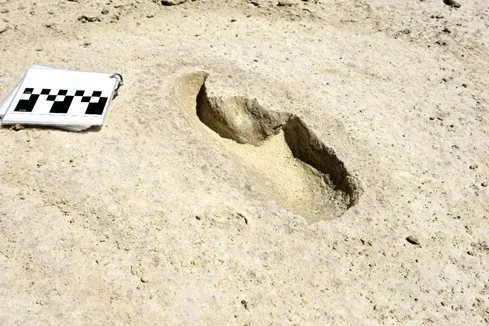
Here’s the thing. For decades, the standard answer to “when did people first arrive in America” was roughly 13,000 years ago. Neat, simple, and, as it turns out, very likely wrong. Human footprints at White Sands National Park in New Mexico show that human activity occurred in the Americas as long as 23,000 years ago, pushing back the known timeline by roughly 10,000 years. That is not a minor adjustment. That is a fundamental paradigm shift.
The claim that footprints discovered in what is now New Mexico were between 23,000 and 21,000 years old turned the dominant theory on its head. A new analysis of these footprints, using two different techniques, confirmed the date, providing seemingly incontrovertible proof that humans were already living in North America during the height of the last Ice Age. Think about that for a moment. These people were living through one of the most brutal climate events in Earth’s history, and they were not just barely surviving. They were leaving footprints in the mud near ancient lakes as if it were an ordinary Tuesday.
In 2020, archaeologists digging in Chiquihuite Cave in the Astillero Mountains of central Mexico unearthed about 1,900 stone artifacts. Radiocarbon and optically stimulated luminescence dating of the objects suggested that humans might have occupied the area between 31,000 and 33,000 years ago. It is hard to say for sure whether this evidence is as solid as White Sands, but the picture emerging is clear. Humans were in the Americas far, far earlier than most people ever imagined.
The Great Migration: Crossing Into a New World
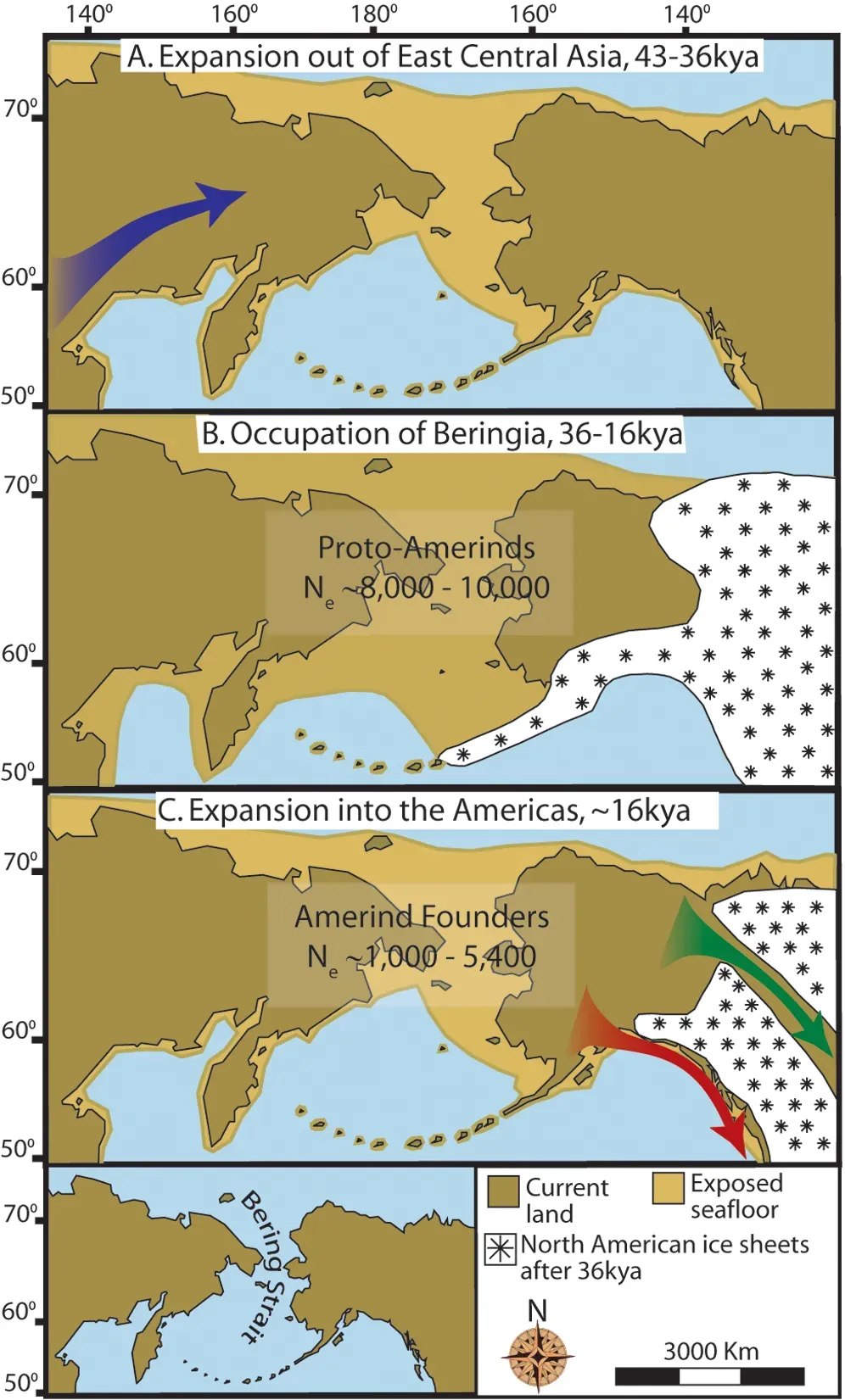
It is believed that the peopling of the Americas began when Paleolithic hunter-gatherers, known as Paleo-Indians, entered North America from the North Asian Mammoth steppe via the Beringia land bridge, which had formed between northeastern Siberia and western Alaska due to the lowering of sea level during the Last Glacial Maximum. Imagine crossing what is essentially a massive frozen land corridor, with ice walls on either side and only the herds of megafauna ahead to guide you.
The most generally accepted theory is that Ancient Beringians moved when sea levels were significantly lowered, following herds of now-extinct Pleistocene megafauna along ice-free corridors that stretched between the Laurentide and Cordilleran ice sheets. Another proposed route has them migrating down the Pacific coast to South America as far as Chile, either on foot or using boats. Two dramatically different roads into a new world, and evidence suggests both routes may have been used.
Phylogeographic analyses at the highest level of molecular resolution reveal that two almost concomitant paths of migration from Beringia led to the Paleo-Indian dispersal approximately 15,000 to 17,000 years ago. One haplogroup spread into the Americas along the Pacific coast, whereas the other entered through the ice-free corridor between the Laurentide and Cordilleran ice sheets. This is genetics telling the story of two ancient highways into an entire continent, and it is nothing short of remarkable.
Hunting Giants: The Incredible Prey of Ancient Americans
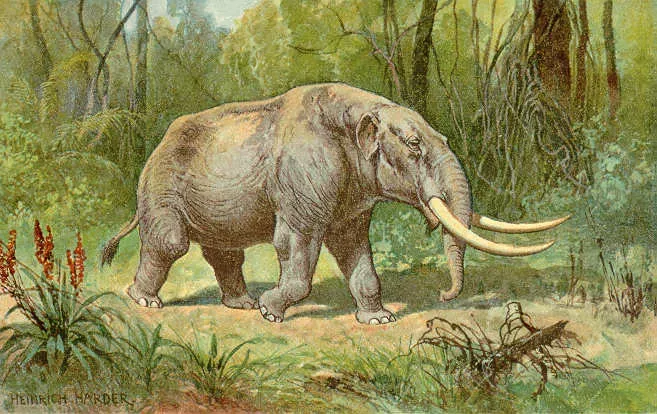
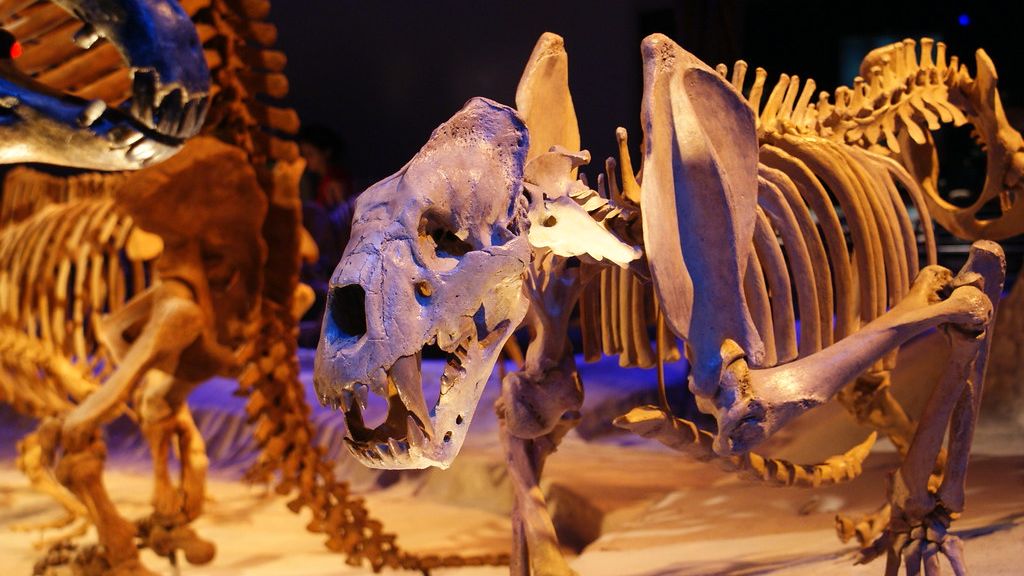
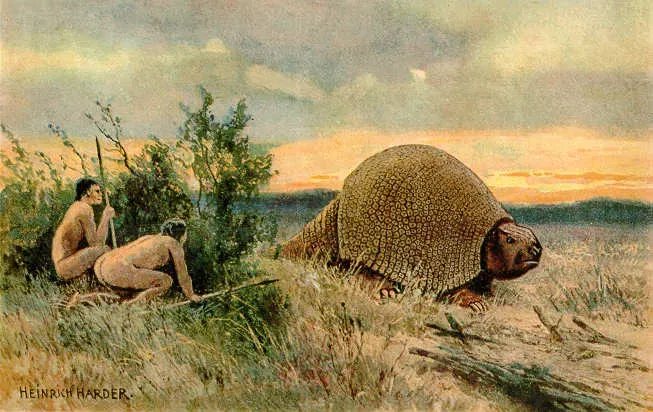
You might picture ancient hunters taking down rabbits and deer. Let’s be real, the actual menu was on a completely different scale. At the beginning of their era, Paleoindians focused attention on large game such as “Mega-Fauna,” which included the mastodons, bison antiquus, and ground sloths, all extinct today. These were not small animals by any stretch of the imagination. A full-grown mastodon could weigh several tons, and yet early Americans were hunting them as a dietary staple.
Study authors discovered something remarkable when they compared the dietary fingerprint of an ancient individual to those of various Ice Age animals: her pattern most closely matched that of the scimitar-toothed cat. Further analysis showed that mammoth meat formed the largest portion of her diet, followed by elk and bison or camel meat. Smaller animals like rabbits and marmots made up only a tiny fraction of what she ate. Think about that. These ancient Americans were essentially eating like apex predators.
Unlike smaller game animals, which might be abundant in one area but scarce in another, mammoths roamed across vast territories. By following these herds, Clovis hunters could move into new areas without having to learn the patterns of local prey. It was a brilliantly flexible survival strategy. Follow the biggest animal on the continent and you never go hungry, no matter where you end up.
Tools of Survival: Ancient Ingenuity in Stone and Bone
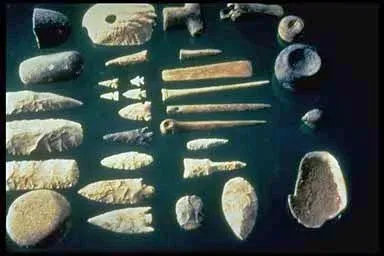
When you think about it, the toolkit of a Paleo-Indian was essentially the difference between life and death every single day. Paleo-Indian technology included knapped, or chipped, stone tools such as scrapers, knives, and projectile points, such as the famous Clovis point. Throughout the Paleo-Indian era, the spear was the most common weapon. These were not crude or haphazard objects. They were precision instruments shaped through extensive skill and knowledge passed down across generations.
Spear-throwers provided leverage for hurling spears and darts greater distances with more speed and accuracy and with less chance of injury from prey. Stone or bone points, attached to spears or darts, enabled humans to exploit fast-moving prey like birds and large, dangerous prey like mammoths. It is the Stone Age equivalent of engineering a weapon system. Distance meant safety, and safety meant survival.
The idea that any early human species had a very narrow diet is likely not accurate. It was probably omnivory, the ability to eat a large variety of things, that helped humans to survive and to reproduce. The same flexible genius that produced varied tools produced a varied diet. Early Americans were not locked into any one strategy. They adapted and problem-solved constantly, which is honestly what makes their story so captivating.
Fire, Shelter, and the Art of Staying Alive

Imagine surviving a North American winter without electricity, insulation, or central heating. The early Americans did it, and they did it brilliantly. Early humans developed extensive clothing and other insulation methods to protect themselves from the cold. A key innovation was the use of animal hides, fur, and pelts. Hunting large game provided both a source of nutrition and also raw materials for warm garments. Every mammoth or bison killed was not just dinner. It was also a coat, a blanket, and material for building.
The ability to make fire on demand helped people moving into harsh new places become more adaptable and enlarged the range of environments they could survive in. Scientists suggest that the ability to make fire on demand helped create places for people to gather during the night, perhaps sharing food and developing language, making them more sociable and helping their brains develop. Fire was not just warmth. It was the original community center, the first living room, the birthplace of storytelling.
Caves provided natural protection from predators and harsh climates, making them ideal shelters for extended periods. These habitats often served as safe retreats, preserving warmth in cold environments and offering shade in hotter regions. Early humans recognized the advantages of using caves as long-term dwelling sites, leading to semi-permanent settlement patterns. Over time, though, shelters evolved. Early humans developed more sophisticated housing structures, including hide-covered tents and rudimentary huts made from wooden frames and packed snow or mud.
Community Life: The Social Glue That Made It All Work
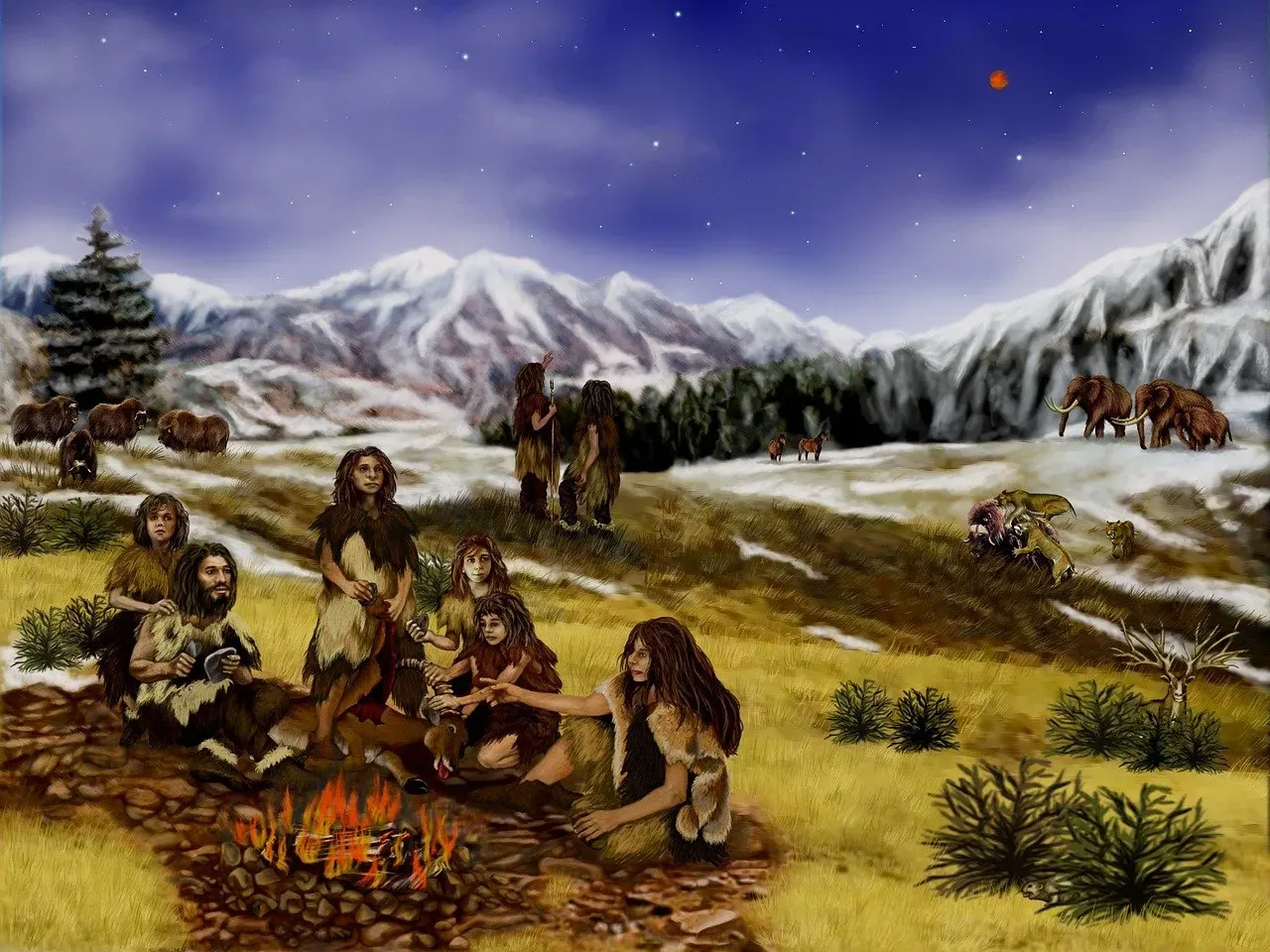
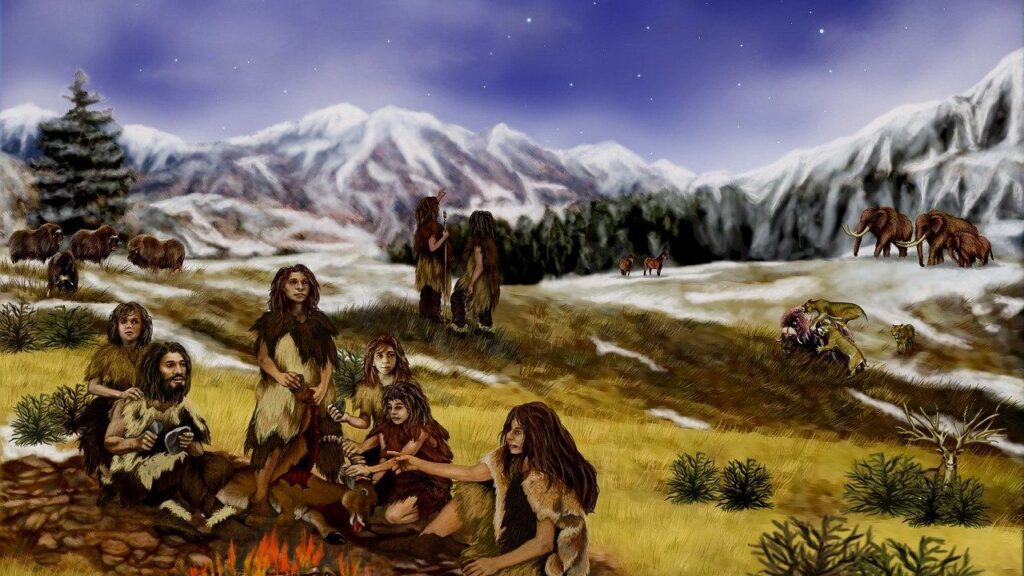
Survival in ancient America was never a solo act. This early Paleo-Indian period lithic reduction tool adaptations have been found across the Americas, utilized by highly mobile bands consisting of approximately 25 to 50 members of an extended family. Think of it like a small village constantly in motion, where every single person had a role to play and the stakes were always survival.
Based on size and estimated gait, the tracks found at White Sands are thought to be those of teenagers and children. The researchers suggest that they were probably being tasked with less demanding roles, such as fetching and carrying, while their parents were out hunting. It is a surprisingly touching image. Even tens of thousands of years ago, children were helping out around the “house,” contributing to the group’s survival in age-appropriate ways.
Members worked together to hunt and gather resources, enhancing their chances of survival. Food and resources were shared among band members, reinforcing social bonds and ensuring that everyone had enough to eat. Individuals often took on specific roles based on age, gender, and skill, contributing to the overall efficiency of the group. This cooperative spirit was essential for navigating the challenges of their environment and forming the foundation of community life. Without that social structure, none of it works. The tools, the fire, the hunting strategies, all of it depended on people choosing to work together rather than apart.
Conclusion
The story of how early humans thrived in ancient America is not a story of primitive struggle. It is a story of remarkable intelligence, breathtaking adaptability, and deep community bonds forged under the most extreme conditions imaginable. These people crossed frozen continents, hunted the largest animals on Earth, engineered sophisticated tools from stone and bone, and built social structures that sustained life across tens of thousands of years.
Every new discovery, from footprints pressed into ancient New Mexican mud to isotope data extracted from 13,000-year-old bones, adds another layer of awe to what they accomplished. Humans are very early on capable of making incredible journeys, of doing things that we, even with modern equipment, would find very difficult to achieve. There is humility in that thought. We, with all our technology and knowledge, are still catching up to what our ancestors already understood about surviving in the wild.
So the next time you look at a stone arrowhead in a museum or glance at a map of the Americas, take a moment to appreciate the extraordinary human story that started it all. What part of their survival story surprises you the most? Share your thoughts in the comments below.