Lost for 150,000 Years: Rainforest Discovery Upends Human History – Image for illustrative purposes only (Image credits: Pexels)
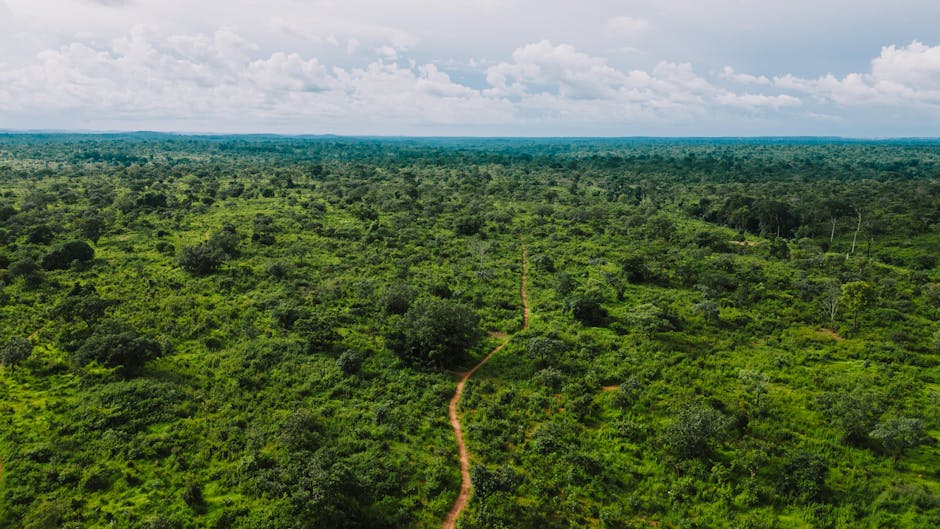
In the dense, humid lowlands of West Africa, researchers have brought to light evidence that early humans not only survived but flourished in environments once considered too harsh for sustained prehistoric life. The discovery centers on artifacts and remains that point to long-term occupation within what is now thick rainforest canopy. Such findings stand in quiet contrast to decades of assumptions that open savannas alone shaped the earliest chapters of our species.
Evidence from the Forest Floor
Excavations have yielded stone tools, plant remains, and other traces that indicate repeated use of the same rainforest locations over extended periods. These materials suggest groups maintained themselves through a mix of foraging, hunting, and resource management suited to closed-canopy conditions. The consistency of the finds across multiple layers points to stable rather than fleeting presence.
Soil analysis and dating techniques have helped place the occupation within a timeframe that overlaps with major periods of human dispersal across the continent. Rather than isolated incidents, the pattern implies deliberate adaptation to the challenges of heavy rainfall, limited visibility, and diverse but demanding flora and fauna.
Questioning Long-Standing Assumptions
For generations, models of human evolution emphasized savanna landscapes as the primary setting for early development. Open grasslands were thought to favor traits such as upright walking, tool use, and social cooperation. Dense forests, by comparison, were viewed as barriers that would have hindered movement and resource access.
The new material from West Africa directly tests that framework. It shows that early populations possessed the flexibility to exploit varied ecosystems, including those with thick vegetation and high humidity. This adaptability broadens the picture of where and how foundational human behaviors emerged.
Broader Implications for Prehistory
Understanding that rainforests supported viable communities changes how scientists map ancient migration routes. It suggests that movement through or around forested zones may have been more feasible than previously modeled, potentially linking populations across wider geographic ranges. The evidence also invites fresh examination of diet, technology, and social organization in these settings.
Similar sites elsewhere on the continent could now receive renewed attention. Researchers are already considering whether comparable adaptations occurred in other tropical regions, which might refine timelines for when and where key innovations took hold.
Looking Ahead
Further fieldwork and laboratory work will be needed to fill in details about daily life and environmental conditions at the time. Still, the current results already demonstrate that early humans were more ecologically versatile than many textbooks have portrayed.
This single discovery serves as a reminder that the full story of human origins continues to unfold in unexpected places. Each new layer of evidence adds nuance to a narrative that remains very much in progress.