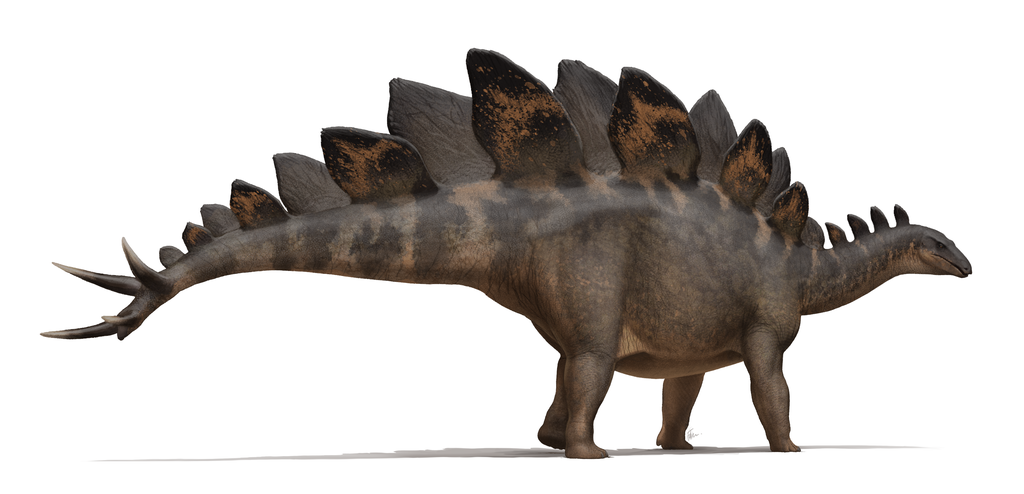
In the dense forests and open plains of the Late Jurassic period, approximately 150 million years ago, the magnificent Stegosaurus roamed what is now western North America. These distinctive dinosaurs, with their double row of kite-shaped plates along their backs and spiked tails, lived in a world vastly different from our own. But what was daily life actually like for these herbivorous giants? By combining paleontological evidence, fossil analysis, and comparisons with modern animals, scientists have pieced together a fascinating glimpse into how a Stegosaurus might have spent its day. Let’s journey back through time and follow a Stegosaurus from dawn until dusk during the Jurassic period.
Dawn Breaks in the Jurassic

As the first light filters through the conifer trees of the late Jurassic landscape, our Stegosaurus slowly rouses from its night of rest. Having likely slept in a protected area—perhaps in a small clearing surrounded by vegetation that could alert it to approaching predators—the dinosaur’s body temperature has dropped during the night. The massive plates along its back, which serve multiple functions including thermoregulation, begin to catch the morning sunlight. Blood vessels within these plates start to warm the animal’s body, much like a solar panel collecting energy. The Stegosaurus rises to its feet, its four sturdy legs supporting its approximately 4-ton body, and lets out a low vocalization that might communicate with nearby herd members that it’s time to begin the day’s activities.
Morning Feeding Frenzy
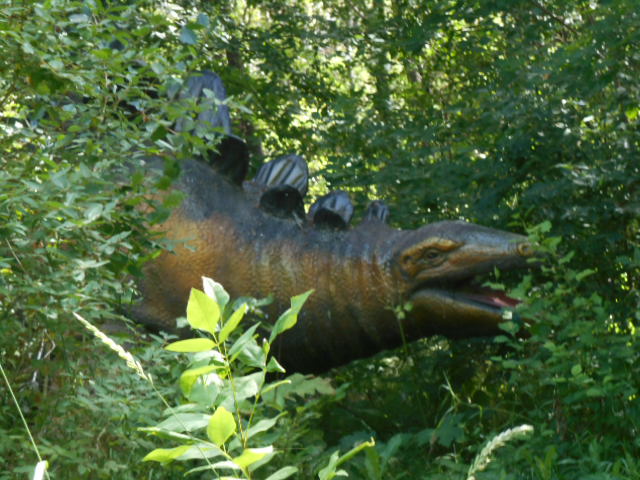
With its body temperature rising to optimal levels, the Stegosaurus begins its most important morning activity: feeding. As a herbivore with a relatively small head and weak, peg-like teeth, this dinosaur likely focused on soft vegetation rather than tough fibrous plants. Using its narrow beak-like mouth, it carefully selects ferns, mosses, and low-growing cycads. The Stegosaurus doesn’t chew its food thoroughly—instead, it nips and tears vegetation before swallowing, relying on gastroliths (stomach stones) and a large digestive tract to break down plant material. Moving slowly but deliberately, it might consume several hundred pounds of vegetation each day, with much of this intake occurring during the cooler morning hours when the dinosaur has the energy to forage extensively before the midday heat.
Social Interactions Within the Herd
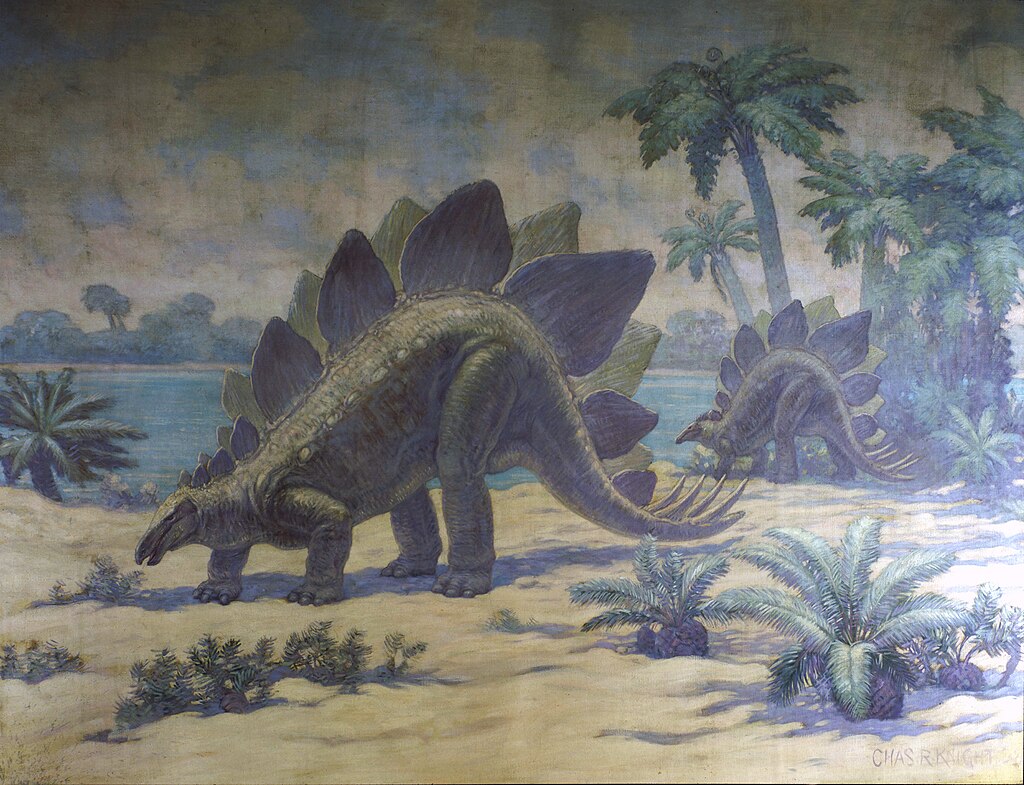
Fossil evidence suggests that Stegosaurus likely lived in loose social groups, though perhaps not in the tightly organized herds seen in some other dinosaur species. During the morning hours, our Stegosaurus might interact with others of its kind, particularly during breeding season. These interactions could include visual displays where individuals turn to showcase their impressive plates and spikes—potentially both for intimidation and attraction purposes. Juveniles within the group might practice defensive maneuvers, learning to position their spiked tails effectively. Subtle vocalizations, perhaps low-frequency sounds below human hearing range (similar to those used by modern elephants), could serve as communication methods between herd members to maintain cohesion while feeding across a wider area, providing better protection through numbers against predators like Allosaurus.
Midday Heat Management
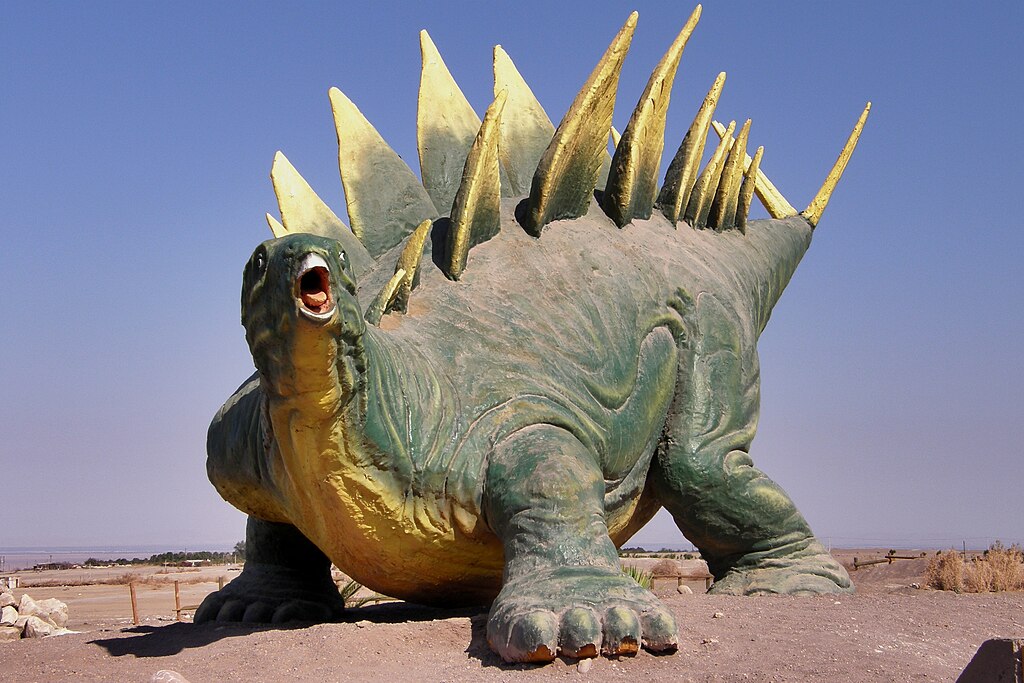
As the Jurassic sun reaches its zenith, the Stegosaurus faces a significant thermoregulatory challenge. Its massive body could potentially overheat, particularly problematic for a creature with a brain the size of a walnut and limited cognitive cooling strategies. This is when the plates along its back serve a crucial function, acting as radiators to dissipate excess heat. The Stegosaurus likely positions itself to maximize either heat absorption or loss, depending on its needs—turning the broad surfaces of its plates perpendicular to the sun to shed heat during hot periods. During this time, our Stegosaurus might seek the shade of tall conifers or giant tree ferns, reducing its activity level to conserve energy. This midday rest period would be crucial for digestion, allowing the dinosaur’s massive digestive system to process the morning’s substantial plant intake.
Water Sources and Hydration
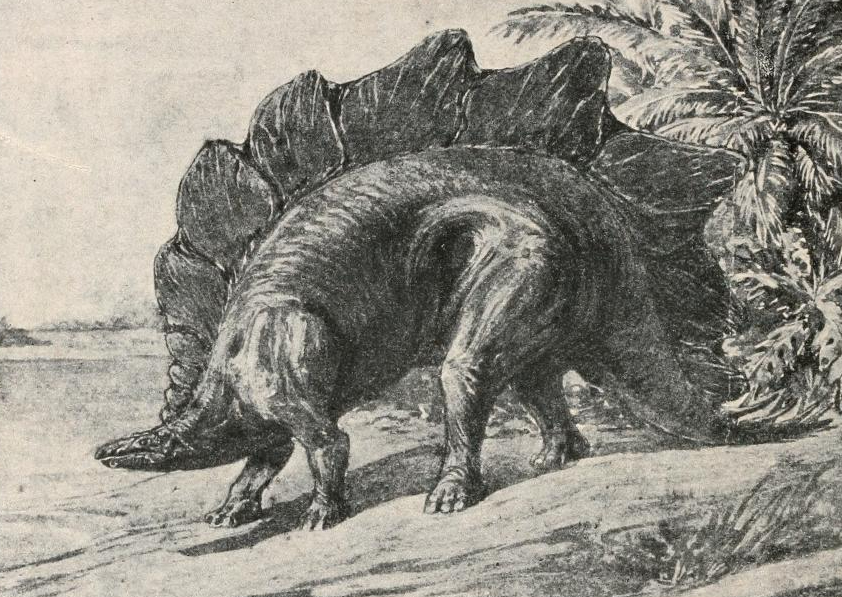
Managing hydration would have been critical for a large herbivore like Stegosaurus, particularly given the warm Jurassic climate. During the late morning or early afternoon, our dinosaur would likely make its way to a water source—perhaps a river, lake, or waterhole. Fossil evidence shows that many dinosaur remains are found near ancient water sources, suggesting these were important gathering places. The Stegosaurus would drink substantial quantities, lowering its head to the water’s edge while remaining vigilant for predators. These water sources would also provide opportunities for the dinosaur to cool off, perhaps wading into shallower areas to lower body temperature. Water access points would serve as natural meeting places where different Stegosaurus individuals or even different species might gather, creating complex ecological interactions at these critical resources.
Afternoon Browsing Behaviors
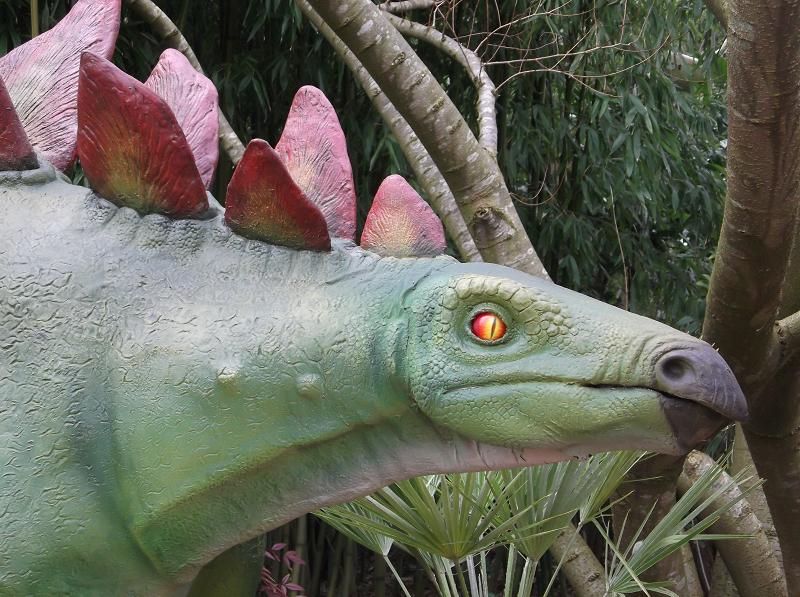
As the intense midday heat begins to wane, our Stegosaurus resumes active feeding. Unlike the morning’s intensive consumption, afternoon browsing might be more selective and deliberate. The dinosaur uses its limited mobility—it couldn’t raise its head much higher than about one meter off the ground—to carefully choose the most nutritious low-growing plants. Its narrow snout allows it to select specific plant parts while avoiding less digestible or potentially toxic components. The Stegosaurus might use its powerful legs to push over smaller cycads or ferns to access the tender growth at their centers. During this afternoon feeding period, the dinosaur continues to move slowly across its range, potentially covering several miles throughout the day as it searches for optimal food sources.
Defensive Posturing Against Predators

Even a massive adult Stegosaurus faced predation threats in the Jurassic ecosystem, particularly from large theropods like Allosaurus. Fossil evidence, including an Allosaurus vertebra with damage consistent with a Stegosaurus tail spike impact, confirms these defensive capabilities were used. When sensing danger, perhaps through ground vibrations or the alert calls of herd members, our Stegosaurus would adopt a defensive posture. It would lower its head and raise its tail, positioning the four sharp spikes (known as the thagomizer) toward the threat. The dinosaur’s plates would serve as visual deterrents, making it appear larger, while also protecting vital areas along its spine. Fossil evidence suggests Stegosaurus could swing its tail with surprising dexterity and force, making it an effective weapon against even the largest predators of its time.
Territorial Behaviors and Range Marking

While much remains unknown about Stegosaurus territory, evidence from modern herbivores suggests our dinosaur might have engaged in some form of range marking or territorial behavior. In the late afternoon, it might use physical markers like pushing over certain plants or even using bodily waste to mark familiar paths. These behaviors would help establish reliable feeding routes and potentially communicate with other Stegosaurus individuals. Territories likely overlapped considerably, with formal “boundaries” being less rigid than what we see in some modern territorial species. Instead, the Stegosaurus might have maintained a familiar range centered around reliable food and water sources, with seasonal migrations possible in response to changing vegetation patterns or reproductive needs.
Evening Feeding Before Nightfall
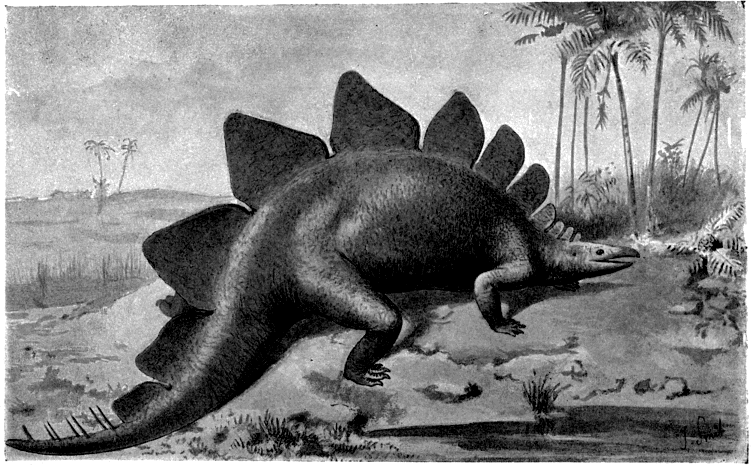
As the Jurassic day begins to wane, our Stegosaurus would engage in a final intensive feeding period before nightfall. This evening feeding would be crucial for consuming enough calories to sustain its massive body through the cooler night hours when its metabolism would slow. The dinosaur might focus on particularly energy-rich plants during this time, or plants with higher water content to prepare for the overnight period. The cooling temperatures would also allow for more active foraging without the risk of overheating. As light fades, the Stegosaurus would become increasingly alert to potential predator threats, as twilight hours often saw increased hunting activity from carnivorous dinosaurs who might use the transitional light conditions to their advantage when stalking prey.
Nighttime Safety Strategies
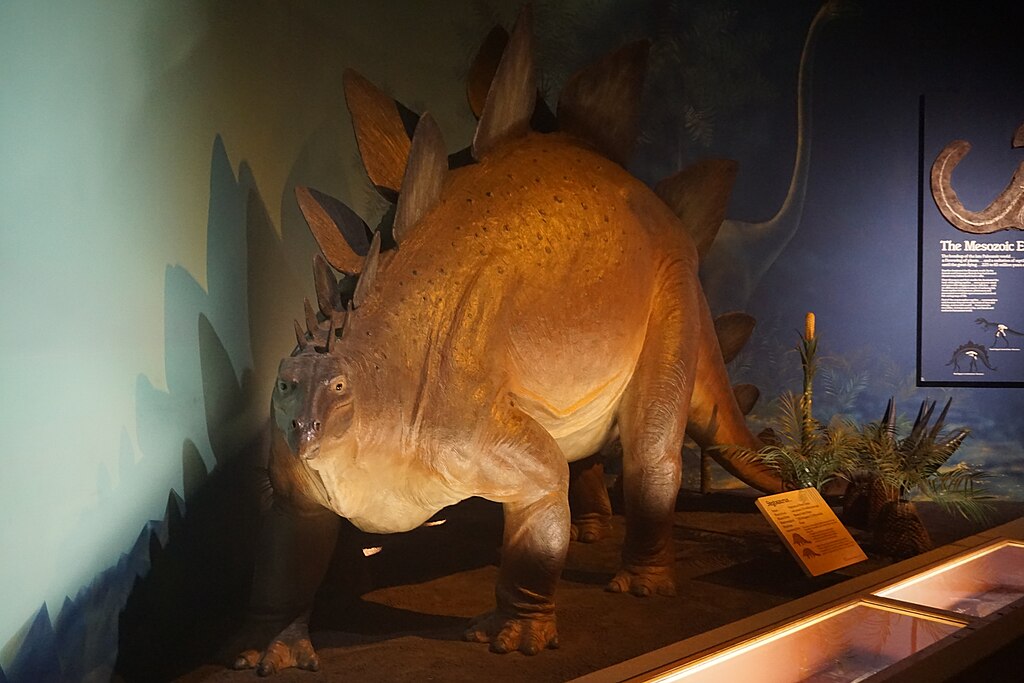
As darkness falls across the Jurassic landscape, our Stegosaurus would need to find a secure location for the night. Unlike some dinosaurs that might have been nocturnal, Stegosaurus was likely primarily diurnal, with limited night vision and activity. The dinosaur might seek areas with good visibility in multiple directions, perhaps slight elevations or clearings surrounded by vegetation that would rustle if approached. Adult Stegosaurus individuals might position themselves protectively around juveniles if traveling in family groups. Their plates, while primarily serving thermoregulatory and display functions during the day, would remain effective visual deterrents even in moonlight, potentially discouraging nocturnal predators. The characteristic tail spikes would remain their primary defensive weapon throughout the night if threats approached.
Sleep Patterns and Nocturnal Metabolism
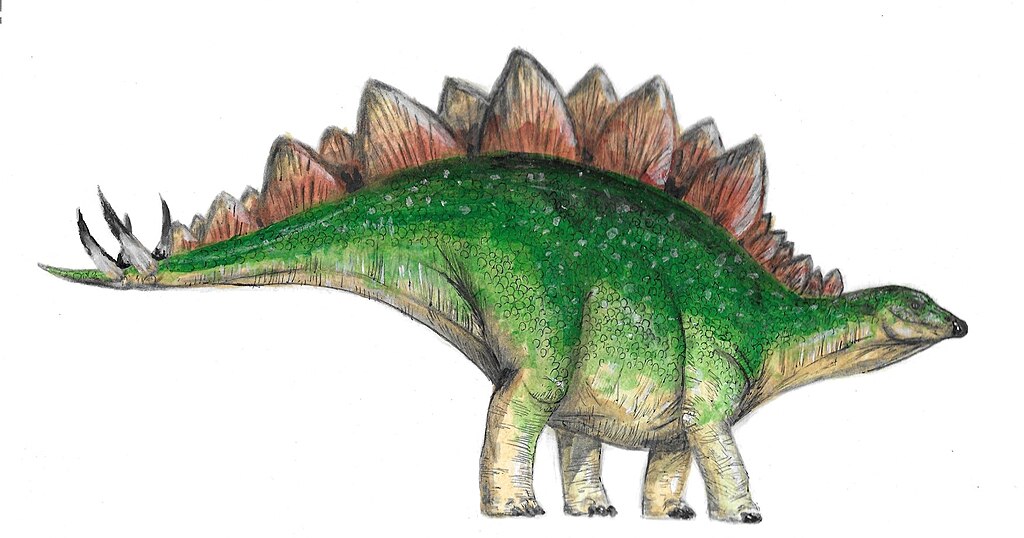
Once settled in a secure location, our Stegosaurus would enter a period of rest, though perhaps not sleep as we understand it in modern mammals. Many reptiles experience different sleep states than mammals, and dinosaurs likely had their own unique patterns. The Stegosaurus’s metabolism would slow considerably during the night, a useful adaptation for conserving energy. Its massive body would retain heat reasonably well, though the large plates would now release the day’s stored warmth, gradually cooling through the night. This daily temperature cycle would be an important rhythm in the dinosaur’s physiological functions. Some researchers speculate that Stegosaurus might have engaged in unihemispheric sleep—resting half the brain while keeping the other half alert—similar to some modern birds and reptiles, though this remains speculative without direct evidence.
Seasonal Variations in Daily Routines
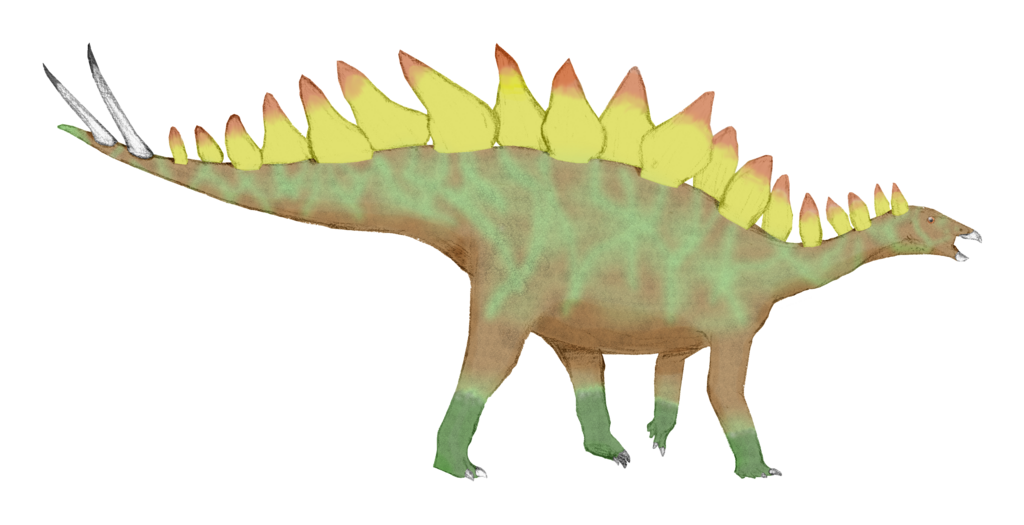
While we’ve explored a typical day, the Stegosaurus’s routine would vary significantly with seasonal changes. During breeding seasons, more time might be devoted to courtship displays and competition, with males potentially using their plates as impressive visual signals to attract mates. The rainy season would alter feeding patterns, perhaps allowing access to different plant types or new growth, while also creating muddy conditions that might impact movement. During drier periods, the dinosaur might spend more time near reliable water sources, adjusting its daily movement patterns accordingly. Fossil evidence from different Stegosaurus specimens shows growth rings in bones similar to tree rings, suggesting these dinosaurs experienced and adapted to seasonal changes throughout their lives, with their daily behaviors shifting in response to these broader environmental cycles.
The Legacy of a Day Long Past
The daily life of a Stegosaurus, while separated from us by 150 million years, leaves traces we can still detect today. From fossilized footprints that reveal walking patterns and social groupings, to teeth that show wear patterns consistent with their plant diet, to the damage on predator bones that demonstrates defensive behaviors—these pieces help reconstruct the complex daily existence of these remarkable creatures. Modern paleontological techniques continue to reveal new insights into how Stegosaurus lived, moved, and interacted with its environment. The daily routines of these dinosaurs, while seemingly ordinary—eating, resting, avoiding predators—collectively shaped the Jurassic ecosystem and contributed to the evolutionary history that eventually led to our modern world. Each day in the life of a Stegosaurus was another small chapter in Earth’s grand evolutionary narrative.
Through examining the likely daily activities of a Stegosaurus, we gain not just knowledge about an individual species, but insights into an entire lost world. From dawn to dusk, these magnificent dinosaurs navigated complex environmental challenges using their unique physical adaptations and behaviors. Their daily lives, while different from any animal alive today, followed the universal rhythms of survival: finding food, avoiding dangers, reproducing, and adapting to environmental conditions. By reconstructing these ordinary days from extraordinary evidence, paleontologists continue to bring the distant past to life, allowing us to visualize not just what these animals looked like, but how they lived during their 150-million-year-old days under a Jurassic sun.