If you tried to design the strangest dinosaur imaginable from scratch, you would probably end up with something that looks suspiciously like Therizinosaurus. It had gigantic scythe-like claws, a potbelly, a beaked face, and feathers, yet it belonged to a group of predators more closely related to Velociraptor than to any plant‑eating giant. When I first saw a reconstruction in a museum, I honestly thought it looked like a prank the paleontologists were playing on the public.
The deeper you dig into what we know about Therizinosaurus, the more it challenges your idea of what a dinosaur was “supposed” to be. This animal broke rules: a member of a meat‑eating lineage that seems to have turned into a slow, bulky, long‑clawed browser; a creature that looks like what you might get if you crossed a giant sloth, an ostrich, and a Freddy Krueger costume. Let’s walk through the key features that made Therizinosaurus one of the most bizarre creatures ever to stomp across our planet.
Those Nightmarishly Long Claws That Started It All
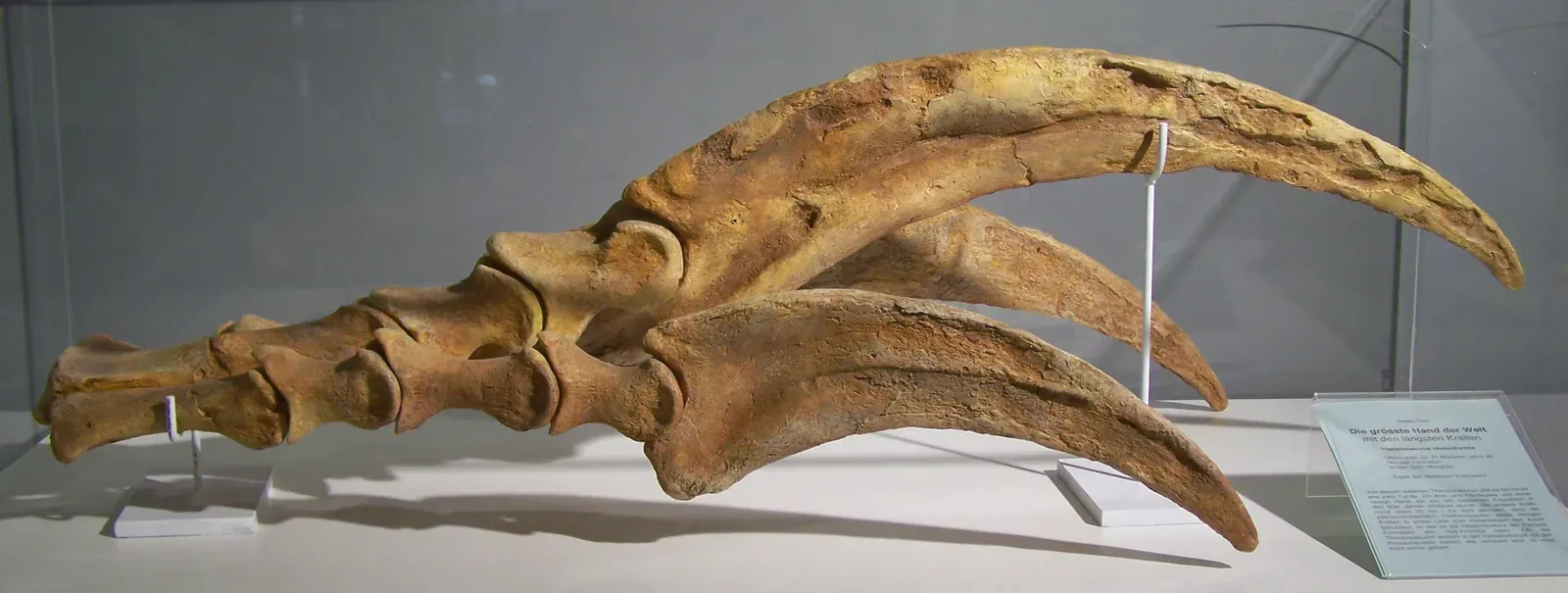
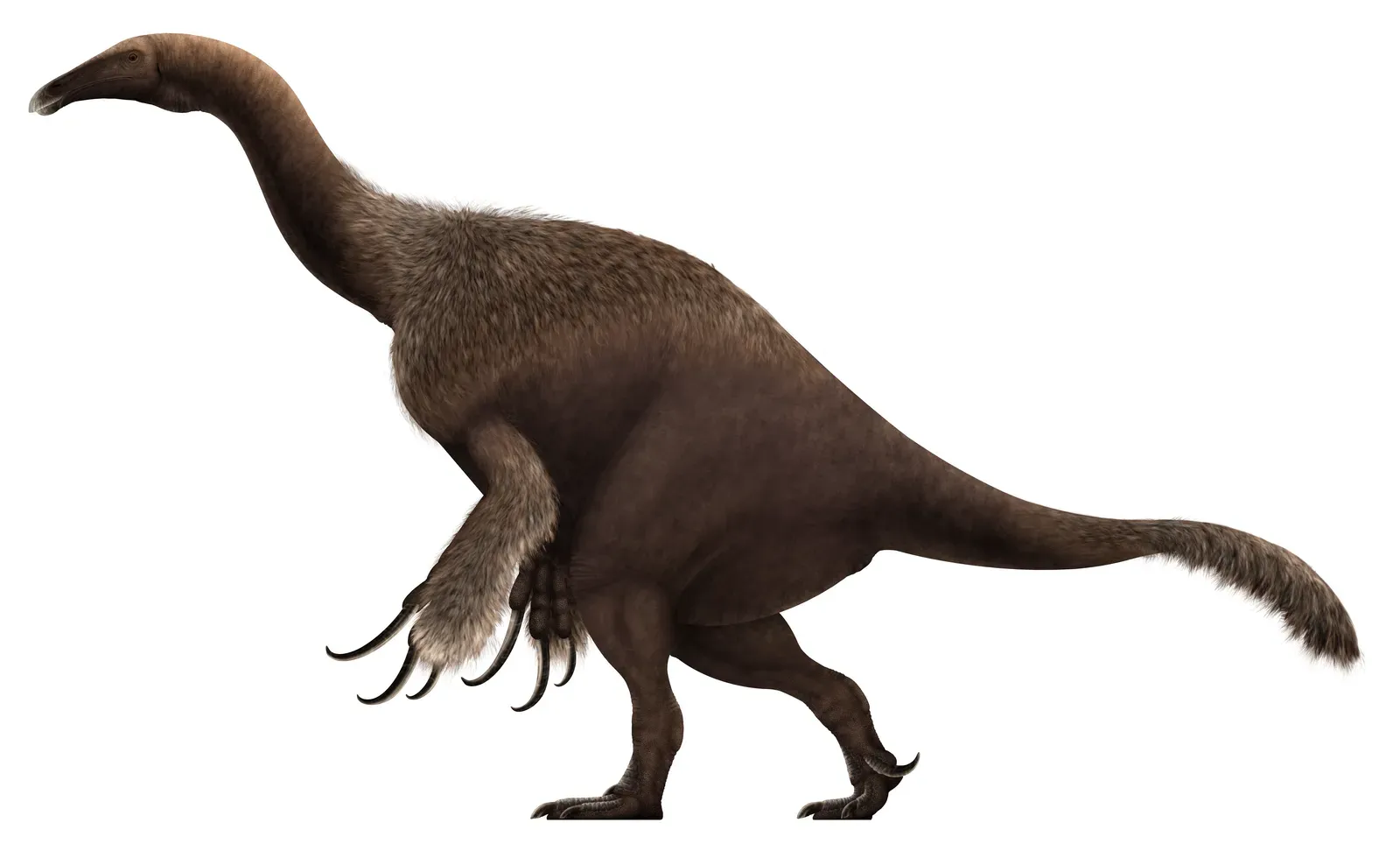
The whole Therizinosaurus story began with its claws, and honestly, they still steal the show. Each hand sported three claws that could reach about three feet in length, making them some of the longest known claws of any animal that has ever lived. Imagine a human arm that ends in three katana blades, and you’re not that far off. When the first fossils were found in the mid‑twentieth century, scientists initially thought they belonged to a huge turtle‑like animal because they were so completely unlike the claws of known theropod dinosaurs.
What makes those claws even stranger is that they were long, narrow, and only moderately curved, more like oversized gardening tools than traditional raptor weapons. Many researchers now think Therizinosaurus used them primarily to hook and pull down branches, strip leaves, or drag vegetation closer to its beaked mouth, rather than for slashing prey. They might still have been dangerous in a fight, of course – one swipe could probably gut a mid‑sized predator – but that may have been a defensive side benefit rather than their main job. It is hard to overstate how unsettling it is to realize that an herbivore may have walked around with weapons that look more terrifying than those of most carnivores.
A Plant‑Eating Giant Born From a Line of Predators
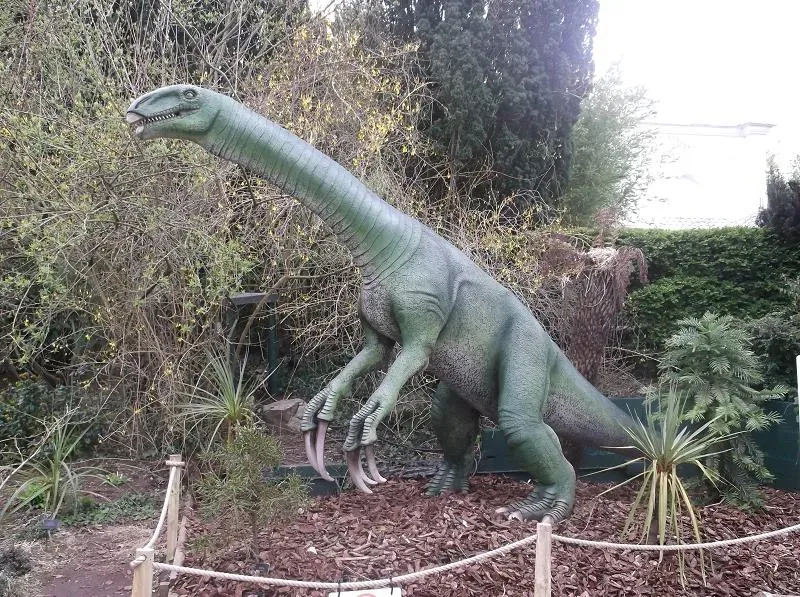
One of the strangest facts about Therizinosaurus is that, under all those odd features, it was still a theropod – the same broad group that gave us iconic predators like Tyrannosaurus and modern birds. Yet the overall body plan points strongly toward a plant‑based diet: a long neck for reaching foliage, a wide barrel‑shaped torso to house a fermentation-friendly gut, and a beak suited to cropping vegetation. Several close relatives preserve teeth that are leaf‑shaped and not at all like meat‑shearing blades, reinforcing the idea that this whole branch of theropods took a hard turn toward vegetarian living.
From an evolutionary standpoint, Therizinosaurus is like that cousin who grew up in a family of butchers and then opened an organic salad bar. Its lineage seems to have gradually shifted from active hunting to browsing, bulking up its body and altering its skull and teeth along the way. That reversal of the typical theropod script is a big part of why it fascinates scientists: it shows that even within a famously predatory group, evolution can run in wildly different directions. To me, this flips the usual dinosaur story on its head and reminds us that nature is more flexible, and frankly more weird, than the Jurassic‑Park version we tend to carry in our heads.
A Body Shape That Looked More Like a Giant Sloth Than a Raptor
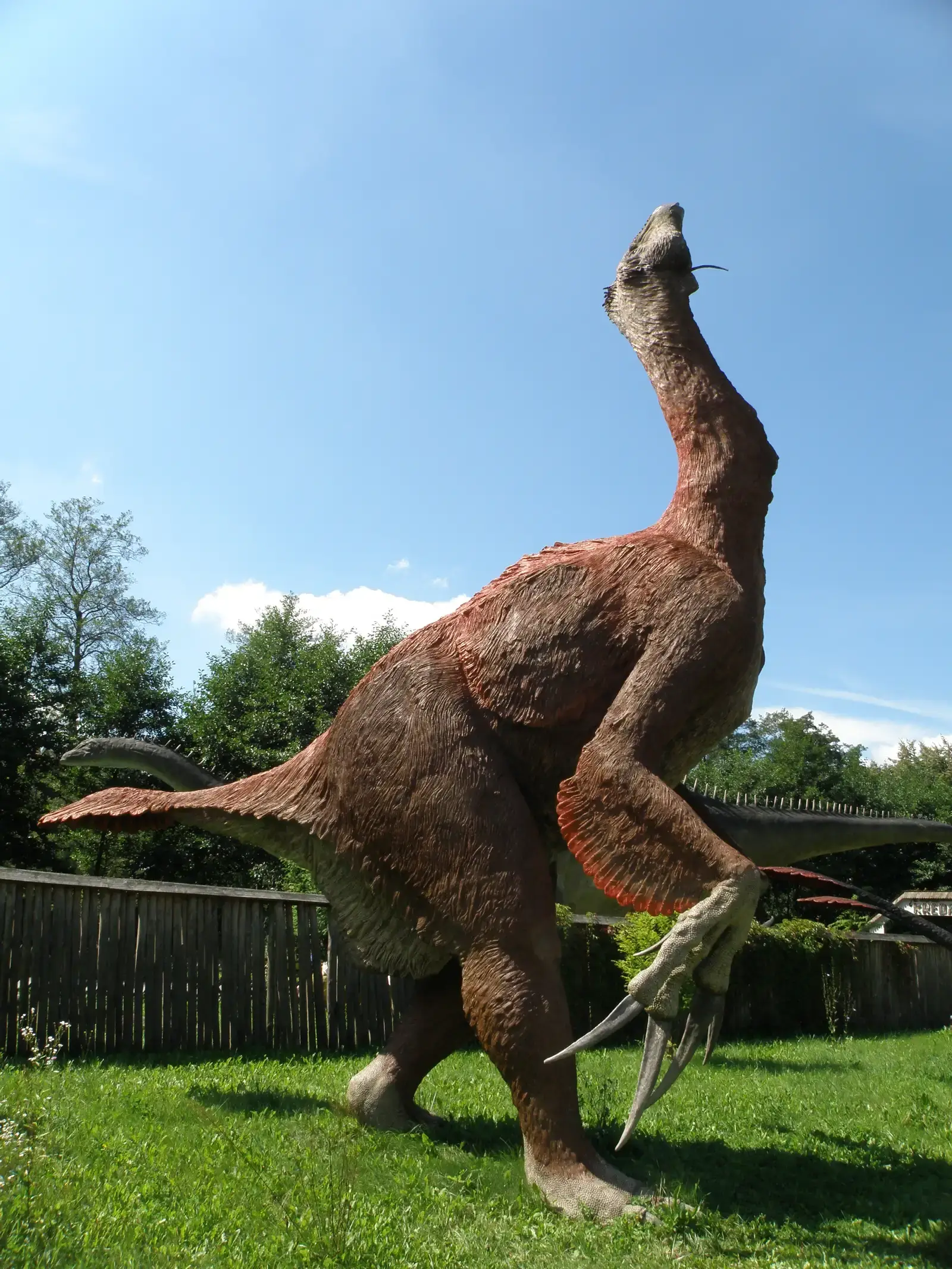
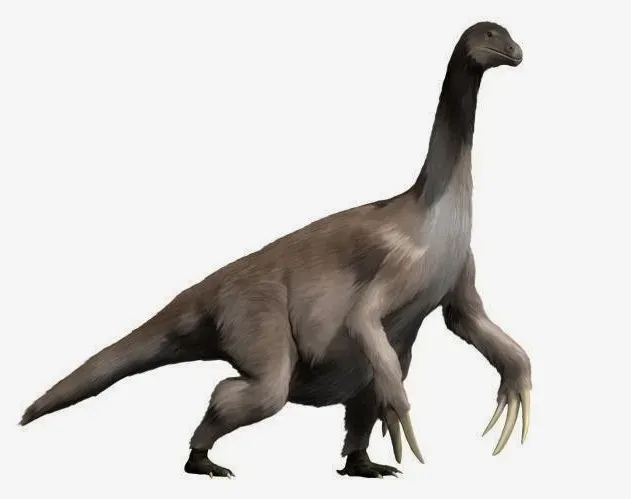
If you saw Therizinosaurus wandering across a Late Cretaceous floodplain, your first impression might not be “dinosaur” at all. Reconstructions suggest a massive, pot‑bellied torso, a relatively small head on a long S‑shaped neck, and strong hind limbs topped by broad hips. Combine that with the long arms and claws, and you get something that looks uncannily like a ground sloth on stilts, rather than the sleek, athletic silhouette we associate with carnivorous theropods. This was likely a slow, deliberate browser rather than a sprinting, pursuit predator.
That bulky build makes sense when you imagine what it needed to do all day: process large amounts of tough plant material. A wide ribcage allows for a larger digestive system, potentially packed with microbes to break down fiber, similar to what we see in large plant‑eating mammals today. In my mind, it helps to think of Therizinosaurus less as a dinosaur “broken” by weird mutations, and more as a giant, specialized herbivore converging on the same sort of solutions that sloths, giant ground sloths, and even some leaf‑eating primates evolved millions of years apart. It just happened to wear a theropod skeleton underneath all of that.
Feathers, Beaks, and the Bird Connection Turned Up to Eleven
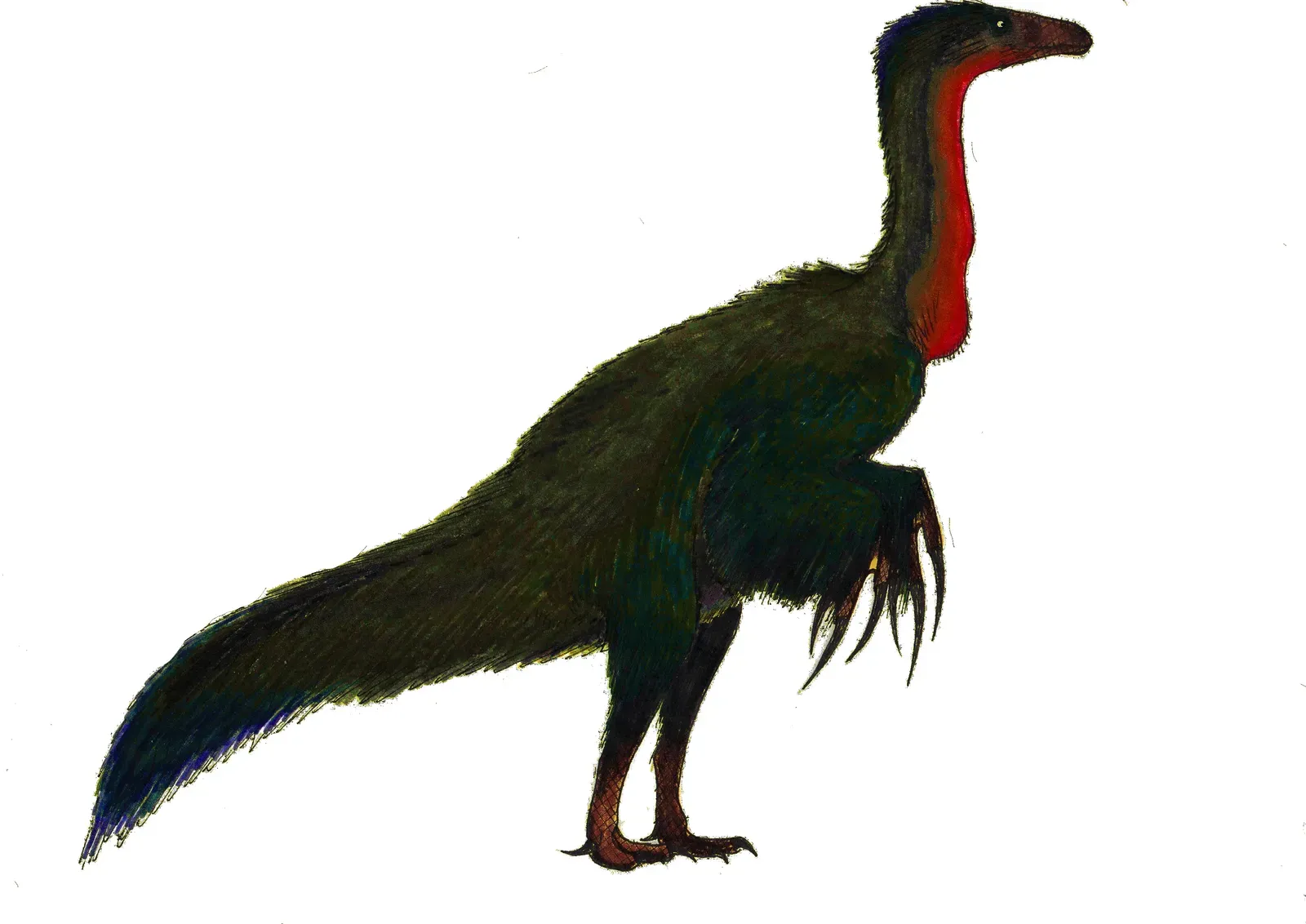
As strange as its claws and belly are, the bird‑like features of Therizinosaurus may be even more important for understanding how bizarre it really was. Evidence from close relatives shows feathers covering much of the body, and it almost certainly had a keratinous beak at the front of the jaw. Picture an enormous, feathered, pot‑bellied creature with scarecrow‑length arms and yard‑long claws, and you are not far from what many paleontologists now think it looked like. It is a far cry from the scaly, reptilian monsters painted in children’s books a few decades ago.
These traits also underscore just how deeply entwined theropod dinosaurs are with the origin of birds. Therizinosaurus lived in the same broad evolutionary neighborhood that would eventually give rise to modern birds, yet it seems to have gone off into its own ecological niche: a feathered, browsing giant rather than a small, flying or fast‑running form. I find it strangely comforting, and a little funny, that birds and something as outlandish as Therizinosaurus share a common heritage. Next time you watch a chicken scratching in the dirt, imagine its family tree branching off to a creature wielding three‑foot claws, and you start to feel just how wild dinosaur evolution really was.
A Mystery Pieced Together From Fragmentary Clues
Another reason Therizinosaurus feels so bizarre is that, for decades, scientists were basically trying to finish a thousand‑piece puzzle with only a handful of oddly shaped pieces. The original fossils were mostly just the enormous claws and parts of the forelimbs, discovered in Mongolia, with almost no context from the rest of the skeleton. That led to early interpretations that it might have been some kind of giant turtle‑like reptile that used its claws for digging or scooping, which sounds completely off the mark in hindsight but shows how disorienting the bones were at the time.
Only later, as related species with more complete skeletons were found, did the picture start to sharpen into the weird, feathered, pot‑bellied dinosaur we talk about today. Even now, we still lack a perfectly complete skeleton, so every new find has the potential to revise our mental image. That uncertainty is part of the charm for me: Therizinosaurus is bizarre not only in its anatomy, but also in the way it has forced scientists to rethink assumptions and stay humble. It is a reminder that paleontology often runs on educated guesswork, constantly updated as more bones emerge from the ground.
An Ecological Oddball in a World of Giants
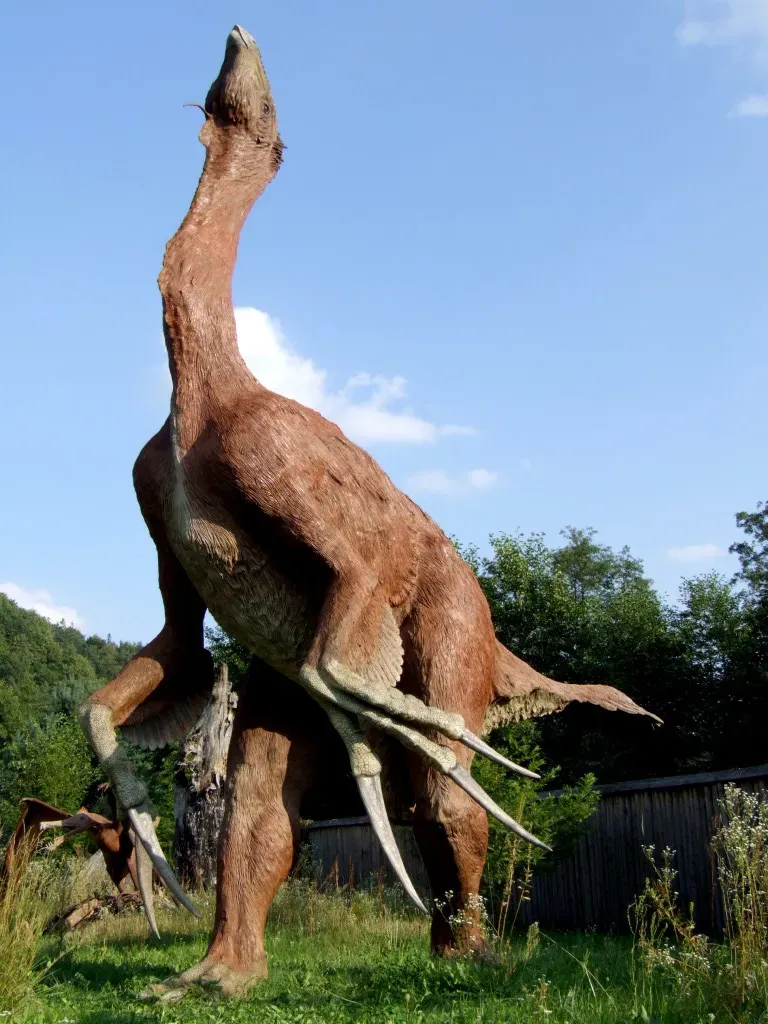
Therizinosaurus did not live in isolation; it shared its environment with large carnivores and other enormous herbivores in Late Cretaceous Asia. In that crowded cast of characters, it still stands out as an ecological oddball, filling a niche that few other dinosaurs seem to have occupied. With its long neck, huge reach, and branch‑hooking claws, it may have specialized in foraging high and wide, browsing on vegetation that was harder for shorter‑armed or shorter‑necked herbivores to exploit. It might have been the specialist canopy gardener of its ecosystem, shaping plant communities with every meal.
At the same time, its intimidating claws and size likely gave predators second thoughts, even if it was fundamentally a peaceful browser. I like to imagine a large predator sizing it up: a tempting mass of meat, wrapped in feathers, with a set of natural scythes on each hand. In that sense, Therizinosaurus turns the usual dinosaur power fantasy on its head. Power here is not about chasing things down; it is about being so well‑armed and uniquely adapted that you can afford to move slowly and focus on plants, confident that almost nothing will bother you unless it is desperate.
Why Therizinosaurus Still Redefines “Weird Dinosaur” Today
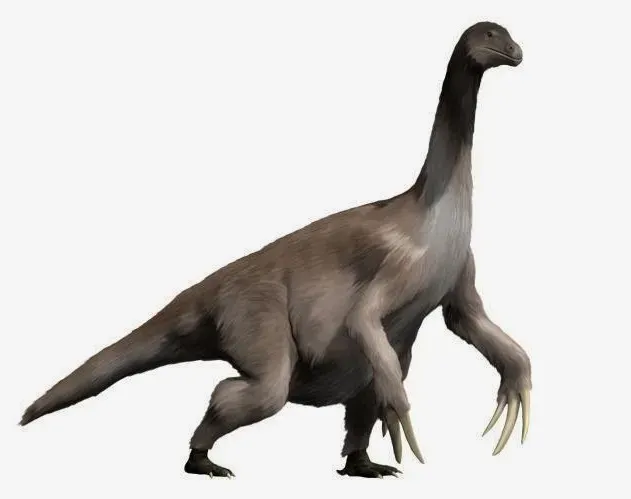
To me, Therizinosaurus deserves its reputation as because it breaks expectations from every angle: predator lineage turned herbivore, claws that look like weapons of horror used for feeding on plants, a body that resembles a giant sloth more than a raptor, and feathers and beaks that push it closer to birds than to the scaly dragons of pop culture. It is not just a dinosaur with one quirky trait; the whole package feels like an evolutionary mash‑up that should not work, yet clearly did, at least for a while. That alone makes it one of the most fascinating case studies in how evolution can remix old parts into something astonishingly new.
My opinion is that Therizinosaurus is exactly the kind of animal that should permanently retire the idea that dinosaurs were all variations on the same reptilian theme. It shows that deep time produced creatures every bit as strange as anything we could dream up now, and probably stranger. The fact that our understanding of it is still evolving only adds to the allure: each new fossil has the potential to make an already weird animal even weirder in our eyes. When you think about it that way, the real question is not why Therizinosaurus was so bizarre, but how many more creatures like it are still hiding in the rock, waiting to upend our expectations all over again. Would you have guessed that one of the oddest giants in prehistory spent its days quietly tearing down branches instead of tearing into prey?