You spend your entire life standing on the crust of the Earth, yet almost everything that keeps your planet alive happens far below your feet. If you could peel back the continents like the lid on a jar, you’d see a restless interior: rock that flows like ultra-thick honey, metallic layers that generate your magnetic shield, and temperatures that rival the surface of the Sun. It is violent down there, but that same violence is the reason you have oceans, air, and a place that stays warm enough for life.
When you hear about the “inside of the Earth,” it can sound abstract, like a diagram from a school textbook that you glance at once and forget. But what crust decides where earthquakes strike your cities, which volcanoes build your landscapes, and even how much carbon sits in your atmosphere. Once you see how these hidden processes work, you start to realize that the ground under you is less like a solid floor and more like the slow, breathing skin of a living planet.
The Layered Planet Under Your Feet
If you could travel straight down from where you’re standing, you would not hit a single uniform “inside,” but a set of distinct layers with totally different personalities. First you’d pass through the crust, that thin outer shell you live on, only a few tens of kilometers thick under continents and much thinner under oceans. Below that, you’d drop into the mantle, which makes up most of Earth’s volume: solid rock overall, but hot and pressurized enough that, over millions of years, it can slowly flow.
Deeper still, you’d cross the boundary into the outer core, where iron and nickel are so hot they behave like a metallic liquid, swirling and churning in giant convection currents. At the very center, you’d reach the inner core, a solid metal ball squeezed by staggering pressure, even though it’s hot enough to melt. You never feel any of this directly, yet every layer plays a role in shaping the surface world you see, like hidden machinery running behind the walls of your home that you rely on without ever opening the panel.
Rock That Flows: How the Mantle Slowly Breathes
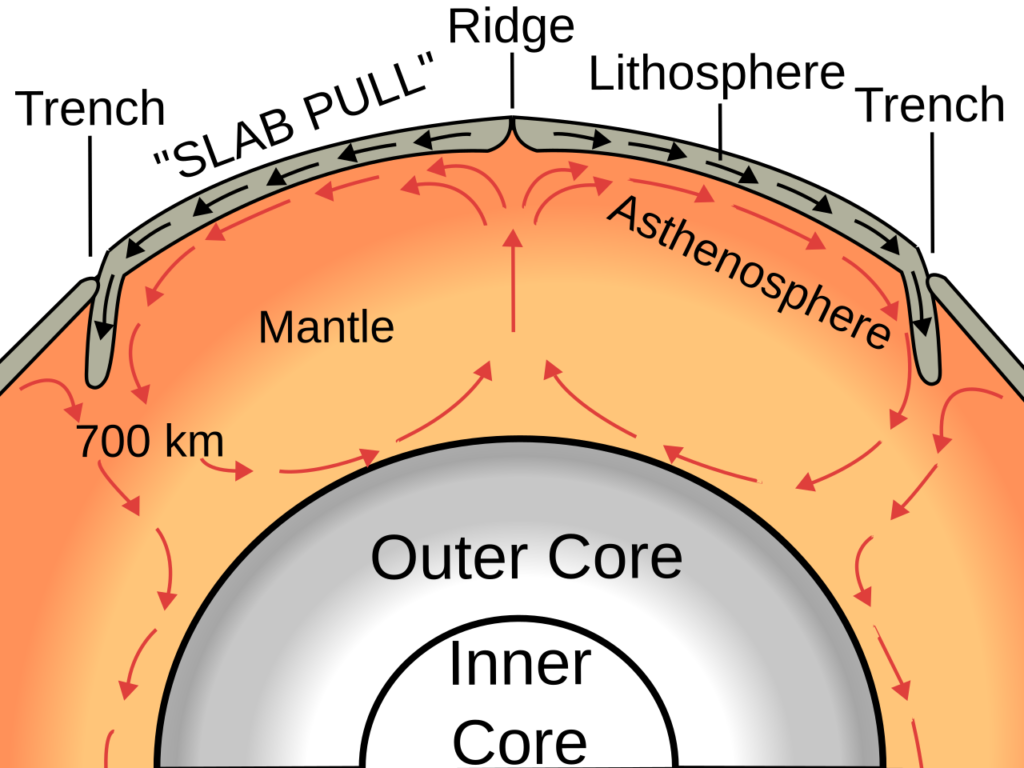
When you picture rock, you probably imagine something stiff and unyielding, the exact opposite of anything that flows. But deep beneath the crust, mantle rock is so hot and under such immense pressure that, given enough time, it behaves more like an extremely sluggish fluid than a rigid block. You can think of it almost like glass: solid in the moment, but capable of very slow deformation if stress and time are large enough. This slow, creeping movement is called mantle convection, and it is one of the main engines of your planet.
Hotter, buoyant mantle material rises from deeper regions, while cooler, denser material sinks back down, setting up giant looping currents over millions of years. You never notice this in your daily life, but this incredibly slow overturning acts like a conveyor belt beneath the crust. It drags entire tectonic plates around, opens new oceans, closes old ones, and rearranges continents over geological time. Every mountain range you see, every ocean basin you cross, and every major volcanic arc ultimately traces its story back to this quiet, relentless “breathing” of the mantle under your feet.
Tectonic Plates: The Cracked Shell That Never Sits Still
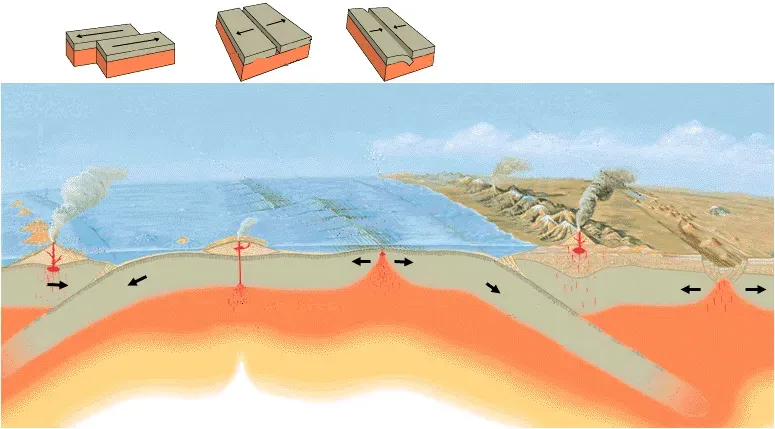
From your perspective, continents look fixed and immovable, but the crust is broken into great slabs called tectonic plates that never truly rest. These plates carry entire continents and oceans on their backs, sliding past each other, colliding, or pulling apart at speeds comparable to the growth of your fingernails. You don’t notice the motion on human timescales, yet when the built-up stress between plates suddenly releases, you feel it as earthquakes that can reshape cities in seconds.
Where plates dive back into the mantle at subduction zones, the crust sinks, melts partially, and fuels chains of volcanoes such as those you see along major ocean margins. Where plates pull apart, new crust forms from rising magma, creating mid-ocean ridges and rift zones. These shifting boundaries also control where mountain belts rise and where deep ocean trenches form. So every time you look at a global map, you are essentially seeing a snapshot of a moving jigsaw puzzle, its pieces steered from deep within the planet rather than from anything at the surface.
Molten Rock, Magma Oceans, and the Birth of Volcanoes
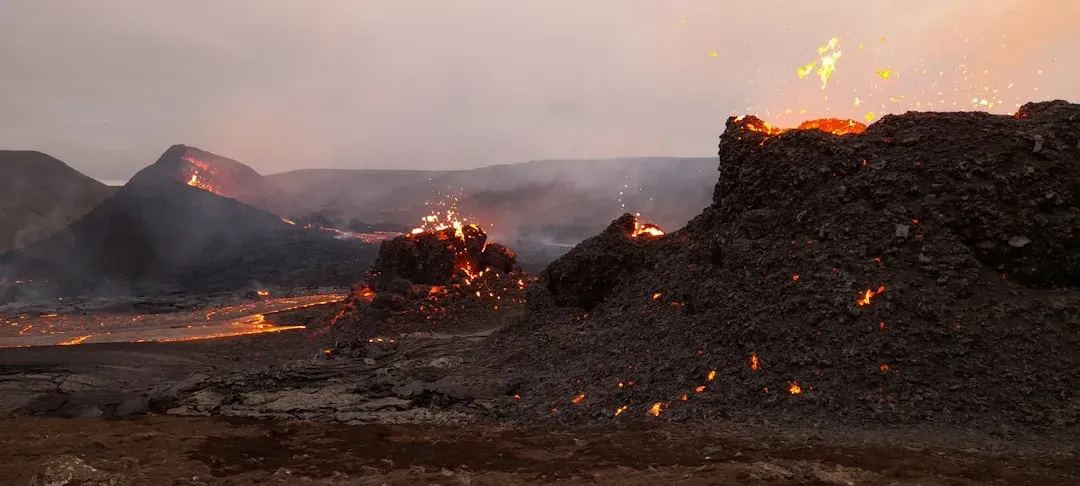
Even though most of the mantle is technically solid, certain conditions cause portions of it to melt into magma, and that is where some of the most dramatic surface events begin. When rock deep below you partially melts, the resulting magma is less dense than the surrounding solid material, so it starts to rise, sometimes gathering in vast underground reservoirs. If pathways open up through fractures or weaknesses in the crust, that magma can ascend all the way to the surface and erupt as lava, ash, and volcanic gases.
You might think of a volcano as a simple hole that leads straight to some huge underground “lake of fire,” but the reality is more like a tangled plumbing system pushing melt through layers of rock. Different depths, pressures, and rock compositions produce very different kinds of magma, from runny basaltic lava that spreads in broad sheets to sticky, gas-rich magma that can erupt explosively. The same deep processes that power these eruptions also release gases that helped build your atmosphere and oceans, so every volcanic landscape you see today is a reminder of how crucial this underground melting has been for a habitable world.
The Hidden Dynamo: How the Core Protects You
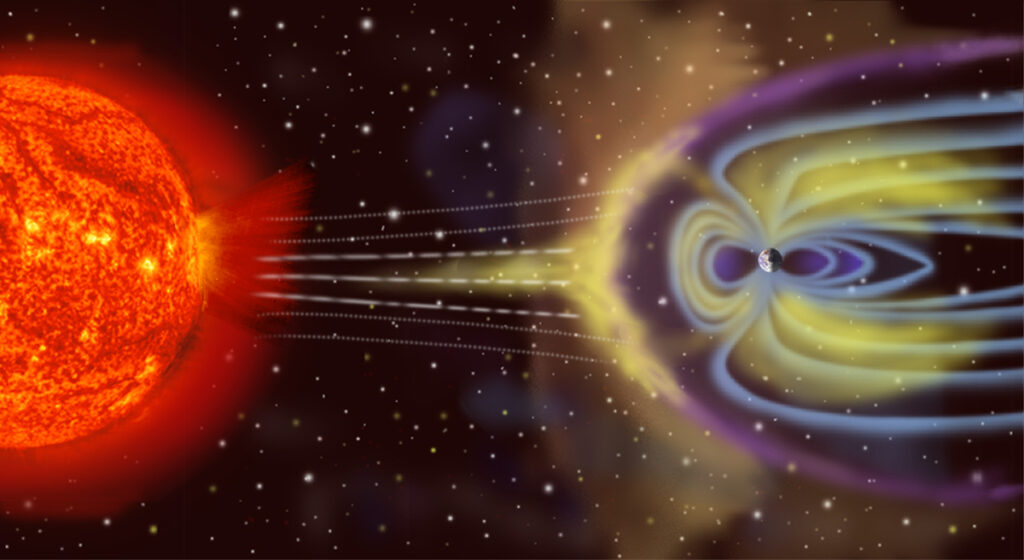
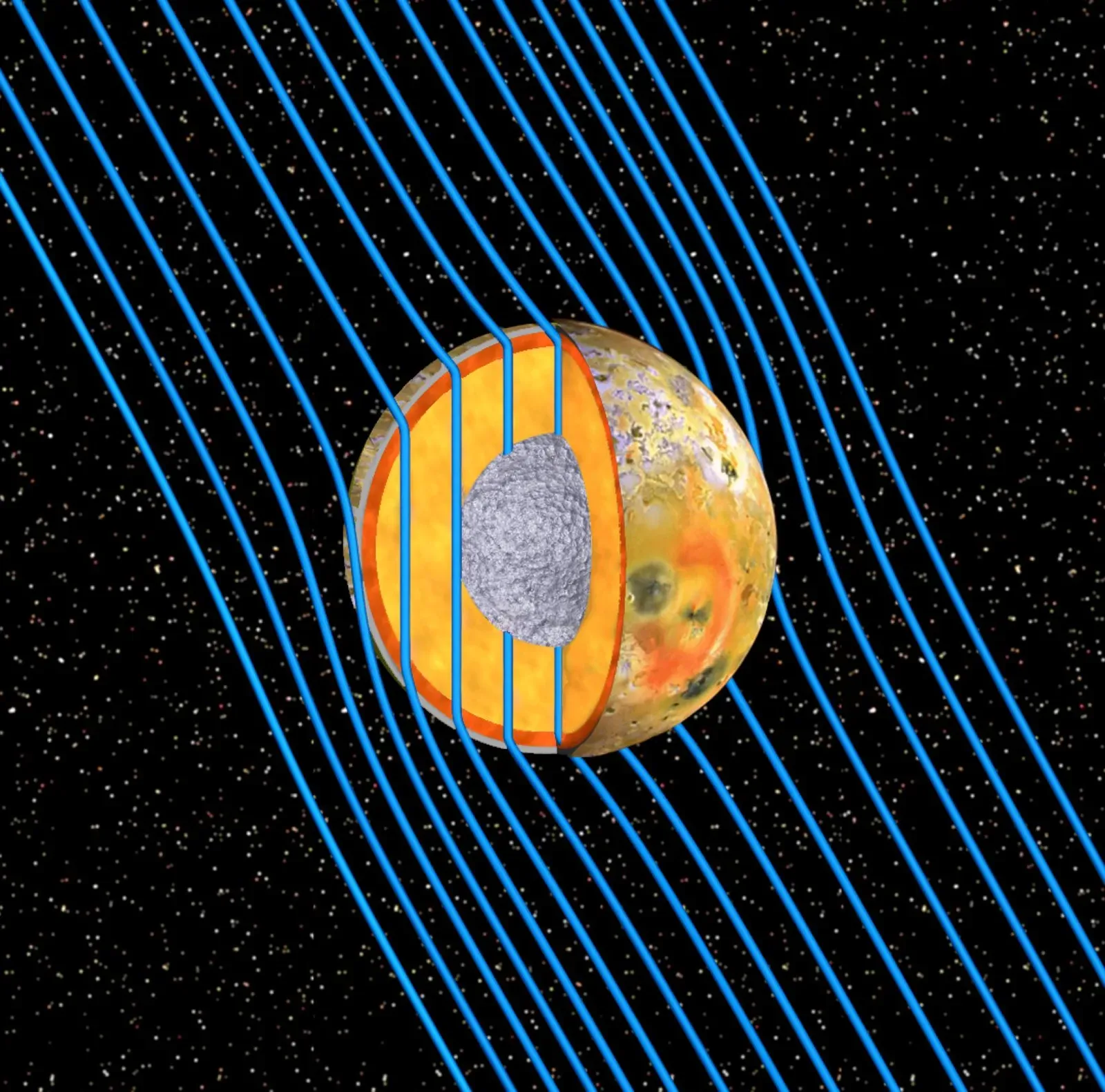
Far below the crust and mantle, the liquid outer core is quietly doing something that matters to you every time you use a compass or watch a solar storm pass harmlessly by: it generates Earth’s magnetic field. In that deep realm, molten iron and nickel swirl in complex patterns under the influence of rotation and convection. Moving electrically conductive metal acts like a natural dynamo, creating a magnetic field that stretches far out into space around your planet, forming a protective bubble called the magnetosphere.
This invisible shield deflects much of the charged particle radiation streaming from the Sun and from deep space, preventing your atmosphere from being stripped away over time. Without that deep, metallic engine, you might be looking at a world far more like a barren, exposed Mars. On the surface, you notice this deep process mainly through compasses, auroras, and some navigation systems, but in reality it is one of the quiet guardians of your climate and biological comfort. When you think about what keeps your world safe, it is easy to forget that a churning ball of liquid metal thousands of kilometers down is playing a starring role.
Deep Carbon and Water: Earth’s Long-Term Life Support System
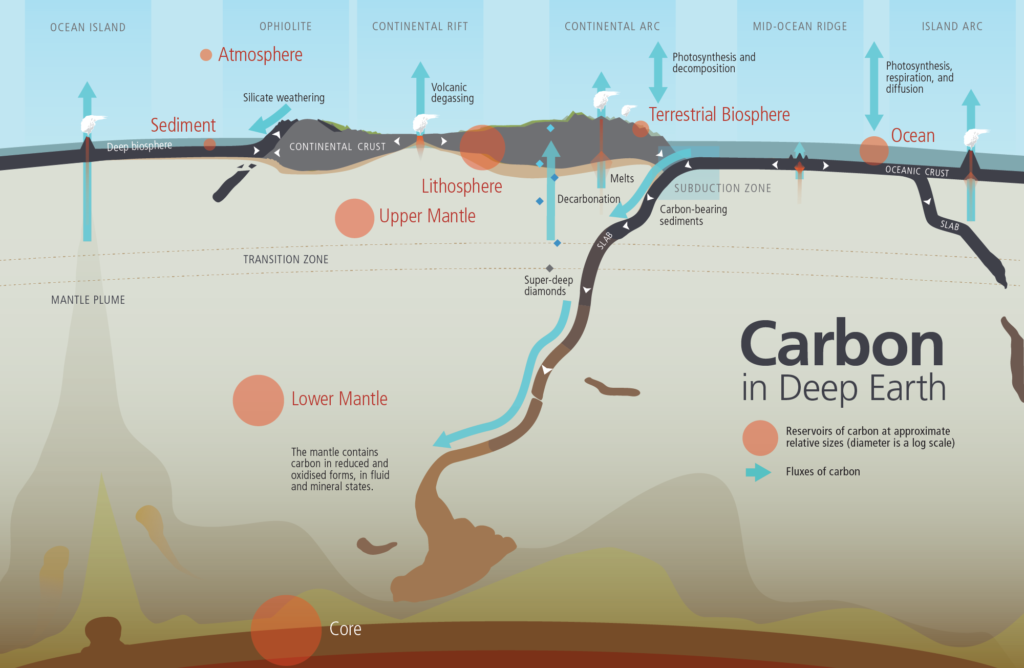
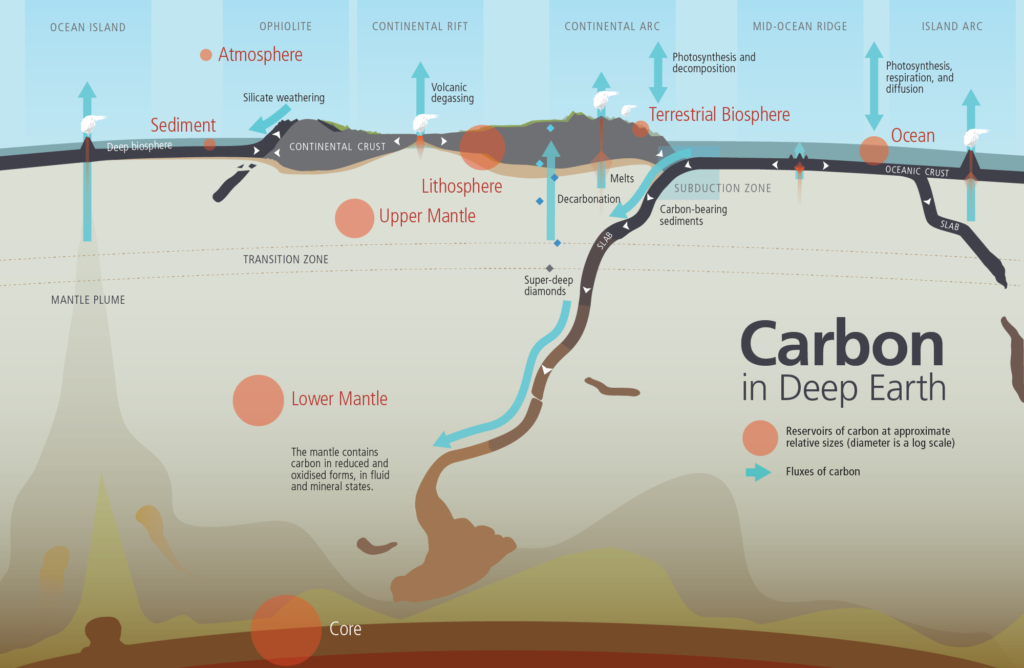
It is tempting to think of carbon and water as surface features, sitting in your oceans, air, and biosphere where you can see them. In reality, a huge share of Earth’s carbon and a surprisingly large amount of its water are locked away deep within the mantle and crust. When tectonic plates carry oceanic crust down into the mantle at subduction zones, they drag water-bearing minerals and carbon-rich sediments with them. Under intense pressure and heat, those materials change, releasing fluids and sometimes melting rock, which then rises and eventually feeds volcanoes and deep-seated magmatic systems.
Over millions of years, this deep cycling of water and carbon helps regulate the amount of greenhouse gas in the atmosphere and the volume of water on the surface. You live inside that long, slow balancing act, even if you never see it happening. If deep Earth stopped recycling these materials, your climate could drift into extremes far less friendly to life, either baking in an unchecked greenhouse or freezing as carbon vanished into rocks. So when you hear about climate and habitability, it is not just about what happens in the air above you, but also about these hidden exchanges far beneath your feet.
How You Can “See” the Deep Earth Without Going There
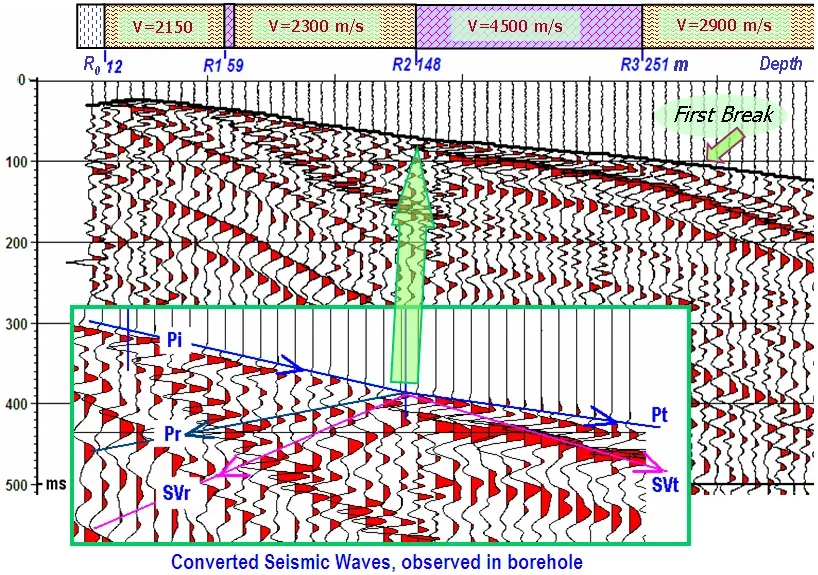
For all this talk about what happens beneath the crust, you might be wondering how anyone can know these things when nobody has ever drilled more than a tiny fraction of the way down. You rely on clever indirect methods, like reading the way earthquake waves travel through the planet. Different layers bend, slow, or speed up those waves in telltale ways, letting you build up a picture of the interior, almost like using medical imaging on a human body. High-pressure experiments in labs and advanced computer models fill in more details about how rocks behave under conditions you can’t reproduce on the surface.
By combining seismic data, gravity measurements, magnetic observations, and lab results, you get a surprisingly rich story about a place you can never visit. Each earthquake becomes not just a hazard, but also a probe that reveals what lies deep below. This detective work is constantly refining your view of Earth’s interior, reminding you that science is often about inferring the unseen from the small signals you can observe. In a way, you are always listening to your planet’s heartbeat through a stethoscope of instruments rather than opening it up directly.
Conclusion: Living on the Skin of a Restless World
Once you start to grasp what really happens beneath the Earth’s crust, the ground you walk on feels less like a static platform and more like the outer rind of a vast, active system. You are living on top of flowing mantle currents, recycled crust, rising magma, and a metallic core that quietly powers your magnetic shield. Earthquakes, volcanoes, mountain ranges, and even long-term climate swings are not random surface events; they are signs of that deep machinery constantly at work.
Seeing the planet this way changes how you think about safety, resources, and the future, because it reminds you that stability is always temporary and that your world is still evolving. You might never feel the heat of the mantle or touch the solid inner core, but they are shaping your life in ways you rarely stop to notice. The next time you look at a globe or feel a tremor on the news, you can picture the hidden layers beneath you, all moving and interacting in slow motion. Knowing that, what surprises you most about the world you thought was solid and still?