If you have ever stared at the ocean and felt a strange mix of awe and unease, you are not alone. Beneath those waves once swam animals so powerful they make today’s great white sharks look almost modest. Fossils of these ancient sea predators are like crime scene photos from a vanished world, and scientists have been painstakingly decoding them to understand how life in the oceans became what it is today.
What those bones, teeth, and even fossilized stomach contents reveal is more than just the size of a jaw or the length of a fin. They tell stories about global climate shocks, mass extinctions, evolutionary experiments that failed, and a few that wildly succeeded. As you follow these clues, you start to see a pattern: Earth’s oceans have always been dangerous, competitive, and strangely creative places, with predators pushing evolution into bold new shapes and strategies. And in more ways than feels comfortable, their story is also our story.
The Megalodon: Power, Size, and the Limits of Being a Giant
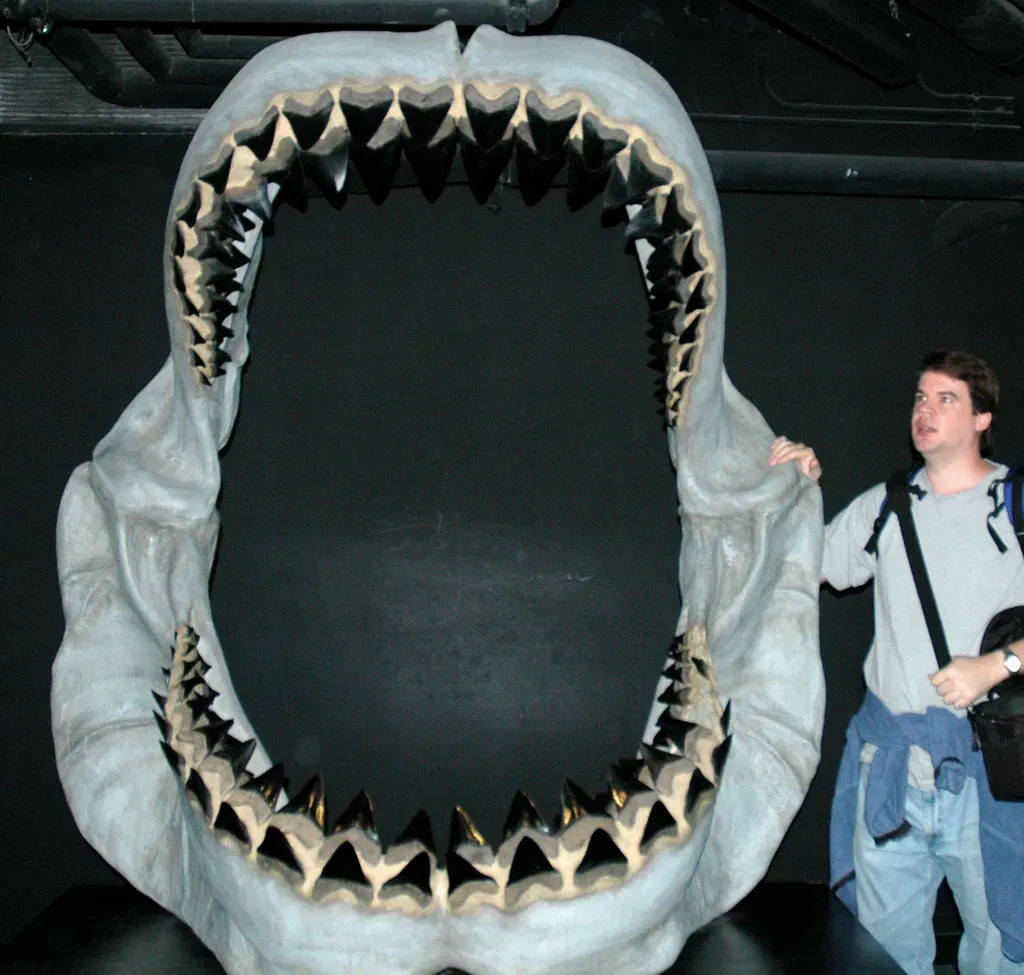
One of the most iconic sea predators in the fossil record is the megalodon, a shark so big its teeth are the size of a human hand. For a long time, megalodon was treated almost like a myth, an exaggeration of nature, but careful study of its fossilized teeth and vertebrae has turned it into a real, measurable animal. Estimates based on tooth size and comparisons to modern sharks suggest it could reach lengths of around fifteen to eighteen meters, making it significantly longer than a city bus. It was not just large; its jaws and bite forces were powerful enough to crush whale bones, reshaping entire marine food webs around its presence.
Yet megalodon also teaches us that being huge is a double-edged sword. Scientists think that shifts in ocean temperature, the rise of new whale species with different migration patterns, and increasing competition from smaller, faster hunters like early great white sharks likely contributed to its extinction. A body that large requires a steady, abundant food supply and relatively stable conditions, and when those pillars weaken, giants fall fast. The lesson is uncomfortably simple: in nature, being the biggest and baddest is impressive, but it is rarely a long-term winning strategy when the environment starts to change.
Mosasaurus and the Reptilian Reign of the Cretaceous Seas
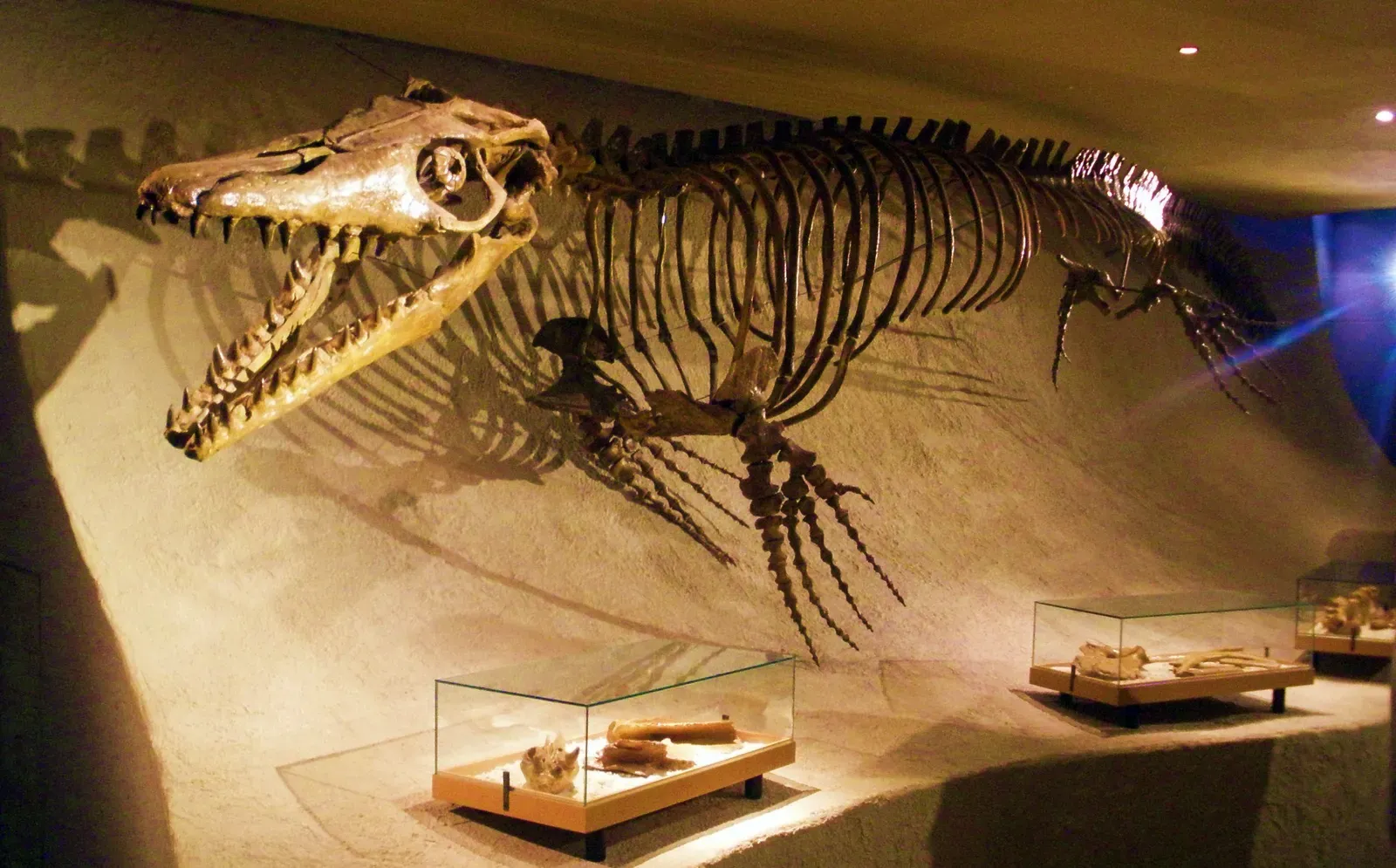
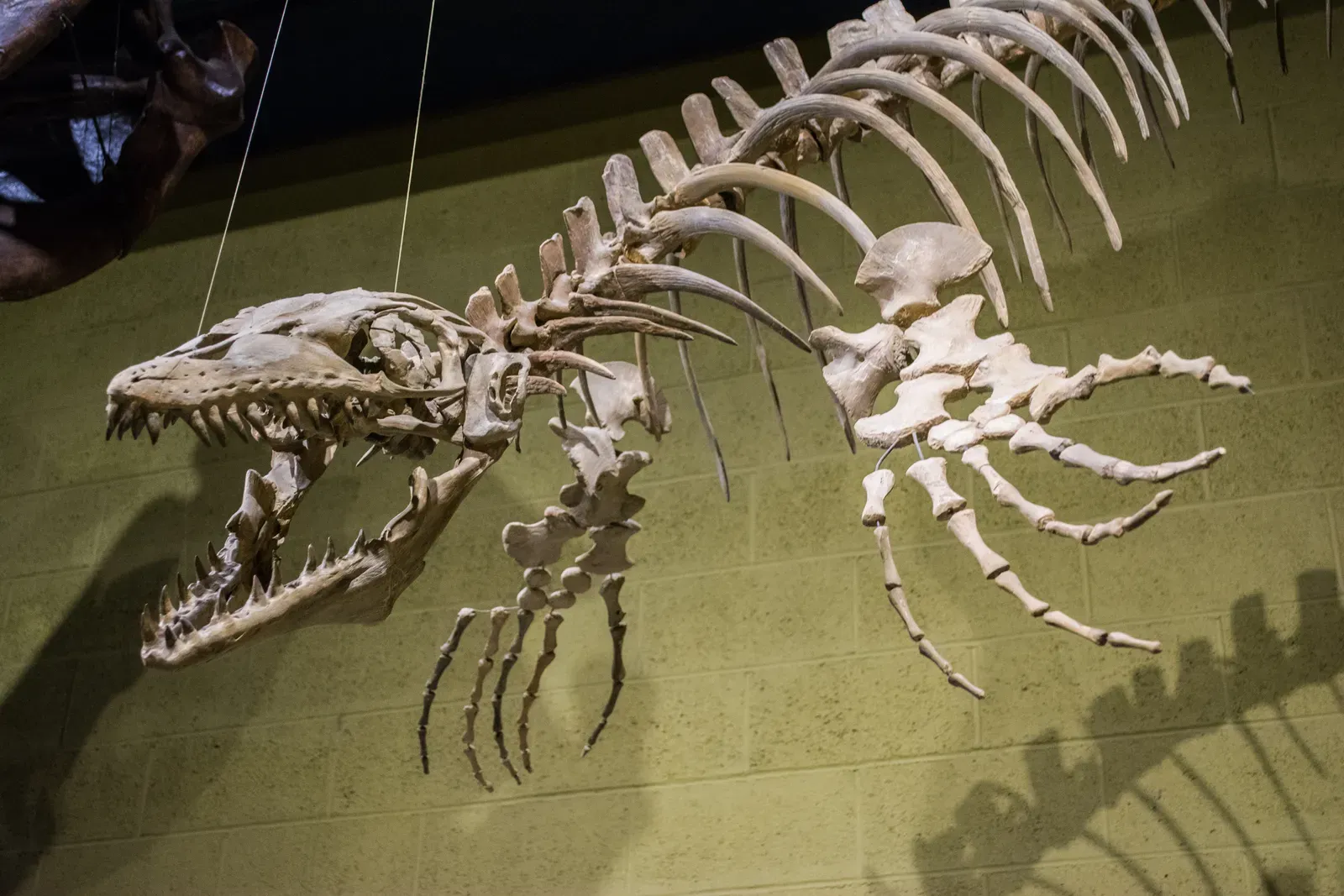
Before sharks took over the top spots, giant marine reptiles called mosasaurs ruled many of the world’s oceans during the late Cretaceous period. Imagine a monitor lizard stretched out to the length of a bus, with paddle-like limbs and a powerful tail built for swimming, and you get a sense of what Mosasaurus and its relatives looked like. Fossils reveal sharp, conical teeth, double-hinged jaws, and bodies adapted for fast pursuit, marking them as apex predators that chased down fish, turtles, and even other marine reptiles. Some specimens preserve stomach contents showing they were not picky eaters; if it swam and could fit in their mouths, it was on the menu.
What is surprising about mosasaurs is how quickly they went from land-based lizards to fully aquatic hunters, in evolutionary terms. Their fossils document a rapid shift: limbs flattened into paddles, hips modified for swimming, and tails morphing into powerful propellers. That transformation tells us something important about evolution’s flexibility when an ecological opportunity opens up, such as warm, shallow seas full of prey and relatively few large competitors. Yet despite ruling the oceans, mosasaurs disappeared in the same mass extinction that wiped out the non-avian dinosaurs, a reminder that even top predators are powerless when the entire planetary system resets almost overnight.
Plesiosaurs and Pliosaurs: Strange Bodies, Smart Solutions
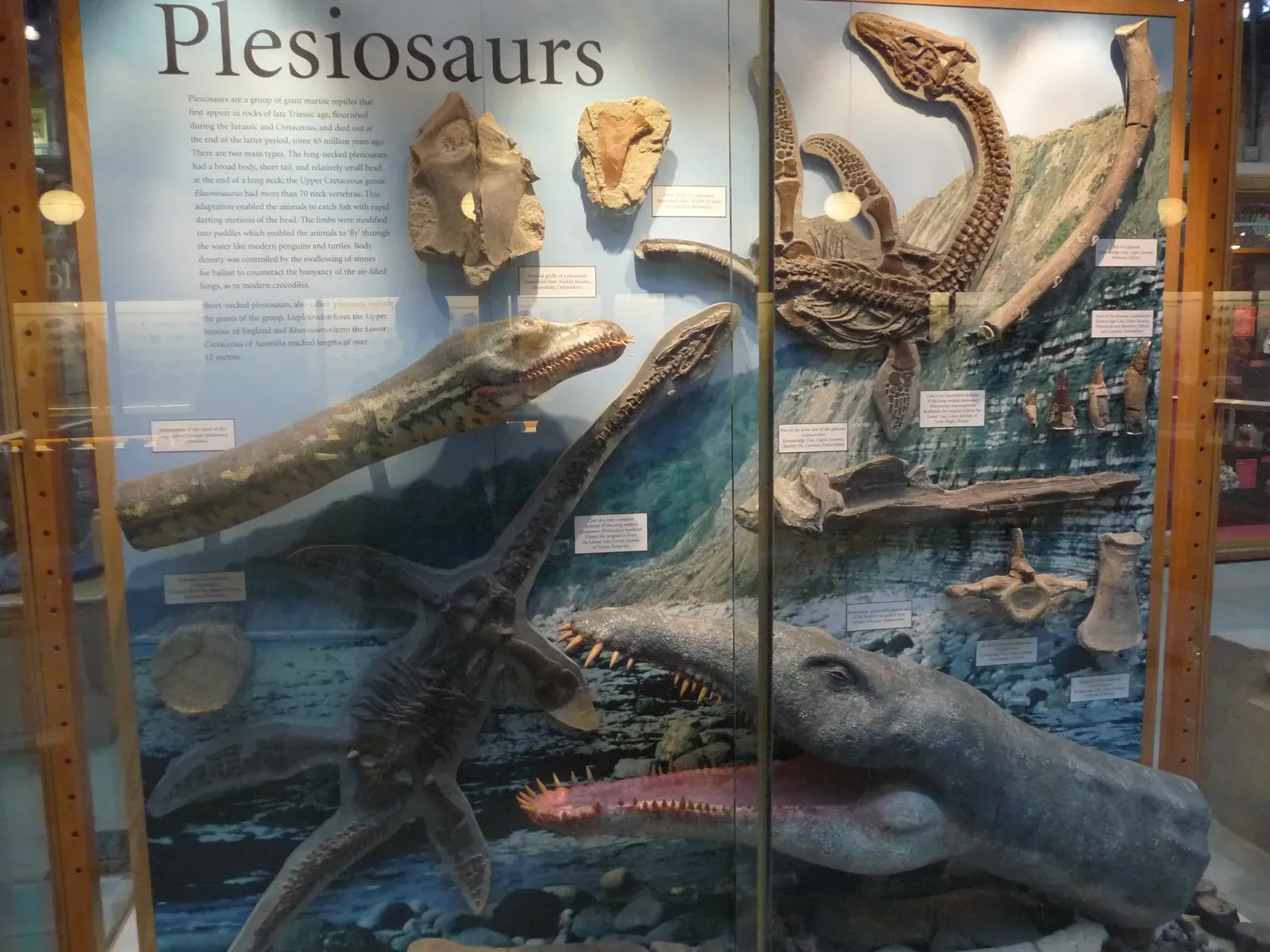
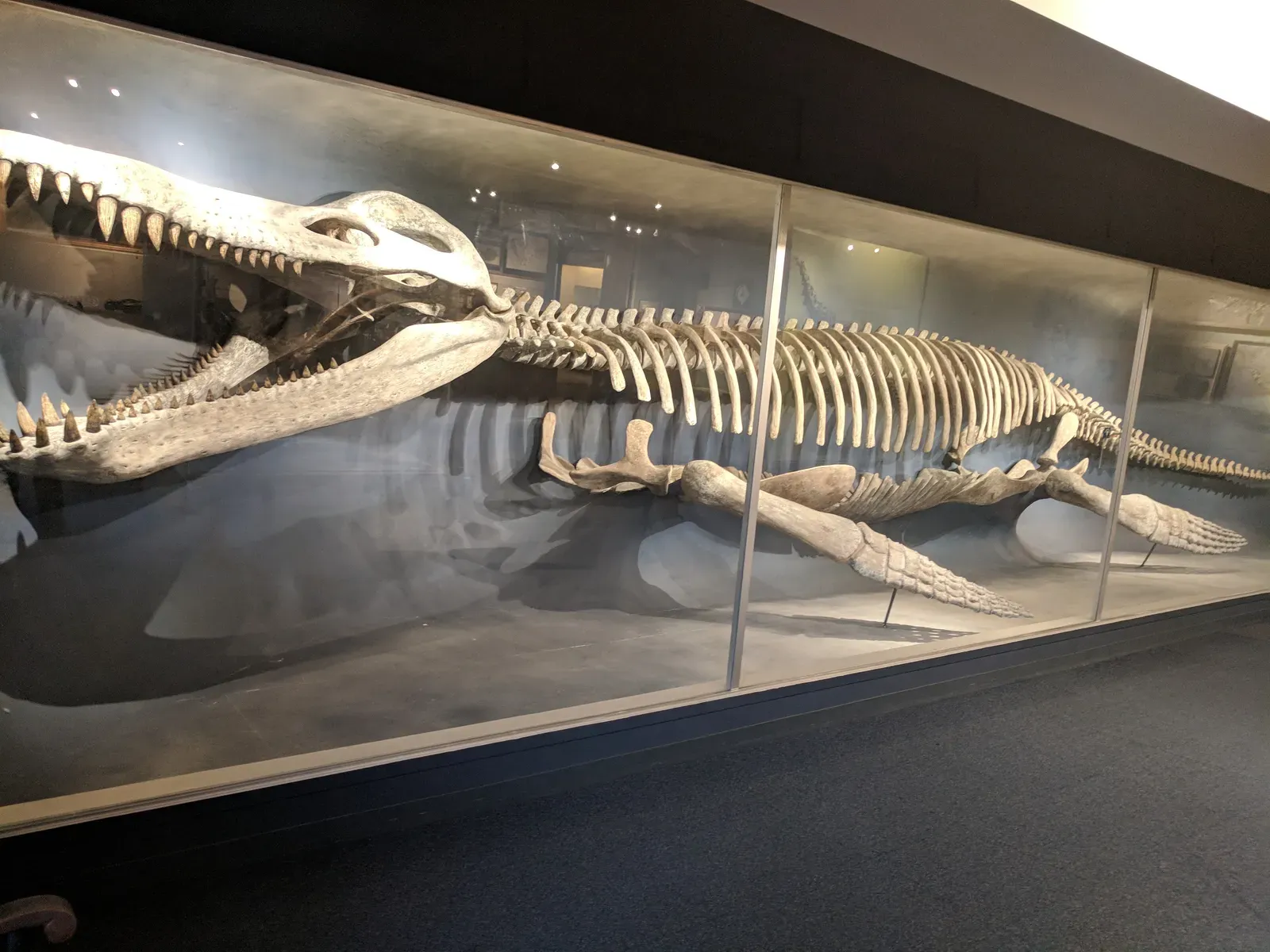
Fossils of plesiosaurs and their more ferocious cousins, the pliosaurs, often look so strange that people once thought they were hoaxes. Long-necked plesiosaurs had small heads on the end of snake-like necks and broad, paddle-shaped limbs, while pliosaurs sported massive heads and shorter necks, more like underwater tanks. These body plans were not just weird for the sake of it; they were highly specialized designs for hunting different kinds of prey in different ways. Long-necked forms could snake their heads through schools of fish or sneak up on prey without revealing their full body, while pliosaurs probably used their huge jaws to ambush larger, fast-moving animals.
Track marks and bone structures suggest these reptiles were powerful underwater flyers, using all four flippers in a coordinated pattern similar to how sea turtles or penguins move today. This unusual four-flipper propulsion appears to have given them remarkable maneuverability, letting them pivot, accelerate, and corner prey in ways most modern marine animals cannot. To me, this is one of the most fascinating takeaways: evolution is not locked into one standard blueprint for success in the ocean. Plesiosaurs show that being odd-looking can be a winning solution if it solves a specific problem, like turning quickly or striking from unexpected angles.
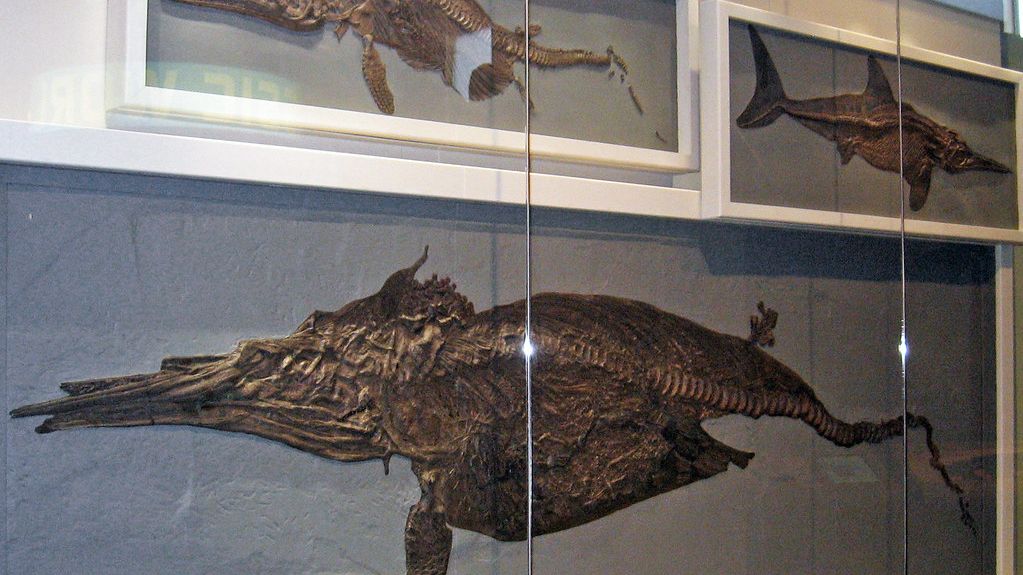
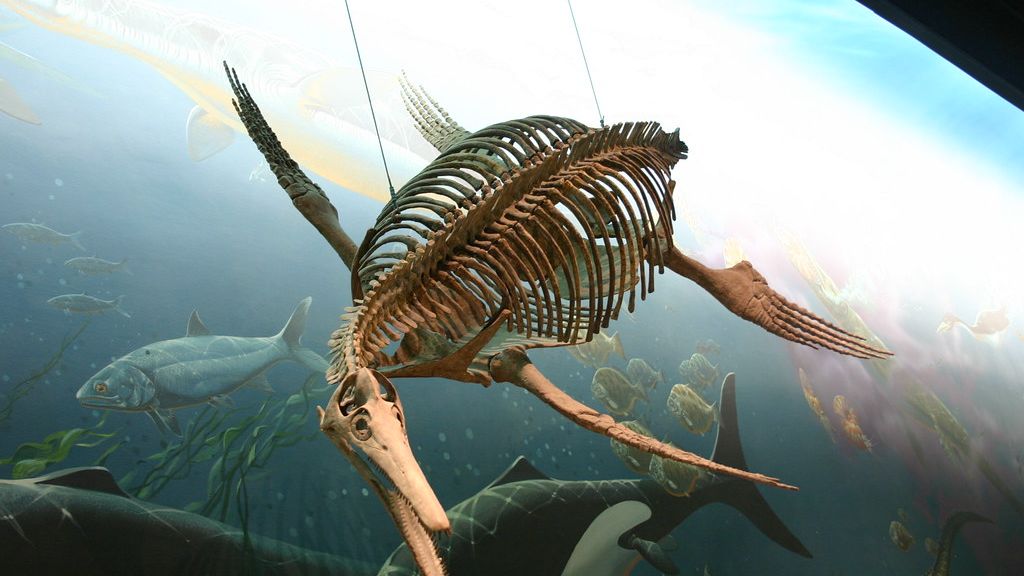
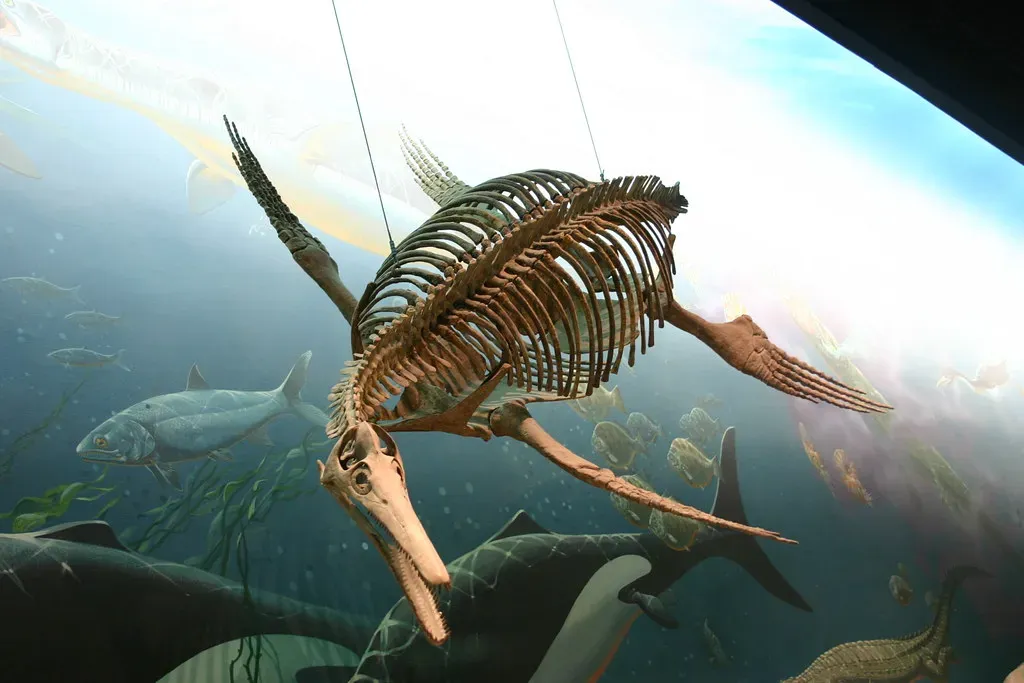
Ichthyosaurs are a vivid example of convergent evolution, where unrelated animals evolve similar shapes because they face similar challenges. These marine reptiles, which lived long before dolphins ever existed, ended up with streamlined, fish-like bodies, large eyes, and crescent-shaped tails that look strikingly similar to modern tuna and porpoises. Fossilized skeletons and even preserved outlines of their bodies show just how hydrodynamic their shape was, tuned for speed in open water. They hunted fast-moving prey like fish and squid, and some species grew to impressive sizes that rivaled the largest of today’s whales.
One of the most striking fossil discoveries of ichthyosaurs is of females preserved with developing embryos still inside their bodies, and even specimens captured in the act of giving birth. That level of detail tells scientists that these reptiles did not lay eggs on land like many of their relatives, but instead gave birth to live young at sea, much like modern whales. This adaptation freed them from needing to return to shore, letting them live fully marine lives. From these fossils, we learn that when life returns to the ocean from land, it does not just adapt a little; it can fully commit, rewriting everything from body shape to reproductive strategy to survive and thrive in a blue world.
Sea Monsters of the Mammal Age: Basilosaurus and Early Whales
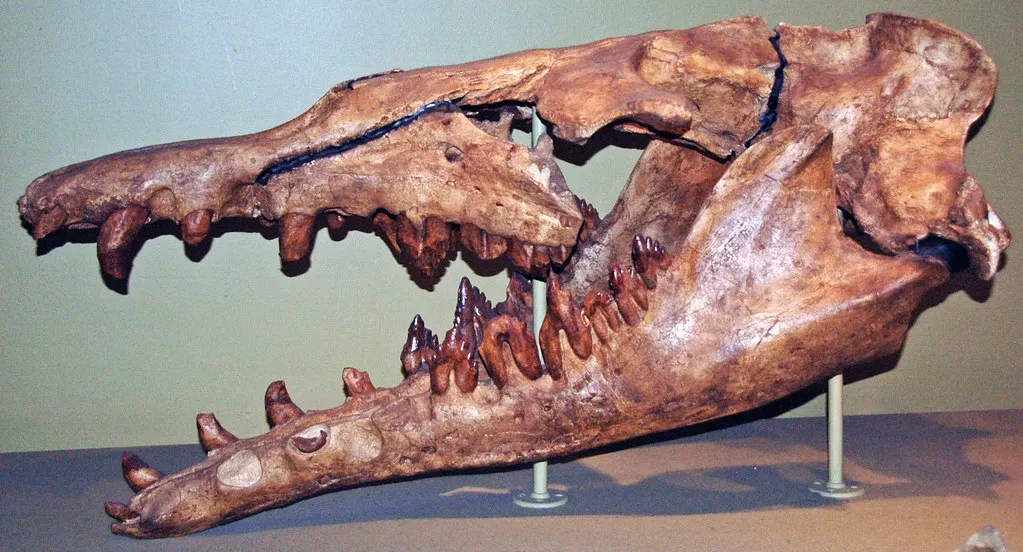
Long after mosasaurs and ichthyosaurs vanished, a new kind of predator began to claim the oceans: mammals that had returned to the sea from land. Basilosaurus, an early whale from the Eocene period, was a long, serpent-like creature that looked nothing like the compact whales we see today. Its fossils reveal a mouth packed with sharp, slicing teeth, signaling a highly carnivorous lifestyle that likely involved hunting other marine mammals and large fish. Some specimens even preserve the tiny, vestigial hind limbs of these animals, a haunting reminder of their four-legged ancestors that once walked on land.
Studies of basilosaur skulls and ear bones also show that early whales were already evolving sophisticated underwater hearing, tuning their senses to locate prey and navigate murky waters. This suggests that the transition from land mammal to sea predator was not just about limbs turning into flippers; it was a reshaping of sensory worlds and hunting strategies. In my view, the fossil record of early whales feels like watching evolution rehearse the role that modern orcas and sperm whales now play: apex hunters using intelligence, social behavior, and specialized senses to dominate complex marine ecosystems.
Teeth, Jaws, and Bite Marks: How Fossils Reveal Predator Behavior
One of the most underrated lessons from sea predator fossils comes from the small details: the angle of a tooth, the wear patterns on enamel, or the puncture marks left in another animal’s bones. Scientists use these traces like detectives use fingerprints, reconstructing who was eating whom and how. For example, whale bones with deep, U-shaped gouges that match the size and curve of megalodon teeth give direct evidence that these sharks hunted large marine mammals, not just scavenged. Scratches, healed bite marks, and partially digested bones can reveal whether a predator attacked live prey or simply cleaned up carcasses.
Even the microstructure of teeth tells a story. Fine ridges, serrations, and overall tooth shape hint at whether an animal was slicing through flesh, crushing shells, or gripping slippery fish. When you combine those clues with jaw mechanics, skull shape, and body proportions, you can start to model entire feeding strategies and daily behaviors for animals that disappeared millions of years ago. To me, the most powerful idea here is that fossils are not just about death; they are records of lives actively lived, of hunting, struggling, and surviving in dynamic, often brutal environments.
Climate, Extinctions, and the Rise and Fall of Ocean Apex Predators
If you zoom out from individual species and look at the big picture, a clear pattern emerges: the greatest sea predators are deeply vulnerable to changes in climate and ocean chemistry. Many of the most formidable hunters in history, from mosasaurs to megalodon, disappear around times of major environmental upheaval. Shifts in sea temperature, sea level, and nutrient cycles can ripple through food webs, reducing prey availability or changing where prey migrates. When that happens, the highly specialized giants at the top of the chain often struggle to adapt fast enough.
Fossil-rich rock layers allow scientists to line up predator diversity with known climate events, showing boom-and-bust cycles where predators flourish when oceans are productive and crash when ecosystems falter. This long view undermines the idea that apex predators are invincible simply because they sit at the top. In fact, their power is built on a fragile foundation of abundant prey and stable conditions. With modern oceans now facing rapid warming, acidification, and overfishing, the fossil record feels less like distant history and more like an unsettling preview of what can happen when the balance tips too far, too fast.
What Fossil Sea Predators Tell Us About Today’s Oceans
The most uncomfortable thing we have learned from the fossils of Earth’s greatest sea predators is that dominance is temporary, but collapse can be permanent. Every time a group like mosasaurs, giant ichthyosaurs, or megalodon vanished, it took millions of years for ecosystems to rebuild new forms of top predators. Modern whales, sharks, and large predatory fish are just the latest generation in a long relay race for control of the oceans. If we push them too hard through climate change, habitat destruction, and industrial fishing, there is no guarantee something equally spectacular will replace them on a timescale that matters to us.
In my opinion, the clearest message from these fossils is less about celebrating monster-sized animals and more about respecting the invisible threads that keep marine food webs intact. Ancient predators thrived when those threads were strong and snapped when they frayed, and we are fraying them faster than at almost any time in the fossil record. The old bones in museum cases are not just curiosities from a savage past; they are warning signs from systems that have broken before. The real question is whether we are willing to listen to them while there is still time to keep our own oceans from repeating that story.
Conclusion: The Ocean Remembers, Even If We Forget
Looking across hundreds of millions of years, the fossils of Earth’s greatest sea predators paint a picture that is both thrilling and deeply sobering. They show us that the oceans are engines of innovation where evolution constantly experiments with new ways to chase, bite, and dominate. At the same time, they reveal how every so-called unstoppable predator has a breaking point, usually triggered by changes in climate, chemistry, or food supply that they never saw coming. The past is full of apex hunters that were sure to last forever, right up until the moment they did not.
My personal take is that we have been far too casual about the idea that modern ocean giants, from great white sharks to orcas, will simply endure whatever we throw at them. The fossil record argues the opposite: top predators are exquisitely sensitive indicators of ocean health, and when they start to struggle, it usually means the entire system is already in trouble. If we ignore that, we are not just losing spectacular animals; we are repeating a pattern that the Earth has already tried many times, with outcomes that are bad for everything living at the time. The ocean remembers every rise and every fall written in stone; the real test is whether we are smart enough to learn from those memories before we join the fossils ourselves.