
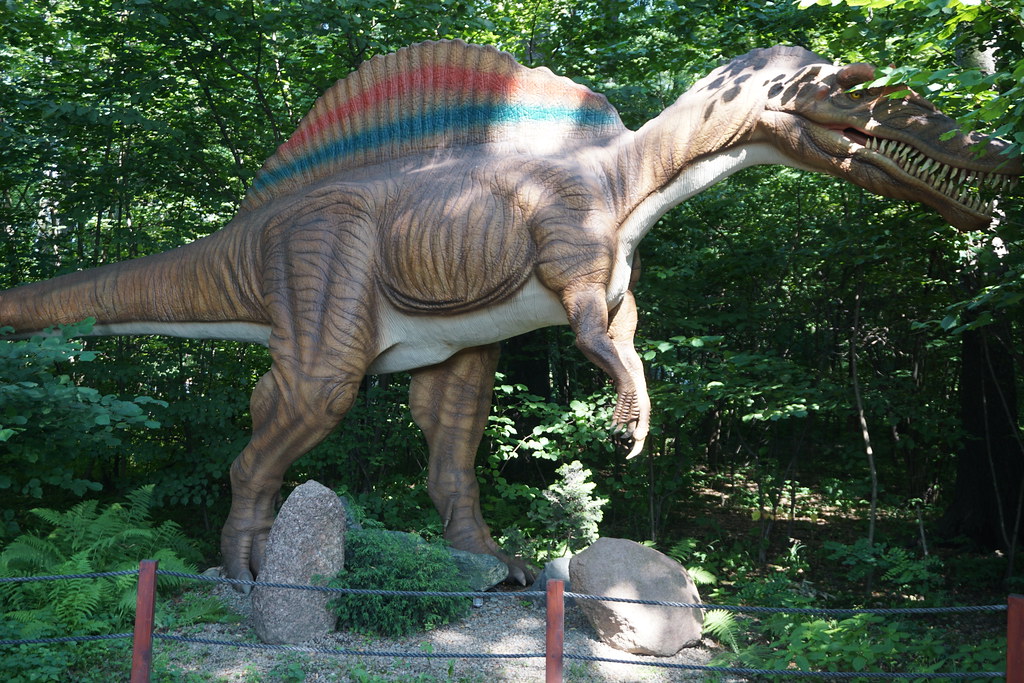
Standing next to a Spinosaurus sounds like the ultimate dinosaur fan daydream: the riverbank, the heat, the shadow of a monster that makes a T. rex look almost modest. But if you actually found yourself a few meters from this animal, what would the scene really be like according to modern science – terrifying, disappointing, or strangely… uneventful? The truth is more nuanced than movie posters suggest, and that makes it much more interesting. I still remember being a kid, staring at a Spinosaurus toy that was basically just a T. rex wearing a sail, and thinking it was the scariest thing imaginable. Now, knowing how much the science has changed, I’m almost more fascinated by the questions than the answers. Would it roar in your face? Ignore you? Smell like a wet crocodile crossed with a fish market? Let’s walk through what scientists actually think, and what your chances of surviving that encounter might really be.
You Would Be Dwarfed by a Semi-Aquatic Giant
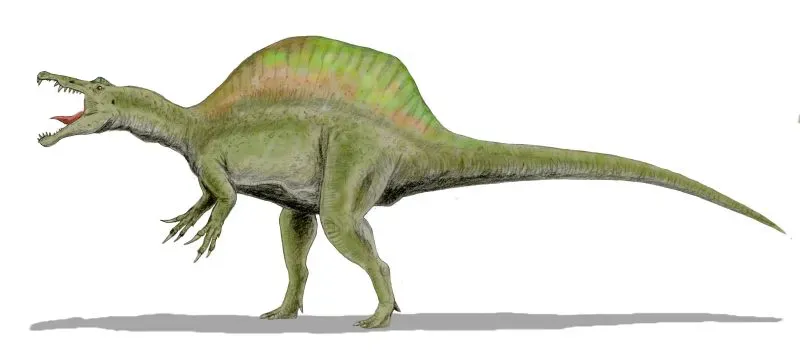
If you were standing next to a Spinosaurus, the first and most overwhelming impression would be its sheer size. Estimates vary, but many researchers think it stretched longer than a T. rex, with some reconstructions putting it around the length of a city bus and weighing several tonnes. You would feel small in the same way you feel small next to a train: not just shorter, but completely outclassed in mass and momentum. What makes Spinosaurus especially eerie up close is not just the length but the shape. Its body was elongated, its tail deep and paddle-like, and a sail rose from its back like a jagged billboard. You wouldn’t be staring at a chunky land predator towering straight over you; instead, you’d be next to a long, crocodile-like torso with a tall, bony display behind it. The visual effect would be unsettling, like standing beside a living dragon that evolved for water as much as land.
The Air Around You Would Feel Like a Swampy Reptile Terrarium
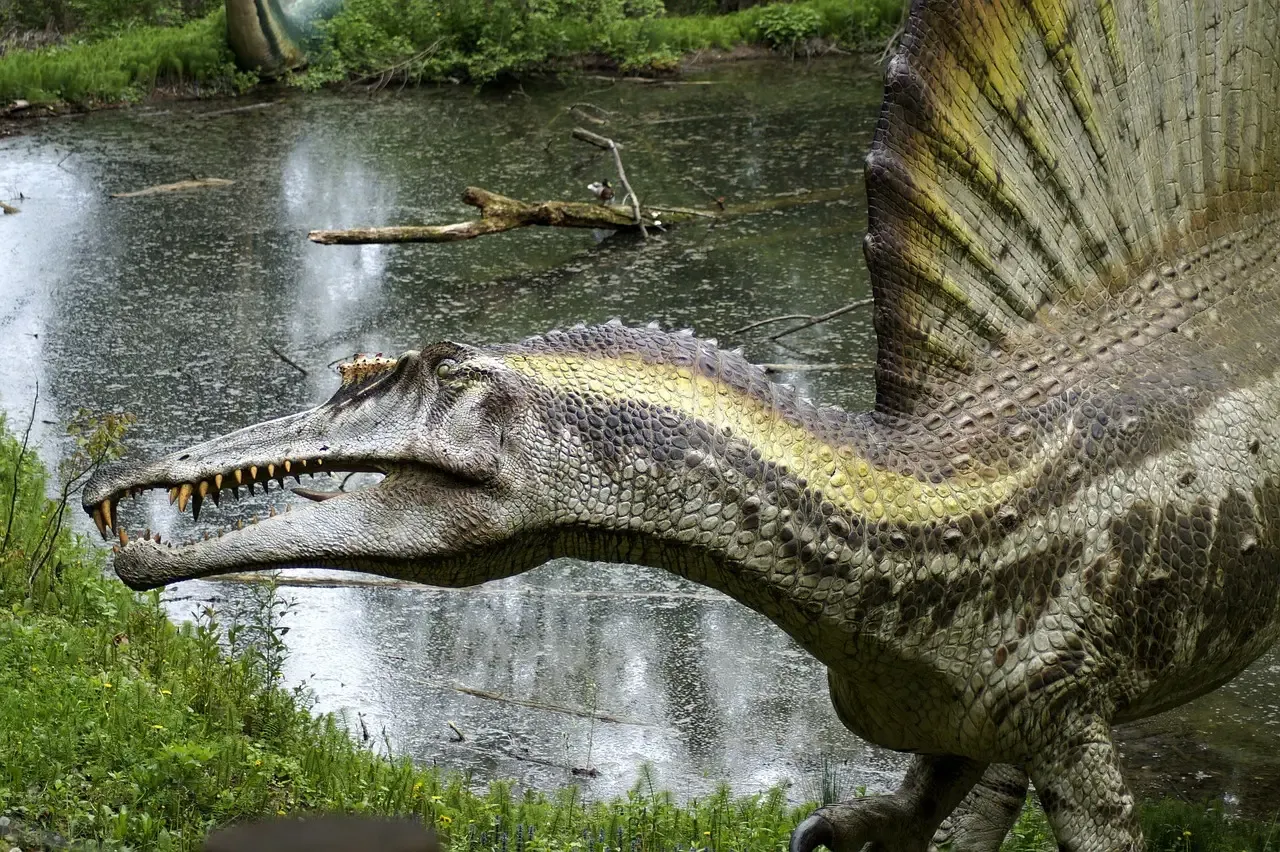
Scientists think Spinosaurus lived in warm, river-rich environments, spending much of its time in or near water. If you were right next to it, you’d likely be standing at the edge of a broad river or swamp, surrounded by thick vegetation, buzzing insects, and the heavy smell of mud and decaying plants. The animal itself would carry the scent of a wet predator that feeds primarily on fish – think a crocodile that just hauled itself out of a murky river after a successful hunt. The atmosphere around this dinosaur would be loud and alive. There might be splashes as it moved through shallow water, the distant calls of other animals, and the subtle scrape of claws and tail against the bank. You’d probably notice the way water clung to its scales and tail, dripping off in dark rivulets. The entire scene would feel more like standing beside a massive, dangerous hippo-crocodile hybrid than the dry, dusty “desert dinosaur” vibe old depictions used to push.
It Probably Would Not Instantly Charge You Like in the Movies
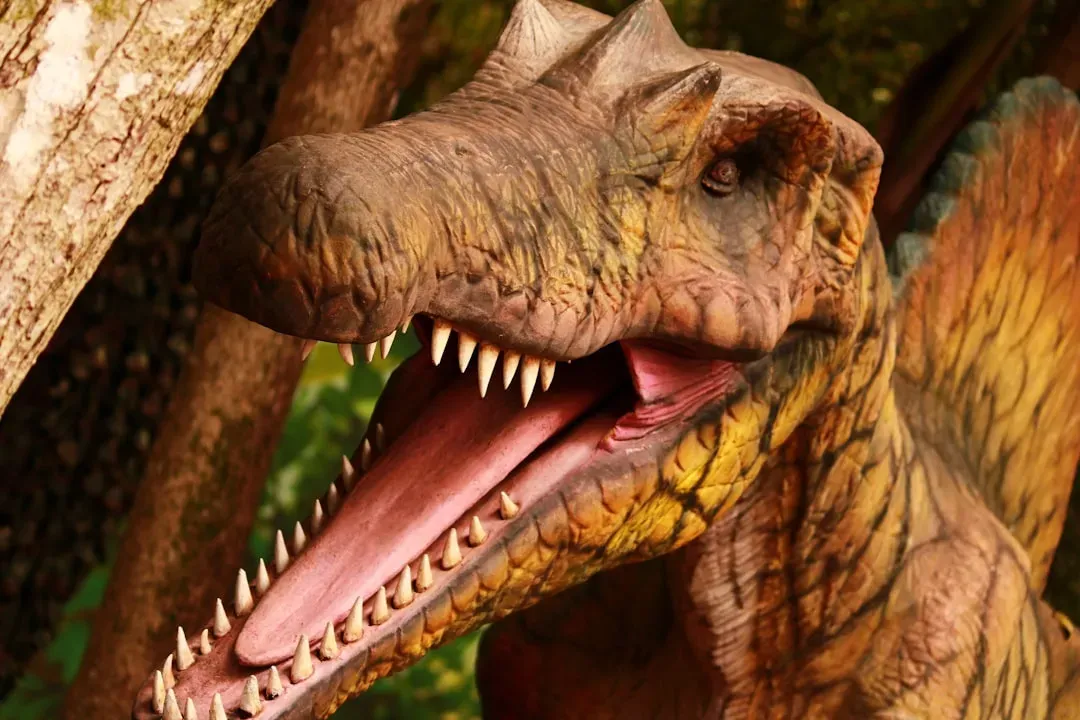
Here’s the surprising part that might disappoint your inner action-movie fan: most paleontologists think Spinosaurus spent a lot of effort catching aquatic prey rather than chasing big land animals. Its long, narrow jaws and conical teeth are better suited for catching slippery fish than tearing apart large, struggling dinosaurs. So if you suddenly appeared near it, there’s a decent chance it would not see you as its ideal meal, at least not immediately. That doesn’t mean you’d be safe, only that a hungry Spinosaurus had other priorities. Large predators in modern ecosystems often prefer low-risk, familiar prey instead of weird, unknown creatures. To Spinosaurus, you might register as a small, odd land animal – more like a curiosity or potential threat than a prime dinner option. The more likely immediate response would be wariness, avoidance, or a defensive reaction if you were too close, not a Hollywood-style, sprinting charge across the shoreline.
It Could Still Kill You Quickly – Even by Accident
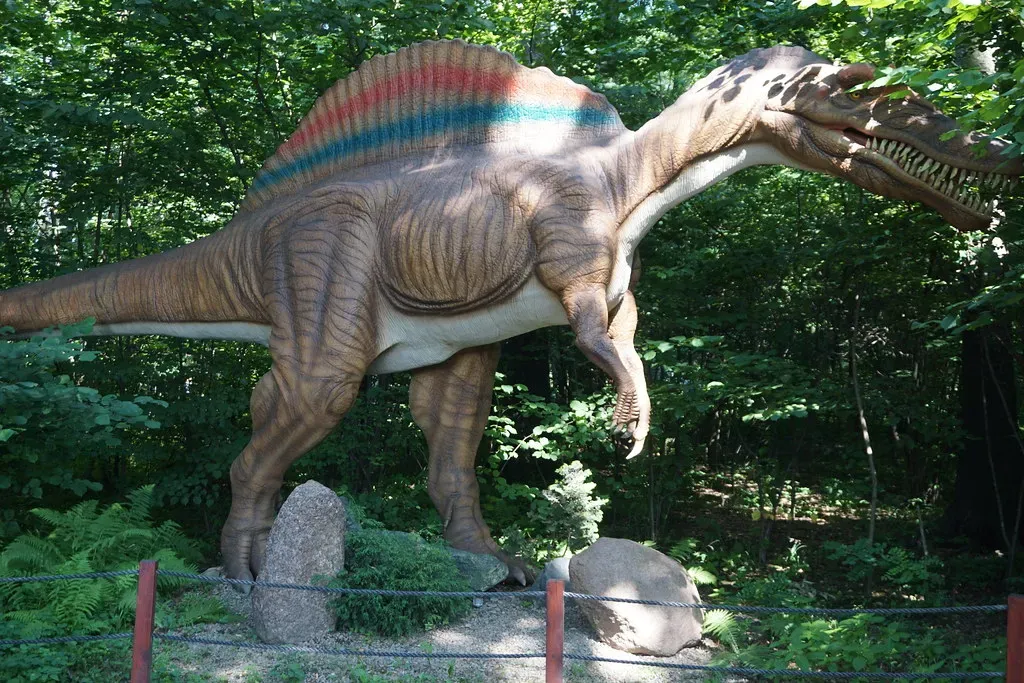
Even if you weren’t on the menu, simply being that close to such a large animal would be extremely dangerous. A single swipe from its tail, a misplaced step, or a panicked reaction could seriously injure or kill you. Think about how many people are hurt every year by elephants or hippos without those animals deliberately “hunting” them. Spinosaurus would have had similar raw power, multiplied by claws, teeth, and the unpredictable behavior of a wild predator. Its jaws alone, designed to clamp onto large fish, would be more than capable of crushing bone if it snapped at you, either in defense or confusion. Its claws, especially on the forelimbs, were robust and could have been used for grabbing or raking. Even if it just tried to shove you aside while maneuvering along a riverbank, you’d be fragile in comparison – like a soccer ball getting bumped by a bulldozer that barely notices the contact.
Your Senses Would Be Overwhelmed by Sound, Movement, and Presence
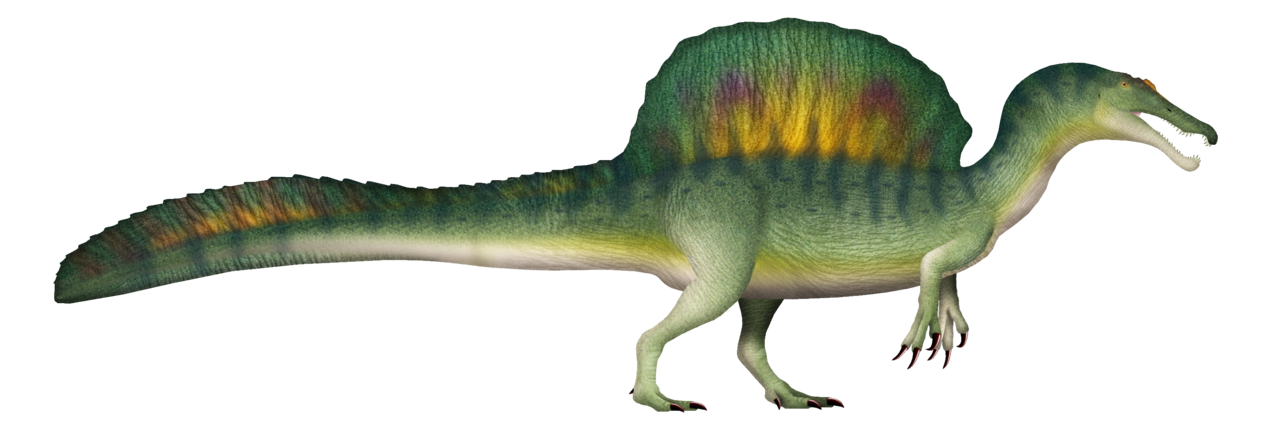
We often imagine dinosaurs as quiet unless they are roaring dramatically, but in reality, a living Spinosaurus would create a constant sensory storm. You’d hear the heavy, rhythmic splash of its feet in the water or the thud of each step on damp ground. There might be low, resonant sounds from its chest or throat – more like rumbles or hisses than the over-the-top roars you hear in films. Even its breathing would be noticeable from close range, a slow, powerful rush of air like an industrial bellows. Visually, the motion of its sail and tail would be hypnotic and unnerving. As it shifted its weight, muscles under the skin would ripple and flex, and the tall spines of the sail might seem to sway against the sky. You’d also feel a strange psychological effect that researchers sometimes describe when people stand near very large animals: a gut-level sense that your brain is struggling to process just how big and alive this thing is. It’s not just fear; it’s awe mixed with the uneasy realization that you’re sharing space with a creature that dominates the entire scene.
The Water’s Edge Would Be Its Comfort Zone, Not Yours
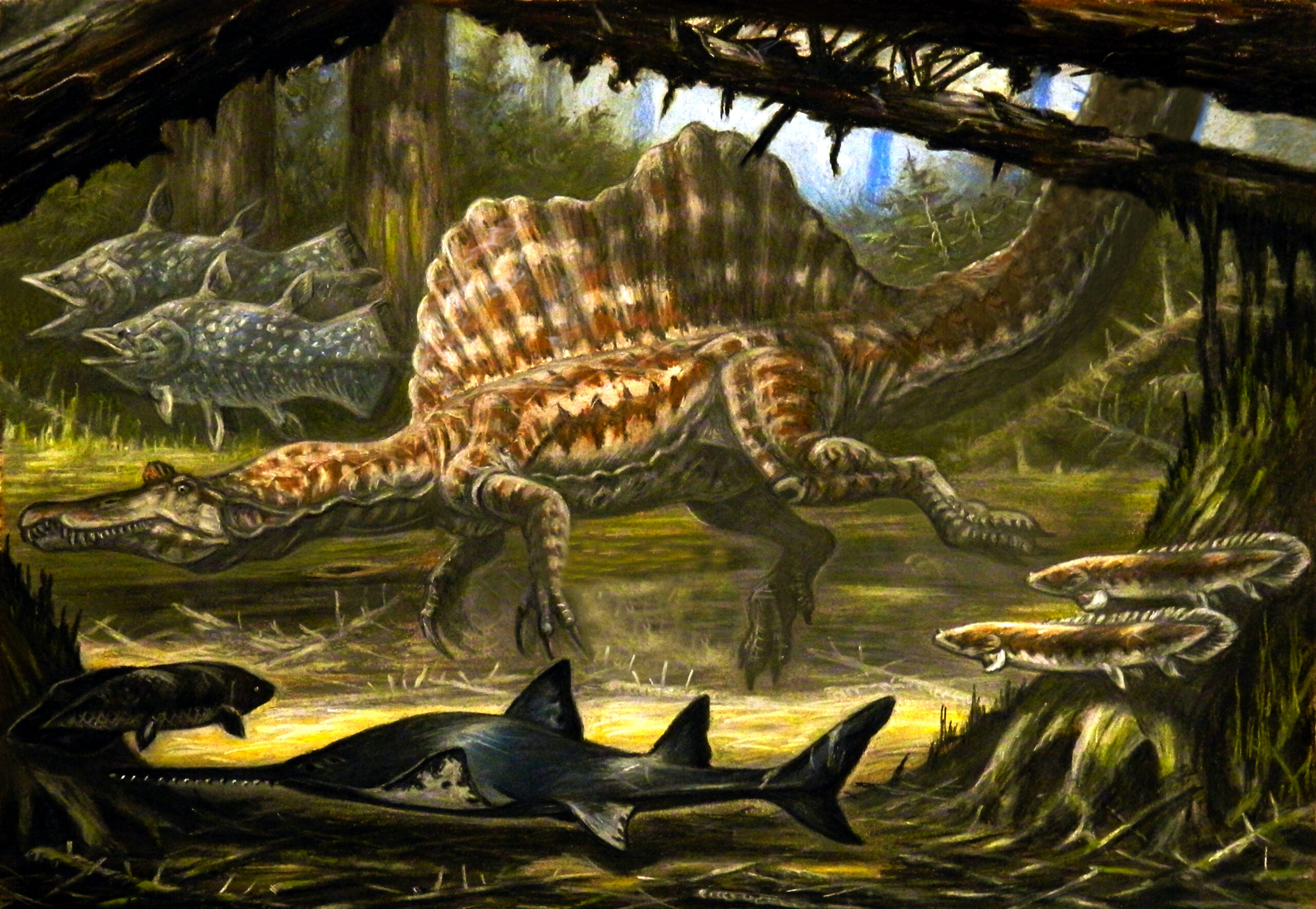
Modern studies suggest Spinosaurus was highly adapted to an aquatic lifestyle, with features that made it comfortable in water and clumsier on land compared with some other big theropods. If you were standing near it at the water’s edge, you’d be deep inside its preferred habitat. That’s a bit like walking into the shallows next to a large crocodile: you’re in its element, not yours, and that instantly tilts the odds against you. You’d probably notice how confidently it moved in and out of the water, using its tail and body like a giant, muscular paddle. If it chose to slide back into the river, it might do so with a surprising smoothness, vanishing into murky depths where you could no longer see its full form. From your perspective, that would be one of the most unsettling parts of the encounter – watching a land-sized monster melt effectively into the water, reminding you that you’re outmatched in every direction, including beneath the surface.
Seeing It Up Close Would Rewrite Your Mental Image of Dinosaurs
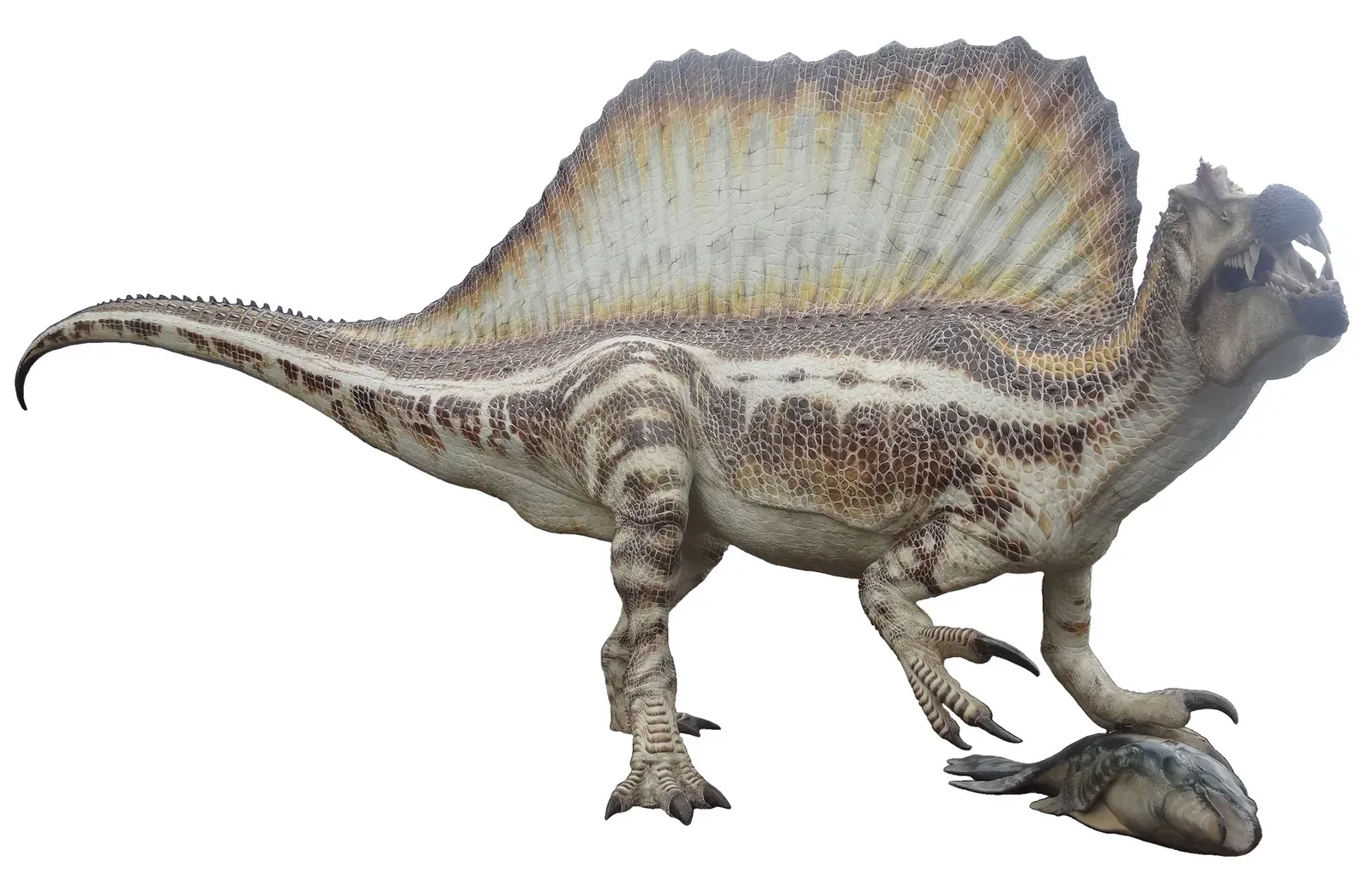
If you somehow survived this encounter, it would completely change the way you think about dinosaurs. Spinosaurus is already one of the key examples showing that not all huge theropods fit the “land-stalking, bone-crushing” stereotype. Seeing it up close, wet, semi-aquatic, long-snouted, and oddly proportioned, you’d probably start questioning every plastic dinosaur toy you’ve ever seen. It would feel less like a monster from a simple action movie and more like a specialized, complex animal filling an ecological niche. Personally, I think standing next to a Spinosaurus would be less about raw fear and more about having your sense of reality stretched. You’d come away realizing that deep time produced creatures that were not just bigger versions of things we know today, but entirely different experiments in body design and lifestyle. It would be a reminder that the world has been stranger, richer, and more varied than our usual pop-culture dinosaur lineup suggests – and that our understanding is still evolving as new fossils and new ideas keep rewriting the story.
Conclusion: You Would Meet a Predator, Not a Movie Monster
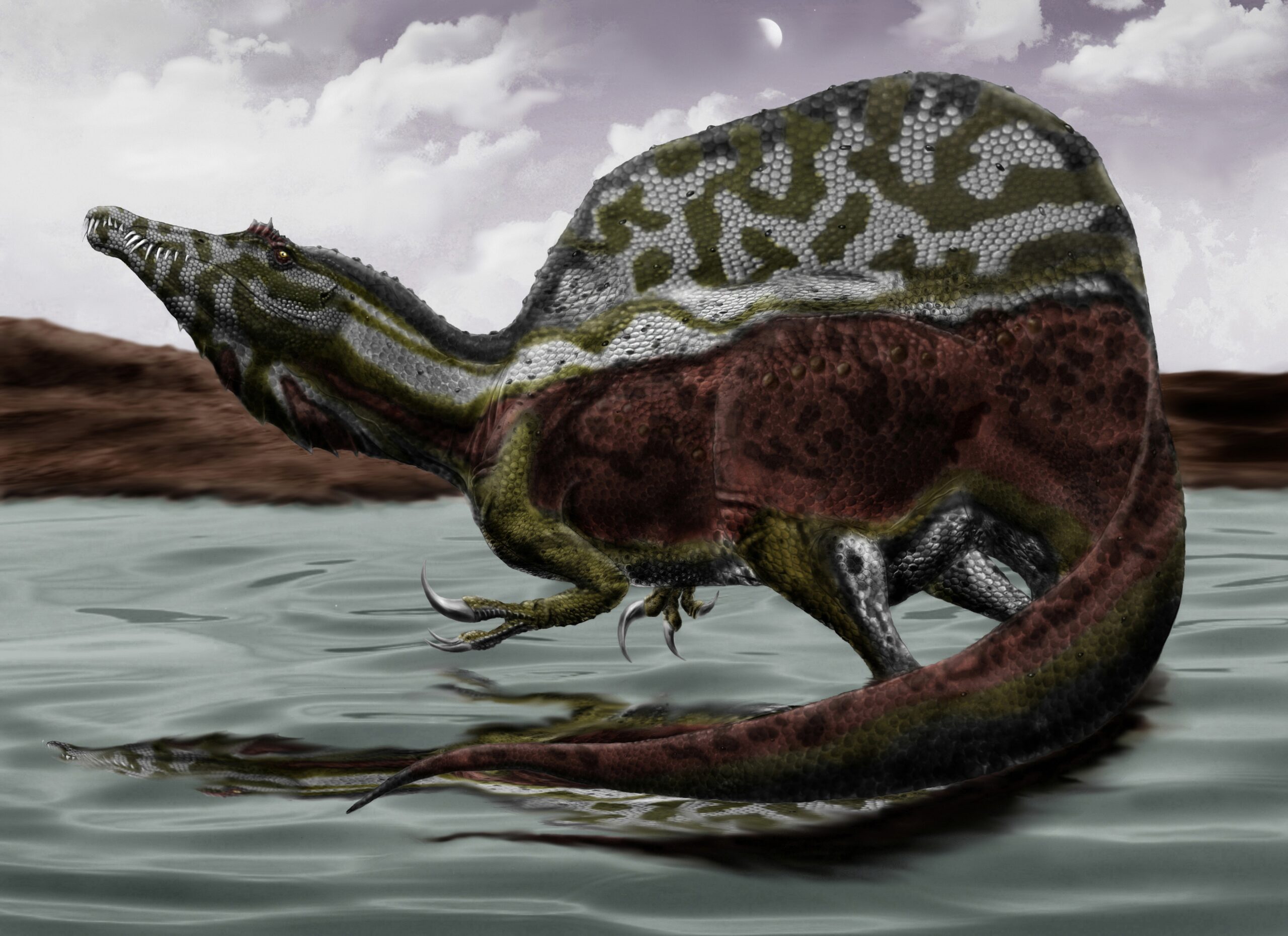
If you stood next to a Spinosaurus, you would not be starring in a perfectly scripted action scene where it roars, charges, and chomps you in one dramatic bite. You’d be standing too close to a powerful, semi-aquatic predator that probably preferred fish, might be wary of you, but could kill you in an instant if you startled it or got in its way. In other words, it would behave less like a villain and more like a very large, very dangerous wild animal with its own priorities. My own opinion is that the reality is actually more thrilling than the fantasy. Instead of a one-dimensional monster, you’d be seeing a complex creature shaped by water, evolution, and a very different Earth. It would not care about your story arc, your bravery, or your childhood fascination – only about its river, its territory, and its next meal. And maybe that’s the most humbling part of all: the realization that, to Spinosaurus, you’d be just another strange animal that wandered too close. Would you really want to test which choice it made?