You’ve probably seen the T. rex skeleton at a museum, or maybe you watched Jurassic Park as a kid. Those massive creatures felt almost mythical, didn’t they? Something about dinosaurs captures our imagination in a way few other extinct animals do. Perhaps it’s their sheer size or the fact that they dominated Earth for so long before vanishing in a cosmic instant.
North America was one of the most spectacular dinosaur playgrounds on the planet. The continent produced some of the most complete skeletons ever discovered and gave us names that became household favorites. From Montana’s badlands to the sprawling fossil beds of Utah, these ancient beasts left their mark in ways that continue to surprise scientists even now. Ready to uncover what really happened when giants walked where you walk today?
The Race That Brought Dinosaurs Into the Public Eye
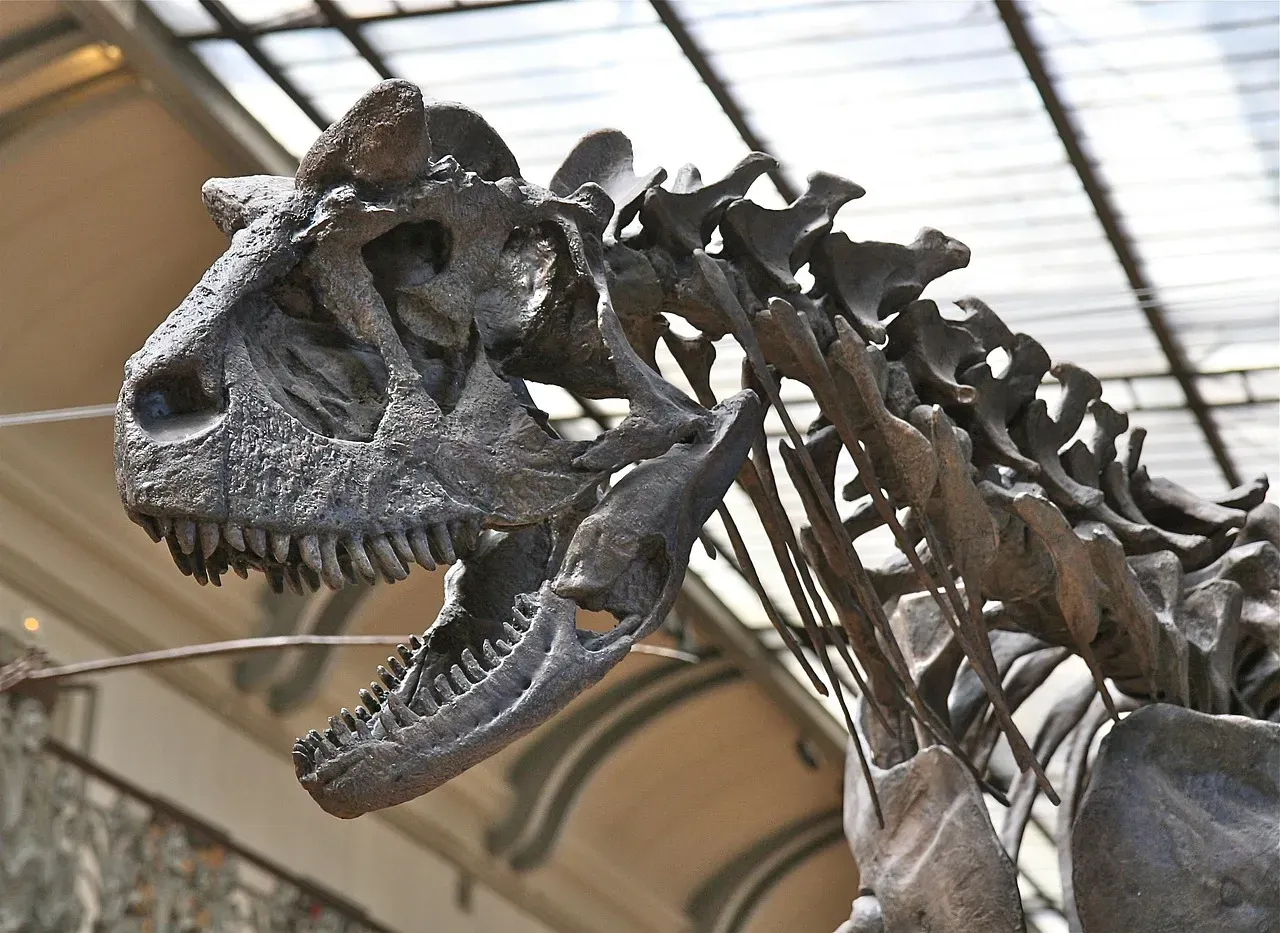
In total, two men described 136 species of dinosaurs, including some famous names such as Stegosaurus, Triceratops, Allosaurus, Diplodocus and Brontosaurus. These discoveries happened during a tumultuous period known as the Bone Wars, a fierce rivalry between paleontologists Edward Drinker Cope and Othniel Charles Marsh. This wasn’t friendly competition either. The two men resorted to spying on each other, stealing fossils, and allegedly even destroying specimens to prevent the other from claiming them first. Here’s the thing, though. Their personal feud inadvertently created a golden age of American paleontology.
What came out of this period was a significant increase in the knowledge of North American dinosaurs, including the discovery of many near complete specimens. The American West became synonymous with dinosaur hunting during the late 1800s, transforming our understanding of these prehistoric giants from fragmentary European finds into detailed reconstructions of entire animals. If you think modern scientific rivalries are intense, imagine two scientists literally blowing up each other’s dig sites with dynamite.
North America’s Oldest Dinosaur Rewrites the Timeline
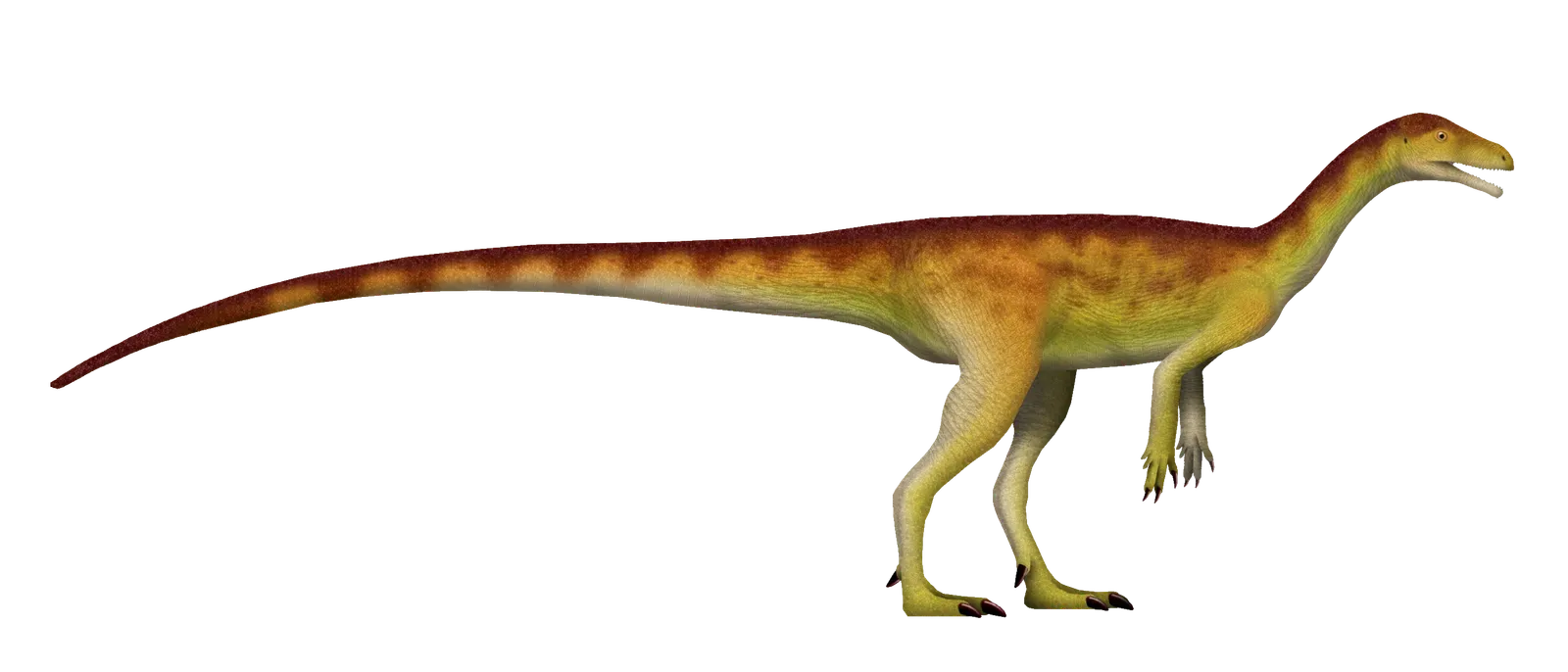
We have, with these fossils, the oldest equatorial dinosaur in the world – it’s also North America’s oldest dinosaur. This groundbreaking discovery comes from Wyoming, where researchers identified Ahvaytum bahndooiveche in rocks dating back roughly 230 million years. What makes this finding particularly significant is that it challenges long held assumptions about where dinosaurs originated and how they spread across the ancient supercontinent Pangea.
The mainstream view has held that the reptiles emerged on the southern portion of the ancient supercontinent Pangea called Gondwana millions of years before spreading to the northern half named Laurasia. But now, a newly described dinosaur whose fossils were uncovered by University of Wisconsin–Madison paleontologists is challenging that narrative, with evidence that the reptiles were present in the northern hemisphere millions of years earlier than previously known. It’s honestly wild how one set of bones can flip decades of scientific consensus on its head. The discovery proves that our understanding of deep time remains incomplete.
Morrison Formation: The World’s Most Fertile Dinosaur Graveyard
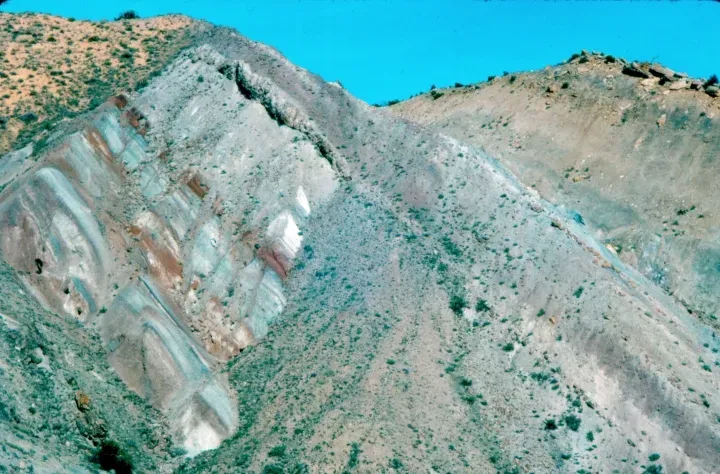
The Late Jurassic Morrison Formation is found in several U.S. states, including Colorado, Utah, Wyoming, Montana, New Mexico, Oklahoma, South Dakota, and Texas. It is notable as being the most fertile single source of dinosaur fossils in the world. Imagine a prehistoric paradise where long necked sauropods browsed treetops while armored stegosaurs lumbered below. That was the Morrison Formation around 150 million years ago.
An abundance of sauropods has been found there, including Apatosaurus, Diplodocus, Barosaurus, Brachiosaurus, Camarasaurus, Brontosaurus and Amphicoelias. This incredible diversity tells us that Late Jurassic North America supported thriving ecosystems with creatures ranging from chicken sized theropods to animals that weighed as much as several elephants combined. The sheer number of species concentrated in one geological formation suggests ideal preservation conditions met abundant life, creating a paleontological treasure trove.
The King of Dinosaurs Had a Rocky Start
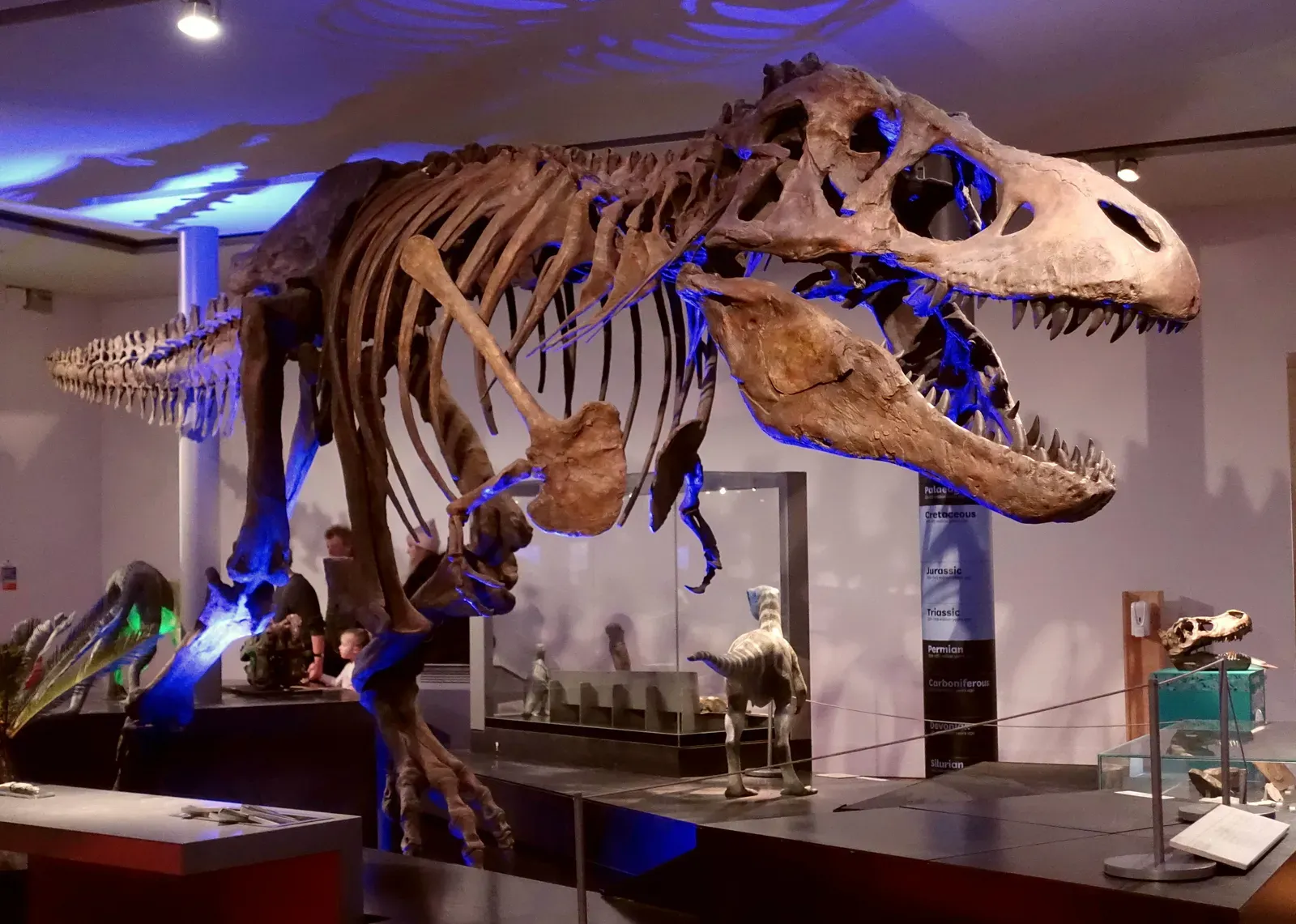
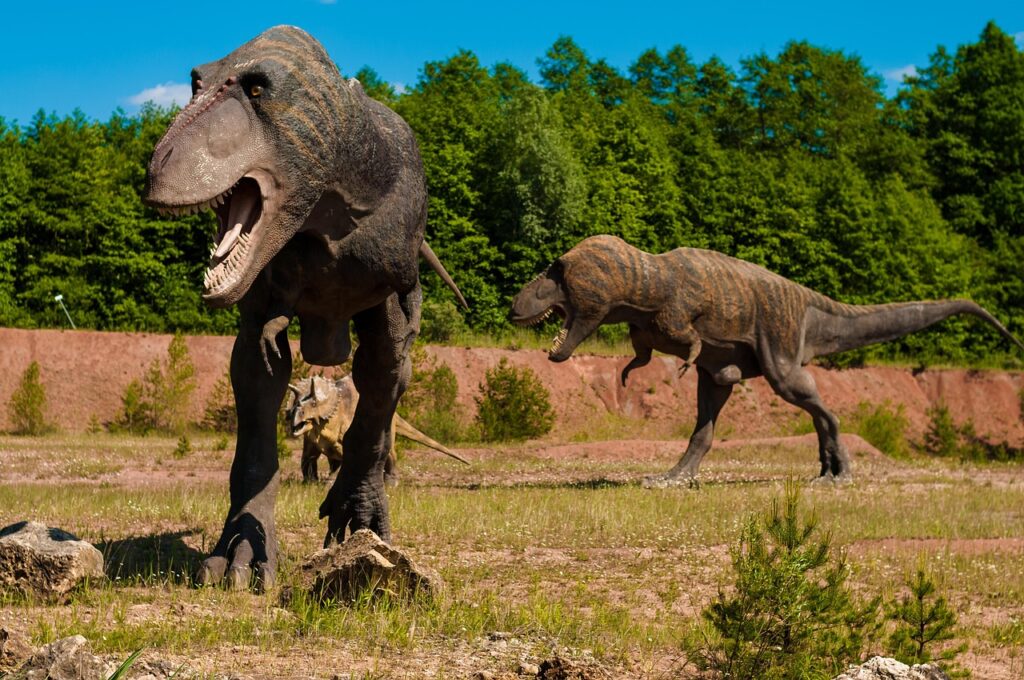
The first skeleton of Tyrannosaurus rex was discovered in 1902 in Hell Creek, Montana, by the Museum’s famous fossil hunter Barnum Brown. Six years later, Brown discovered a nearly complete T. rex skeleton at Big Dry Creek, Montana. Let’s be real, T. rex is probably the most famous dinosaur ever. Kids know its name before they can spell it. The story of its discovery is actually quite fascinating, involving multiple misidentifications before scientists realized what they had found.
The first-named fossil specimen which can be attributed to Tyrannosaurus rex consists of two partial vertebrae (one of which has been lost) found by Edward Drinker Cope in 1892. Cope believed that they belonged to an agathaumid (ceratopsid) dinosaur, and named them Manospondylus gigas. So technically, T. rex was discovered and named three separate times before the name finally stuck. Paleontologists have found most T. rex fossils in states such as Montana, Wyoming, North and South Dakota, and some areas of Alberta, Canada. The Hell Creek Formation in Montana is an especially prolific area for fossil recovery.
The Famous Fossil That Almost Ended Up in Private Hands
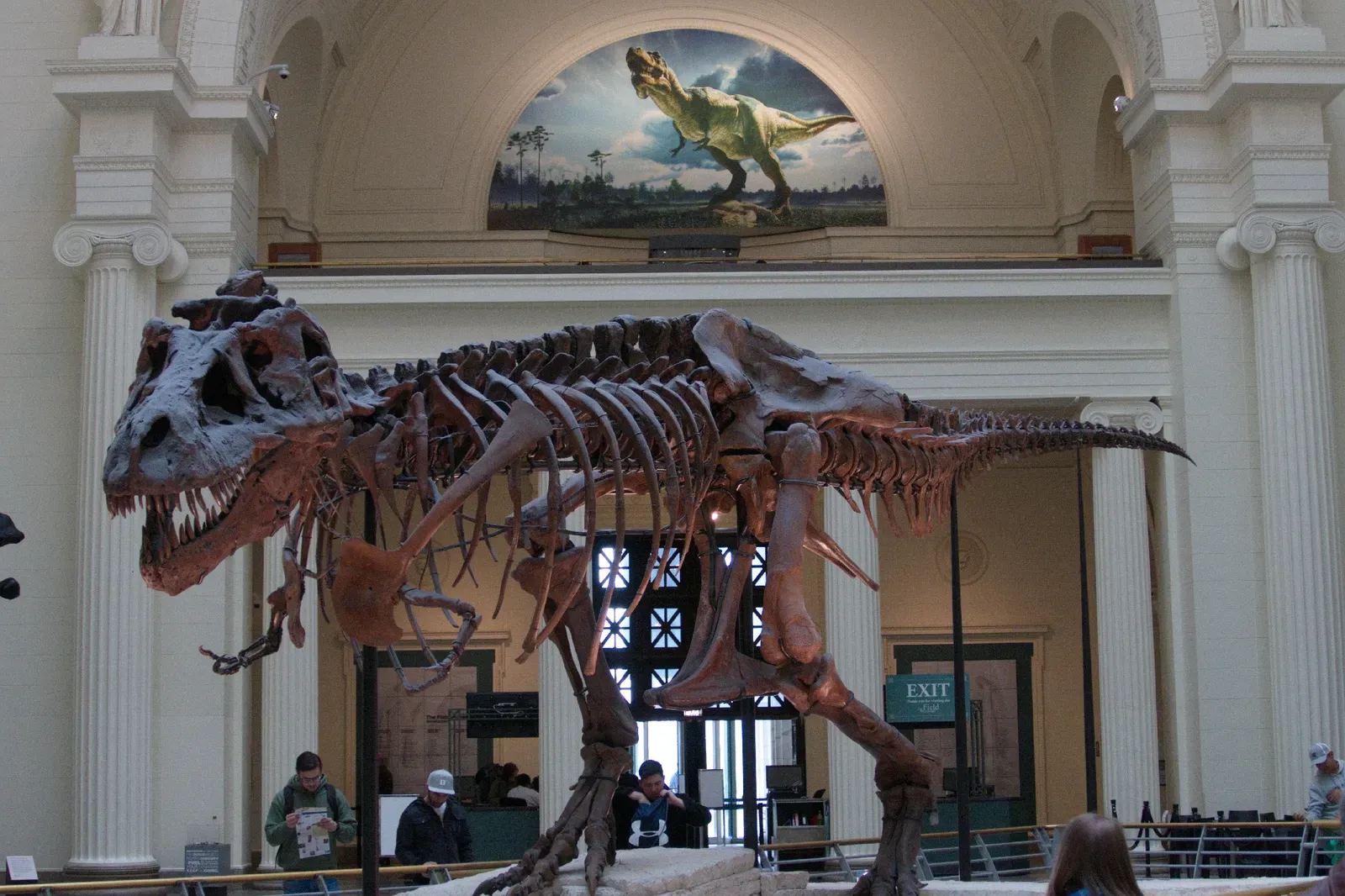
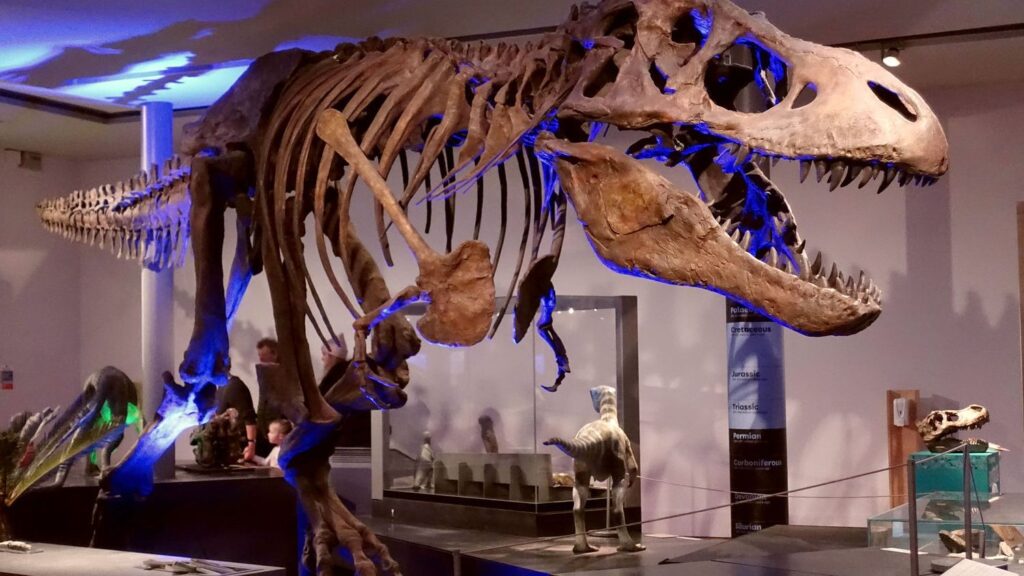
FMNH PR 2081 was discovered on August 12, 1990, by American explorer and fossil collector Sue Hendrickson, after whom it is named. After ownership disputes were settled, Sue was auctioned in October 1997 for US$8.3 million, at that time the highest price ever paid for a fossil. Sue the T. rex represents one of the most complete Tyrannosaurus specimens ever found, with over 90 percent of the skeleton recovered. That’s incredibly rare for any dinosaur, let alone one of the most sought after species.
The legal battle surrounding Sue’s ownership lasted years and involved the FBI, Native American tribes, and competing claims from multiple parties. Sue is now a permanent feature at the Field Museum of Natural History in Chicago, Illinois. Many paleontologists worried the fossil would disappear into a private collection where scientists couldn’t study it. Thankfully, the Field Museum secured funding from corporations and individual donors to keep Sue accessible to researchers and the public alike.
Triceratops: The Tank With Three Horns
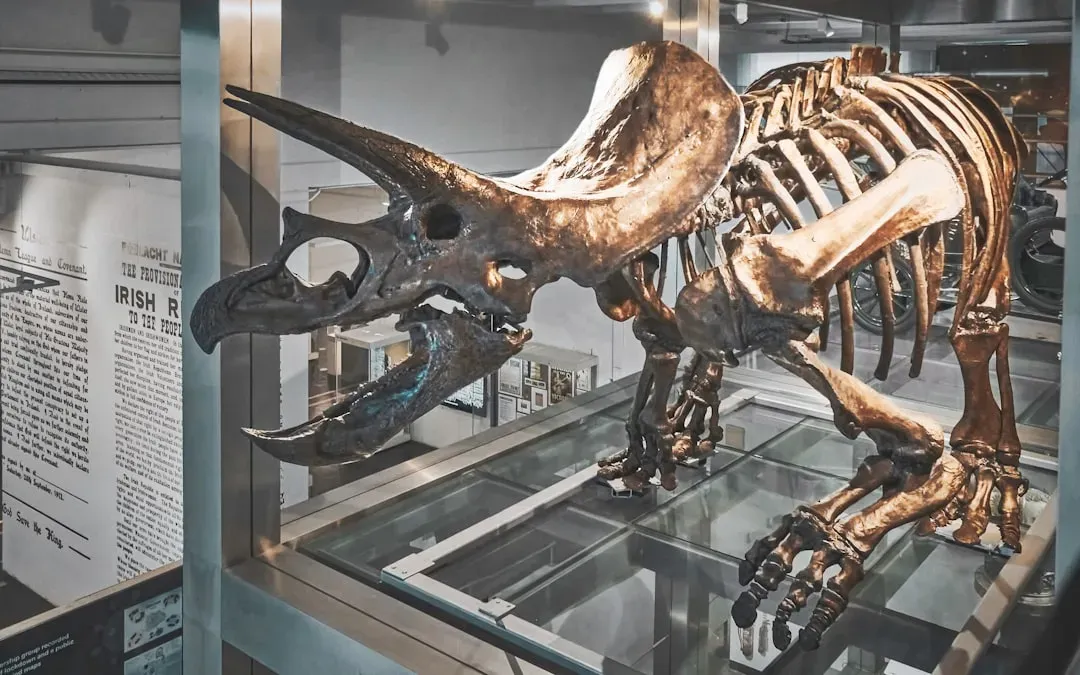
Triceratops is a genus of chasmosaurine ceratopsian dinosaur that lived during the late Maastrichtian age of the Late Cretaceous period, about 68 to 66 million years ago on the island continent of Laramidia, now forming western North America. It was one of the last-known non-avian dinosaurs and lived until the Cretaceous–Paleogene extinction event 66 million years ago. Honestly, Triceratops might be the most recognizable dinosaur after T. rex. Those three facial horns and the massive bony frill make it instantly identifiable even to young children.
For example, Bruce Erickson, a paleontologist of the Science Museum of Minnesota, has reported having seen 200 specimens of T. prorsus in the Hell Creek Formation of Montana. Similarly, Barnum Brown claimed to have seen over 500 skulls in the field. These numbers are staggering when you consider that most dinosaur species are known from only a handful of bones. The abundance suggests Triceratops was likely the dominant herbivore of its time, possibly traveling in herds across Late Cretaceous landscapes.
The Western Interior Seaway Split the Continent
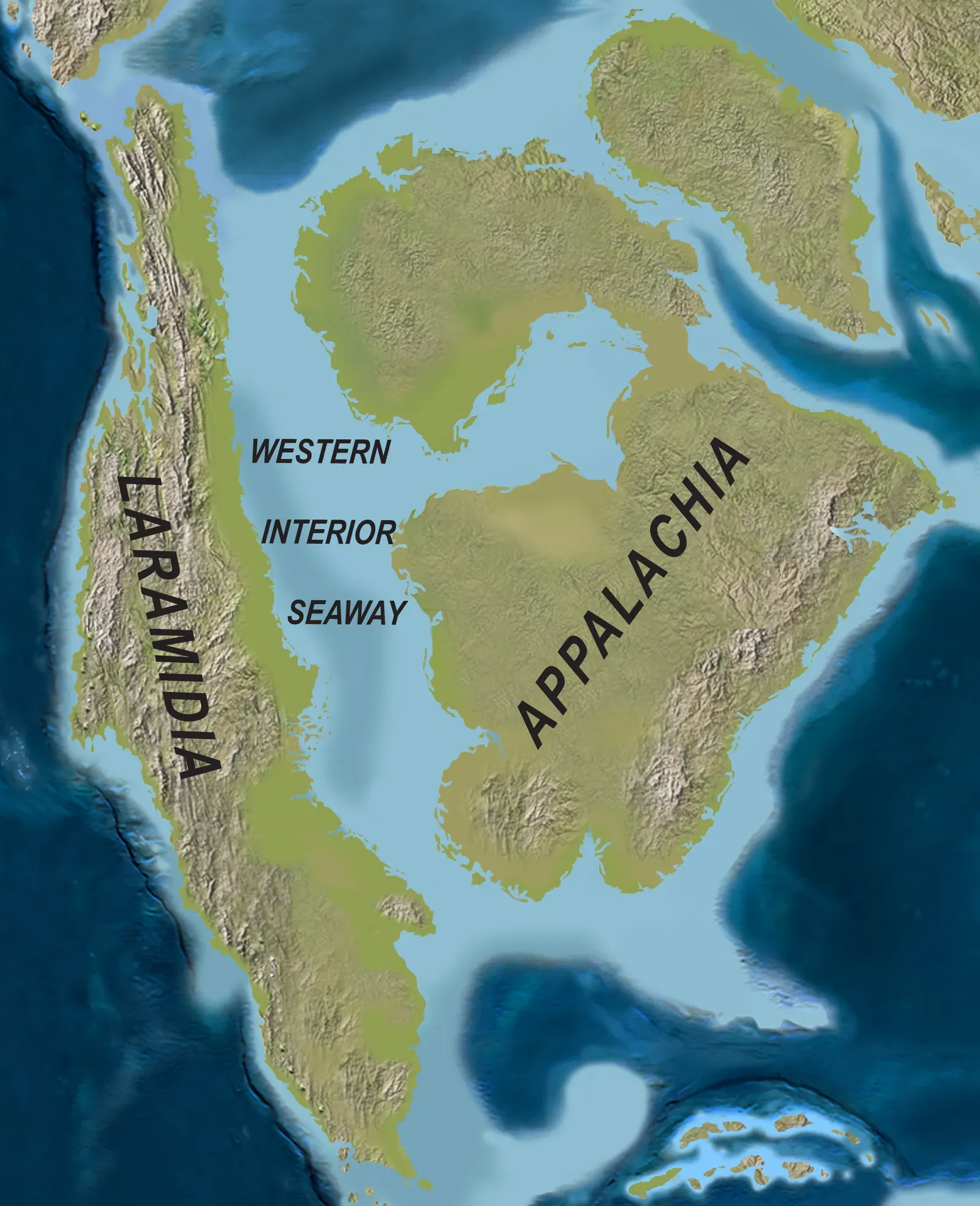
Toward the middle of the Cretaceous, rising sea levels driven by the ongoing breakup of Pangaea submerged the shallow lowlands of the center of the continent, while the western margin was thrust up into a volcanic mountain range similar to the Andes as it overrode oceanic crust. North America was like two continents at this time – a narrow western landmass and a broader eastern landmass – with the Western Interior Seaway between them. Picture this: a shallow tropical sea cutting North America in half, stretching from the Gulf of Mexico to the Arctic Ocean. This wasn’t just a minor geographical feature. It fundamentally shaped which dinosaurs lived where.
The dinosaurs of the last 10 million years of the Cretaceous in North America are some of the best known in the world. They include tyrannosaurs such as Tyrannosaurus, diverse small theropods, ankylosaurs, bone-headed pachycephalosaurs, horned and frilled ceratopsians such as Triceratops, and duckbilled hadrosaurs. This seaway essentially created isolated dinosaur communities on either side, allowing for unique evolutionary paths. When the waters finally retreated near the end of the Cretaceous, these separate populations had developed distinct characteristics.
Armored Tanks That Walked on Four Legs
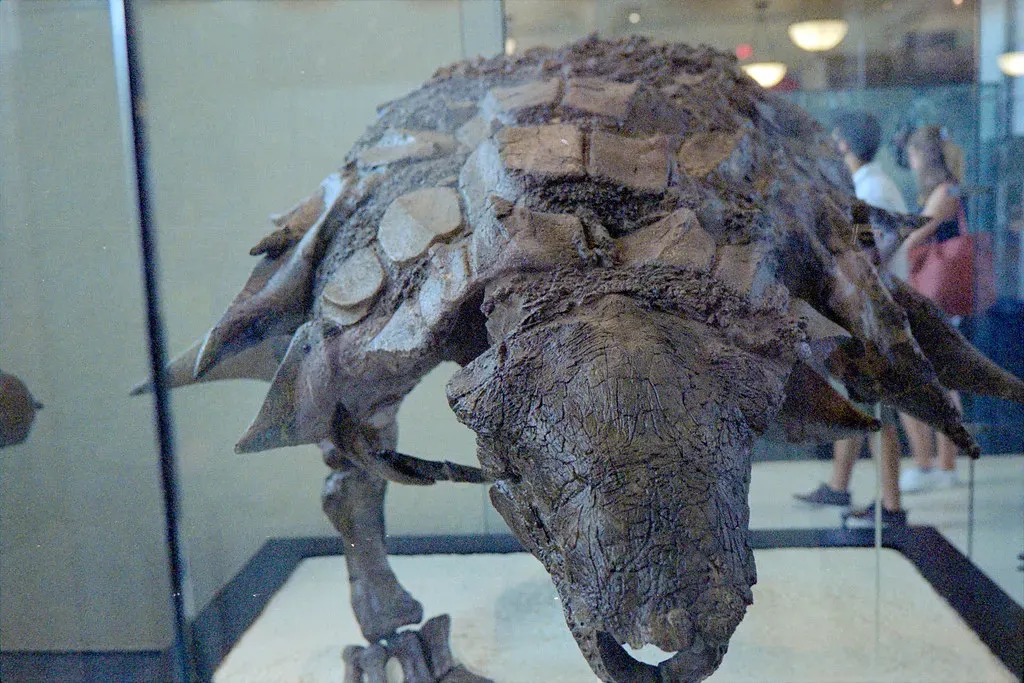
Its fossils have been found in geological formations dating to the very end of the Cretaceous Period, about 68–66 million years ago, in western North America, making it among the last of the non-avian dinosaurs. It was named by Barnum Brown in 1908; it is monotypic, containing only A. magniventris. Ankylosaurus represents one of nature’s most remarkable defensive designs. Imagine an animal covered head to tail in bony armor plates, with a massive club on the end of its tail that could deliver bone crushing blows.
Possibly the largest known ankylosaurid, Ankylosaurus is estimated to have been between 6 and 8 m (20 and 26 ft) long and to have weighed between 4.8 and 8 t (5.3 and 8.8 short tons). Despite its intimidating defenses, Ankylosaurus was a plant eater that probably moved quite slowly. Ankylosaurus also lived alongside dinosaurs such as Tyrannosaurus, Triceratops, and Edmontosaurus. Scientists debate whether the tail club was primarily for defense or possibly for competing with other ankylosaurs over territory or mates.
The Day Everything Changed
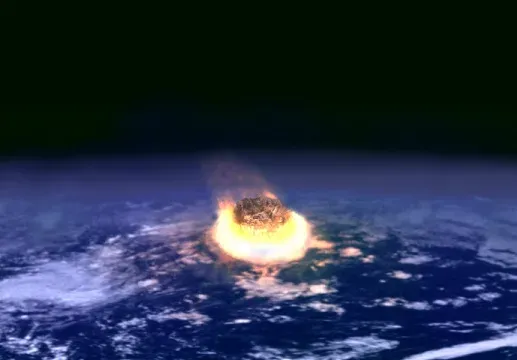
Around 66 million years ago, during the Northern Hemisphere’s spring, a six-mile-wide asteroid struck what is now the Yucatán Peninsula. The resulting disaster drove 75 percent of Earth’s species to extinction, including nearly every dinosaur lineage except for beaked birds. Let’s be honest, no article about dinosaurs feels complete without addressing how their reign ended. Recent research reveals something surprising though.
Fossils from New Mexico that date to within about 340,000 years before the asteroid struck paint a vivid picture: the dinosaurs were thriving right until the moment of impact. This contradicts older theories suggesting dinosaurs were already in decline. Rather than struggling to survive, dinosaurs were still thriving. The extinction wasn’t the end of a slow fade but rather a sudden catastrophic interruption of vibrant ecosystems. Dinosaurs didn’t die out because they were failing. They died because a mountain sized rock fell from space at the worst possible moment.
Did you realize how much drama unfolded in your own backyard millions of years ago? What do you think would have happened if that asteroid had missed Earth entirely?