Picture this: a world where you could walk from New York to Morocco without crossing an ocean, where the Amazon rainforest sat next to the Sahara Desert, and where dinosaurs roamed freely across what would become seven different continents. This was Earth during the late Triassic period, roughly 200 million years ago, when our planet looked nothing like the globe we know today. A massive supercontinent called Pangaea dominated the landscape, stretching from pole to pole like a giant puzzle piece floating on an endless sea.
The Colossal Breakup That Rewrote Earth’s Story

The splitting of Pangaea wasn’t just another geological event – it was the most dramatic planetary transformation in Earth’s recent history. Around 175 million years ago, during the Middle Jurassic period, this supercontinent began tearing apart with unimaginable force. Massive rifts opened like wounds in the Earth’s crust, spewing lava and creating new ocean basins that would eventually become the Atlantic and Indian Oceans.
The breakup happened slowly by human standards, moving at roughly the same pace your fingernails grow. But in geological terms, this was catastrophically fast. Within just 50 million years, Pangaea had fragmented into distinct landmasses that would drift thousands of miles apart. The northern portion, called Laurasia, included what would become North America, Europe, and Asia, while the southern chunk, Gondwana, contained the future South America, Africa, Antarctica, Australia, and India.
Dinosaurs Before the Split: Life on a Unified Planet

Before Pangaea’s breakup, dinosaurs lived in a world of extremes and unity. The supercontinent’s interior was a scorching desert wasteland, while its edges enjoyed more moderate climates with lush vegetation. Early dinosaurs like Coelophysis and Plateosaurus could theoretically migrate across the entire landmass without encountering a single ocean barrier.
This connected world allowed dinosaur species to spread far and wide, creating remarkably similar fossil records across what are now different continents. The same types of dinosaurs that roamed ancient Argentina also wandered through prehistoric Morocco and early Europe. It was like having a massive biological highway system where species could freely exchange genes and colonize new territories.
The climate was generally warm and humid, with no polar ice caps to speak of. This greenhouse world supported vast forests of conifers, ferns, and cycads that provided abundant food sources for the growing diversity of herbivorous dinosaurs. Meanwhile, the first large predators began establishing the ecological patterns that would define dinosaur evolution for the next 135 million years.
The Jurassic Rift: When Continents Began Their Journey

The Jurassic period marked the beginning of the end for Pangaea’s reign as Earth’s dominant landmass. Starting around 200 million years ago, volcanic activity intensified along what would become the Atlantic Ocean’s mid-ocean ridge. These weren’t just ordinary volcanoes – they were massive fissure eruptions that split the continent like a zipper being pulled apart.
The process began in what is now the central Atlantic, creating a narrow seaway between North America and Northwest Africa. As the rift expanded, it gradually separated Europe from North America and began isolating different dinosaur populations for the first time in their evolutionary history. This early Atlantic Ocean was much narrower than today’s version, more like a large lake or inland sea.
Simultaneously, the southern portion of Pangaea started experiencing its own rifting events. The future Indian Ocean began forming as Madagascar and India started pulling away from Antarctica and Australia. These geological upheavals created new mountain ranges, altered weather patterns, and established the foundation for the modern world’s geography.
Climate Revolution: How Continental Drift Changed Weather Forever

As Pangaea split apart, Earth’s climate underwent a dramatic transformation that would reshape dinosaur evolution. The massive interior desert that characterized the supercontinent’s heart began shrinking as newly formed oceans brought moisture inland. Coastal regions expanded dramatically, creating more temperate and humid environments perfect for supporting diverse ecosystems.
Ocean currents, previously constrained by Pangaea’s massive bulk, began flowing in new patterns that distributed heat more evenly around the planet. This led to the development of the warm, tropical conditions that would define the Jurassic period. Sea levels rose significantly, flooding low-lying areas and creating shallow seas that teemed with marine life.
The increased humidity and warmth triggered an explosion of plant growth across the fragmenting continents. Forests became denser and more diverse, while new types of vegetation evolved to take advantage of the changing conditions. This botanical revolution provided dinosaurs with unprecedented food sources and habitats, setting the stage for their golden age of diversity and size.
Evolutionary Isolation: The Birth of Unique Dinosaur Lineages

One of the most profound consequences of Pangaea’s breakup was the evolutionary isolation it created among dinosaur populations. As ocean barriers formed between the separating continents, dinosaur species that had once freely intermingled suddenly found themselves cut off from their distant relatives. This isolation became the driving force behind rapid evolutionary diversification.
In the northern landmasses of Laurasia, dinosaurs began evolving along different paths than their southern cousins in Gondwana. The famous long-necked sauropods developed distinct characteristics depending on which continent they inhabited. While North American species like Diplodocus evolved extremely long, whip-like tails, their South American relatives developed different body proportions and feeding strategies.
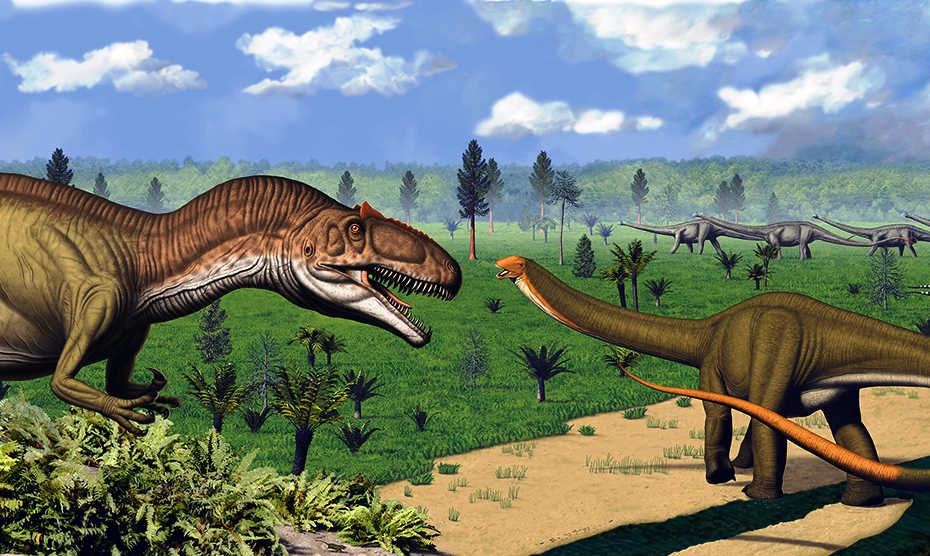
This geographical separation also led to the evolution of entirely new dinosaur groups. The massive predator Allosaurus dominated the western United States, while different theropod lineages emerged in what would become Europe and Asia. Meanwhile, the southern continents saw the rise of unique dinosaur families that had no counterparts in the north, creating a patchwork of distinct evolutionary experiments across the fragmenting world.
The Sauropod Revolution: Giants in a Changing World

The Jurassic period is perhaps best known for the rise of the sauropods, the largest land animals that ever lived. These magnificent giants reached their peak diversity and size precisely because of the environmental changes triggered by Pangaea’s breakup. The warm, humid climate and abundant vegetation created perfect conditions for animals that needed enormous amounts of food to sustain their massive bodies.
Sauropods like Brachiosaurus and Diplodocus evolved different feeding strategies that reflected their isolated environments. Some developed extremely long necks to reach high into the canopy, while others evolved more horizontal feeding postures to browse on ground-level vegetation. The availability of diverse plant communities in different regions drove these adaptations, creating a spectacular variety of giant forms.
The separation of continents also allowed sauropods to evolve without direct competition from their relatives on other landmasses. This reduced competitive pressure contributed to their ability to grow to such enormous sizes. In some regions, multiple sauropod species coexisted by specializing in different types of vegetation or feeding at different heights, creating complex ecological relationships that would have been impossible in a more connected world.
Predator Diversification: The Arms Race Accelerates

As herbivorous dinosaurs diversified and grew larger in response to continental separation, their predators underwent their own evolutionary revolution. The Jurassic period saw the emergence of increasingly sophisticated and specialized theropod dinosaurs that evolved to exploit the new niches created by Pangaea’s breakup. These predators ranged from small, agile hunters to massive apex predators that rivaled modern-day elephants in size.
Allosaurus, the quintessential Jurassic predator, evolved powerful jaws and razor-sharp teeth specifically adapted for hunting the large sauropods that dominated its North American habitat. Meanwhile, other continents developed their own unique predatory dinosaurs that reflected local prey availability and environmental conditions. This geographical variation in predator evolution created a global arms race between hunters and their prey.
The isolation also led to the evolution of pack-hunting behaviors and more sophisticated hunting strategies. Some smaller theropods began working together to bring down prey much larger than themselves, while others specialized in hunting specific types of dinosaurs. This diversification of predatory strategies contributed to the overall ecological complexity that characterized Jurassic ecosystems.
Marine Reptiles: Masters of the New Ocean Basins

While dinosaurs dominated the land during the Jurassic breakup, the newly formed ocean basins became the realm of equally impressive marine reptiles. The expanding Atlantic and Indian Oceans provided vast new habitats for creatures like plesiosaurs, ichthyosaurs, and marine crocodiles. These animals evolved to fill every available ecological niche in the warming seas.
Plesiosaurs developed into two distinct groups: long-necked forms that used their serpentine necks to snatch fish and squid, and short-necked pliosaurs that became the apex predators of Jurassic seas. Some pliosaurs grew larger than modern sperm whales, with massive heads and teeth designed for crushing other marine reptiles. The isolation of different ocean basins led to the evolution of distinct marine reptile communities on either side of the expanding seaways.
The abundant marine life in these new oceans also influenced coastal dinosaur evolution. Many dinosaurs living near the expanding coastlines began incorporating marine resources into their diets, leading to the evolution of semi-aquatic species and new feeding behaviors. This interaction between land and sea created complex ecological relationships that wouldn’t have existed in Pangaea’s more landlocked world.
Volcanic Chaos: How Eruptions Shaped Dinosaur Evolution

The geological forces that split Pangaea apart created one of the most volcanically active periods in Earth’s history. Massive volcanic provinces erupted across the fragmenting continents, spewing millions of tons of lava and ash into the atmosphere. These eruptions had profound effects on dinosaur evolution, creating both challenges and opportunities for different species.
The Central Atlantic Magmatic Province, one of the largest volcanic events in Earth’s history, coincided with the early stages of Pangaea’s breakup. This massive eruption likely contributed to a significant extinction event that eliminated many early dinosaur competitors, clearing the way for dinosaurian dominance. The volcanic activity also created new mountain ranges and altered local climates, forcing dinosaurs to adapt to rapidly changing conditions.
Some dinosaur species actually thrived in these volcanic environments, developing adaptations that allowed them to exploit the mineral-rich soils and unique plant communities that emerged in volcanic regions. The constant geological activity also created isolated valleys and highlands that served as evolutionary laboratories, allowing small populations to evolve in isolation and develop unique characteristics.
Plant Evolution: The Green Revolution That Fed the Giants

The breakup of Pangaea triggered a botanical revolution that was just as dramatic as the changes occurring in the animal kingdom. As the climate became warmer and more humid, new types of plants evolved that would fundamentally change terrestrial ecosystems. The diversity of plant life exploded, creating the lush forests and grasslands that supported the Jurassic dinosaur boom.
Conifers reached new heights of diversity and size, with some species growing to enormous proportions in the warm, humid climate. Ferns and cycads flourished in the understory, while new types of seed plants began experimenting with different reproductive strategies. This plant diversification provided dinosaurs with a much wider variety of food sources than had been available during the Pangaea era.
The geographical separation of continents also led to the evolution of distinct plant communities on different landmasses. South American vegetation began diverging from African flora, while North American plants evolved along different lines from their European relatives. This botanical isolation contributed to the concurrent evolution of specialized herbivorous dinosaurs adapted to exploit specific plant communities.
Ecosystem Complexity: The Birth of Modern Food Webs

As Pangaea fragmented and climates stabilized, Jurassic ecosystems became far more complex and interconnected than anything that had existed before. The warm, humid conditions and diverse plant communities supported intricate food webs that included everything from tiny insects to massive sauropods. This ecosystem complexity provided numerous evolutionary opportunities for dinosaurs to specialize and diversify.
Different continents developed unique ecological relationships that reflected their isolation and local environmental conditions. In some regions, massive herds of herbivorous dinosaurs created migrations that shaped entire landscapes, while in others, complex predator-prey relationships evolved that involved multiple species of theropods hunting different types of prey. These regional differences contributed to the overall diversity of Jurassic life.
The increased ecosystem complexity also led to the evolution of more sophisticated behaviors among dinosaurs. Some species developed elaborate social structures, while others evolved complex communication systems and mating displays. The stable, productive environments created by continental separation allowed dinosaurs to invest energy in these complex behaviors rather than simply focusing on survival.
Fossil Evidence: Reading the Story in Stone

The fossil record provides compelling evidence for how Pangaea’s breakup influenced dinosaur evolution. Paleontologists have discovered that dinosaur fossils from the early Jurassic show remarkable similarities across what are now different continents, reflecting the connected world that existed before the split. However, as the period progressed, fossil assemblages became increasingly distinct between separating landmasses.
The Morrison Formation in North America, for example, contains dinosaur species that are found nowhere else in the world, reflecting the evolutionary isolation that occurred as the Atlantic Ocean expanded. Similarly, dinosaur fossils from the Tendaguru Formation in Tanzania show unique characteristics that distinguish them from their North American contemporaries, despite sharing common ancestors.
These fossil patterns provide a clear timeline of how continental separation influenced dinosaur evolution. Early Jurassic rocks contain similar species across multiple continents, while later formations show increasing divergence and specialization. The fossil record essentially documents the transformation from a unified global dinosaur fauna to the distinct regional assemblages that would characterize the rest of the Mesozoic Era.
The Legacy of Separation: Long-term Evolutionary Consequences

The breakup of Pangaea during the Jurassic period set in motion evolutionary processes that would shape dinosaur history for the remainder of the Mesozoic Era. The geographical isolation created by continental drift became a permanent feature of dinosaur evolution, leading to the development of increasingly distinct regional faunas as time progressed. This isolation would eventually contribute to the incredible diversity of dinosaur species that existed by the end of the Cretaceous period.
The ecological niches created by the changing climate and geography also established patterns of dinosaur evolution that would persist for millions of years. The arms race between predators and prey, the specialization of herbivores for different plant communities, and the development of complex social behaviors all had their roots in the environmental changes triggered by Pangaea’s fragmentation.
Perhaps most importantly, the Jurassic breakup demonstrated the profound influence that geological processes can have on biological evolution. The dinosaurs’ response to continental drift shows how life adapts to changing planetary conditions, providing insights that remain relevant for understanding evolution in our modern world of rapid environmental change. The patterns established during this crucial period would influence dinosaur evolution right up until their extinction 66 million years ago, making the Jurassic breakup one of the most important events in the history of life on Earth.
The story of Pangaea’s split reveals how our planet’s geological forces shaped one of evolution’s greatest success stories. As continents drifted apart and new oceans formed, dinosaurs seized the opportunity to diversify into forms that still capture our imagination today. The Jurassic period’s legacy lives on not just in museum displays and Hollywood films, but in the very structure of our modern world, where the continents continue their slow dance across the globe. What other evolutionary marvels might be unfolding right now as our planet continues its endless transformation?