Picture this: you are standing in a park, watching a pigeon peck at crumbs near a bench. You probably are not thinking, “Wow, that’s a dinosaur.” Yet that is precisely what it is. The birds you spot every single day, from sparrows to eagles, are the living descendants of creatures that once ruled the Mesozoic world. It sounds like something out of a science fiction novel, but the fossil record does not lie.
The story of feathered dinosaurs is one of the most thrilling chapters in the history of science. It reshapes everything you thought you knew about these prehistoric giants and connects an ancient, vanished world directly to the one outside your window right now. Buckle up, because what you are about to read just might change the way you look at birds forever. Let’s dive in.
Feathers Belonged to Dinosaurs Long Before Birds Existed
Here is the thing that blows most people’s minds: feathers did not first appear on birds. They showed up on dinosaurs tens of millions of years before anything resembling a modern bird ever took to the sky. Until recently, feathers were regarded as uniquely avian, as the defining characteristic of what it meant to be a bird. Scientists held that belief tightly for a long time, and it made perfect sense on the surface. Then the fossils arrived and changed everything.
A series of spectacularly preserved fossil discoveries, primarily from the Early Cretaceous of China, revealed the presence of feathers and other feather-like structures in a variety of non-flying theropod dinosaurs, demonstrating conclusively that earlier models of bird evolution were wrong, as feathers clearly appeared prior to the origin of either birds or flight and must have had a deeper, dinosaurian ancestry. Think of it like discovering that wheels existed long before cars. The technology came first; the vehicle came later. Feathers were nature’s technology, and the dinosaurs were its first clients.
The Fossil Goldmine: China’s Early Cretaceous Beds
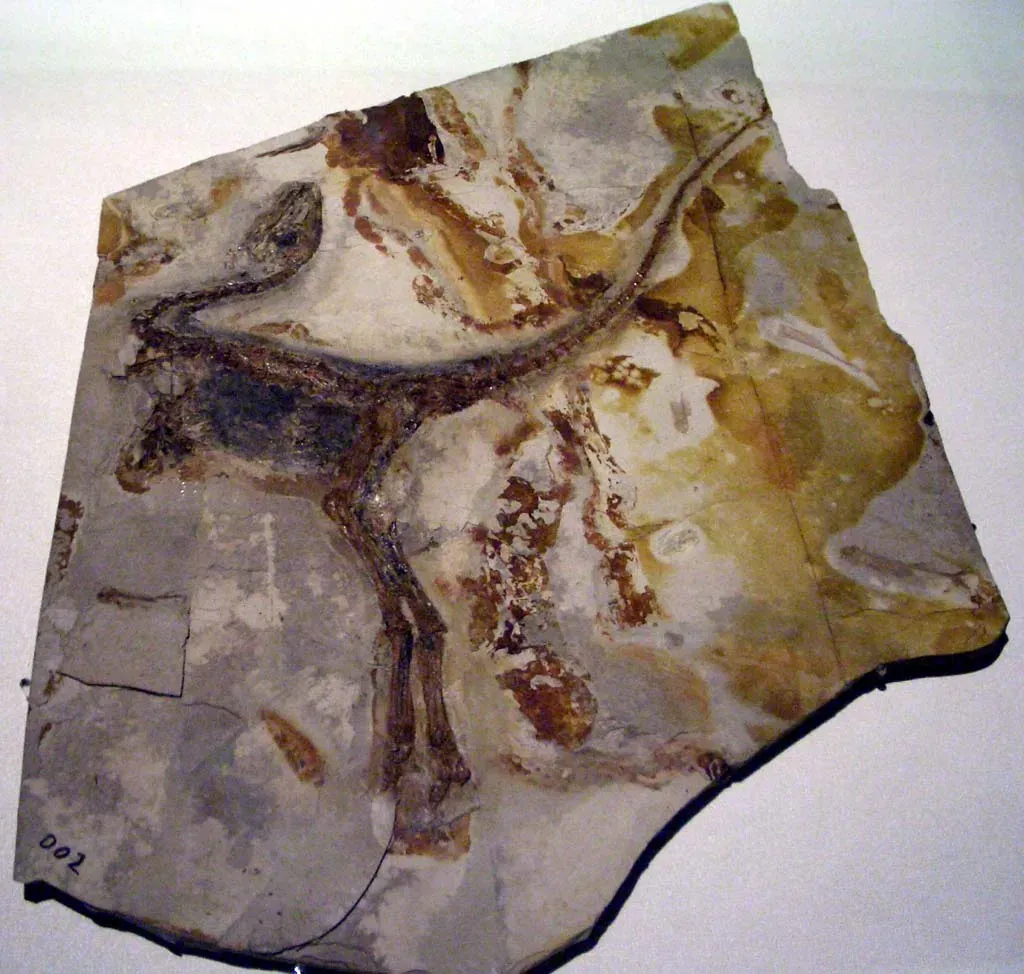
If you ever want to witness a pivotal moment in paleontological history, you would want to travel back to the northeastern Chinese province of Liaoning in the 1990s. In the 1990s, the first fossilized feathers were found in extinct dinosaurs. That discovery cracked open a mystery that scientists had been circling around for well over a century. Scientists sprinted to the Liaoning region of China where the first feathered specimens were found, and today fossil hunters have recovered more than 20 species of feathered dinosaurs from that region alone.
The most important discoveries at Liaoning have been a host of feathered dinosaur fossils, with a steady stream of new finds filling in the picture of the dinosaur-bird connection and adding more to theories of the evolutionary development of feathers and flight. It is almost hard to believe that a single geological formation could hold so many answers to questions humanity has wrestled with for generations. Honestly, Liaoning is to paleontology what the Rosetta Stone is to linguistics: a key that unlocked an entire hidden language.
Archaeopteryx: The Famous Bridge Between Two Worlds
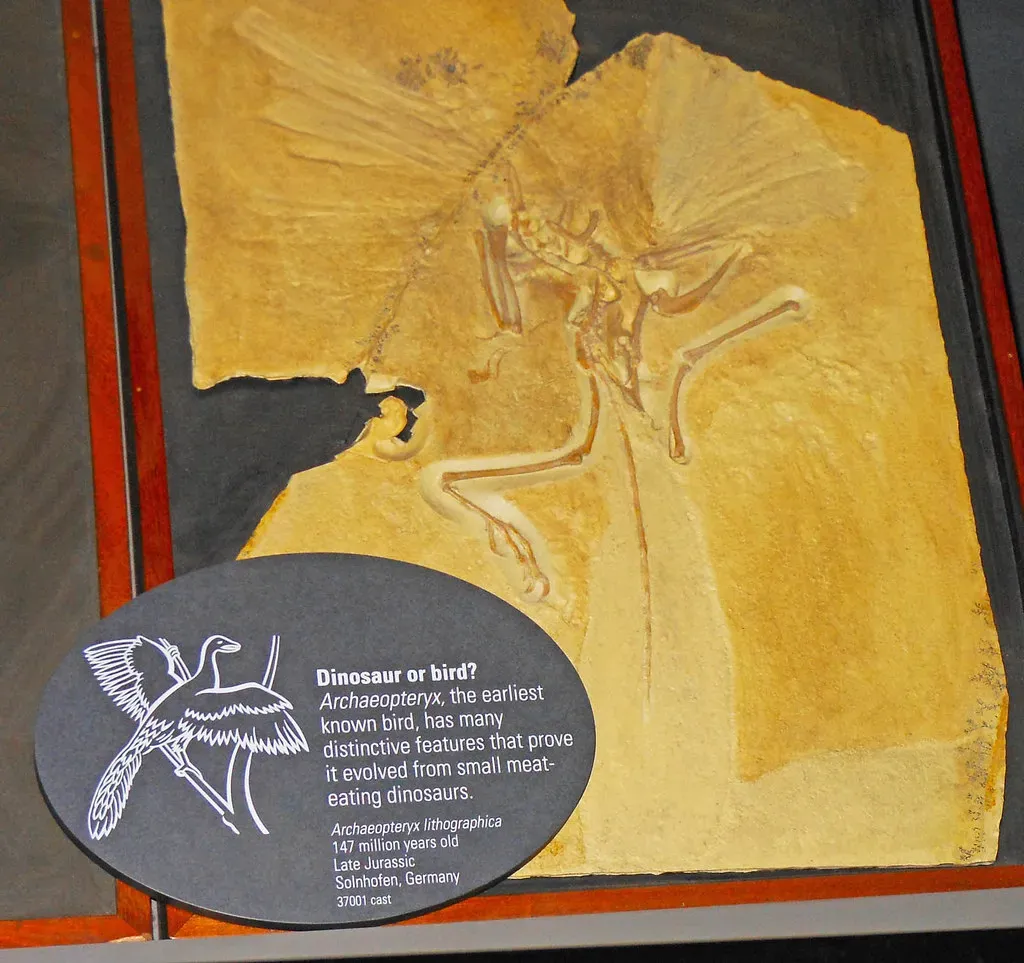
The type specimen of Archaeopteryx was discovered just two years after Charles Darwin published On the Origin of Species. Archaeopteryx seemed to confirm Darwin’s theories and has since become a key piece of evidence for the origin of birds, the transitional fossils debate, and confirmation of evolution. For decades, it was treated as the holy grail of paleontology, the creature that sat perfectly at the crossroads between reptile and bird. It is the kind of fossil that makes even seasoned scientists do a double-take.
Because it displays features common to both birds and non-avian dinosaurs, Archaeopteryx has often been considered a link between them. In the 1970s, John Ostrom, following Thomas Henry Huxley’s lead in 1868, argued that birds evolved within theropod dinosaurs, and Archaeopteryx was a critical piece of evidence for this argument, as it had several avian features such as a wishbone, flight feathers, wings, and a partially reversed first toe, along with dinosaur and theropod features. It is like finding a photograph of your great-great-great-grandmother who looks uncannily like you. You cannot deny the family resemblance.
Why Feathers? The Surprising Original Purpose
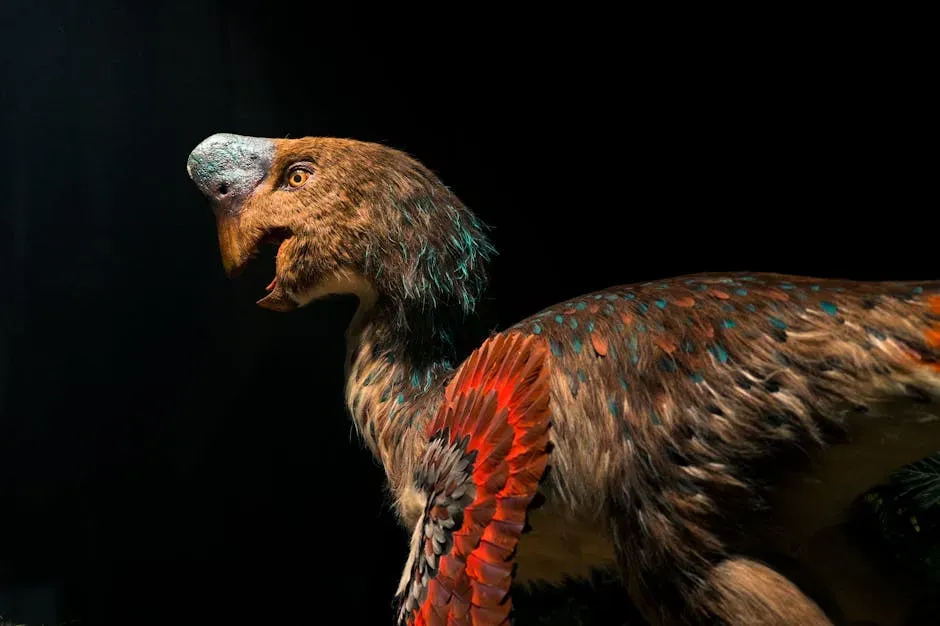
You might assume feathers evolved purely for flight. That would be the logical guess. After all, that is what you see feathers doing every time a bird takes off. But science, in its eternal habit of defying expectations, tells a completely different story. It has been suggested that feathers had originally functioned as thermal insulation, as it remains their function in the down feathers of infant birds prior to their eventual modification into structures that support flight. Feathers, in other words, started their career as a kind of prehistoric puffer jacket.
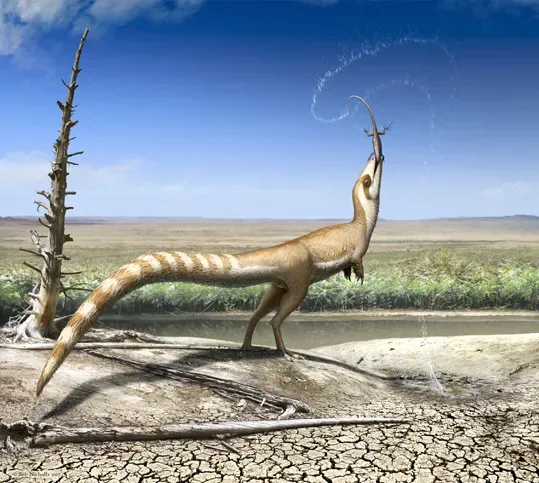
There is also a deeply compelling argument for visual display as the original driver. The simplest feathers in dinosaurs such as Sinosauropteryx were only present over limited parts of the body, for example as a crest down the midline of the back and round the tail, and so they would have had only a limited function in thermoregulation. It may also indicate that not only primitive proto-feathers but also more advanced pennaceous feathers probably first evolved in a functional context other than flight, such as balancing, brooding, insulation, or display. So before feathers ever lifted a dinosaur off the ground, they were busy keeping them warm and making them look good. Some things never change.
Feather Colors: Science Finally Paints the Picture
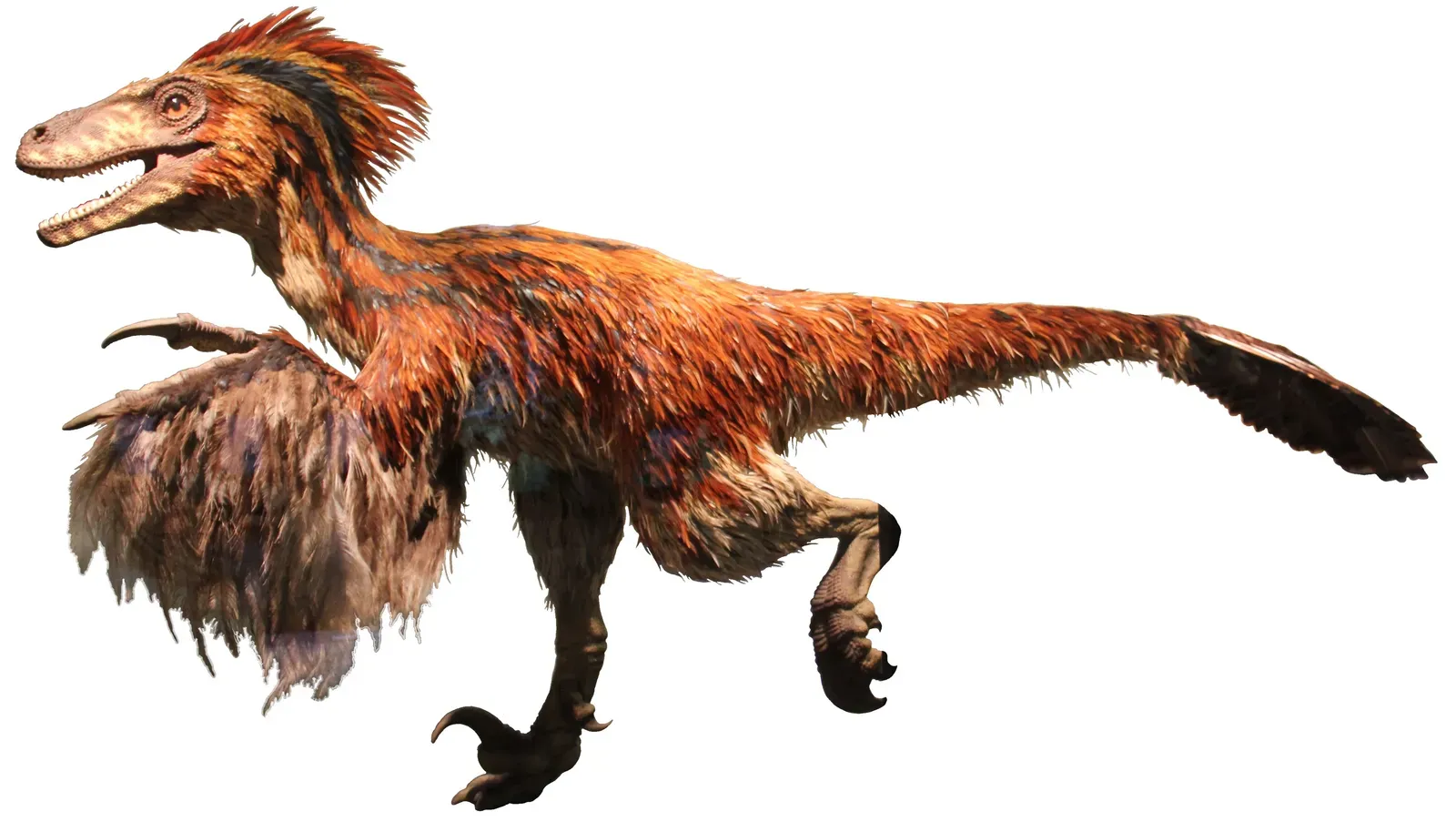
For most of paleontological history, dinosaur color was pure guesswork. Artists painted them according to imagination, and the results were wildly inconsistent. Then came the discovery of melanosomes, which are tiny pigment-bearing structures locked inside fossilized feathers, and suddenly guesswork gave way to genuine science. Melanosomes are color-bearing organelles buried within the structure of feathers and hair in modern birds and mammals, giving black, grey, and rufous tones such as orange and brown. The fact that these organelles survived for tens of millions of years inside fossils is nothing short of extraordinary.
In 2010, paleontologists studied a well-preserved skeleton of Anchiornis, an averaptoran from the Tiaojishan Formation in China, and found melanosomes within its fossilized feathers. As different shaped melanosomes determine different colors, analysis of the melanosomes allowed paleontologists to infer that Anchiornis had black, white, and grey feathers all over its body and a crest of dark red or ochre feathers on its head. Imagine knowing with reasonable scientific confidence what color a creature was when it walked the earth over 160 million years ago. That is the kind of achievement that makes you realize how far science has come.
The Great Debate: Did All Dinosaurs Carry Feathers?
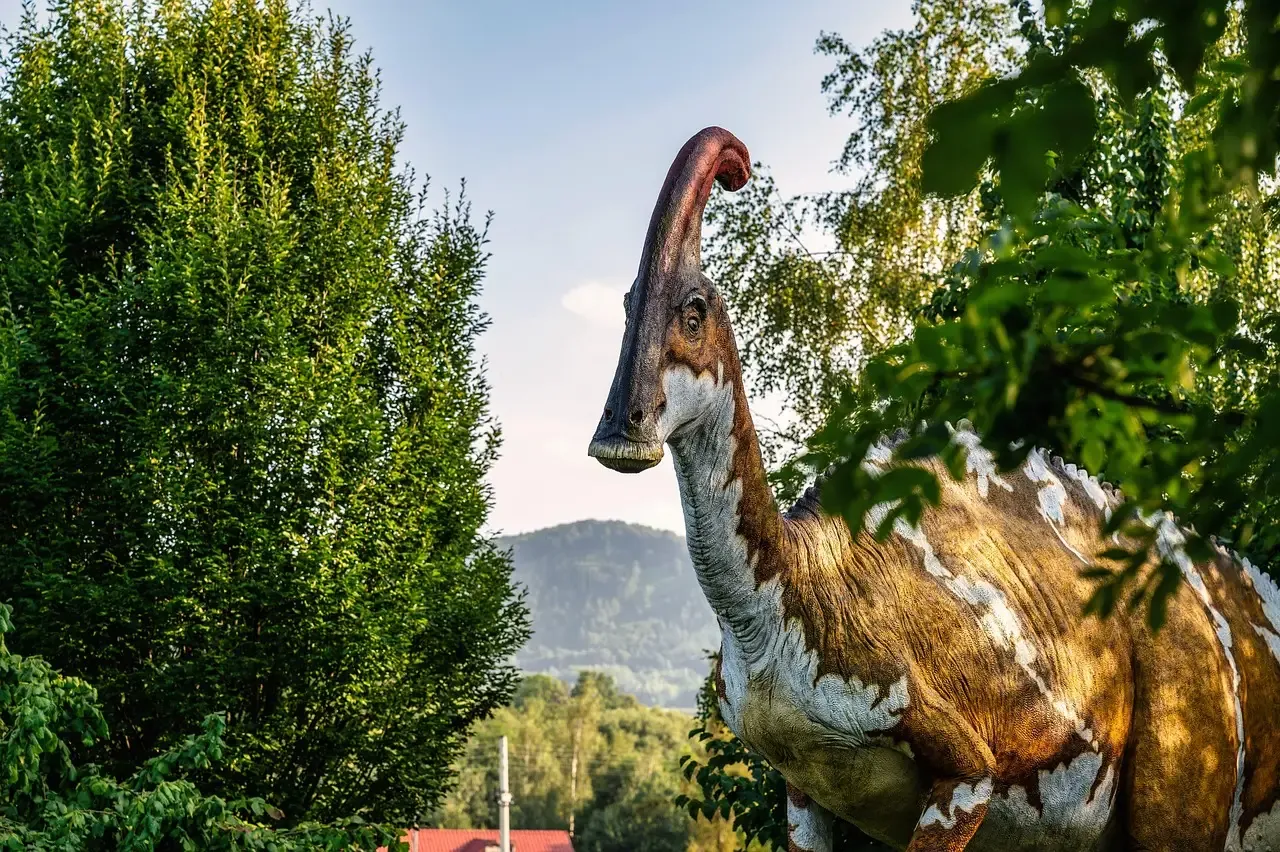
Here is where things get genuinely complicated, and where scientists are still passionately arguing today. Not every dinosaur appears to have had feathers, which raises a tantalizing question: was feathering universal among them, or did it arise separately in different lineages? Did all dinosaurs inherit feathers from a common ancestor, or did feathers evolve multiple times in the group? Are they exclusive to birds and their closest relatives, or are they more widespread across the reptile family tree? At the moment, the jury is still out.
The first group of scientists supports a concept known as the avemetatarsalian origin, referring to the group containing birds, dinosaurs, and pterosaurs. This theory suggests that feathers first evolved in a common ancestor of the dinosaurs, including birds, and pterosaurs, meaning both groups would have inherited their feathery coatings. Some would have later lost their ability to grow feathers, explaining why some species do not have feathers but are scaly instead. It is a bit like saying everyone in a family inherited a particular trait, but some members simply stopped expressing it over generations. The potential is in the genes; whether it shows up is a different story entirely.
Living Proof: Modern Birds Are Dinosaurs in Disguise
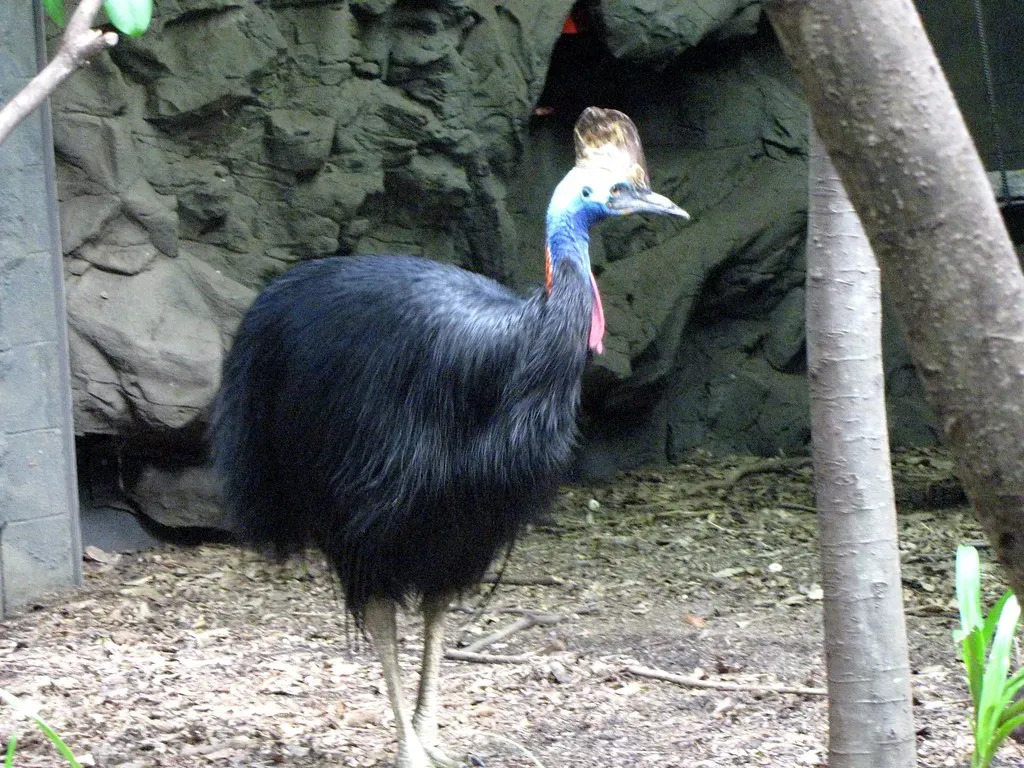
Perhaps the most staggering conclusion of all this research is also the simplest one. Among the most revolutionary insights emerging from 200 years of research on dinosaurs is that the clade Dinosauria is represented by approximately 11,000 living species of birds. That means every bird you have ever seen, heard, or fed in a park is a dinosaur. Your pet parrot? A dinosaur. The chicken in your dinner? Also a dinosaur. It is genuinely hard to wrap your head around.
The unique assemblage of characters that make a modern bird, including feathers, wings, a lightweight skeleton, an enhanced metabolic system, an enlarged brain, and visual systems, evolved step-by-step over some 50 million years of dinosaur evolution, through the Jurassic and Cretaceous periods. Evolution rarely makes dramatic leaps. Instead, it tinkers incrementally over vast stretches of time, adding a piece here, refining a structure there, until something entirely new emerges. The bird at your window is the 160-million-year-long result of that patient, relentless tinkering.
Conclusion: A Mystery Still Being Written
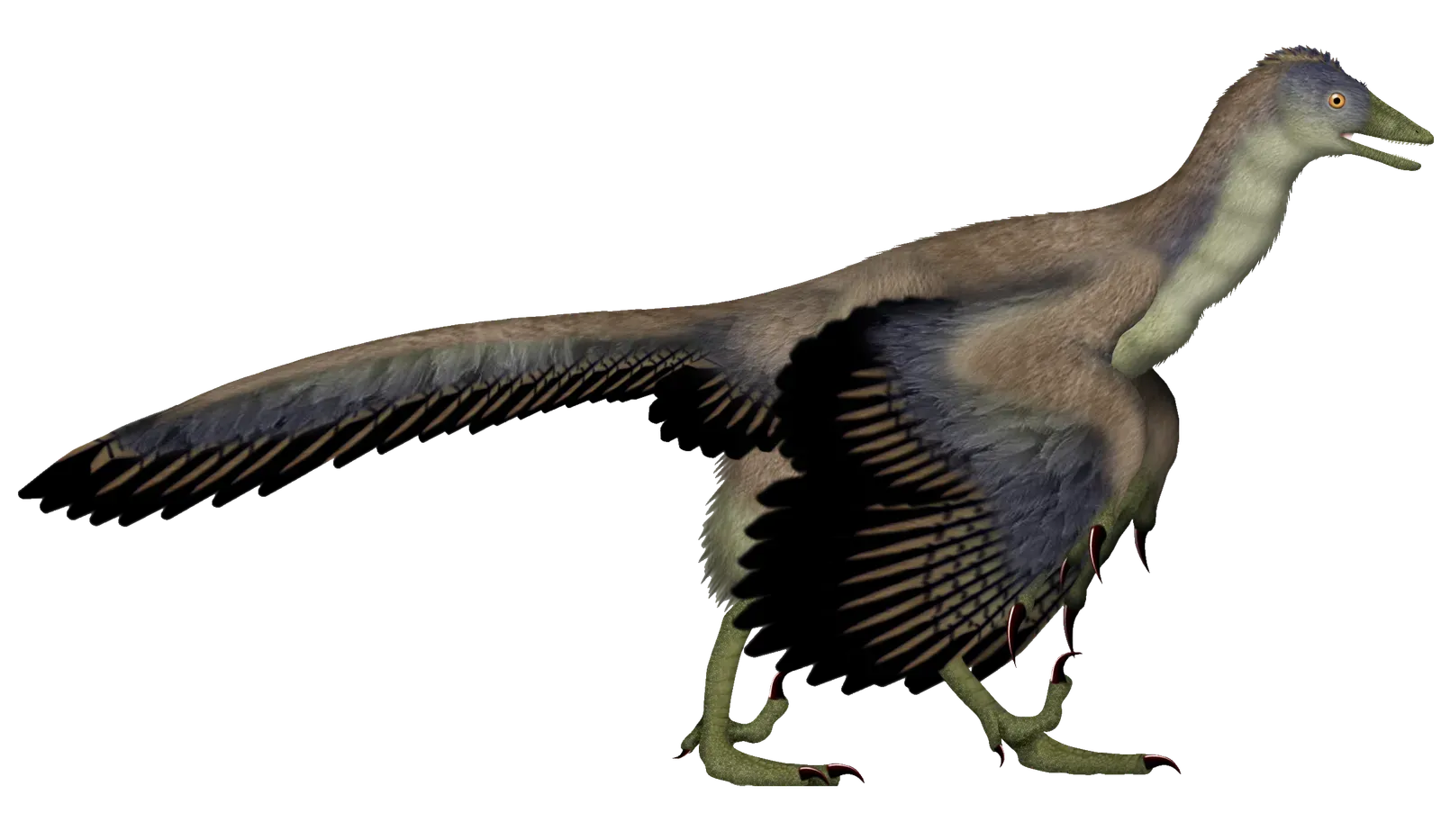
The question of why some dinosaurs had feathers does not have a clean, single answer, and that is what makes it so endlessly fascinating. Feathers served warmth, served display, served camouflage, and only eventually served flight. They evolved in creatures that had no intention of becoming birds, and yet here we are, sharing a planet with roughly 11,000 species of their descendants. The story is still unfolding too. There is still a lot of work to do until the origin of feathers can be pinned down, and until then, paleontologists will continue to search the world for the fossils that can finally settle this decades-old debate.
Every new fossil found in China, or anywhere else in the world, peels back another layer of a mystery that has been building since life itself took its first scaly steps on this planet. The next time you watch a robin pull a worm from the soil, or a hawk glide silently overhead, remember: you are watching the closest living thing to a Velociraptor. What would you have guessed it was, if no one had ever told you?