
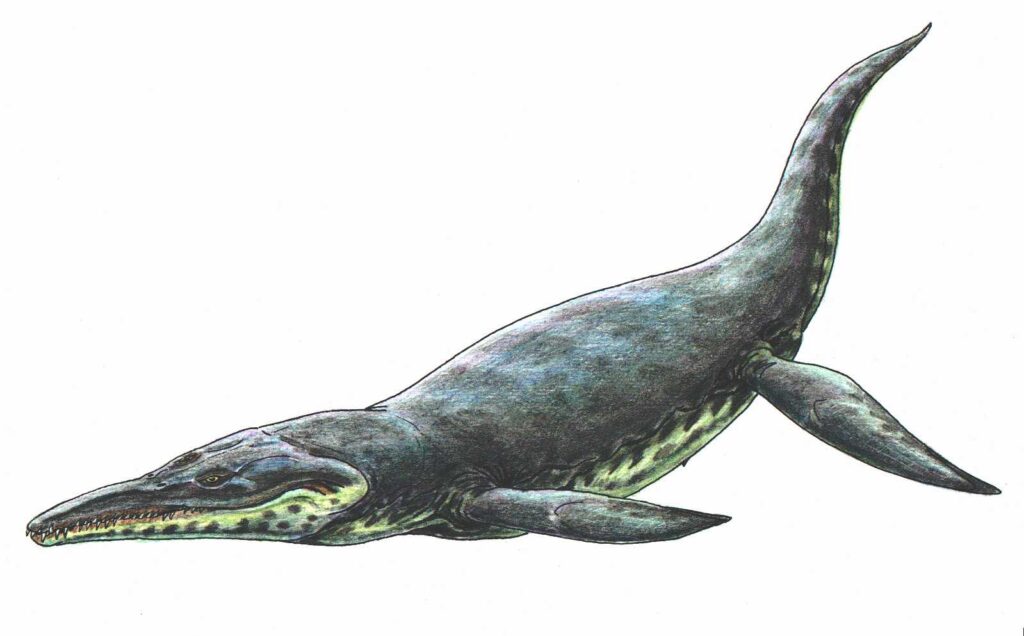
Picture an animal so massive that a modern great white shark would look more like a rival than a ruler, and yet still come off second best. That is the shadow Kronosaurus casts over the ancient seas: part reptile, part torpedo, and all muscle and teeth. Even after more than a century of study, scientists are still arguing over its exact size, but almost nobody disputes that it was one of the most formidable marine predators ever to live.
What makes Kronosaurus truly fascinating is not just its bulk, but how everything about its anatomy and lifestyle seems tuned for the hunt. Unlike many prehistoric celebrities that turn out to be a bit overhyped when you look closely, Kronosaurus actually becomes more terrifying the more you learn about it. Once you dig into its skull design, swimming power, and the world it ruled, it is very hard not to see it as one of nature’s most extreme experiments in building an oceanic killer.
A Skull Built Like a Living Battering Ram
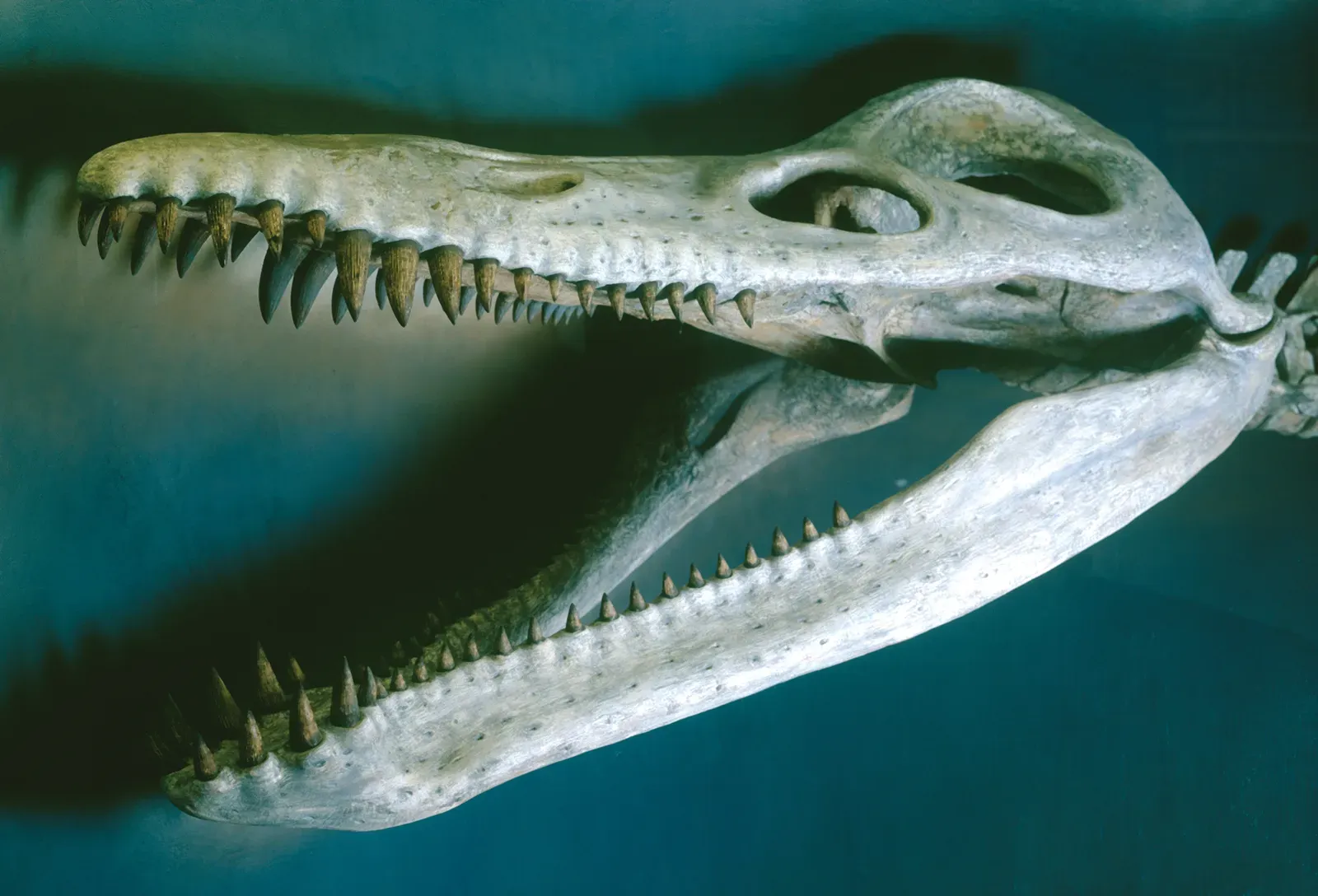
If you had to pick one feature that defined Kronosaurus, it would be its skull. This was not a delicate, narrow snout like you see in fish eaters; it was a broad, deep, heavily built head that looks almost overengineered for smashing and holding large, struggling prey. In some specimens, the skull alone reaches several meters in length, which means a huge portion of the animal’s body was basically just jaw and muscle.
That skull shape is a big clue to its hunting style. A shorter, deeper skull tends to be better at delivering powerful bites rather than fast, snatching nips, more like a bulldog than a greyhound. The jaw joints and muscle attachment areas in Kronosaurus are massive, suggesting it could generate enormous crushing forces when it clamped down. That kind of bite is exactly what you want if your prey is not small fish, but other large marine reptiles and big, thrashing animals that will fight back hard.
Teeth Designed to Grab, Tear, and Not Let Go
The teeth of Kronosaurus are another dead giveaway that this animal was not playing around. Instead of fine, needle-like teeth suited to spearing slippery fish, Kronosaurus had big, conical teeth that interlocked, forming a kind of organic bear trap. Some of these teeth grew longer than a human hand, and they were rooted in thick, robust jaws that could take a beating without snapping.
Conical teeth like these are less about slicing and more about gripping and breaking. Think of a crocodile latching onto a struggling wildebeest: the goal is to hold on, apply force, and let body weight and leverage do the work. Kronosaurus likely did something similar under water, clamping onto the body, flipper, or neck of its prey and then using its own momentum and mass to rip chunks away or disable the animal entirely. Those teeth tell a simple story: everything about this predator was optimized for attacking large, muscular targets and making sure they did not escape.
A Torpedo-Shaped Body Built for Power, Not Grace
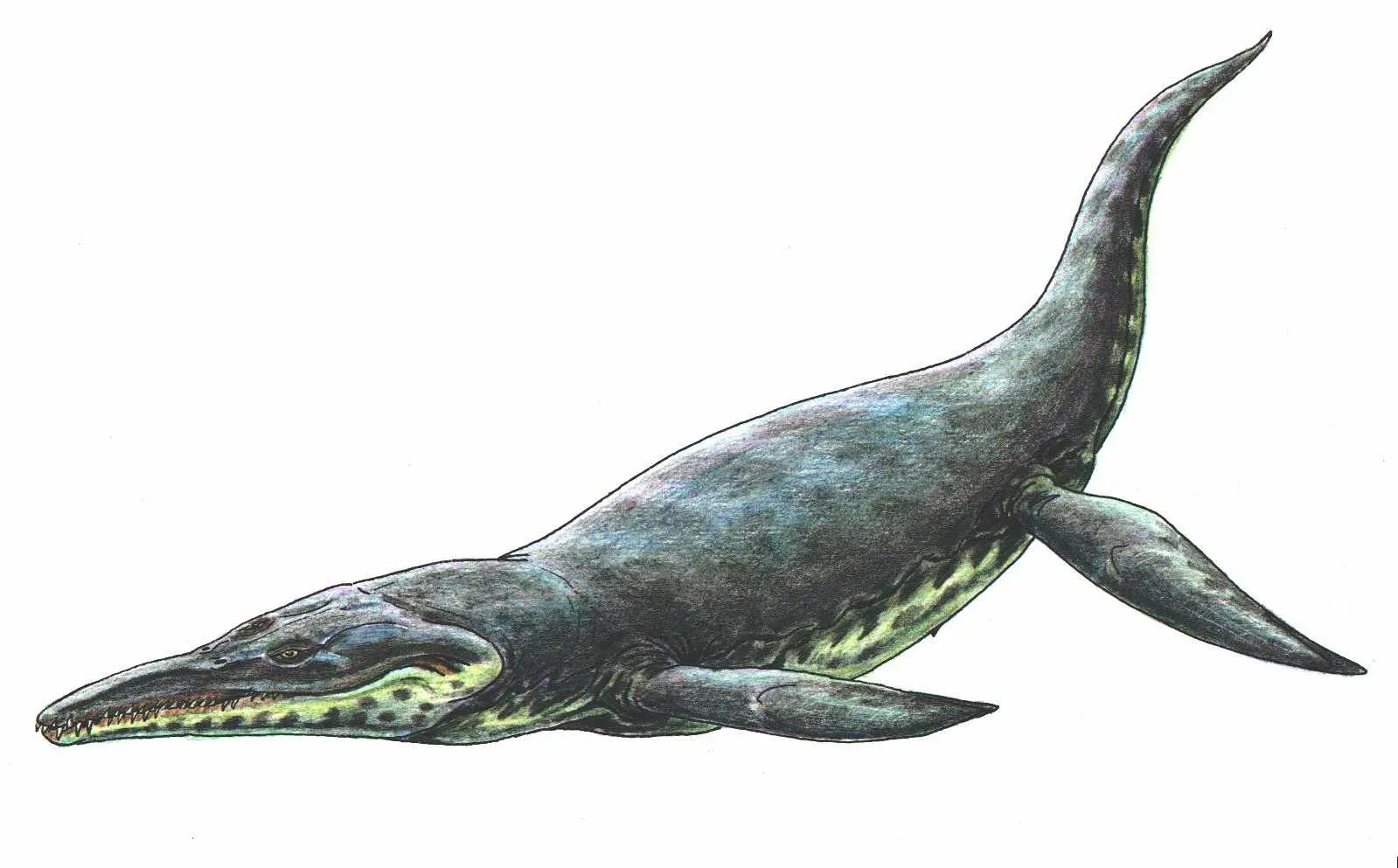
Unlike some marine reptiles with long, snake-like bodies, Kronosaurus had a relatively short, barrel-shaped torso and a tail that was not especially elongated. Combine that with four large, paddle-like flippers, and you get an animal built more for explosive power and control than for the endless gliding you see in many modern whales. In paintings it often looks almost like a reptilian tank disguised as a swimmer.
This body plan likely made Kronosaurus an ambush or pursuit sprinter rather than a marathon cruiser. With strong limb-driven propulsion, it could probably surge forward quickly to close the gap with prey, then use its weight to power through resistance during the attack. In a way, it seems less like a sleek sailboat and more like a heavily armed speedboat: not the most elegant thing in the water, but terrifying in a straight-line charge over short to medium distances.
Ruling a Food Chain Filled With Tough Competition
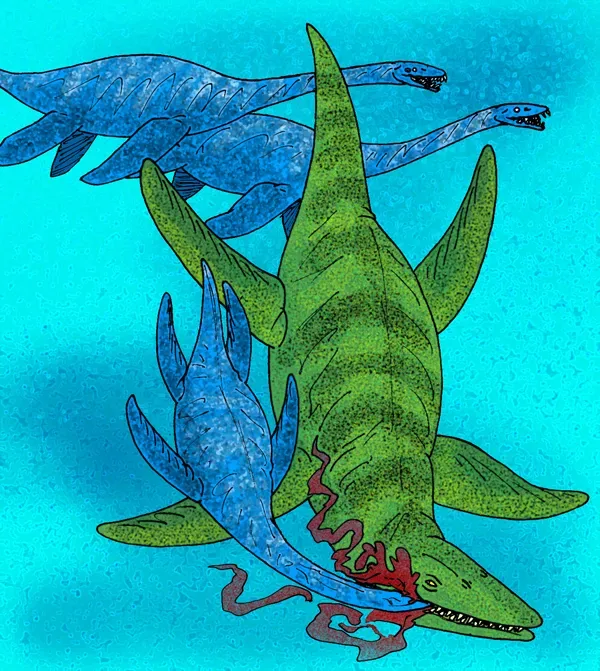
Kronosaurus did not live in a gentle or empty ocean. It swam during the Early Cretaceous, in seas filled with armored fish, large bony predators, and other marine reptiles that were no pushovers. There is evidence that giant turtles, long-necked plesiosaurs, and even other pliosaurs shared parts of its range. Being top tier in that kind of environment is not just impressive; it is almost shocking.
To sit near the top of such a crowded, dangerous food web, Kronosaurus had to be more than just big. It needed a combination of speed, weaponry, and caution, picking its battles and targeting prey that gave it the biggest energy payoff. When you look at the animals around it, the fact that Kronosaurus seems to have specialized in hunting sizeable, powerful prey suggests a level of dominance that goes beyond simple size comparisons. It was not just another competitor; it was the kind of predator other large marine animals probably tried to avoid.
Massive Size, but Also a Lesson in Scientific Humility
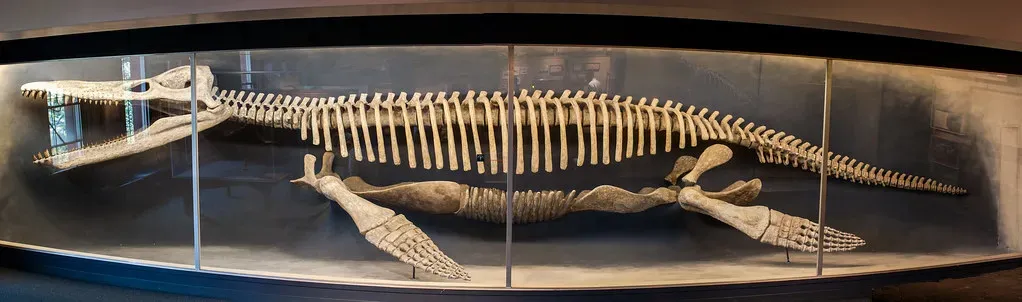
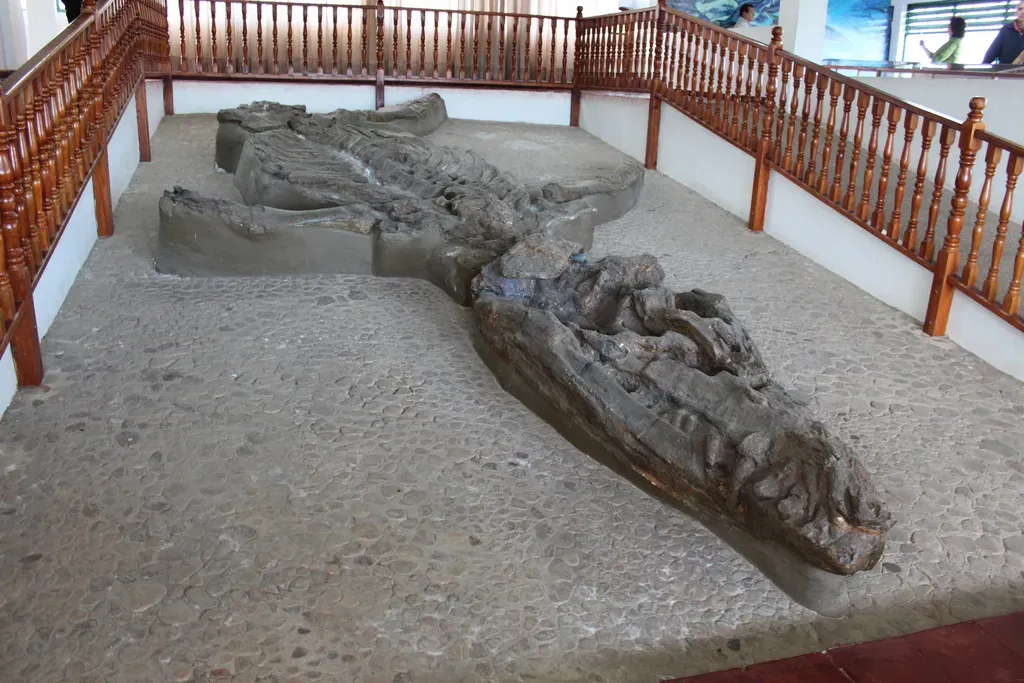
Size is always a touchy subject with prehistoric animals, and Kronosaurus is no exception. For decades, museum mounts and early estimates suggested extraordinarily huge lengths, with some reconstructions stretching it to almost absurd dimensions. Later studies, based on better measurements and comparisons, have pulled those numbers back, reminding everyone that impressive fossils do not automatically translate into the monsters of our childhood imaginations.
Even with more cautious estimates, Kronosaurus remains a giant, likely comparable to or exceeding a modern great white shark in length and significantly bulkier in build. That combination of mass and muscular design would have given it tremendous impact when striking prey. At the same time, the revision of its supposed size is a good reminder that calling it one of the most powerful hunters ever is not just about raw length. Its stature as an apex predator comes from a broader package: skull strength, bite style, prey choices, and the dangerous ecosystems it actually survived in.
Why Kronosaurus Still Deserves Its Monster Reputation
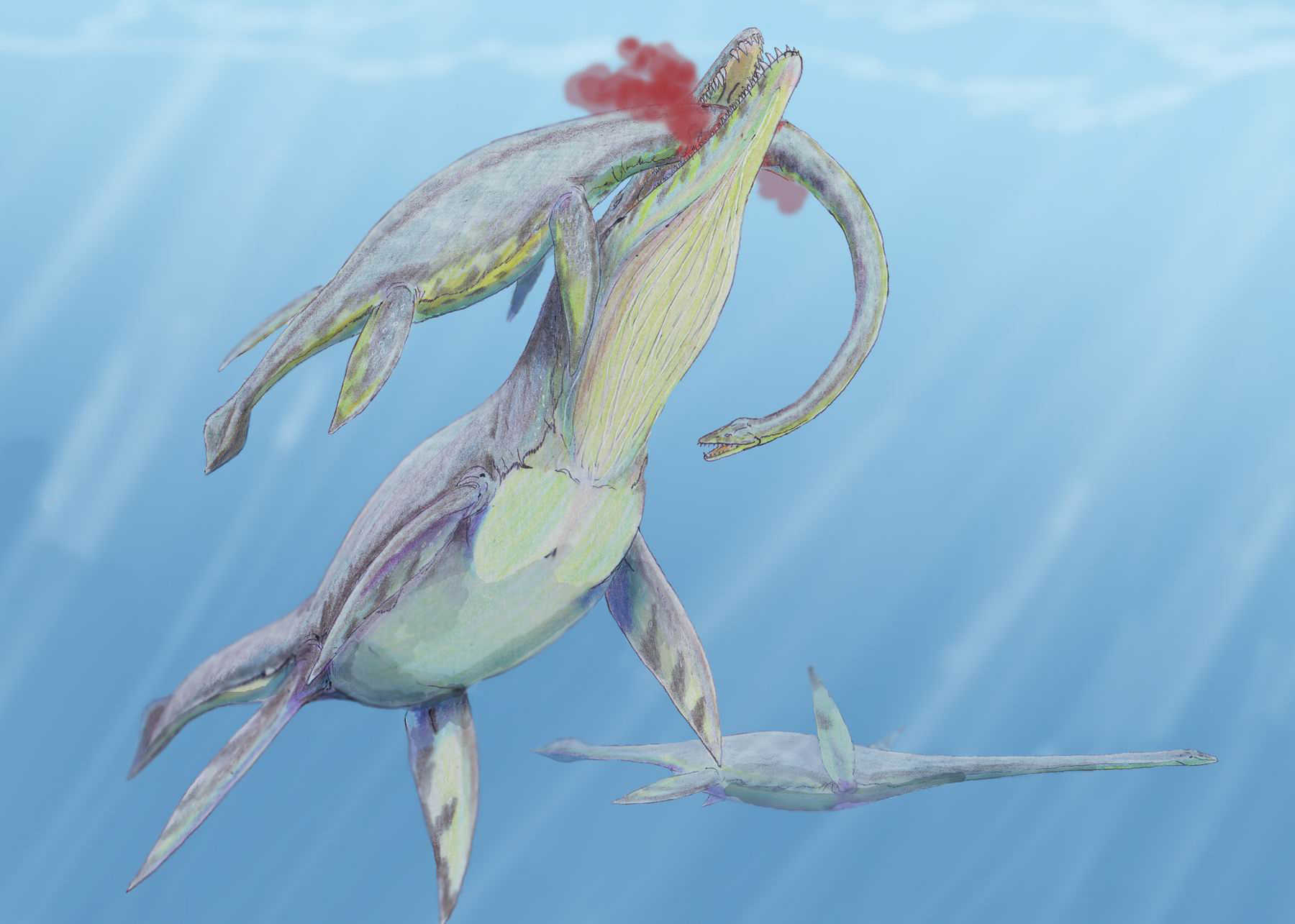
Some prehistoric predators shrink a little once you strip away the exaggeration, but Kronosaurus holds onto its mystique even after the numbers are cleaned up. When you stack up what we do know – its battering-ram skull, bone-crushing teeth, muscular flippers, and the dangerous company it kept – it still comes across as one of the most specialized large-prey hunters the oceans have ever seen. It may not have been the absolute biggest marine predator of all time, but in terms of sheer hunting hardware, it was clearly in the top tier.
Personally, I think that is what makes Kronosaurus so compelling: it is powerful enough to impress even without myth, and uncertain enough to keep paleontologists curious. Every new fossil has the potential to tweak our picture, but the central idea remains solid: this was an animal built from snout to tail to dominate big, struggling prey in a world full of competition. If the ancient oceans were an arms race, Kronosaurus was one of the heaviest hitters, and it still forces us to ask a simple, thrilling question: just how far can evolution push a hunter before the ocean itself finally pushes back?