Triceratops has always felt comfortably familiar: the classic three-horned dinosaur from kids’ books, lunchboxes, and museum halls. But the more paleontologists dig into its bones, the more that familiar image starts to wobble. Under the surface of those big skulls and heavy bodies lies a story that’s much weirder, more dynamic, and more unsettling than the textbook picture many of us grew up with.
In the past few decades, new fossil finds, advanced imaging, and microscopic bone studies have quietly rewritten large chunks of Triceratops’ biography. Details that once seemed settled – how it grew, how it used its horns, even what it might have looked like in life – are now back on the table. As someone who used to think of Triceratops as the “normal one” next to all the stranger dinosaurs, I’ve had to admit: it might actually be one of the weirdest of them all.
The skull that kept changing throughout its life
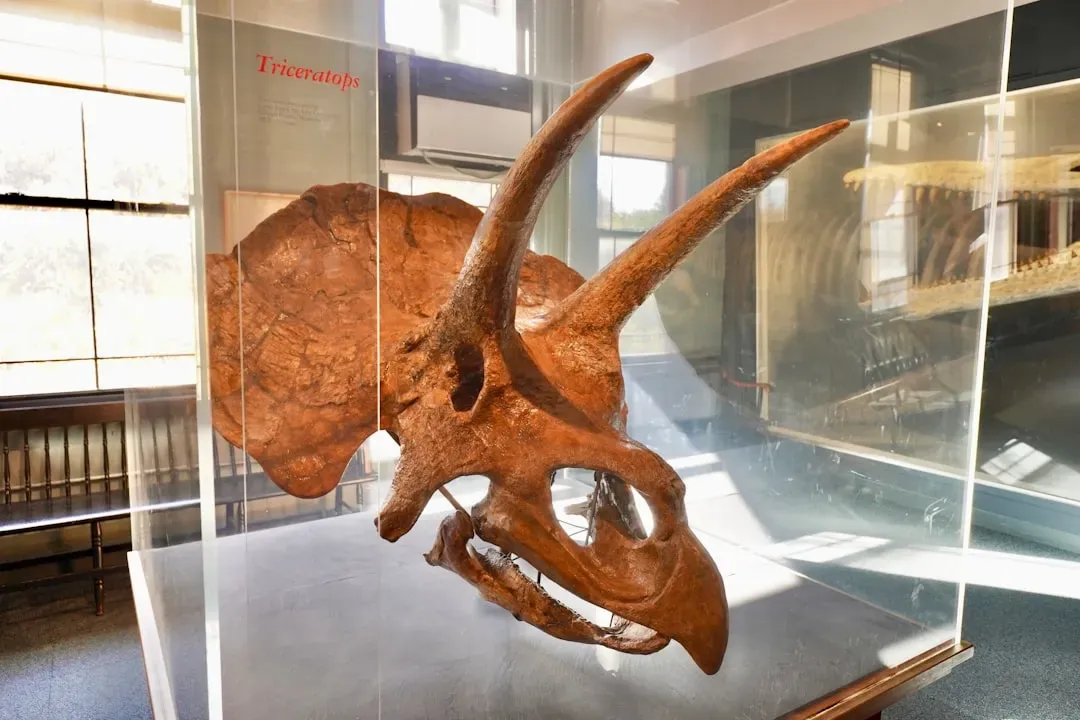
One of the most surprising things about Triceratops is that its skull was not a fixed, stable structure; it was more like a long-term construction project. As the animal grew, the bones of the skull fused, reshaped, and sometimes even remodeled in ways that can make juveniles look like completely different species. Paleontologists have found young Triceratops with proportionally huge eyes, short stubby horns, and frills that look oddly unfinished, almost like the dinosaur equivalent of a teenager in an awkward growth spurt.
Bone histology – slicing bones thin enough to see their microscopic structure – has shown that the surface of the frill and horns went through intense remodeling over time. That means what you see on a museum mount is more like a snapshot taken at one life stage, not the whole story. To me, that makes Triceratops less like a static statue and more like a creature whose face literally changed as it aged, a bit like watching someone’s facial hair, wrinkles, and hairstyle shift over decades, only dialed up to dinosaur scale.
Horns and frill: weapons, billboards, or both?
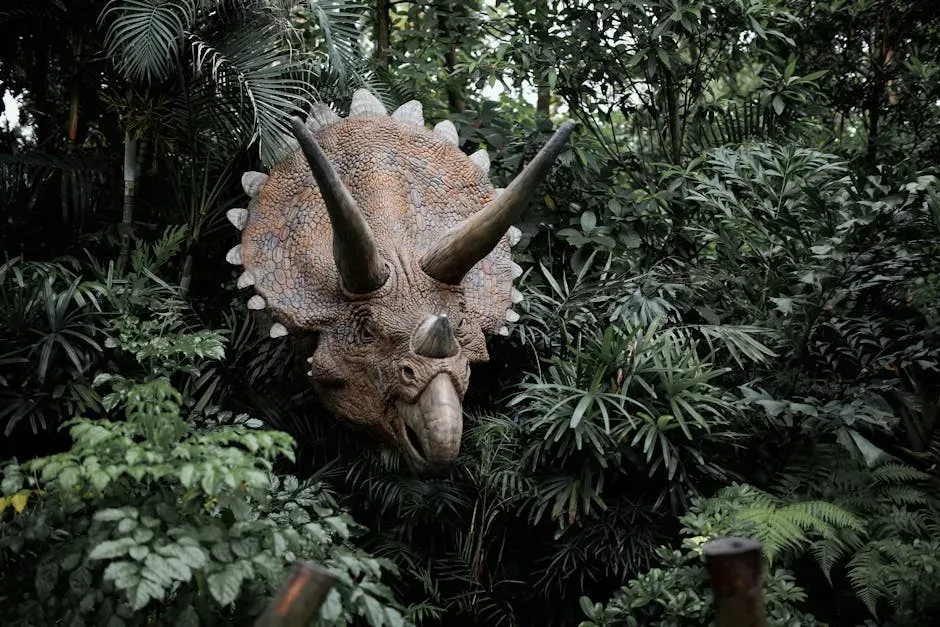
If you ask ten paleontologists why Triceratops had those enormous horns and that giant frill, you’ll probably get at least three different answers, and they might all be partly right. The traditional view was that the horns were mainly weapons, meant to fend off predators like Tyrannosaurus. There’s some real support for that idea: a few Triceratops skulls show healed injuries that look suspiciously like puncture wounds, and some bones even show signs of combat between individuals, suggesting those horns saw real action. At the same time, the sheer size and shape of the frill can be hard to explain as just armor.
Over time, the idea has gained traction that the frill and maybe even the horns doubled as visual display structures – essentially living billboards for communication, intimidation, or mate attraction. Subtle differences in frill shape, horn angle, and surface texture may have helped individuals recognize members of their own species or signal strength and maturity. I like to think of it a bit like a mix between a bighorn sheep’s curling horns and a peacock’s tail: yes, useful in a fight, but also a bold signal that says, in dinosaur language, “look at me, I’m not to be messed with.”
The possibility of wild colors, patterns, and soft tissues
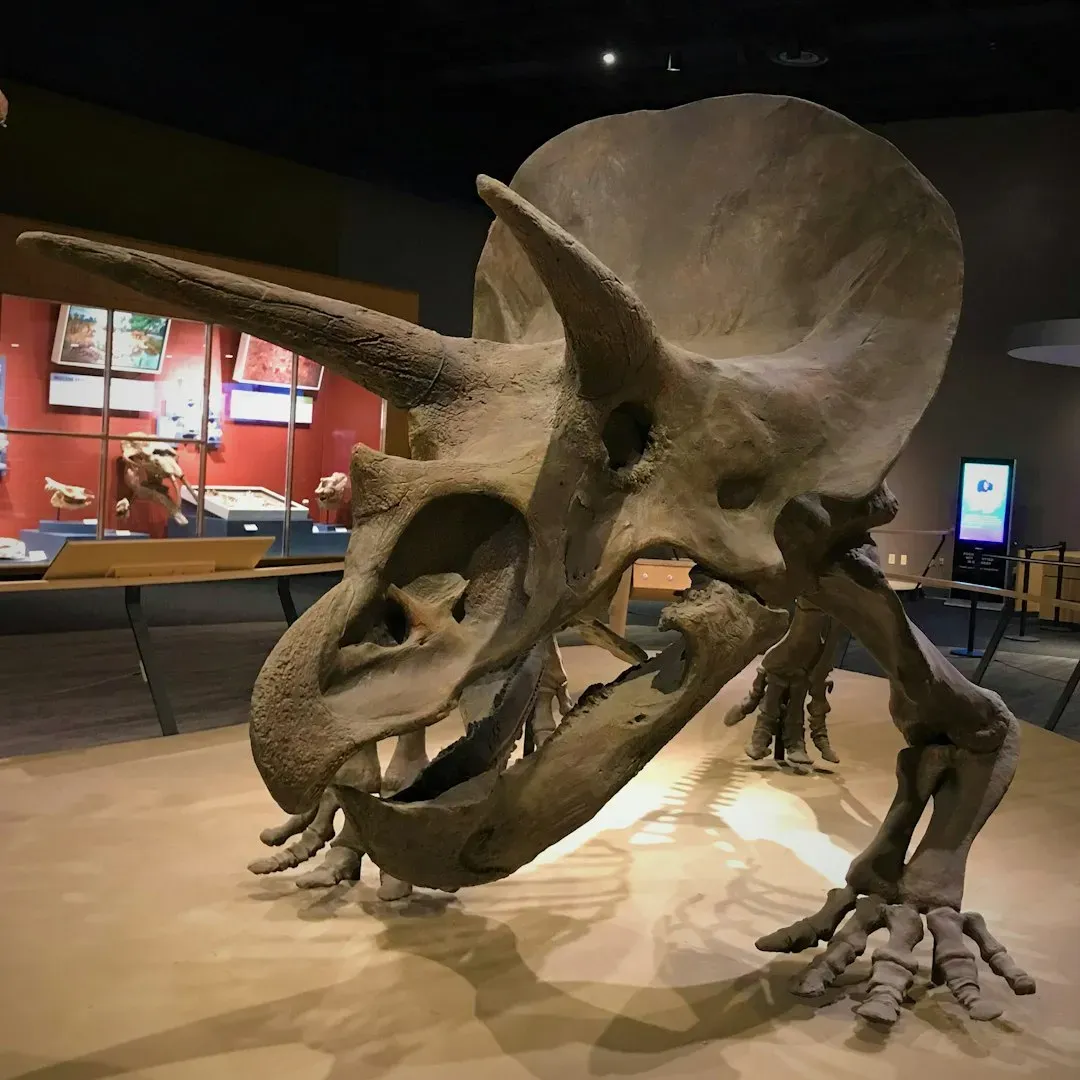
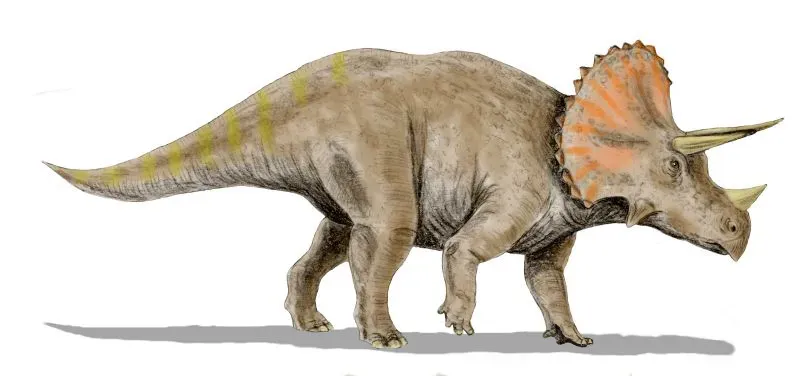
In every classic illustration, Triceratops is some shade of brown, gray, or dull green, like a living tank. The truth is, we do not know its exact color, and that uncertainty opens the door to something much stranger than the drab versions we grew up with. The frill in particular, with its rich blood supply and large surface area, may have supported striking patterns or even color changes in life, somewhat like the flush of color you see in some modern lizards and birds during displays. Even a mottled or banded pattern would instantly make Triceratops look far more unusual than the monotone versions that fill most children’s books.
There is also the possibility of soft tissues that do not preserve well in the fossil record, such as keratin coverings, scaly ornamentation, or even small display structures along the frill edge. Many horned animals today have horns and frills covered by thick keratin sheaths that change the visible shape compared with the underlying bone. If Triceratops was anything like that, the living animal might have had longer, sharper horns or a differently outlined frill than the bare skull suggests. That means the dinosaur people obsess over in museums might still be a stripped-down, under-decorated version of how bizarre it really looked wandering through its Cretaceous habitat.
A brain and senses built for a complex social world
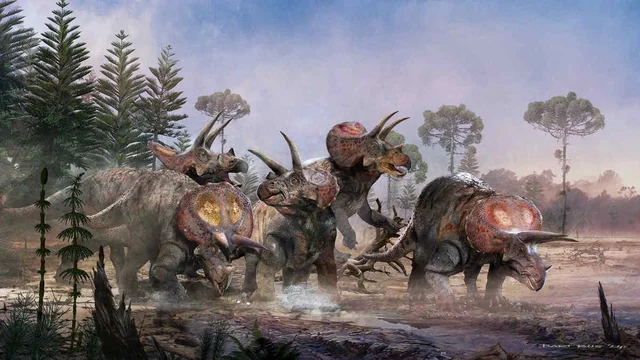
For a long time, big herbivorous dinosaurs were sometimes dismissed as slow, not just in their movements but also in their minds, an outdated stereotype that is finally fading. Studies of Triceratops braincases using CT scans show that while its brain was not huge compared with its body, the structures associated with vision, balance, and possibly smell were well developed. Large eyes and forward-angled horns also hint that sight was crucial, especially for reading other Triceratops’ body language or watching for predators. That combination suggests an animal that had to navigate more than just plants and mud; it had to interpret a busy, dangerous social landscape too.
There is also evidence that many horned dinosaurs lived in social groups at least part of the time, and although Triceratops is often reconstructed as more solitary, the debate is ongoing. If it did form groups or temporary aggregations, that would make the horns and frill not just hardware for fighting but tools for social negotiation – displaying dominance, signaling submission, or coordinating movement. I find it much more compelling to picture Triceratops not as a lumbering loner but as a participant in noisy, tense interactions, where visual cues and subtle movements of that giant head mattered every single day.
Triceratops might not have been as common as we think
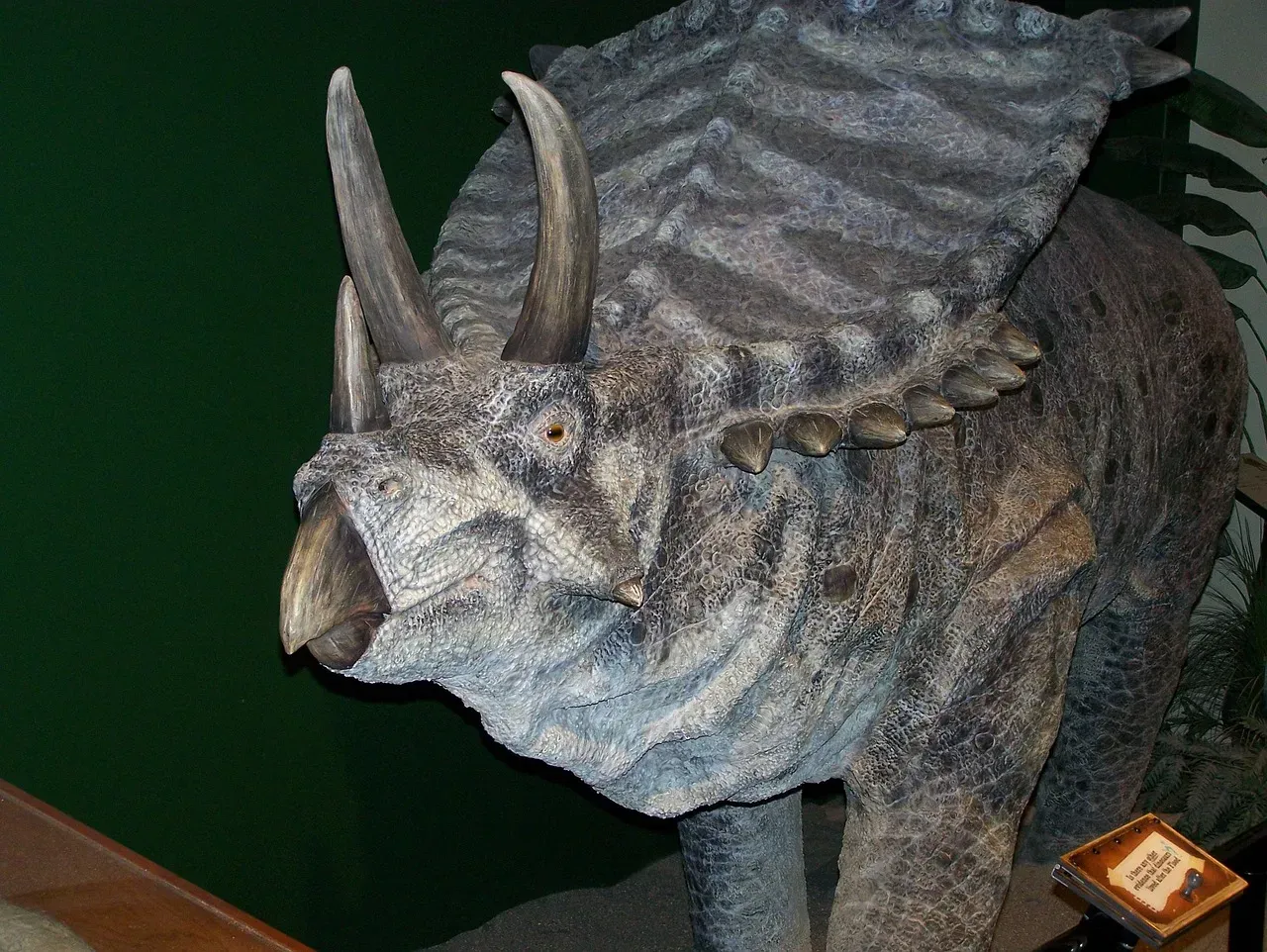
In North American museums, Triceratops bones and skulls are everywhere, which creates a subtle illusion: it starts to feel like this dinosaur absolutely dominated its ecosystem. The reality is more nuanced. Yes, Triceratops fossils are relatively abundant compared with some dinosaurs, but that may say more about the specific rocks we have access to and the environments that preserved remains than about true population numbers. Fossilization is extremely biased, and certain habitats, body sizes, and behaviors lead to a much higher chance of preservation than others.
It is also possible that what we casually group under “Triceratops” represents a complex of closely related species or evolving lineages rather than a single, stable animal that stayed the same for millions of years. Subtle differences in skull shape between specimens might reflect geography, time, age, or even unrecognized diversity. That idea makes Triceratops feel stranger to me: instead of a single character in the Late Cretaceous story, it becomes more like a constantly shifting cast of near look-alikes, all navigating a changing world right up until the end-Cretaceous extinction.
The body was more athletic than its heavy build suggests
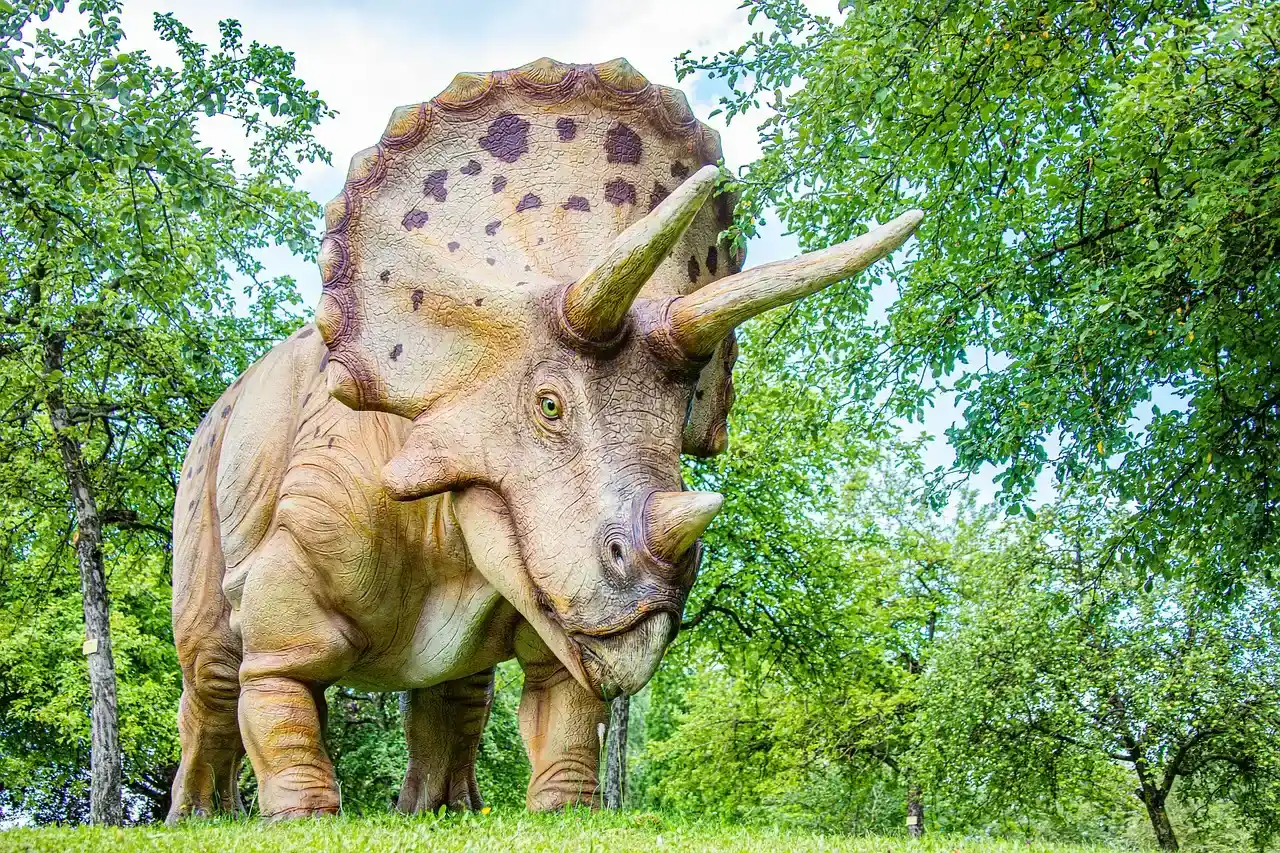
When you first see a mounted Triceratops skeleton, the word that comes to mind is usually “tank” or “bulldozer.” But reconstructions of its muscles and joints suggest a more athletic, capable animal than that mental image gives it credit for. Its forelimbs were sturdy but not as sprawling as once thought, allowing a more efficient, semi-erect gait. That means it could move with surprising speed for an animal of its size, especially over short distances, which makes sense for something that might occasionally have to spin and face down a charging predator.
There is also the question of how Triceratops used its massive neck muscles and spine in combination with its horns. Some biomechanical models indicate it could generate powerful lateral and forward thrusts, almost like a living battering ram or a heavyweight wrestler using its entire body to push. That combination of agility and muscular force makes Triceratops feel less like a rolling boulder and more like a trained fighter, capable of quick, deliberate maneuvers. The idea that this huge animal might have been capable of surprisingly sharp movements is one of those details that quietly undercuts the comfortable, slow-dinosaur stereotype.
Growth, aging, and the problem of “how many species?”
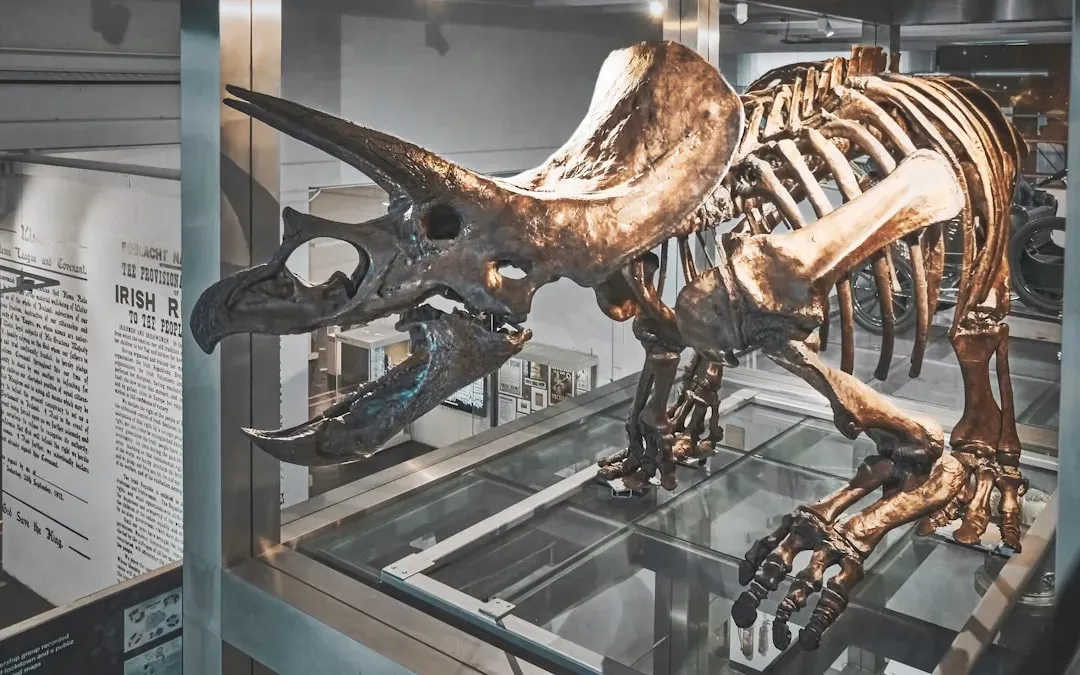
One of the trickiest puzzles with Triceratops is working out how many kinds there actually were. As scientists studied more and more skulls, they started to notice that young individuals looked dramatically different from older ones, not just smaller. Some had short horns that later curved backward and then forward again, while the frill changed in shape, thickness, and even ornamentation across life stages. This has led to intense debates over whether certain named species or close relatives were actually just young or old versions of the same animal.
All of this makes Triceratops weirder than a simple “one species, one look” model. In a way, it behaved more like some modern animals whose appearance changes radically from youth to maturity, such as deer that grow antlers or birds that acquire brighter plumage as they age. Imagine trying to classify humans using only skulls from toddlers and elderly people, without knowing they were the same species; you would probably draw some wrong conclusions. Triceratops forces paleontologists into that kind of detective work, and the shifting picture that emerges is anything but straightforward.
Living at the edge of extinction in a changing world
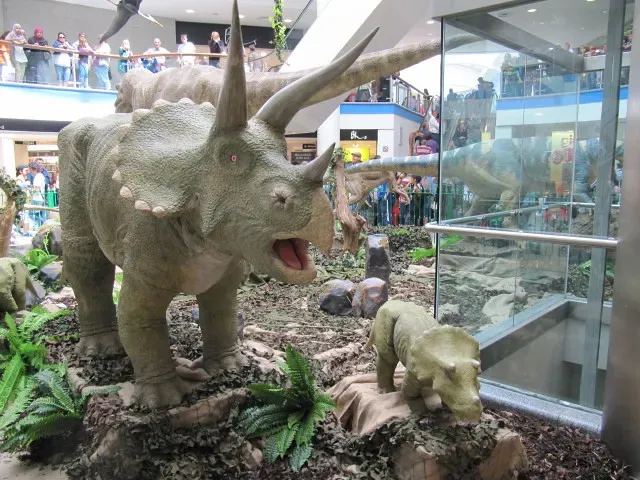
Triceratops lived in the final chapters of the Cretaceous period, in ecosystems that were already complicated and under subtle environmental pressures. It shared its world with large predators, smaller herbivores, and a variety of plants that were themselves evolving and spreading, including flowering plants. That means it was not just a big, peaceful browser; it was part of a tense, competitive network of species, all adapting in real time. Its massive headgear, social behaviors, and possible flexibility in diet may have been responses to that pressure-cooker environment.
What makes this particularly eerie is that Triceratops persisted right up to the asteroid impact that ended the age of dinosaurs. It was not a relic fading out; it was a dynamic, apparently successful animal living at the very brink of catastrophe. Thinking about it that way adds a layer of strangeness: a creature that had spent millions of years fine-tuning its horns, frill, and lifestyle was suddenly cut off by an event that had nothing to do with how well-adapted it was. In a world obsessed with the idea that the strong always win, Triceratops’ abrupt disappearance is a sobering counterexample.
Conclusion: a familiar dinosaur that refuses to stay simple
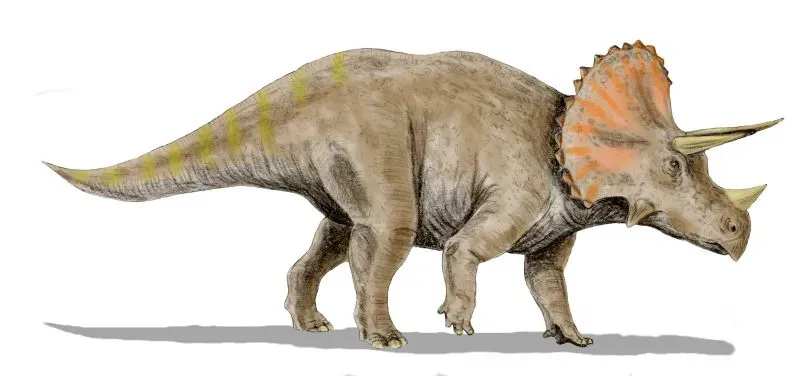
The more we learn about Triceratops, the more it slips out of the neat little box we tried to put it in. It is not just a three-horned plant-eater plodding through a prehistoric swamp; it is an animal with a face that transformed over time, headgear that likely carried multiple jobs at once, and a body capable of far more agility and nuance than old illustrations suggest. Its life story blends fierce combat with complex signaling, growth stages that mimic different species, and a final act played on the edge of a mass extinction. In my view, clinging to the old, simple image does this dinosaur a real disservice.
If anything, Triceratops is a reminder that even the dinosaurs we think we know best are still full of surprises, and that honest science often makes the world stranger, not simpler. I think that is a good thing: it keeps us humble, keeps us curious, and nudges us to look twice at what we thought was settled. Next time you walk past that familiar three-horned skull in a museum, it might be worth pausing to wonder what soft colors or shifting behaviors you are not seeing in that frozen bone. Maybe the real Triceratops was not just impressive, but one of the oddest, most complicated animals of its time – would you have guessed that from the picture in your childhood book?