Rare fossils from northeastern China have provided scientists with an unprecedented look at the feathers of ancient dinosaurs. Researchers discovered that these creatures, equipped with wing-like structures, displayed molting patterns characteristic of flightless animals. The findings suggest a more tangled path in the evolution of flight among feathered dinosaurs than previously understood.
Exceptional Fossils Unlock Hidden Clues
Exceptional Fossils Unlock Hidden Clues (Image Credits: Upload.wikimedia.org)
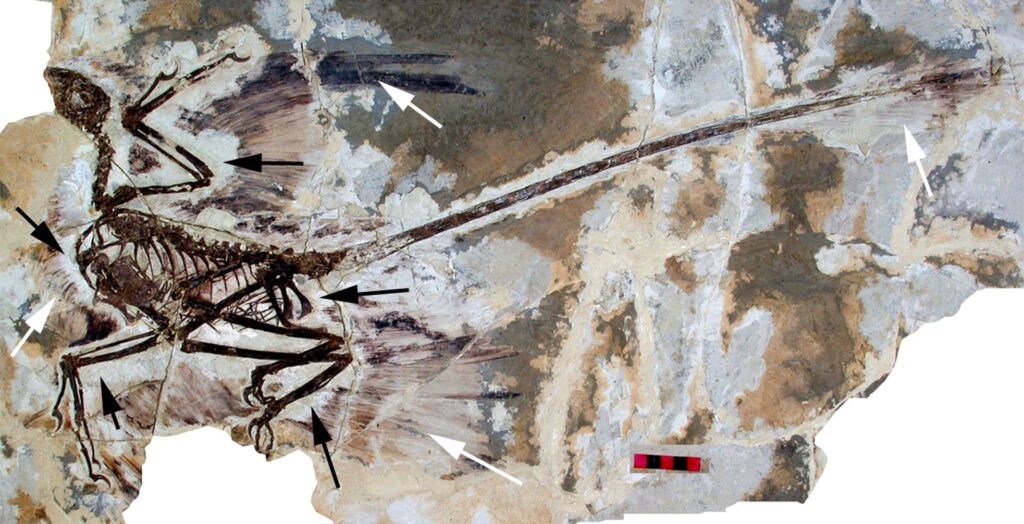
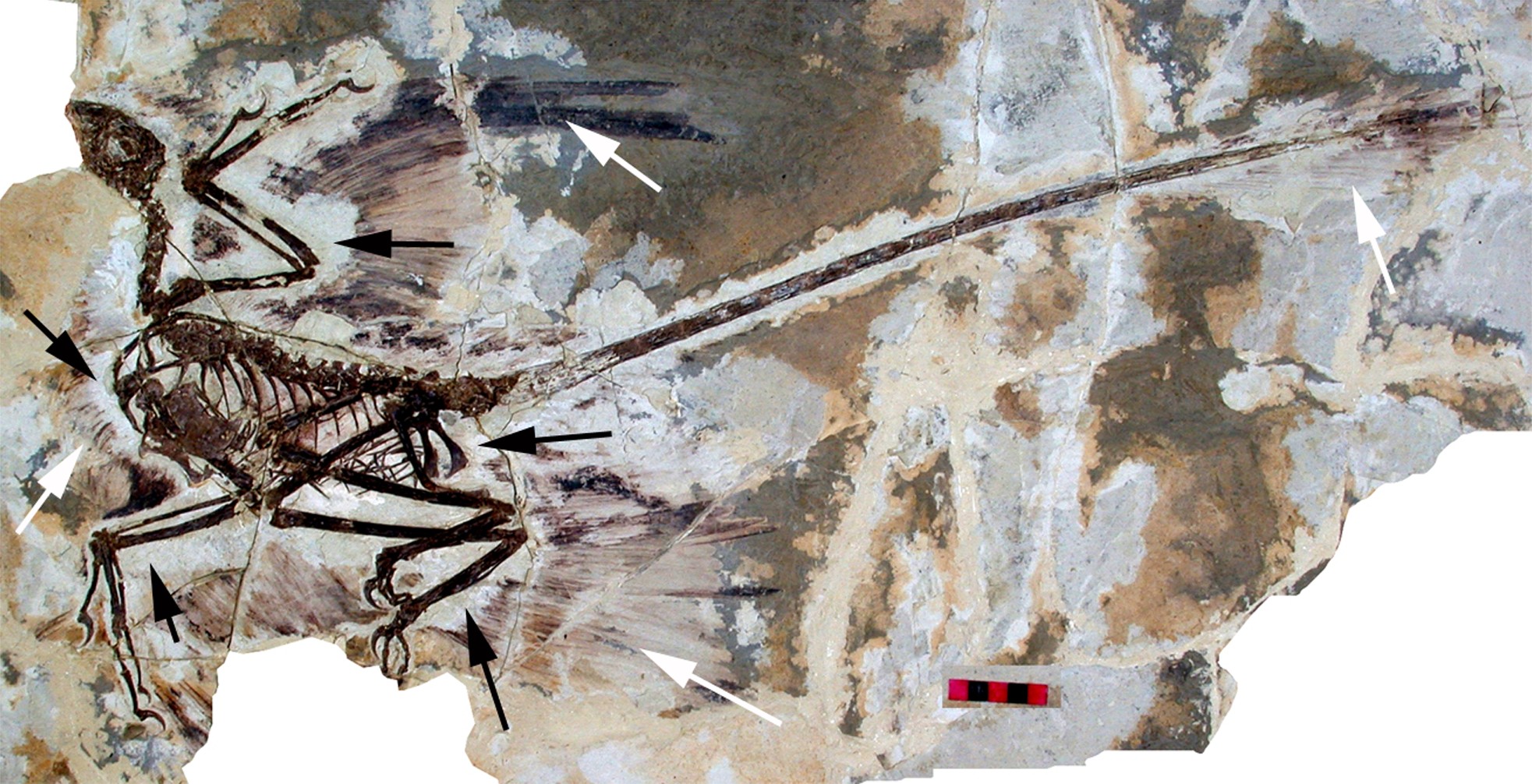
Nine remarkably preserved specimens of Anchiornis huxleyi, a small theropod from about 160 million years ago, offered the key evidence. These Late Jurassic dinosaurs walked on two legs and sported feathers on both forelimbs and hindlimbs, creating four wing-like appendages. Unique fossilization conditions in the Tiaojishan Formation retained the feathers’ original colors – white shafts with black tips – allowing detailed scrutiny.
The feathers formed continuous lines of black spots along the wing edges, but closer inspection revealed disruptions. Developing feathers showed misaligned spots, signaling active but uneven replacement. Such preservation is extraordinarily rare, as feathers typically decay long before fossilization occurs.
Deciphering the Molting Patterns
Feathers grow rapidly over two to three weeks, then wear out and require replacement through molting. Flying birds replace them in a precise, sequential manner to preserve wing symmetry and flight capability. In contrast, flightless species exhibit chaotic, irregular molting without concern for aerodynamics.
Dr. Yosef Kiat, an ornithologist at Tel Aviv University, led the analysis. He noted irregular patterns in Anchiornis wings, with asymmetrical feather growth akin to that in modern ostriches or kakapos. “Based on my familiarity with modern birds, I identified a molting pattern indicating that these dinosaurs were probably flightless,” Kiat stated.
This approach relied on color patterns to distinguish old from new feathers, revealing a non-sequential replacement process. Anchiornis wings featured 20 to 28 primary feathers, far more than in most modern birds, further hinting at non-volant adaptations.
Implications for Dinosaur Flight Evolution
Anchiornis belongs to the Pennaraptora, a group that developed feathers around 175 million years ago as distant bird ancestors. Previous debates questioned whether this dinosaur glided or flew powered flights. The molt evidence tilts toward flightlessness, possibly secondary – meaning ancestors may have flown briefly before relinquishing it.
Environmental shifts could have favored grounded lifestyles, much like penguins or emus today. “This finding has broad significance, as it suggests that the development of flight… was far more complex than previously believed,” the researchers concluded. Feathers likely served insulation or display roles initially, complicating the flight origin story.
| Molting Strategy | Description | Associated Flight Ability |
|---|---|---|
| Sequential | Gradual, symmetric replacement | Flying birds |
| Simultaneous | All at once, in safe habitats | Some flying, risks flightlessness |
| Irregular | Random, asymmetrical | Flightless (e.g., ostrich) |
Broader Lessons from Feathered Ancestors
The study, published in Communications Biology, involved collaborators from China and the United States, including Jingmai O’Connor. It underscores how soft tissues like feathers reveal behaviors invisible in bones alone. Anchiornis now joins other feathered but grounded dinosaurs, enriching our view of plumage diversity.
Feathers first appeared after dinosaurs diverged from reptiles around 240 million years ago. Only birds survived the extinction 66 million years ago, but this research shows flight’s path included detours and dead ends.
Key Takeaways
- Anchiornis huxleyi had four feathered “wings” but irregular molting proves it could not fly.
- Molting patterns distinguish flight-capable from flightless creatures, even in fossils.
- Flight evolution involved gains and losses, far more complex than a linear progression.
These flightless winged dinosaurs remind us that evolution favors adaptability over perfection. What roles do you think those feathers played beyond flight? Tell us in the comments.