
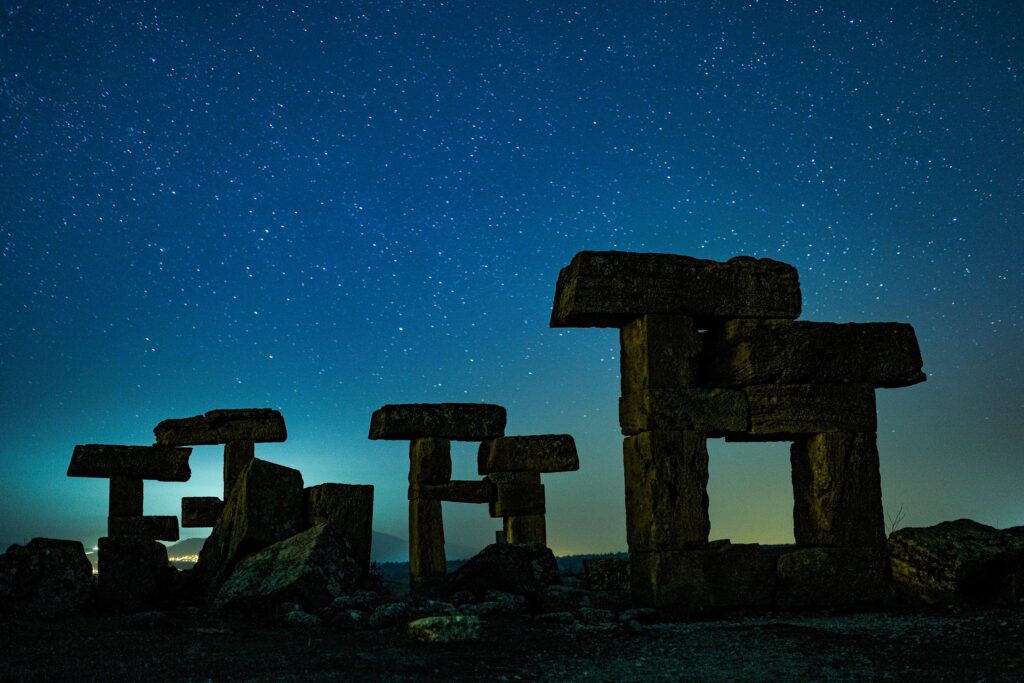
Ancient history is full of questions that refuse to sit quietly in textbooks. For every broken pot and crumbling temple we can neatly explain, there’s another discovery that feels like it is staring right back at us, daring us to admit how much we still do not know. That tension between what we can prove and what we can only guess is exactly where the most exciting science happens.
From lost cities swallowed by jungle to perfectly carved stones that seem to defy the tools of their age, these mysteries can make modern technology look strangely small. Scientists are not chasing magic or legends here; they are testing soil samples, scanning with satellites, and running computer models late into the night. And yet, even with all that, the past holds onto some of its best secrets. Let’s dive into ten of the most stubborn puzzles that keep archaeologists, geologists, and historians coming back for more.
1. Göbekli Tepe: The “First Temple” That Shouldn’t Exist
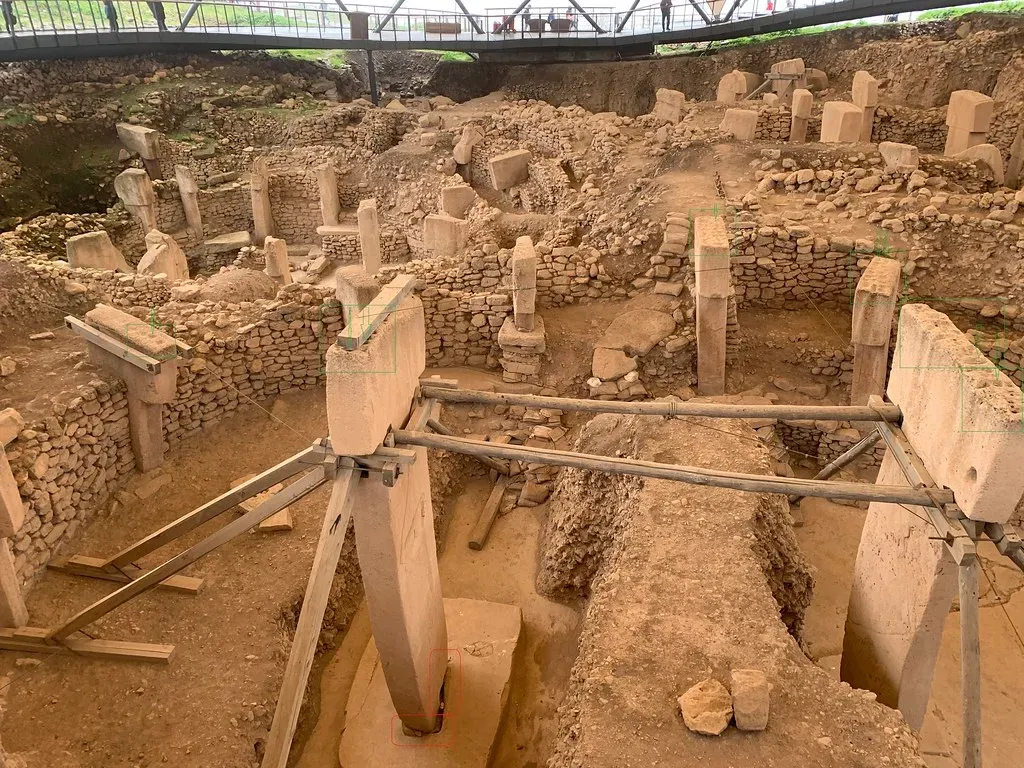
Imagine discovering a massive ritual complex that looks thousands of years ahead of its time, built before pottery, before writing, and even before farming had really taken off. That is Göbekli Tepe in southeastern Turkey, a site going back to around ten thousand years before the common era, with huge T-shaped stone pillars arranged in circles, many of them carved with animals. According to the old story of human progress, large religious monuments were supposed to come after cities and agriculture, not before them.
This flips a key assumption on its head: maybe people did not settle down and then invent religion to keep order; maybe shared beliefs and ritual gatherings helped push people into living together in the first place. Researchers still argue about what exactly happened on this hilltop and who built it, since no one has found houses or burials that clearly belong to its builders. Every new excavation adds data but also more questions, and that is what makes Göbekli Tepe so thrilling – it is like catching humanity mid‑leap, before the usual rules of civilization had settled into place.
2. The Great Pyramids of Giza: Engineering on an Impossible Scale
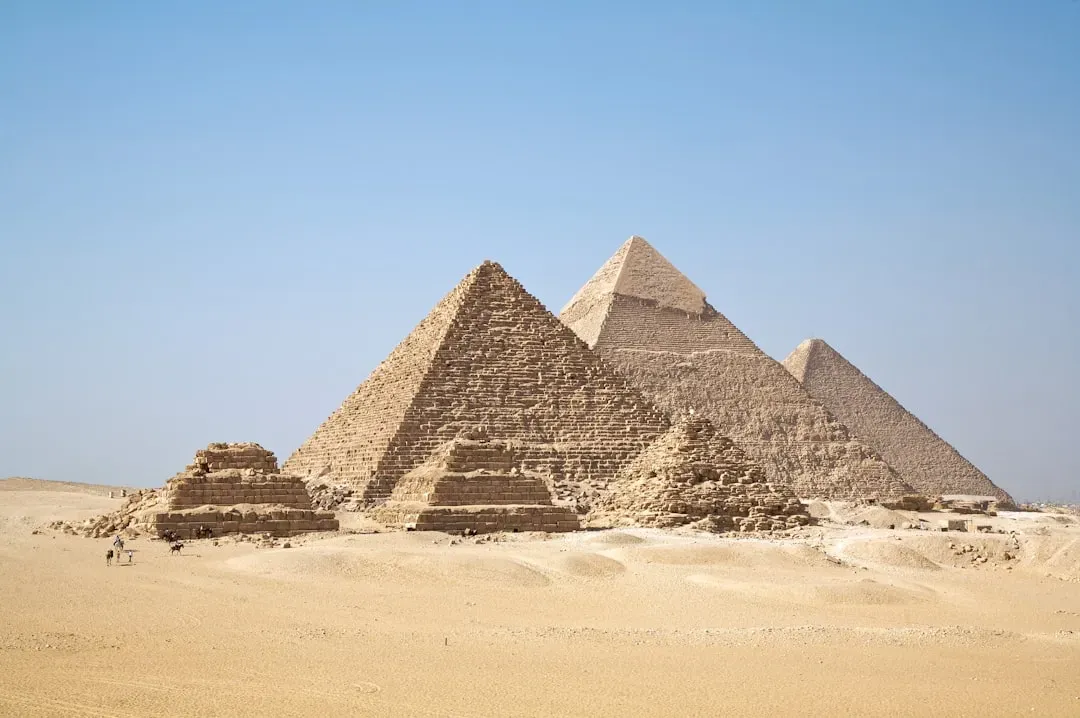
Even if you have seen a hundred photos, standing in front of the Great Pyramid in Egypt can feel almost unreal. You are looking at millions of stone blocks, some heavier than a truck, stacked with such precision that the base sides differ by only a tiny fraction in length, and the whole structure is aligned closely with the cardinal directions. Built more than four thousand years ago as royal tombs, the pyramids are not mysterious because we have no idea who built them – we do – but because their logistics and engineering still stretch belief.
Archaeologists have uncovered workers’ villages, stone quarries, ramps, and tools that show these monuments were the work of huge, organized labor forces, not some supernatural shortcut. Still, there’s no full agreement on the exact methods used to haul and lift the biggest blocks or how planners kept the geometry so precise with Bronze Age instruments. Modern experiments can move and raise stones, but scaling that to the size of Giza without modern machinery remains mind‑bending, and that gap between “we roughly know” and “we can fully replicate it” continues to fascinate engineers and historians alike.
3. Stonehenge: More Than Just a Circle of Stones
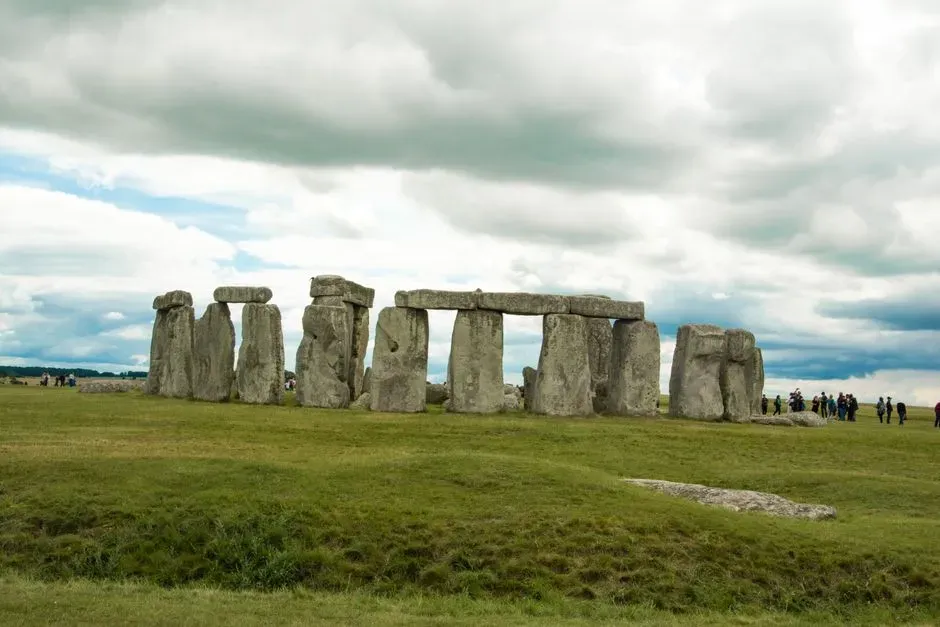
On the Salisbury Plain in England, Stonehenge looks deceptively simple: a ring of massive standing stones, some capped with horizontal lintels. But scratch the surface and the questions multiply fast. The stones come in at least two types from different locations, including smaller “bluestones” that seem to have been transported from mountains in Wales, far to the west. Before the stones went up, people had already been digging ditches and building timber structures on the site for centuries.
Scientists can date the phases of construction and analyze the stones and soils, but the deeper “why” is still elusive. Was Stonehenge mainly a burial center, a solar observatory, a ceremonial gateway, or some combination we have not yet imagined? Patterns in the alignments suggest a strong link to the movements of the sun, especially at solstices, but that does not tell us what it felt like to stand there as one of the builders. For me, the most striking part is the long‑term commitment: generations returned to reshape the same place, which hints at an emotional and spiritual investment that is hard to grasp from our modern distance.
4. The Nazca Lines: Giant Drawings Only the Sky Can See
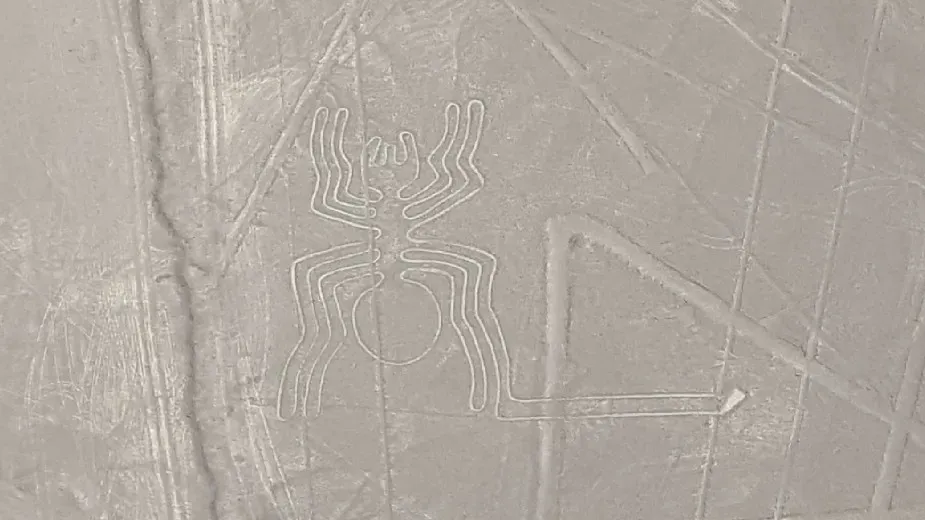
Across the dry plains of southern Peru, enormous lines and figures stretch for kilometers – a hummingbird, a spider, straight tracks that run arrow‑true across hills and valleys. These Nazca Lines were made by removing dark pebbles to reveal lighter soil underneath, and the desert’s stability has preserved them for roughly about two thousand years. From ground level they can be hard to understand, but from the air they jump out like purposeful drawings on a blank canvas.
Researchers have linked some of the lines to ceremonial paths and water sources, and they suspect that rituals connected to rainfall and fertility played a major role. Still, no single explanation comfortably covers the sheer variety, from geometric shapes to animal figures and long, ruler‑straight rays. The fact that they are best appreciated from above feels almost like an accidental side effect, given that the Nazca people did not fly, which adds a strange, modern twist: we rely on planes and satellites just to fully notice art someone scratched into the ground centuries before the first airplane existed.
5. The Indus Valley Script: A Civilization Without a Voice
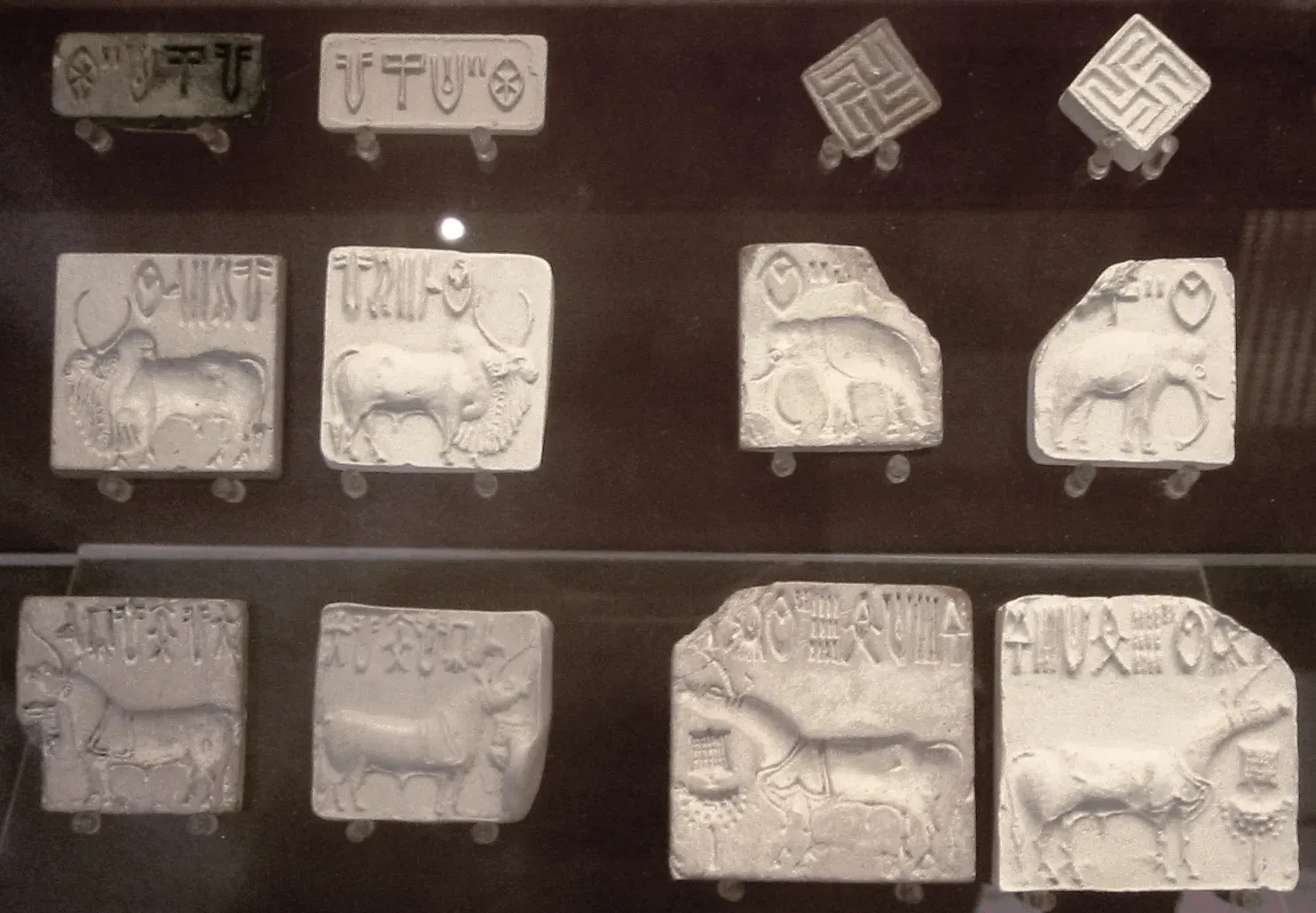
The cities of the Indus Valley, in what is now Pakistan and northwest India, were amazingly advanced for their time: grid‑planned streets, sophisticated drainage systems, standardized weights, and long‑distance trade. Yet the symbols carved on seals and pottery – often called the Indus script – still refuse to yield a clear message. They appear in short sequences, too brief to crack easily, and we do not have a bilingual key like the famous Rosetta Stone that helped with Egyptian hieroglyphs.
Some scholars argue these symbols might not be a full writing system at all, but something more like clan emblems or economic marks. Others are convinced we are dealing with a real script that just happens to be brutally difficult to decode with the limited evidence we have. Computer scientists have tried statistical analyses to spot patterns, while archaeologists hunt for new inscriptions and context clues. Until a breakthrough appears, one of the world’s first great urban cultures remains strangely voiceless; we can walk their streets in our minds, but we still cannot read what they wrote about themselves.
6. The Antikythera Mechanism: An Ancient Machine That Acts Like a Computer
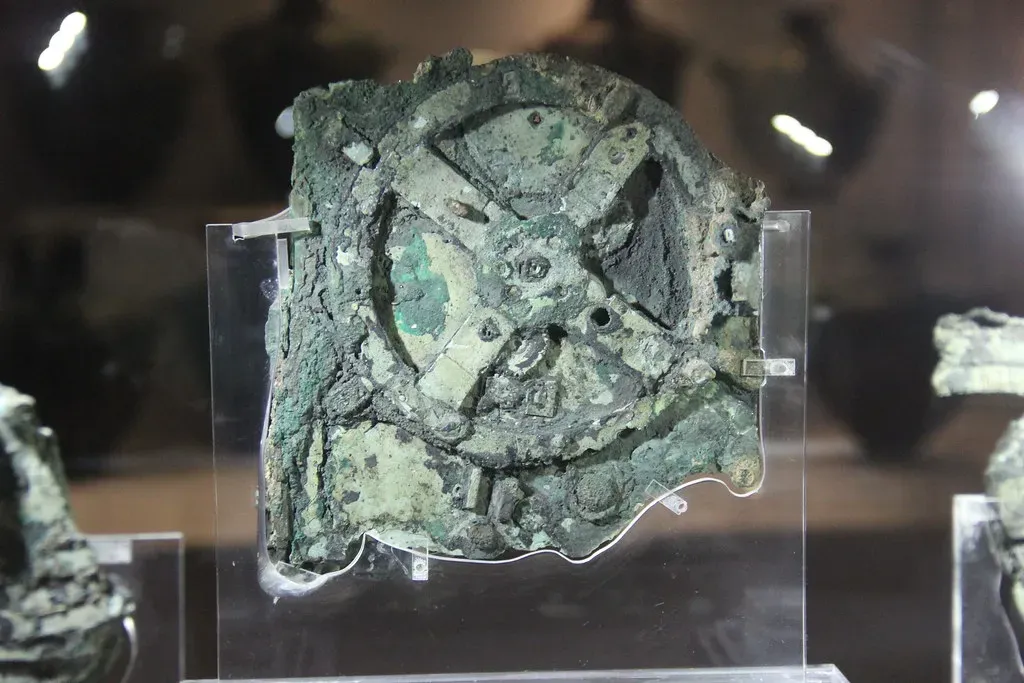
In the early twentieth century, divers off a Greek island pulled up a corroded lump of bronze that looked like nothing special. X‑rays later revealed something astonishing inside: a complex arrangement of gears, dials, and inscriptions now known as the Antikythera Mechanism. Built more than two thousand years ago, it appears to have modeled the movements of the sun, moon, and possibly planets, predicting eclipses and other celestial events through intricate gear ratios.
Nothing else quite like it has been found from that era, which raises an unsettling question: was this machine a rare one‑off marvel, or just the only surviving member of a whole family of sophisticated devices? Engineers and historians have spent years reconstructing how it worked, and every improvement in imaging technology peels back another layer of understanding. To me, the most humbling part is not just the craftsmanship but the reminder that our timeline of technological progress is full of missing chapters; the ancient Mediterranean may have had pockets of mechanical genius that vanished almost without a trace.
7. The Disappearance of the Maya Classic Cities
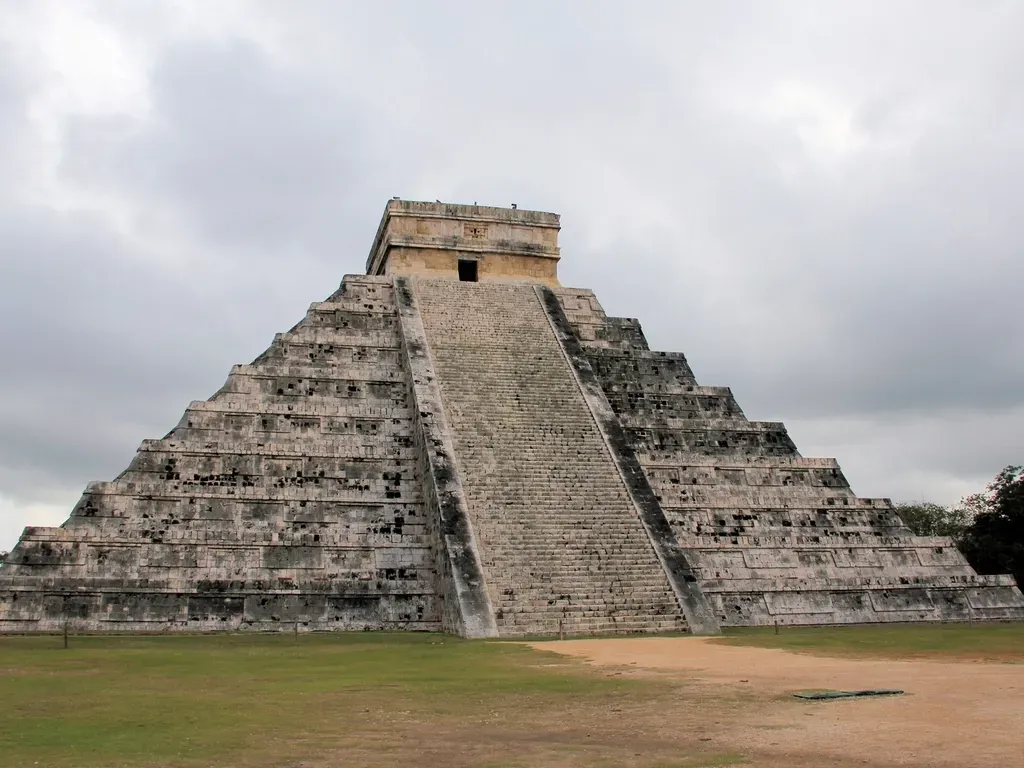
Scattered through the tropical forests of Central America are the remains of Maya cities with towering pyramids, ornate inscriptions, and ball courts that once echoed with ritual games. Around the end of the first millennium of the common era, many of these southern lowland centers were abandoned or dramatically reduced in population. Scientists know the Maya people themselves did not simply vanish – their descendants still live throughout the region – but the question of why these urban hubs declined so sharply has been debated for decades.
Evidence points toward a tangled mix of factors: climate records suggest periods of severe drought, while signs of warfare, political fragmentation, and overused farmland show up in the archaeological record. Rather than a single dramatic collapse, it looks more like a slow unravelling as stress piled on stress and cities could no longer sustain their complexity. What fascinates researchers today is how this story echoes modern concerns about environmental limits and social resilience; studying how the Maya adapted, moved, and reorganized is not just about the past – it quietly holds up a mirror to our own era.
8. Easter Island’s Moai: Moving Giants Across a Lonely Island
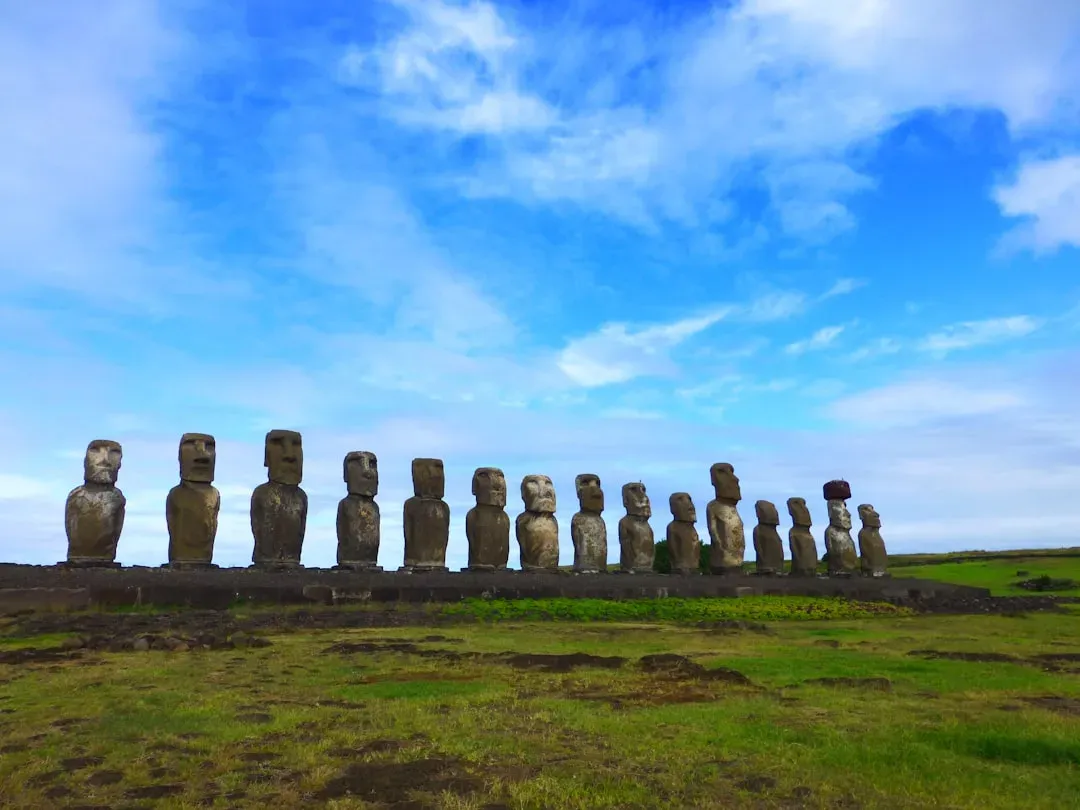
On remote Easter Island, or Rapa Nui, hundreds of massive stone figures with solemn faces stand watch over the landscape. Some are still attached to quarries, others partially buried, and many once stood on stone platforms facing inland. The questions are obvious: how did a relatively small island population carve, move, and erect such enormous statues, and what exactly did they mean to the people who poured so much energy into them?
Experiments have shown that teams can “walk” replica statues upright using ropes and careful rocking, suggesting that the islanders may have moved the real moai in a surprisingly elegant way rather than just dragging them flat on sledges. At the same time, debates continue over how statue building related to forest loss, social inequality, and eventual conflict on the island. For me, the most striking thing is that even the most practical explanations still leave an emotional gap: what mindset, what shared vision, drives a society to invest generations of labor into giving stone faces to an otherwise empty horizon?
9. The Sea Peoples and the Late Bronze Age Collapse
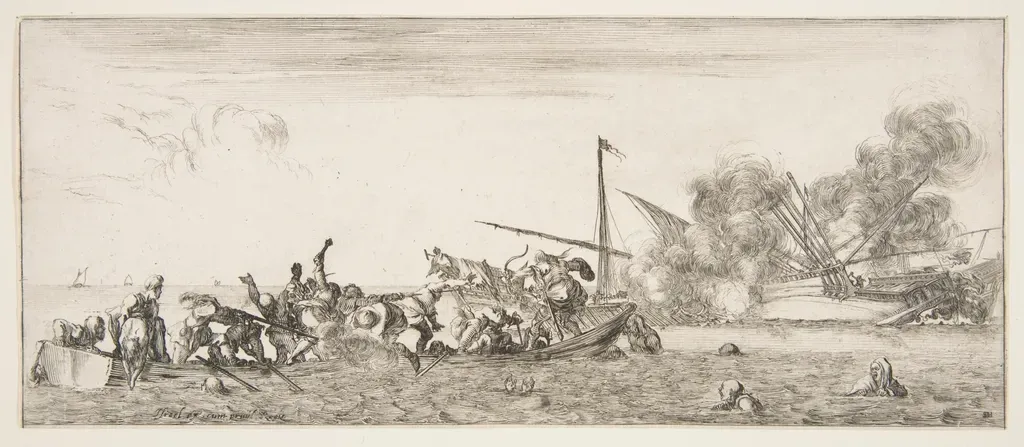
Around the twelfth century before the common era, several powerful kingdoms around the eastern Mediterranean either fell or suffered major disruptions: cities burned, trade networks shrank, and once‑dominant empires never fully recovered. In some ancient inscriptions, mysterious groups known as the “Sea Peoples” are blamed for attacks and invasions. Modern researchers have tried to piece together who these groups were, where they came from, and how much of the wider crisis they actually caused.
Instead of a single invading horde, many scholars now see a storm of overlapping problems: climate shifts that hurt agriculture, internal revolts, earthquakes, shifting trade routes, and yes, probably opportunistic raiders moving by land and sea. The Sea Peoples remain shadowy players in this drama, more like silhouettes than clearly defined nations. What makes this episode so compelling today is its reminder that complex systems can tumble into chaos for many reasons at once, and that simple, tidy villains rarely explain the fall of whole civilizations, no matter how tempting that story might be.
10. The Origin of the Aboriginal Australian Rock Art Tradition
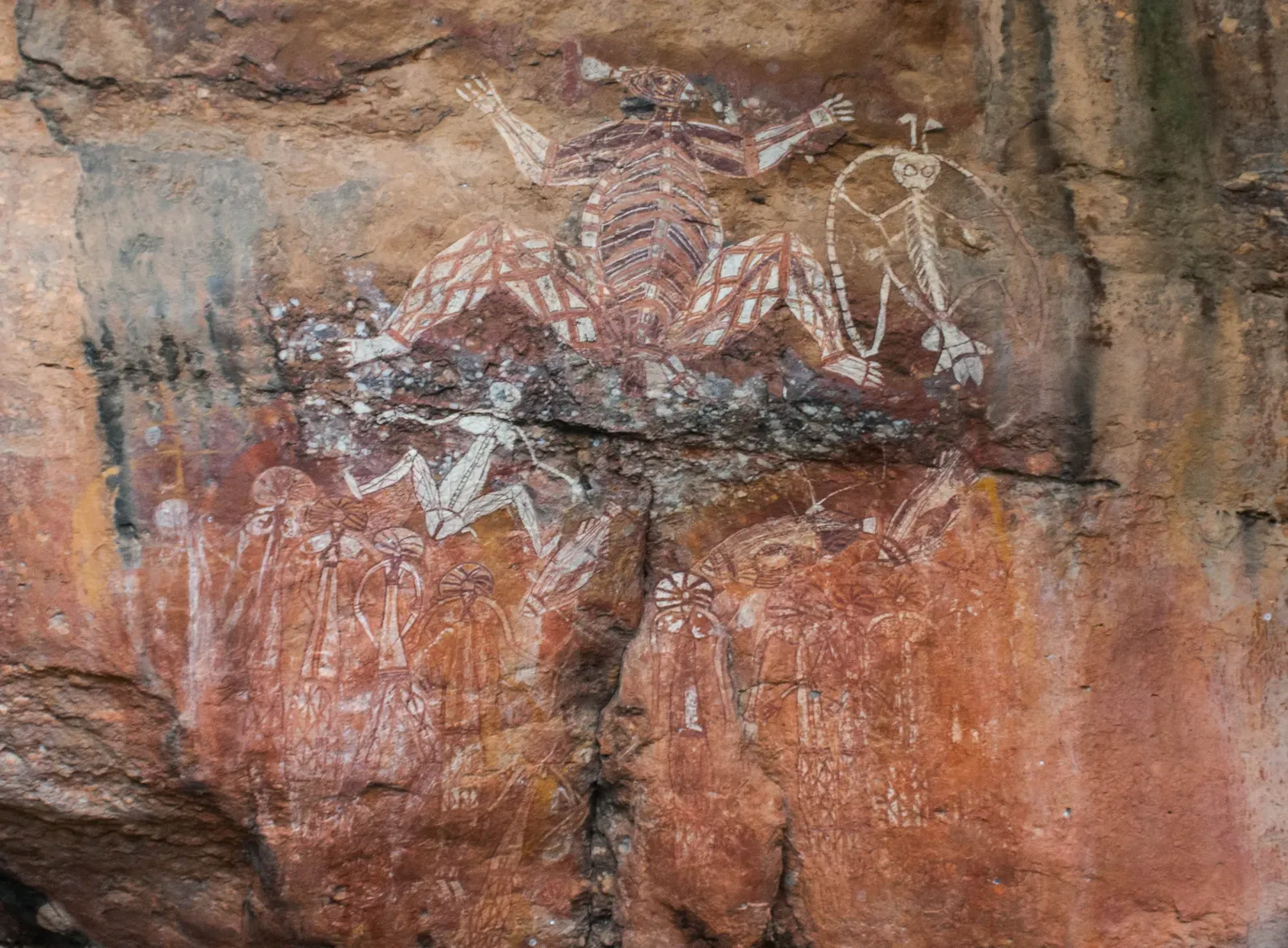
Across Australia, especially in remote regions, there are rock art sites that range from simple hand stencils to elaborate figures and mysterious symbols. Some of these paintings and engravings may go back tens of thousands of years, making them part of one of the longest continuous artistic traditions on Earth. Dating rock art precisely is extremely difficult, so scientists rely on indirect methods like analyzing mineral layers that formed on top of the paintings or charcoal left behind nearby.
What makes this such a powerful mystery is not just the age, but the continuity: many Aboriginal communities today maintain deep cultural connections to certain motifs and sites, yet the full story of how these styles developed and changed over vast stretches of time is still unfolding. Researchers walk a careful line, trying to use scientific tools while respecting Indigenous knowledge and sovereignty over sacred places. To me, this is one of the most hopeful ancient puzzles, because each new finding is not just about the distant past – it is a living dialogue with people whose ancestors created the very images being studied.
Conclusion: Why These Mysteries Matter More Than the Answers
Looking across these mysteries, a pattern jumps out: the real story is rarely about miracle technologies or lost super‑civilizations, and almost always about humans pushing the limits of what was possible in their time. I think the most honest position is to sit in that in‑between space – accepting the solid evidence we have while also admitting how many pieces of the puzzle are missing. In an age that loves quick explanations and viral certainty, there is something refreshing about problems that stubbornly resist easy closure.
If anything, these ancient enigmas make our modern world feel a bit less inevitable and a bit more fragile. They show that brilliant ideas can vanish, entire systems can buckle, and yet creativity leaves fingerprints resilient enough to outlast empires. Maybe the healthiest stance is a mix of admiration and humility: we are not the peak of human ingenuity, just the latest chapter. The next time someone claims we have history all figured out, it is worth remembering a stone circle, a half‑decoded seal, or a corroded gear wheel at the bottom of the sea – and asking, with a hint of skepticism, are we really as certain as we want to be?