
When people talk about extinct animals, the same names always show up: dinosaurs, mammoths, dodos. They dominate documentaries and T‑shirts like a tiny celebrity clique of prehistory. But behind that familiar cast is a whole lost world of creatures that were stranger, smarter, and sometimes far more impressive than the usual headliners.
This list is a small rebellion against that narrow spotlight. These 10 extinct creatures rarely get the attention they deserve, yet their lives read like science fiction: razor‑toothed birds, burrowing sea scorpions, and whales that hunted like crocodiles. Once you meet them, you might find the usual extinct superstars… a little boring.
1. Thylacine – The Tragic “Striped Wolf” That Wasn’t a Wolf
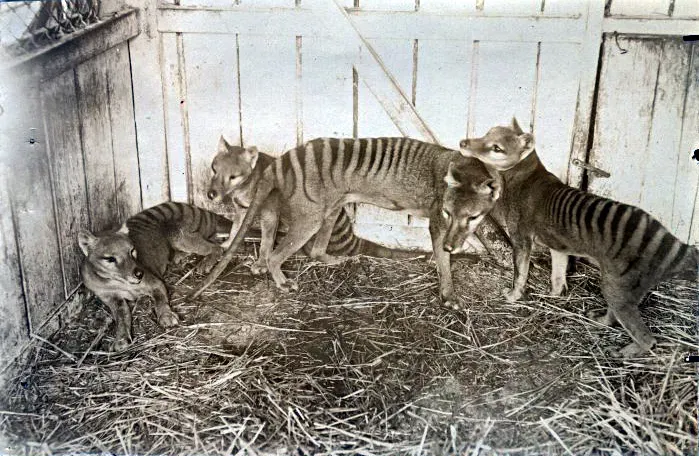
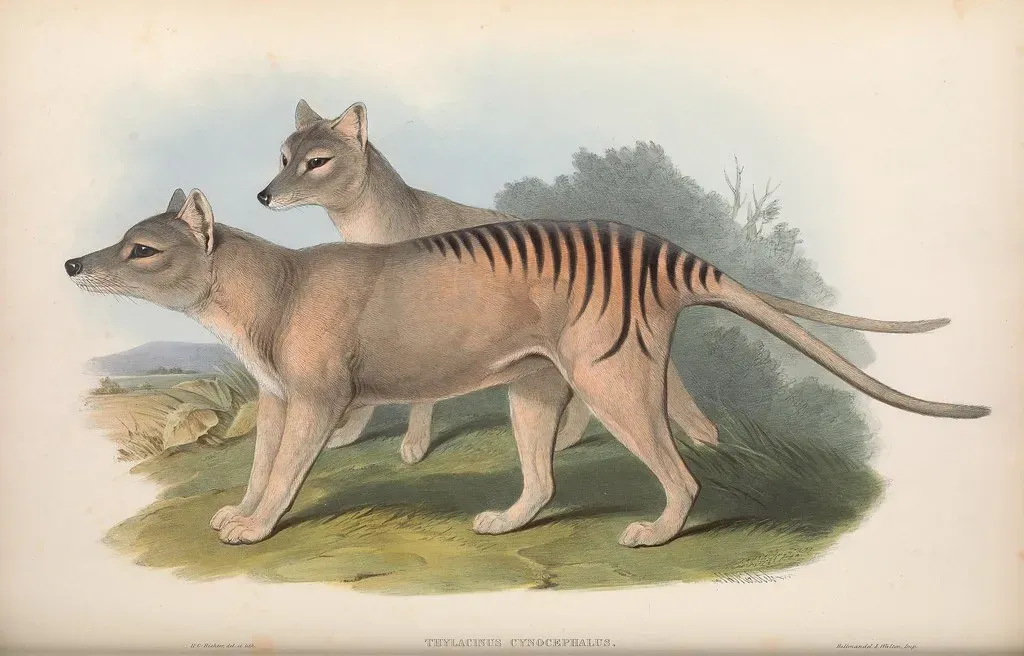
The thylacine, often called the Tasmanian tiger, looked like a lean, yellowish dog with a stiff tail and dark stripes over its back. But here’s the twist: it was not a dog or a tiger at all, it was a marsupial, more closely related to kangaroos than to wolves. Its jaw could open surprisingly wide, giving it a slightly uncanny, almost cartoonish profile when it yawned or threatened.
Europeans arriving in Tasmania demonized thylacines as livestock killers, and relentless hunting, habitat loss, and disease drove them to extinction by the early twentieth century. The last known individual died in a zoo in Hobart in 1936, filmed pacing a barren concrete enclosure that feels heartbreaking to watch today. Every blurry “thylacine sighting” rumor now says more about our regret than about reality, a reminder of how fast we can erase something unique once we decide it does not fit in our plans.
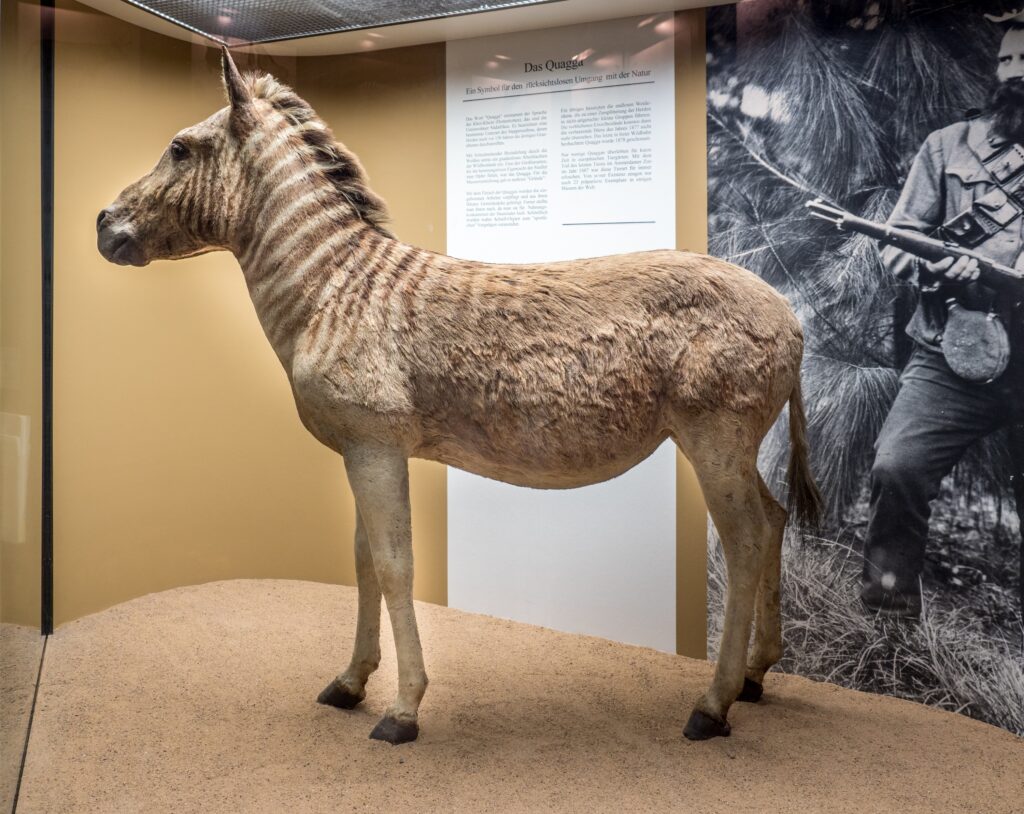
2. Quagga – Half-Zebra, Half-Horse, Fully Gone
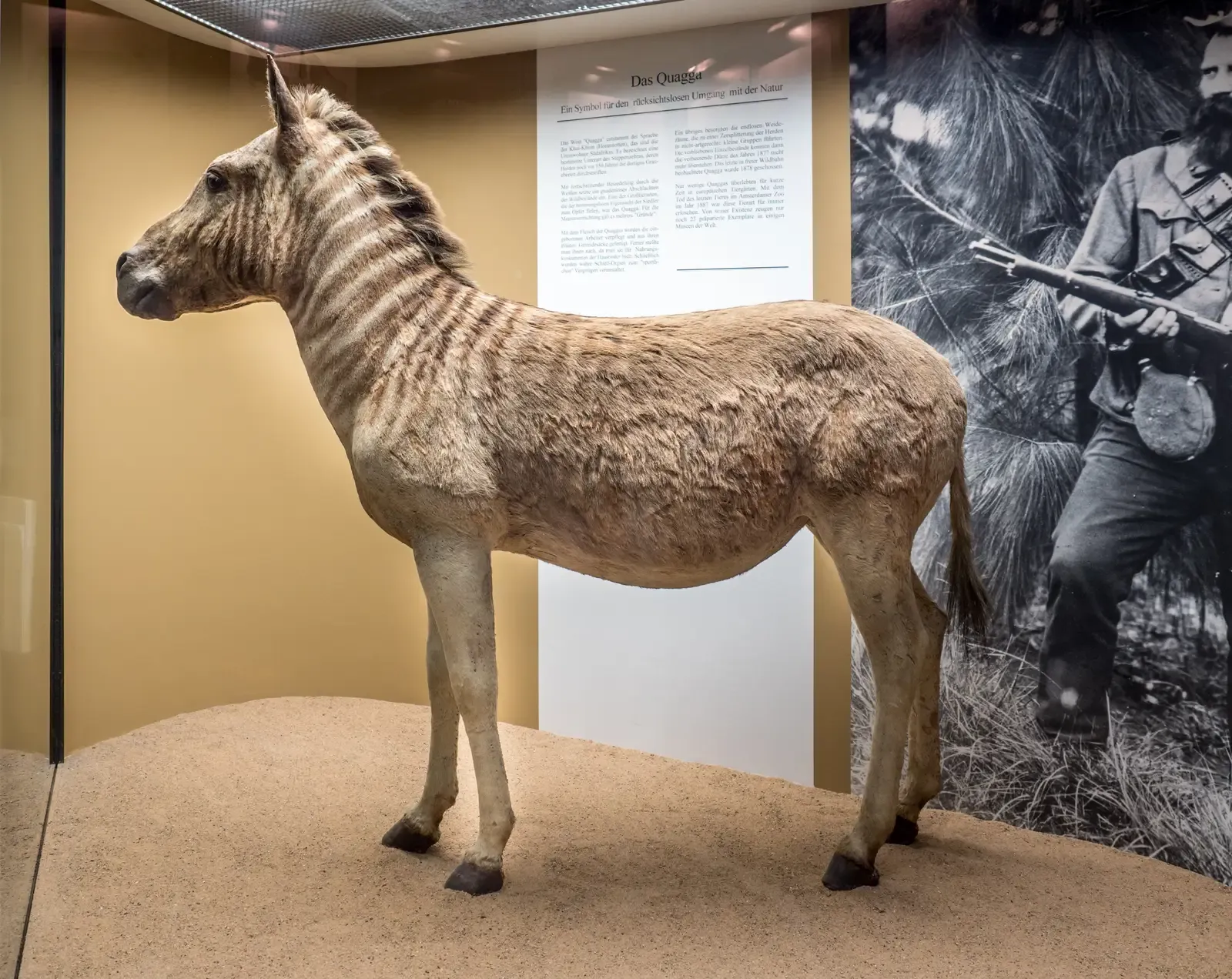
The quagga looked like someone had started painting a zebra and then got bored halfway through. Its front half carried bold brownish stripes, while the back faded into a plain horse-like rump. This odd pattern was not a glitch; it was a distinct subspecies of plains zebra that roamed the grasslands of South Africa in large herds.
By the late nineteenth century, quaggas were hunted into oblivion as “competition” for livestock and for their hides, long before anyone really understood what was being lost. For years after extinction, people argued over whether it was truly a separate animal or “just a weird zebra,” because scientists had so few good specimens and records. Today, selective breeding programs using heavily striped and lightly striped zebras are trying to reconstruct a quagga-like appearance, but even if they succeed visually, the original wild population and its behavior are gone for good.
3. Basilosaurus – The Misnamed Sea Dragon of the Early Whales
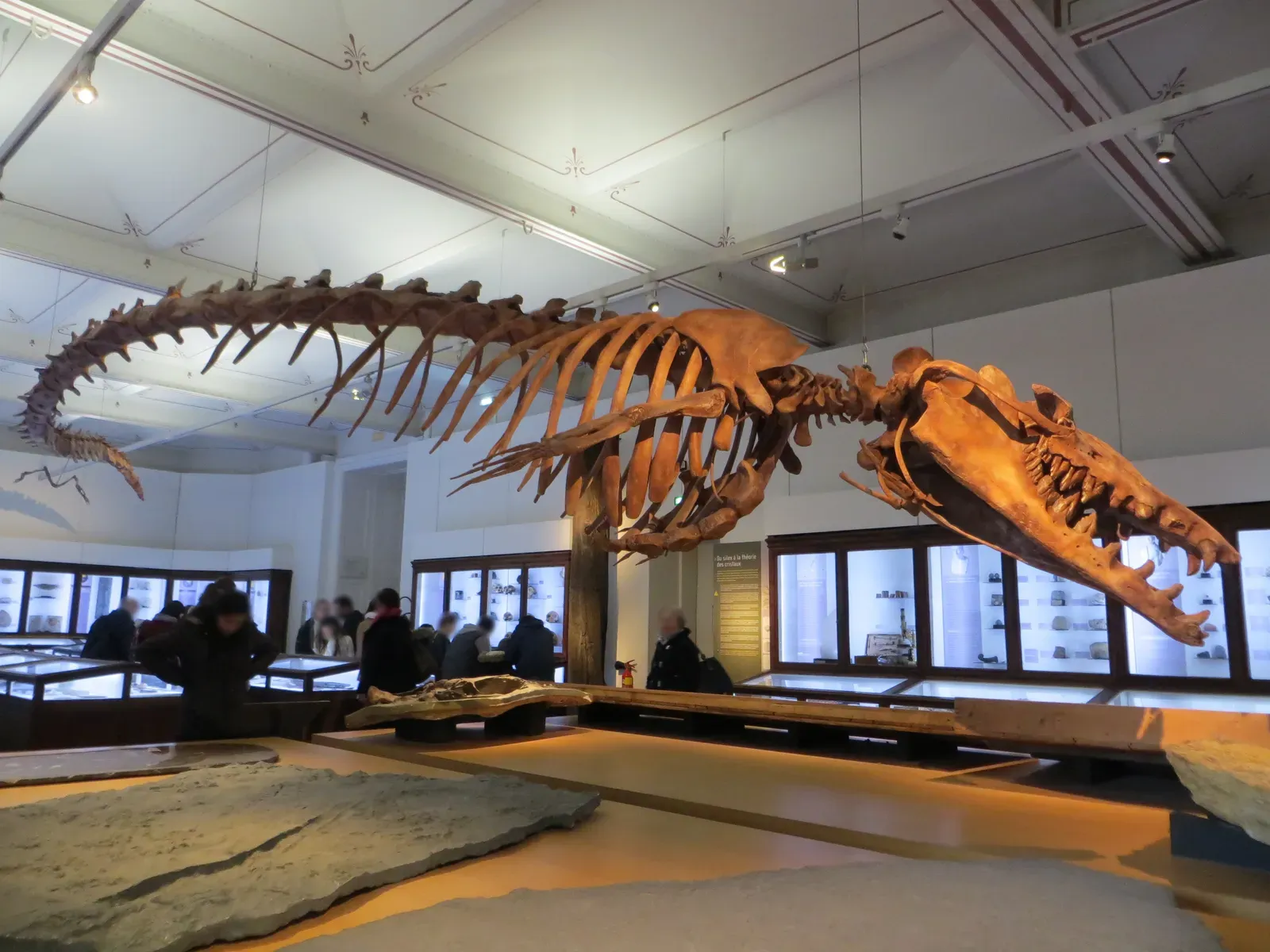
Basilosaurus sounds like a dinosaur, and early fossil hunters actually thought it was a reptile, which is why it carries a name that roughly translates to “king lizard.” In reality, it was an early whale that lived more than thirty million years ago, with a long, eel-like body that could reach the length of a modern bus. Its skeleton shows small, almost hidden hind limbs, evolutionary leftovers that look like ghost legs from its land-mammal ancestors.
Unlike modern baleen whales that filter tiny prey, Basilosaurus had large, sharp teeth and a skull that screams active predator. Evidence from fossilized stomach contents suggests it did not hesitate to eat other marine mammals, including smaller whales. Imagining this serpentine, toothed whale cruising through warm prehistoric seas makes today’s gentle humpbacks feel strangely tame, like the peaceful cousins of a once much fiercer lineage.
4. Pelagornis sandersi – The Giant Bird That Ruled the Sky
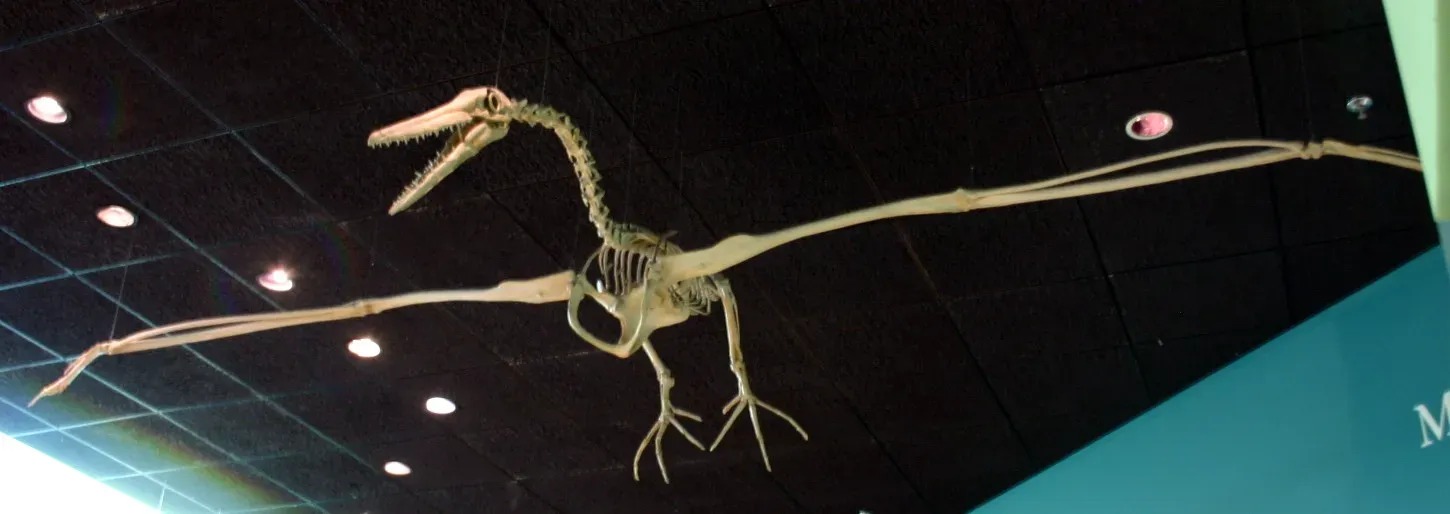
Pelagornis sandersi was a seabird with an absurd wingspan, stretching roughly twice as wide as an albatross and rivaling the wingspan of a small plane. Its wings were so long and narrow that scientists think it spent much of its life gliding over oceans, barely flapping as it surfed air currents for hours or even days. If today’s seabirds are the gliders of the skies, Pelagornis was the high-performance sailplane of the ancient world.
Its beak was lined with bony tooth-like projections, giving it a jagged, saw-edged smile that must have looked intimidating to fish and squid near the surface. Despite the scary face, it probably lived more like a professional long-distance traveler than a brutal fighter, snatching prey during long, effortless flights over warm seas. It is wild to think that this enormous, almost dragon-like bird is barely known outside paleontology circles, while smaller, less extraordinary extinct birds get most of the pop-culture love.
5. Glyptodon – The Armored “Car-Size” Armadillo
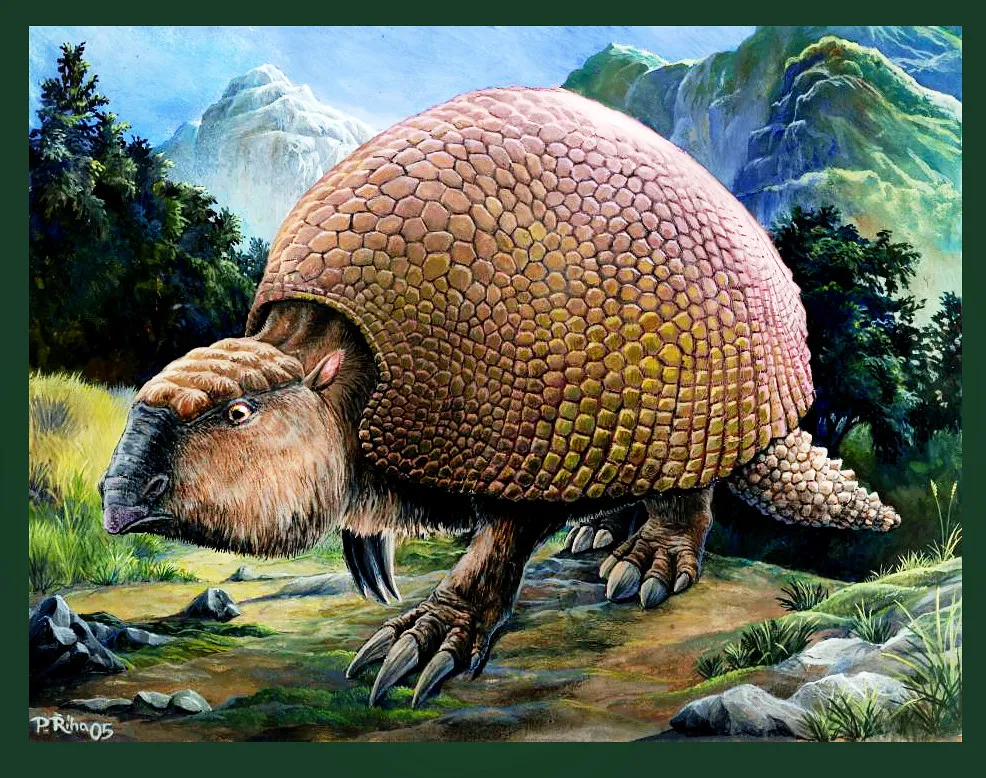
Glyptodon was essentially an armadillo scaled up to the size of a compact car, wrapped in a thick domed shell made of fused bony plates. Its back looked like a living shield, and some species even carried clubbed or spiked tails that could swing like a prehistoric wrecking ball. You can almost picture early humans staring at one and thinking of mobile stone huts wandering across the plains.
These herbivores grazed in South America during the Ice Age, sharing landscapes with giant sloths, sabre-toothed predators, and early humans. There is evidence that people may have used their heavy shells as shelters or windbreaks, which is impressive and deeply unsettling at the same time. Despite how visually striking they were, Glyptodons barely show up in popular discussions of Ice Age life, overshadowed by mammoths and big cats that admittedly have better PR but are not half as bizarre.
6. Helicoprion – The Shark With a Buzzsaw Jaw
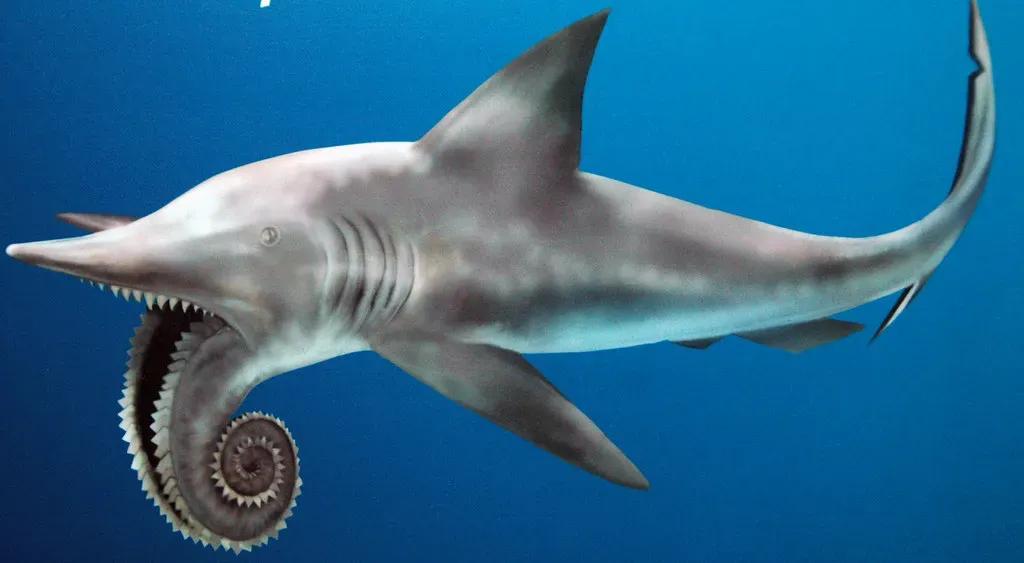
Helicoprion is the kind of animal that sounds like a hoax until you see the fossils. Its lower jaw carried a spiral of teeth that rolled inward like a buzzsaw or a rolled-up tape measure, confusing scientists for decades. For a long time, no one knew where this strange spiral belonged, and early reconstructions placed it sticking out of the snout or even mounted on the nose like a saw-bladed horn.
More modern interpretations put the spiral inside the lower jaw, where new teeth pushed old ones forward into a curling loop. When the shark bit down, the spiral may have sliced or crushed soft-bodied prey like squid, feeding in a way no modern shark quite matches. It is bizarre that a creature this visually outrageous is not as famous as the great white; if nature had a “most inventive dental design” award, Helicoprion would be a front-runner.
7. Arsinoitherium – The Double-Horned Not-Quite-Rhino
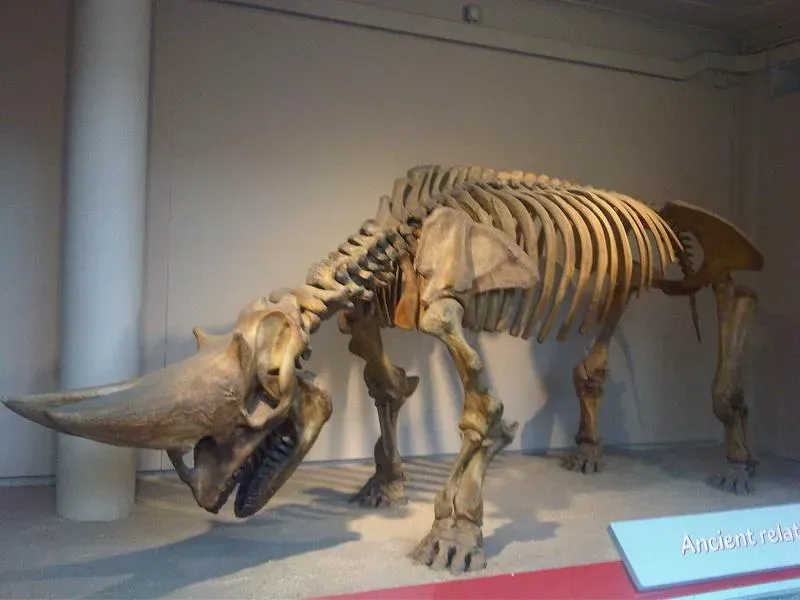
At a glance, Arsinoitherium looks like a rhinoceros with two massive, side-by-side horns jutting straight from its skull. But dig into its anatomy and relationships, and things get weirder: it was not a true rhino and is instead more closely related to elephants and manatees. Its body was chunky and heavy, with pillar-like legs that look built more for trudging than for sprinting.
This animal lived in swampy, forested regions of what is now North Africa around the early part of the Cenozoic era, wandering through hot, lush environments that feel almost alien compared with today’s deserts. Those paired horns were likely used for display, intimidation, or ritualized combat rather than constant bloody fighting, a bit like natural billboards advertising strength and status. If there were any justice in the world of prehistoric mascots, Arsinoitherium would be plastered on every museum T‑shirt rack instead of being hidden in the background of dusty dioramas.
8. Moa – The Towering Bird That Never Needed Wings
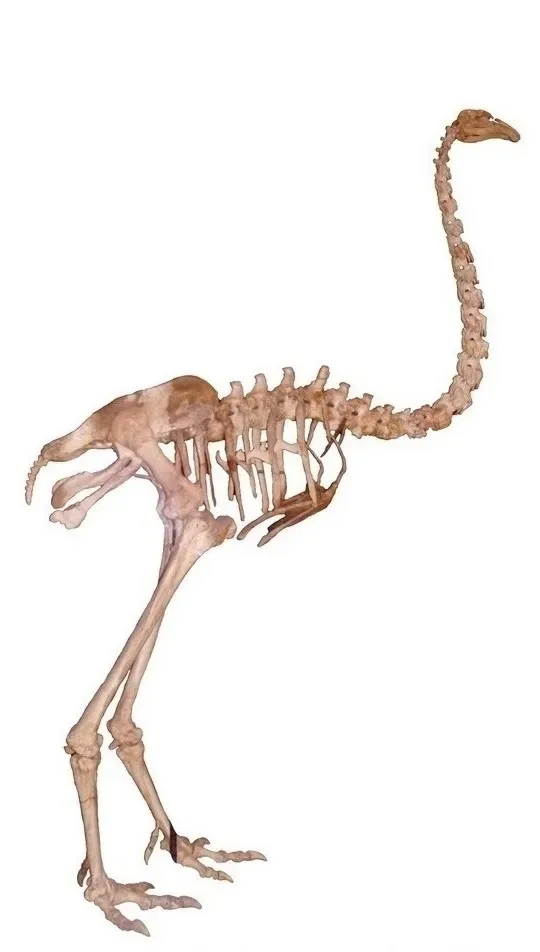
The moas of New Zealand were enormous, flightless birds, with the largest species standing as tall as a small giraffe when stretching their necks upright. Unlike ostriches or emus, they had no visible wings at all; their wing bones were so reduced that they were essentially wingless. They browsed on leaves, twigs, and fruits, filling a role that large grazing mammals play on other continents.
For thousands of years, these gentle plant-eaters had no mammalian predators to fear, just the giant Haast’s eagle that hunted them from above. Then humans arrived roughly within the last thousand years, and overhunting combined with habitat change wiped moas out in just a few centuries, a blink in evolutionary time. Their story is a brutal reminder of how quickly a stable, isolated ecosystem can collapse when a new and clever predator appears with tools, fire, and an appetite for giant drumsticks.
9. Steller’s Sea Cow – The Gentle Giant Lost Almost Overnight
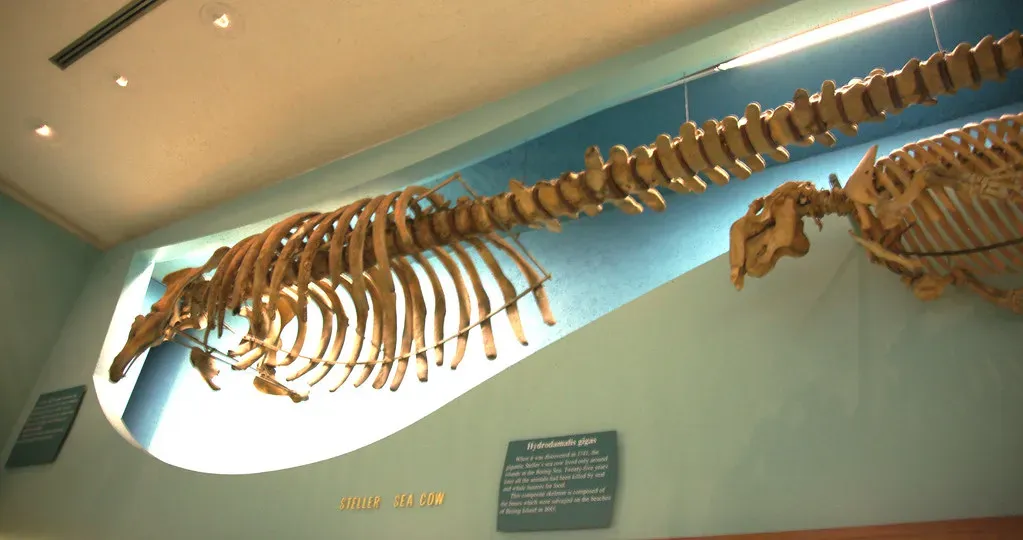
Steller’s sea cow was a colossal relative of modern dugongs and manatees that lived in the cold waters of the North Pacific. It may have reached the length of a city bus, grazing on kelp in shallow coastal areas and moving slowly, with thick, insulating skin that protected it from icy seas. Reports from early naturalists describe it as placid and unafraid of humans, which unfortunately was a fatal personality trait.
European hunters discovered these animals in the eighteenth century, and within a few short decades of scientific description, they were completely gone. Their meat, fat, and hides made them a convenient resource for ships and remote settlements, and with no history of serious predators, they had no instinct to escape. Steller’s sea cow deserves far more attention as one of the clearest, almost textbook examples of how quickly human exploitation can erase a large, harmless species that had survived natural challenges for millennia.
10. Basiloterus (Livyatan melvillei) – The Whale That Hunted Like a Killer Sperm Whale
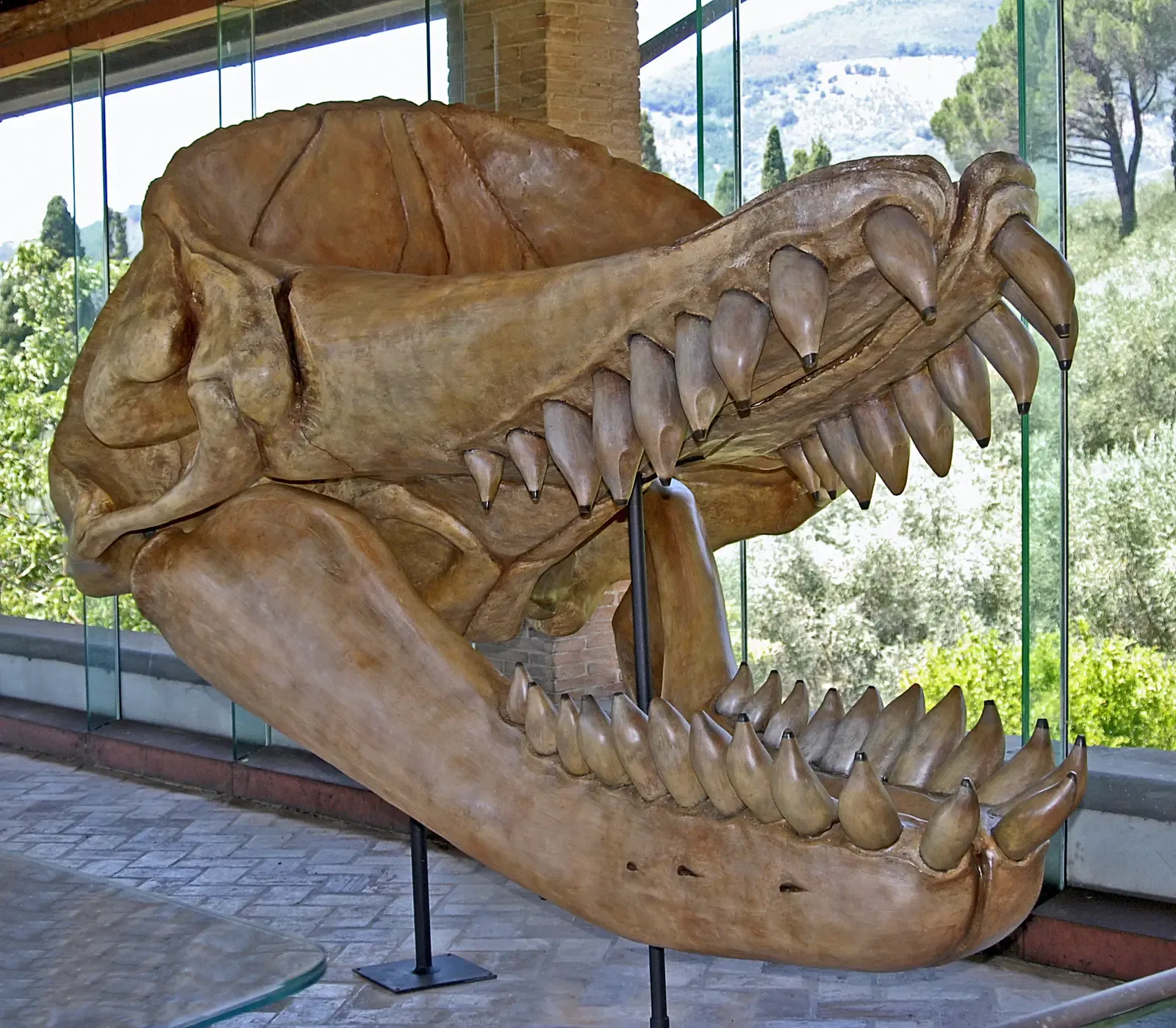
Often simply called Livyatan, this extinct sperm whale lived about twelve to thirteen million years ago and was built for combat in the open ocean. Its skull carried huge, thick teeth in both upper and lower jaws, unlike modern sperm whales, which only have functioning teeth on the lower jaw. These teeth were some of the largest known from any non-dinosaur predator, suggesting it targeted large, fleshy prey rather than just small squid.
Fossil evidence from the same regions hints that Livyatan shared the seas with giant sharks such as the infamous megalodon, raising the possibility of titanic clashes over carcasses and hunting territories. It likely occupied a top predator role similar to that of modern orcas, but scaled up, with powerful jaws capable of biting into other marine mammals with ease. For a whale this dramatic, it is oddly underrepresented in the public imagination, despite having all the ingredients of a blockbuster ocean villain.
Conclusion – The Forgotten Majority of Extinction
Most of the extinct creatures that dominate our imagination are really just the tip of a very large, very strange iceberg. For every famous dinosaur or Ice Age giant we obsess over, there are countless other species like Helicoprion, Glyptodon, or the thylacine whose stories are at least as compelling. Focusing only on the same handful of “celebrity fossils” feels a bit like judging all of human history by a few famous kings and movie stars while ignoring everyone else.
In my view, giving these lesser-known species more attention is not just a fun curiosity project; it quietly changes how we think about life and loss. When you realize how many wildly different ways there are to be an animal, and how quickly human activity can erase even the most spectacular of them, conservation stops being an abstract slogan and starts feeling urgent and personal. The past is trying to tell us something through these forgotten creatures: that uniqueness is fragile, and fame offers no protection once extinction comes knocking. Which of these lost oddities surprised you the most, and which living species do you think we will someday wish we had cherished more?